Six Degrees of Separation: From Alice’s Adventures in Wonderland to Uprooted

It’s the first Saturday of the month which means it’s time for another Six Degrees of Separation, hosted by Kate of Books are my Favourite and Best. The idea is that Kate chooses a book to use as a starting point and then we have to link it to six other books of our choice to form a chain. A book doesn’t have to be connected to all of the others on the list – only to the one next to it in the chain.
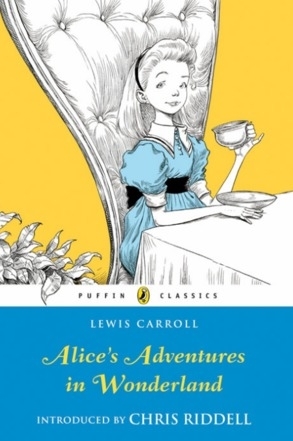
This month we are starting with the children’s classic Alice’s Adventures in Wonderland by Lewis Carroll. It’s not often that I have read the first book in the chain, but this is one that I have read several times, although not for years.
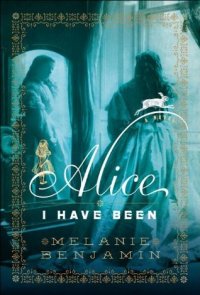
The character of Alice was inspired by a real life child, Alice Liddell. Melanie Benjamin’s novel, Alice I Have Been (1), is a fictional account of Alice Liddell’s life, with a focus on her relationship with Charles Lutwidge Dodgson (Lewis Carroll) and how her connection with his book changed her life forever.

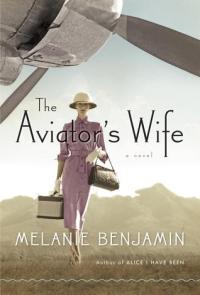
I have read a few of Melanie Benjamin’s other books and enjoyed them. The Aviator’s Wife (2) is my favourite. It tells the story of Anne Morrow Lindbergh, wife of the famous American aviator Charles Lindbergh and later an accomplished aviator in her own right, as well as a successful author.

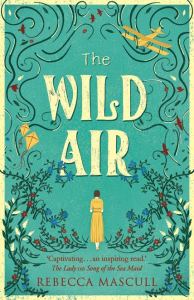
Another novel I’ve read about a female aviator, a fictional woman this time, is The Wild Air by Rebecca Mascull (3). Although I’m not particularly interested in aviation myself, I loved Rebecca Mascull’s book – it really made me appreciate just how brave those early pioneers of flying were.
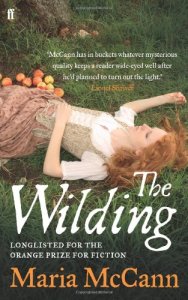
My next link takes the word ‘Wild’ and leads me to The Wilding by Maria McCann (4), a historical mystery set in 17th century England and narrated by a young man who works as a cider-maker.

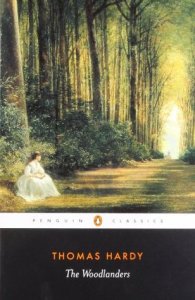
With its recreation of life in a small rural community and the descriptions of orchards and trees and apple-pressing, The Wilding shares some themes with The Woodlanders by Thomas Hardy (5). The Woodlanders is one of my favourite Hardy novels; I loved getting to know the people who built their lives in and around the woods of Little Hintock.

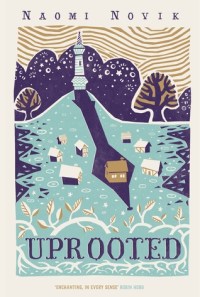
My final link is to another book in which a wood plays an important part in the story: Uprooted by Naomi Novik (6). Uprooted is a fantasy novel set in a village under threat from evil forces gathering in The Wood, a sinister place which is much more than just a collection of trees!

~

Well, that’s my chain for this month, with links including Alice Liddell, female aviators, the word ‘Wild’, apples and woods. Next month we will be starting with Jane Austen’s unfinished manuscript, Sanditon.
My Commonplace Book: October 2019

A selection of words and pictures to represent October’s reading:

commonplace book
noun
a book into which notable extracts from other works are copied for personal use.

~

This is one of the troubles and the wonders of childhood: you imagine things wrongly. And later, when the truth is known – assuming there is an absolute truth – the unwinding of the imagined thing is tangled, because the first image keeps on obstinately breaking through. You’re adrift in mystery and ambiguity.

Rosie: Scenes from a Vanished Life by Rose Tremain (2018)

~

The art of the murderer, my dear Maurot, is the same as the art of the magician. And the art of the magician does not lie in any such nonsense as “the hand is quicker than the eye”, but consists simply in directly your attention to the wrong place. He will cause you to be watching one hand, while with the other hand, unseen though in full view, he produces his effect. That is the principle I have applied to crime.

It Walks By Night by John Dickson Carr (1930)

~

The Milky Way, seen from La Silla Observatory

‘Ah, I perceive you think me weak in the extreme,’ he said, with just a shade of pique. ‘But you will never realize that an incident which filled but a degree in the circle of your thoughts covered the whole circumference of mine. No person can see exactly what and where another’s horizon is.’

Two on a Tower by Thomas Hardy (1882)

~

“Nonsense. Why can’t a painter paint something nice and cheerful to look at? Why go out of your way to look for ugliness?”

“Some of us, mon cher, see beauty in curious places.”

Five Little Pigs by Agatha Christie (1942)

~

‘Quite marvellous,’ the stranger replies with unexpected warmth. Iris feels a rush of love for this unfamiliar human, and for all of the people pressed around her. Everyone, with their worries and their joys and their loves and their frustrations, their tears and dreams and laughter – they are all gloriously alike.

The Doll Factory by Elizabeth Macneal (2019)

~

1898 illustration by John La Farge from the original Collier’s Weekly serialisation.

‘It’s beyond everything. Nothing at all that I know touches it.’

‘For sheer terror?’ I remember asking.

He seemed to say it was not so simple as that; to be really at a loss how to qualify it. He passed his hand over his eyes, made a little wincing grimace. ‘For dreadful — dreadfulness!’

‘Oh, how delicious!’ cried one of the women.

The Turn of the Screw by Henry James (1898)

~

‘Andy is a grower,’ said Jay earnestly. ‘He’s paid to grow things and growing things is what he’d want to do even if he wasn’t paid.’ He laughed, pleased with himself. ‘I call this the Hardie theory of happiness. You’re happy when what you are is the same as what you do.’

The Daughter of Hardie by Anne Melville (1988)

~

‘Taxes are high, Haith. Much higher than in the times of my father. What the King takes in taxes they cannot put on the table to feed their families.’

‘These are troubled times. The costs of Henry’s war in Normandy run high.’

‘You can see why Welsh farmers and tenants might struggle to see the relevance of that for them.’

Conquest: The Drowned Court by Tracey Warr (2017)

~

Large Blue butterfly

‘Remember, my darling, one man’s rubbish might be another man’s gold. But perhaps we are all beachcombers in a way,’ Daddy had said, squinting in the sun. ‘We keep seeking, hoping to find that elusive buried treasure that will enrich our lives, and when we pull up a teapot rather than a gleaming jewel, we must continue to search.’

The Butterfly Room by Lucinda Riley (2019)

~

‘Of the arrows the God of Love possesses, it is Frankness I prefer, because frankness is truly noble,’ said Bernadine. ‘The other arrows – Beauty, Simplicity, Courtesy, Company, Beau-Semblant – are the qualities in a woman that may injure a man’s heart while leaving his pride untouched. That woman may get herself a lover and never open her mouth. But the man who falls in love mostly by the wound of his lover’s frankness is enobled, for he accepts her enumeration of his faults, without doubting the loving spirit in which they are given; and she accepts his frankness in return.’

To Calais, in Ordinary Time by James Meek (2019)

~

Favourite books read in October:

Two on a Tower and The Daughter of Hardie

New authors read in October:

Elizabeth Macneal, James Meek

Countries visited in my October reading:

England, France, Wales, China

~

Have you read any of these books? Which books did you enjoy reading in October?