Historical Musings #64: My Year in Historical Fiction – 2020

Welcome to my monthly post on all things historical fiction. For my first Musings post of the year, I am looking back at the historical fiction I read in 2020 and have put together my usual selection of charts and lists! I have kept the same categories as in the previous four years so that it should be easy to make comparisons and to see if there have been any interesting changes in my reading patterns and choices (my 2019 post is here, 2018 here, 2017 here and 2016 here).

~

Time periods read about in 2020
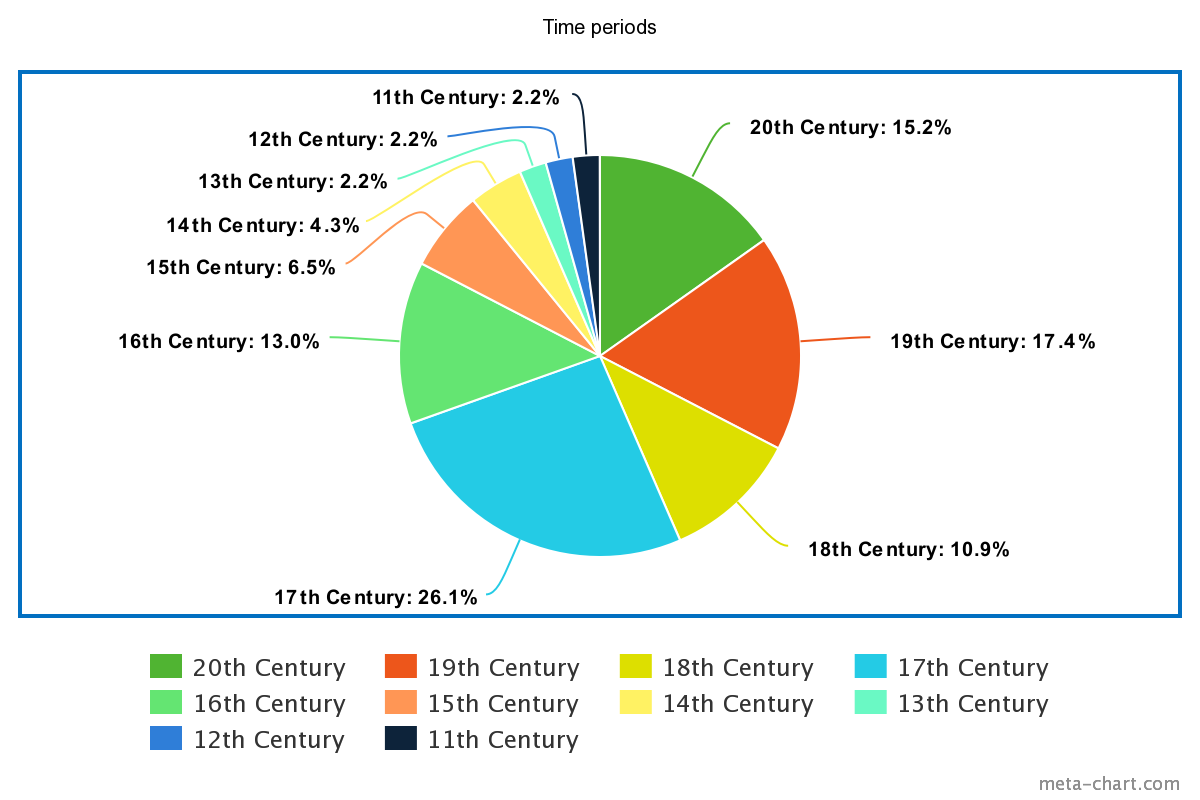
For the last four years, the 19th century has been the most popular time period for my historical fiction reading (in 2019, it was the setting for more than a third of the books I read). In 2020, there was a different winner: the time period I read about most often was the 17th century, with the 19th in second place, just ahead of the 20th and 16th.

I read 12 books in total set during the 17th century, with topics ranging from the Pendle Witch Trials (The Familiars by Stacey Halls) to the 1617 Vardø storm (The Mercies by Kiran Millwood Hargrave) and the Barbary pirate raid on Cornwall (The Tenth Gift by Jane Johnson).

~

32% of the historical fiction authors I read in 2020 were new to me.

This is down on 2019’s 54%, but I’m pleased that I still discovered a lot of new authors as well as reading books by favourite authors.

Three books I’ve read by new-to-me historical fiction authors in 2020:

The Almanack by Martine Bailey
Mrs Whistler by Matthew Plampin
The Animals at Lockwood Manor by Jane Healey

~

Publication dates of books read in 2020
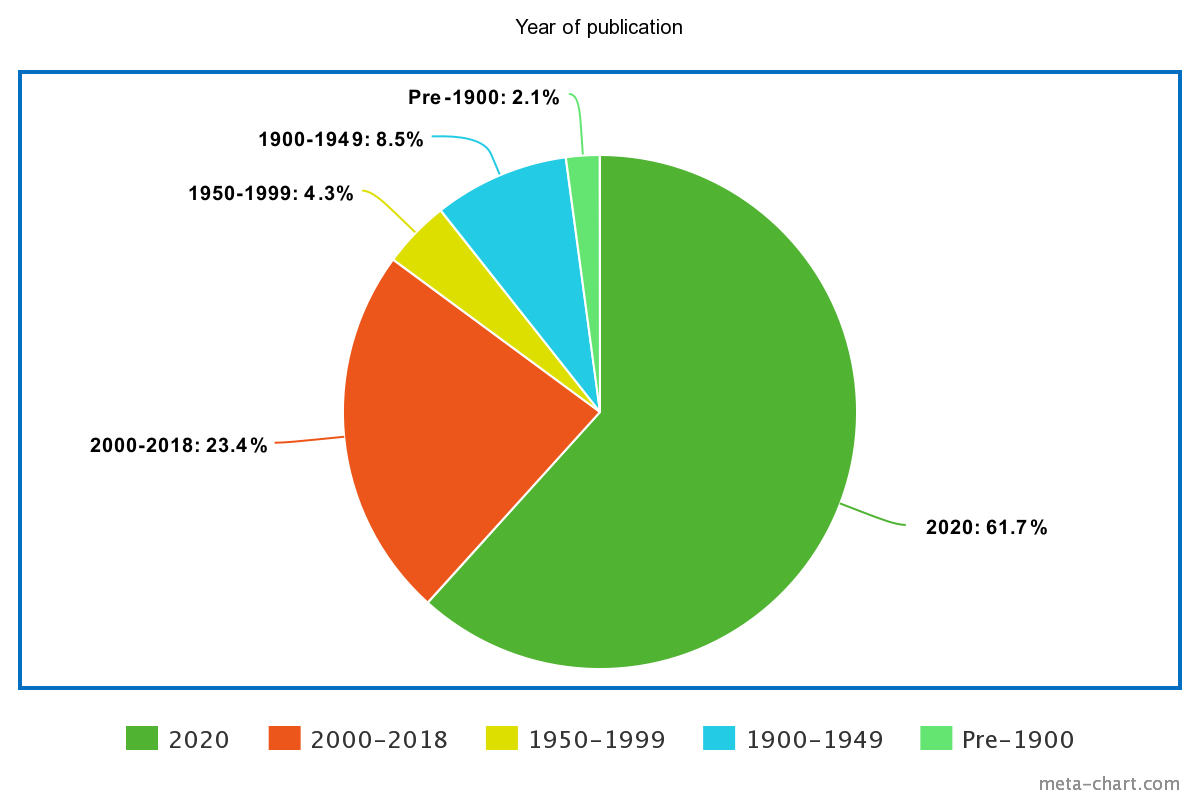
As usual, most of the historical fiction books I read were published in the current year. Not even a quarter of the books I read were published before 2000, which is disappointing for me as those older books are the ones I usually end up loving the most. I need to stop being tempted by all the new books on NetGalley!

The oldest one I read was The Black Arrow by Robert Louis Stevenson (1883).

~

10% of my historical reads in 2020 were historical mysteries.

This is lower than 2019’s 20% and 2018’s 14%.

Three historical mysteries I read last year:

The Last Protector by Andrew Taylor
The Silver Collar by Antonia Hodgson
The Butcher of Berner Street by Alex Reeve

~

I read historical fiction set in 19 different countries in 2020.
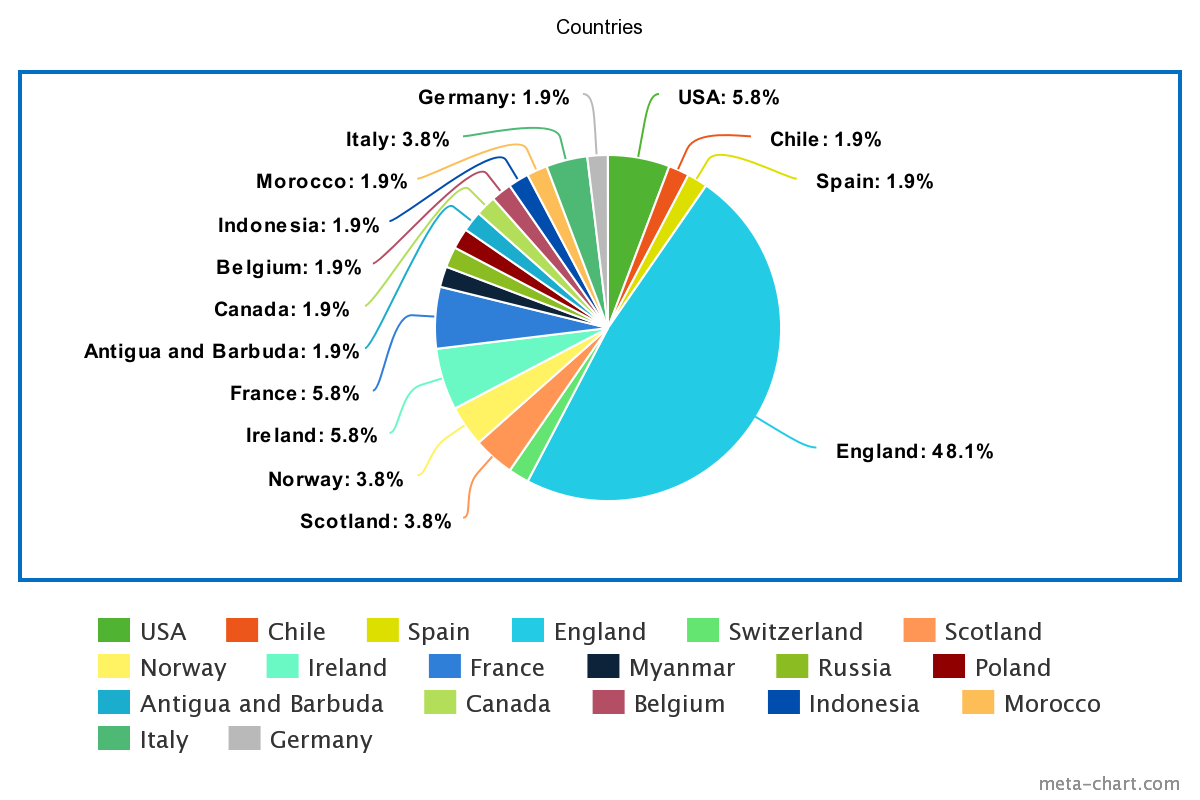
This is slightly more than the 16 different countries I read about in 2019, but I still want to make an effort to visit more countries in my reading this year, particularly African and Asian ones.

Three books I read last year set in countries other than my own:

The Missing Sister by Dinah Jefferies (Myanmar)
The Bell in the Lake by Lars Mytting (Norway)
Tsarina by Ellen Alpsten (Russia)

~

Four historical men I’ve read about this year:

Bram Stoker (Shadowplay by Joseph O’Connor)
Raphael (The Woman in the Painting by Kerry Postle)
Charles of Orléans (In a Dark Wood Wandering by Hella S Haasse)
Henry VIII (The Great Matter Monologues by Thomas Crockett)

Four historical women I’ve read about this year:

Eleanor of Provence (The Silken Rose by Carol McGrath)
Joan Vaux (The Lady of the Ravens by Joanna Hickson)
Aoife MacMurchada (The Irish Princess by Elizabeth Chadwick)
Belle Bilton (Becoming Belle by Nuala O’Connor)

~

What about you? Did you read any good historical fiction last year? Have you read any of the books or authors I’ve mentioned here and have you noticed any patterns or trends in your own reading?
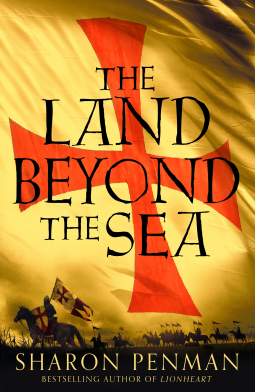

The Land Beyond the Sea by Sharon Penman

The first book I have finished in 2021 is actually one that I started last summer, but as with many of the books I tried to read last year I found that I wasn’t in the right frame of mind for anything long and complex. And at almost 700 pages, this novel is certainly long – and with a plot dealing with the history and politics of Outremer, or the Kingdom of Jerusalem, it is certainly complex! As I’m finding it a lot easier to concentrate on reading now, I picked the book up again and have enjoyed immersing myself in it over the last week or two.

Jerusalem was captured by the Crusaders in 1099, at the end of the First Crusade, and the kingdom they established there became known as Outremer or ‘the land beyond the sea’. The Crusaders who stayed in Outremer and made it their home were mainly of French origin and Penman refers to them (and their descendants) as Franks or Poulains. The novel covers the period from 1172 to 1187, a period when the kingdom is becoming divided by disputes over the succession to the throne and when the Muslim Arabs (referred to as Saracens in the book), led by their sultan Saladin, are taking advantage of this to try to reclaim their lands.

With Outremer under threat from Saladin’s armies, strong leadership is more important than ever, but the young king of Jerusalem, Baldwin IV, has been forced to confront an unwelcome truth: he is suffering from leprosy and can expect an early and unpleasant end to his life. As rival Poulain lords begin plotting and scheming to become the influence behind the next king or queen, the Saracens advance further into Outremer, with their eye on Jerusalem itself…

The Land Beyond the Sea is a fascinating novel. I have read a lot about Europe in the medieval period, but not so much about other parts of the world. Apart from Elizabeth Chadwick’s Templar Silks, I can’t really think of anything else I’ve read that focuses entirely on the Holy Land and its people. As my knowledge of the subject was so limited, I didn’t always know how or when a character would die, or who they would marry, or what the outcome of a battle would be, which made a nice change from reading about the Tudors or the Wars of the Roses, where I usually have a good idea of what is going to happen next! It also meant that it wasn’t a particularly easy read; the number of characters introduced in the first half of the book was overwhelming, especially as so many of them were used as viewpoint characters, which made it difficult to really settle into the story. By the middle of the novel, though, I felt that I was getting to know some of them much better and they were starting to feel like real people rather than just names on the page and from this point on I really enjoyed the rest of the book.

Most of the novel is written from the perspective of the Franks, with a focus on three of them in particular: Baldwin, the ‘Leper King’, who is depicted as a courageous and intelligent young man determined to take care of his kingdom until his illness makes it impossible; William, Archbishop of Tyre, tutor to Baldwin, whose chronicle History of Deeds Done Beyond the Sea is one of our most important sources of information on the Kingdom of Jerusalem; and Balian d’Ibelin, one of the leading Poulain noblemen who, due to the respect he commands amongst the other lords and his marriage to the king’s stepmother Maria Comnena, often finds himself drawn into the kingdom’s military and political affairs. I’ve noticed that a few other readers have said they found Balian too good to be true, or even anachronistic, but I disagree – there are plenty of other characters in the book who are selfish, weak or untrustworthy, so why shouldn’t there also be one who is decent and honourable? Balian was the only character I fully connected with emotionally; I sympathised with him as he struggled with some very difficult decisions and shared his frustration at the behaviour of some of the other Franks whose inability to put the welfare of the kingdom before their own interests led Jerusalem towards disaster.

We do occasionally see things from the Saracen point of view, particularly when Balian crosses paths with Saladin and his brother al-Adil, and I think Penman does give a balanced portrayal of both sides in the conflict. Although for most of the book the Saracens are the ‘enemy’, whenever the perspective switches to their side we see that Saladin and al-Adil are more admirable than many of the Franks, are prepared to be reasonable in negotiations and to show compassion where necessary. My only complaint is that I would have liked to have spent more time with them instead of just a few pages here and there.

As with Sharon Penman’s other books, this one has clearly been very well researched and her afterword and author’s note are almost as interesting as the story itself. Apart from maybe two or three words and phrases out of a 700 page book, I didn’t have any problems with inappropriately modern language (and I’m usually the first to complain about that sort of thing). However, I didn’t love this one as much as some of her others such as The Sunne in Splendour or Falls the Shadow, which I think is down to finding the writing slightly dry in places and the lack of emotional impact until nearer the end. Still, I really enjoyed The Land Beyond the Sea and am determined to find time soon to read the final book in Penman’s Welsh Princes trilogy, The Reckoning, which has been waiting on my shelf for years!

Book 1/50 read for the Historical Fiction Reading Challenge.

Thanks to Pan Macmillan for providing a copy of this book for review via NetGalley.

Six Degrees of Separation: From Hamnet to Macbeth

It’s the first Saturday of the month (and of the new year) which means it’s time for another Six Degrees of Separation, hosted by Kate of Books are my Favourite and Best. The idea is that Kate chooses a book to use as a starting point and then we have to link it to six other books of our choice to form a chain. A book doesn’t have to be connected to all of the others on the list – only to the one next to it in the chain.

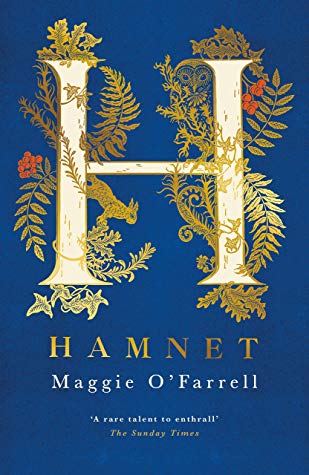
This month we are beginning with Hamnet by Maggie O’Farrell. I read this book last year and although I thought the writing was beautiful, I didn’t love it as much as most other people seem to have done. It’s a great book to start this month’s chain with, though, because there are so many possible options for the first link!

Drawing on Maggie O’Farrell’s long-term fascination with the little-known story behind Shakespeare’s most enigmatic play, Hamnet is a luminous portrait of a marriage, at its heart the loss of a beloved child.

Warwickshire in the 1580s. Agnes is a woman as feared as she is sought after for her unusual gifts. She settles with her husband in Henley street, Stratford, and has three children: a daughter, Susanna, and then twins, Hamnet and Judith. The boy, Hamnet, dies in 1596, aged eleven. Four years or so later, the husband writes a play called Hamlet.

Award-winning author Maggie O’Farrell’s new novel breathes full-blooded life into the story of a loss usually consigned to literary footnotes, and provides an unforgettable vindication of Agnes, a woman intriguingly absent from history.

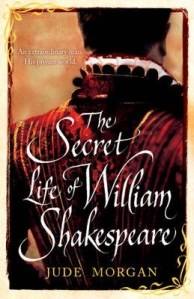
Shakespeare is not named in Hamnet; he is always referred to as ‘the husband’ or ‘the father’, which puts the focus on Agnes and their children. The Secret Life of William Shakespeare by Jude Morgan (1) does use Shakespeare’s name, as well as the more commonly used Anne Hathaway in place of Agnes, but it also focuses on Shakespeare as a husband and father and is written largely from his wife’s perspective.

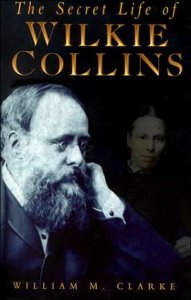
Another book I’ve read with a title beginning ‘The Secret Life of’ is The Secret Life of Wilkie Collins (2), a biography of one of my favourite Victorian authors. The writer of the biography, William M. Clarke, was married to Collins’ great-granddaughter, which gave him access to personal information about Collins’ private life, family relationships and romantic entanglements, and these things form the basis of the book. However, I found the writing style quite dry and I would also have preferred more discussion and analysis of Collins’ work as well as his life.

Next, I’m linking to a book by Wilkie Collins himself: The Frozen Deep (3), not one of his better known books but still one that I enjoyed reading. It’s a short one – a novella, really – but still an entertaining and compelling story, inspired by reports of Sir John Franklin’s famously doomed 1845 voyage to the Arctic in search of the Northwest Passage during which the ships became icebound and the members of the expedition disappeared.

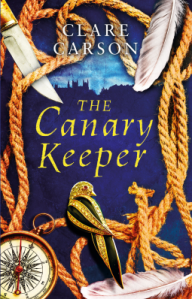
Clare Carson’s historical novel The Canary Keeper (4) is set just a few years after the Franklin Expedition. The novel follows Birdie Quinn, a young woman who finds herself a suspect in a murder case, as she travels to the Orkney Islands to try to identify the real killer and clear her name. As she investigates, she discovers some fascinating links between the murder and the expedition.

I can only think of one other novel I’ve read set in Orkney and that is King Hereafter by Dorothy Dunnett (5), a very different kind of story from The Canary Keeper and taking place many centuries earlier! This beautifully written and thoroughly researched novel is based around the theory that Macbeth, the historical King of Alba, and Thorfinn, Earl of Orkney, were the same person.

This, of course, leads me to Macbeth by William Shakespeare (6) and so brings the chain full circle! It’s not often that I manage to do that, so I’m pleased to have achieved it with my first chain of the year.

~

And that’s this month’s Six Degrees of Separation. My links included Shakespeare, secret lives, Wilkie Collins, the Franklin Expedition, Orkney and Thorfinn/Macbeth.

In February we will be starting with Redhead By the Side of the Road by Anne Tyler.