It’s the first Saturday of the month which means it’s time for another Six Degrees of Separation, hosted by Kate of Books are my Favourite and Best. The idea is that Kate chooses a book to use as a starting point and then we have to link it to six other books of our choice to form a chain. A book doesn’t have to be connected to all of the others on the list – only to the one next to it in the chain.
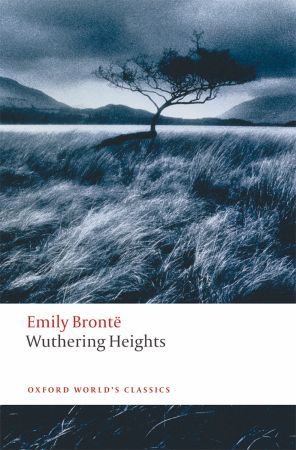
This month we’re starting with Wuthering Heights by Emily Brontë, one of my favourite classics. The book has been getting a lot of attention recently due to the new film adaptation (which I wrote about here), so it’s a perfect choice for this month’s Six Degrees.


For my first link, I’ve chosen a novel inspired by Wuthering Heights – Ill Will by Michael Stewart (1). Those of you who have read Wuthering Heights will remember that Heathcliff disappears for several years after overhearing a conversation between Catherine and Nelly. In Ill Will, Stewart gives a possible account of where Heathcliff may have gone during that period and what he could have been doing. I loved the setting and the historical detail, but the language felt inappropriate for a book inspired by a 19th century classic and pulled me out of the story.
The Tutor by Andrea Chapin (2) also attempts to fill in a ‘lost year’. Little is known about William Shakespeare’s life between the years of 1585 and 1592 and in this novel, Chapin imagines that in 1590 Shakespeare was employed as a tutor at a country estate in Lancashire (there’s no real evidence for this theory, although several people have suggested it). She uses this idea to show where some of the inspiration for his work may have come from, particularly the poem Venus and Adonis.
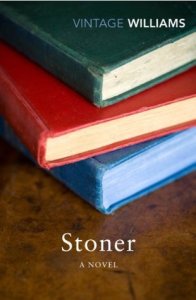
The word ‘tutor’ made me think of other books about teaching. John Williams’ 1965 novel Stoner (3) is about the life of a man who teaches English Literature at the University of Missouri for more than forty years. It’s not the most eventful of lives, yet I found the book completely gripping and would highly recommend it to anyone who enjoys fiction with academic settings.
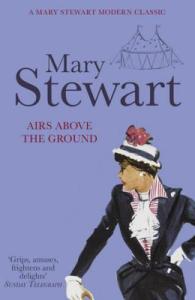

Another book published in 1965 is Airs Above the Ground by Mary Stewart (4). I love Stewart’s novels – they all have a wonderful sense of place and this one is no exception. Set in Vienna, the book follows our heroine Vanessa as she searches for her missing husband and becomes caught up in a mystery involving the dancing Lipizzaner stallions of the famous Spanish Riding School.
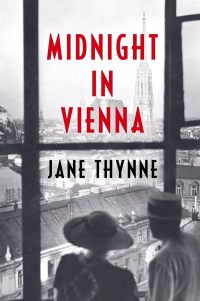
Vienna is a setting I always enjoy reading about, so my next link is to Midnight in Vienna by Jane Thynne (5), the first in a new series of wartime spy thrillers featuring Stella Fry and Harry Fox. In this book, set in 1938, Stella travels to Vienna on the trail of a murder suspect. I loved Thynne’s portrayal of the mood of the Austrian people following the annexation of their country by Nazi Germany. I recently read the second book in the series and will be reviewing it soon.
I’m ending my chain with a simple link using the word Midnight. Midnight is a Lonely Place by Barbara Erskine (6) tells the story of an author who rents a cottage on the Essex coast to work on her new book. When strange things start happening at the cottage, she becomes convinced that she is being haunted by the ghosts of a Roman soldier and a Druid prince. I found it atmospheric but wished there had been more focus on the historical characters. Erskine always sounds like an author I should love, but I’m often left feeling a bit disappointed by her books.
~
And that’s my chain for March! My links have included fiction inspired by Wuthering Heights, ‘lost years’, teaching, the year 1965, Vienna and the word midnight.
In April we’ll be starting with Virginia Evans’s epistolary novel, The Correspondent.
 She Reads Novels
I loved Stoner, so pleased to see that mentioned.
I really enjoyed it. I need to look for more of John Williams’ books.
Great chain. I liked Stoner when I read that a while back.
Stoner is a great book. I’m glad you liked it as well.
Love the lost year link. I really must read the Thynne – I think I have one more Clara Vine novel to get through first before the new series though.
Thanks. I’ve only read Thynne’s two most recent books, so I’m looking forward to going back and reading the Clara Vine series.
I feel the same about Barbara Erskine’s novels. And I also agree with you about Stoner. An outstanding novel. I hadn’t noticed that it was written in 1965.
Erksine’s books seem to have all the elements I usually enjoy in a book, yet they never really seem to work for me. Stoner is a great book, though!
Stoner was a stand-out book for me – I need to re-read it as I encountered it years ago. And this is a really well-constructed chain. You’ve piqued my interest with your words about the Jane Thynne book. So I’ve reserved it from the library.
I would like to re-read Stoner at some point as well, although I’ve also been meaning to try John Williams’ other books for years and still haven’t done it. I hope you like the Jane Thynne.
I hope so too. I went through a John Williams period some years ago, and while Stoner was the standout, he’s a rewarding writer.
Ill Will sounds like a good idea for a book. Shame it didn’t work for you.
I was hoping to love it, so it was disappointing that I just didn’t get on with the writing style at all.
Interesting chain here. I don’t think I know any of these books.
Thanks!
I like that lost year link – it’s a clever set up for a novel. I’m a fan of Stoner, too.
Yes, I think filling in a lost year is a great premise for a novel.
I am putting Stoner on my list. Of course, Airs Above the Ground is a favorite. I bought Midnight in Vienna last year in London but have not read it yet. And I agree that Erskine’s books are often unsatisfying – I have read this one but have no recollection of it. I remember my colleague who briefly edited her had difficulty although I don’t recall the details.
Barbara Erskine’s books always sound appealing, but I’ve tried four or five of them and the only one I really enjoyed was Sleeper’s Castle. I hope you like Midnight in Vienna!
After I’ve completed Middlemarch I shall be getting on with Wuthering Heights, better late than never! Incidentally, Erskine’s Midnight is a Lonely Place caught my attention: I wonder if she’d read or was aware of Joan Aiken’s Midnight is a Place which was published about twenty years before? The themes were of course very different but it’s a curious and catchy title, taken from a quote in the earlier novel “Midnight is not a moment, Midnight is a place”.
The two books have such similar titles, I wouldn’t be surprised if Erskine had read or at least heard of the Aiken novel. I still need to read that book myself – there’s so much of Aiken’s work I haven’t had a chance to explore yet!
Good chain! A novel with the Lipizzaner stallions?? Sign me up, also the next one in the chain. Both are going on my TBR if I can find them.
Thanks! I really enjoyed both of those books.
Ill Will is an interesting idea, it’s a shame that the book fell short for you.
I gave away my copy of Stoner before I’d read it, thinking I’d get another copy sometime but haven’t yet. It sounds well worth reading.
I really enjoyed Stoner. I hope you’re able to get another copy eventually – it’s definitely worth reading.
You always come up with the best bookish chains! 😀
Thanks, Lark! I enjoyed putting this chain together.
I have Stoner waiting to be read and might pick it up sooner rather than later! I’m sorry about Ill Will because it sounds such a good idea. Midnight is a Lonely Place is such a beautiful title. . .
Stoner is great! I hope you enjoy it.
As always plenty of your picks are jumping out at me: Stoner, as also the Mary Stewart, Thynne, and Erskine! A great set of links, Helen.
Thanks! I’m glad you’re interested in reading some of these.