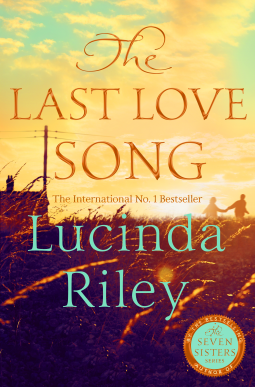
 This is a reworking of one of Lucinda Riley’s early novels, originally published as Losing You in 1997 under the name Lucinda Edmonds. After Riley’s death in 2021, her son Harry Whittaker completed her unfinished novel, Atlas, then updated another of her early books, Hidden Beauty, as The Hidden Girl. It would be interesting to know exactly how much is Whittaker’s work, but without reading the originals it’s impossible to tell.
The Last Love Song begins in 1964 in the village of Ballymore on the coast of West Cork, Ireland. When sixteen-year-old Sorcha O’Donovan goes to see a local band with her friends from school, she has no idea that her life is about to change forever. Within months she is heading for London with the lead singer, Con Daly, having been disowned by her father, who disapproves of their relationship. After a period of struggling to make ends meet while Con looks for opportunities in London’s vibrant music scene, he finally achieves stardom with his new band, The Fishermen, and he and Sorcha become rich and famous almost overnight. Of course, this doesn’t necessarily bring happiness and when Helen McCarthy, a face from both their pasts, arrives back in their lives, everything starts to go wrong.
Two decades later, preparations are being made for a huge charity concert at Wembley Stadium. The Fishermen have agreed to reform for the event, but one member is missing – Con Daly, who disappeared seventeen years ago after suffering a personal tragedy. There’s only one person who may be able to find out what happened all those years earlier; the problem is, she’s in prison…
I enjoyed this book; it was much more than just the simple romance it seemed to be at first. Although I found Sorcha slightly bland, I thought Helen McCarthy was a great character and I veered between loving and hating her at various times throughout the book. Mostly I admired her for trying to get what she wanted out of life despite things not always going her way. There’s also a crime element to the story, which becomes stronger towards the end – my biggest criticism of the book is that this part of the plot is dropped for a long section in the middle – and although I easily guessed who the culprit was, I was kept in suspense wondering when and how they would finally be caught!
What I really loved about this book, though, is the portrayal of the 60s music scene. The novel takes us step by step through every stage of the Fishermens’ rise to fame, beginning with the formation of the band and choosing of the name, their first meeting with the man who would become their manager, and the difficulties they faced in getting signed to a record label. The complex and often tense relationships between the four band members are explored and it’s difficult not to think of the Beatles, with Con and Todd in the Lennon-McCartney positions as the band’s two main songwriters, Derek as an aspiring songwriter in his own right, struggling to make himself heard, and Ian as the happy-go-lucky drummer. If you enjoyed Taylor Jenkins Reid’s Daisy Jones and the Six, I think you’ll like the musical aspect of this novel, if nothing else!
I think there are one or two more Edmonds novels that haven’t been published yet, but I haven’t seen any news on whether Harry Whittaker will be reworking them as well. Of the books already available under the Riley name, I haven’t read Hothouse Flower or The Angel Tree yet, so still have those two to look forward to. I’ve also discovered that Harry has written his own book, Orlando, coming later this year.
Thanks to Pan Macmillan for providing a copy of this book for review via NetGalley.
 She Reads Novels