Irish Short Story Month Year 3: Two from Oscar Wilde

Irish Short Story Month

Irish Short Story Month is an annual event hosted by Mel U of The Reading Life. To participate all you need to do is read at least one Irish short story during the month of March. In 2011 I read Laura Silver Bell by Sheridan Le Fanu. I didn’t manage to take part in 2012, but as I’ve been neglecting my short story-reading in recent months, I decided to join in again this year.
Oscar Wilde, 1854-1900

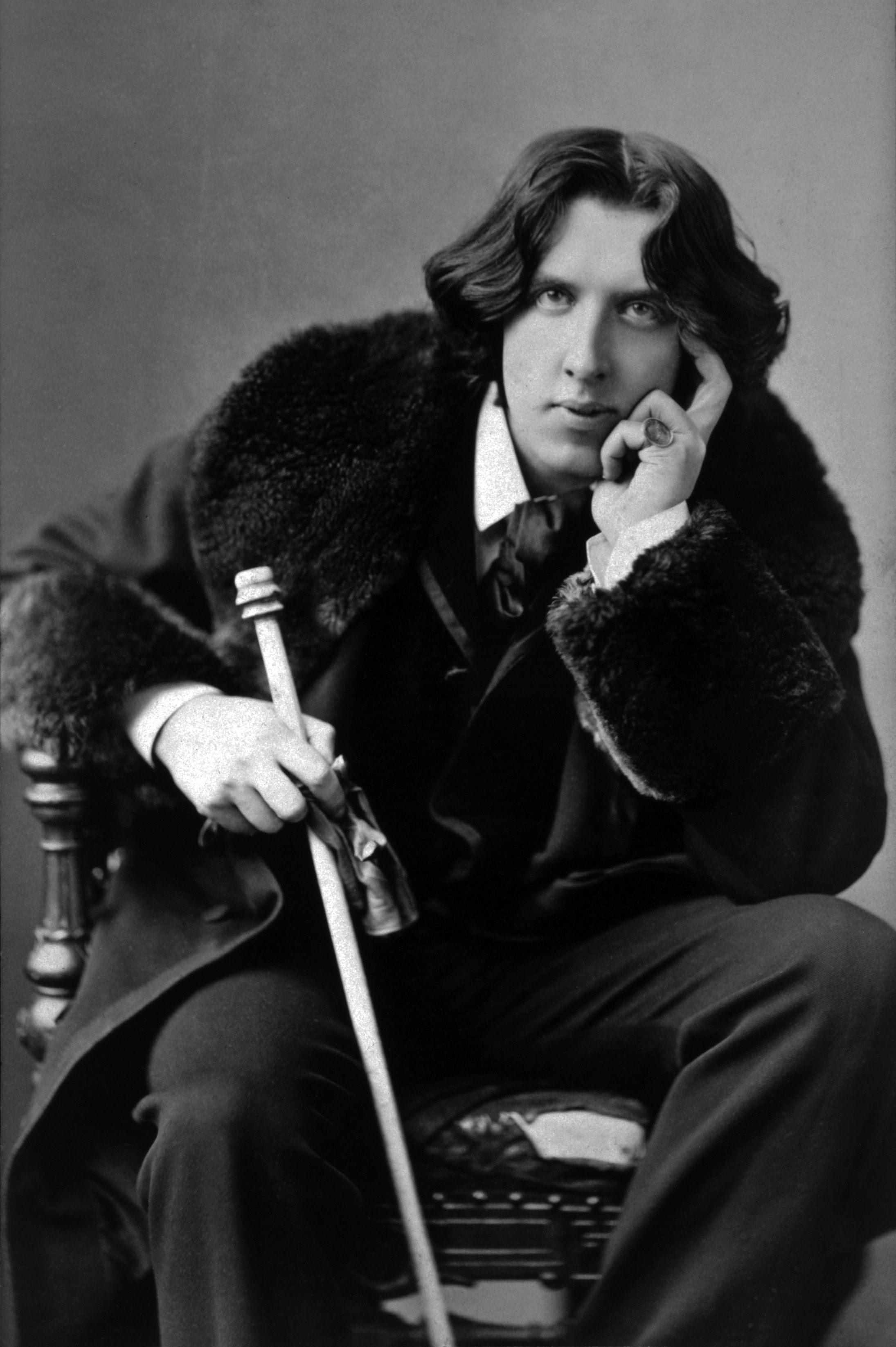
Oscar Wilde, 1854-1900

I have previously read one of Oscar Wilde’s fairy tale collections for children, A House of Pomegranates, but none of his short fiction for adults. For Irish Short Story Month I’ve read two of his stories – The Model Millionaire and The Sphinx Without a Secret. Both of these are available online and can easily be read in just a few minutes. They also appear in the collection, Lord Arthur Savile’s Crime and Other Stories.

In The Model Millionaire we meet Hughie Erskine, who is in love with Laura Merton, the daughter of a retired Colonel. Hughie is handsome and good-natured but unfortunately has no money and the Colonel will not let him marry Laura until he has ten thousand pounds of his own. One day, Hughie visits his artist friend, Alan Trevor, and finds him painting a portrait of an old beggar dressed in rags, who is standing in the corner of the room.

The beggar himself was standing on a raised platform in a corner of the studio. He was a wizened old man, with a face like wrinkled parchment, and a most piteous expression. Over his shoulders was flung a coarse brown cloak, all tears and tatters; his thick boots were patched and cobbled, and with one hand he leant on a rough stick, while with the other he held out his battered hat for alms.

‘What an amazing model!’ whispered Hughie, as he shook hands with his friend.

‘An amazing model?’ shouted Trevor at the top of his voice; ‘I should think so! Such beggars as he are not to be met with every day. A trouvaille, mon cher; a living Velasquez! My stars! what an etching Rembrandt would have made of him!’

‘Poor old chap!’ said Hughie, ‘how miserable he looks! But I suppose, to you painters, his face is his fortune?’

‘Certainly,’ replied Trevor, ‘you don’t want a beggar to look happy, do you?’

Hughie asks his friend how much he will be paying the beggar for modelling for him and is shocked at how little the amount is compared to the amount Trevor will make from selling the picture. Although Hughie himself is very poor, he feels sorry for the old man and as soon as his friend leaves the room he gives the beggar all the money he has in his pocket. Later that night he discovers that his act of generosity has had a surprising result.

I thought it was very easy to predict what was going to happen in this story, but I enjoyed it and despite it being so short, I still found it satisfying – and very well written, of course.

The other story I read, The Sphinx Without a Secret, is another very short one. The narrator meets his friend, Lord Murchison, in Paris and seeing that something is wrong, asks him what the problem is. Murchison tells him about the beautiful Lady Alroy, whom he had loved and planned to marry.

He took from his pocket a little silver-clasped morocco case, and handed it to me. I opened it. Inside there was the photograph of a woman. She was tall and slight, and strangely picturesque with her large vague eyes and loosened hair. She looked like a clairvoyante, and was wrapped in rich furs.

‘What do you think of that face?’ he said; ‘is it truthful?’

I examined it carefully. It seemed to me the face of some one who had a secret, but whether that secret was good or evil I could not say. Its beauty was a beauty moulded out of many mysteries – the beauty, in face, which is psychological, not plastic – and the faint smile that just played across the lips was far too subtle to be really sweet.

Finding her to be very secretive and surrounded by an atmosphere of mystery, Murchison decided to follow her one day and saw her entering a boarding house where she stayed for a few hours before returning home. When Lady Alroy tried to deny visiting the house, Murchison became convinced that she was hiding something – but what could it be?

Although I didn’t find either of these to be particularly memorable stories, I did enjoy them both as I love Oscar Wilde’s writing style. I liked the ambiguous ending of The Sphinx Without a Secret; despite the suspense that builds up throughout the story it’s not hard to guess what Murchison is going to discover as the title does give it away, but we are still left with something to think about at the end. This story may have been intended as a satire on Victorian sensation fiction, in which everybody had a secret to hide and an ulterior motive for every seemingly innocent action, as well as being a study of a person’s desire to pretend to be something they’re not.

Have you read any of Oscar Wilde’s short stories? Who are your favourite Irish writers?

War and Peace Readalong: February

warandpeace2013 This is my second monthly update on the readalong of War and Peace I’m participating in this year (hosted by Amy and Iris). Unlike last month, when I reported on how much I was enjoying the book and finding it difficult to put down, this month I had a very different experience.

Our goal for February was to read Book 1, Part 2. This is a very male-dominated section of the book, with none of the female characters we met in the first part (no Natasha or Sonya or Princesses Hélène or Liza). Instead we get to learn more about some of the men in the story including Prince Andrei Bolkonsky, Nikolai Rostov, Dolokhov and General Kutuzov. I found it a bit easier to keep track of the characters this month but what I struggled with instead was the fact that Part 2 is spent entirely with the Russian army, on the battlefield and in the barracks. I think my complete lack of knowledge of this period of history and Russia’s involvement in the Napoleonic Wars was a problem here, as well as the fact that I often find battle scenes and military tactics difficult to follow. Some background reading before I started this section would probably have been a good idea!

One thing that did make an impression on me was the sheer confusion and chaos of war and also the conflicts, arguments and fighting that went on in the ranks of the Russian army before they even faced the enemy. For example, there’s an episode where Nikolai’s commanding officer, Denisov, has some money stolen by a fellow soldier.

My favourite part of this month’s reading came towards the end of the section, when we rejoin Nikolai Rostov who has been wounded in battle. He can’t believe that anybody would actually want to kill him, a person everybody likes. Of course, none of that matters when you’re at war; you are simply another enemy soldier and no longer an individual.

“Who are they? Why are they running? Can it be they’re running to me? Can it be? And why? To kill me? Me, whom everybody loves so?” He remembered his mother’s love for him, his family’s, his friends’, and the enemy’s intention to kill him seemed impossible.

It’s through the thoughts of characters like Rostov that Tolstoy succeeds in showing us the harsh reality of war, in contrast to the romantic ideas the characters may have had about it at first. Prince Andrei is another character who had notions of success and heroism but after he visits the Austrian government to report on a Russian victory and discovers that it is not appreciated by the Austrians he also becomes disillusioned with war.

Finally, this is just a minor point but was anyone else irritated by the way Denisov’s speech impediment was handled? I don’t know how it is represented in other translations but in the one I’m reading (Pevear & Volokhonsky) I thought the way the guttural r’s were written was very distracting and annoying.

“They don’t even give us time to dghrink!” replied Vaska Denisov. “They dghrag the ghregiment here and there all day…”

So, this month was less enjoyable for me than last month but I will keep reading, though I’m now a bit concerned that there’s going to be too much ‘war’ in War and Peace for me. The end of Part 2 couldn’t come quickly enough, but I look forward to seeing what Part 3 will bring.

For other participants’ thoughts, see the War and Peace February Check-In.

War and Peace Readalong: January

warandpeace2013
Throughout 2013 I am taking part in a readalong of Tolstoy’s War and Peace hosted by Amy of My Friend Amy and Iris of Iris on Books. Amy has posted some questions to help us discuss January’s reading.

Why are you reading War & Peace?

I read Anna Karenina years ago and enjoyed it so I’ve been meaning to read War and Peace for a long time but haven’t been able to find the motivation to actually get round to doing it. After taking part in a year-long group read of Clarissa by Samuel Richardson last year, when I saw that Amy and Iris were planning a readalong of War and Peace for 2013, I decided to join in with this one too. It seemed like a good opportunity to read another long novel and the reading schedule looked very manageable – this month we had to read Volume 1 Part 1 and I had no difficulty finishing it in time. In fact, I didn’t want to stop at the end of Part 1 and I admit to starting Part 2 before the end of January!

War and Peace What translation are you reading? Are you reading print, ebook, or audio?

I’m reading the Kindle version of the Vintage Classics edition. Opinions seem to be very divided on all of the available War and Peace translations so I wasn’t sure which one to choose. I read the Pevear and Volokhonsky translation of Mikhail Bulgakov’s The Master and Margarita a couple of years ago and was quite happy with it and as I remember disliking the Maude translation of Anna Karenina (though it didn’t affect my enjoyment of the story too much) I decided it might be best to go with P&V again.

So far, is it different than you expected or the same?

I had high hopes for this book and I’m pleased to be able to say that I’ve loved what I’ve read so far, though it does have quite a different feel to Anna Karenina. I’ve found it surprisingly easy to read, though this first section has been mainly concerned with introducing us to the characters – I suspect I might be going to struggle with the military scenes as I don’t have much knowledge of the Napoleonic Wars or the French invasion of Russia.

The only problem I’ve had is that so much of the dialogue is in French and in this edition and format the English translations are in the notes at the end of each chapter – not very convenient with the Kindle (one of the negative things I’ve found with ebooks in general is that it’s not as easy to move backwards and forwards through the text as it is with a physical book).

Do you have a favorite character?

Not yet – I don’t feel I know any of them well enough to have favourites. And there are so many of them too! I’m still having trouble keeping them all straight (and especially remembering how each of them is related to the others) but I’m sure that will become easier as I progress through the book. The characters I’ve found most memorable so far are Pierre, Count Bezukhov’s illegitimate son, and Natasha, the thirteen-year-old daughter of the Rostovs. We haven’t seen much of Natasha yet but she seems a strong, lively character and I’m looking forward to getting to know her better.

What do you see as the biggest obstacle to finishing?

The mistake I made with Clarissa last year was that I kept abandoning the book without picking it up for long periods of time which made it difficult to start reading again. I loved Clarissa while I was actually reading it, but as soon as I stopped and allowed a few weeks to pass, I lost all my enthusiasm for it. I don’t want that to happen with War and Peace so this time I really need to find a reading pace that I’m happy with. I’ll try to stick to the readalong schedule at first as it’s more fun to be reading and posting at the same time as other participants, but it could be that a different pace would suit me better. The important thing is that I continue to enjoy reading this book and don’t start to feel that it’s a chore, which is what happened with Clarissa.

I don’t really have much more to say about the book at this early stage but I’ll post another update at the end of February.

Classics Club Readathon

classics-club-readathon-january-2013

Today I’m taking part in the first ever Classics Club Readathon. The readathon starts at 8am EST, which is 1pm here, though I think I will probably have to miss the first few hours and start later in the afternoon. When I signed up for this last month I expected to have plenty of time to read today, but I now have some other commitments so I might not be able to get as much reading done as I had hoped.

I’m currently in the middle of reading The Small House at Allington by Anthony Trollope so I’m going to concentrate on finishing that before I start anything else. If I do finish it, I’ll be choosing another book from my Classics Club list to read next.

To avoid overwhelming you with extra posts I’ll be updating this post throughout the readathon.

The Small House at Allington Update 8.30pm – I’ve read another 8 chapters of The Small House at Allington and am still hoping to finish the book before the end of the readathon. I’m enjoying this one a lot more than the previous Barsetshire novel, Framley Parsonage, despite some very frustrating characters!

Update 9.00am – It’s Sunday morning, I’ve had some sleep and there are still 4 hours of the readathon to go. I am still reading The Small House at Allington and have 7 more chapters to read.

Final Update 12.30pm – I finished The Small House at Allington this morning and with the readathon almost over, I decided not to start another book. I’m quite happy with what I’ve achieved and I think immersing myself in the story for long periods enabled me to enjoy it more than I would have done if I had dragged it out over a few weeks. My thoughts on the book will follow soon!

R.I.P. VII is here!


It’s September tomorrow and summer is coming to an end (not that we’ve had much of a summer here in the UK this year). But as the nights start to get darker it means it’s time for R.I.P. (R.eaders I.mbibing P.eril), one of my favourite reading events! As always, R.I.P. VII is hosted by Carl at Stainless Steel Droppings and runs throughout the months of September and October. The idea is to read books that could be classified as one of the following:

Mystery
Suspense
Thriller
Dark Fantasy
Gothic
Horror
Supernatural
Or anything sufficiently moody that shares a kinship with the above.

There are a few different levels of participation to choose from. I’m planning to participate in Peril the First, which means reading four books.

I’m listing below a selection of books I would like to read that fit the above categories. I certainly don’t expect to have time to read all of these before the end of October, but I wanted to give myself plenty of options. It’s also possible that I’ll change my mind and decide to read some books that I haven’t mentioned. I’m very bad at sticking to lists!

Frankenstein by Mary Shelley – This has been on my R.I.P. list for the last two years and I still haven’t read it!

The House by the Churchyard by Joseph Sheridan Le Fanu – I’ve read Uncle Silas and want to try another Le Fanu book. I might be tempted to read Carmilla instead as it’s much shorter.

The Seance by John Harwood – This was recommended to me after I read and loved John Harwood’s other novel, The Ghost Writer.

The Haunting of Hill House by Shirley Jackson – I’m hoping I’ll enjoy this as much as We Have Always Lived in the Castle.

The Strange Case of Dr. Jekyll and Mr. Hyde by Robert Louis Stevenson – It’s on my Classics Club list along with the Mary Shelley and Sheridan Le Fanu books above, so this is a good opportunity to read all three.

The Quarry by Johan Theorin – Another one that was on my list last year.

Blood Harvest by S.J. Bolton – This is the only book by S.J. Bolton that I still haven’t read.

Dragonwyck by Anya Seton – I love Anya Seton and have been wanting to read this for years!

The Woman in Black by Susan Hill – Another book I’ve been meaning to read for a long time.

A Monstrous Regiment of Women by Laurie R. King – I read the first book in the Mary Russell series in January and loved it, but still haven’t had time to read the second one.

Bleeding Heart Square by Andrew Taylor – I read The American Boy and The Anatomy of Ghosts in 2011 and enjoyed them both, so I’m looking forward to this one.

The Curse of the Pharaohs by Elizabeth Peters – Another series I started and haven’t continued with.

The Romance of the Forest by Ann Radcliffe – I’ve read three of Radcliffe’s other gothic novels, so I’d like to try this one too.

Who else is taking part in R.I.P. this year? See Carl’s post for more information and to sign up.

Wolf Hall Readalong: Week 1

During August and September I am taking part in a readalong of Wolf Hall, Hilary Mantel’s Booker Prize-winning novel about Thomas Cromwell. The readalong is hosted by Michelle of The True Book Addict and Kai of Fiction State of Mind. This week we have been reading Part One, which consists of three chapters.

Here are my answers to this week’s discussion questions:

1) What prompted you to join this read-a-long?

As an avid reader of historical fiction I should probably have read this book before now, but for some reason, despite its success and popularity, I never got around to reading it. Now that the sequel, Bring Up the Bodies, has been released and getting so much praise and attention too, it seemed like the perfect time to finally read Wolf Hall, and when I saw that there was going to be a readalong it helped motivate me to actually pick the book up and start reading. I also like the way this readalong is structured and hopefully I won’t have any problems keeping up with the schedule!

2) What do you think of Thomas so far?

I don’t feel that I know Thomas Cromwell very well yet, but as I’ve still only read the first three chapters I’m sure I’ll get to know and understand him better as I read on. However, each of these first three chapters has given us an insight into a different side of Thomas’s character. In the first, we get a glimpse of what appears to have been a very unhappy childhood, living with a cruel and abusive father. In the second, we meet Thomas again as an adult and we are shown his public persona, the part he is playing in the politics of the country, and his interactions with other important historical figures such as Stephen Gardiner and Cardinal Wolsey. And in the third we see Thomas in his role as a husband and father.

3) What do you think about Thomas’s feelings towards his son Gregory? Do you think he is too indulgent? Do you think his treatment of Gregory now will affect Gregory’s future?

I think it’s a good thing that Thomas is trying to avoid treating Gregory the way his own father treated him. This quote gives us a good idea of his feelings on this subject:

Bawling, strong, one hour old, plucked from the cradle: he kissed the infant’s fluffy skull and said, I shall be as tender to you as my father was not to me. For what’s the point of breeding children, if each generation does not improve on what went before?

I don’t think Thomas is being too indulgent, but it’s too early to say at this point in the novel what effect his treatment of Gregory will have on Gregory’s future.

See Kai’s post for other participants’ thoughts on Part 1 of Wolf Hall.

BBAW: Community

This week I’m taking part in Book Blogger Appreciation Week 2011. Between now and Friday there will be book blog awards, giveaways and a special topic to write about every day.

Here’s today’s topic:

While the awards are a fun part of BBAW, they can never accurately represent the depth and breadth of diversity in the book blogging community. Today you are encouraged to highlight a couple of bloggers that have made book blogging a unique experience for you. They can be your mentors, a blogger that encouraged you to try a different kind of book, opened your eyes to a new issue, made you laugh when you needed it, or left the first comment you ever got on your blog. Stay positive and give back to the people who make the community work for you!

I’ve put a lot of thought into how to approach this topic and how I could thank the people I want to thank without hurting anyone’s feelings by leaving them out. There are so many blogs that I enjoy reading and so many bloggers who I’ve found an inspiration that I would find it impossible to pick out just one or two. And so, although it’s not really answering the question, I’m just going to say a general thank you to everyone who reads my blog, has commented on one of my posts or has offered advice, support or recommendations during the two years since I started blogging – and also thanks to those of you who organise and host the challenges and events that make book blogging so much fun.

What I can do is give a special mention to the people who, according to the WordPress stats section, have left the most comments on my blog. In no particular order, these are Jo of The Book Jotter, Boof of The Book Whisperer, Veens of Giving Reading a Chance, Anbolyn of Gudrun’s Tights, Sue, Stephanie of Reviews by Lola, Annie of The Senior Common Room, Jane of Fleur Fisher in her World and Karen of Books and Chocolate. Thanks to you all and to everyone else!

Don’t forget to visit the BBAW blog to see how other bloggers have answered today’s topic and to keep up with everything else that’s happening this week.