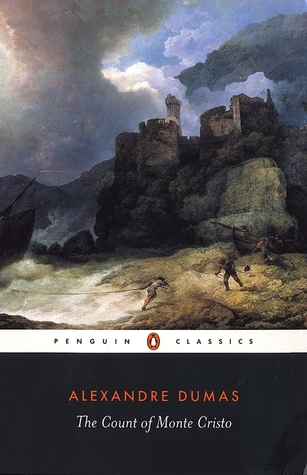
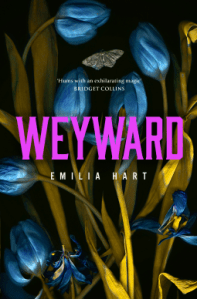
Spell the Month in Books: January – The newest additions

I don’t take part in Spell the Month in Books (hosted by Reviews From the Stacks) every month but the theme for January appealed to me so I decided to join in. The rules are very simple – spell the current month using the first letter of book titles, excluding articles such as ‘the’ and ‘a’ as needed. This month’s theme is New, which can be interpreted in several ways.

I’ve decided to go with the book most recently added to my TBR for each letter. The books themselves are not necessarily ‘new’ – some of them were published many years ago – but they are all relatively new to my shelves. Descriptions are from Goodreads.

~

JJohn Halifax, Gentleman by Dinah Maria Mulock Craik (1856)
Acquired October 2019

“Like Charles Dickens’ beloved David Copperfield, John Halifax is an orphan, determined to make his success through honest hard work. He becomes an apprentice to Abel Fletcher, a tanner and a Quaker, and is soon befriended by Abel’s invalid son, Phineas, who chronicles John’s success in business and love, rising from the humblest of origins to the pinnacle of wealth made possible by England’s Industrial Revolution.

Dinah Maria Mulock Craik explores the sweeping transformation wrought by this revolutionary technological age, including the rise of the middle class and its impact on the social, economic, and political makeup of the nation as it moved from the eighteenth to the nineteenth century.”

AAbove Suspicion by Helen MacInnes (1941)
Acquired October 2022

“It is the summer of 1939. A young Oxford don, Richard Myles and his wife Frances are about to leave for their usual long vacation on the continent. At the request of a Foreign Office friend of Richard’s they agree to serve as messengers to a man who has been involved in rescue work and anti-Nazi espionage, a man who now seems to have gone missing. Their qualifications? Next to nothing except for Richard’s superb memory and the fact that they look so very innocent. Across a continent on the brink of war from Paris to Innsbruck and beyond Richard and Francis travel ever deeper into danger.”

NNews of the Dead by James Robertson (2021)
Acquired October 2022

“Deep in the mountains of north-east Scotland lies Glen Conach, a place of secrets and memories, fable and history. In particular, it holds the stories of three different eras, separated by centuries yet linked by location, by an ancient manuscript and by echoes that travel across time.

In ancient Pictland, the Christian hermit Conach contemplates God and nature, performs miracles and prepares himself for sacrifice. Long after his death, legends about him are set down by an unknown hand in the Book of Conach. Generations later, in the early nineteenth century, self-promoting antiquarian Charles Kirkliston Gibb is drawn to the Glen, and into the big house at the heart of its fragile community. In the present day, young Lachie whispers to Maja of a ghost he thinks he has seen. Reflecting on her long life, Maja believes him, for she is haunted by ghosts of her own.”

UThe Undertaking by Audrey Magee (2014)
Acquired March 2022

“Desperate to escape the Eastern front, Peter Faber, an ordinary German soldier, marries Katharina Spinell, a woman he has never met; it is a marriage of convenience that promises ‘honeymoon’ leave for him and a pension for her should he die on the front. With ten days’ leave secured, Peter visits his new wife in Berlin; both are surprised by the attraction that develops between them.

When Peter returns to the horror of the front, it is only the dream of Katharina that sustains him as he approaches Stalingrad. Back in Berlin, Katharina, goaded on by her desperate and delusional parents, ruthlessly works her way into the Nazi party hierarchy, wedding herself, her young husband and their unborn child to the regime. But when the tide of war turns and Berlin falls, Peter and Katharina, ordinary people stained with their small share of an extraordinary guilt, find their simple dream of family increasingly hard to hold on to…”

AArrest the Bishop? by Winifred Peck (1949)
Acquired October 2022

“He caught the back of a chair, staggered and groaned. There was a heavy crash and fall, and the parson lay motionless and livid, while lilies from a vase fell, like a wreath, across his chest. The Rev. Ulder, everyone agreed, was the parish priest from hell. In addition to tales of drunkenness and embezzlement, the repellent cleric had recently added blackmail to his list of depravities. There was scandal in the district, plenty of it, and Ulder had the facts. Until, that is, a liberal helping of morphia, served to him in the Bishop’s Palace, silenced the insufferable priest – for good.

Was it the Bishop himself who delivered the fatal dose? Was it Soames, the less-than-model butler? Or one of a host of other inmates and guests in the house that night, with motives of their own to put Ulder out of the way? Young Dick Marlin, ex-military intelligence and now a Church deacon, finds himself assisting Chief Constable Mack investigate murder most irreverent.”

RThe Rose in Spring by Eleanor Fairburn (1971)
Acquired November 2022

“Cecily Neville, dubbed the ‘Rose of Raby’, is ten years old when she is betrothed to her childhood love, Richard Plantagenet, Duke of York. Little does she know that their union is one to change Britain’s history for centuries to come, and that she will become a powerful matriarch in her own right.

Beautiful, courageous and intelligent, Cecily carves out her place at her husband’s side as they navigate the increasingly difficult political sphere of 15th century Europe, rocked by the actions of Jeanne d’Arc in France. With wit and sensitivity, The Rose in Spring is a unique perspective of a previously overlooked figure in history, and the first in a quartet dedicated to the Wars of the Roses.”

YYours Cheerfully by AJ Pearce (2021)
Acquired August 2021

“London, November 1941. Following the departure of the formidable Henrietta Bird from Woman’s Friend magazine, things are looking up for Emmeline Lake as she takes on the challenge of becoming a young wartime advice columnist. Her relationship with boyfriend Charles (now stationed back in the UK) is blossoming, while Emmy’s best friend Bunty, still reeling from the very worst of the Blitz, is bravely looking to the future. Together, the friends are determined to Make a Go of It.

When the Ministry of Information calls on Britain’s women’s magazines to help recruit desperately needed female workers to the war effort, Emmy is thrilled to be asked to step up and help. But when she and Bunty meet a young woman who shows them the very real challenges that women war workers face, Emmy must tackle a life-changing dilemma between doing her duty and standing by her friends.”

~

Have you read any of these books? Which do you think I should read first?

Six Degrees of Separation: From Tomorrow and Tomorrow and Tomorrow to The Loving Spirit

It’s the first Saturday of the month – and of 2024 – which means it’s time for another Six Degrees of Separation, hosted by Kate of Books are my Favourite and Best. The idea is that Kate chooses a book to use as a starting point and then we have to link it to six other books of our choice to form a chain. A book doesn’t have to be connected to all of the others on the list – only to the one next to it in the chain.

This month we’re starting with Tomorrow and Tomorrow and Tomorrow by Gabrielle Zevin. I haven’t read it, but here’s what it’s about:

When Sam catches sight of Sadie at a crowded train station one morning he is catapulted straight back to childhood, and the hours they spent immersed in playing games.

Their spark is instantly reignited and sets off a creative collaboration that will make them superstars. It is the 90s, and anything is possible.

What comes next is a decades-long tale of friendship and rivalry, fame and art, betrayal and tragedy, perfect worlds and imperfect ones. And, above all, our need to connect: to be loved and to love.

The title of the Zevin novel is a line from one of the most famous soliloquies in Shakespeare’s Macbeth: “Tomorrow, and tomorrow, and tomorrow, Creeps in this petty pace from day to day, To the last syllable of recorded time.” In Elizabeth Bailey’s For One More Tomorrow (1), Sadie Grey is directing a production of Macbeth when she discovers that she has somehow conjured up the ghost of Macbeth himself…and he is not at all happy with the way he is being portrayed.

I didn’t immediately notice that as well as the Macbeth and ‘Tomorrow’ connections, both the Zevin and Bailey novels feature a character whose name is Sadie! So does At the Edge of the Orchard by Tracy Chevalier (2), although this is a completely different kind of novel, set in the 1830s and following the story of a family who are trying to establish an orchard in the Black Swamp region of Ohio.

I learned a lot about trees and apples from the Chevalier book – more than I knew I needed to know! Another book that features apples, but in a very different way, is For the Most Beautiful by Emily Hauser (3). This novel, the first in a trilogy inspired by the ‘golden apples’ from Greek mythology, is a retelling of the Trojan War from the perspectives of two female characters, Krisayis and Briseis. The other two books in the trilogy focus on Atalanta (For the Winner) and Hippolyta (For the Immortal).

The word ‘beautiful’ also appears in the title of Your Beautiful Lies by Louise Douglas (4), a novel set in a small mining town in Yorkshire during the miners’ strike of 1984. A crime takes place – a woman is murdered on the moors – but although the book does have a strong mystery element, I described it in my review as “difficult to classify as belonging to a particular genre, being a mixture of crime, romance, suspense and domestic drama”.

Mining also features heavily in the plot of Ross Poldark (5), the first book in Winston Graham’s Poldark series. Set in 18th century Cornwall, it begins with Ross returning home after a long absence to find that his father has died and the woman he loves is marrying his cousin. The rest of the book follows Ross as he tries to restore the family estate and open a new copper mine. I read this book in 2015 when a new adaptation was being shown on the BBC, but although I enjoyed it and intended to continue with the rest of the series, I still haven’t picked up the second book.

An author who is closely associated with Cornwall is Daphne du Maurier. Many of her novels are set there, but the one I’ve chosen to finish my chain is The Loving Spirit (6). Published in 1931 when she was just twenty-four years old, this was du Maurier’s first novel and tells the story of four generations of the Coombe family, who live in a fictional shipbuilding town on the Cornish coast. Although it’s not as strong as her later novels, I still enjoyed it. The title is taken from an Emily Brontë poem, Self-Interrogation, which provides a link back to the beginning of this chain – books with titles inspired by another author’s work.

~

And that’s my chain for this month! My links have included: The word ‘tomorrow’, Macbeth, the name Sadie, apples, the word ‘beautiful’, mining and Cornwall.

In February we’ll be starting with the book we finished with this month – which for me is The Loving Spirit.

Six Degrees of Separation: From Kitchen Confidential to The Thirteenth Tale

It’s the first Saturday of the month, which means it’s time for another Six Degrees of Separation, hosted by Kate of Books are my Favourite and Best. The idea is that Kate chooses a book to use as a starting point and then we have to link it to six other books of our choice to form a chain. A book doesn’t have to be connected to all of the others on the list – only to the one next to it in the chain.

This month we’re starting with Kitchen Confidential by Anthony Bourdain. I haven’t read it and I’m not likely to, but here’s what it’s about:

After twenty-five years of ‘sex, drugs, bad behaviour and haute cuisine’, chef and novelist Anthony Bourdain has decided to tell all. From his first oyster in the Gironde to his lowly position as a dishwasher in a honky-tonk fish restaurant in Provincetown; from the kitchen of the Rainbow Room atop the Rockefeller Center to drug dealers in the East Village, from Tokyo to Paris and back to New York again, Bourdain’s tales of the kitchen are as passionate as they are unpredictable, as shocking as they are funny.

Using food and kitchens as my first link, John Saturnall’s Feast by Lawrence Norfolk (1) is set in the 17th century and tells the story of John Sandall, an orphan who is taken into the household of a wealthy nobleman, Sir William Fremantle. With his knowledge of food and ancient recipes, John is given the task of creating a meal to tempt Sir William’s daughter, who is refusing to eat as a protest against an arranged marriage. This is a complex, multi-layered novel with an unusual plot and a vivid portrayal of life in the kitchen!

The Feast by Margaret Kennedy (2) shares a word in the title, but is a very different book. Published in 1950, it follows a week in the lives of a group of guests who are staying in a hotel on the coast of Cornwall. We know from the beginning that by the end of the week the hotel will have been destroyed by a cliff collapsing on top of it, but we don’t know who will survive and who won’t. I really enjoyed this one; it’s one of my favourites so far by Margaret Kennedy.

Although it doesn’t form a big part of the plot, some of the characters in The Feast have traits that represent one of the seven deadly sins, which I thought was a clever touch. Anne Zouroudi’s Greek Detective series, which follows the investigations of the mysterious Hermes Diaktoros, also uses one of the seven sins as a theme for each novel. The Doctor of Thessaly (3) is the third book in the series, although they can be read in any order, and this one has ‘envy’ as its theme.

I haven’t read many authors whose surname begins with the letter Z, but one of them is Émile Zola. I’ve read three of his books so far and my favourite is Thérèse Raquin (4), the first one I read and a standalone novel which is not part of his longer Rougon-Macquart cycle. This is a very dark novel about two people who commit a terrible crime and the psychological effect this has on the rest of their lives.

I’m going to use a word in the title again for my next link, which leads me to 13, rue Thérèse by Elena Mauli Shapiro (5). This unusual and imaginative novel begins with a man discovering a box full of photographs, letters, postcards and other items that once belonged to Louise Brunet, a Frenchwoman who lived through both world wars. We are given a picture of each item, followed by a few pages of story describing the item’s significance and background, and gradually Louise’s history begins to unfold.

My final link uses the number 13. The Thirteenth Tale by Diane Setterfield (6) is the story of a young woman who agrees to write the biography of a reclusive author. It’s an entertaining read, clearly inspired by several classic Gothic novels, and I described it in my review as a tale of ‘Yorkshire moors, twins, mistaken identities, ghosts and governesses’.

~

And that’s my chain for this month! My links have included: Kitchens, the word ‘Feast’, the seven deadly sins, author names beginning with Z, the name Thérèse and the number thirteen.

In January we’ll be starting with Tomorrow and Tomorrow and Tomorrow by Gabrielle Zevin.

Top Ten Tuesday: Books set at sea

This week’s topic for Top Ten Tuesday (hosted by That Artsy Reader Girl) is “Books Set In X (Pick a setting and share books that are all set there. This could be a specific continent or country, a state, in outer space, underwater, on a ship or boat, at the beach, etc.)”

I am listing here, in no particular order, ten books that are set entirely or mainly at sea. Let me know if you’ve read any of these!

~

1. She Rises by Kate Worsley – I’m starting my list with this novel about a young man press-ganged into the Navy in the 18th century, and his sister, left behind in England, trying to find out where he has gone. I found this a very atmospheric book with some clever twists when the two storylines begin to merge together.

2. A Fatal Crossing by Tom Hindle – I loved this murder mystery set aboard a cruise ship crossing the Atlantic in 1924. A ship is the perfect setting for this kind of novel as the suspects are all together in one place and nobody can arrive or leave!

3. Life of Pi by Yann Martel – I didn’t expect to enjoy Martel’s Booker Prize winner, especially as I’d had a previous failed attempt to read it a few years earlier, but I ended up loving it. An Indian boy, Pi, finds himself stranded in a lifeboat in the middle of the Pacific Ocean with a hyena, a zebra, an orangutan – and a Bengal tiger!

4. Captain Blood by Rafael Sabatini – I could have included both this book and The Sea-Hawk, but decided to stick to one book per author. This one tells the story of Peter Blood, who is wrongly found guilty of treason after the Monmouth Rebellion of 1685 and is transported to Barbados as a slave. Driven into piracy, he sets out to clear his name so he can marry the woman he loves. Sabatini’s books are always entertaining and this is one of his best known.

5. Master and Commander by Patrick O’Brian – No list of nautical fiction would be complete without at least one book by Patrick O’Brian! This is the first in his Aubrey-Maturin series, set during the Napoleonic Wars and following the adventures of Captain Jack Aubrey of the Royal Navy and his friend, the surgeon and spy Dr Stephen Maturin. I confess to not really understanding all the naval terminology, but I’m eight books into the series now and looking forward to reading the rest!

6. The Devil and the Dark Water by Stuart Turton – This is a wonderfully eerie novel set aboard a cursed ship on a trading voyage from Batavia to Amsterdam in 1634. I loved the atmosphere and the twists and turns of the plot, but wished the historical setting had felt more authentic.

7. My Beautiful Imperial by Rhiannon Lewis – Set in the 19th century, this novel follows a young Welsh sailor, Davy Davies, as he embarks on a career at sea, becoming captain of the Imperial, which just happens to be sailing down the coast of South America when civil war breaks out in Chile in 1891. I knew nothing about the Chilean Civil War before reading this book, so I found it fascinating, particularly after learning that the main character is based on the author’s own ancestor.

8. Blue Water by Leonora Nattrass – This is the second book in the Laurence Jago historical mystery series, although it would also work well as a standalone. A murder takes place aboard the Tankerville, sailing from Britain to Philadelphia to deliver an important treaty to George Washington. I’ve enjoyed all three books in this series so far.

9. Cup of Gold by John Steinbeck – This was Steinbeck’s first novel, published in 1929. The story is loosely based on the life of the 17th century Welsh pirate, Sir Henry Morgan, taking us from the hills and valleys of Wales to Barbados and Panama and incorporating some Arthurian legend along the way. It’s beautifully written, but not at all what I’d expected from Steinbeck!

10. Sea of Poppies by Amitav Ghosh – This is the first book in Ghosh’s Ibis Trilogy and introduces us to a large, diverse cast of memorable characters who are thrown together on a voyage from India to Mauritius aboard a former slaving ship just before the First Opium War. I enjoyed all three books in the trilogy and learned a lot from them.

~

As someone who has never really considered myself a fan of nautical fiction, I’m surprised to see how many books I’ve enjoyed that are set on ships and boats! I could also have included Georgette Heyer’s pirate adventure novel Beauvallet, The Night Ship by Jess Kidd in which a ship is wrecked off the coast of Australia in 1629, and The Woman in Cabin 10 by Ruth Ware, a modern thriller set on a cruise liner in the Norwegian Fjords.

What books have you read that are set at sea?

Six Degrees of Separation: From Western Lane to Death in Berlin

It’s the first Saturday of the month, which means it’s time for another Six Degrees of Separation, hosted by Kate of Books are my Favourite and Best. The idea is that Kate chooses a book to use as a starting point and then we have to link it to six other books of our choice to form a chain. A book doesn’t have to be connected to all of the others on the list – only to the one next to it in the chain.

This month we’re starting with Western Lane by Chetna Maroo.

Eleven-year-old Gopi has been playing squash since she was old enough to hold a racket. When her mother dies, her father enlists her in a quietly brutal training regimen, and the game becomes her world. Slowly, she grows apart from her sisters. Her life is reduced to the sport, guided by its the serve, the volley, the drive, the shot and its echo.

But on the court, she is not alone. She is with her pa. She is with Ged, a thirteen-year-old boy with his own formidable talent. She is with the players who have come before her. She is in awe.

An indelible coming-of-age story, Chetna Maroo’s first novel captures the ordinary and annihilates it with beauty. Western Lane is a valentine to innocence, to the closeness of sisterhood, to the strange ways we come to know ourselves and each other.

~

I struggled to get started with this month’s chain; I don’t read many books about sports and couldn’t find any inspiration in the book’s description. Eventually, I decided to use the word ‘lane’ as my first link – another word for lane can be street, which leads me to The Crowded Street by Winifred Holtby (1). I loved this 1924 novel about a young woman searching for independence and happiness in a small Yorkshire village as World War I approaches.

The Holtby novel is set partly in Scarborough on the North Yorkshire coast. So is Big Sky by Kate Atkinson (2), the fifth and most recent novel in the Jackson Brodie crime series. It begins with a recreation of a naval battle on the lake in Scarborough’s Peasholm Park then moves on to other coastal towns such as Whitby and Bridlington where private investigator Jackson is on the trail of a client’s cheating husband. Like the other books in the series, this one is more about the characters than the crimes being committed, but I think that’s why I enjoy them so much.
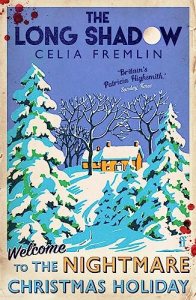
From Kate Atkinson to a different author with the same first name: Kate Summerscale. I’ve read several of her books, but the one I’m going to link to here is The Haunting of Alma Fielding (3). This is a nonfiction book based on the true story of Alma Fielding who claims to be the victim of paranormal activity in 1930s London. Nandor Fodor of the International Institute for Psychical Research begins to investigate, but are there really poltergeists at work in the Fielding household or is it an elaborate fraud? I enjoyed this one but felt that Alma’s story wasn’t really substantial enough to fill a whole book.

Poltergeists also feature in The Little Stranger by Sarah Waters (4), which is set in an old country house in post-war Britain. This book is a work of fiction but, like the Summerscale one, the story is ambiguous – is Hundreds Hall really haunted or is there another explanation? We are given some answers, but the ending leaves a lot open to interpretation and I was still trying to make sense of it days later. Genuinely spooky and one of my favourites by Sarah Waters.

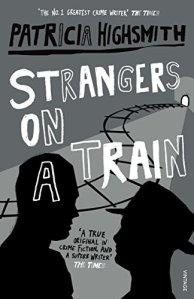
Another book with a shared word in the title is Strangers on a Train by Patricia Highsmith (5), in which two men meet on a train and find themselves plotting two perfect murders. I read this classic psychological thriller earlier this year and enjoyed it, despite both main characters being very unlikeable, particularly the psychopathic Bruno! This was my first Patricia Highsmith book and I do plan to read more eventually.

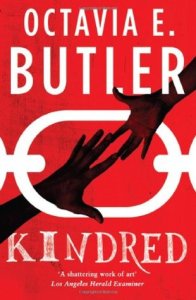
Miranda, the heroine of M.M. Kaye’s Death in Berlin (6), is on a train journey at the beginning of the novel when one of the passengers is murdered. The mystery continues to deepen when Miranda arrives at her destination, Berlin, a city trying to recover in the aftermath of World War II. This is one of a series of Death In… suspense novels by Kaye, all set in different locations around the world. Death in Kashmir is my favourite, but I did love the portrayal of an eerie postwar Berlin in this one.
~

And that’s my chain for November! My links have included: lanes and streets, Scarborough, authors with the name Kate, poltergeists, the word ‘Stranger’ and books set on trains.

In December we’ll be starting with Kitchen Confidential by Anthony Bourdain.

Top Ten Tuesday: A Halloween Cryptozoo

This week’s topic for Top Ten Tuesday (hosted by That Artsy Reader Girl) is “Halloween Freebie”.

Today also marks the start of Witch Week, hosted by Chris and Lizzie, and their theme for this year is…Cryptozoo, “all about legendary animals, fantastic beasts and literary monsters.” I thought this would make an interesting top ten, so I am listing below a selection of monstrous animals and mythological creatures, all of which have appeared in books I’ve read and reviewed on my blog.

Not all of these are traditionally associated with Halloween, but I don’t think you would want to meet any of them after dark!

~

1. The Minotaur
Ariadne by Jennifer Saint

I’m starting my list with one of the most famous creatures from Greek mythology. The Minotaur has the head of a bull and the body of a man and is imprisoned in the Labyrinth of Knossos on the island of Crete. He appears in many novels and books of mythology, including Saint’s Ariadne, written from the perspectives of the Minotaur’s sisters, Ariadne and Phaedra.

2. Mari Lwyd
Silver on the Tree by Susan Cooper

This final novel in Cooper’s The Dark is Rising sequence features several beasts and monsters, including the afanc, a Welsh lake monster, and some very threatening black minks and polecats. Most terrifying of all is the skeleton horse known as the Mari Lwyd, another creature from Welsh folklore.

3. Medved
The Winternight trilogy by Katherine Arden

This is a wonderful fantasy trilogy set in medieval Russia and grounded in mythology, folklore and fairy tales. The novels feature several chyerts, or spirits, including the demonic Medved, who at one moment can appear to be a man, the next a bear.

Statue of Ox-Head in Taiwan

4. Ox-headed demons
The Ghost Bride by Yangsze Choo

The Ghost Bride is a very unusual historical fantasy novel in which a young Chinese woman receives a marriage proposal from a dead man, then enters the underworld to investigate his murder. Here she finds that the Chinese afterlife is populated with many ghosts, spirits and monsters, among them the sinister ox-headed demons, guardians of the underworld.

5. Tintaglia
The Realm of the Elderlings sequence by Robin Hobb

There are several dragons who appear throughout Robin Hobb’s sixteen-volume fantasy sequence, but for this list I have chosen Tintaglia, the blue female who is the first to hatch when dragons begin to return to the world during the Liveship Traders Trilogy. Like the other dragons in the series, Tintaglia is proud and unpredictable, and for the human characters she can be either an ally or a danger.

6. Jörmungandr
Ragnarok by A.S. Byatt

Another mythical being, this time from Norse mythology. Jörmungandr, also known as the World Serpent, encircles the Earth and bites its own tail. When it releases its tail, Ragnarök, the final battle of the world, will begin. Byatt’s novel is written from the perspective of a little girl who has been evacuated during World War II and relates the Norse myth to her own life in wartime Britain.

Illustration of Kikimora by Ivan Bilibin (1934)

7. Kikimora
The Witch and the Tsar by Olesya Salnikova Gilmore

Like the Katherine Arden books above, this one combines Russian history and folklore, this time telling the story of the witch, Baba Yaga. The kikimora, a secondary character in the novel, is a house spirit from Slavic mythology. She has a birdlike appearance and lives in a swamp, where she plagues the dreams of any human who falls asleep near her watery home.

8. The Leviathan
The Leviathan by Rosie Andrews

At first this appears to be a novel about a woman accused of witchcraft in the 17th century, but halfway through it develops into something quite different with tales of a fearsome snake-like sea monster. I loved the foreboding atmosphere of the earlier chapters and would have preferred the book to continue that way, but I know other readers enjoyed the second half a lot more than I did!

9. The Beast Folk
The Island of Doctor Moreau by HG Wells

Sometimes the most frightening monsters are those that could really exist. In Wells’ classic science fiction novel, a man is shipwrecked on an island inhabited by a scientist who has been experimenting on animals. Thankfully Wells doesn’t go into those experiments in too much detail, but the results are both sad and horrific.

10. Behemoth
The Master and Margarita by Mikhail Bulgakov

This list wouldn’t be complete without Behemoth, the demonic, chess-playing, vodka-drinking black cat from Bulgakov’s Soviet classic. I loved this book and must read it again to see if I can pick up on some of the things I know I missed the first time!

What do you think of my list? Which other literary beasts and monsters would you include?

Six Degrees of Separation: From I Capture the Castle to The Woman in White

It’s the first Saturday of the month, which means it’s time for another Six Degrees of Separation, hosted by Kate of Books are my Favourite and Best. The idea is that Kate chooses a book to use as a starting point and then we have to link it to six other books of our choice to form a chain. A book doesn’t have to be connected to all of the others on the list – only to the one next to it in the chain.

This month we’re starting with I Capture the Castle by Dodie Smith. Usually I haven’t read the first book in these chains (and have often never even heard of them), but this is one I have read and enjoyed! Here’s what it’s about:

‘I write this sitting in the kitchen sink’ is the first line of this timeless, witty and enchanting novel about growing up.

Cassandra Mortmain lives with her bohemian and impoverished family in a crumbling castle in the middle of nowhere. Her journal records her life with her beautiful, bored sister, Rose, her fading glamorous stepmother, Topaz, her little brother Thomas and her eccentric novelist father who suffers from a financially crippling writer’s block. However, all their lives are turned upside down when the American heirs to the castle arrive and Cassandra finds herself falling in love for the first time.

The title of the Dodie Smith novel is metaphorical, but my first link is to a book about people really trying to capture a castle! Winter Siege by Ariana Franklin and Samantha Norman (1) is set in the 12th century during the Anarchy, the period of civil war when King Stephen and his cousin, the Empress Matilda, battled for the English throne. The castle being besieged in the novel is the fictional Kenniford Castle where the Empress seeks sanctuary during the war. Ariana Franklin sadly died leaving the book unfinished, so it was completed by her daughter Samantha.

I recently finished reading another book completed by the author’s child after their mother’s death: Atlas: The Story of Pa Salt by Lucinda Riley and Harry Whittaker (2). This is the last of eight books in Riley’s Seven Sisters series and Whittaker wrote it using his mother’s notes. The previous seven books tell the stories of the seven adopted daughters of Pa Salt, each named after a star in the Seven Sisters star cluster, and this final novel delves into the history of Pa Salt himself, answering some of the mysteries raised throughout the series. I haven’t posted my review yet, but it should be up soon.

Atlas is the name of a character from mythology – a Titan condemned to hold up the sky for eternity. Another book with the name of a mythological character in the title is The Labours of Hercules by Agatha Christie (3). This is a collection of short stories featuring Christie’s famous detective Hercule Poirot. He investigates twelve different cases in this collection, each one loosely inspired by one of the twelve Labours of Hercules.

The Christie book was published in 1947 and so was Prince of Foxes (4), Samuel Shellabarger’s classic historical adventure novel. Set in Renaissance Italy, it’s the story of Andrea Orsini, who is given the task of negotiating a marriage between Alfonso d’Este and Lucrezia Borgia. I described it in my review as a book involving “battles, duels, clever disguises, last-minute escapes, sieges, miracles and all sorts of trickery and deception”. I loved it, but still haven’t read any of Shellabarger’s other books.

Now from a book with ‘foxes’ in the title to an author with the same animal in her name! The Somnambulist by Essie Fox (5) is an atmospheric Gothic novel set in Victorian England, featuring a large country house, family secrets and intrigue, ghostly occurrences and, as the title suggests, a theme of sleepwalking, both literal and metaphorical. The title is a reference to the 1871 painting The Somnambulist by John Everett Millais.

The Millais painting, which depicts a woman in a long white nightgown, is thought to have been inspired by The Woman in White by Wilkie Collins (6), which was published more than ten years earlier. I love Collins’ books and this classic Victorian sensation novel is one of my favourites (tied with Armadale). Who can forget his wonderful heroine Marian Halcombe, the sinister Count Fosco, and that eerie meeting between Walter Hartright and the mysterious ‘woman in white’ on a lonely London road?

~

And that’s my chain for October! My links have included: capturing castles, parent and child writing teams, titles featuring mythological characters, books published in 1947, the word ‘fox’ and Millais’ The Somnambulist.

In November we’ll be starting with Western Lane by Chetna Maroo.