The Venice Train by Georges Simenon (trans. Ros Schwartz)

This is one of Georges Simenon’s many psychological thrillers, which he described as romans durs or ‘hard novels’. I’ve read two of his others – The Man from London and The Strangers in the House – and have enjoyed both, so was looking forward to reading this one. First published in 1965 as Le Train de Venise, it has just been reissued by Penguin Classics in a new English translation by Ros Schwartz.

The novel begins with Justin Calmar boarding a train in Venice to return to his home in Paris after a family holiday. His wife and two young children will follow in a few days’ time. During the journey, another passenger engages Justin in conversation and he finds himself agreeing to deliver a briefcase to an address in Lausanne when the train stops at the station there. However, things don’t go according to plan and Justin ends up returning to Paris with the case still in his possession. Unable to resist the temptation, he breaks the locks and looks inside…and what he finds there will change his life forever.

I won’t say too much more about the plot because I wouldn’t want to spoil the suspense of wondering what is inside the case and what Justin will decide to do with it. This is a very short book (176 pages in the paperback version) and for the first half, the tension builds and builds. It would have made a perfect Alfred Hitchcock film! It’s not a crime novel, however, so don’t go into it expecting one; the mystery is never fully explained or resolved, it ends abruptly and we are left with lots of unanswered questions. The events on the train are simply a starting point for Simenon to explore the psychological effects on Justin Calmar as he battles with nerves, guilt and paranoia, lying to his wife and his friends and finding that each lie leads to another.

The second half of the book isn’t quite as strong as the first and I do wish we’d had answers to at least some of those questions, but this is a fascinating and compelling story – my favourite by Georges Simenon so far.

Although I was slightly disappointed that only the first few pages of the book are actually set in Venice – the rest either on the train or in Paris – I wasn’t too disappointed because Paris is, of course, a great setting as well. And as Thyme for Tea and Readerbuzz are hosting their annual Paris in July event this month, the timing couldn’t be better!

Thanks to Penguin Classics for providing a copy of this book for review via NetGalley.

Summerhills by D.E. Stevenson

Summerhills, first published in 1956, is the second book in D.E. Stevenson’s Ayrton family trilogy which began with Amberwell. I knew it had been a few years since I read the first book but was shocked to find that it was actually more than six years! I was worried that I’d left it so long I would struggle to get back into the story, but that turned out to not be a problem; although I could barely remember what happened in Amberwell, Stevenson provides enough of a recap in the opening chapters that I could easily pick up all the threads again.

The book begins with Roger Ayrton, now an officer in the Army, returning to his family home in Scotland for a visit. The house, Amberwell, is where Roger and his brothers and sisters grew up before the outbreak of World War II and it still holds a special place in his heart. Some of the family have moved on, but Amberwell is still home to Roger’s stepmother and his younger sister Nell, who has been taking care of his son, Stephen, since his wife’s death. Stephen is now eight years old and Roger thinks it’s time he was sent away to school, but Nell objects, wanting him to stay close to home. As there are no suitable schools near Amberwell, Roger comes up with what he thinks is the perfect plan – he’ll open a school of his own!

At first it seems that the creation of the school – which becomes known as Summerhills – is going to be the main focus of the book, but the plot soon branches off into several different directions. Roger finds himself unexpectedly falling in love, as does Nell, while his youngest sister, Anne, whose first marriage ended unhappily is trying to move on from her traumatic past and has become housekeeper to an elderly neighbour. A new cook arrives at Amberwell, adding a touch of humour to the story, and there’s also a new governess, Georgina Glassford, who enjoys running and is always looking for someone to time her mile. Although most of the main characters in the book are very likeable, I did find their treatment of Georgina very unkind, particularly as their dislike of her seems to be based on the fact that she wears trousers and gets up early to exercise.

I enjoyed the glimpse of life in post-war Scotland – even though the lifestyles of the Ayrton family seem largely unchanged thanks to Roger receiving a large inheritance on his wife’s death, all around them other once-wealthy families are having to sell their country houses as they can no longer afford to maintain them or pay for servants. This is how Roger manages to acquire a large house to convert into a school (of course there’s no question of an Ayrton boy being sent to an ordinary day school – it must be a boarding school – and there’s no mention of the girls being allowed to go either). At least he does promise to charge reduced fees so that less fortunate boys can attend and gives the job of headmaster to his friend Arnold Maddon (one of my favourite characters), who has lost a foot during the war and has been struggling to find work.

I would have liked Anne’s storyline to have had a proper conclusion – it was left very open-ended – and I was sorry that we saw very little of the other Ayrton sister, Connie, and nothing at all of their brother Tom, who has become a doctor. There’s also a strange subplot in the middle of the book where Roger goes to Rome in search of Aunt Beatrice; I couldn’t really see the point of this as it didn’t have much relevance to the rest of the novel. Still, Stevenson’s writing style is so readable that even pointless episodes like this are quite enjoyable. There is a third novel, Still Glides the Stream, which is described as the final book in the Ayrton trilogy, but seems to be about a completely different family. Have any of you read that one?

This is book 5/20 from my 20 Books of Summer list.

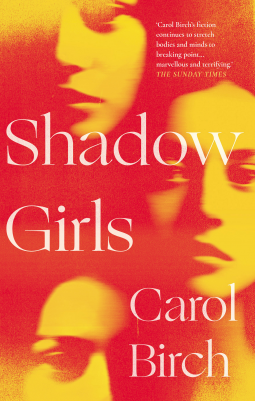
Shadow Girls by Carol Birch

Having enjoyed two of Carol Birch’s earlier novels – Orphans of the Carnival and the Booker Prize nominated Jamrach’s Menagerie – I decided to try her new book, Shadow Girls. I enjoyed this one too, but it’s a very strange novel and not quite what I’d expected!

From the blurb, I had thought this was going to be a ghost story, but for the first half of the book at least, it’s much more of a ‘school story’. Our narrator, Sally, is a fifteen-year-old girl growing up in 1960s Manchester and the time and place are vividly evoked with references to the music, films, fashion and culture of the decade woven into the narrative. Like most girls her age, then and now, Sally’s life revolves around schoolwork and spending time with her friends and her boyfriend, and this is the focus of the first section of the book. Through Sally’s eyes we get to know her best friend, Pamela, a rebellious troublemaker nobody else likes, and their ‘enemy’ Sylvia Rose, a girl from a posh background who is a talented classical singer. She also describes her feelings for Rob, her first serious boyfriend, whom she is starting to have doubts about.

The supernatural element of the story isn’t introduced until surprisingly late in the novel, when Sally has a mysterious encounter with Sylvia that will haunt her for the rest of her life. The pace picks up from this point and it does become the ghost story I had expected – in fact, it’s quite a creepy one, particularly as, like many good ghost stories, it’s never completely clear which of Sally’s experiences are real and which are in her mind.

Despite not much happening for half of the book, I found it all very absorbing and was pulled into Sally’s world from the first page. I’m not sure whether so much build up was really necessary, but I enjoyed it anyway and found the book so difficult to put down that I ended up reading most of it in one day. Now I’m interested in reading Carol Birch’s previous ghost story, Cold Boy’s Wood. Has anyone read that one – or any of her other books?

Thanks to Head of Zeus for providing a copy of this book for review via NetGalley.

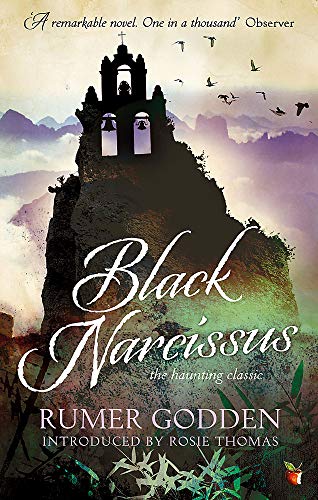
Black Narcissus by Rumer Godden

I started reading this for Brona’s Rumer Godden Reading Week, but didn’t manage to finish it until the week was over. Still, I’m grateful to Brona for motivating me to pick up my first Rumer Godden novel, even if I’m late with this review!

Black Narcissus, published in 1939, is one of Godden’s best known books, made into a successful Powell and Pressburger film in 1947 and adapted again for television by the BBC in 2020. It tells the story of a group of Anglican nuns who set out to establish a new convent in an abandoned palace in Mopu, high in the Himalayas. Once known as ‘the House of Women’, the palace had been home to the General’s harem; now the General’s son has donated it to the nuns for them to use as a hospital and school for the local community. A group of missionary brothers had already tried to do the same, but left after just a few months, giving us an early indication of the difficulties and challenges the nuns will face.

Leading the mission is Sister Clodagh, the newly appointed Sister Superior, and she is accompanied by four other sisters, each with a different role to play in the new convent. As the Sisters try to adapt to their new way of life, Mopu gradually casts its spell upon them and each finds herself being affected in a way she had never expected. Sister Philippa, responsible for the convent gardens, worries that she is becoming ‘too fond of the place’; Sister Honey grows too attached to the children who come to the school and to the hospital; Sister Ruth becomes obsessed with the General’s charismatic agent, Mr Dean; and Sister Clodagh receives constant painful reminders of her past in Ireland and the man she once thought she would marry.

There are other characters – the General’s heir, Dilip Rai, a handsome young man who comes to the convent in search of an education; Kanchi, a beautiful girl from the village whose uncle wants her to spend some time with the Sisters because she is ‘behaving so badly that no one wants her’; and Ayah, the elderly housekeeper at the palace – but the focus of the novel is on the nuns and how they try to adjust to the unfamiliar world in which they find themselves. The culture of Mopu is very different from anything they have previously experienced and despite advice given to them by Mr Dean, the nuns struggle to understand the local traditions and superstitions. As the story progresses it seems that they will never understand and that they are doomed to fail in their mission as others have failed before them.

This is a dark and atmospheric novel, but in a quiet and restrained way. There are some moments of drama but this is a story driven by the characters and their inner thoughts and desires as their repressed feelings rise to the surface and tensions grow, particularly between Sister Clodagh and Sister Ruth. I’m not sure whether it’s a book I would read again, but I’m very pleased to have read it once and will definitely be reading more by Rumer Godden.

This is book 26/50 from my second Classics Club list.

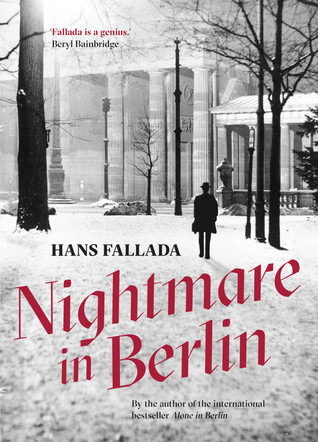
Nightmare in Berlin by Hans Fallada

The war had destroyed everything, and all that was left to him were the ruins and the ugly, incinerated detritus of former memories.

For this year’s German Literature Month, hosted by Lizzy and Caroline, I decided to read a book by one of my favourite German authors, Hans Fallada. Nightmare in Berlin was one of his final novels, written just before his death in 1947, and although I don’t think it’s as good as some of his others – particularly Alone in Berlin and Little Man, What Now? – I did find it an interesting and powerful read. This 2016 translation by Allan Blunden is the first time the book has been made available in English.

Nightmare in Berlin begins in the spring of 1945, just as the war ends and the Red Army march into Berlin. Dr Doll, who had been a successful author before the war, and his much younger wife Alma, live in a small rural town and, unlike most of their neighbours, choose to welcome the Soviet troops into their home. Doll is rewarded by being appointed mayor of the town, but soon finds that he is being viewed with suspicion and resentment by his fellow Germans. Eventually, they decide that it’s time to move back to Berlin, having fled from the city to the countryside during the war. When they arrive in Berlin, however, they discover that someone else has moved into their apartment and that it’s going to be much harder than they’d expected to pick up the threads of their old life.

As Doll sets out to look for help in finding somewhere to live and in getting medical treatment for his wife’s injured leg, he is struck by the greed and selfishness of many of the people he encounters, who think nothing of cheating other Germans to get what they want. Disillusioned and depressed, Doll is overcome with shame and apathy, beginning to despair for Germany’s future.

In this time of the country’s collapse and defeat, no feelings last for long; the hatred passed away, leaving only emptiness, deadness, and indifference behind, and people seemed remote, out of reach.

Although this is obviously quite a bleak novel, it does have its more uplifting moments: there are times when Doll is shown some kindness and compassion, restoring his faith in human nature at least temporarily. The relationship between Doll and Alma is portrayed as a warm and loving one, so that no matter what is going on around them, they know they can always rely on each other. However, the Dolls are also both reliant on drugs, taking morphine and sleeping pills to escape from reality and get through the day, and the middle section of the novel follows their experiences in the hospitals and sanatoriums where they are being treated for their addictions. This part of the book was of much less interest to me (I wanted to see more of post-war Berlin, rather than the inside of a hospital) and I felt that it seemed to come out of nowhere – drugs were never mentioned until the Dolls left their rural town to return to Berlin and yet they had apparently both been addicts for a long time.

Nightmare in Berlin seems to be a very autobiographical novel. Hans Fallada (born Rudolf Wilhelm Friedrich Ditzen) struggled with morphine addiction himself, as did his younger second wife, Ursula Losch. Like Dr Doll, he was appointed mayor of a small country town shortly after the Soviet invasion and then spent the remainder of his life going in and out of hospital. I think the book might have worked better as non-fiction rather than a novel, but maybe Fallada found it easier to write about his own experiences by disguising them as fiction. Still, this is a fascinating novel and worth reading for the insights it offers into the mood of the German people in the aftermath of the war.

This is book 24/50 from my second Classics Club list.

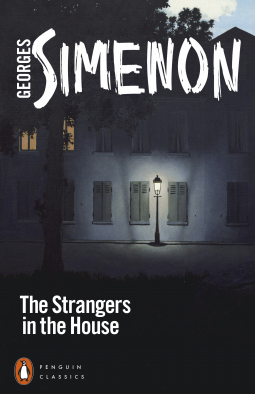
The Strangers in the House by Georges Simenon

Since enjoying my first Georges Simenon book, The Man from London, last year, I’ve been looking forward to reading more. I had intended to try one of his Maigret books next, but the opportunity to read this one came up first; it’s a new Penguin Classics edition of a novel originally published in 1940, The Strangers in the House, and is translated by Howard Curtis. Unfortunately, at 224 pages in the paperback version, it’s just slightly too long to count towards Novellas in November!

The Strangers in the House is one of the many standalone novels written by Simenon that are described as romans dur, or ‘hard novels’. I’m not entirely sure what that term means, but as far as I can tell, it refers to the dark, noirish atmosphere, and the hard, bleak lives that the characters are leading. And the life of our protagonist, Hector Loursat, is certainly bleak! Once a successful lawyer, he fell into a depression when his wife left him eighteen years earlier and turned to alcohol for comfort. Since then, he has spent his time sitting alone with his books and a constant supply of red wine, living in the same house as his daughter Nicole, but barely aware of her presence.

Loursat’s miserable, solitary existence continues until, one night, he hears a gun being fired inside the house and discovers a dead body in one of the bedrooms. When Nicole and her friends become implicated in the murder investigation, Loursat is forced to acknowledge that his daughter is now a stranger to him…or is it in fact Loursat himself who is the stranger in the house?

There’s a detective fiction element to this novel, as Loursat sets out to uncover the truth behind the murder. When suspicion falls on Nicole’s lover, he agrees to defend the young man in court and finds that getting involved in the legal profession again gives him some purpose in life. However, although we see Loursat speaking to the suspects, getting to know Nicole’s circle of friends and learning all he can about the victim, this is not a conventional mystery novel and not one that the reader has much chance of being able to solve. If you’re expecting a story with clever twists and surprises you’ll be disappointed; even the court scenes which take up about half of the book lack suspense.

The book is much more successful as a psychological study of a lonely, reclusive man who is forced to confront his own behaviour and gradually engage with the people and things he has neglected for years. Watching Loursat’s reawakening as he becomes aware of the things that have been going on in his own house without his knowledge is fascinating. Whether or not he finds redemption and whether it’s too late to repair the damage to his relationship with Nicole I will leave you to discover for yourself, if you read the book. All I will say is that Simenon’s storytelling is realistic, unsentimental and ‘hard’.

Have you read this or any of Georges Simenon’s other books? Which can you recommend?

Thanks to Penguin Classics for providing a copy of this book for review via NetGalley.

An Evening with Claire by Gaito Gazdanov – Translated by Bryan Karetnyk

When An Evening with Claire was originally published in 1930, Russian author Gaito Gazdanov was living in Paris and hadn’t seen his home country for nearly a decade. This, his first novel, was a success for Gazdanov, bringing him to the attention of other émigré writers, and now that I’ve read it I can understand why. It’s not my usual sort of book but I was drawn to it because I’ve enjoyed other books which have been reissued by Pushkin Press recently and because, apart from Mikhail Bulgakov and Boris Pasternak, I can’t think of any other 20th century Russian authors that I’ve read. This new edition has an introduction by Bryan Karetnyk, who is also responsible for the excellent English translation, which I found very readable.

The novel opens with our narrator, Kolya, in Paris spending an evening with Claire while her husband is away from home. Although we know very little about Kolya’s relationship with Claire at this stage, we do learn that he first met her ten years ago and has been in love with her ever since. However, they have spent most of that time apart and have only now been reunited. Later that evening, while Claire is asleep, Kolya remembers their first meeting, along with many of the other significant moments in his past. As he continues to remember and reminisce, the story of his life begins to take shape: his childhood, his schooldays, his relationships with family members and his experiences during the Russian Revolution and the Civil War that followed.

We actually see very little of Claire herself and I never really felt that I knew her or understood the sort of person she was, but that didn’t matter too much because the main part of the novel concentrates on Kolya’s own history as it unfolds through a chain of memories. His love for the absent Claire is always there and can be seen as a symbol of hope as he dreams of meeting her again one day. I enjoyed the first half of the novel, which includes anecdotes from Kolya’s childhood and his education at a strict military school and gymnasium, but the second half is more interesting as he begins to remember his time serving with the White Army in the Russian Civil War. It all feels very autobiographical and although I don’t know much about Gaito Gazdanov, I’m sure he must have been drawing on some of his own personal experiences and feelings in the writing of this novel.

At just over 200 pages in this edition, An Evening with Claire is a very short novel, but I thought it was the right length for the story being told. In general, I prefer books with more plot and this one has very little, but while this might have been a problem for me in a longer novel, there was just enough here to interest me and hold my attention throughout those 200 pages. This may sound like a strange comparison, but I was reminded of one of my other recent reads, Goodbye Mr Chips, another short book published in the same decade in which a man is looking back on episodes from earlier in his life. They share a focus on the power of memory, recollections of better days and regret for a disappearing world – which are also the reasons why I think An Evening with Claire would have resonated so much with other Russian émigrés of the 1930s. I would be happy to read more by Gazdanov and I see there are four of his other books available in English from the same publisher.

Thanks to Pushkin Press for providing a copy of this book for review via NetGalley.