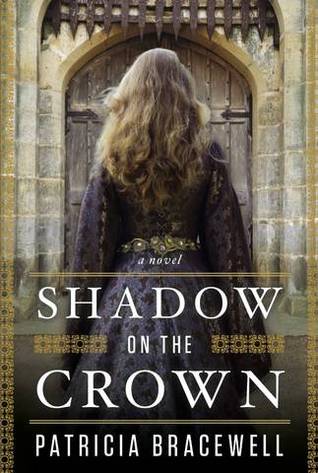
Shadow on the Crown by Patricia Bracewell

Shadow on the Crown When King Æthelred II of England loses his wife Ælfgifu, he looks across the Narrow Sea to Normandy for his next bride. Duke Richard of Normandy has two unmarried sisters and it’s the younger, fifteen-year-old Emma, who is chosen. In return, Æthelred requests that Richard closes the harbours of Normandy to Swein Forkbeard and his Vikings, the enemies of the Anglo-Saxons.

From the moment Emma arrives in England in the year 1002 and learns that her new husband has not bothered to come and meet her, she knows her marriage is not going to be a happy one. Soon Emma hears of the rumours surrounding Æthelred’s claim to the throne and the older half-brother who died under suspicious circumstances and she begins to understand that she has married a troubled, paranoid man. But dealing with her husband is not the only problem she faces; she also has to cope with the hostility of her stepsons, the æthelings (heirs to the throne) Athelstan, Ecbert and Edmund. Because she has actually been crowned Queen of England, any children of Emma’s will inherit the throne ahead of the æthelings – the children of Æthelred’s previous wife, who was never crowned.

Another person unhappy with Emma’s arrival is Elgiva, daughter of the Northumbrian ealdorman Ælfhelm, who was hoping to become Queen herself. Elgiva soon becomes one of the villains of the novel, consumed with jealousy and plotting Emma’s downfall. The only bright spot in Emma’s life is her relationship with Athelstan, the eldest ætheling, whose feelings for her are changing as he gets to know her better. But with a brutal, violent husband and a woman who will do anything to steal her crown, Emma comes to realise that the only way she will be able to wield any power is to have a child of her own as quickly as possible, a son who will be the future King of England.

I loved Shadow on the Crown. The writing is beautiful and it’s hard to believe it’s Patricia Bracewell’s first novel. It also made a nice change to find an author choosing to write about a period of history that isn’t covered in historical fiction very often. Before reading this book I had only a vague knowledge of this period and I enjoyed learning more about life in the early years of the eleventh century – an era that is fascinating to read about, but definitely not one I would have wanted to live through myself! It’s difficult to comment on the accuracy of a novel when you know so little about the period concerned but the book does include an interesting author’s note explaining which parts of the story are based on fact. Bracewell has used the Anglo-Saxon Chronicle as one of her sources and includes some excerpts throughout the novel, which adds to the feeling of authenticity.

Sometimes historical fiction can work well when it’s written in the first person but this one is written in the third person from several different viewpoints and I think it was the right decision. It allowed us to see events from more than one perspective – from Emma’s, Elgiva’s, Athelstan’s and Æthelred’s – and while I liked Emma from the beginning, being able to get inside the other characters’ heads meant I could understand them better. Æthelred’s feelings of guilt and terror, haunted by the death of his older half-brother, Edward; Athelstan’s inner conflicts, torn between love for Emma and his desire to be king; Elgiva’s envy of Emma and her bitterness at not becoming queen – being given some insights into all of these things helped me to see why these characters behaved the way they did.

Shadow on the Crown is the first in a trilogy of books about Emma of Normandy and I’m already looking forward to the second one. This book only covers the period between 1001 and 1005, so there is still a lot more of Emma’s story to come!

I received a copy of this book from the publisher via Netgalley for review
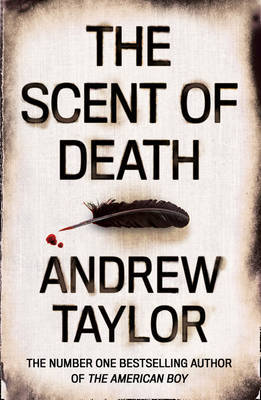
The Scent of Death by Andrew Taylor

The Scent of Death I’ve been looking forward to reading this book, having enjoyed some of Andrew Taylor’s previous novels, including The American Boy (An Unpardonable Crime in the US), so I was pleased to find that The Scent of Death was a similar type of historical mystery, though set in a different time and place.

The story begins in 1778, during the American War of Independence. Our narrator, Edward Savill, is an English clerk who has been sent to Manhattan (an area still under British rule at that time) to investigate the compensation claims of Loyalists who have been dispossessed of their property. Before Savill’s ship even arrives in the port, he sees a dead body being lifted out of the water. Soon another body is discovered – the body of Mr Pickett, a man who has connections with the Wintours, the family Savill will be staying with during his time in New York.

While Savill worries about the people he has left behind in England – his cold, distant wife and his beloved daughter – he also finds himself becoming embroiled in the lives of the Wintour family. As he gets to know Judge Wintour, his invalid wife and his beautiful daughter-in-law Arabella, whose husband is missing in action after the Battle of Saratoga, he starts to suspect they are covering up some secrets. Who killed Mr Pickett and why? Whose is the child Savill hears crying in the night? And what is the mysterious ‘box of curiosities’ he has heard so much about?

One of the things I like about Andrew Taylor’s historical novels is that he makes a real effort to use language appropriate to the time period throughout both the dialogue and the narration. I read a lot of historical fiction and there are a surprising number of authors who make no attempt to do this at all; there are very few who do it as convincingly as Taylor. He doesn’t use any jarring modern words or phrases and it all adds to the atmosphere and authenticity of the story, so that I could almost believe Edward Savill really was an 18th century English gentleman narrating his adventures to us. Remembering that this novel is set in the 1770s, we are also given a range of different opinions on slavery rather than the author just projecting 21st century views onto all of his characters, which would have been unrealistic.

As with Taylor’s other novels, you can never be sure which characters can and can’t be trusted. From Mr Townley and his clerk, Mr Noak, who nursed Savill through his seasickness on the long voyage from England, to the enigmatic Arabella Wintour herself, some of these people turn out to be friends and others enemies. I didn’t actually like any of them apart from Savill himself, but that wasn’t a problem at all – I’m sure we weren’t supposed to like them and were intended instead to get a feel for the hostility and suspicion Savill encountered everywhere he went.

The vivid, atmospheric settings are another strong point of Taylor’s novels. I don’t have much knowledge of the American Revolutionary War and Taylor does such a great job of portraying life in New York during this period: the variety of different people, including soldiers, spies, refugees and slaves, who had made the city their home; the overwhelming heat of summer and the intense cold of winter; and all the danger and intrigue of a city at war. Savill’s investigations take him into the heart of Canvas Town, an area of slums where many of the city’s criminal gangs have settled after it was destroyed by fire, and also away from New York, to the ruins of Arabella’s family plantation, Mount George.

But this was not a perfect book: while parts of it were exciting and absorbing (especially Savill’s journey into the dangerous, lawless ‘Debatable Ground’) and the short chapters made it easy to keep reading, the story moved forward very slowly and at almost 500 pages it felt too long – although admittedly it would be hard to see what could have been taken out. I did enjoy it, though, and while I did come close to solving the mystery, there were still some surprises and plot twists towards the end of the book. So, this was not my favourite Andrew Taylor book and unlike The American Boy will not be one of my books of the year, but it was definitely still worth reading and I hope it’s true that we are going to meet Edward Savill again in a future novel.

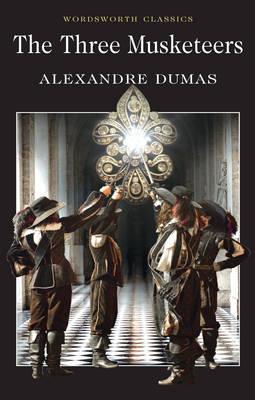
The Three Musketeers by Alexandre Dumas (re-read)

The Three Musketeers One of my goals for 2013 was to re-read more of my favourite books, something I’ve been neglecting in recent years. Well, here we are in the middle of April and so far I’ve only re-read one!

The Three Musketeers may be the title, but our hero is not a musketeer when we first meet him at the beginning of the novel, in the year 1625; his name is d’Artagnan and he’s a young man from Gascony in France, on his way to Paris where he hopes to join the King’s Musketeers under the command of Monsieur de Tréville. On his arrival in Paris, d’Artagnan encounters three of the musketeers – Athos, Porthos and Aramis – in one of those wonderful openings to a book that once you’ve read you’re unlikely ever to forget.

Soon d’Artagnan and the three musketeers become the best of friends, and when d’Artagnan meets and falls in love with Constance Bonancieux, one of the Queen of France’s ladies, all four of them are drawn into the intrigue surrounding the Queen’s affair with the powerful English nobleman, the Duke of Buckingham. With the King’s advisor, Cardinal Richelieu, hoping to expose the affair, Constance, d’Artagnan and his three friends become targets of the Cardinal and his spy, the beautiful Lady de Winter. But Milady, as she is known, is hiding a secret of her own and if d’Artagnan discovers the truth, he and Constance could find themselves in even greater danger.

I first read The Three Musketeers five years ago and when I finished it I had intended to read the other books in the trilogy (the second is Twenty Years After and third is the three-volume The Vicomte de Bragelonne/Louise de la Valliere/The Man in the Iron Mask) but as so often happens other books got in the way and I never did get around to continuing with the d’Artagnan series. And so when I made my list for the Classics Club I put all of them on there – along with a re-read of The Three Musketeers as I thought it would be a good idea to remind myself of the characters and story before embarking on Twenty Years After – and anyway, I never need an excuse to re-read a book that I enjoyed so much the first time!

I love Alexandre Dumas and although The Three Musketeers is not my favourite of the three novels of his that I’ve read (that would be The Count of Monte Cristo) I still think it’s a wonderful book with some great characters. The musketeers all have such different personalities: the aristocratic, melancholy Athos, the loud, brash Porthos, the fastidious would-be priest, Aramis, and of course, the brave, passionate d’Artagnan. Everyone will be able to pick a favourite musketeer, and mine is Athos. In her recent post on The Count of Monte Cristo, Lisa compared the character of Edmond Dantes with Francis Crawford of Lymond from the Lymond Chronicles by Dorothy Dunnett (two other great fictional characters, by the way); I agree, but I can also see some of Athos’ character traits in Lymond too, especially during one of the most memorable set pieces in the book, where the four friends eat breakfast in a fortress surrounded by enemy soldiers because it’s the only place they can find to talk in private.

It seems five years is a good length of time to wait between re-reads of a book. I had forgotten enough so that I could be surprised by the twists and turns of the plot, but remembered just enough to be able to look forward to some of my favourite parts: the breakfast scene I mentioned above, the episode with the Queen’s diamond studs, and especially the sequence of chapters in the middle (entitled Porthos, The Thesis of Aramis and The Wife of Athos) which is just a joy to read. The friendship between d’Artagnan, Athos, Porthos and Aramis is so inspiring and heartwarming (all for one, one for all!) and this is why, for me, there’s a change in the tone of the book when towards the end, the focus switches from the musketeers to Milady and I don’t enjoy the final third quite as much as the first two thirds.

Now, a note on the translation. I read the Wordsworth Classics edition of The Three Musketeers which uses the first English translation by William Barrow in 1846 (I think this is also the one used by Oxford World’s Classics). I would be interested to try a newer translation, such as Richard Pevear’s, to see how it compares – and also because I’m aware that the older translations altered certain parts of Dumas’ original text because they considered it too sexually explicit for Victorian readers. I can see that some readers today would probably find the Barrow translation too literal and antiquated but I didn’t have a problem with it at all; I actually quite like the way the sentences are constructed and I think it has a certain romantic, old-fashioned quaintness about it.

I’ll be moving on to Twenty Years After very soon!

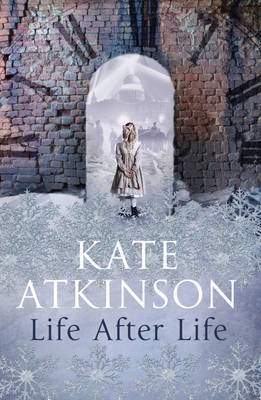
Life After Life by Kate Atkinson

Life After Life Do you ever look back on your life and wish you had done something differently? Do you sometimes regret the decisions you’ve made and wonder what would have happened if you’d chosen another path through life? I’m sure we would all answer ‘yes’ to those questions, but unfortunately most of us only have one chance to get things right. But Ursula Todd is not like the rest of us. If things don’t work out the first time, she does have the chance to go back and try again…and again…and again.

Ursula is born one snowy night in February 1910 with the umbilical cord around her neck. Darkness falls and she dies before the doctor has time to arrive. We turn the page and it’s that same night in February 1910 again. This time the doctor is present and she survives, but this is only the beginning of Ursula’s journey through life. Every time she reaches a turning point, she must be sure to make the right decision – otherwise darkness will soon fall once more and Ursula must return to the night of her birth in 1910 and have another attempt.

As we follow Ursula again and again through some of the major events of the twentieth century – including both the First and Second World Wars (there are some very atmospheric scenes set in London during the Blitz) – she slowly grows in wisdom and learns from her previous mistakes, even without being fully aware of what is happening to her or why. Gradually she develops a sort of intuition or déjà vu that allows her to draw on her past experiences, and this is used to particularly good effect in an early sequence of chapters in which she has several attempts at preventing the maid, Bridget, from going to London and catching Spanish flu.

Apart from Ursula herself, the characters who are almost always there throughout every version of the story are the members of the Todd family – Ursula’s brothers Maurice, Teddy and Jimmy, sister Pamela and parents Hugh and Sylvie – and the servants, Mrs Glover and Bridget. Izzie, Ursula’s wild and irresponsible aunt, also plays a significant role in many of the storylines. Other characters come and go; people who are an important part of Ursula’s life in one existence barely appear at all in another and it’s fascinating to see how something as simple as a chance encounter in the street (and the way she reacts to it) could completely alter the course of her future. Sometimes Ursula is unable to change the outcome of a particular event no matter what choices she makes; on other occasions even a small action has huge consequences.

Life After Life is a very clever, complex novel; I was so impressed by it! With such an unusual and complicated plot it could have been a disaster, but it wasn’t; I thought everything worked perfectly and although I found it confusing at first, after the first few chapters I knew I was going to love the book. It’s actually much less repetitive than you might think and fortunately we don’t have to go right through the entire story from the beginning each time Ursula is reborn! I sometimes felt a bit distanced from Ursula, maybe because in each of her lives she makes different choices, has different ambitions and motives, so is not exactly the same person she was in a previous existence – but that didn’t stop me liking her and hoping things would work out better for her the next time darkness fell and she went back to that snowy February night yet again.

This is the first Kate Atkinson book I’ve read and having enjoyed it so much I will be looking out for her other books now. I understand that her earlier novels are very different to this one but I would still like to read them and would welcome any recommendations.

The Poisoned Island by Lloyd Shepherd

The Poisoned Island In June 1812 the Solander returns to London from a voyage to Tahiti financed by Sir Joseph Banks of the Royal Society. The ship is carrying a cargo of rare and exotic plants destined for the Kew Gardens. But why is Banks so interested in one particular specimen? Could there have been another motive behind the voyage?

When one of the Solander’s crew is found dead under suspicious circumstances, the magistrate John Harriott and Constable Charles Horton of the Thames River Police begin to investigate. Soon more murders take place – and when he learns that all of the victims were members of the crew, Horton must find out how the deaths could be connected with the recent trip to Tahiti.

I’ve been looking forward to this since I read Lloyd Shepherd’s first novel, The English Monster, last year. When you loved an author’s debut novel there’s always the worry that their next book might be a disappointment, but that was definitely not a problem here because I thought The Poisoned Island was even better than The English Monster! Both novels are complete stories in themselves and it’s not necessary to read them in order, but they do have a few things in common. They each explore the darker side of the British Empire, trade and colonialism (it seemed clear to me that one of the messages of The Poisoned Island is a warning against the dangers of exploiting a country for its resources), they both involve the Royal Society, and there are also some recurring characters, including Harriott and Horton of the River Police.

It’s interesting to see how Horton uses methods of crime-solving that in 1812 are new and innovative. Instead of merely watching and observing or relying on witness statements, he is actively investigating the crimes, looking for clues, searching for evidence, interviewing suspects and trying to find motives. This arouses the suspicion and dislike of London’s other police constables and magistrates but Harriott has faith in him and can see the value of his detection methods. Horton’s wife, Abigail, makes a few brief appearances in the novel too and I thought she had the potential to be a great character. The fact that Abigail was so underused was the only thing that disappointed me about this book; she’s intelligent, courageous and with her interest in natural science I had expected her to play a bigger part in the story.

Interspersed with the main storyline are some chapters set in Tahiti (or Otaheite as it was known at the time) following the adventures of a young Tahitian prince and showing us what happened to the island when Europeans first arrived bringing guns, alcohol and disease with them. But while The English Monster was a dual time period novel with alternating chapters set in different centuries, The Poisoned Island concentrates on Horton and Harriott’s London with only a few flashbacks to an earlier time. Although the murder mystery forms the central plot, there’s also a lot of historical detail that helps to bring the Regency period to life. And I enjoyed learning about the Kew Gardens, the process of collecting and studying botanical specimens, and the work of Joseph Banks’ librarian, the botanist Robert Brown. I’m hoping there will be more Harriott and Horton novels, but if not I will still look forward to whatever Lloyd Shepherd writes next.

I received a review copy of The Poisoned Island from the publisher

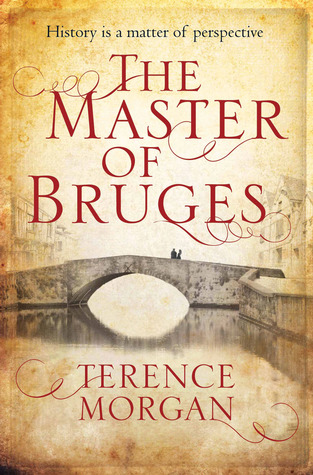
The Master of Bruges by Terence Morgan

The Master of Bruges The Master of Bruges is presented as the fictional memoirs of the 15th century artist, Hans Memling. In December 1464, following the death of his master, the Flemish painter Rogier van der Weyden, Hans travels to Bruges where he works at the Burgundian court, painting portraits of the nobility. As an artist, Memling is naturally a very observant, perceptive person and can offer the reader some insights into both the politics of the period and the lives and personalities of the people he meets in Bruges.

One night two strangers calling themselves ‘Ned and Dick Plant’ come to seek refuge at Memling’s house and Hans finds himself drawn into the drama and intrigues of the Wars of the Roses, the conflict between England’s House of York and House of Lancaster. And when several years later he is invited to England and renews his acquaintance with Ned and Dick, he becomes caught up in one of history’s greatest mysteries: the disappearance of Edward IV’s sons, the Princes in the Tower, who many people believe were murdered by their uncle, Richard III.

Before reading this book I had heard of Hans Memling but was not familiar with his work. The only one of his paintings I knew anything about was his triptych The Last Judgment, which featured a portrait of the banker Tommaso Portinari being weighed in St Michael’s scales, and was captured by the Danzig pirate Pauel Benecke as it was being shipped to Italy. The only reason I was aware of this anecdote was because it formed a minor plot point in Dorothy Dunnett’s House of Niccolo series (specifically, in To Lie with Lions and Caprice and Rondo). Luckily, many of Memling’s paintings can be seen online and I can guarantee that you’ll want to look at them as you read. There are also some short chapters interspersed throughout the novel in which Hans shares with us his views regarding artistic technique, perspective, focus, colours, and some of the tricks artists use to please their sitters, and I enjoyed reading these. As well as being fascinating to read, these chapters are relevant to the story as Memling’s descriptions of his techniques are either directly or indirectly linked to aspects of the plot.

I thought the first part of the novel, which details Hans’ early days as an artist, worked very well but not the second part, after he travels to England. I was interested in learning about Hans and his portraits and I was also interested in the Richard III story – it was the way the two were combined that didn’t work for me. Despite the Wars of the Roses being one of my areas of interest in historical fiction, I think I would have liked this book more if it had continued to tell the story of Memling’s life in Bruges rather than changing focus halfway through to concentrate on the mystery of the Princes in the Tower.

I don’t expect historical novelists to always stick rigidly to the facts, otherwise they would be writing non-fiction rather than fiction, but this particular book stretches credibility too much for me. I appreciated the author’s note at the end of the book, but I wished it had given more information on exactly which aspects of the story were based on fact and which were fictional. As far as I can tell there is no evidence to suggest that Hans Memling ever came to England or had any involvement with the Plantagenets. I also found it hard to believe Morgan’s theories regarding what happened to the two princes (especially a plan of Edward IV’s to have them declared illegitimate), though they were certainly very imaginative ideas. I was happy enough with the characterisation of Richard III, though – he is one of my favourite historical figures and I am definitely of the opinion that he has been unfairly treated by history, so it was good to see him portrayed in a more positive light in this book.

Because of the problems I’ve noted above, I can’t say that I loved The Master of Bruges, but I’m glad I kept reading to the end as there were some big surprises within the final chapters. I think as long as readers are aware that this book does not always give an entirely historically accurate account of the period and that it sometimes takes a more speculative approach to what might possibly have happened, it can be enjoyed as something refreshingly different and fun.

The Florentine Emerald by Agustín Bernaldo Palatchi

The Florentine Emerald The Florentine Emerald is historical fiction set in Florence during the Renaissance. The story begins in 1478 at Cardona Castle in Spain, where Mauricio Coloma is visiting his father, Pedro, who has been chained in a dungeon after being falsely accused of treason. Knowing that he is facing execution, Pedro reveals to Mauricio the truth that until recently converting to Christianity, their ancestors had been Jews. Before he is put to death he also tells his son of a valuable emerald ring hidden under a tile in the floor of their home in Barcelona and advises him to take it to Florence to sell to the Medici, the powerful Florentine family of bankers.

Arriving in Florence with the priceless jewel, Mauricio finds himself in the right place at the right time to thwart an assassination attempt on Lorenzo de’ Medici, the man who rules the Florentine Republic. As a sign of his gratitude, Lorenzo helps Mauricio establish himself in Florence. But then he meets and falls in love with Lorena Ginori, a girl whose parents are planning a more ambitious marriage for her with a man she dislikes. As the years go by, both Lorena and Mauricio have to confront some secrets from their pasts, while around them Florence is thrown into turmoil by the prophecies of the priest Savonarola and the conspiracies of those who want to cause the downfall of both Mauricio and the Medici.

This is an English translation of a Spanish novel by Agustín Bernaldo Palatchi, published by Barcelona eBooks, who if I’ve understood correctly are a spin-off of the Spanish publisher Roca Editorial and partners of Open Road Media, specialising in digital versions of Spanish and English translations. I was pleased to have the opportunity to read the ebook via Netgalley, but as I know not everyone likes or is able to read ebooks I thought it was only fair to point out that I’m not sure if or when The Florentine Emerald might be available in English in any other format.

Something I really enjoyed about this book was learning more about Renaissance-era Florence. In the fifteenth century, Florence was one of the most important centres of European trade and culture, which makes it an ideal setting for historical fiction. There were so many things happening both within Florence itself and in Europe in general during this period that had an effect on Mauricio’s story: outbreaks of plague; the voyages of Christopher Colombus; and the Spanish Inquisition and the threat to the Jews of expulsion from Florence. The first part of the novel is set during roughly the same period as Dorothy Dunnett’s House of Niccolò series which I read recently and so I was already familiar with some of the characters and events that were covered in the book (the papal alum monopoly, the Medici and Strozzi families, the Duke of Urbino and King Ferrante of Naples). This was useful as I would probably have found some of the historical details much more confusing otherwise!

I did find it a bit hard to believe that Mauricio would have been befriended by Lorenzo de’ Medici and given a position at the Medici bank almost as soon as he arrived in Florence and I had to suspend disbelief again as Mauricio immediately began to associate with Leonardo da Vinci, Christopher Columbus and so many other famous people of the period. However, this was only a small part of the story and overall I did enjoy the inclusion of so many real historical figures, especially as there were some I had previously known little or nothing about, including the philosopher Marcilio Ficino and the Dominican friar and preacher, Girolamo Savonarola who plans to reform Florentine society.

I thought the translation was generally good – the writing flowed well and I didn’t have any problems with it, except that it was maybe slightly lacking in emotion and passion. I enjoyed following the adventures of Mauricio and Lorena but something got in the way of me really being able to connect with them emotionally and whether that was due to the translation or not it’s difficult to say without having read the original. I liked the characterisation of Lorenzo de’ Medici, though, and it was interesting to read about the position of power and influence he held in Florence and the much less successful rule of his son and heir, Piero, who followed him. All of this left me wanting to read a good biography of the Medici family or even another fictional account, so any recommendations are welcome!