Classics Spin Review: That Lady by Kate O’Brien

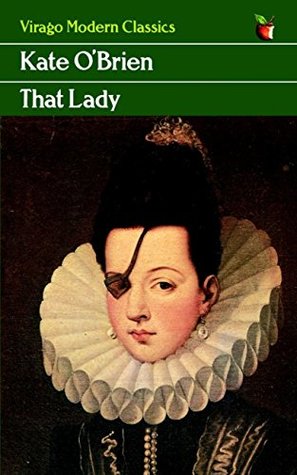
Kate O’Brien’s novel from 1946, That Lady, was the book chosen for me in the recent Classics Club Spin. I had never read anything by Kate O’Brien before and had only added this one to my Classics Club list because I remembered reading some very positive reviews by Lisa and Kay and because I liked the portrait on the front cover of the Virago Modern Classics edition. The portrait shows Ana de Mendoza, Princess of Eboli and Duchess of Pastrana, and Ana’s life is the subject of the novel.

That Lady opens in 1576, with Ana a widow of thirty-six. Following the death of her husband Ruy Gomez de Silva, one of King Philip II of Spain’s closest advisers, Ana and her children have continued to live on Ruy’s lands in Pastrana in the region of Castile. If you know nothing about Ana, as I didn’t before reading this book, you’ll be pleased to know that O’Brien gives plenty of detail on Ana’s background, explaining how she came to be married to Ruy Gomez at the age of thirteen, how she lost her eye fighting a duel with a page in her father’s household, and the origins of her close relationship with Philip II.

Early in the novel, Philip visits Ana at the Palace of Pastrana and asks her to consider coming back to Madrid. He gives several reasons why she should return, but it is clear that he misses Ana and her children and wants them living nearer to him. Ana is reluctant, but within a year she is back in Madrid and here she begins an affair with Antonio Perez, Philip’s ambitious secretary of state. Needless to say, this was not what the king had intended, and when Ana’s affair becomes public – and, worse still, leads to her becoming implicated in a murder case – she finds that Philip is not such a good friend after all.

That Lady is an unusual novel and at first I wasn’t sure whether I was going to like it. The pace is slow and although there is a lot happening, most of it happens off the page; major events including the defeat of the Spanish Armada are covered in a few brief sentences, while dramas which directly affect Ana, such as the murder mentioned above and the circumstances which lead to it, are only referred to in conversation afterwards. The lack of action makes this much more of a character driven novel, which I’m usually quite happy with, but I also struggled to understand and warm to Ana as a character during the first half of the novel.

Somewhere in the middle of the book, though, I began to find Ana’s story much more compelling. I understood why her relationship with Antonio was so important to her, despite the disapproval of Philip and the public – because it was her own choice, something she was doing because she wanted to, and not because she had been pushed into it by her father, by her husband or by the king. I admired her for sticking to her principles and I was impressed by the loyalty she inspired in her young daughter, Anichu, and her servant, Bernardina. Ana also finds herself struggling to reconcile her actions with her religious beliefs and this is another of the novel’s themes, which develops through conversations with her friend, Cardinal Quiroga of Toledo.

I found it intriguing that in her foreword to That Lady, O’Brien states that this is not a historical novel, but an ‘invention’ based on the story of Ana de Mendoza and Philip II, in which the outline of historical events is real but the words, thoughts and emotions of the characters are imaginary. I think I know what she was trying to say, but surely any historical novel contains an element of invention, otherwise it wouldn’t be a novel. Anyway, I was able to learn a huge amount from this book, not just about Ana, Philip and Antonio, but also about the political situation in Spain in the late sixteenth century. Most of this was new to me and the amount of detail made it quite a slow read, but an interesting one too.

I was left wanting to know more about the real woman, so I looked her up online and found a selection of portraits of Ana, with her distinctive silk eye patch (although it seems there could be a less dramatic explanation for the loss of her eye than the duelling story). I couldn’t find any other novels about Ana, but if you know of any, please let me know. And if you’ve read this book, I would love to hear what you thought of it – and whether you would recommend anything else by Kate O’Brien.

This is book 8/50 from my second Classics Club list.

Marking Time by Elizabeth Jane Howard

This, the second in Elizabeth Jane Howard’s Cazalet Chronicles, continues the story begun in The Light Years, taking us through the early stages of the Second World War. It’s been almost exactly a year since I read the first book, but I found that I could still remember the characters and storylines and jump straight back into the story. If I’d needed a reminder, though, the book opens with a useful family tree, character list and summary of the previous novel.

Marking Time begins just as Britain declares war on Germany in September 1939 and ends just two years later, in 1941. The Cazalet family – who include ‘the Brig’ and his wife ‘the Duchy’; their daughter, Rachel; their three sons, Hugh, Edward and Rupert, with their wives and children; and an assortment of other relations, friends and servants – are gathered again at Home Place in the Sussex countryside and this is where most of them will be based during the two years the novel covers. As an upper middle class family, they are sheltered from some of the worst deprivations of the war, but eventually it does begin to affect each of their lives in all sorts of ways.

One of my criticisms of The Light Years was that the number of characters was overwhelming and the constant changes from one perspective to another made it difficult to focus. Marking Time has a slightly different format. There are still several chapters which deal with the whole family, spending a few pages with one family member, then a few pages with another, but there are also some longer sections which concentrate on one character at a time.

The characters who are given their own chapters are the three teenage girls – Louise, Polly and Clarissa (Clary) – who happen to be three of the characters I singled out as favourites in my review of The Light Years. I was delighted to have the opportunity to spend a more substantial period of time with each of the girls, getting to know them better. Louise, the eldest child of Edward and Villy, is an intriguing mixture of sophistication and innocence. In Marking Time, we see her leave home to become an actress, fall in love for the first time, and make an unwelcome discovery about another family member. Clary’s chapters are written partly in the form of diary entries and this gives her a particularly strong and distinctive voice. Clary receives some bad news quite early in the war – although we don’t yet know exactly how bad – but there are some positives to come out of this, such as an improvement in her relationship with her stepmother, Zoe. Meanwhile, Polly – Hugh and Sybil’s daughter – overhears a private conversation which throws her life into turmoil.

Despite all the problems various family members are experiencing, the novel isn’t entirely depressing; there are some funny scenes too, mainly involving the younger children, Neville and Lydia, and we see the beginnings of a touching romance between two of the Cazalet servants. Although the lifestyle of the Cazalet family is entirely different from my own – partly because of the time period in which they live, but also because of their class – I still feel that they are people I understand and care about. I enjoyed this book much more than the first and am pleased I still have another three Cazalet novels to read. The next one is Confusion and I’m looking forward to finding out how the family fare throughout the rest of the war.

This is book 14/20 of my 20 Books of Summer.

The Way of All Flesh by Ambrose Parry

The Way of All Flesh is the first in a new historical mystery series written by husband and wife team Chris Brookmyre and Marisa Haetzman under the pseudonym Ambrose Parry. Brookmyre is an established crime novelist, while Haetzman is a consultant anaesthetist with a Master’s in the History of Medicine – the perfect combination when writing a crime novel set in the medical world!

It’s 1847 and young medical student Will Raven has secured a position as apprentice to the renowned Scottish obstetrician Dr James Simpson. Simpson is one of Edinburgh’s leading doctors and Raven intends to make the most of this wonderful opportunity to gain experience in the fields of midwifery and anaesthesia. Unfortunately, he doesn’t get off to the best of starts: just before he is due to begin his apprenticeship he discovers the dead body of his friend Evie, a prostitute whom he has being trying to help financially. Stumbling away through the dark streets of Edinburgh’s Old Town, he is attacked by a gang sent after him by a moneylender and turns up battered and bruised for his first day at work – definitely not the impression he had hoped to give!

Settling into his work with Dr Simpson and his colleagues, Raven is required to assist at some difficult births and quickly comes to appreciate the role ether can play in easing the pain of childbirth. During his visits to other households, and in his conversations with other doctors, Raven begins to hear about other women from the Old Town who have been found dead, like Evie, under suspicious circumstances. Determined to find out what really happened to Evie, he decides to investigate…

But this is not just Raven’s story. We also meet Sarah Fisher, Dr Simpson’s housemaid. Sarah is an intelligent young woman who would love to have the opportunities that have been given to Will Raven, but as a career in medicine is not available to her because of her gender and class, she has to resign herself to reading the doctor’s medical books and helping out in his clinic as much as she can. Sarah and Will take an instant dislike to each other, but as they continue to work together – not just in the same household, but also to track down the murderer – they begin to find some common ground.

The Way of All Flesh is a fascinating read for anyone who is interested, as I am, in the history of medicine. Some of the doctors and scientists who appear in the book, including James Simpson, are real historical figures and the novel recreates some of the experiments, discoveries and research that led to the development of anaesthetics, as well as some of the challenges they faced – such as the opposition of the Scottish church leaders, who believed it was natural for women to feel pain in childbirth and that using drugs to relieve it was against the will of God. Remembering that one of the authors of this book is an anaesthetist herself, everything feels very authentic and convincing. I should warn you, though, that the descriptions of childbirth and other medical cases and operations are very detailed and occasionally a bit gruesome!

It was actually the crime element which was the least successful aspect of the book for me. I felt that it took second place to the medical procedures and scientific discussions and after a while I lost track of who had been killed and what the circumstances were; it just wasn’t the sort of mystery I prefer, where I find myself looking for clues and trying to guess who the culprit could be. The setting makes up for it, though – the descriptions of Victorian Edinburgh are wonderfully atmospheric.

Although I thought the secondary characters could have been given more depth, I did enjoy getting to know both Will Raven and Sarah Fisher. This was a promising start to a new series and I will be looking out for the second book.

This is book 13/20 of my 20 Books of Summer.

Thanks to Canongate Books for providing a copy of this book for review via NetGalley.

The Silence of the Girls by Pat Barker

There have been a number of novels published recently which look at Greek myths and legends from a feminine perspective. In the last few months I have enjoyed reading Circe by Madeline Miller, which tells the story of the witch Circe from the Odyssey, and For the Immortal by Emily Hauser, the story of Hippolyta the Amazon queen. Pat Barker’s new novel, The Silence of the Girls is another, this time bringing to life the character of Briseis and the events of Homer’s Iliad.

When the city of Lyrnessus falls to the Greeks during the Trojan War, Briseis loses her husband, King Mynes, and her father and brothers. The surviving women are shared out amongst the Greek conquerors as prizes of war and Briseis finds that she is given to the great warrior Achilles as a slave. The events which follow, such as the quarrel which breaks out between Achilles and Agamemnon, King of Mycenae, over the possession of Briseis, and the fate of Patroclus when he impersonates Achilles on the battlefield, will already be known to anyone familiar with the Iliad. If all of this is new to you, though, don’t worry – no knowledge of Homer’s epic is necessary and Pat Barker makes it very easy to follow what is happening.

Most of the novel is narrated by Briseis herself and I found her a very engaging narrator. The nature of her story and the ordeals she faces make her an easy character to sympathise with; I was given a good understanding of how she felt about losing her freedom, becoming a slave and being at the mercy of the men responsible for murdering her family and destroying her city. This is quite a dark novel and Barker doesn’t hold back when describing the brutality of the men in the Greek army, both on and off the battlefield.

I was surprised to find that there are also some chapters written from the perspective of Achilles, who is very much the villain of the book. Although seeing Achilles’ side of the story certainly didn’t make me warm to him at all, it was good to get a different point of view, especially as it allowed us to see scenes and hear conversations that took place when Briseis was not present. However, because of the title of the book, I think it would have been nice if more female characters had been given a voice so that the silence of more than just one girl could be broken. We do meet some of the other women in the Greek camp, but only through Briseis’ eyes and Briseis is the only one we get to know in any depth.

I did really enjoy this book, though. It’s well written, very readable, and a fascinating portrayal of Ancient Greek society. If you’re interested in reading more about Briseis, you could try Hand of Fire by Judith Starkston and For the Most Beautiful by Emily Hauser. She also appears in Madeline Miller’s The Song of Achilles, which will give you a very different view of Achilles as well!

This is book 12/20 of my 20 Books of Summer.

Thanks to Penguin for providing a copy of this book for review via NetGalley.

Lamentation by CJ Sansom

When I heard the exciting news that there was a new Shardlake novel – Tombland – coming in October, I remembered that I still needed to read Lamentation, the sixth book in the series, so I put it on my 20 Books of Summer list to ensure that I would read it sooner rather than later and be up to date in time for the new one.

Lamentation is set in London in 1546, about a year after the previous novel, Heartstone, ended. Henry VIII is in poor health and although it is treason to predict the death of a king, it is obvious to everyone who sees him that he can’t have much longer to live. Having broken away from the Roman Catholic Church several years earlier, it now seems that Henry is slowly moving England back towards Rome. A power struggle is taking place at court between the religious traditionalists and the reformers, while those suspected of heresy are being hunted down, tortured and burned at the stake. Even the Queen herself – Henry’s sixth wife, Catherine Parr – is not above suspicion, and when a book she has written on the subject of her faith, titled The Lamentation of a Sinner, is stolen, she knows her life could be at risk.

Our narrator, the lawyer Matthew Shardlake, has worked for the Queen before, and it is to Shardlake that she turns again to ask for assistance in finding the missing book. Despite having vowed to stay out of politics following the events of Heartstone, Matthew can’t resist a request from his Queen, but when the first page of the manuscript is found clutched in the hand of a murdered printer, the danger involved in the mission becomes clear.

I’ve enjoyed all of the Shardlake novels, but I think this is one of the best in the series. It’s a long book, with over six hundred pages, but at no point does it ever start to feel slow or repetitive. The plot is complex and does require some concentration – it’s important to try to remember the religious and political backgrounds of various characters and which are allies and which are rivals, especially as various groups of suspects begin to emerge – but in my case I was so absorbed in the story my concentration never wavered for a moment anyway. I always find Sansom’s portrayal of Tudor England very immersive; he manages to make the history of the period easy to understand, but without simplifying things too much, and shows us how the decisions made by those in power affect the lives of ordinary people who are just trying to survive from day to day.

As well as the search for Catherine’s stolen book, there is also a secondary mystery taking place in which Shardlake is representing a client who is locked in a feud with her brother over the wording of their mother’s will. Most of the Shardlake novels have multiple storylines and sometimes they feel a bit unconnected, but everything in this book comes together very effectively. The two feuding siblings are on opposite sides of the religious divide and this eventually has implications for Matthew.

Of course, Matthew doesn’t have to deal with all of this alone. His friend and legal assistant, Jack Barak, is there for him as usual and always ready for an adventure – although with Jack’s wife expecting another baby, Matthew is reluctant to let him get involved. He also has a new assistant – Nicholas Overton, a young man who has been sent to London to study law – and over the course of the novel he comes to value Nicholas’s courage and loyalty. Another old friend, the doctor and former monk, Guy, is back too, but their friendship is put under strain by Guy’s disapproval of Matthew’s mission and the very different religious views they each have. Nobody, including Shardlake, ever comes out of a Shardlake novel entirely unscathed and this is why, although it would be possible to treat the books as standalones, I still recommend reading the series in order. That way, you’ll be able to watch the characters develop and see how the things that happen in one book affect their lives in the next.

By the end of this book Henry VIII is dead, to be succeeded by his son, the young Edward VI. The change of monarch – and the consequences this will have for the country – is sure to bring new challenges for Shardlake but we will have to wait for the publication of Tombland to find out what they are.

This is book 11/20 of my 20 Books of Summer.

Rosalind Laker: Warwyck’s Wife and Claudine’s Daughter

At the beginning of Thomas Hardy’s The Mayor of Casterbridge, Michael Henchard sells his wife at an auction, an impulsive act which he later regrets and which haunts him for the rest of his life. This horribly cruel and barbaric custom really did take place in England between the 17th and 19th centuries. Rosalind Laker’s 1978 novel Warwyck’s Wife – the first in a trilogy – opens with a similar scene in which a farmer puts his unwanted wife Kate up for auction at a market in Brighton, parading her in front of the crowd with a halter round her neck like an animal.

Among the men who decide to bid for Kate are nineteen-year-old Harry Warwyck and his older brother Daniel. Harry has the best of motives – he has fallen in love at first sight and wants to prevent Kate from being bought by someone who will treat her badly – but Daniel has seen an opportunity to obtain the wife he needs in order to claim his inheritance, Warwyck Manor. To Harry’s disappointment, it is Daniel who is successful…but will he be happy with his new purchase? It’s not the most pleasant or uplifting start to a novel, but Rosalind Laker does a good job of conveying the shame and degradation Kate feels because of her husband’s actions combined with relief at being released from her unhappy marriage and given the chance to start a new life.

Warwyck’s Wife is described as a romance, but there’s certainly nothing very romantic, in my opinion, about the relationship between Daniel and Kate. Daniel makes it clear at the beginning that he wants Kate only because he believes she can be useful to him, and although his feelings for her do begin to change, he is too obsessed with another woman – Claudine Clayton – to appreciate what he has in Kate. Daniel is a thoroughly unlikeable character, actually: he uses and discards Kate as it suits him; he hides the truth from Claudine; and the way he behaves towards Harry is hardly very brotherly either. Not my idea of a romantic hero – not that every book really needs a hero, of course. Kate, on the other hand, is a lovely person, although her devotion to the undeserving Daniel really frustrated me and I couldn’t understand how she could possibly have preferred him to Harry!

Luckily, there is a lot more to this novel than the ‘romance’. Another major part of the plot involves Daniel’s career as a boxer and his ambition to become a champion prize-fighter. The novel is set in 1826, during the reign of George IV, and although I have no interest in boxing in its modern form, I did find it interesting to read about Daniel’s preparation for his fights (or ‘mills’ as they were called), the hours of practice he puts in with his trainer, Jem Pierce, and the spectacle of the mills themselves, which attracted large crowds and were sometimes held illegally, at risk of being stopped by the local magistrate. It seemed a much more violent and chaotic sport than its modern equivalent too, unsurprisingly with little regard for the health and safety of the participants.

There is also a storyline involving Daniel’s plans to develop the little coastal village of Easthampton into a seaside resort similar to Brighton. As you can imagine, this causes a lot of conflict as the scheme meets support from some of the villagers but fierce opposition from others as new workers are brought in to carry out the construction work while existing businesses find themselves under threat. This subplot gives the author a chance to highlight social injustices and the difference in attitude between Kate and Daniel, as Kate does everything she can to improve the working conditions of the builders, masons and labourers while Daniel cares only about money and productivity.

Warwyck’s Wife is not a perfect novel but I found more to like than to dislike and went straight on to read the sequel, Claudine’s Daughter.

~

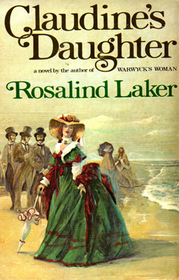
Claudine’s Daughter begins about twenty years after the previous book ends and introduces us to Lucy di Castelloni, Claudine Clayton’s daughter. Lucy has lived in Italy all her life and was married off at an early age to a much older man. Now, following her husband’s death, she has decided to come to England to see where her parents grew up and to find out whatever she can about her family and her origins. Arriving in the town of Easthampton, she quickly catches the eye of three very different men. The first is Richard Warwyck, Daniel’s son; the second is Timothy Attwood, who is distantly related to Lucy’s family; and the third is Josh Barton, who has ambitious plans that could affect the future of everyone in Easthampton.

Although this is very much the story of Lucy and the other ‘second generation’ characters, some of the characters from Warwyck’s Wife appear again too, including Daniel, Kate, and (very briefly) Harry. There’s also a new set of secondary characters: Emmie, the landlady of the house where Lucy takes lodgings; her daughter Meg; and Meg’s lover, a local fisherman. Lucy’s romantic entanglements form a large part of the novel but, like the first book, it is more than just a romance. It’s also a story about the uncovering of family secrets – and while the reader already knows what these secrets are (assuming we have read the first book in the trilogy), Lucy and most of the other characters do not. This means the plot is quite predictable, but the interest is in waiting to see how and when the truth will be revealed.

The most interesting aspect of the book, for me, was seeing how Easthampton, which was only a small village in Warwyck’s Wife, has grown into a thriving resort with piers, pavilions, hotels and theatres. A source of conflict throughout the novel is the question of whether or not the town should be connected to the railway network. Richard Warwyck is in favour as it will allow the area to develop further, but Daniel (whom I still found impossible to warm to) doesn’t like the idea of opening up access to the resort to large numbers of working class people and destroying the select atmosphere.

There is a third novel about the family – The Warwycks of Easthampton – but I don’t own a copy of that one yet and I think I’ve read enough about the Warwycks for now. Maybe I will read it at some point, but there are other books by Rosalind Laker that sound more appealing to me at the moment.

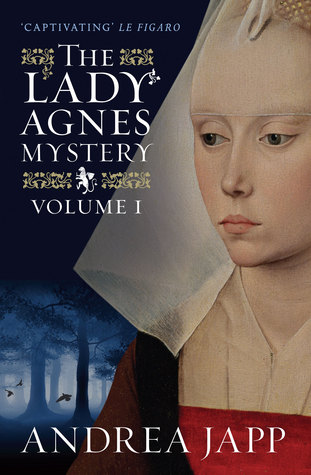
The Lady Agnès Mystery Volume 1 by Andrea Japp – #WITMonth

I hadn’t made any plans for taking part in Women in Translation Month, but when I came across this book which had almost disappeared into the black hole of my Kindle, I decided to join in. Andrea Japp is a French crime novelist and this, the first volume of her Lady Agnès Mystery (originally published in 2006), has been translated into English by Lorenza Garcia. Japp herself is also a translator and produced the French translations of Patricia Cornwell’s Kay Scarpetta novels, which I think makes her a perfect choice for Women in Translation.

There are actually two books included in this volume – The Season of the Beast and The Breath of the Rose – but they do not stand alone and although they can be bought separately, there is not much point in reading one without the other. Together, the two books tell the story of Lady Agnès de Souarcy, a young widow living in 14th century France with her eleven-year-old daughter Mathilde and ten-year-old Clément, a servant’s child whom she has raised as her own son. Left with only a small dowry to live on, Agnès is struggling financially and reliant on the support of her half-brother, Eudes de Larnay. Unfortunately she and Eudes have always had a difficult relationship and when Inquisitors arrive in the area to hunt down heretics, Eudes sees this as the perfect opportunity to rid himself of his troublesome sister.

Agnès may have some powerful enemies but, unknown to her, she also has some powerful friends who are prepared to do everything they can to protect her from the horrors of the Inquisition. But is there any connection with the murders that have been carried out on Agnès’s land – dead bodies which have been discovered with the letter A marked on the ground beside them – and with the poisoning of several nuns at nearby Clairets Abbey? It seems that all of these things must be linked..but how?

The Lady Agnès Mystery is a book with many layers. First, there’s the richness of the historical setting. Set in the Perche region of France in 1304, the story takes places at a time of religious conflict and of power struggles between King Philip IV the Fair, his various advisers and their rivals, and the two religious orders, the Knights Templar and the Knights Hospitaller. We meet characters who belong to each of these groups and are given a range of different views and perspectives. It’s exactly the same period of history as I’ve previously read about in Maurice Druon’s Accursed Kings series and I loved revisiting it here. If you’re not familiar with this period, though, it shouldn’t be a problem; everything you need to know to understand the story is clearly explained in the text – and if you do want to know more, there are several appendices at the back of the book which provide definitions, explanations and brief biographies of historical figures.

This is not a dry, heavy read, though. There’s always something happening – a clandestine meeting in a dark tavern, a coded message being deciphered or a hidden room being explored, not to mention the vivid scenes depicting Agnès’s ordeals at the hands of the Inquisitors. My favourite aspect of the book was the mystery surrounding the deaths of the nuns…I particularly enjoyed watching the apothecary nun Sister Annelette using her knowledge of plants and herbs to try to catch the murderer.

So far so good. However, there is another storyline involving the Knights Templar, a secret prophecy and a missing manuscript which didn’t really interest me at all. I thought there was already enough going on with Agnès’s personal story and the murder mystery…and I’m sure I’m not the only one who finds it difficult to read this sort of storyline without making comparisons with The Da Vinci Code.

Volume 1 ends, not on a cliffhanger exactly, but with some of the many plot threads still unresolved. I would like to know what happens next to Lady Agnès and her family, and I would love to see more of the nuns of Clairets Abbey, but I have a feeling Volume 2 will be dominated by the prophecy storyline. Will I read it? At the moment I don’t think so, but I could change my mind.