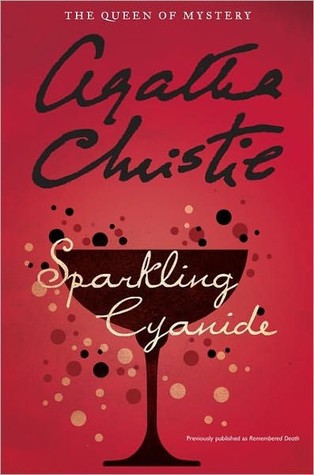
Sparkling Cyanide by Agatha Christie

The March theme for the Read Christie 2021 challenge is ‘a story featuring a society figure’. I had narrowed my choices down to the Poirot novel Lord Edgware Dies and the Colonel Race mystery Sparkling Cyanide. As I had just read a Poirot in February and have another one lined up for April, I decided to go with this one, Sparkling Cyanide. First published in 1945, the novel is an extended version of one of Christie’s short stories, Yellow Iris, which I haven’t read – but apparently the culprit is someone different in that story, so both are worth reading.

The novel begins one year after the death of Rosemary Barton, a beautiful heiress who had been celebrating her birthday at the Luxembourg restaurant with friends and family. The cause of death was believed to be cyanide in Rosemary’s champagne and it was assumed that she had committed suicide due to depression following an illness. Her husband George accepted the verdict at the time but has now received some anonymous letters stating that Rosemary was actually murdered. Sure that the murderer must have been one of the other people at the table, George decides to recreate the dinner party by inviting the same guests to the same restaurant in the hope that he will be able to identify the culprit. However, things don’t go according to plan and the evening ends with a second death…

The characterisation in this book is very strong and Christie begins by giving us one chapter from the perspective of each of the six dinner party guests, so that the nature of their relationship with Rosemary and their thoughts and feelings about her are clear from the start. It is quickly established that each of them had a possible motive for wanting Rosemary dead, but it doesn’t seem at first that any of them actually had the opportunity to carry out the murder. With the second death, things become even more complicated as this murder appears to be an almost impossible crime. I very rarely manage to solve an Agatha Christie mystery, but this is one that I found particularly difficult, despite paying close attention to the descriptions of the seating plans in the restaurant and even sketching a few diagrams! The eventual explanation, when it comes, seems quite unlikely and relies on a certain sequence of events that could easily have happened in a different way with a different result. However, I didn’t feel cheated as I don’t think any clues were withheld from us – I just didn’t put them together correctly!

The detective in this novel is Colonel Race rather than one of Christie’s more famous detectives such as Poirot or Marple – not that he really seems to do a lot of detecting. In fact, one of the suspects makes a bigger contribution to the solving of the mystery than he does. Still, Race is a straightforward, unobtrusive character who just quietly gets on with his investigations, makes mistakes now and then and isn’t afraid to admit that he has got things wrong. This is the first book I’ve read in which he appears; I think there are only three others, but as I’m hoping to read or re-read all of Christie’s novels eventually I’ll be meeting him again at some point.
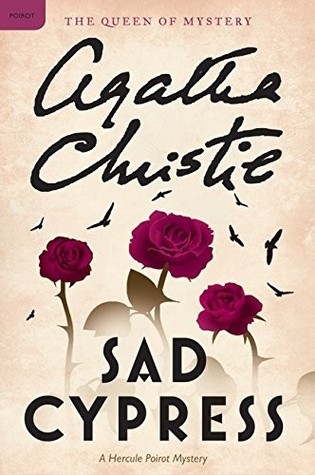
Sad Cypress by Agatha Christie

The February prompt for Read Christie 2021 was ‘a story featuring love’; as usual there were several books I could have chosen to fit this theme, but I decided on Sad Cypress, a Poirot title from 1940.

The novel begins with Elinor Carlisle on trial for the murder of Mary Gerrard. All the evidence points to her being guilty – not only was Mary her rival in love, Elinor was also in the right place at the right time to have carried out the murder. Only the village doctor, Peter Lord, believes Elinor didn’t do it and he calls in Hercule Poirot to find proof of her innocence. As Poirot begins to investigate, he discovers that almost everyone connected with the case is telling lies – but Poirot knows that where crimes are concerned, a detective can learn as much from a lie as he can from the truth.

Sad Cypress has not become a favourite Christie novel, but it’s still one that I enjoyed and one that stands out to me as feeling slightly different from most of the other Poirots I’ve read. In fact, Poirot himself doesn’t appear until almost halfway through the book and although he plays his usual vital role in solving the crime, I think the story could have been just as strong without him (apparently this was Christie’s own view as well, when she reflected on the novel after it was published). A large part of the story is written from Elinor’s perspective which gives it an emotional, intimate feel; I particularly liked the sections at the beginning and end of the book which become almost dreamlike as Elinor stands in court ‘as though imprisoned in a thick mist’, waiting to hear the decision of the jury.

As for the mystery itself, I think the plot is perhaps simpler than a lot of Christie’s others, but cleverly constructed and tightly focused. There are really only two or three likely suspects and for once I did correctly guess how the murder had been carried out and therefore who must have been responsible, but I wasn’t completely sure and had to wait for Poirot to provide the evidence. I didn’t manage to solve the mystery entirely, though – there were still lots of things that confused me, including the motive, and the twists towards the end of the book took me by surprise! Finally, in case you’re wondering, the unusual title comes from Shakespeare’s Twelfth Night: “Come away, come away, death, And in sad cypress let me be laid.”

The Read Christie theme for March is ‘a story featuring a society figure’. I’m torn between Lord Edgware Dies and Sparkling Cyanide; if you’ve read either of them, maybe you can help me decide!

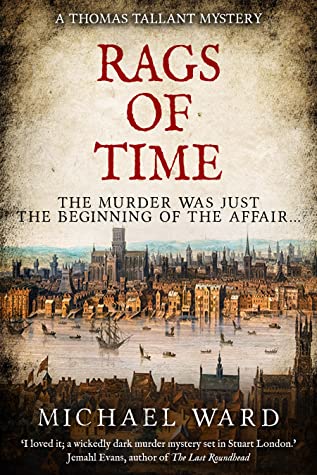
Rags of Time by Michael Ward

I love a good historical mystery, so I’m pleased to have had the opportunity to read Rags of Time, the first in a new series set in the 17th century during the final years of the reign of Charles I. Based on how much I enjoyed this book, I will certainly be looking out for the next one.

The story begins in 1639 with Tom Tallant, a young spice merchant, returning to London from India only to find that he has become implicated in a murder investigation. Wool merchant Sir Joseph Venell has been found dead in a meadow near his home in Kensington and it seems that Tom is the main suspect. Then another murder takes place, this time in the Tallant household, casting further suspicion on Tom. In order to clear his name, Tom must try to identify the real murderer – and for that he will need the help of Elizabeth Seymour, an intelligent and unusual young woman with an interest in astronomy and an addiction to gambling.

“The murder was just the beginning of the affair”, it says on the front cover of the book, and that is quite true because although Rags of Time at first appears to be a straightforward murder mystery, it soon becomes apparent that the murder is only one aspect of the story and for a while takes second place to an equally fascinating subplot involving a printing press and the distribution of seditious pamphlets. Remember that this is all taking place during an eventful and turbulent period of history, a time of tension between King and Parliament and unrest on the streets:

‘Each day and week we suffer treasonable talk on the street, attacks on our churches, seditious street-preachers, scandalous pamphlets on every corner and finally this…mutinous gangs of Apprentice Boys!’

I loved the recreation of 17th century London; there’s such a strong sense of time and place (without becoming overly descriptive) and with so much going on it’s the perfect backdrop for Tom’s adventures. Yet one of my favourite parts of the story relates to something taking place overseas – the ‘tulip mania’ sweeping Amsterdam in the 1630s and the notion of windhandel, or ‘trading in promises’.

As for the mystery itself, once everything starts to come together towards the end of the book, there are plenty of twists and turns and when the solution was revealed I was completely taken by surprise! I think there were probably a few clues but I didn’t pick up on them and didn’t guess either the culprit or how and why the murders were carried out. Although most of the focus of the novel is on Tom, I was pleased to see that Elizabeth also contributes to the solving of the mystery; I wasn’t sure I would like her at first and it took me a little while to warm to her, but I think she’s a character with a lot of potential, as is Tom himself. I hope to meet them both again soon!

Thanks to the author for providing a copy of this book for review.

Book 4/50 read for the Historical Fiction Reading Challenge.

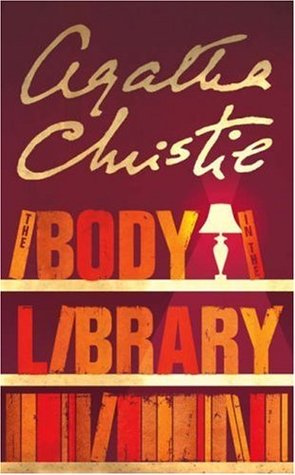
The Body in the Library by Agatha Christie

I’m taking part in Read Christie 2021 this year and the prompt for January is ‘a story set in a grand house’. Christie wrote lots of those and I’ve already read some of them, including The Hollow, which is the one the challenge hosts have chosen as the book of the month. Fortunately, they provided a list of alternative suggestions and I decided on the 1942 Miss Marple mystery, The Body in the Library, as my January book for the challenge.

The ‘grand house’ in this novel is Gossington Hall in St Mary Mead, home to Dolly Bantry and her husband, Colonel Arthur Bantry. When the Bantrys are woken by the maid early one morning to be told that a dead body has been found on their library floor – the body of a blonde young woman in a white satin evening dress and silver shoes – suspicion immediately falls on the Colonel. But the Colonel insists that he has never seen the woman before and there is no evidence to connect him with the murder, so attention then turns to other suspects.

Could the culprit be Basil Blake, a newcomer to the village who is involved in the film industry and whose lifestyle has made him the centre of village gossip? What about George Bartlett, a guest at the nearby Majestic Hotel where the murdered woman, Ruby Keene, had worked as a dancer? Or maybe it’s Conway Jefferson, who had been planning to adopt Ruby as his daughter after losing his wife and children in a plane crash several years earlier. As the police begin to investigate, Dolly Bantry enlists the help of her friend Miss Marple because she’s ‘very good at murders’. And Miss Marple once again proves just how good she is at murders by using her usual blend of observation and knowledge of human nature to piece together the clues and solve the crime.

The Body in the Library is a short, quick read and like most of Christie’s novels it is cleverly constructed so that most of the information you need to be able to solve the mystery is there from the beginning, but very easy to overlook. As Miss Marple says once or twice, most people are too trusting and too ready to believe everything they are told; even bearing that in mind, I still didn’t suspect the right person and the murderer had me completely fooled! The murderer also had the police fooled – although we don’t actually see very much of Miss Marple in this novel and the focus is more on the police investigation, she is the one who provides the necessary insights that lead to the identification of the killer.

In the foreword to the novel, Christie states that the ‘body in the library’ story is a cliché of detective fiction and that she wrote this book as a variation on that cliché: ‘The library in question must be a highly orthodox and conventional library. The body, on the other hand, must be a wildly improbable and highly sensational body.’ Well, the library at Gossington Hall certainly sounds conventional and the body caused plenty of sensation in St Mary Mead, so I think Christie achieved what she set out to do! This has not become a favourite Marple novel but I did enjoy it and am looking forward to reading February’s book for the challenge.

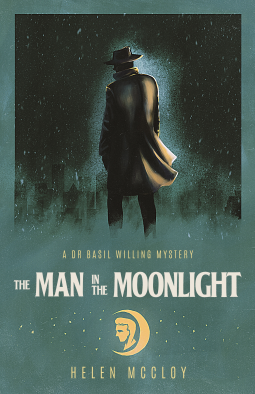
The Man in the Moonlight by Helen McCloy

I loved Dance of Death, the first book in Helen McCloy’s Dr Basil Willing mystery series which I read last month, so I was pleased to see that Agora Books have now reissued the second in the series, The Man in the Moonlight. I didn’t enjoy this one quite as much as the first, but it was still a good read and it was nice to meet Dr Willing and Assistant Chief Inspector Foyle again.

Helen McCloy (a pseudonym of Helen Clarkson) was an American crime author whose career spanned five decades and included several standalone books as well as the Basil Willing series. The Man in the Moonlight, first published in 1940, is set during World War II and the war has a part to play in the plot.

Inspector Foyle is visiting Yorkville University, where he is planning to send his son, when he finds a discarded piece of paper with the message: ‘I take pleasure in informing you that you have been chosen as murderer for Group No 1. Please follow these instructions with as great exactness as possible.’ At first Foyle doesn’t take this too seriously – he assumes it’s part of a game of some sort and doesn’t believe that real killers refer to each other as ‘murderers’ anyway – but he is forced to change his mind when Professor Konradi, an Austrian biochemist who escaped from a concentration camp, is found dead in his laboratory.

Konradi’s death appears to be suicide but Foyle isn’t convinced and enlists the help of Dr Basil Willing, psychiatric consultant to the New York District Attorney’s office. As Foyle and Willing begin to investigate, they uncover some intriguing and unexpected aspects of the case, ranging from a psychological experiment being carried out by another of the university professors to the potential involvement of a group of Nazi spies. As in Dance of Death, it’s Willing’s understanding of how the human mind works that leads to the eventual solution.

This is quite a complex mystery novel and incorporates lots of interesting psychological and scientific ideas. The sort of methods Basil Willing uses to obtain the information he needs include lie detector tests and word association tests and I found it fascinating to see him explain his analysis of these tests to the other characters. The focus on the personalities of the suspects, their possible motives and their reasons for behaving the way they do, is much more appealing to me than reading long discussions of alibis and timelines which often dominate other mystery novels and this is one of the reasons why I’m enjoying Helen McCloy’s novels so much. Most of her books are still currently out of print but I’m hoping more of them will be made available by Agora Books soon.

The Two Hundred Ghost by Henrietta Hamilton

I read my first Henrietta Hamilton novel, Answer in the Negative, earlier this year and wasn’t particularly impressed by it; I wasn’t sure whether I wanted to read any more of her books, but I believe in giving an author a second chance and The Two Hundred Ghost sounded very tempting. I’m glad I gave it a try as I enjoyed it much more than Answer in the Negative.

The Two Hundred Ghost was first published in 1956 and is the first book in Hamilton’s Johnny and Sally Heldar mystery series. The unusual title refers to 200 Charing Cross Road, the address of the antiquarian bookshop in London which is owned by Johnny Heldar’s family and said to be haunted by a ghost. Sally Merton is one of the booksellers in the shop; she is not yet married to Johnny when we first meet her and has been attracting some unwelcome attention from one of the male employees, Victor Butcher. Mr Butcher is an unpleasant bully, disliked by everybody who knows him, so when he is found dead in his office with a knife in his back, there are plenty of suspects…including the ghost, which is sighted in the building shortly before the murder takes place!

This is a very short novel and the plot moves along at a steady pace, making it a quick and easy read; although, as with the other Hamilton novel I read, I felt that there was a bit of repetition surrounding discussions of alibis, timing of events and layouts of rooms, this one has a better balance between these technical aspects of mystery-solving and the more ‘human’ aspects, such as motives and personalities. I didn’t guess who the murderer was, but I don’t think the author was unfairly holding back information from the reader and it may have been possible to solve the mystery if you were paying more attention than I was and didn’t miss any clues!

Henrietta Hamilton (a pseudonym of Hester Denne Shepherd) worked in a London bookshop in the years following World War II and had personal experience of selling antiquarian books, which gives the novel a feeling of authenticity. Bookselling is not just a background to the novel, but an important part of the plot, and the author’s knowledge and interest in ‘incunabula’ (early printed books) comes through very strongly.

I was pleased to find that Sally plays a bigger part in the investigations in this book than she did in Answer in the Negative and makes some important discoveries which prove to be turning points in the mystery – although, remembering that it was written in the 1950s, there’s always a sense that Johnny feels the need to protect her because she’s a woman. Still, both Johnny and Sally are characters who are easy to like and to care about; it was nice to get to know them before they were married and to see their relationship develop (although it does so quite subtly and their romance is only one small part of the story). Having enjoyed this book, I would like to meet the Heldars again – luckily, there are another two books in the series and I’m hoping they will be reissued soon too!

Thanks to Agora Books for providing a copy of this book for review via NetGalley.

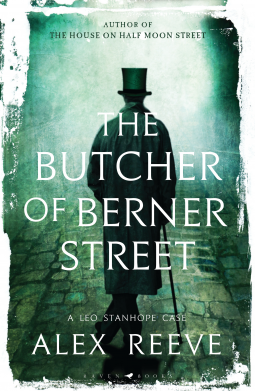
The Butcher of Berner Street by Alex Reeve

Along with Antonia Hodgson’s Thomas Hawkins books and Andrew Taylor’s Marwood and Lovett books, this is one of several new historical mystery series I have been enjoying over the last few years. It is set in Victorian London and follows the adventures of Leo Stanhope, an interesting, intelligent and likeable young man who has a secret he must keep hidden at all costs. This is the third book in the series and although you could certainly read it without having read the previous two (The House on Half Moon Street and The Anarchists’ Club), I do recommend getting to know Leo and his friends from the beginning if possible.

As The Butcher of Berner Street opens, we learn that Leo, formerly a coroner’s assistant, has a new job writing articles on science for the Daily Chronicle newspaper. He is enjoying the work and is grateful for the opportunity he has been given, but he longs for something more exciting to write about – something that will give him a front page headline. When he receives an anonymous note warning of a murder due to take place at a wrestling club in the East End of London that night, it seems Leo is about to get his wish. A murder does take place, although not quite in the way Leo had expected, and when suspicion falls on a Hungarian female wrestler, Irina Vostek, he must find a way to get the headlines he needs while making sure that Irina really is the killer.

I think The Butcher of Berner Street is my favourite of the three books in this series. The plot is well constructed and although I did guess who the murderer was, there were several possible suspects and enough twists and turns to give me a few doubts. More than the plot, though, I loved the setting, the atmosphere and the insights into various aspects of Victorian life: the class differences and the fate of those living in poverty, the early days of the women’s suffrage movement and attitudes towards the Catholic church.

Leo himself is a very compelling character; it’s no spoiler to tell you that although he has chosen to live as a man, he was born and raised as a girl before leaving home as a teenager and taking on a new identity, knowing that he could never be happy unless he had the freedom to be true to himself. Only one or two trusted friends know Leo’s secret and he lives in fear of anyone else finding out; life as a transgender man in the 19th century is not easy and he has heard stories of others who have been arrested and forced to undergo horrific ‘cures’. Although this book is first and foremost a mystery novel and not specifically a book about the experience of being trans, it does have an impact on the way Leo approaches solving the mystery, as he needs to avoid drawing too much attention to himself and risking being blackmailed or exposed. As well as Leo, there are lots of other recurring characters in the series and I enjoyed meeting them all again, particularly the pie maker Rosie Flowers and Alfie the pharmacist and his young daughter, Constance.

I don’t know whether there will be a fourth book in this series. This one has a proper ending, tying up some loose ends and not leaving too much unresolved, but I still hope to see Leo and his friends again soon!

Thanks to Raven Books for providing a copy of this book for review via NetGalley.