Cards on the Table by Agatha Christie

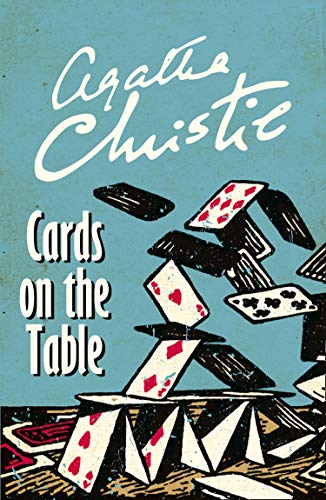
A new year means the start of a new Agatha Christie challenge! Read Christie 2023 is hosted by the official Agatha Christie site and this year the focus is on methods and motives. The theme for January is jealousy and the chosen book is Sad Cypress. However, I read that one quite recently so I’ve gone with one of the alternative suggestions for this month, Cards on the Table.

Published in 1936, this is a Poirot novel, but it also features three of Christie’s other recurring characters, all of whom work together to solve the mystery. They are Superintendent Battle, the Scotland Yard detective; former Army officer and intelligence agent, Colonel Race; and Ariadne Oliver, the famous crime author. All three, along with Poirot, are invited to a dinner party hosted by Mr Shaitana, a wealthy man known as a collector of rare objects. He tells Poirot that he will also be inviting a collection of criminals – four people he believes have committed murder but never been caught.

During the party, the eight guests divide into two groups and sit down to play bridge. Several hours later, Mr Shaitana, who wasn’t participating, is found dead in his chair by the fire – stabbed with a small dagger by one of his guests while the others were engrossed in their game. The four sleuths can obviously be ruled out, but any one of the other four could be the murderer. To get to the truth, Poirot and his friends must investigate the background of each suspect to see whether Shaitana was correct and each of them had already killed before.

Cards on the Table begins with a foreword in which Christie explains that unlike most crime novels where the least likely suspect is usually the culprit, this book has four suspects who are all equally likely. They have all (allegedly) committed murder in the past, so all have a motive – fear that Shaitana will expose their previous crimes to the other guests. There’s Dr Roberts, who may or may not have been responsible for the death of at least one of his patients; Major Despard, whose expedition to the Amazon is shrouded in mystery; young Anne Meredith, who tries to cover up her reasons for leaving a previous job; and Mrs Lorrimer, an expert bridge player whose secrets prove particularly difficult to unearth. I suspected all of them at various points, but every time I thought I’d worked it out, Christie threw another twist into the story and I had to think again!

I loved the idea of having four different detectives working together in the same novel (it’s a shame Miss Marple and Tommy and Tuppence hadn’t been invited to the party too!) and each of them has a chance to contribute to the solving of the mystery. Colonel Race has a disappointingly small part, but we see a lot of Battle and Mrs Oliver – who is often described as a self-parody of Christie herself and provides an opportunity to comment on the writing of detective novels. Of course, it’s Poirot who correctly identifies the murderer in the end!

I enjoyed this book, but I think I would have enjoyed it even more if I’d had more knowledge of bridge, which is a game I don’t play and don’t really understand. Part of Poirot’s investigation revolves around the score cards and an analysis of each suspect’s playing style, so this meant very little to me. Luckily, though, it’s not completely essential to be able to follow all of this and there are other clues to piece together as well.

February’s Read Christie theme is ‘a blunt object’ and the group read will be Partners in Crime, which again is a book I’ve already read. I’ll wait until they reveal the alternative choices for the month and see if any appeal to me.

The Adventure of the Christmas Pudding by Agatha Christie

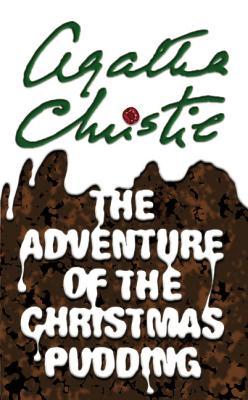
The December prompt for Read Christie 2022 is ‘a story containing precious jewels’ and the book chosen for the group read is Hercule Poirot’s Christmas. I read that one a few years ago, so decided to try The Adventure of the Christmas Pudding instead. This is a collection of six short stories and although only the first one contains precious jewels and has a festive theme, I thoroughly enjoyed reading all six of them!

Agatha Christie herself selected the stories for this collection and the first five in the book are Poirot mysteries. In the title story, The Adventure of the Christmas Pudding, Poirot joins the Lacey family at their country house, supposedly to experience a ‘typical English Christmas’. However, unknown to the family, he has another motive for attending their Christmas celebrations – he is hoping to track down a precious ruby stolen from a foreign prince. Although I felt that the title gave away part of the mystery – it’s obvious that the pudding is going to have some significance – there are still some twists before the full solution becomes clear. And I loved the Lacey children who decide to present Poirot with a murder as a special Christmas treat!

The Adventure of the Christmas Pudding was apparently inspired by Christie’s own memories of spending Christmas at Abney Hall, her sister’s home in Cheshire (presumably without the stolen jewels and murders). The other four Poirot stories in this collection are not set at Christmas, but are equally enjoyable to read. The Mystery of the Spanish Chest, in which a dead body is found in a chest after a party, is excellent. I had no idea who the culprit was or how the crime was carried out and I loved watching the plot unfold. The Under Dog, where Poirot investigates the death of a man who has been hit on the head with a club, is another good one. It’s quite complex and involved and I think it could easily have been developed into a full length novel.

The next two stories are quite unusual. In Four and Twenty Blackbirds, a man who usually dines in the same restaurant every Tuesday and Thursday without fail suddenly turns up on a Monday and asks for food he has never ordered before. Poirot is intrigued, particularly when he hears three weeks later that the man has died after an accidental fall downstairs. I found part of the solution easy to guess, but again there’s more to this story than it would seem at first! Then, in The Dream, Poirot is summoned by an elderly millionaire who is having a recurring dream in which he shoots himself with a revolver. When the old man does actually die a few days later in exactly the manner he has described, Poirot is called back to investigate. I loved this one – it’s very cleverly done!

After all of these Poirot mysteries, it was nice to see Miss Marple make an appearance in the final one, Greenshaw’s Folly. In this story, the elderly Miss Greenshaw, the current owner of the house known as Greenshaw’s Folly, is murdered in the garden just after making a new will. Miss Marple is brought into the mystery by her nephew Raymond West, whose niece has been working at the house, and through her usual methods – a knowledge of human nature and trying to decide who the various suspects remind her of – she proceeds to solve the mystery.

Overall, this is a great collection and I hope I’ve managed to give you a taste of each story without spoiling them too much. I’m looking forward to taking part in Read Christie 2023 next year!

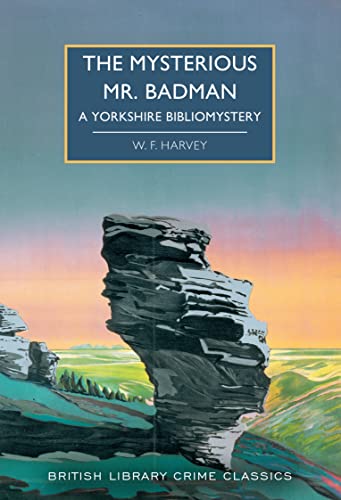
The Mysterious Mr Badman by W.F. Harvey

The British Library are doing a great job of bringing the work of obscure or long-forgotten authors back into print with their Crime Classics series and William Fryer Harvey is another. Better known for his horror stories such as The Beast with Five Fingers and August Heat, he also wrote a crime novel, The Mysterious Mr Badman, which was originally published in 1934. I was immediately drawn to this book not just by the title, but also the subtitle, A Yorkshire Bibliomystery!

As Martin Edwards points out in the introduction, this must be the only crime novel with a blanket manufacturer as the protagonist. His name is Athelstan Digby and as the novel opens he is visiting his nephew in the Yorkshire village of Keldstone. One day he offers to take charge of the village bookshop so the bookseller and his wife can go to a funeral. Digby is expecting a quiet, uneventful afternoon so he is amazed when three men separately enter the shop within the space of a few hours, all asking for a copy of the same book: Bunyan’s Life and Death of Mr Badman. Digby is unable to find this book on the shelves, but when a boy arrives at the shop later that day with a pile of old books to sell – including Mr Badman – he becomes even more suspicious. What is going on – and why is that particular book so important?

This is a short novel, so I won’t go into the plot in much more detail…except to say that it’s great fun. There are murders, incriminating letters, political conspiracies, a touch of romance and a lot of humour! With character names like Athelstan Digby, Euphemia Upstart, Olaf Wake and Kitchener Lilywhite, you can see that it’s not a book to be taken entirely seriously, but at the same time it’s a clever, interesting and well written novel and one of the most enjoyable I’ve read from the British Library Crime Classics series for a while. Just be aware that it’s more of a thriller than a conventional detective novel; the mystery is actually solved quite early in the book and the significance of Mr Badman and the identity of the villain are revealed much sooner than you would expect. The fun is in watching Digby team up with his nephew Jim Pickering and Jim’s love interest Diana Conyers to try to decide what they should do with the information they’ve obtained.

As always when I read mysteries written in this period, I was struck by not only how much more difficult some aspects of crime-solving were in those days (no internet, no DNA testing) but also how much easier other aspects were. It was far simpler to trace a particular car when there were so few of them on the roads and everyone would notice an unfamiliar one driving through their village. I really enjoyed watching Digby, Jim and Diana investigate the mystery using the methods available to them in the 1930s, even if they occasionally walk straight into traps that are quite obvious to anyone who reads a lot of Golden Age crime fiction! I also loved the Yorkshire setting, although not all of the novel is set there.

Although, as I’ve said, Harvey is better known as a horror writer, it seems that the character of Digby previously appeared in a book of short stories, The Misadventures of Athelstan Digby. I hope that one will become available as a BLCC book soon too.

4.50 from Paddington by Agatha Christie

This month’s theme for Read Christie 2022 is ‘a story featuring train travel’. I had already read most of the possibilities – The Mystery of the Blue Train, Murder on the Orient Express and The ABC Murders – but hadn’t yet read the Miss Marple novel 4.50 from Paddington, so that was my choice for this month.

The ‘train travel’ element of the story appears in the very first chapter, with the elderly Elspeth McGillicuddy taking a train to the village of St Mary Mead to visit her friend, Miss Jane Marple. Mrs McGillicuddy happens to glance out of the window just as her train passes another train running parallel in the same direction. At that moment, a blind flies open in the window of the other train and she is horrified to witness a man standing with his back to her strangling a woman. She reports the incident to the ticket collector and the police are informed, but when no dead body is found on the train Mrs McGillicuddy is dismissed as an old woman with an overactive imagination. Miss Marple, however, knows her friend is telling the truth and is determined not to let the matter drop.

Convinced that the body may have been thrown from the train as it passed the grounds of Rutherford Hall, Miss Marple enlists the help of Lucy Eyelesbarrow, a young woman she knows who has established a reputation for herself as a professional and efficient cook and housekeeper. Lucy’s skills mean she is very much in demand and never short of work, but Miss Marple persuades her to take a position at Rutherford Hall for a few weeks so that she can search for the body while she’s there. Settling into her new job, Lucy begins to get to know the residents of Rutherford Hall – the family patriarch Luther Crackenthorpe, his sons, daughter, in-laws and grandchildren – and begins to wonder whether their connection to the murder on the train really was a coincidence after all.

I found this a particularly enjoyable Miss Marple novel – probably in my top two or three. It seems that it has had some criticism due to the lack of clues and logical deductions and I do understand that complaint because we never find out exactly what leads Miss Marple to identify the correct suspect. However, I didn’t have a problem with this. The solution does make sense, even if we don’t know how she arrived at it, and the culprit was actually the person I suspected myself (again, not based on any real evidence – just a hunch!).

Although Miss Marple is the one who solves the mystery, we don’t really see very much of her in this book. Unable to infiltrate the Crackenthorpe household herself, she sends Lucy Eyelesbarrow in her place, which means a lot of the story is written from Lucy’s perspective. Luckily, Lucy is a great character – independent, intelligent and courageous. Several of the male Crackenthorpes are drawn to her and there’s a hint at the end of the book that she’s going to marry one of them. Which one she chooses is left for the reader to decide – although I’ve since discovered that Christie reveals Lucy’s choice in her Secret Notebooks, published in 2009.

There’s only one month left in this year’s Read Christie challenge and the December theme will be ‘a story containing precious jewels’. However, plans for Read Christie 2023 have already been announced and you can register your interest here: https://linktr.ee/OfficialAgathaChristie

Fool Errant by Patricia Wentworth – #1929Club

This week Karen and Simon are hosting 1929 Club, the latest of their biannual events where we all read and write about books published in the same year. 1929 turns out to have been a particularly great year for publishing, with lots of tempting titles to choose from, but I decided to start with a book by an author I had never read but had been intending to try for a long time.

Patricia Wentworth is better known for her Miss Silver mystery series, but Fool Errant is the first of four novels featuring a different crime-solving character – Benbow Collingwood Horatio Smith. Named after three famous British admirals, the mysterious Mr Smith lives in London with his very talkative parrot, Ananias, and carries out some sort of espionage work for the Foreign Office. We learn little more than that about him in this book – in fact, he only makes two or three brief appearances and remains an eccentric, shadowy character in the background.

The novel opens with a nervous, stammering young man, Hugo Ross, arriving at Meade House, the home of the inventor Ambrose Minstrel. He is hoping to apply for the position of secretary and is surprised when Minstrel immediately offers him the job despite his lack of qualifications and experience. Before he even starts work, however, he has an encounter with a young woman in the street who is running away from home to avoid marriage with a distant cousin. When she hears that Hugo is planning to join Minstrel’s household, she is horrified and advises him to leave at once, but rushes off to catch her train before Hugo can ask for an explanation.

Taking up his new position as Minstrel’s secretary, Hugo soon begins to feel that something is not quite right at Meade House. Following a series of strange occurrences – and another warning from the young woman, whose name he discovers to be Loveday Leigh – Hugo decides to consult his brother-in-law’s uncle, Benbow Smith. It seems that he has stumbled upon a plot that could have serious implications for the government – and for his own safety if Minstrel finds out that he has guessed the truth. With the help of Smith and Loveday, Hugo must try to foil the plot while convincing Minstrel and his accomplices that he really is the timid, gullible idiot they believe him to be.

Fool Errant turned out to be a good choice for my first Patricia Wentworth novel; I expect it’s quite different from the Miss Silver books, being much more of a thriller than a mystery, but it was fun to read and the exciting plot kept me turning the pages. My only real problem was with the ridiculous characterisation of Loveday Leigh who, although she saves the day on one or two occasions, behaves like a child, is unable to have a serious conversation and expects kisses at the most inappropriate moments. Women like Loveday are quite common in books from that era, of course, but she has to be one of the worst I’ve come across!

This probably isn’t a book I’ll want to read again, but I did enjoy it and will look forward to reading the other three Benbow Smith novels…eventually!

~

Other 1929 books previously reviewed on my blog:

A Room of One’s Own by Virginia Woolf

A Farewell to Arms by Ernest Hemingway

Beauvallet by Georgette Heyer

Dickon by Marjorie Bowen

Partners in Crime by Agatha Christie

~

This is also book #6 read for R.I.P. XVII

Blue Water by Leonora Nattrass

This is the sequel to Black Drop, Leonora Nattrass’ 2021 debut novel which introduced us to the character of Laurence Jago. Blue Water works well as a standalone historical mystery, but I would recommend reading both books in order if you can.

It’s December 1794 and former government clerk Laurence Jago has just left Britain aboard the packet ship Tankerville. The ship’s destination is Philadelphia, where one of Jago’s fellow passengers, Theodore Jay, will deliver a treaty to President Washington. The Jay Treaty, negotiated by Theodore’s father, the American envoy John Jay, is designed to promote peace between the two nations and prevent America from joining forces with France against Britain. War Office official Mr Jenkinson, also on board the Tankerville, has offered to hide the Treaty in a safe place, but when he is found dead and the papers disappear Jago realises it’s up to him to find them and prevent them from falling into French hands.

Well, I enjoyed Black Drop but this second book is even better! With almost the entire story taking place at sea and therefore with a limited number of characters, the mystery has a ‘locked room’ feel and kept me guessing until the end. Leonora Nattrass very skilfully casts suspicion on first one character then another and it soon appears that almost everyone on the ship has a secret to hide. Although I correctly predicted a few of the plot twists (and was impatiently waiting for Jago to discover them too) the eventual revelation of the fate of the Treaty came as a complete surprise to me. I was also surprised when I read the author’s note at the end and saw that some parts of the plot were based on historical fact, although the details have been added to and embellished using the author’s imagination.

Laurence Jago continues to be an engaging narrator, though not always the most reliable one due to his occasional poor judgement, the secret sympathies we learned about in the previous book and his tendency to succumb to the temptations of ‘black drop’ laudanum. I was pleased to see the return of some other characters from the first book including the journalist William Philpott (whose attempts to compile a dictionary of seafaring superstitions add some humour to the book) and Theodore Jay’s slave and companion Peter Williams, always a calm and wise presence amid the onboard chaos. And of course, there are plenty of colourful new characters amongst the passengers, including two French aristocrats, an American plantation owner and an Irish actress with a dancing bear!

Choosing to set this novel at sea gives it a very different feel from Black Drop. Apart from a few glimpses of Madeira and then Praia, capital of Cape Verde, the whole story unfolds aboard the Tankerville and we are given lots of insights into life during a long sea voyage. The use of nautical terminology never becomes too overwhelming but it all feels authentic and due to the setting, time period, elegant prose and frequent encounters with French warships, I was strongly reminded of Patrick O’Brian’s Aubrey/Maturin series. I was quite sure Leonora Nattrass must have read O’Brian and when I reached the acknowledgements at the end of the book I found that I was right!

If it’s not already clear, I loved this book and hope there’s going to be a third in the series.

Thanks to Viper for providing a copy of this book for review via NetGalley.

Book #5 read for R.I.P. XVII

Book #56 read for the Historical Fiction Reading Challenge 2022.

The Twist of a Knife by Anthony Horowitz

This series, of which The Twist of a Knife is the fourth book, takes as its premise the idea that the author Anthony Horowitz himself is one of the main characters, enlisted by the fictional detective Daniel Hawthorne to write books about the cases he investigates. It’s a concept that some people love and others hate, but if you have followed this series through to its fourth outing you probably, like me, fall into the first category. If you’re yet to read any of these books, you could start with this one if you want to as it does stand alone, but I would recommend beginning with the first, The Word is Murder, if you can. Either way, try one and see what you think!

The Twist of a Knife begins with Hawthorne trying to persuade Horowitz to write another book about him, but Anthony has other plans. He had only agreed to a three-book deal and that is now complete; now he’s working on a different novel – Moonflower Murders – and preparing for the London opening of his play, Mindgame. However, as Anthony himself then admits, the fact that we, the reader, are holding a fourth Hawthorne novel in our hands proves that somehow Hawthorne must get what he wants!

The story then moves on to the first night of Mindgame at London’s Vaudeville Theatre. The play has been very well received on tour and Horowitz is hoping that London audiences will like it just as much. Everything goes smoothly on that first night, but as Anthony and the cast get together in the green room after the play, the first review comes in – and it’s a bad one. In fact, it couldn’t be much worse. Written by the critic Harriet Throsby for the Sunday Times, the review is rude, scathing and insulting, placing most of the blame on Horowitz’s writing. When Harriet is found stabbed to death the next morning, suspicion immediately falls on Horowitz and he is arrested for murder. His only hope is that Hawthorne can find the real culprit and clear his name – but what will Hawthorne expect in return?

I think this could be my favourite of the four books in this series. I loved the theatrical setting and I found the mystery a particularly interesting one. Just about everyone involved with the play Mindgame has both the motive and the opportunity to have killed Harriet and I enjoyed learning more about each of the suspects – I did pick up on some of the clues, but certainly not all of them and I didn’t guess who the murderer was until the truth was revealed in an Agatha Christie-style denouement at the end of the book. Mindgame is a real play written by Horowitz which was first performed in 1999, although in this book it’s presented as a new work and the actors, director and events of the opening night are fictional. It sounds like a fascinating play and I’m tempted to read it, although it sounds like one that would have to be seen on stage to fully appreciate.

Daniel Hawthorne remains a private, secretive person, as he has from the beginning of the series, but with each book a few more facts about him are uncovered. In this book, Horowitz has the chance to spend some time in Hawthorne’s home and makes one or two intriguing discoveries which I’m sure will be explored further in the next book. I’m assuming there will be a next book – in fact, there were hints at the end of this one that we could have several more to look forward to. I hope so, although I would still prefer another book about Susan Ryeland and Atticus Pünd to follow Magpie Murders and Moonflower Murders!

Thanks to Century for providing a copy of this book for review via NetGalley.

Book #1 read for R.I.P. XVII