The Tudors: A Very Short Introduction by John Guy

The Tudors Just a short post today to discuss a very short book!

The Tudors: A Very Short Introduction is part of a series of books which offer, as the title suggests, a very short introduction to a wide variety of different topics. Looking at the list of other titles available (and there are hundreds of them) you can choose from subjects as diverse as Folk Music, Feminism or Contemporary Art; Chinese Literature, Biblical Archaeology or American Politics. This one is devoted to the Tudors although, admittedly, I probably didn’t really need a short introduction to them, having recently read Peter Ackroyd’s much longer book on the same subject! I had the opportunity to receive a review copy, though, and was curious to see what the series was like.

In this book, historian John Guy takes us through the reigns of each Tudor monarch – Henry VII, Henry VIII, Edward VI, Lady Jane Grey, Mary I and Elizabeth I. All of the basic facts are here, presented in a format that is easy to follow and understand. There are also some illustrations, genealogical tables, a chronology and a list of suggested further reading. As I already have quite a good knowledge of the Tudor period, very little of the information in this book was new to me, but for those readers who don’t know much about the Tudors this will be an excellent starting point.

While this was not as interesting or compelling as Ackroyd’s book (and I know it’s not fair to compare the two as they are clearly aimed at different readers and have different purposes) I did enjoy reading this Very Short Introduction and would consider trying another one. As well as being short (just over 100 pages), these books are also very small and would be the perfect size to take with you on a train or bus journey or to fit into a bag or pocket so that you could dip into it when you have a few spare moments to read. And if you don’t feel like actually reading it from cover to cover, it would be a good reference book to keep on your shelf for times when you might want to quickly look up some dates or facts.

You can find a full list of all the Very Short Introductions on the Oxford University Press website.

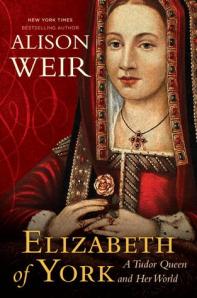
Elizabeth of York: A Tudor Queen and Her World by Alison Weir

Elizabeth of York Elizabeth of York’s story is a fascinating one. As the eldest daughter of King Edward IV and Elizabeth Woodville (the alternate spelling of Wydeville is used in this book), Elizabeth lived during one of the most turbulent periods of English history, the Wars of the Roses. She was the sister of the two young princes who it is believed may have been murdered in the Tower of London, she married the first Tudor king, Henry VII, who defeated her uncle Richard III at the Battle of Bosworth, and she was also mother to another king, Henry VIII. Despite all of this, Elizabeth is not usually given as much attention as other figures of the period. This new biography, Elizabeth of York: A Tudor Queen and Her World, explores Elizabeth’s life and her historical significance.

Alison Weir is an author of both historical fiction and non-fiction. Although I have read one of her novels, Innocent Traitor, this is the first of her biographies I’ve read and I was very impressed. The book is written in a style that I found engaging and easy to read but it’s also a very thorough, long and detailed account of Elizabeth’s life. An incredible amount of research must have gone into the writing of this book and it contains an absolute wealth of information…I read it on my Kindle and was constantly bookmarking interesting facts and passages.

As well as taking us, in chronological order, through Elizabeth’s entire life from her birth to her death and its aftermath, we are also given lots of details on the social history of the period and what life was like for people who lived during that time: what they ate and drank, the clothes they wore, and the way children were treated and expected to behave. There are lists of dishes served at banquets, descriptions of the duties of ladies-in-waiting and even an appendix giving a full description of every known portrait of Elizabeth. Sometimes there’s too much detail (I didn’t really feel the need to know the names of the nurses of each of Elizabeth’s younger sisters, for example, and the lists of her privy purse expenses and all the gifts she bought and received were a bit overwhelming) but it all helps to build up a full and vivid picture of Elizabeth’s world.

Less is known about Elizabeth than other Tudor figures, so there are times when the focus of the book switches to important political events, conspiracies and other things taking place in the wider world, rather than on Elizabeth herself. The only drawback here is that with so few primary sources remaining to give us information on Elizabeth’s life, Weir can only assume what Elizabeth may have thought or how she felt. This is not really the author’s fault but it would have been interesting to know Elizabeth’s true thoughts on some of these issues, such as the pretenders to the throne who appeared during Henry VII’s reign claiming to be Elizabeth’s lost brothers.

Much as I enjoyed this book, I did have a problem with the portrayal of Richard III. I was aware before I started reading that Alison Weir has a negative opinion of Richard and believes him guilty of all the crimes that he has been accused of, but I still thought there was too much speculation and personal bias in her discussions of him. In the absence of any real evidence, we are told that ‘maybe Elizabeth hated him’ and ‘maybe Cecily was furious with him’, for example. These are not really historical facts, are they? The opinions of other authors and historians who take a more sympathetic view of Richard are dismissed as ‘wishful theories evolved by revisionists’. Anyway, this is just a small criticism of what is otherwise a wonderfully entertaining and informative book. For anyone interested in learning more about this important but often forgotten Tudor queen and her world, I would highly recommend reading Elizabeth of York. It really is a fascinating period of history and Elizabeth deserves to be remembered!

I received a copy of this book for review via Netgalley.

Tudors by Peter Ackroyd

Tudors Peter Ackroyd has written over thirty non-fiction books, but Tudors is the first one I have read. I read a lot of historical fiction set in the Tudor period, so I thought it would be a good idea to read some factual information about the period and fill in some gaps in my knowledge. Tudors is the second volume in Ackroyd’s new The History of England series and while I would have liked to have started at the beginning with the first book, Foundation, the fact that I started with this one wasn’t a problem.

I was surprised to find that this book does not begin with the life of the first Tudor king, Henry VII. Instead, it starts with his death and the accession to the throne of his son, Henry VIII in 1509. Ackroyd then takes us through the reigns of Edward VI, Mary I and Elizabeth I, ending with Elizabeth’s death in 1603 – a whole century of history. Throughout the book, his focus is on the subjects of religious change and reform and once I knew that this was the main theme of the book, the decision to include Henry VII in the previous volume rather than this one made more sense as the reformation of the English church only really began with Henry VIII’s break away from Rome.

As this was my first experience of Peter Ackroyd’s work and I wasn’t sure what to expect, I was pleased to find that Tudors was both well written and well researched, while not being too academic, which makes it a good choice for the general reader with an interest in English history. With so much history to cover, I thought Ackroyd did a good job of selecting which historical events to concentrate on and how long to spend discussing each one. He keeps everything in chronological order, rather than jumping around in time, which makes the book easy to follow and if you’re left wanting to know more about a particular person or topic, an extensive list of further reading is included at the end of the book.

My only problem with this book was that I don’t personally find the subject of religious reform particularly interesting so, for me, some sections were slightly dry and boring. Obviously the English Reformation was of huge importance and I can understand why Ackroyd chose to give it so much attention, but I would have preferred more detail on how these religious changes affected the daily lives of the English people as well as those of the monarchs and nobility. I would also have liked to delve deeper into the characters of some of the fascinating historical figures who lived during the Tudor period, but I felt that Ackroyd was more concerned with chronicling the events of the period rather than looking at character.

Six volumes are planned in this series and Tudors is only the second, so there’s a lot of history still to come!

I received a copy of this book for review from Netgalley.

Daphne du Maurier and her Sisters: The Hidden Lives of Piffy, Bird and Bing by Jane Dunn

Daphne du Maurier and Her Sisters I don’t read a lot of biographies but I was pleased to have the opportunity to read this one as Daphne du Maurier is one of my favourite authors. Jane Dunn has previously written a book on Virginia Woolf and her sister Vanessa Bell and another about Elizabeth I’s relationship with Mary Queen of Scots, but this is the first time I’ve read any of her work.

Daphne du Maurier and Her Sisters, as the title suggests, tells the story of not just Daphne, but also her two sisters, Angela and Jeanne – or Piffy, Bird and Bing as they were nicknamed. Rather than looking at each of the sisters’ lives separately, Dunn blends their three stories together and shows us the different ways they reacted to the same experiences and the influence they had on each other both as people and as writers or artists.

The three girls were born into a family of celebrities at the turn of the 20th century. Their father, Gerald, was a famous actor and theatre manager and their mother, Muriel Beaumont, was also an actress, while their grandfather, George du Maurier, was a successful writer. Angela (Piffy), Daphne (Bing) and Jeanne (Bird) had a rich and privileged childhood, but not always a very happy one. With a mother who could often be very distant, it was the flamboyant, theatrical Gerald who was the biggest influence on his daughters’ lives – sometimes in a good way and sometimes bad. He was a popular, charismatic man but also a selfish and spoiled one who liked to be the centre of attention and Daphne, who was less outgoing than her sisters, soon grew to resent the non-stop parties and socialising.

As Daphne is by far the most famous of the du Maurier sisters, it’s natural that most people who pick up this book will do so because they want to learn more about Daphne’s life. Having read Justine Picardie’s novel, Daphne, I already knew some of the basic facts – her difficult marriage to the soldier, Tommy ‘Boy’ Browning; her obsession with Menabilly, the house in Cornwall that became the model for Manderley in Rebecca – but I was keen to find out more about the author whose books I love so much. As a fan of Daphne’s novels I was hoping there would be more information on her work, so I was slightly disappointed that Dunn devotes no more than one or two pages to most of her novels, although it was enough to show me how Daphne’s writing related to various aspects of her life and I can now see how autobiographical many of her books were, particularly The Parasites and I’ll Never Be Young Again.

Yet despite my interest in Daphne, of the three du Maurier sisters the one I found I really liked and sympathised with was Angela. Dunn portrays Angela as a passionate, romantic and naïve girl who was eager to please but often felt inadequate and inferior, aware that she was not as pretty as Daphne and not her parents’ favourite. After a failed acting career, Angela wrote several novels but again found herself overshadowed by the success of her younger sister. Whenever she was mistaken for Daphne and asked if she was the novelist she would reply “I’m only the sister” which even became the title of her autobiography. The youngest sister, Jeanne, is not given as much attention in this book as Daphne and Angela, though this is understandable as less is known about her. Daphne and Angela both left behind a legacy of written work which Dunn is able to quote from, but in Jeanne’s case there is less material to work with especially as her life-long partner, the poet Noël Welch, chose not to cooperate.

I was completely gripped by the first few chapters of this book. I loved reading about the du Mauriers’ early years and meeting these three creative, imaginative little girls who enjoyed re-enacting their favourite scenes from Peter Pan and creating their own games and fantasy worlds. The descriptions of life after World War I – the Jazz Age of the 1920s and the lifestyles of the ‘Bright Young Things’ – were also fascinating. But as the sisters grew older and Dunn began to focus on constant holidays to France and Italy, and an endless cycle of friendships and love affairs, I thought the book started to become more repetitive and less interesting.

While I didn’t find this book as enthralling as the first few chapters led me to expect, I did still enjoy getting to know Piffy, Bird and Bing and have been left wanting to read the remaining Daphne du Maurier novels I still haven’t read, as well as maybe trying to find one of Angela’s.

I received a copy of this book for review via Netgalley

Blood Sisters: The Women Behind the Wars of the Roses by Sarah Gristwood

Blood Sisters Blood Sisters is a non-fiction book which looks at the lives of seven women who all played an important part in the period of history known as The Wars of the Roses or the Cousins’ War – the conflict between the House of York and the House of Lancaster, two branches of the English royal family. These seven women are listed below:

* Margaret of Anjou (Marguerite), Queen to Henry VI

* Cecily Neville, the mother of two Kings of England: Edward IV and Richard III

* Elizabeth Woodville, Queen to Edward IV and mother of the ‘Princes in the Tower’.

* Margaret of Burgundy, sister of Edward IV and Richard III and wife to the Duke of Burgundy.

* Anne Neville, wife of Richard III and daughter of the Earl of Warwick (the Kingmaker)

* Margaret Beaufort, mother of Henry Tudor (the future Henry VII).

* Elizabeth of York, Edward IV’s daughter and Henry VII’s wife.

Notice that I’ve defined these seven women by their relationships to the men, the Kings, and it would have been almost impossible not to do that, as their connections to the Plantagenet and Tudor Kings of England are the reasons they are still remembered today. But in this book, Sarah Gristwood shows that each of them also had an interesting story of her own and was historically important in her own right. Rather than devoting one section of the book to each woman and telling their stories separately, she weaves them together which makes sense considering that some of the women were related and several of them did meet or interact with the others in some way.

While Blood Sisters was very compelling and readable non-fiction, I have to admit I didn’t learn much that I didn’t already know about most of the women. The lives of Elizabeth Woodville and Margaret Beaufort were covered in another book I’ve read, The Women of the Cousins’ War, and a lot of the same information appears here too – though I suppose there’s a limit to how much information is actually available. Of the seven featured in this book, Margaret of Burgundy was the one I previously knew the least about and so I was particularly interested in reading about her.

As well as telling us about the major historical events of the period, Gristwood also gives us a lot of information to help us understand what daily life was like for these women: for example, records of household accounts, and descriptions of clothes worn at coronations or pageants and the dishes served at banquets. I also enjoyed reading about the disappearance of the Princes in the Tower and I appreciate the fact that Gristwood presented some of the different theories and possibilities rather than just blaming Richard III! A lot of attention is also given to the stories of the various Yorkist pretenders to the throne who caused so many problems for Henry VII during his reign, especially Perkin Warbeck, who claimed to be the younger son of Edward IV.

It’s frustrating that so much of the information we have about this period comes from the work of Thomas More and others who were writing during the Tudor period and so were likely to be biased, but Gristwood does take care to point out when something may not be completely accurate and when we need to use some caution. She explains which of her sources may have been unreliable or may have had their own reasons for wanting to portray a person or event in a certain way.

I would recommend Blood Sisters to anyone interested in learning more about this period from a female perspective and it’s also an ideal book for readers like myself who don’t often read non-fiction but want to build on the knowledge they’ve already gained through reading historical fiction.

I received a copy of this book for review via Netgalley

Charles Dickens: A Life by Claire Tomalin

I’ve only read one of Claire Tomalin’s other biographies (Samuel Pepys: The Unequalled Self) but having read that one, Charles Dickens: A Life was everything I was expecting: well researched, thorough and very readable. It took me a long time to finish it but that’s just because I was reading other books at the same time and is no reflection on how much I was enjoying it. Charles Dickens is an ideal subject for a biography as he had such an eventful life and career. One of the things I liked about Tomalin’s Samuel Pepys book was the way she attempted to give us a balanced view of Pepys, looking at both his good points and his bad points, and she does the same here with Dickens.

There are plenty of positive things about Dickens that we can take away from this biography: his incredible energy, his literary talent and the amount of hard work and effort he was prepared to put in to achieve his ambitions. But Tomalin also shows us Dickens’ flaws, particularly the insensitive and cruel way he treated his wife Catherine Hogarth and sometimes his children too. And of course, she discusses his affair with the actress Nelly Ternan (this is the subject of one of Tomalin’s other biographies, The Invisible Woman: The Story of Nelly Ternan and Charles Dickens, which I haven’t read).

It was interesting to read about the progress of Dickens’ career as a writer, and how he went from writing character sketches of the people around him to developing longer stories and eventually producing his famous novels. I enjoyed reading what Tomalin had to say about the Dickens novels that I’ve read – it seems that she admires most of his work though not all of it – but be aware that if you haven’t read all of his books she does include some spoilers. I can understand this, as many of the plot points and characters in Dickens’ novels give us insights into the mind of Dickens himself, and it would be hard to discuss the man without discussing his work. However, I’m sure there will be a lot of people like myself who will read this biography without having read Dickens’ complete works first, so I thought I should warn you that you might come across things you would prefer not to know!

Overall I was left with a negative impression of Dickens rather than a positive one. I can admire the motivation, ambition and talent of someone who worked his way up from a job in a boot blacking factory to become first a journalist and then one of the most famous and successful writers in the world. But the way he treated people in his personal life, as well as the high opinion he seemed to have of himself, makes it hard for me to like him.

I’m not sure how this book compares with other Dickens biographies as this is the only one I’ve ever read, but I enjoyed it, learned a lot from it and was left with a much better understanding of the complex person Dickens was. And as well as the huge amount of information this book contains about the life and work of Dickens himself, as someone who loves reading about the Victorian period in general I was fascinated by all the little details of 19th century life! The book also comes with plenty of additional material including maps, illustrations, a bibliography and a list of the important people in Dickens’ life.

Finally, this has nothing to do with this biography but I was surprised to find how much of Dickens’ life story was already familiar to me through reading novels like Drood and The Last Dickens. This shows that although historical fiction may not always be completely accurate it’s often a good way to absorb historical facts while being entertained at the same time!

Thomas Hardy by Jane Drake (Wessex Books)

Wessex Books are a publishing house based in Wiltshire who specialise in books about the history, mysteries and legends of the Wessex region of South West England. I was unaware of Wessex Books until they contacted me before Christmas to offer me a review copy of one of their titles, Thomas Hardy by Jane Drake, and as Hardy is one of my favourite authors I was very happy to receive this beautiful 32 page guide to his life and work.

Thomas Hardy, as you probably know if you’ve read any of his books, set most of his work in a fictional Wessex and Jane Drake’s book begins with a useful fold-out map and a list of the place names found in his writing. The pages that follow give some basic biographical information about Hardy with a focus on how his life related to his work. There are also some beautiful illustrations and photographs (many of them in colour) showing some of the places that were important to Hardy, including his birthplace at Higher Bockhampton, near Dorchester. And interspersed throughout the books are some of Hardy’s poems: Tess’s Lament, The Ghost of the Past, After the Last Breath, and a few others.

With all the poems, extracts from his novels, quotations, photos and captions taking up so much space, there’s not a huge amount of original text to read in this book. It’s not a comprehensive biography and at only 32 pages it’s obviously not intended to be. However, the book is lovely to look at and I’m sure it would make a nice gift either for someone who is interested in Hardy’s work or who is planning a visit to that part of the country.