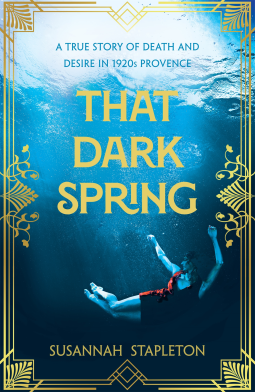
That Dark Spring by Susannah Stapleton

One of my resolutions for 2025 was to read more non-fiction books, so I’m ashamed to say this is only my second one this year. Oh, well – I still have more than seven months to add a few more to that total. I would also like to widen the range of topics I normally choose to read about and try something different, but for now, with That Dark Spring, I have stayed within one of my usual areas for non-fiction – true crime.

The crime in question is the murder – or could it be suicide? – of Olive Branson, an Englishwoman in her forties found dead at her farmhouse in a village in Provence. This happens in April 1929, when she is discovered submerged in a water tank outside the house, a bullet wound between her eyes and a revolver nearby. The local policeman and doctor conclude that Olive shot herself, but not everyone is happy with this verdict. Back in England, Olive’s wealthy, influential cousin demands that the case be reopened, so one of France’s top detectives, Alexandre Guibbal, is summoned from Marseille to investigate.

It’s an intriguing mystery! Could Olive really have lifted the heavy cistern lid, lowered herself in and shot herself – with her left hand, despite evidence suggesting that she was right-handed? Guibbal doesn’t think so and quickly turns his attentions to François Pinet, believed to be a lover of Olive’s for whom she had changed her will to leave him the Monte Carlo Hotel, which she had recently purchased. As evidence mounts up against Pinet, he insists that he is innocent and is defended by many of the villagers who are keen to support ‘one of their own’. There’s eventually a trial, but even then a lot of questions are left unanswered. Susannah Stapleton can’t – and doesn’t – give us those answers, leaving us to draw our own conclusions and try to decide what really happened.

I enjoyed That Dark Spring overall, although it took me a while to get into it due to the amount of background information provided in the first half of the book: a history of the village of Les Baux and the Baussenc people; an account of Olive’s early life and her career as an artist; detailed descriptions of the two rival hotels in Les Baux; and a long and (as far as I could tell) irrelevant biography of the poet Frédéric Mistral. Some padding is to be expected in books of this type, of course, but I found that I only became fully engaged with the story when it returned to the central crime. There are some points that wouldn’t be out of place in a detective novel, such as where Guibbal consults an astronomer in an attempt to decide exactly when darkness fell on the night of the crime or where Pinet tries to use the sighting of a car as an alibi and becomes entangled in his own lies.

It’s frustrating that we still don’t know the truth behind Olive’s death and probably never will. If Pinet was innocent and we assume that suicide was unlikely, that must mean someone else got away with murder – but who was it? Stapleton doesn’t really steer us into one way of thinking or another; she just provides the facts and some possible theories for us to consider. She suggests that the police may have been so determined just to pin the blame on somebody that they ignored or failed to collect important evidence, leaving Pinet’s fate up to the lawyers and the jury.

Stapleton has drawn on a number of primary sources and includes excerpts from Olive Branson’s diaries and letters throughout the text, giving it a more personal touch. There are also notes at the end, a bibliography and a list of Olive’s exhibited artworks. I had never heard of Olive until now, so it’s good to have learned a little bit about her. I’ll have to go back and read Susannah Stapleton’s other book – The Adventures of Maud West, Lady Detective.

Thanks to Picador for providing a copy of this book for review via NetGalley.
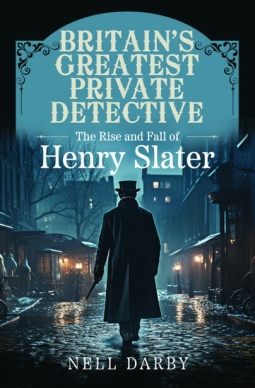
Britain’s Greatest Private Detective by Nell Darby

As someone who enjoys detective novels, I was naturally drawn to this non-fiction book about a real life private detective who achieved fame and success in the late Victorian era. His name (at least the one by which he was best known) was Henry Slater and he was the owner of Britain’s leading detective agency. This new book by Nell Darby explores Henry Slater’s life and career and looks at the world of the early private detective in general – the backgrounds they came from, the type of cases they dealt with, the methods they used and the problems that could arise from those methods.

The Matrimonial Causes Act 1857 is one of the key factors that gave rise to the private detective in the second half of the 19th century. This made it possible for people to request a divorce through the law courts (rather than through a private Act of Parliament as previously) as long as they could prove their spouse had committed adultery. Women would also need to prove one other offence, such as desertion or cruelty. But how could people obtain evidence to show that their partner had been unfaithful? By employing a private detective, of course, and asking them to shadow their husband or wife and look for proof of infidelities. And what do you think happened if the detective couldn’t find any proof – and their client was paying them to deliver results?

Slater’s Detective Agency, who operated from offices in London’s Basinghall Street, advertised all sorts of detective work, but most of their business relied on divorce cases. It was one case in particular that brought about their downfall. Having been hired on behalf of a Mrs Kate Pollard to help her divorce her husband, the agency resorted to underhand methods to get the evidence they needed and were betrayed by a former employee with a personal grudge against Henry Slater. This led to a trial which damaged Slater’s business and exposed his true identity. The Pollard case and the trial which followed form a large part of the book, although Darby moves back and forth between that story, a personal biography of Henry Slater himself and a general history of private detective agencies.

This is a fascinating book and has clearly been very well researched (there’s a long bibliography and an extensive section of notes), but it wasn’t quite what I expected. I thought there would be details of more of Slater’s cases than just the Pollard one and more discussion of the other types of work the agency carried out as well as divorces, but maybe there just wasn’t enough information available to do that. I can’t agree with other reviews saying the book reads like a detective novel as there’s very little actual ‘detecting’ being done and certainly not much similarity between Henry Slater and Sherlock Holmes, whose adventures were appearing in print during the same period that Slater was operating. The jumping around from one topic to another also disrupts the flow of the book and meant I couldn’t become as immersed in it as I would have liked.

Still, I enjoyed learning about Henry Slater and how he established his agency, how he found work first through advertising and then through the strength of his fame and reputation, and how he faced challenges from rival companies. It seems that although Slater can be admired for what he achieved in building his business up from nothing and reaching the very top in his chosen profession, he was less skilled in handling his personal relationships with friends and employees – and this, together with his determination to keep his perfect record in winning divorce cases, is what led to his demise.

I was intrigued by the occasional mentions of the women detectives Slater employed, particularly the ones described as ‘cyclist detectives’ who followed their suspects by bicycle. I’ve discovered that Nell Darby has written another book, Sister Sleuths: Female Detectives in Britain, which sounds like a good companion to this one and I’m sure it would be an interesting read as well.

Thanks to Pen & Sword for providing a copy of this book for review via NetGalley.
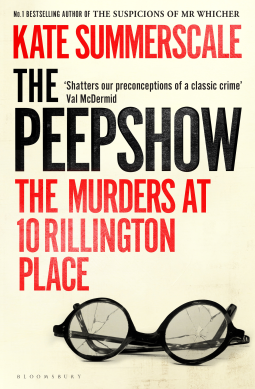
The Peepshow: The Murders at 10 Rillington Place by Kate Summerscale

When I first saw the title of Kate Summerscale’s new true crime book, I wondered if it dealt with the Thompson/Bywaters murder case, the subject of A Pin to See the Peepshow by F. Tennyson Jesse. Then I saw the subtitle and knew this was a book about a different crime – the John Reginald Christie murders at 10 Rillington Place in London. However, I was partly right, because Tennyson Jesse herself was actually involved in this case as well and appears in this book in her role as author and journalist.

In March 1953, John Reginald Christie was arrested following a seven-day manhunt after the bodies of three women were found in his kitchen alcove. The body of his wife, Ethel, was then discovered under the floorboards, as well as the remains of two more women in the garden. Christie admitted to being responsible for all of these deaths and was hanged in July 1953. However, just three years earlier, Timothy Evans, another tenant at the same address, was believed to have killed his wife and baby daughter and was also hanged. Evans had changed his story several times and after withdrawing a confession he had made to the police, he accused Christie of committing both murders. Did the jury get it wrong and hang an innocent man, allowing Christie to go on killing more people?

The Peepshow is a detailed and thorough account of the Rillington Place murders – sometimes a bit too detailed, for example where we are given the personal histories of the most minor of characters or a list of every single reported sighting of Christie in a seven day period. In general, though, it’s all interesting information that adds up to a full picture of not just the crime itself but also the state of British society in the early 1950s. Some of Christie’s victims were prostitutes or from deprived backgrounds and Summerscale spends a lot of time discussing their stories and the sequence of events that brought them into contact with their killer. She also explores the racist attitudes of the period – it seemed that many of the white residents of Rillington Place were so busy complaining about living amongst black people, they failed to notice that they were also sharing the building with at least one murderer. Other topics Summerscale touches upon include illegal abortions (Christie carried these out in his rooms at Rillington Place) and the poor living conditions in multiple-occupancy housing.

To give the book a more personal touch, Summerscale focuses on two people who were investigating the murders from different perspectives. One was Harry Procter, star reporter with the Sunday Pictorial, who arrived at Rillington Place to report on the discovery of the bodies in the kitchen – and remembered that three years earlier he had visited the same house to interview Christie about the Timothy Evans case. Now, with more information available, Procter became convinced that he – and the police – made a terrible mistake and that it was in fact Christie who was responsible for the murders of Beryl and baby Geraldine.

Procter’s theory was shared by the author Fryn Tennyson Jesse, who was researching the case for a new book in the Notable British Trials series. Fryn was dealing with morphine addiction and poor eyesight, but was determined to attend Christie’s trial, where she came to the same conclusion as Procter. However, there was very little appetite from the authorities to look again at the Evans case – the police didn’t want to admit that they failed to identify the correct culprit and it’s believed that the Tory government of the time didn’t want to cast doubt on the justice system as it would strengthen opposition to the death penalty. Although Timothy Evans has now been posthumously pardoned, it seems that we still don’t know for certain what happened to Beryl and Geraldine Evans and if you’re hoping for answers or lots of new evidence, you’re not going to find anything conclusive in The Peepshow. I was left feeling confused about the whole thing, which isn’t really Summerscale’s fault – the confusion was caused by both Evans and Christie confessing to various murders, then changing their stories – but it’s not very satisfying if you prefer everything to be neatly wrapped up at the end of a book.

I did find this an interesting read, although I think it needed more structure; it seemed to jump around a lot, from one topic to another and backwards and forwards in time, which stopped it from flowing as well as it could have done. Still, it was good to learn more about this complex true crime and the social conditions that may have contributed to it.

Thanks to Bloomsbury Circus for providing a copy of this book for review via NetGalley.
Eighteen: A History of Britain in 18 Young Lives by Alice Loxton

What sort of person were you when you were eighteen years old? What had you accomplished by that point in your life and what were your hopes and dreams for the future? Or, if you haven’t reached that age yet, what would you like to achieve before your eighteenth birthday? In her new book, Eighteen: A History of Britain in 18 Young Lives, Alice Loxton explores the stories of eighteen historical figures, some famous and some more obscure, with a focus on the first eighteen years of their lives and how their childhoods shaped the adults they would later become.

The book is arranged in chronological order, so the first historical figure to be covered is the Anglo-Saxon monk and scholar, the Venerable Bede, and the last is the fashion designer Vivienne Westwood. Each section is quite short – it’s not a long book and there are lots of lives to get through – but I think Alice Loxton achieves what she sets out to do, which is to shine a light on the early lives of her subjects and the ways in which they are influenced by not only their own family background and upbringing, but also the world around them. She looks only briefly at the achievements that make them famous after the age of eighteen, but that information is available elsewhere and this book is trying to do something different.

Loxton chooses her subjects from all walks of life and a range of different backgrounds, including royalty, artists, engineers, actors and writers. They are almost equally split between men and women and England, Scotland, Wales and Northern Ireland are all represented. I was less interested in the people I’d read about before, such as Elizabeth I and the Empress Matilda, but there were others I was completely unfamiliar with and I found these chapters fascinating. I’m ashamed to say I knew nothing at all about the life of Jacques Francis, a diver originally from West Africa who attempted to recover the wreck of the Mary Rose during the Tudor period, or Sarah Biffin, an English artist born in the late 18th century without arms or legs.

Alice Loxton’s writing style is very readable and I flew through this book in much less time than it normally takes me to read non-fiction. Although it’s not marketed as being for any particular age group, it’s clearly aimed at readers closer to the age of her subjects, so she doesn’t bombard us with too much information and provides sources and notes at the back of the book rather than interrupting the text. She tries to find analogies that will make sense to young, modern readers, such as comparing a royal progress with a rock band going on tour, and imagines what the lives of some of her other historical figures would look like as a film adaptation or a slideshow. The main biographical chapters are also interspersed with other chapters describing a very special 18th birthday party, but I’ll leave you to find out more about that for yourself if you read the book!

Eighteen would be a fun, accessible way for teenagers to explore British history, but for those of us who are older it’s still an entertaining read and provides a good starting point for further investigation into some of these fascinating historical figures. I’m now interested in reading Alice Loxton’s previous book, Uproar!, about printmakers in Georgian London.

Thanks to Pan Macmillan for providing a copy of this book for review via NetGalley.

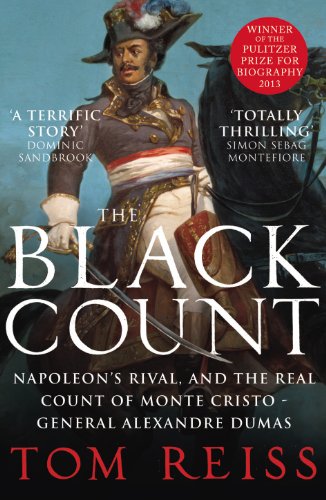
The Black Count by Tom Reiss

My second non-fiction review this month, The Black Count is a biography of General Thomas-Alexandre Dumas, father of the French author Alexandre Dumas. I’ve always loved Dumas’ novels (he’s most famous for The Three Musketeers and The Count of Monte Cristo, one of my all-time favourite books), so The Black Count appealed to me as soon as I heard about it on its publication in 2012. I’ve no idea why it has taken me so long to actually pick it up and read it!

Thomas-Alexandre Dumas, usually referred to in the book as Alex, was born in 1762 in the French colony of Saint-Domingue (now Haiti) in the Caribbean. He was the son of a French aristocrat, the Marquis Alexandre Antoine Davy de la Pailleterie, and a freed slave woman, Marie-Cesette Dumas. After the death of his mother, the young Alex, along with his three siblings, was temporarily sold into slavery by his father in order to pay their passage back to France. Eventually the Marquis bought Alex back (but not the other three children, who remained in slavery and are lost to history) and took him home to France where he was educated in fencing, horse riding and all the other skills befitting the son of a nobleman.

When the Marquis remarried, however, Alex was left to fend for himself and he joined the French military, taking his mother’s surname of Dumas. Playing an important role in the French Revolutionary Wars, he quickly rose through the ranks and by the age of thirty-two was General-in-Chief of the French Army of the Alps, commanding 53,000 men. Later, on a campaign to Egypt, Alex clashed with another powerful general, Napoleon Bonaparte, and from there his career took a downward spiral. Today, Napoleon remains one of the most well known historical figures of all time, but Alex Dumas has been largely forgotten. The Black Count is an attempt to give Dumas the attention he deserves and make his story known to a modern audience.

General Alex Dumas was clearly a fascinating man, yet I have to be completely honest and say that I was slightly disappointed by this book. It was described as a thrilling real life adventure story, as exciting as one of Dumas’ novels, which I think raised my expectations too high. For me, there was too much focus on military history, with details of campaigns, battles and tactics, along with lots of general information on the French Revolution, with Alex Dumas himself being pushed into the background for large sections of the book. Of course, other readers will find this much more interesting than I did, but military life is never going to be one of my personal favourite subjects to read about and I have read about the Revolution many times before. I did quite enjoy the chapter about the Army of the Alps, though, where Alex and his men scaled the icy cliffs of Mont Cenis to capture a mountain pass; as Reiss points out, the cold must have come as a shock to a man who grew up in the Caribbean!

All of Alex Dumas’ achievements are very impressive, but most impressive of all is the fact that he was able to rise as high as he did as a person of colour in the 18th century. In some ways it was the perfect time and place for him to succeed because it was a surprisingly tolerant period in French history; a century later racial prejudices and the removal of rights for black people would have prevented him from reaching the same heights. At the time of Alex’s arrival in France, however, a decree known as the Code Noir was in place which gave freed slaves the same rights and privileges as white people. Add to that Alex’s renowned strength, courage and leadership skills and it’s easy to see how he was able to accomplish so much and even rival Napoleon for a while.

Tom Reiss occasionally tells us about his visits to museums and archives where he saw documents and paintings which informed his writing of the book. He also draws on a large number of other sources, which are listed at the end in a bibliography, the most notable being the writings of Alexandre Dumas (the author), who wrote about his father in his memoirs and several of his other non-fiction books. Reiss also suggests that some famous scenes from Dumas’ novels were based on his father’s adventures – for example, in 1799 Alex was captured and thrown into a dungeon in the Kingdom of Naples for two years, something which surely inspired the imprisonment of Edmond Dantès in The Count of Monte Cristo.

Although I expected to love The Black Count more than I did, I do feel that I’ve learned a lot from it, both about France in the second half of the 18th century and about Alex Dumas himself. He was an amazing man and deserves to be better known; I’m sure this book, in the twelve years since it was published, will have gone some way towards achieving that.

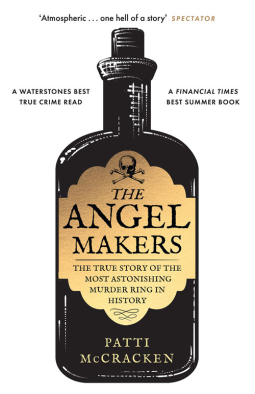
The Angel Makers by Patti McCracken

I don’t read a lot of true crime, but the title, cover and blurb of this one all intrigued me. Subtitled The True Story of the Most Astonishing Murder Ring in History, the book narrates in dramatic detail the tale of a group of serial killers in a Hungarian village who murdered over a hundred men during a fifteen year period. The killers were all women and their ringleader was a midwife known as Auntie Suzy.

The village of Nagyrév, a farming community in central Hungary, may seem an unlikely centre of crime, but actually it’s easy to understand why the events described in the book happened where and when they did. The murders took place between 1914 and 1929, a time when Hungary was in a state of political turmoil and preoccupied with war and its aftermath. The government didn’t have the money or resources to look into reports of suspicious deaths in a small rural village. Not only did Nagyrév have no police presence, but also no doctor, meaning that Auntie Suzy, with her limited medical knowledge, was the person to whom everyone turned for help with their own and their family members’ health problems. This put Suzy in a position of power, made stronger by the fact that she was the one who dictated to the clerk the causes of death to be put on the death certificates.

Auntie Suzy’s method was poisoning; she would soak sheets of flypaper in water to leave a residue of arsenic which could then be fed to the victim in small doses until they eventually became ill and died. Women came to buy bottles of Suzy’s potion for all sorts of reasons: maybe they had an abusive husband, an unwanted child they couldn’t feed or an elderly father they’d become tired of and wanted dead. Suzy herself would sometimes have reasons for wanting the murder to take place – if a wealthy woman was widowed, for example, she would then be free to marry Suzy’s own son, or perhaps a house would become vacant that Suzy could take for herself.

In The Angel Makers, Patti McCracken tells the story of Auntie Suzy and the other female poisoners of Nagyrév in a style that is as easy to read as fiction. In fact, the whole book feels much more like a novel than a work of non-fiction; I liked this as it made it easy to get to know the characters and follow what was happening, but it wasn’t what I’d expected and it may not appeal to readers who prefer their non-fiction to be more formal and academic. There’s a section of notes at the end of the book and a bibliography, but apart from occasional extracts from newspaper articles or other documents, McCracken doesn’t interrupt the flow of the story to provide any commentary of her own. She has also anglicised the names of most of the people in the book – Auntie Suzy’s real name was Zsuzsanna Fazekas.

One thing that struck me about this case was how easily the crimes could have been stopped and the culprits brought to justice, yet they were allowed to continue for many years because the authorities either didn’t have the resources to investigate or just didn’t seem interested. The poisonings were an open secret in Nagyrév and Suzy and the other women grew more and more confident over time, hardly bothering to cover up their actions. You can feel sorry for some of the women, pushed into arranged marriages at a time when divorce was not an option, but others were committing murder for cruel or petty reasons. Suzy, as the ringleader, was particularly complacent and unrepentant about the deaths she was causing and her behaviour is quite chilling to read about. However, McCracken seemed to have an obsession with Suzy’s weight; the constant descriptions of her chubby hands, fat feet and waddling walk quickly became very repetitive and unnecessary.

The Angel Makers is a fascinating story and I would probably recommend it to people who have enjoyed Kate Summerscale’s books such as The Suspicions of Mr Whicher, although the informal style won’t be to everyone’s taste. Despite some flaws I found it entertaining and informative and feel that I’ve not only gained some knowledge of a very unusual ring of criminals but also some insights into life in Hungary between the wars and the various elements that enabled crimes like these to take place.

Thanks to Mudlark for providing a copy of this book for review via NetGalley.
Powers and Thrones by Dan Jones

I actually started Dan Jones’ Powers and Thrones for last year’s Nonfiction November but found it so long and intensely detailed I could only read it in small doses. Although it’s a fascinating book and I’ve been learning a lot from it, 736 pages covering more than a thousand years of history is not something I could read quickly. I confess that I kept putting it aside and getting distracted by other books…so here I am, finishing it a year after I began and conveniently just in time for Nonfiction November again!

In Powers and Thrones, Jones explores the long period of history known as the Middle Ages. Starting in 410 AD, just before the fall of the Roman Empire, and ending in 1527 during the Renaissance, he looks at some of the ‘powers’ that helped to build the world we know today – not just ‘thrones’, but also powers such as money, trade, religion and exploration. He moves forward chronologically throughout the book while choosing a different topic to focus on in each chapter; Monks, Knights, Scholars, Crusaders, Merchants and Builders are just a few of the chapter titles.

As well as putting key events into the context of their own time, Jones also draws lots of parallels with modern life. It’s impossible to read about the first recorded global pandemic – a form of bubonic plague thought to have killed millions of people worldwide during the middle of the 6th century – without thinking of the similarities and differences with our own recent Covid-19 pandemic. Again, when he discusses the later outbreak of plague in the 14th century known as the Black Death, he looks at the economic impact on prices and wages, something as relevant now as it was then. It was also interesting to read about the effects of climate change and extreme weather such as droughts on the mass migration of people in the 4th and 5th centuries that led to ‘barbarian’ tribes pushing across the Roman frontiers and contributing to the fall of Rome.

Although the book concentrates on broad themes like these, Jones does pick out individual historical figures to write about in more detail. These range from ancient leaders such as Attila the Hun and Theodoric, king of the Ostrogoths to Henry the Navigator, Marco Polo, and Dick Whittington – a real-life merchant and politician before he became a British pantomime character! The book is quite Eurocentric, but Jones doesn’t ignore things that were taking place in other parts of the world, particularly where they affect European life and culture. For example, he includes sections on Genghis Khan and the Mongols and on the caliphates of the Arab world.

The problem with Powers and Thrones is that there’s just too much information here for one book. Any of the chapters could have been expanded into an entire book in itself; trying to condense it all into one volume was a bit overwhelming. I’m still glad I read it, though, and am pleased I made it all the way through to the end – I finished it with a real sense of achievement!

Thanks to Head of Zeus for providing a copy of this book for review via NetGalley.