The Black Count by Tom Reiss

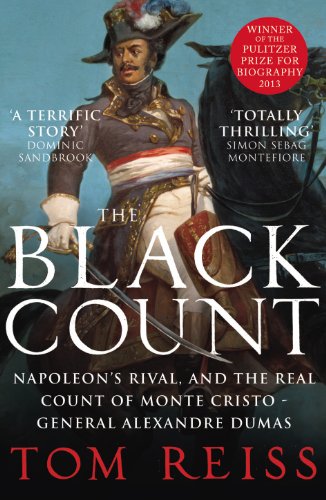
My second non-fiction review this month, The Black Count is a biography of General Thomas-Alexandre Dumas, father of the French author Alexandre Dumas. I’ve always loved Dumas’ novels (he’s most famous for The Three Musketeers and The Count of Monte Cristo, one of my all-time favourite books), so The Black Count appealed to me as soon as I heard about it on its publication in 2012. I’ve no idea why it has taken me so long to actually pick it up and read it!

Thomas-Alexandre Dumas, usually referred to in the book as Alex, was born in 1762 in the French colony of Saint-Domingue (now Haiti) in the Caribbean. He was the son of a French aristocrat, the Marquis Alexandre Antoine Davy de la Pailleterie, and a freed slave woman, Marie-Cesette Dumas. After the death of his mother, the young Alex, along with his three siblings, was temporarily sold into slavery by his father in order to pay their passage back to France. Eventually the Marquis bought Alex back (but not the other three children, who remained in slavery and are lost to history) and took him home to France where he was educated in fencing, horse riding and all the other skills befitting the son of a nobleman.

When the Marquis remarried, however, Alex was left to fend for himself and he joined the French military, taking his mother’s surname of Dumas. Playing an important role in the French Revolutionary Wars, he quickly rose through the ranks and by the age of thirty-two was General-in-Chief of the French Army of the Alps, commanding 53,000 men. Later, on a campaign to Egypt, Alex clashed with another powerful general, Napoleon Bonaparte, and from there his career took a downward spiral. Today, Napoleon remains one of the most well known historical figures of all time, but Alex Dumas has been largely forgotten. The Black Count is an attempt to give Dumas the attention he deserves and make his story known to a modern audience.

General Alex Dumas was clearly a fascinating man, yet I have to be completely honest and say that I was slightly disappointed by this book. It was described as a thrilling real life adventure story, as exciting as one of Dumas’ novels, which I think raised my expectations too high. For me, there was too much focus on military history, with details of campaigns, battles and tactics, along with lots of general information on the French Revolution, with Alex Dumas himself being pushed into the background for large sections of the book. Of course, other readers will find this much more interesting than I did, but military life is never going to be one of my personal favourite subjects to read about and I have read about the Revolution many times before. I did quite enjoy the chapter about the Army of the Alps, though, where Alex and his men scaled the icy cliffs of Mont Cenis to capture a mountain pass; as Reiss points out, the cold must have come as a shock to a man who grew up in the Caribbean!

All of Alex Dumas’ achievements are very impressive, but most impressive of all is the fact that he was able to rise as high as he did as a person of colour in the 18th century. In some ways it was the perfect time and place for him to succeed because it was a surprisingly tolerant period in French history; a century later racial prejudices and the removal of rights for black people would have prevented him from reaching the same heights. At the time of Alex’s arrival in France, however, a decree known as the Code Noir was in place which gave freed slaves the same rights and privileges as white people. Add to that Alex’s renowned strength, courage and leadership skills and it’s easy to see how he was able to accomplish so much and even rival Napoleon for a while.

Tom Reiss occasionally tells us about his visits to museums and archives where he saw documents and paintings which informed his writing of the book. He also draws on a large number of other sources, which are listed at the end in a bibliography, the most notable being the writings of Alexandre Dumas (the author), who wrote about his father in his memoirs and several of his other non-fiction books. Reiss also suggests that some famous scenes from Dumas’ novels were based on his father’s adventures – for example, in 1799 Alex was captured and thrown into a dungeon in the Kingdom of Naples for two years, something which surely inspired the imprisonment of Edmond Dantès in The Count of Monte Cristo.

Although I expected to love The Black Count more than I did, I do feel that I’ve learned a lot from it, both about France in the second half of the 18th century and about Alex Dumas himself. He was an amazing man and deserves to be better known; I’m sure this book, in the twelve years since it was published, will have gone some way towards achieving that.

The Angel Makers by Patti McCracken

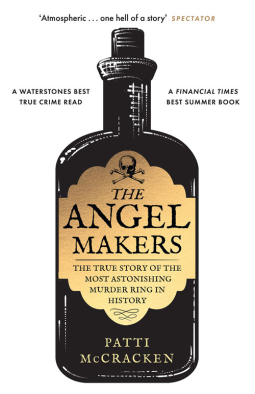
I don’t read a lot of true crime, but the title, cover and blurb of this one all intrigued me. Subtitled The True Story of the Most Astonishing Murder Ring in History, the book narrates in dramatic detail the tale of a group of serial killers in a Hungarian village who murdered over a hundred men during a fifteen year period. The killers were all women and their ringleader was a midwife known as Auntie Suzy.

The village of Nagyrév, a farming community in central Hungary, may seem an unlikely centre of crime, but actually it’s easy to understand why the events described in the book happened where and when they did. The murders took place between 1914 and 1929, a time when Hungary was in a state of political turmoil and preoccupied with war and its aftermath. The government didn’t have the money or resources to look into reports of suspicious deaths in a small rural village. Not only did Nagyrév have no police presence, but also no doctor, meaning that Auntie Suzy, with her limited medical knowledge, was the person to whom everyone turned for help with their own and their family members’ health problems. This put Suzy in a position of power, made stronger by the fact that she was the one who dictated to the clerk the causes of death to be put on the death certificates.

Auntie Suzy’s method was poisoning; she would soak sheets of flypaper in water to leave a residue of arsenic which could then be fed to the victim in small doses until they eventually became ill and died. Women came to buy bottles of Suzy’s potion for all sorts of reasons: maybe they had an abusive husband, an unwanted child they couldn’t feed or an elderly father they’d become tired of and wanted dead. Suzy herself would sometimes have reasons for wanting the murder to take place – if a wealthy woman was widowed, for example, she would then be free to marry Suzy’s own son, or perhaps a house would become vacant that Suzy could take for herself.

In The Angel Makers, Patti McCracken tells the story of Auntie Suzy and the other female poisoners of Nagyrév in a style that is as easy to read as fiction. In fact, the whole book feels much more like a novel than a work of non-fiction; I liked this as it made it easy to get to know the characters and follow what was happening, but it wasn’t what I’d expected and it may not appeal to readers who prefer their non-fiction to be more formal and academic. There’s a section of notes at the end of the book and a bibliography, but apart from occasional extracts from newspaper articles or other documents, McCracken doesn’t interrupt the flow of the story to provide any commentary of her own. She has also anglicised the names of most of the people in the book – Auntie Suzy’s real name was Zsuzsanna Fazekas.

One thing that struck me about this case was how easily the crimes could have been stopped and the culprits brought to justice, yet they were allowed to continue for many years because the authorities either didn’t have the resources to investigate or just didn’t seem interested. The poisonings were an open secret in Nagyrév and Suzy and the other women grew more and more confident over time, hardly bothering to cover up their actions. You can feel sorry for some of the women, pushed into arranged marriages at a time when divorce was not an option, but others were committing murder for cruel or petty reasons. Suzy, as the ringleader, was particularly complacent and unrepentant about the deaths she was causing and her behaviour is quite chilling to read about. However, McCracken seemed to have an obsession with Suzy’s weight; the constant descriptions of her chubby hands, fat feet and waddling walk quickly became very repetitive and unnecessary.

The Angel Makers is a fascinating story and I would probably recommend it to people who have enjoyed Kate Summerscale’s books such as The Suspicions of Mr Whicher, although the informal style won’t be to everyone’s taste. Despite some flaws I found it entertaining and informative and feel that I’ve not only gained some knowledge of a very unusual ring of criminals but also some insights into life in Hungary between the wars and the various elements that enabled crimes like these to take place.

Thanks to Mudlark for providing a copy of this book for review via NetGalley.
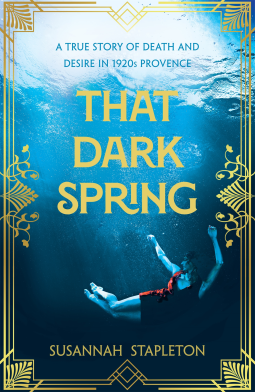
Powers and Thrones by Dan Jones

I actually started Dan Jones’ Powers and Thrones for last year’s Nonfiction November but found it so long and intensely detailed I could only read it in small doses. Although it’s a fascinating book and I’ve been learning a lot from it, 736 pages covering more than a thousand years of history is not something I could read quickly. I confess that I kept putting it aside and getting distracted by other books…so here I am, finishing it a year after I began and conveniently just in time for Nonfiction November again!

In Powers and Thrones, Jones explores the long period of history known as the Middle Ages. Starting in 410 AD, just before the fall of the Roman Empire, and ending in 1527 during the Renaissance, he looks at some of the ‘powers’ that helped to build the world we know today – not just ‘thrones’, but also powers such as money, trade, religion and exploration. He moves forward chronologically throughout the book while choosing a different topic to focus on in each chapter; Monks, Knights, Scholars, Crusaders, Merchants and Builders are just a few of the chapter titles.

As well as putting key events into the context of their own time, Jones also draws lots of parallels with modern life. It’s impossible to read about the first recorded global pandemic – a form of bubonic plague thought to have killed millions of people worldwide during the middle of the 6th century – without thinking of the similarities and differences with our own recent Covid-19 pandemic. Again, when he discusses the later outbreak of plague in the 14th century known as the Black Death, he looks at the economic impact on prices and wages, something as relevant now as it was then. It was also interesting to read about the effects of climate change and extreme weather such as droughts on the mass migration of people in the 4th and 5th centuries that led to ‘barbarian’ tribes pushing across the Roman frontiers and contributing to the fall of Rome.

Although the book concentrates on broad themes like these, Jones does pick out individual historical figures to write about in more detail. These range from ancient leaders such as Attila the Hun and Theodoric, king of the Ostrogoths to Henry the Navigator, Marco Polo, and Dick Whittington – a real-life merchant and politician before he became a British pantomime character! The book is quite Eurocentric, but Jones doesn’t ignore things that were taking place in other parts of the world, particularly where they affect European life and culture. For example, he includes sections on Genghis Khan and the Mongols and on the caliphates of the Arab world.

The problem with Powers and Thrones is that there’s just too much information here for one book. Any of the chapters could have been expanded into an entire book in itself; trying to condense it all into one volume was a bit overwhelming. I’m still glad I read it, though, and am pleased I made it all the way through to the end – I finished it with a real sense of achievement!

Thanks to Head of Zeus for providing a copy of this book for review via NetGalley.
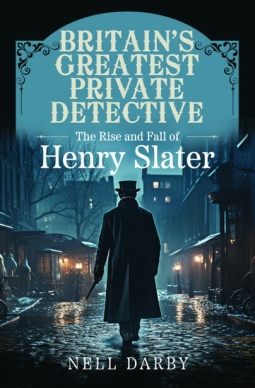
The Real Enid Blyton by Nadia Cohen

Like many children in Britain and other countries around the world, I grew up reading Enid Blyton. Although her books have attracted a lot of criticism for their outdated attitudes and a perceived lack of literary merit, I have lots of happy memories of solving crimes with the Five Find-Outers, going on adventures with the Famous Five and getting to know the girls of Malory Towers and St Clare’s. As a child, I never gave any thought to the author herself and what she may have been like as a wife, mother or friend, but I later became aware that she was allegedly not a very nice person and certainly not the loving, maternal figure her books would lead you to believe. She has been the subject of TV documentaries and a 2009 BBC drama starring Helena Bonham Carter as well as several biographies, including this one, The Real Enid Blyton, in which Nadia Cohen takes us through Enid’s life from birth to death and attempts to shed some light on the woman behind the stories.

Enid was born in East Dulwich, South London in 1897 and Cohen suggests that her character was shaped by the break-up of her parents’ marriage while she was in her early teens. Enid had a close, loving relationship with her father, Thomas Blyton, who instilled in her a love of reading, animals and nature, but she didn’t get on very well at all with her mother, Theresa. When Thomas left his wife for another woman, Theresa refused to agree to a divorce and insisted that his new living arrangements be kept secret in order to avoid bringing shame on the family. Enid was devastated and felt that her father had betrayed her by choosing someone else over her. As she grew into an adult, she would learn to detach herself from the people around her, ‘removing people from her life without a backward glance’, and would deal with anything unpleasant by simply pretending it hadn’t happened, things Cohen attributes to the emotional damage caused by her father’s departure.

Enid began to write after taking a teacher training course and working first as a teacher then as a private governess. She said, ‘It was the children themselves who taught me how to write. No adult can teach you that as they can.’ I was interested to read that early in her career she submitted an adult novel, The Caravan Goes On, to her agent but it was rejected and later reworked into her children’s book Mr Galliano’s Circus. If that novel had been accepted, I wonder whether she would have continued to write for adults rather than for children. However, that was not to be and apart from an adult play she wrote in the 1950s (which was also rejected), she concentrated on writing for the younger readers she understood so well. By the peak of her career in 1951, she produced thirty-seven books in that one year alone.

Despite Enid’s popularity with children she had never met, her own children seem to have felt neglected and unloved. Cohen provides plenty of evidence of this, sprinkling throughout the book quotes from Gillian and Imogen, Enid’s two daughters by her first husband, Hugh Pollock. Imogen described her mother as ‘arrogant, insecure and without a trace of maternal instinct. Her approach to life was childlike, and she could be spiteful, like a teenager’. Enid and Hugh divorced when the girls were still young children and she refused to let them have any further contact with their father – another example of cutting all her ties, but this time her children were made to suffer. Her second marriage, to the surgeon Kenneth Waters, was happier, but Enid’s relationship with Imogen in particular never improved. However, Cohen’s portrayal of Enid seems quite fair and balanced overall and she does acknowledge Enid’s good points, such as her energy, impressive work ethic and support for various charities. Most people, especially men, who encountered Enid in a professional capacity, tended to like her and commented on how agreeable and easy she was to work with.

Cohen also discusses some of the criticism directed at Enid’s work and the recent attempts of publishers to censor and ‘update’ her books, something I think many of us who were Blyton fans feel quite strongly about! It can’t be denied that her books did contain a lot of sexism, racism and snobbery, but some of the changes that were made just seem completely unnecessary:

The word jersey was replaced with jumper, frocks became dresses, mother and father were changed to mum and dad, fellow to man and peculiar to strange. The aim was to help young readers in contemporary society to relate more easily to the characters.

In The Faraway Tree stories Dick and Fanny were renamed Rick and Frannie, as what were common names in the 1950s had become vulgar slang in the 1990s…Dame Slap became Dame Snap, and scolded naughty children instead of spanking them. Mary and Jill of the Adventurous Four were updated to Pippa and Zoe…

Even before these recent controversies, Enid’s books had been banned by some libraries and by the BBC (until the 1950s), because of her ‘over simplified writing’ and ‘undemanding plots’, with one critic accusing her of poisoning the reading ability of children and another claiming children would become addicted to her books and would never go on to read adult literature. Enid’s response to all of this was that she didn’t care about the opinion of anyone over the age of twelve!

What do you think? Did you read Enid Blyton as a child? Have you read this or any other books about her life and work?

Thanks to Pen & Sword History for providing a copy of this book for review via NetGalley.
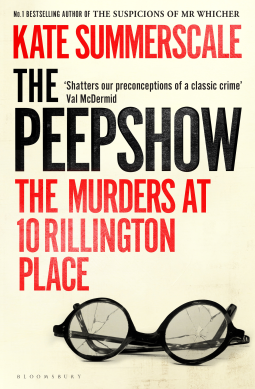
The Rebecca Notebook: and Other Memories by Daphne du Maurier – #DDMReadingWeek

When a novel can affect the human heart in such a way it seems to mean one thing only: not that the tale is exceptional in itself, but that the writer has so projected his personality on to the printed page that the reader either identifies with that personality or becomes fascinated by it, and in a near sense hypnotised.

Here Daphne du Maurier is talking about her grandfather, George du Maurier, author of the popular 1894 novel Trilby, but I think this quote could just as easily apply to Daphne herself. The more I read about her and about her background and family, the more I can see how her own personality and experiences found their way into the writing of her famous novels and short stories. I’ve now read all of those novels and stories (and looked back at my favourites in this post from last year) and am now working through her non-fiction. The Rebecca Notebook: and Other Memories, first published in 1981, was my choice for this year’s Daphne du Maurier Reading Week hosted by Heavenali.

The first part of the book consists of du Maurier’s notes and drafts relating to the writing of Rebecca – in fact, her notes were used as evidence when she had to defend herself against plagiarism allegations in the 1940s. It’s fascinating to see the similarities and differences between the early outline of her novel and the finished version (did you know that Maxim de Winter was originally called Henry, for example?) and her chapter summaries get longer and more detailed as the story takes shape and the characters develop. The original epilogue – which eventually became the prologue – is included in full and in another piece of writing, The House of Secrets, du Maurier describes her discovery of Menabilly, the house in Cornwall that was the inspiration for Manderley in Rebecca and later became Daphne’s home.

The rest of the book collects together some of the essays and poetry written by du Maurier, including the piece about her grandfather, George du Maurier, which I quoted from above, and other biographical accounts of her father, who was the famous actor-manager Gerald du Maurier, and her cousins, the Llewelyn Davies children, who inspired JM Barrie’s Peter Pan. Having previously read Daphne’s autobiography Myself When Young, I was already familiar with some of this information but was happy to read it again, from a slightly different perspective.

In her other essays, du Maurier discusses subjects such as Shakespeare, her views on romantic love and her feelings on becoming a widow. She talks a lot about fame and what it’s like to live life in the public eye; coming from what we would now consider a ‘celebrity family’ and being a private person herself, it’s understandable that this topic would be of particular relevance to her.

Tip the scales, and the hands that acclaim the artist become the hands that tear him to pieces. The wreath of laurel is the crown of thorns. The actor and the writer are especially vulnerable today, when worldwide publicity through press and television makes them into that treacherous thing, a ‘personality’.

None of these pieces are very long – the whole book is under 200 pages long – but I found most of them interesting and insightful. They don’t really need to be read in any particular order either, so it’s the sort of book you can easily dip in and out of and come back to later. Most people who pick up this collection will probably do so because of the Rebecca connection, but be aware that only a relatively short section of the book is devoted to Rebecca; however, if you’re interested in du Maurier as a person as well as a writer and would like to try some of her non-fiction, this is a good place to start.

The Dark Queens by Shelley Puhak (non-fiction)

Their ghosts are everywhere; we just need to know where to look.

This is a fascinating dual biography of two little-known medieval queens, Brunhild and Fredegund, who belonged to the Merovingian dynasty and ruled over large swathes of the lands we now know as France and Germany. I don’t often find myself drawn to non-fiction, but this book was a great choice for me as it’s both educational and entertaining – and every bit as readable as fiction.

Most people today have probably never heard of Brunhild and Fredegund and it seems there’s a good reason for that: as Shelley Puhak explains, following the deaths of the two queens, their stories were rewritten – and some of their achievements erased altogether – by the rulers who came after them, including their own son and nephew Clothar II, and later by Charlemagne’s Carolingian dynasty. And yet the influence of these two Merovingian women lived on, in legends and fairy tales, in the naming of roads, and in the character of Brunhild the Valkyrie from Wagner’s opera Der Ring des Nibelungen. Most intriguingly, a battle strategy of Fredegund’s appears to have inspired, whether directly or indirectly, the ‘Birnam Wood comes to Dunsinane’ episode of Shakespeare’s Macbeth.

The two queens came from very different backgrounds. Brunhild was a princess from Visigothic Spain who was married off to King Sigibert of Austrasia in 567 as part of a political alliance. Austrasia was the north-eastern territory of the Kingdom of the Franks; Neustria to the west and Burgundy to the south were ruled by Sigibert’s brothers, Chilperic I and Guntram, respectively. Fredegund, a former slave, rose to power when she married Chilperic of Neustria following the death of his wife under suspicious circumstances. This was only the first of many murders with which Fredegund would be connected; she went on to be associated with a whole series of poisonings, tortures and political assassinations. Brunhild is portrayed as a much more sympathetic character, but the prejudices of the sources do need to be considered!

After the deaths of their husbands, both Brunhild and Fredegund reigned as regents on behalf of their young sons and grandsons. Their kingdoms of Austrasia and Neustria were engaged in war for many years, fuelled by a rivalry between the two queens, which originated in Fredegund allegedly being responsible for the murders of both Galswintha, Brunhild’s sister, and King Sigibert, Brunhild’s husband. However, they were willing to work together where necessary and both queens proved themselves to be strong, intelligent, politically astute women in a world dominated by men.

The Dark Queens is not a particularly academic book. It’s written in the style of narrative non-fiction, drawing on the available primary sources such as the writings of Gregory of Tours and Venantius Fortunatus but sometimes finding it necessary to speculate in order to fill in the gaps. Despite this, it’s clear that Shelley Puhak has carried out a huge amount of research in writing this book and she does include a list of all of her sources, both primary and secondary, at the end, along with a comprehensive section of notes and references. Although The Dark Queens may not satisfy readers who are looking for something more scholarly, I thoroughly enjoyed it and am so pleased I’ve had the chance to get to know Brunhild and Fredegund. I’m surprised they haven’t been written about more widely; they would be wonderful subjects for historical fiction and would make a nice change from the Tudors!

Thanks to Head of Zeus for providing a copy of this book for review via NetGalley.
Myself When Young by Daphne du Maurier – #DDMReadingWeek

This is my second contribution to Ali’s Daphne du Maurier Reading Week. As I mentioned in my first post, I have now read all of du Maurier’s novels and short story collections, but still have plenty of her non-fiction books to read. This one, originally published in 1977 as Growing Pains: The Shaping of a Writer, was written towards the end of her career but based on diaries kept throughout her childhood and into her twenties. A lot of the information in this book was already familiar to me through a biography I read a few years ago, Daphne du Maurier and Her Sisters: The Hidden Lives of Piffy, Bird and Bing by Jane Dunn, but it was still interesting to read it again in du Maurier’s own words this time.

Daphne and her two sisters, Angela and Jeanne, were part of a famous theatrical and artistic family – both of their parents, Gerald du Maurier and Muriel Beaumont, were actors and their grandfather, George du Maurier was a cartoonist and author, best known for creating the character Svengali in his 1894 novel Trilby. Daphne undoubtedly had a privileged childhood, being educated privately by governesses before being sent to finishing school in France, but it’s clear that she didn’t always feel very comfortable with the sort of lifestyle into which she’d been born. As a shy and solitary child – the book begins with a vivid description of four-year-old Daphne being ushered into the drawing room with a group of ladies who had come to visit baby Jeanne and being frightened and overwhelmed by the noise – she retreated into a world of imagination, spending her time reading, writing and performing in plays with her sisters. From an early age, Daphne found herself drawn to male roles, eventually creating her own alter ego, Eric Avon, a character whom she said would emerge again later (in different forms) as the male narrator of five of her novels – I’ll Never Be Young Again, My Cousin Rachel, The Scapegoat, The Flight of the Falcon and The House on the Strand.

She talks a lot about her childhood homes in London – Cumberland Terrace, Regent’s Park and Cannon Hall, Hampstead – and the influence they had on her early life:

Who can ever affirm, or deny that the houses which have sheltered us as children, or as adults, and our predecessors too, do not have embedded in their walls, one with the dust and cobwebs, one with the overlay of fresh wallpaper and paint, the imprint of what-has-been, the suffering, the joy? We are all ghosts of yesterday, and the phantom of tomorrow awaits us alike in sunshine or in shadow, dimly perceived at times, never entirely lost.

Later, of course, when the family bought a holiday home in Cornwall, she would fall in love with that part of the country, and in this book she describes her first sight of Menabilly, the house that would appear in The King’s General and as Manderley in Rebecca, and her first trip to Bodmin Moor, where she discovered the old coaching inn that would inspire yet another of her famous novels, Jamaica Inn.

As well as places, she writes about the people who had important roles to play in her life; her adoration of her charismatic father comes through strongly, although her feelings for her mother are less clear, while she also devotes a lot of time to discussing her various love affairs, including her flirtations with her much older married cousin Geoffrey, a brief romance with the film director Carol Reed, and her very close relationship with Fernande Yvon, one of the teachers at her Paris finishing school. Right at the end of the book, she meets her future husband, Tommy ‘Boy’ Browning, who had read her novel The Loving Spirit and sailed to Fowey in Cornwall in search of its author. A few months later they get married but this is where the book ends and as there is no sequel, we aren’t given the opportunity to read her thoughts on her married life.

I enjoyed Myself When Young, particularly the first half where she writes about her childhood, the houses she lived in, the games she played with her sisters and her thoughts on the books she read. I wasn’t quite as interested in the later chapters, apart from where we were given some insights into the writing of her early novels and short stories – such as the difficulties she had in writing Parts Three and Four of The Loving Spirit or where she was when the character of Julius popped into her head. I would have liked more of this, but I suppose it wasn’t really the purpose of the book. Still, it was lovely to learn more about one of my favourite authors and I’m looking forward to reading the rest of her non-fiction.