The Road to Wigan Pier by George Orwell

“On the day when there was a full chamber-pot under the breakfast table I decided to leave. The place was beginning to depress me. It was not only the dirt, the smells, and the vile food, but the feeling of stagnant meaningless decay, of having got down into some subterranean place where people go creeping round and round, just like black beetles, in an endless muddle of slovened jobs and mean grievances.”

The Road to Wigan Pier I am working very slowly through George Orwell’s books, having read Keep the Aspidistra Flying last year and Coming Up for Air the year before, as well as 1984 and Animal Farm as a teenager (I should probably re-read those two one day). The Road to Wigan Pier is the first example of his non-fiction I have read.

Published in 1937, this book was commissioned by the publisher Victor Gollancz, who wanted Orwell to write about the living conditions of the unemployed in the north of England, particularly in the industrial towns of Lancashire and Yorkshire. Orwell spent several months in 1936 living in Wigan, Sheffield and Barnsley while he researched the book…which turned out to be not quite what Gollancz had hoped for. When it was issued by the Left Book Club, Gollancz was concerned that members would be offended by some of the ideas expressed in the book and added a foreword in which he distanced himself from Orwell’s views.

The Road to Wigan Pier is divided into two very different parts. The first half documents Orwell’s time spent in the north, staying with working class people and studying the way they lived. Orwell’s observations are honest, vivid and non-judgmental, and this is by far the most interesting section of the book. Although he was originally asked to write about the unemployed – which he does – he also writes about those who are employed but still living in poverty, and he devotes a lot of time to describing the working conditions of one sector of workers in particular: the miners. Orwell went down a coal mine himself as part of his research, in an attempt to understand what it was like, and the respect he gained for the miners is clear.

I found it fascinating to read Orwell’s descriptions of the houses he visited and stayed in: the layouts of the buildings, the furnishings and amenities (or lack of them) and the sleeping arrangements. The levels of squalor in which families with young children were living is shocking to read about. Here is one of the many examples Orwell gives of the notes he made while inspecting these houses:

1. House in Wortley Street. Two up, one down. Living-room 12 ft. by 10 ft. Sink and copper in living-room, coal hole under stairs. Sink worn almost flat and constantly overflowing. Walls not too sound. Penny in slot gas-light. House very dark and gas-light estimated at 4d. a day. Upstairs rooms are really one large room partitioned into two. Walls very bad — wall of back room cracked right through. Window frames coming to pieces and have to be stuffed with wood. Rain comes through in several places. Sewer runs under house and stinks in summer but Corporation ‘says they can’t do nowt’. Six people in house, two adults and four children, the eldest aged fifteen. Youngest but one attending hospital — tuberculosis suspected. House infested by bugs. Rent 5s. 3d., including rates.

The Penguin Classics edition I read includes a selection of photographs so you can see what these homes looked like (although, curiously, most of them are pictures of buildings in Wales and London rather than the northern towns discussed in the text). Being from the north myself I feel I should point out here that, thankfully, things have changed drastically since the 1930s! The slums were cleared long ago and towns and cities have been regenerated; some areas are still suffering from the loss of heavy industry, and poverty still exists, of course, but not on the scale or of the type Orwell describes in this book.

The second half of the book takes the form of a long essay in which Orwell talks about his own upbringing as a member of what he calls ‘the lower-upper-middle class’ and how this affected the way he felt about the unemployed and working classes (he grew up, he says, being told that working class people smell). He goes on to explain how his attitudes began to change and to discuss his theories on socialism, the class system and left-wing politics. He also takes the opportunity to criticise the views of his fellow socialists, which is what sent Victor Gollancz into a panic. While I found this part of the book much less compelling than the first (I have to confess that I found my attention wandering a few times and had to force myself to concentrate), it was still interesting to read.

Because Orwell puts so much of himself into this book, it has given me a better appreciation of what he was trying to say about class and capitalism in novels like Keep the Aspidistra Flying. I’m now looking forward to reading Down and Out in Paris and London!

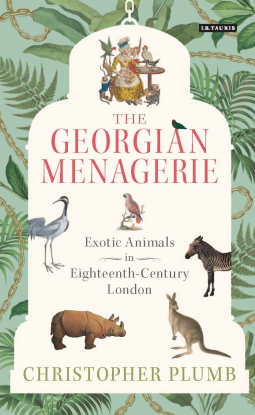
The Georgian Menagerie by Christopher Plumb

Elephants, kangaroos, parrots, zebras, bears, tigers, camels – we all know what they look like and how they behave; even if we haven’t actually encountered them for ourselves in a zoo or on safari, we’ve certainly seen them on television and read about them in books. But there was a time when, for British people at least, these animals and birds were new and unusual. The Georgian Menagerie: Exotic Animals in Eighteenth-Century London is a fascinating account of how these creatures were brought to Britain and what happened to them when they arrived.

The Georgian Menagerie Christopher Plumb draws on a wide range of sources including diaries, court cases, wills and other legal documents, advertisements, newspapers, letters and even poems and jokes to explore the stories of exotic animals and birds in Georgian society. As the British Empire grew during the 1700s, overseas trade and shipping increased and it became easier to travel to faraway destinations; this meant that menagerists and private collectors were able to obtain animals from distant continents and – as long as they were able to survive a long sea journey – bring them home to exhibit to the public.

The book features anecdotes from all over Britain, but specifically London, where most of the early menageries were located – including Pidcock’s Menagerie in the Exeter Exchange and Kendrick’s Menagerie at Piccadilly. While a lot of attention is given to the menageries with their large collections of creatures, eventually some of the animals and birds (canaries, for example) became more common and ordinary people could sometimes afford to buy one to keep in their own home.

Unfortunately, though, some of the animals being imported were required for a different purpose. In a section entitled Ingredients, we learn about the popularity of turtle soup, the use of bear grease by wigmakers and the demand for perfumes made with oil from the glands of civet cats. And even dead animals were of interest to the Georgians: they could be studied by anatomists, artists and naturalists, and were often then stuffed and put on display in museums.

As you can probably imagine, many of the anecdotes in the book are very sad to read. The people who were removing these animals from their natural habitats had no idea how to look after them correctly and, in most cases, didn’t seem to care. The animals and birds usually didn’t live very long in captivity and had short, miserable lives, being fed inappropriate food and provided with inadequate housing. There are stories of a young polar bear kept for a month in a wooden barrel with fresh water poured in daily and a parrot left unable to walk after being tethered to a perch on a short chain, to give just two examples.

Sometimes the animals would take their revenge. In a chapter called Bitten, Crushed and Maimed you can read about owners, keepers and spectators being injured or attacked by animals – not always because the animal was being tormented or badly treated, but also due to human ignorance. If people didn’t know how to care for the animals, they didn’t know how to behave around them either and seemed to have no understanding of the dangers of taunting rattlesnakes, trying to climb on elephants’ backs or poking fingers between the bars of cages!

The Georgian Menagerie is not always a pleasant read, then, but I suppose not everything in our history is very pleasant. And of course, there are lots of amusing and lighthearted anecdotes in the book too, particularly in the final section, Humour, which discusses the novelty of electric eels, the jokes surrounding Queen Charlotte’s zebras, and the relationships between parrots and their owners. Christopher Plumb’s style throughout the book is engaging and easy to read and there are plenty of beautiful illustrations by artists of the period. References and sources are provided both within the text and at the back of the book.

Despite the sometimes distressing descriptions of animal cruelty, I found The Georgian Menagerie completely fascinating. I love reading about the eighteenth century and this book gave me an opportunity to explore an aspect of Georgian life about which I previously knew very little. Definitely recommended!

Thanks to the publisher for providing a review copy via NetGalley.

She-Wolves: The Women Who Ruled England Before Elizabeth by Helen Castor

She-Wolves As the title suggests, this is a book about four medieval women who ruled – or attempted to rule – England in the centuries before Elizabeth I.

* Matilda, daughter and heir of King Henry I, was known as ‘Lady of the English’. She was never actually crowned Queen of England but fought her cousin, Stephen of Blois, for the throne in a period of civil war described as The Anarchy.

* Eleanor of Aquitaine was married to two kings – first Louis VII of France and then Matilda’s son, Henry II of England. Two of her sons – Richard I (the Lionheart) and John – also became King, and Eleanor effectively ruled England as regent while Richard was away fighting in the crusades.

* Isabella, the daughter of King Philip IV of France, came to England as Edward II’s young queen but found that her husband was so obsessed with his favourites (Piers Gaveston and Hugh Despenser) that he was prepared to put them before not only his wife but also his kingdom. Isabella eventually staged a rebellion with her lover Roger Mortimer and deposed Edward in order to put her young son, the future Edward III, on the throne.

* Margaret of Anjou was Henry VI’s queen consort and played a major part in the Wars of the Roses. With Henry unable to provide the strong leadership the country needed and possibly suffering from an unspecified mental illness, it fell to Margaret to rule in his place and to lead the Lancastrian faction against their Yorkist rivals.

In She-Wolves (the title refers to a term which has been used to describe both Isabella of France and Margaret of Anjou) Helen Castor looks at the lives of each of these queens in turn, before examining their role in history and how they possibly opened the way for Mary I and Elizabeth I to reign in their own right. Unlike Mary and Elizabeth, the four women covered in this book never ruled as sole monarchs but found themselves in a position of power as the daughters, wives or mothers of kings who, for one reason or another, were unable to rule themselves. Henry I died without a male heir and his nephew Stephen was never fully accepted by the English nobility; Richard I spent much of his reign abroad; Edward II lost the support of his barons due to his choice of favourites; and Henry VI was simply incapable of being an effective ruler. In each case, a woman stepped in to fill the gap.

She-Wolves takes us on a fascinating journey through medieval history, but I have to confess that I didn’t read this book in the way it was intended to be read. As I had just finished reading Isabella by Colin Falconer, the queen I was most interested in was Isabella of France, so I read her section of the book first before turning back to the beginning to read the rest. This wasn’t a problem for me as I’m familiar with all four periods of history, but I would still recommend reading the book in order (unless you’re desperate to read about one particular woman, as I was). The final section of the book, which describes the reigns of Mary and Elizabeth, ties everything together and looks at how times had changed enough by the Tudor period for a woman to finally rule alone.

I thought She-Wolves was slightly dry in places but I did find the book well written, interesting and easy to read. Each section starts with a map showing the relevant areas of Britain and Europe and a family tree to help clarify the complex relationships between characters. As this is a work of non-fiction, however, I was surprised by the lack of notes and references – although there is a list of suggestions for further reading at the back of the book and some sources are named directly in the text. These sources include anonymous chronicles such as Vita Edwardi Secundi (Life of Edward II) and the Gesta Stephani (Deeds of King Stephen) and as Helen Castor points out, medieval chroniclers struggled with the idea of women wielding power and tended to focus on the men, which is why we have so little information on the women’s own experiences and actions.

Approaching the end of the book, I was ready to praise Helen Castor for avoiding bias and speculation…until I came across the statement that the Princes in the Tower were ‘murdered by Edward’s youngest brother and most trusted lieutenant, Richard of Gloucester’, stated as fact. It could be true, of course, but I would have preferred an acknowledgment that it might not be and this made me wonder whether the earlier sections of the book had been as unbiased as I’d thought or whether I just didn’t notice as I have less knowledge of those other periods of history.

I don’t think I’m ever going to decide that I prefer non-fiction to fiction, but I did enjoy reading this book and have learned a lot about Matilda, Eleanor, Isabella and Margaret. Can anyone recommend any other good biographies of any or all of these women?

An Accidental Tragedy: The Life Of Mary, Queen Of Scots by Roderick Graham

An Accidental Tragedy The death of Mary, Queen of Scots, executed in 1587, could certainly be considered a tragedy. Was it also an accidental one? Could Mary’s fate have been avoided if she had only been a different type of person and if she had made different choices in life? This is the starting point for Roderick Graham’s 2009 biography of one of Scotland’s most fascinating monarchs, which claims ‘neither to blacken her character by portraying her as a murderess of husbands, nor to sanctify her as the lonely champion of her faith, but to recount the circumstances which formed her character and to explain the events which determined her fate’.

The book begins with Mary’s birth at Linlithgow Palace in 1542 and her rapid accession to the throne when her father, James V of Scotland, died just six days later. Mary was not Scotland’s first child monarch – James V himself and all of the four kings before him also came to the throne at an early age – and the Scottish people had become used to long periods of regency. As Graham explains, this led to an increase in the power and independence of the nobility and caused division and a lack of unity.

After a marriage treaty between Mary and Henry VIII’s son, Prince Edward, was rejected by the Scots, the five-year-old queen was sent to France where she would eventually marry the French king’s heir, the Dauphin Francis. Mary grew up in France rather than Scotland and she and Francis were strongly influenced by her mother’s relatives, the Guises. This meant that when Mary returned to Scotland to rule in 1561 following her husband’s death, she had very little knowledge of the country of her birth. At a time of increasing religious and political conflict among the Scottish noblemen a strong leader was needed.

Roderick Graham does a good job of showing how poorly equipped Mary was for her role as Queen of Scots and how she was unable to provide the sort of leadership the country required. Despite the presence of three influential women in her life – her mother, Mary of Guise; the Queen of France, Catherine de’ Medici; and the King of France’s mistress, Diane de Poitiers – Mary appeared to learn very little from any of them regarding the management of court intrigue and politics. The years that followed her return to Scotland were dominated by murders, plots, rebellions and two disastrous marriages, the first to Lord Darnley and the second to the Earl of Bothwell, finally ending in her abdication and imprisonment in England.

I found it interesting that Graham had chosen to write a book about someone for whom he seemed to have so little admiration, sympathy or liking. He never misses an opportunity to compare Mary with that other queen south of the border – Elizabeth I – and to point out how much stronger, cleverer and wittier the Queen of England was. In contrast, he paints a picture of Mary as immature, incapable of making good decisions and driven by passion and emotion. I’m not sure how fair or unfair his treatment of Mary is, but despite his preference for Elizabeth, he still made me feel sad for Mary as her life drew closer to its tragic end.

An Accidental Tragedy is the first book I’ve read that is specifically about Mary, Queen of Scots. Of course, I’ve come across her in other non-fiction books about the Tudor/Elizabethan period and she has been a secondary character in some of the historical fiction novels I’ve read, but this is the first time I’ve read a comprehensive biography of her entire life. I was particularly interested in reading about this period in Scotland’s history because my favourite historical fiction series, the Lymond Chronicles by Dorothy Dunnett, is set during the first part of Mary’s reign, but this just added another layer of interest to what was already a fascinating and very readable biography.

If anyone has any other biographies of Mary to recommend, please let me know. I would love to read another one.

The Dead Duke, His Secret Wife and the Missing Corpse by Piu Marie Eatwell

the dead duke How could I resist reading a book with a title like that? Luckily, the story between the covers proved to be as intriguing as the title; I was completely engrossed in The Dead Duke, His Secret Wife and the Missing Corpse from beginning to end. I don’t often choose to read non-fiction but I’m very glad I decided to read this one!

In The Dead Duke, Piu Marie Eatwell gives a thoroughly researched account of one of the most bizarre legal cases of the Victorian and Edwardian eras. In 1897, Anna Maria Druce approached the courts to request the exhumation of her father-in-law’s grave. She sensationally claimed that her father-in-law, T.C. Druce, was actually the 5th Duke of Portland and had been leading a double life until deciding to kill off his alter ego. Druce had faked his own death, she said, and if his coffin was opened it would be found to be empty. This would leave Anna Maria’s son as the true heir to the Portland fortune.

This was only the beginning of a fascinating legal battle that would continue for years, attracting a huge amount of media attention and capturing the imaginations of the public. Of course, I’m not going to spoil any of the book’s surprises by telling you whether the grave was ever opened or whether Anna Maria’s claims were proved to be true, but along the way some shocking revelations were made and some dark secrets were uncovered!

With tales of secret wives and illegitimate children, fraud and forgery, stolen evidence and unreliable witnesses, lies and deception and double identities, this could have been the storyline of a Wilkie Collins or Mary Elizabeth Braddon novel (and Eatwell does draw some parallels with the lives and works of these authors and others). As a fan of Victorian sensation novels, it’s not surprising that I enjoyed this book so much.

I particularly loved reading about the eccentric lifestyle of the 5th Duke of Portland. Becoming increasingly reclusive in his later years, he rarely went out in daylight and constructed a labyrinth of underground tunnels beneath his estate. He often wore six coats at the same time, had a large collection of wigs and only ate in the mornings and evenings. His alleged alter ego, T.C. Druce, who ran a London department store, was said to have some similar habits, which added some support to the theory that the two men were one and the same.

I was impressed with the huge amount of research the author must have carried out while she was writing this book, drawing on newspaper articles, letters, photographs, census records and other documents to build up a full and balanced picture of the case. Every time a new character is introduced we are given details of their family history, personal background, appearance and personality, all of which helps to bring them to life rather than being just names on the page. Further notes are provided at the back of the book, along with a list of primary and secondary sources.

In the final three chapters, set in 2013, Piu Marie Eatwell describe some of the new evidence she was able to discover during her investigations and her enthusiasm for the subject really shines through here. It must have been a fascinating book to research and it was certainly a fascinating book to read!

Thanks to Midas PR for providing a review copy of this book.

The Gothic: A Very Short Introduction by Nick Groom

The Gothic The Gothic is one of a series of books offering very short introductions to a wide variety of different topics. I have read one of the other books in this series – The Tudors – and found it a good way to gain a brief overview of a subject without going into an overwhelming amount of detail. I was attracted to this particular title because I enjoy reading Gothic novels, but the book does cover other aspects of Gothic culture as well as literature.

Nick Groom begins by explaining the history of the Goths (who originated from Germanic barbarian tribes) and how their influence spread throughout Europe. He then looks at Gothic architecture, before moving on to the more recent past and discussing the development of Gothic fiction, music, art and film. For such a short book (150 pages) it’s surprisingly comprehensive, but it really is intended to be just an introduction. If you want to explore any of the topics covered in the book in more detail, Groom gives some suggestions for further reading at the end.

This is a fascinating little book, but I don’t think it succeeds in showing how the different meanings of the term Gothic are related to each other. In the preface the author states that each of these meanings and associations are “part of a common history and occasionally share common features”, but I feel that I still don’t really understand how the Gothic culture with which we’re familiar today is connected with the original Goths of the fourth and fifth centuries. I did still enjoy reading the book, though. The chapters on literature were of particular interest to me, and as I hadn’t heard of some of the Gothic novels Groom talks about, I now have a whole list of titles to investigate!

I found the book itself very well presented (as was the other book I read, on the Tudors); the text is divided into short, manageable sections, there are some useful maps, photographs and illustrations and references are provided at the back. I think The Gothic and the other titles in the Very Short Introduction series will appeal to many different types of reader, from the student who wants to gain a general understanding before delving more deeply into one area to the non-academic reader who just wants to learn something new and interesting.

You can find a full list of all the Very Short Introductions on the Oxford University Press website.

Rebellion by Peter Ackroyd

Rebellion Rebellion, subtitled The History of England from James I to the Glorious Revolution, is the third volume in Peter Ackroyd’s History of England series. I haven’t read the first one, but I did read the second – which covered the Tudor period – and enjoyed it, so I was looking forward to seeing how Ackroyd would tackle the Stuarts in this latest volume. Before I go any further I should point out that Rebellion is the US title, which I’m using here as this is the edition I received for review via NetGalley; the UK title is Civil War.

The book opens with the reign of the first Stuart king of England, James I, who acceded to the throne after the death of Queen Elizabeth I in 1603. He was, of course, also James VI of Scotland and united the two countries under one crown. James was followed by his son, Charles I, and most of the book is devoted to discussing the Civil War which ended in Charles’ execution. After several years of rule by the Lord Protector, Oliver Cromwell, the Stuart monarchy was restored under Charles II and the Restoration period is also covered in this volume. Finally, Ackroyd looks at the reign of James II and finishes with the Glorious Revolution which marked the arrival of William of Orange and his wife, Mary.

I have condensed eighty-five years of history into one paragraph here, but the book itself goes into a huge amount of detail, describing the life of each Stuart monarch and the key events of their reign. It’s a fascinating read, especially if you have a particular interest in this period of English history, and like the previous volume, Tudors, it’s written in a style that is factual without being too academic for the general reader. While the lives of kings and queens are interesting to read about, I also like to know how ordinary people lived, so I was pleased to find that Ackroyd gives some attention to the social history of the period and includes some chapters on literature, science, music and drama.

The only problem I had with this book was that I felt too much time was spent on the Civil War while the reigns of Charles II and James II had been squeezed in at the end. The chapters describing the events leading to the Civil War and the religious and political reasons for it seemed to go on forever, and although I can certainly understand why Ackroyd chose to make this the focus of the book I did start to get bored and found myself looking forward to moving on to the Restoration period.

While I didn’t enjoy this book as much as Tudors, I do feel that I’ve learned a lot from it. I am definitely not an expert on seventeenth century history but having finished this book, I now know much more than I did before I started. I haven’t heard anything about the fourth book in this series yet, but I expect it will continue to move forward chronologically into the eighteenth century. While I’m waiting maybe I should find a copy of the first volume, Foundation, which I still haven’t read…or I could try one of Peter Ackroyd’s other books. He has written more than thirty non-fiction books and a large number of novels too, so there would be plenty to choose from!