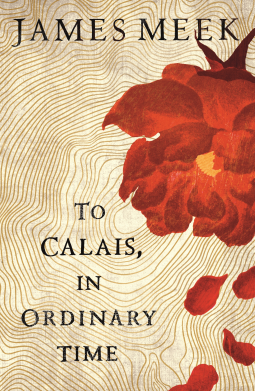
To Calais, in Ordinary Time by James Meek

It’s 1348, two years after England’s victory over France at the battle of Crécy, which led to the capture of the French port of Calais. And it is to Calais that we are headed in James Meek’s latest novel, in the company of a large and diverse group of characters.

First, there’s Lady Bernadine, a young noblewoman betrothed to a man her father’s age. Dreaming of the sort of love described in her favourite poem, Le Roman de la Rose, Bernadine has run away from her home and her arranged marriage in pursuit of the man she hopes to marry instead, the knight Laurence Haket. Haket has raised a band of archers to send to the English garrison at Calais and they are all on their way to Melcombe in Dorset where their ship awaits.

The newest recruit to the company of archers is Will Quate, a young bondsman from Bernadine’s village, Outen Green. Will hopes that Bernadine’s father, Sir Guy, will grant him his freedom in return for serving with the bowmen. The other archers are rough, battle-hardened men who were together at Crécy and are not the most pleasant of people, as Will quickly discovers – but it seems that they will not go unpunished for the crimes they have committed.

Finally, we meet Thomas Pitkerro, a Scottish proctor who has been working at the papal court in Avignon and is returning there after carrying out a commission at Malmesbury Abbey in England. The Abbot has asked him to travel with the archers and to listen to their confessions as the nearest thing to a priest they will have. And they certainly have a lot to confess!

To Calais, in Ordinary Time doesn’t have a huge amount of plot – the whole story consists of the journey through the south of England towards Melcombe, but there’s still a lot going on. We get to know more about the archers and the girl known as Cess who has come back with them from France; the characters find themselves asked to perform in a morality play; and there’s an exploration of identity and gender through the story of Hab the swineherd and his ‘sister’ Madlen. Meanwhile, unknown to the characters, every step they take towards Calais is taking them closer to the Black Death, the great pestilence coming in the opposite direction. The choice of Melcombe as the point where they will embark for France is significant because Melcombe will become known as the ‘Plague Port’ – one of the first locations where the Black Death would enter England. You can find parallels with modern catastrophes (James Meek has said that he was thinking of climate change) but any comparisons are lightly drawn and they are more something to keep in mind rather than an important part of the story.

But the most notable aspect of this book – and one you’ll probably either love or hate – is the language. Meek uses three very distinct styles to convey the different backgrounds and social classes of each of the three main characters or groups of characters. Thomas Pitkerro’s narrative, mainly in the form of letters to his friends in Avignon, is written in very formal prose with long sentences and big words, evoking the Latin used by the clergy at that time. As an English noblewoman in the 14th century, Bernadine would have spoken a form of Norman French, so this is indicated by peppering her speech with words like the French negative ‘ne’ (‘you ne understand’, ‘ne speak his name’). The others – Will, Hab and the archers – speak in their local Cotswold dialect (‘they say steven in place of voice, and shrift and housel for confession and absolution, and bead for prayer’). They also say neb for face, which I found quite jarring as where I live it means nose!

While I appreciated the imaginativeness and cleverness behind all of this, I have to admit that I just found it a distraction. Ironically, instead of helping to immerse me in the setting and the story, it kept pulling me back into the present day and reminding me that I was reading a modern work of fiction. As I’ve said, though, I’m sure other readers will love the use of language and so will probably enjoy this book a lot more than I did. It’s the sort of book I would expect to see being nominated for awards; it just wasn’t right for me personally.

Thanks to Canongate Books for providing a copy of this book for review via NetGalley.
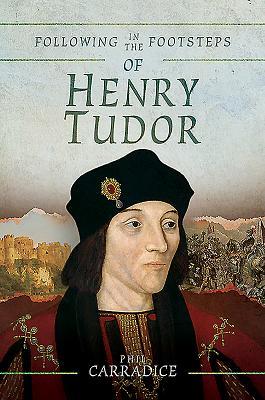
Following in the Footsteps of Henry Tudor by Phil Carradice

As those of you who have been following my blog for a while will probably know, my favourite period of English history is the Wars of the Roses, the conflict that dominated the second half of the fifteenth century as the rival houses of York and Lancaster fought for control of the throne. The Wars of the Roses came to an end shortly after the Battle of Bosworth in 1485, during which Richard III was killed and the victorious Henry Tudor came to the throne as Henry VII. In Following in the Footsteps of Henry Tudor, Phil Carradice looks at Henry’s life from childhood to death, but with a special focus on his journey to Bosworth Field.

Beginning with Henry’s birth at Pembroke Castle in Wales to Margaret Beaufort and Edmund Tudor, Carradice goes on to give us an overview of the period, explaining how the throne changed hands several times between York and Lancaster and describing Henry’s fourteen years in exile under the protection of the Duke of Brittany. In 1485, with Richard III’s reign becoming increasingly troubled, Henry returned to Wales ready to launch his own claim to the English throne. His long march into England at the head of an army – a journey which took more than two weeks – where he would meet Richard on the battlefield at Bosworth, is the main subject of this book.

Carradice goes into a lot of detail on why the place usually described as the site of Henry’s landing in Wales may be incorrect and attempts to establish exactly where he did begin his journey. He then looks at some of the legends that surround the various stages of the march and whether they are likely to be true or not. He draws on primary sources such as The Ballad of Bosworth Field and the chronicles of Polydore Vergil, but also refers to the work of more recent historians and even includes some excerpts from his own interview with a man who decided to mark the 500th anniversary of Bosworth in 1985 by recreating Henry’s march. The one thing that was missing and would have really added to my enjoyment of the book was a map showing the route taken by Henry and his men; there was plenty of other additional material, such as photographs and illustrations, a bibliography and an index, so it’s disappointing that no map was included.

The account of the Battle of Bosworth itself was particularly well written and interesting, giving a good idea of how both Richard and Henry may have felt as they made their preparations and how each of their fates rested on winning the support of Thomas and William Stanley, who waited until the very last minute to enter the battle. The author makes no secret of the fact that his sympathies are with Henry and the Lancastrians rather than with Richard and the House of York – and he gives his reasons for his bias in the prologue at the beginning of the book. However, he does acknowledge some of Richard’s good points, such as his courage on the battlefield and his skill as a soldier, and in general I thought the book was quite fair and balanced – certainly not as biased as others that I’ve read.

As for accuracy, I noticed a few small errors such as a reference to the white rose of Lancaster and red rose of York (it’s the other way round, of course) but I’m sure these were silly mistakes rather than a lack of knowledge from the author. Overall, I found this an enjoyable and informative read; even though it’s a period I have read about many times before, I felt that I was learning new things from it – and I think it would be accessible for readers with little or no knowledge of the period too.

Following in the Footsteps of Henry Tudor is published by Pen & Sword Books as part of their ‘Following in the Footsteps’ series. The other books in the series explore the stories of Edward II, Oliver Cromwell and The Princes in the Tower. Thanks to Pen & Sword for providing me with a copy of this book for review.

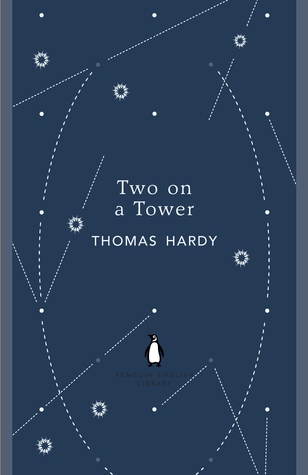
Two on a Tower by Thomas Hardy

This was the book chosen for me in the most recent Classics Club Spin and although it wasn’t one of the books on my list that I was particularly hoping for, I was pleased with the result as Thomas Hardy is one of my favourite Victorian authors. Today is the deadline for posting our reviews and for once I have managed to finish in time!

Two on a Tower was published in 1882 and is one of Hardy’s less well known novels, but that doesn’t mean it isn’t a good one. Although I wouldn’t rank it amongst my top three or four, I still thoroughly enjoyed it. It falls into the group of novels Hardy himself classed as ‘romance and fantasy’ and is set, like many of his other books, in his fictional Wessex. The romantic aspect of the book concerns Lady Viviette Constantine and her relationship with the younger Swithin St Cleeve.

Twenty-year-old St Cleeve lives with his elderly grandmother and dreams of becoming a famous astronomer. He has created an observatory in an old tower on land owned by Lady Constantine and her husband, who is away in Africa. When Lady Constantine meets the young man who is using her tower, she is struck by his beauty and by his passion for his work, and as Swithin introduces her to the wonders of the night sky with its planets and constellations, she becomes aware that she has fallen in love with him. She and Swithin spend more and more time together in their own private world at the top of the tower, hidden away from the prying eyes of society whom, she knows, would disapprove of their relationship – because she is ten years older and belongs to a different social class.

Even after news arrives from Africa of the death of Lady Constantine’s husband, the barriers of age and class still stand in their way. Will she and Swithin ever be able to marry and live together openly? How long will she manage to keep her romance a secret from her scheming brother Louis? And can she fend off the unwelcome attentions of the Bishop of Melchester?

Two on a Tower has a slightly different feel from most of the other Hardy novels I’ve read. It’s quite a gentle story, with none of the truly shocking, tragic scenes that you would find in books like Jude the Obscure and Tess of the d’Urbervilles. That’s not to say there is no drama, because there is, especially at the end – Hardy certainly doesn’t make things easy for Viviette Constantine and Swithin St Cleeve – but what I will remember most from this book are the descriptions of the stars in the night sky and the slow development of the two lovers’ relationship. However, I thought that the sense of place – usually such a strong element of Hardy’s writing – was weaker than usual. Apart from the tower itself, I felt that the surrounding landscape never came to life in the same way as, for example, Egdon Heath in The Return of the Native. It was as if, by concentrating on the wider universe, Hardy had less time to spend on the smaller details of everyday life. Maybe that was intentional; I’m not sure.

As I’ve said, this book hasn’t become a favourite – and I felt less emotionally invested in the central romance than I would have liked, probably because, although I completely believed in Viviette’s love for Swithin, I wasn’t convinced that she really meant much more to him than his telescope did. I was still gripped by their story, though, and overall, I really enjoyed Two on a Tower.

I have four Hardy novels left to read and they are all obscure ones too: The Well-Beloved, A Laodicean, The Hand of Ethelberta and The Trumpet-Major. If you have read them, please let me know which one I should read next!

This is book 14/50 read from my second Classics Club list.

The Turn of the Screw by Henry James

I keep coming across books that are said to have been inspired by or similar to Henry James’ 1898 classic The Turn of the ScrewFlorence and Giles by John Harding, This House is Haunted by John Boyne and The Turn of the Key by Ruth Ware, to name a few – so it seemed ridiculous that I still hadn’t read the book itself. I decided to put it on my list for this year’s R.I.P. challenge, and have finally read it, appropriately just in time for Halloween.

The Turn of the Screw is presented as a ghost story told to a group of friends sitting round the fire at Christmas. It tells of two children left in the care of an uncle after the deaths of their parents. Not wanting to be bothered by his little niece and nephew, the uncle employs a young woman as their governess, giving her strict instructions not to contact him with any complaints or questions and to deal with any problems herself. The governess, who remains unnamed throughout the story, arrives at the family estate, Bly, and gets to know Flora, the younger of her two charges. Flora’s brother, Miles, is away at school but shortly after the governess’s arrival, he returns home, having been expelled. The governess can’t understand this, as Miles, like his sister, appears to be so charming and angelic.

When the governess begins to see two mysterious figures around the grounds of the estate, however, she begins to wonder whether the children are really as innocent as they seem. Learning from the housekeeper that the two figures she has seen closely resemble two previous Bly employees – Miss Jessel and Peter Quint, both of whom are now dead – the governess becomes convinced that she is seeing ghosts. But are the ghosts a figment of her imagination or do they really exist? Are Flora and Miles, as she strongly suspects, secretly aware of them too? And if so, what hold do the ghosts have over the children?

I do wish I’d read this book before now; it was a quick, short read and it would undoubtedly have been better to have read it before reading all those other novels it inspired! Already being familiar with the general outline of the plot before I began did spoil things a little bit, although I still found that some parts of the story were new to me. I didn’t find it particularly scary, which in a way I was pleased about as I live alone and don’t like to be terrified – but I was also slightly disappointed because surely a good ghost story should be scary. Anyway, it was certainly unsettling, mainly because of the ambiguity. Because of the governess’s unreliability as a narrator, we have to decide for ourselves whether the ghosts are real or whether they are not – and there are other questions that are never fully answered either, such as the true nature of the children’s relationship with Jessel and Quint or what exactly Miles said and did to get expelled from school.

This is the second book I’ve read by Henry James and although I found it more entertaining than my first (The Europeans), I don’t think I’m ever going to be a fan of his writing style which I find very dry and difficult to engage with. I’m glad I’ve read this one at last and I will try more of his books, but I’m not expecting him to become a favourite author.

This is book #7 read for this year’s R.I.P. event.

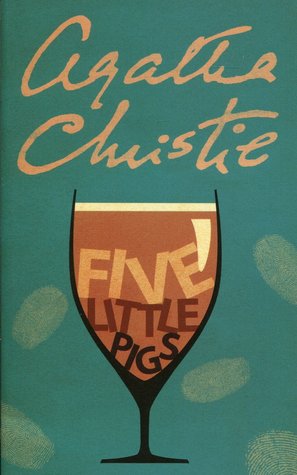
Five Little Pigs by Agatha Christie

This is one of the Christie novels I have been particularly looking forward to reading, as so many people list it amongst their favourites. I had hoped to read it last month as it was September’s selection for the 2019 Read Christie Challenge, but it ended up having to be an October read for me instead.

Published in 1942, Five Little Pigs is one of Christie’s Poirot mysteries, but it is slightly different from the others in that Poirot is trying to solve a crime which took place many years before the novel opens. Carla Lemarchant has received a letter from her mother, Caroline, who has died in prison while serving a life sentence for the murder of her husband, Amyas Crale, sixteen years ago. In the letter, Caroline assures her daughter of her innocence – and because Carla knows that her mother was always a woman who told the truth, she believes her. Hoping to find out what really happened, Carla approaches Hercule Poirot and asks him to investigate.

This is not Poirot’s usual sort of mystery – there is no active crime scene to visit and any evidence is likely to have been lost or destroyed long ago – but he agrees to Carla’s request. He begins by collecting statements from the five people who, other than Caroline, had been present on the day of the murder: the stockbroker Phillip Blake and his reclusive brother Meredith; Elsa Greer, with whom Amyas Crale was thought to be having an affair; the governess Cecelia Williams; and Caroline’s younger sister, Angela, who was just a teenager at the time. If Caroline was innocent, then one of these five must have been the murderer – but will it still be possible to identify the real culprit now that so much time has passed?

I can understand why Five Little Pigs is so highly regarded by Christie fans. The characterisation is excellent; the suspects are well drawn and have believable motives for wanting Amyas dead, and there is evidence of character development too, in the contrast between their present day selves and the people they had been sixteen years earlier. The structure is clever too – the statement each character writes is given in full and although I thought at first that I would find it repetitive reading about the same events five times in a row, that wasn’t really a problem. Each account of that fateful day is slightly different and each one makes us question what we were told in the previous one. It’s only once Poirot has all five accounts in front of him and has spoken to all five of the writers in person that he can piece everything together and solve the mystery.

I enjoyed this book but it hasn’t become a personal favourite and there are other Poirots I’ve liked more. The problem I had with this one was that, although I appreciated the structure and the characters, I didn’t find the mystery itself particularly imaginative or entertaining. I thought The ABC Murders and Dumb Witness both had better plots, to give two examples that I’ve read this year for the Read Christie challenge. Having just caught up with September’s book at the end of October, I am going to skip October’s book for the challenge (a new short story collection, The Last Séance) and will wait to see what November’s choice will be.

And if you’re wondering, the title of Five Little Pigs refers to the fact that the five suspects remind Poirot of the children’s rhyme, “This little piggy went to market, this little piggy stayed at home; This little piggy had roast beef, this little piggy had none; And this little piggy went ‘wee wee wee’ all the way home!”

This is book #6 read for this year’s R.I.P. event.

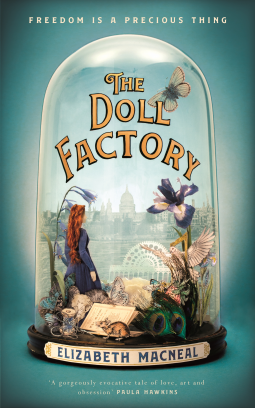
The Doll Factory by Elizabeth Macneal

The Doll Factory was one of the books on my 20 Books of Summer list that I never got round to reading, so I added it to my Autumn TBR list instead, hoping that would give me a push into picking it up sooner rather than later. Now that I’ve finally read it, I can say that it was worth waiting for – and it was actually a perfect October read.

The Doll Factory is set in Victorian London and follows three main characters whose stories become more and more closely entwined as the novel progresses. First, we meet Silas Reed, a lonely and eccentric man of thirty-eight whose ‘shop of curiosities’ houses stuffed animals, jars of specimens and cabinets of butterflies. He dreams of one day opening his own museum and hopes he will get his chance to make a name for himself at London’s upcoming Great Exhibition, but a chance encounter with Iris Whittle proves to be a distraction.

Iris – like her sister, Rose – works at Mrs Salter’s Doll Emporium, painting faces on china dolls. What Iris really wants is to develop her skills as an artist and be taken seriously as a painter in her own right, so when she is approached by Louis Frost, a member of the Pre-Raphaelite Brotherhood who asks her to model for him, she jumps at the opportunity…on the condition that Louis teaches her to paint. As she and Louis begin to spend time together, Iris discovers that she is falling in love – but she is being watched by Silas Reed, who has already decided that Iris is the woman he has been waiting for all his life.

Ten-year-old Albie has links with both Silas and Iris, providing dead animals for the curiosity shop and running errands for the doll factory. Albie is a bright and observant boy, but has grown up in poverty; he needs all the money he can get if he is ever going to help his sister out of prostitution and achieve his dream of buying a new set of teeth for himself. Albie can see that Silas is becoming dangerously obsessed with Iris, but will he be able to help her before it’s too late?

There are so many things to admire about The Doll Factory. I loved the Victorian setting, which in Elizabeth Macneal’s hands feels vivid and convincing, and I loved the way she blends her fictional characters and storylines together with real history. I enjoyed reading about the art world of the 1850s; although we do meet some of the real Pre-Raphaelites such as Rossetti and Millais, they are just minor characters while the focus is on Iris’s relationship with the fictional Louis Frost (and his wombat, Guinevere). As a woman trying to find her way into this world, Iris knows she faces huge challenges and obstacles but she knows she has talent as an artist and is determined to find a way to express herself.

Because of the Pre-Raphaelite element of the novel, I kept being reminded of Crimson and Bone by Marina Fiorato, another book in which a young woman becomes an artist’s model, although I think this is the stronger and better written of the two. It’s also quite a dark novel; the signs are there from the beginning with the descriptions of taxidermy, the collection of dead creatures and some of the macabre paintings Iris and her sister create for mourning parents in the doll factory, but it becomes much darker and more disturbing in the second half of the book as Silas becomes increasingly obsessed with possessing Iris. The ending wasn’t perfect – the climax of the story seemed to go on for far too long and was the one part of the book that, for me, felt contrived and over the top – but other than that, I really enjoyed The Doll Factory. It’s an impressive first novel and I will be hoping for more from Elizabeth Macneal.

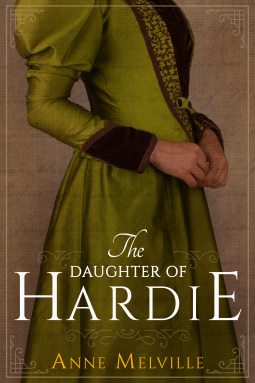
The Daughter of Hardie by Anne Melville

The Daughter of Hardie, originally published in 1988 as Grace Hardie, is the second in Anne Melville’s trilogy of novels following the story of a family of English wine merchants throughout the late nineteenth and early twentieth centuries. I think this book does stand alone quite well as it concentrates mainly on the younger generation of the Hardie family, but I would still recommend starting with the first one, The House of Hardie, if you can.

This second novel opens in 1898 with Grace Hardie growing up at Greystones, the family estate in the countryside near Oxford, where they have their wine shop. As the only girl in a family of boys and considered an invalid due to her severe asthma attacks, Grace is struggling to find her place in the world but she finds happiness in exploring the grounds of Greystones and playing with her beloved cat, Pepper. Then, one day, a tragic accident destroys Grace’s happiness and things are never quite the same again. Meanwhile, 1914 is approaching and with it the beginning of the First World War. With five brothers, four of whom are old enough to fight, there could be more tragedy ahead for Grace and her family…

I enjoyed the first Hardie novel, but I thought this one was even better. I wasn’t sure about it at first – I found the scenes describing the accident I alluded to earlier quite harrowing and I almost stopped reading at that point, but I’m pleased I didn’t because as the consequences of that incident and its impact on Grace and her brothers became clearer I started to understand why it was depicted in that way. By the time war broke out halfway through the novel I had been fully drawn into the story and was genuinely worried for the characters as they either went off to fight or were left behind to wait for news of their loved ones.

Anne Melville manages to cover almost every aspect of the war you could think of – men sent home from the front wounded, men left suffering from shellshock, gas attacks and zeppelin raids, conscription and desertion, women stepping into roles vacated by men, and the difficulties of keeping a large estate running during and after the war. This could easily have felt overwhelming, but it doesn’t…all of these storylines arise naturally from the stories of the various characters and the types of people they are.

But this is not just a book about war. One of the main themes of the first novel, women’s education, was at the forefront of this one too. Midge Hardie, my favourite of the ‘first generation’ characters, is now a school headmistress – a job she loves, even though she had been forced to make an unfair choice between marriage and a teaching career, as married headmistresses are considered ‘unacceptable’. Grace herself is not as certain as Midge about what she wants to do and it was interesting to follow her internal struggles over whether to marry and have children or to pursue a more independent way of life.

There was so much to enjoy in this book that I really don’t think the two big plot twists that come towards the end of the book were at all necessary. One in particular felt unbelievable and just a way of trying to tie up loose ends that didn’t need to be tied. That was a shame because otherwise I had loved the book, after that uncertain start. Despite those reservations, though, I will definitely be reading the final part of the trilogy, The Hardie Inheritance, and will look forward to finding out how the story ends.

Thanks to Agora Books for providing a copy of this book for review via NetGalley.