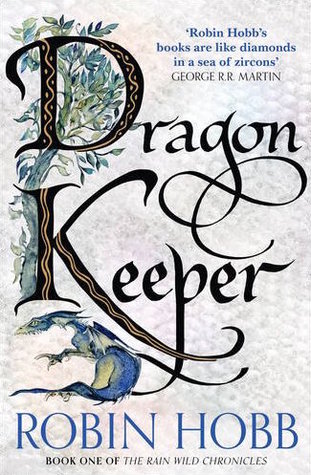
Dragon Keeper by Robin Hobb

Over the last few years, I’ve read and loved Robin Hobb’s Farseer Trilogy, Liveship Traders Trilogy and Tawny Man Trilogy, but I have to admit that I wasn’t particularly looking forward to reading Dragon Keeper, the first in her four-book Rain Wild Chronicles series. Although I found the dragon storylines in the earlier trilogies quite enjoyable, I wasn’t sure that I really wanted to read a series in which the dragons would be the main focus – and also, after coming to the end of the Tawny Man books, I just wanted to continue Fitz’s story rather than have to get used to a whole new set of characters. It was tempting to go straight to Hobb’s final and most recent trilogy, Fitz and the Fool, but I knew I should keep reading in order of publication as the books do all form part of one larger sequence and it’s possible that things could happen in the Rain Wild series that I need to know before returning to Fitz.

Anyway, Dragon Keeper picks up the story that was set into motion at the end of the Liveship Traders. Guided by the dragon Tintaglia, a group of sea serpents have made the long journey up the Rain Wild River to the shores of Cassarick, where they have formed the cocoons where they will await their transformation into dragons. When the day of the hatching finally arrives, the people of the Rain Wilds – among them eleven-year-old Thymara and her father – gather round to witness this historic moment: the moment that will mark the return of dragons to the world for the first time in generations.

The dragons that emerge from the cocoons, however, are weak and malformed due to the inappropriate conditions they had lived in as serpents and the difficult circumstances surrounding their cocooning process. These creatures are unlikely ever to fly like their ancestors and can barely even manage to feed themselves. It seems that their only hope of survival is to make their way to Kelsingra, the ancient city of the Elderlings, but if they are to get there safely they will need some human help. Thymara, born with claws and scales – a more extreme example of the mutations that affect many of the Rain Wild people – is chosen to be part of a team of dragon keepers who will escort the dragons to their legendary homeland.

And there’s not really much more to the plot than that. There’s a sense that, with this first in the series, Hobb is setting things up for the three that will follow and the story is just beginning to get started when the book comes to an end. I liked it enough to want to continue, but it is certainly my least favourite of Hobb’s books so far. Maybe because so many of the dragon keepers are children (they are seen as more dispensable, not having families who rely on them), it felt almost as though this book was aimed at younger readers than the others.

There were several characters who intrigued me, though, and I’ll look forward to seeing how their storylines develop in the next book. One of these is Alise Kincarron, a young woman from Bingtown who looks destined for spinsterhood before entering into a loveless marriage with a local trader, Hest Finbok. The dragons hold a special fascination for Alise and the chance to accompany them on the journey to Kelsingra is both a dream come true and a way to escape from her husband. Hest has no interest in the dragons himself, so asks Alise’s childhood friend Sedric to chaperone her – but we, the reader, know something about Sedric that Alise doesn’t and that makes us think of him more as a villain than a friend.

As a setting, I prefer the Six Duchies of the Farseer and Tawny Man trilogies, but I did enjoy the descriptions in this book of Trehaug, the city built in the treetops above the Rain Wild River. We did visit Trehaug and the Rain Wilds at several points throughout the Liveship Traders trilogy, but they lose some of their mysterious aura in this book as we learn much more about them and the people who live there. In case you’re wondering, we do meet some of the Liveship characters again (I was particularly pleased to see Paragon) but their appearances are very brief and the focus is definitely on Thymara, Alise and the other new characters. And the dragons, of course! Part of the story is told from the perspective of Sintara, a blue dragon who is not quite as weak and stunted as some of the others, and it was interesting to see things from her point of view now and then.

Although I couldn’t quite love this book, I did find it a relatively quick and easy read, in comparison to some of Hobb’s others which are usually much longer and more emotionally demanding. I’ll continue the series soon with the second book, Dragon Haven.

Cashelmara by Susan Howatch (re-read)

After re-reading Susan Howatch’s Penmarric last year, I decided to continue with a re-read of her 1974 novel, Cashelmara. I remembered this one as my least favourite of the three big historical novels I read by Howatch, so I was interested to see whether I still felt the same way about it now.

Cashelmara, like Penmarric (and The Wheel of Fortune, which I will also be re-reading soon), retells Plantagenet history in a more recent setting. Here we see Edward I, Edward II and Edward III of England recreated as Edward de Salis, his son Patrick and grandson Ned, a fictional 19th century family. No knowledge of the historical characters is necessary but it does add another layer of interest if you can spot the parallels.

The novel opens in 1859 with Edward de Salis, a widower with several adult children, visiting cousins in New York and returning to England with a new bride – the much younger Marguerite. Edward is keen to introduce his wife to his daughters, but they prove to be disappointingly hostile to Marguerite, who is only a few years older than they are. It is only Patrick, his son and heir, who makes her feel welcome and wanted, but Marguerite senses a tension between father and son that she doesn’t quite understand.

After Edward’s death, Patrick inherits his father’s lands and title, and as his story unfolds we start to see why his relationship with Edward had been so strained. Marguerite is pleased when he marries her niece, Sarah, but it soon becomes clear that it is not going to be a happy marriage. Patrick’s fortune is quickly lost through gambling and poor financial decisions and the two are forced to move to Cashelmara, the de Salis estate in Ireland. It is here that Sarah gets to know Patrick’s beloved friend Derry Stranahan and discovers that she is destined to always take second place in her husband’s affections…

At this point, if you do know the history on which this book is based, you’ve probably guessed that Sarah represents Isabella, Edward II’s queen, and Derry the king’s favourite, Piers Gaveston. Later in the novel you will also meet characters who correspond to Isabella’s lover Roger Mortimer, to Edward II’s other favourite Hugh Despenser, and to Edward III and his wife, Philippa of Hainault. If you don’t know the history, though, don’t worry because the story of the de Salis family can still be followed and enjoyed even if you’re completely unaware of the similarities with their 14th century counterparts.

The novel is divided into six sections, each one with a different narrator – Edward, Marguerite, Patrick, Sarah, Maxwell Drummond and Ned. I can’t really say that I liked any of the characters (apart from maybe Marguerite), but they are all complex, interesting, multi-faceted human beings each with their own positive and negative qualities. As with Penmarric, the shifting perspectives are very effective, because characters who had seemed unpleasant and unappealing when seen through the eyes of others suddenly become much more sympathetic when they get the opportunity to tell their side of the story. Sarah, in particular, is forced to go through some terrible ordeals during her marriage to Patrick; there are some dark moments in each of the six narratives, but Sarah’s story is surely the darkest and bleakest of them all.

Howatch’s choice of 19th century Ireland as the setting for the novel is perfect as there are plenty of historical events and issues which she can use to move the plot forward while continuing to mirror the Plantagenet storyline. The effects of famine and poverty, the campaign for Home Rule under Charles Stewart Parnell, the civil unrest surrounding the evictions of tenants, and the lives of Irish immigrants in America are all woven into the story. Cashelmara is a fascinating novel on many levels and I enjoyed my re-read, but I did find it very slow in places and for a while in the middle it seemed to go on forever. I never really became so immersed in the story that I couldn’t put it down. I do remember loving The Wheel of Fortune much more and I’m looking forward to reading that one again too, hopefully in the near future.

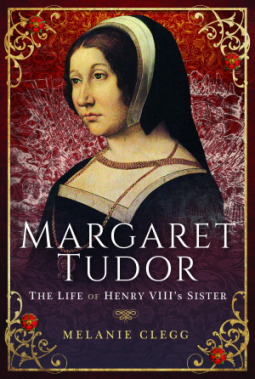
Margaret Tudor by Melanie Clegg

Henry VIII’s sister Margaret is one of the lesser known Tudors and doesn’t usually get a lot of attention either in fiction or non-fiction, yet she was important historically as both an English princess and a queen of Scotland. This very enjoyable new biography by Melanie Clegg takes us through the whole of Margaret’s life from her birth in 1489 to her death in 1541, throwing some light on her childhood, her time as queen and her unhappy second and third marriages.

As the eldest daughter of Henry VII and Elizabeth of York, Margaret had the sort of privileged childhood you would expect – perhaps more so than usual because Henry, not yet secure on his recently claimed throne, wanted to do everything he could to increase the rank and status of the new Tudor dynasty. Margaret grew up well aware of her own importance and value to her father in his efforts to arrange marriages for his children and form alliances with other royal families. In 1503, at the age of thirteen, Margaret was married to the thirty-year-old James IV of Scotland and made the long journey north while still in mourning for her mother, who had died earlier that year. It must have been a daunting experience for such a young girl, but James, despite already having several mistresses and illegitimate children, treated her with respect and kindness and helped her to settle into life in her new country.

Margaret was still just in her twenties when James was killed fighting the English at the battle of Flodden in 1513, leaving her to rule as regent for their young son who was crowned James V. She did not remain a widow for long, however, and soon married again, this time to a husband of her own choice, Archibald Douglas, Earl of Angus, a move which angered the rest of the Scottish nobility and resulted in her losing the regency. The remainder of Margaret’s life was marked by political turmoil and personal tragedy – including the death of her younger son, divorce from Angus and an equally unhappy and unsuccessful third marriage to Henry Stewart, Lord Methven.

I thoroughly enjoyed this biography. It is written in a clear and easy to read style and although it may not be academic enough for some readers (sources are just listed at the back of the book, for example, rather than being directly referenced in the text) for the general reader this is a good introduction to Margaret Tudor’s life and to this period of Scottish and English history. Melanie Clegg’s portrayal of Margaret feels quite fair and balanced, so that the reader feels some sympathy for her while also being aware of her flaws. There are parallels with the life of her granddaughter Mary, Queen of Scots (James V’s daughter), who also made some poor decisions when it came to choosing husbands!

Clegg shows how, in Margaret’s first few years in Scotland she has little interest in politics and government, but as time goes by she begins to grow in knowledge and experience. She is often torn between her adopted country and the country of her birth and does everything she can to bring about peace between Scotland and England, not always successfully. It can’t have been easy being the sister of a man like Henry VIII, after all (though maybe slightly preferable to being his wife). She should have been able to rely on him for support, especially after James is killed at Flodden, but instead he tries to make his own plans for Margaret and her children, aimed at uniting the two countries under one crown. Of course, this is what would eventually happen anyway, if not quite in the way Henry had hoped, through the marriage between Margaret’s granddaughter Mary Queen of Scots and grandson, Lord Darnley (son of Margaret’s daughter, Margaret Douglas) which resulted in the birth of the future James VI of Scotland and I of England.

I particularly enjoyed the second half of the book, which deals with the rivalries between the various factions of Scottish noblemen, the conflict between Margaret and the Duke of Albany (the next nearest in line to the throne) and her escape to England. The earlier chapters, although less dramatic, are interesting too and I loved the way James IV was portrayed. Staying in this fascinating period of history, I am looking forward to reading another new non-fiction book I have waiting on my TBR, The Afterlife of King James IV by Keith J Coleman.

Thanks to Pen and Sword for providing a copy of this book for review via NetGalley.

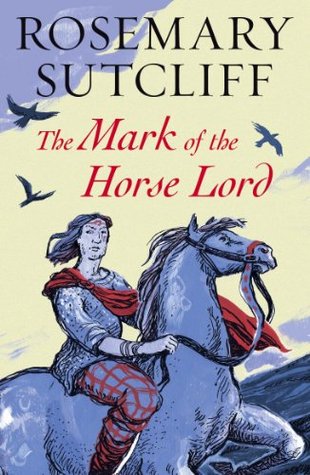
The Mark of the Horse Lord by Rosemary Sutcliff

This is the second book I’ve read for this week’s 1965 Club, hosted by Simon from Stuck in a Book and Karen from Kaggsy’s Bookish Ramblings. Like my first, Over Sea, Under Stone by Susan Cooper, Rosemary Sutcliff’s The Mark of the Horse Lord is described as a book for younger readers, although it doesn’t really feel like one. I have previously read two of Sutcliff’s adult books (The Rider of the White Horse and Blood and Sand) and I found this one just as beautifully written and with just as much to offer an adult reader.

The story is set during the time of the Roman Empire and our hero, the gladiator Phaedrus, is the son of a Greek wine merchant and his slave. The novel opens with Phaedrus, a slave himself, winning the Wooden Foil (and therefore his freedom from slavery) when he is victorious in a fight in the arena of Corstopitum, a town on the great wall built by Hadrian in what is now the north of England. His freedom is short-lived, however, when he is imprisoned after getting into trouble while out celebrating in the town, but this time he is rescued by a group of men who have noticed that he closely resembles their king and are hoping to persuade him to take part in a conspiracy.

Soon Phaedrus is heading north into what we now call Scotland, a land which at this time is home to both the Caledones (Picts) and the Dalriadain (Scots). The plan is for Phaedrus to impersonate Midir of the Dalriadain, who has been usurped by the Caledonian Queen Liadhan and blinded to prevent him from trying to rule. As he travels to the Antonine Wall and beyond, Phaedrus educates himself on the history and culture of his new people and comes to understand the significance of his new role as Horse Lord. But will he manage to convince everyone that he really is Midir – and who will win the upcoming battle between the Dalriads and the Caledones?

There was so much to enjoy about this book. I loved the descriptions of the Roman settlements along Hadrian’s Wall, including Corstopitum or Corbridge, as it is now known (I can recommend a visit to Corbridge Roman Town, run by English Heritage, if you’re ever in the area), and the contrast with the tribes in the north, where Roman rule hasn’t reached. I also found it fascinating to read about the differences in culture between the patriarchal Dalriads, whom Sutcliff tells us have ‘become a Sun People, worshipping a male God’ and the matriarchal Caledones who ‘had held to the earlier worship of the Great Mother’.

The plot was good enough to hold my interest to the end and made me think of other imposter stories I’ve read (such as The Great Impersonation and, in particular, The Prisoner of Zenda), but the setting, the time period and the themes it explores make it different and original. Also, without wanting to spoil anything, I thought the ending was perfect – both powerful and poignant. And yet, there was still something that prevented me from enjoying this book as much as I would have liked to. I’m not sure why, but I sometimes seem to struggle with books set in more ancient periods of history; I often don’t engage with the characters and storylines as thoroughly as I do when a book is set in slightly later periods. I’ve no idea why that should be, especially when an author writes as well as Rosemary Sutcliff does!

Katrina from Pining for the West has also reviewed The Mark of the Horse Lord for 1965 Club, if you would like to read a Scottish perspective on the book.

Over Sea, Under Stone by Susan Cooper

This week Simon from Stuck in a Book and Karen from Kaggsy’s Bookish Ramblings are hosting another of their club events, where bloggers read and write about books published in a chosen year. This time the year is 1965 and as usual I found a wide variety of books to choose from, as well as a few that I’d already read. Over Sea, Under Stone, the first book in Susan Cooper’s The Dark is Rising sequence was published in 1965 and as I’ve wanted to read that series for a long time this seemed the perfect opportunity to begin.

I did wonder whether I might have read this book when I was younger and forgotten about it, but as soon as I started to read I knew I couldn’t have done as it didn’t seem familiar at all. The story begins with three children – Simon, Jane and Barney – arriving in Trewissick, a small fishing village in Cornwall where they will be spending the summer holidays with their parents and Great Uncle Merry. The children have fun exploring the large house the family are renting, particularly when they move some furniture and discover a secret door leading into a dusty hidden room.

Up to this point, I thought the book had a feeling of The Lion, the Witch and the Wardrobe about it, but the plot soon goes in a very different direction when the children find an ancient manuscript inside the hidden room. The manuscript includes a drawing of what appears to be the Trewissick coastline and some text which they are unable to translate, apart from a possible reference to King Arthur and his knights. Could it be a treasure map – and if so, what sort of treasure is it leading them to?

On sharing their news with Great Uncle Merry, the children learn the true significance of the map they have found and set off to follow the clues it contains. But it seems that other people have also been looking for the map and will stop at nothing to get hold of it and discover its secrets for themselves.

Over Sea, Under Stone is described as a children’s novel, but I think it is one of those books that can be enjoyed by readers of all ages. It did often remind me of the Enid Blyton adventure stories I loved as a child, but this book feels darker than anything Blyton wrote. The villains are quite sinister and there were several points in the novel when I was genuinely worried about the children! It doesn’t help that our young heroes and heroine make some stupid decisions and choose the wrong people to trust – but they are children, after all! I liked the way Susan Cooper gives each of them his or her own strengths and weaknesses and their own chance to shine and play a part in solving the mystery.

The Cornish coastline is beautifully described and although the village of Trewissick is fictional, it felt very real to me and I wasn’t surprised to learn later that Susan Cooper based it on Mevagissey, a real fishing port in Cornwall. The coast, with its rocks and caves, beaches, cliffs and bays, is an integral part of the story and not just a pretty setting!

This is a great book and I do regret not reading it as a child, as I’m sure I would have loved it then. I will definitely be continuing with the rest of the series, although I’m aware that the other books are a bit different and have a stronger fantasy element.

~

I will have another 1965 read to tell you about later in the week, but for now here are some other 1965 books I have previously reviewed on my blog:

Airs Above the Ground by Mary Stewart

Stoner by John Williams

The Flight of the Falcon by Daphne du Maurier

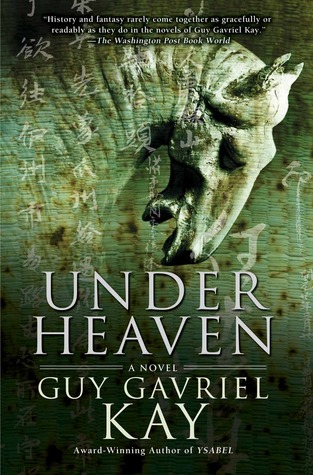
Under Heaven by Guy Gavriel Kay

I am looking forward to reading Guy Gavriel Kay’s new novel, A Brightness Long Ago, which will be published in May, but before starting that one I wanted to finally read a different book by Kay which has been on my shelf unread for a few years now. That book is Under Heaven, the first of two novels (the second is River of Stars) inspired by two different Chinese dynasties, Tang and Song.

Kay writes a type of historical fantasy where the emphasis is usually more on the historical than the fantasy. With most of his novels, I at least have a little bit of familiarity with the period on which his setting is based (Renaissance Italy, medieval Spain, the Vikings etc) but the setting of Under Heaven – a fictionalised Tang China – is one I’ve never read about before and of which I have absolutely no knowledge. That made this particular book a slightly more challenging read for me than the others I’ve read by Kay, but it has also left me wanting to know more about the real history of China during this period.

In the book, China is referred to as Kitai, with Tagur (Tibet) to the west. The novel opens with Shen Tai travelling to the battle site of Kuala Nor, where his father, an army general, once led the Kitan to victory against the enemy Taguran. Now his father is dead and Tai plans to spend the two year mourning period laying to rest the bones of the forty thousand dead, both Kitan and Taguran. It seems an impossible task, but Tai is determined to try anyway:

There were too many. It was beyond hope to ever finish this: it was a task for gods descending from the nine heavens, not for one man. But if you couldn’t do everything, did that mean you did nothing?

To acknowledge his efforts, the Empress of Tagur, once a Kitan princess, promises him two hundred and fifty magnificent Sardian horses as a reward – but Tai is not as delighted as you might expect him to be at receiving such a lavish gift. As he knows, ‘You gave a man one of the Sardian horses to reward him greatly. You gave him four or five of those glories to exalt him above his fellows, propel him towards rank – and earn him the jealousy, possibly mortal, of those who rode the smaller horses of the steppes.’ Imagine the danger a man could be in who possesses not just four or five but two hundred and fifty of these legendary animals! This is a life-changing moment for Tai and on his return journey to the imperial capital of Xinan he finds that he has become the centre of attention, with various factions at court all vying to take possession of the horses for themselves. These include An Li, a powerful military leader; Wen Zhou, the Prime Minister; and Wen Jian, the ‘Precious Consort’ of the elderly Emperor Taizu.

In a parallel storyline, Tai’s sister Li-Mei is being sent north beyond the Long Wall to Bogü (possibly Mongolia) where she is to marry the son of the Bogü leader. Marriage to a barbarian is not what Li-Mei had in mind for herself, but a chance to escape this fate comes when she is rescued by the mysterious Meshag, who takes her across the steppes on a journey as eventful and dangerous as Tai’s.

Kay’s female characters are always strong and interesting and I enjoyed following Li-Mei’s story as much as Tai’s. I’ve already mentioned Wen Jian, the emperor’s consort, who is a match for any of the men when it comes to manoeuvring her way through court politics, but my favourite of the women in the novel is Wei Song, the Kanlin warrior who is sent to protect Tai and takes her duties very seriously, even if it means putting her own life at risk. Of the male characters, apart from Tai himself, I particularly liked Bytsan sri Nespo, his Taguran friend who brings him the message about the Sardian horses, and Sima Zian, the famous poet who accompanies him to Xinan and becomes one of the few men he can trust.

Poetry runs through the novel, as does superstition, myth, legend and political intrigue – but there are only one or two small elements that you could really describe as fantasy (mainly at the beginning, with the ghosts of Kuala Nor – ‘outside in all seasons, moonlit nights and dark, as soon as the sun went down’). Most of the other Guy Gavriel Kay novels I’ve read are set in a world with one white moon and one blue, but the world of Under Heaven has only one (he makes a point of telling us that the poet Sima Zian has often dreamed of having another moon to write about). I’m curious to know why he decided to set this one in a different world to the others, especially as we were back to the two moons again in his most recent book, Children of Earth and Sky.

I will have to find out more about the Tang Dynasty and the An Shi Rebellion, but I’m also looking forward to reading River of Stars which is set four hundred years later, during the Song Dynasty. First, though, on to A Brightness Long Ago!

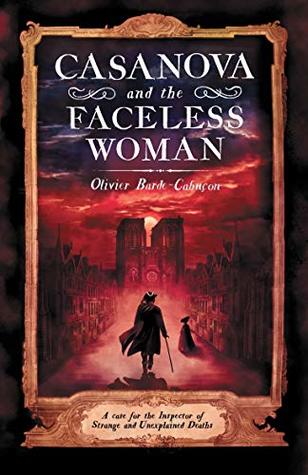
Casanova and the Faceless Woman by Olivier Barde-Cabuçon

Casanova and the Faceless Woman is the first in a series of historical mysteries by French author Olivier Barde-Cabuçon, set in pre-Revolutionary France. There are currently seven books in the series but this one, translated from the French by Louise Rogers Lalaurie, is the first to appear in English. When I was offered a copy for review by Pushkin Vertigo I was immediately intrigued because although I read a lot of historical mysteries I don’t think I’ve read any set in this particular period.

It’s 1759 and Louis XV is on the throne of France. He is not a popular king – unrest is growing amongst those who feel they have been oppressed under his reign and his rumoured liaisons with innocent young girls have not helped his reputation either – and there are several different factions plotting to overthrow or discredit him. Not long before our story begins, Louis had been the target of an assassination attempt and narrowly avoided being stabbed to death thanks to the quick actions of the Chevalier de Volnay. As a reward for his bravery, Volnay has been given the title of Inspector of Strange and Unexplained Deaths, responsible for investigating particularly unusual crimes on the king’s behalf.

One such crime occurs when a young woman is found dead in a dark Paris courtyard with the skin torn away from her face. On arriving at the scene, Volnay removes a sealed letter from the corpse intending to examine it later, but it seems that someone – perhaps several people – have seen him do it. Over the days that follow, as Volnay sets about trying to identify the woman and hunt down her killer, he himself is hunted by those who want to retrieve the letter and will stop at nothing to get it back.

Volnay interested me from the beginning because he is such a mysterious character. We are told very little about him at first, with the secrets of his tragic and eventful past being revealed very gradually as the story progresses. He seems very alone in the world, his only companions being a monk (with whom he forms a fascinating crime-solving partnership) and a tame magpie. There is a sense that he is not somebody who finds it easy to love or to trust others, and so, when he enters into a relationship with the beautiful Chiara D’Ancilla, we worry that he is going to get hurt – especially as his rival in love is the legendary Casanova.

Giacomo Casanova is one of several real historical figures who have important roles to play in the novel; others include Madame de Pompadour, the king’s mistress, and the Comte de Saint-Germain, the alchemist, sorcerer and musician who has fascinated me since I first met him in Diana Gabaldon’s Outlander series. I don’t think Casanova has appeared in any other novels I’ve read, although his career as writer, adventurer, gambler and, most famously, seducer of women, makes him an ideal subject for historical fiction. His character is well developed and convincing here and Barde-Cabuçon explores events from his past in order to explain his present behaviour, but I could never quite warm to him because my sympathies were with Volnay from the start. While Casanova seems to treat his romance with Chiara – and his involvement with the stolen letter and all the intrigue surrounding it – as a game, for Volnay these things are literally a matter of life and death.

I’m not sure whether Louis was really as disgusting and depraved as he is depicted in the novel but his reign certainly wasn’t seen as very successful and I think the author does a good job of conveying the mood in France in the years leading up to the Revolution and the discontent of the people with the king and the aristocracy. However, as a mystery novel, I thought the plot felt a bit more complicated than it really needed to be and the action moved between one set of characters and another too quickly, so that there were times when I struggled to hold on to all the different threads of the story. I also found the ending unnecessarily dramatic with one twist too many – although I had been intrigued by some of the revelations near the end, which left me wanting to read the next book in the series. I hope it’s going to be available in English soon too as I would love to see more of the Inspector of Strange and Unexplained Deaths.

Thanks to Pushkin Press for the review copy.