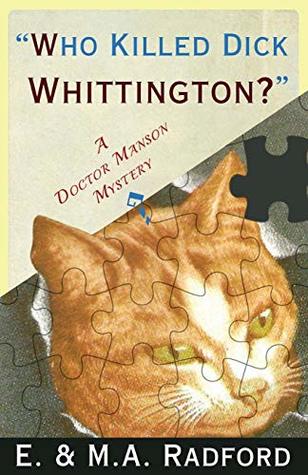
Who Killed Dick Whittington? by E and MA Radford

Dean Street Press have recently brought an intriguing selection of Golden Age crime novels back into print, including several by husband and wife writing team E and MA (Edwin and Mona Augusta) Radford. This book – and the other two Radford titles which have just been reissued, Murder Jigsaw and Murder Isn’t Cricket – all feature Harry Manson, a detective and forensic scientist who works at Scotland Yard’s Crime Research Laboratory.

Who Killed Dick Whittington?, published in 1947, has a theatrical setting and takes place during the Christmas season. The Henri de Benyat theatre company are performing Dick Whittington at the Pavilion in Burlington-on-Sea and, in the tradition of all good British pantomimes, the hero is played by a woman. Her name is Norma de Grey and to say she is not popular with the rest of the cast would be an understatement. When she is killed with a lethal dose of prussic acid one night while on stage in the role of Dick, suspicion falls on the actor playing her Cat – but when the Cat is also found poisoned, it seems that someone else must have been responsible.

Doctor Manson is called in to investigate, but as well as the Dick Whittington poisonings he is also busy with another case, this one involving a series of suspicious fires which have possibly been caused deliberately as part of an insurance fraud. At first the two cases seem entirely separate, but eventually links begin to emerge between the two. Manson uses a range of scientific methods to carry out his investigations and I thought this aspect of the book was fascinating. As it was written in the 1940s, there were obviously fewer, less sophisticated techniques available to Manson than there would be to modern day scientists, but I was still impressed by how much he was able to discover by, for example, weighing the ash found at the fire scenes or analysing the hairs inside the Cat costume.

I also found the details of theatrical life interesting. Apparently Mona Radford had been an actress herself and this does come through in the novel, which shows a deep understanding of everything involved in rehearsing and staging a pantomime, including the things that go on behind the scenes! When a book is written by a pair or team of writers, I am always curious to know how they broke down the writing duties amongst themselves. Well, according to the introduction to this new edition:

The plot was usually developed by Mona and added to by Edwin during the writing. According to Edwin, the formula was: “She kills them off, and I find out how she done it.”

Another thing I liked about this book was the way the authors make it clear that they have tried to give the reader all the clues needed to be able to identify the culprit. There are several ‘Interludes’ at certain points in the novel which are addressed directly to the reader, asking us to put together what we have learned so far and solve various aspects of the mystery. I obviously wouldn’t make a good detective as I still wasn’t able to work any of it out despite the hints, but I was happy to wait until Doctor Manson revealed the truth at the end of the book.

I thought this was a very entertaining mystery by two authors I had never come across before. I’m interested in reading more books by E and MA Radford now.

Thanks to Dean Street Press for providing a copy of this book for review.
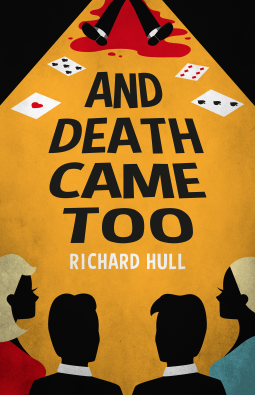
And Death Came Too by Richard Hull

Richard Hull’s The Murder of My Aunt was one of my favourite books read in 2018; I loved the humour, the narrative voice and the clever plot twists and couldn’t wait to read more of the author’s classic crime novels. The one I chose next was And Death Came Too, which has recently been reissued by Agora Books.

First published in 1939, the novel gets off to a very intriguing start, introducing us to four friends who are attending a series of charity balls at Trevenant Hall when they receive an invitation from a neighbour, Arthur Yeldham, who has recently moved into nearby Y Bryn House. The four – Martin Hands and his sister Patricia; Patricia’s fiancé Gerald Lansley; and a friend, Barbara Carmichael – don’t really want to go, but reluctantly accept and set off together for Y Bryn.

On their arrival, they are surprised to find that there is no sign of their host. Instead, there are two strangers sitting at the table: a man playing a game of solitaire who says his name is Mr Salter, and a mysterious woman whose name nobody knows. As you can imagine, the conversation is extremely awkward, especially when the unknown woman suddenly stands up and leaves with no explanation. Next, a police constable enters the room and helps himself to a drink before announcing that there has been a murder: Arthur Yeldham has been found dead in his study but no weapon has been found and the time of death is unclear. With at least six suspects to choose from – and a range of clues which could point the way to the truth or be complete red herrings – it’s not going to be an easy mystery to solve.

At this point I was anticipating another unusual and original novel like The Murder of My Aunt, but apart from the fascinating opening scenes this was a much more conventional detective story. I still enjoyed following the investigations and sorting through the clues, but in the second half of the novel it became quite obvious who the murderer was and I wasn’t at all surprised when the truth was revealed. The ending was very abrupt as well; the story just seemed to end in the middle of a conversation!

The main characters in the novel – the four friends and the two strangers they encounter at Yeldham’s house – have interesting backgrounds and motives, although none of the six are very likeable. We don’t see any of them getting very involved in amateur investigations – all of that is left to the police, and one element of the book which I did find slightly unusual is that we meet so many different policemen! There are several of them, some local and some from Scotland Yard, of different positions and ranks, all working on separate aspects of the crime. The competition and rivalry between them added another layer of interest to the novel, although on the other hand I think I prefer having just one or two detectives to follow and get to know.

This is a perfectly good, solid murder mystery novel, but I was slightly disappointed with it because, based on my previous experience of Richard Hull, I had hoped for something more imaginative. I will probably still try one or two more of his books. I like the sound of The Ghost It Was and Keep It Quiet, also from Agora Books. Has anyone read either of those – or any other Richard Hull novels?

I received a copy of this book for review via NetGalley.

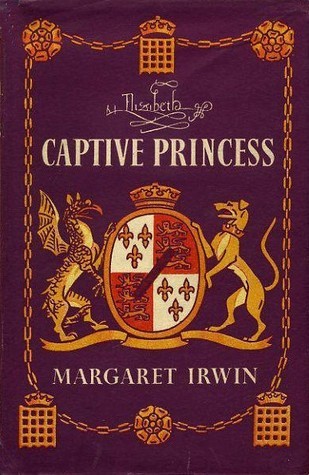
Elizabeth, Captive Princess by Margaret Irwin

I loved Young Bess, the first book in Margaret Irwin’s Elizabeth I trilogy, so I didn’t want to wait too long before picking up the second. I was hoping for another great read but, although there was still a lot to like about this book, I didn’t think it was as good as the first one.

Published in 1948, Elizabeth, Captive Princess, continues the story of the young Elizabeth. The novel begins with the death of Elizabeth’s half-brother, Edward VI, leaving the succession to the throne of England in doubt. We then follow the tragic story of Lady Jane Grey, queen for nine days before eventually being beheaded after Elizabeth’s half-sister Mary comes to the throne. This is a fate that Elizabeth could face herself as she also becomes linked with plots and conspiracies during Mary’s reign, leading to her imprisonment in the Tower of London.

Before the novel ends, two very different men have entered Elizabeth’s life: one is Robert Dudley, son of the Duke of Northumberland and another prisoner in the Tower; the other is Philip of Spain, who has come to England at last to marry Queen Mary. I would expect Elizabeth’s relationships with these two men to form the basis of the final book in the trilogy, Elizabeth and the Prince of Spain, but this particular book concentrates on the stories of Lady Jane Grey and Queen Mary. We actually see very little of Elizabeth herself in this book, which I thought was strange as she is the title character, although I suppose it’s not too surprising as a lot of the drama during this specific period was taking place elsewhere.

The lack of focus on Elizabeth wasn’t really a problem for me in itself; after all, in Young Bess it had been the secondary characters that I found most interesting anyway, particularly Thomas Seymour and his brothers Edward and Henry. But the characters in this book just don’t come to life in the way that the Seymours did and I struggled to connect with any of them on an emotional level. This made the novel feel a bit slow and flat, which was disappointing for me after enjoying the first one so much.

I don’t want to sound too negative, though, because I did like this book and the quality of Margaret Irwin’s writing still makes it a worthwhile read. I love her descriptive writing and the way she recreates Tudor London:

It was seven o’clock as they entered the city of London. The sun was setting in a fury of flame and storm-clouds. All the dark rickety wooden houses leaning top-heavily across the streets as though they were nodding to each other, all but rubbing each other’s foreheads, all seemed to have put on scarves and petticoats, so many bright cloths fluttered from the windows, while the gaily painted shop signs flaunted and creaked and clattered in the breeze.

Away from the main storylines, I enjoyed all the other little details of 16th century life and 16th century history. For example, I was interested in the account of the Edward Bonaventure’s voyages to the White Sea and the ‘strange land of endless snow’ which I first read about in The Ringed Castle by Dorothy Dunnett.

Having come this far, I will be finishing the trilogy with Elizabeth and the Prince of Spain, but will then look forward to reading some of Margaret Irwin’s other books. I have The Galliard, her novel about Mary, Queen of Scots and the Earl of Bothwell on my TBR and would also like to read The Stranger Prince, about Prince Rupert of the Rhine.

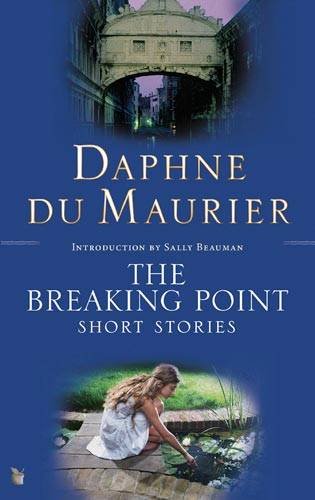
The Breaking Point: Short Stories by Daphne du Maurier

Having enjoyed some of Daphne du Maurier’s other short story collections – The Birds and Other Stories, The Rendezvous and Other Stories and Don’t Look Now and Other Stories – I’ve been looking forward to reading this one. Originally published in 1959 and written at a time when du Maurier herself said she had been close to a nervous breakdown, the eight stories in this collection are particularly dark and unsettling.

There is a paragraph just before the introduction in my Virago edition of the book which gives an idea of the common theme linking the stories and why the title The Breaking Point was chosen:

There comes a moment in the life of every individual when reality must be faced. When this happens, it is as though a link between emotion and reason is stretched to the limit of endurance, and sometimes snaps. In this collection of stories, men, women, children and a nation are brought to the breaking-point. Whether the link survives or snaps, the reader must judge for himself.

I enjoyed this book, but I found the first three stories by far the strongest and some of the others slightly disappointing in comparison. For this reason, I preferred The Birds and Don’t Look Now, which I felt were more even in quality. Anyway, the first story in the book, The Alibi, gets the collection off to a great start. A man, bored with his life, his marriage and his daily routine, makes an impulsive decision to rent a room in a house chosen at random. Adopting a new identity, soon he is spending every spare moment at the house, but what is his real motive for doing this? This is a creepy and disturbing story; the suspense builds and builds as we wait to see whether it will end in the way we hope it won’t!

The Blue Lenses is a very strange story about Marda West, a woman who has been having eye surgery. When her bandages are removed and she is fitted with a new pair of lenses, she finds that the people around her look very unusual – in fact, you could say that she is finally seeing them for what they really are. I can’t say much more without completely spoiling the story, but Marda’s situation is both frightening and fascinating. I loved this story and thought the twist at the end was perfect.

The next one, Ganymede, reminded me of Death in Venice by Thomas Mann, both in setting and in plot. A man is visiting Venice for a relaxing October break when a young man working in a restaurant catches his eye. As the days go by, he becomes more and more obsessed with the young waiter, whom he thinks of as ‘Ganymede’. This is another very suspenseful story, as it quickly becomes obvious that things are not going to go smoothly for our narrator – and in du Maurier’s hands, Venice becomes an eerie and sinister setting where we know some sort of tragedy is going to happen.

In the next story, The Pool, we meet Deborah and Roger, two children staying at their grandparents’ house for the summer. One day Deborah escapes from her younger brother and enters the woods nearby, where she discovers a pool which seems to lead into a secret world. I didn’t like this story as much as the first three – although, as always, du Maurier’s descriptions are beautiful and vivid. The Archduchess, which follows, is an account of a revolution in a fictional European country called Ronda. This was the only story in the collection that actually bored me – there seemed to be a huge amount of world-building and scene-setting, with very little plot or depth of character – but it’s possible that I didn’t fully understand what she was trying to say.

I wasn’t sure what to make of The Menace either. It seemed like a science fiction story at first, about a new filming technology known as ‘feelies’ where actors are wired up to a machine powered by their own life-force. This aspect of the story is never really explained, but I did enjoy getting to know actor Barry Jeans as we follow him through a twenty-four-hour period and I loved the ending. The Chamois is another of the weaker stories in the collection, but still an interesting one. A woman travels to Greece with her husband so that he can hunt chamois, but as they climb further into the mountains, the cracks in their marriage start to show and the woman’s deepest fears become exposed.

Finally, The Lordly Ones is a great story to finish with. Ben is a young mute boy who feels neglected and unloved by his parents. When the family move to a new house in the countryside, he escapes to the moors one night and for the first time in his life feels welcomed and cared for by another family he thinks of as The Lordly Ones. This is a very short story with a clever twist at the end that made me want to go back to the beginning and read it again!

Overall, I do recommend The Breaking Point but if you’re new to du Maurier’s short stories, I would suggest reading The Birds or Don’t Look Now collections first as I thought they were stronger. I still have The Doll, her collection of ‘lost’ stories to read, and will try to get to that book soon.

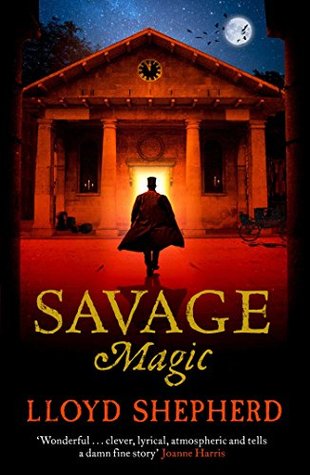
Savage Magic by Lloyd Shepherd

Savage Magic, published in 2014, is Lloyd Shepherd’s third historical mystery to feature Charles Horton of the Thames River Police. The books all stand alone, so if you’ve never come across this series before you could easily read this one first without having read the previous two. Having said that, I found the other two – The English Monster and The Poisoned Island – much stronger and wouldn’t recommend starting here.

After a brief prologue, Savage Magic opens in London in 1814 with Abigail Horton entering Brooke House, a ‘private madhouse for the deranged’. She has made the decision to do this voluntarily as she has been suffering from visions of a wild, savage woman, haunting her dreams and pursuing her through her waking hours. Afraid she is losing her sanity, Abigail hopes she can receive the help she needs at Brooke House, but her husband, Constable Horton, is hurt when he discovers that she has done this without confiding in him first.

Meanwhile, Horton’s superior, the magistrate Aaron Graham, is also concerned about his own wife, who has left him to go and live with her new lover, taking their young daughter with her. Graham has heard some very disturbing rumours about Thorpe Lee House, where his wife and daughter are now living, and he sends Horton off to investigate. Horton has barely left London when a murder takes place, under the strangest of circumstances. A wealthy, aristocratic gentleman is found dead in his own bed, wearing a satyr’s mask on his face. This is only the first in a series of similar murders in which all of the victims are from the same social circle and all disguised by a mask. With Horton gone, Graham is left to investigate the killings himself.

At first, the separate strands of the story feel quite unconnected, with Graham trying to solve the London murders and Horton, miles away, becoming embroiled in accusations of witchcraft and hauntings at Thorpe Lee House. Eventually, everything begins to fall into place and we see how they are linked – and how the key to the entire mystery may lie in the events which occur behind the walls of Brooke House Asylum.

Reading back over what I’ve written above, I know this sounds like the sort of book I would usually enjoy…and yet I was disappointed. It’s possible that if I hadn’t loved Lloyd Shepherd’s first two novels so much, I might have liked this one more, but I’m not sure. The English Monster combined an investigation into the Ratcliffe Highway Murders with a pirate adventure in the Caribbean, while The Poisoned Island featured the story of a Tahitian prince. By comparison, I found this book less exotic, less exciting and lacking the originality of the previous two. It seemed like a much more conventional novel and, although I was pleased to see Abigail given a larger role to play, the asylum storyline is something I feel I’ve read several times before.

I do still like Lloyd Shepherd’s writing (despite the annoying use of present tense) and I love the way he creates atmosphere – the scenes which take place at the supposedly haunted Thorpe Lee House are particularly good and, knowing how Shepherd has used supernatural elements in his other books, I was kept wondering whether there really were witches at work or whether there was a more logical explanation. There was too much switching between one storyline and another, though; there were too many different threads to keep hold of and it took too long for them to start coming together.

The fourth book in the series, The Detective and the Devil, sounds more promising. I haven’t been put off reading it, but I’m not in any hurry either.

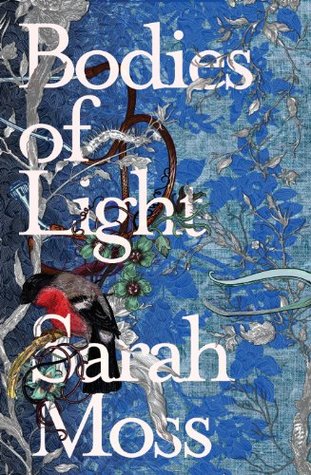
Bodies of Light by Sarah Moss

This is the first book I’ve read by Sarah Moss, an author I had never really thought about trying until I saw so much praise for her latest novel, Ghost Wall, last year. Bodies of Light is apparently loosely linked to an earlier book, Night Waking, but I didn’t feel that I’d missed anything by reading this one first.

The setting for Bodies of Light is Victorian Manchester where, as the novel opens, a newly married couple – Elizabeth and Alfred Moberley – are moving into their new home. Even this early in their marriage, there are clues that suggest they might not be very happy together; Alfred is a painter who appreciates the finer things in life while Elizabeth is passionate about social reform and women’s rights. Their two daughters, Alethea (Ally) and May, grow up trying to please both parents, being asked to model for their father’s latest portrait one day and accompanying their mother on one of her missions to help women in Manchester’s poorest areas the next.

I really enjoyed the first half of this book; after a slow start I found that I had become completely drawn into the lives of the Moberley family. Each chapter starts with a description of a portrait painted by Alfred or one of his circle, giving an idea of what will follow in the pages to come, and I thought that was a nice touch. As the novel progresses and the children grow older, we see that Elizabeth, despite her good deeds in public, can be a harsh and unloving mother; to explain this, Sarah Moss spends some time at the beginning of the book showing us what made her the way she is, focusing on Elizabeth’s relationship with her own mother and the depression she suffered after Ally’s birth.

The second half of the novel is devoted mainly to Ally, as she goes to London to study medicine at the first medical school to accept female students. She is pushed into this career path by her mother, who believes very strongly that women – particularly ‘fallen women’ – should be entitled to request treatment from a female doctor and who likes the idea of her own daughter becoming one of these doctors. Ally is an intelligent young woman who loves learning, so she throws herself into her studies, but there is always a sense that she is doing this mainly to make her mother happy – and yet, whatever she does, it seems that Elizabeth is never happy.

I felt so sorry for Ally, who self-harms and suffers from nightmares as she is growing up, longing for some comfort and compassion from her mother but receiving only criticism and impatience instead, told that she has no right to complain about anything ‘because there is always someone else worse off.’ Interestingly, her younger sister May, who has the same upbringing, doesn’t seem to suffer from Ally’s anxiety-related problems, possibly due to the fact that Ally, as the eldest, has always felt under more pressure.

Once Ally had left home to begin her medical studies, I found the story a bit less compelling but still interesting. It certainly made me appreciate the educational opportunities that are open to women today and how difficult it must have been for those who were among the first to try to enter a field dominated by men. This is a fascinating book and I do like Sarah Moss’s writing, so I now want to read the sequel, Signs for Lost Children, as well as the earlier Night Waking, which I think tells some more of May’s story.

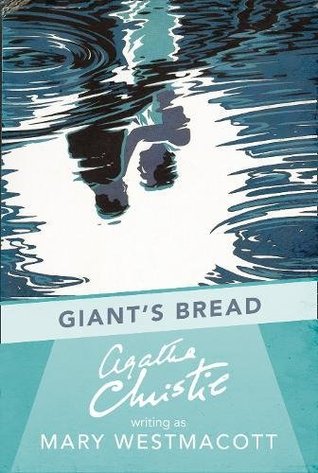
Giant’s Bread by Mary Westmacott

I was aware that Agatha Christie had written several books under the name of Mary Westmacott but I had never really thought about trying one until I saw that the February book for the Read Christie 2019 Challenge was Giant’s Bread. Published in 1930, this is the first of the Westmacott novels, so seemed like a good place to start with them. Now that I’ve read it, I can see why she used a pseudonym as it’s very different from the mystery novels for which she is much more famous, but it’s still enjoyable in its own way and I will definitely be going on to read more Westmacott books.

Giant’s Bread is the story of a young man and his love of music. We first meet Vernon Deyre as a child, growing up in a wealthy household under the care of a succession of nursemaids and servants. With a highly-strung, melodramatic mother and a father who is more interested in other women than in his wife, Vernon retreats into a world of imaginary friends – and imaginary monsters, such as the grand piano, which he thinks of as a vicious ‘Beast’ with teeth. This irrational fear makes him avoid all forms of music until, as an adult, he allows himself to listen for the first time and is enchanted by what he hears.

Although the focus is mainly on Vernon as he pursues a career in music, determined to make up for all the years he has wasted, we follow the stories of several other characters too. There’s Joe (Josephine), Vernon’s cousin and best friend, an independent and rebellious young woman who wants to become a sculptor; the beautiful, timid Nell Vereker, Vernon’s childhood playmate with whom he later falls in love; Jane Harding, an older woman who shares his love of music; and Sebastian Levinne, whose family buy the house next to the Deyres’ estate, Abbots Puissants. Sebastian is Jewish, and yes, you can expect some of the anti-Semitism that appeared in so many books from this era – but despite that, I thought he was portrayed as the most likeable of the five main characters in the novel. The others are all deeply flawed people but, of course, that is what makes them and their struggles so interesting to read about.

Before I started to read Giant’s Bread, I had the impression that Mary Westmacott’s books were light romances, but that’s not how I would describe this one at all. Although characters do fall in and out of love over the course of the novel, it’s not a very romantic story – more a story of the sacrifices we are prepared or not prepared to make in order to get what we want out of life. This is illustrated particularly well with Nell’s storyline, in which she has to decide whether her love for Vernon is more important to her than her love of comfort and luxury.

Towards the end of the novel, things became much more dramatic, with some very implausible plot twists and some coincidences that seemed far too convenient! It was disappointing because up to that point I had really believed in the story and the characters. This did let the book down, in my opinion, but didn’t spoil it too much, as there had been so much else that I’d loved. The early chapters describing Vernon’s childhood were wonderful and captured the way a lonely, imaginative little boy may have looked at the world. Later in the book, I enjoyed reading about Nell’s experiences as a nurse during the First World War.

On finishing the book, I wasn’t entirely sure what message Christie wanted us to take away from it. Yes, Vernon and the others had made sacrifices, but were we supposed to agree that those sacrifices were worthwhile or not? If anyone else has read the book, I would be interested to hear your thoughts on that. I do like books that leave me with something to think about and this one certainly did. I hope the other Mary Westmacott novels will be equally fascinating.

If you’re wondering, the title Giant’s Bread comes from the lines spoken by the giant in Jack and the Beanstalk – ‘Fee-fi-fo-fum, I smell the blood of an Englishman. Be he alive, or be he dead, I’ll grind his bones to make my bread’.