The Witches of St Petersburg by Imogen Edwards-Jones

I love reading about Russia, so the title of this novel alone was enough to attract my attention. When I discovered that it was set in the final years of the Romanov dynasty I was even more interested in reading it – it’s such an eventful period of history, yet most of my Russian reading has been set either earlier than that or later.

The novel opens in 1889 with the arrival in St Petersburg of two Montenegrin princesses. Militza and her younger sister Stana (Anastasia) are the daughters of the King of Montenegro and are being married off to members of Russia’s Imperial Court. Despite the high positions they now hold as a result of their marriages, the sisters are not fully accepted by the Russian courtiers who look down on them because of the smallness and perceived insignificance of their home country. They do make some friends, however, including the Tsarina Alexandra who, having given birth to four daughters, is now desperate to provide the Tsar with a son and heir.

Militza and Stana believe they may be able to help. With their knowledge of magic, their ability with spells and charms, and their skill at channelling spirits, they are what many people would call witches, but despite all of their efforts they are still unable to produce a son for the Tsarina and turn at last to a monk from Siberia by the name of Rasputin. Rasputin proves to be a sensation and the princesses are proud to have been responsible for his introduction to court – but when his influence with the Tsar and Tsarina begins to surpass their own, they start to wonder what they have done.

There were things that I liked about The Witches of St Petersburg and things that I didn’t like. I loved the setting as I’d hoped I would, and as I had never read about Militza and Stana before, I enjoyed getting to know them. Stana’s role in the novel is mainly confined to her marital problems – her husband Prince George Maximilianovich spends most of his time in Biarritz with his mistress and Stana longs for a divorce – but Militza is an interesting character and the one who drives the story forward, working to raise the sisters’ profile at court and to get close to the Tsarina. As a ‘witch’, she is also the more powerful of the two, conducting séances and speaking to the dead. The magical aspects of the book confused me, though; I wasn’t sure whether we were supposed to believe that Militza really did have magical powers and really was a witch or whether it was all just a pretence.

The first half of the novel felt too long and repetitive – there were only so many times I wanted to read about the sisters being snubbed at parties and taunted for their provincial background and ‘smelling of goat’ – and I wondered when Rasputin was going to arrive on the scene and liven things up. His first appearance doesn’t come until halfway through the book and the story does become more compelling after that, as Militza and Stana begin to regret their role in bringing him to St Petersburg and wonder how they can get rid of him. However, this is a particularly repulsive portrayal of Rasputin! Some of it may be realistic, but I wished there wasn’t so much graphic detail on how dirty and revolting he was. This is not really a book for the squeamish.

I had a mixture of feelings about The Witches of St Petersburg, then, but overall my interest in the Russian history and in two women I had previously known nothing about was enough to make me keep reading.

Thanks to Head of Zeus for providing a copy of this book for review via NetGalley.
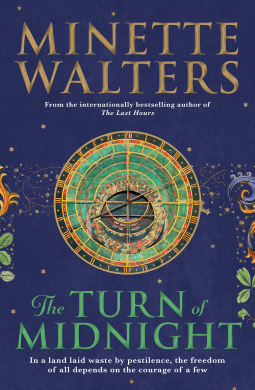
The Turn of Midnight by Minette Walters

This is the sequel to The Last Hours, which followed the fortunes of a group of people during the Black Death which reached England in 1348. When I finished the first novel last year, I wasn’t sure whether I had liked it enough to want to read any more, but in the end I couldn’t resist finding out how the story would conclude.

The Turn of Midnight picks up where The Last Hours left off, with the people of Develish in Dorsetshire living in quarantine while the plague rages across the land. The reason their community has survived largely intact while others around them have been wiped out is because of the precautions taken by Lady Anne, who gathered her people within the moat that surrounds her manor house and burned the bridges, cutting them off from contact with the outside world. Now that winter has come and food supplies are running low, Lady Anne’s loyal serf Thaddeus Thurkell, accompanied by several other young men from Develish, has crossed the moat and ventured into the countryside to see what he can find.

Despite the strong leadership skills of Lady Anne and the intelligence and courage of Thaddeus, Develish has no lord, Lady Anne’s husband Sir Richard having succumbed to the plague early in the previous novel. This has left the demesne in a vulnerable position, so together Thaddeus and Lady Anne come up with a plan to protect the people of Develish…but if they fail Thaddeus could find himself in serious danger.

I’m glad I decided to read this book because I enjoyed it quite a bit more than The Last Hours. It feels faster paced, with more going on, and of course, being the second of a pair of two novels, it has a much more satisfying ending. Where the previous novel was set mainly in and around the manor of Develish, this one has a wider scope, concentrating less on Lady Anne and her family and more on Thaddeus. Towards the end of The Last Hours I felt that Thaddeus and his companions were wandering aimlessly in the countryside without much happening, but this time they have adventure after adventure as they explore desolate towns and villages, make new friends and new enemies, and carry out charades and deceptions.

My main criticism of this book is that I still couldn’t really believe in either Thaddeus or Lady Anne as realistic 14th century characters. As I mentioned in my review of The Last Hours, I found their attitudes and thought processes far too modern and wasn’t at all convinced that they, unlike the rest of the population, could have had such an accurate understanding of how the Black Death was spread and how to protect themselves from it. I was also disappointed that Lady Anne’s stepdaughter, Lady Eleanor, is reduced to such a minor role in this book. Eleanor was very much the villain of the previous novel, but near the end some reasons were given for her terrible behaviour and there were hints that she might have been about to turn a corner. She is certainly much more likeable in this second book, but sadly the transformation of her character is not explored in any depth which I thought was a wasted opportunity.

This is such an interesting period of history to read about, though, and I did find the portrayal of a country devastated by plague vivid and convincing, even if the characters were not. Minette Walters is much better known as a crime author and has moved into new territory with these two novels; I’ll be curious to see whether she writes any more historical fiction in the future.

Thanks to Allen & Unwin for providing a copy of this book for review via NetGalley.
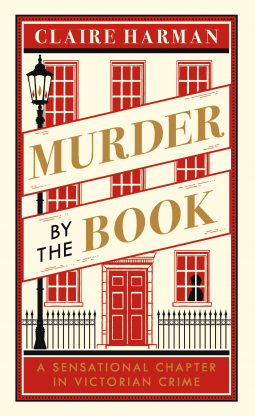
Murder by the Book by Claire Harman

I don’t read a lot of non-fiction, but I’ve been reading more of it than usual over the last few weeks in preparation for Nonfiction November. Murder by the Book, an account of a true crime which took place in Victorian London, sounded appealing to me because it promised to explore the possible links between the crime and some of the bestselling novels of the day.

The book begins by describing the events of 6th May 1840, when Lord William Russell’s housemaid found her master in bed with his throat slit. Suicide was suspected at first, but with his head almost severed from his body, this theory was dismissed and a murder investigation began. Russell, an elderly widower, had been leading a quiet, unremarkable life, living alone (apart from his servants) in a respectable Mayfair street. Who could possibly have wanted him dead – and why?

The murder sent shockwaves throughout London, with everyone – including Queen Victoria herself – following the news and voicing their opinions. What made this particular case so shocking was that when the culprit was identified and questioned, it was found that before committing the murder he had been reading Jack Sheppard, a well-known novel by William Harrison Ainsworth. Based on the story of a real life 18th century criminal, Jack Sheppard had been published as a serial in Bentley’s Miscellany from January 1839 until February 1840. With plots involving murder, theft and violence, crime novels of this type had become known as ‘Newgate Novels’ (a reference to the Newgate Prison), and were hugely popular with the public, partly due to the rise in literacy levels during the first half of the 19th century. Following the Russell murder, a debate began regarding the suitability of this sort of reading material.

I enjoyed Murder by the Book, but I didn’t find the true crime element particularly interesting. There didn’t seem to be a lot of mystery surrounding Russell’s death and the murderer was arrested quite quickly. Although Claire Harman did manage to flesh the story out, on its own it wouldn’t have been enough to form a compelling book. The parts where she discussed Jack Sheppard and other popular novels of the time were of much more interest to me. I haven’t read Jack Sheppard, or anything else by William Harrison Ainsworth, and I’d had no idea that it had been so successful in its time. The book was adapted for stage many times, including some musical versions, so even if people hadn’t read it they were likely to have seen it performed.

The reactions of other authors were interesting; Charles Dickens had apparently been a friend of Ainsworth’s, but distanced himself from him after the Russell incident, doing all he could to defend the reputation of his own Oliver Twist, which covered similar themes. Both Dickens and William Makepeace Thackeray followed the outcome of the murder trial and attended the hanging of the culprit and some of their thoughts on this are given in the book.

Anyway, the social aspects of the book were fascinating, even if the true crime parts weren’t – although I was surprised that Claire Harman didn’t draw more parallels between the Jack Sheppard controversy and the perceived influence of modern television, music and video games on violent behaviour. The book reminded me of Kate Summerscale’s The Wicked Boy and I think if you enjoy one you might enjoy the other.

Thanks to Viking for providing a copy of this book for review via NetGalley.
The Magick of Master Lilly by Tobsha Learner

Although I have read a lot of books set in 17th century England, I can’t remember ever reading anything about the astrologer William Lilly so I was immediately intrigued by the title and premise of Tobsha Learner’s new novel which promised to bring Lilly’s story to life.

We first meet Master Lilly in 1641, living quietly in the Surrey countryside after finding himself out of favour with Parliament. Even in exile, though, he is still famous for his knowledge of the occult and his skill at reading fortunes, and it’s not long before he is summoned back to London to draw up an horary (a form of horoscope) for Charles I. As Master Lilly looks to the future to discover what fate has in store for his King and his country, he sees only war, fire and plague on the horizon. He and his fellow ‘Cunning Folk’ will need to use all the magical powers they possess if they are to avert disaster – but is it really possible to change what is written in the stars? Master Lilly thinks it is:

We are all born with our Fates written like maps across the cosmos, but our faith and humanity give us choice. This is what I, William Lilly, believe: the Stars incline, they do not compel, and it is up to us mortals to know when to play our hand and when to fold.

The Magick of Master Lilly had the potential to be a good book, and in some ways it was. As I’ve said, I knew nothing about William Lilly before I started reading, so it was nice to be introduced to him and to learn about his life and work (the author includes some notes at the end to give some indication of what is based on fact and what isn’t). Whether you believe that some people can really see into the future or not, it seems that Lilly, among his other achievements, quite accurately predicted the Great Fire of London. He is also a healer and herbalist, and a writer of astrological texts and almanacs, although his day to day work, as he explains in the first chapter of the novel, consists mainly of “horaries, Natal figures, seduction of reluctant lovers, the finding of lost things, and the location of errant husbands”.

Lilly is not always the most likeable of characters, particularly where his relationship with his wife, Jane, is concerned, but despite this his narration is warm and lively, pulling us into his story. The tone of the novel reminded me of Rose Tremain’s Restoration and Anna-Marie Crowhurst’s The Illumination of Ursula Flight. I could have done without the long, in-depth descriptions of every horoscope Lilly casts, though! I found myself skimming through those sections as I was much more interested in Lilly himself – his interactions with people at court; his meetings with other magicians; his romance with the (fictional) Magdalene de Morisset – than in the intricate details of his work.

My biggest problem with this book was the language. I’m usually the first to complain when the language used in historical fiction is too modern, but sometimes when the author attempts to write in a style appropriate to the period it can be just as distracting and I felt that was the case here. The word ‘hath’, for example, was used in place of ‘have’, but not consistently and not always when it made grammatical sense within the sentence. Modern words and phrases are used alongside the archaic ones, which just felt wrong to me. Also, Lilly often talks about his wife being a Quaker, a term which wasn’t used until the end of the English Civil War.

Just little things, but there were a lot of them, and they meant that I didn’t enjoy this book as much as I’d hoped to. Still, I was pleased to make Master Lilly’s acquaintance. I do love reading about this period of history and with appearances from characters such as the Witchfinder General Matthew Hopkins and the female painter Artemisia Gentileschi, this was still an interesting read at times.

Thanks to Little, Brown Book Group for providing a copy of this book for review via NetGalley.
Hallowe’en Party by Agatha Christie

With this year’s R.I.P. Challenge rapidly coming to a close, I decided to squeeze an Agatha Christie novel in before the end of the month. Hallowe’en Party was one I hadn’t read before so I thought it would be a good choice for a late October read. As one of the final Poirot novels, published in 1969 towards the end of Christie’s career, I wasn’t expecting it to be one of her better books – and I don’t think it was – but I did still enjoy reading it.

At the beginning of the book, Mrs Drake is hosting a Halloween party for a group of teenagers. One of them, thirteen-year-old Joyce, who likes to be the centre of attention, tries to impress the others by insisting that she had once been a witness to a murder. Knowing Joyce’s reputation for telling lies, nobody believes her…but at the end of the party, she is found dead, drowned in the bucket of water which had been used for the traditional Halloween game of bobbing for apples. It seemed that somebody may have believed Joyce after all and has murdered her before she can say any more.

Among the adults helping out at the party is the crime novelist, Ariadne Oliver, who summons her old friend, Hercule Poirot, to the village, sure that he will be able to identify Joyce’s killer. But when Poirot arrives he quickly discovers that before he can begin to solve the mystery of Joyce’s death, there’s another murder to investigate first: the one which Joyce claimed to have witnessed and which someone was so desperate to cover up that they were prepared to kill again.

As I said, I found this an enjoyable Poirot novel but not a great one. The solution to the mystery didn’t seem as complex or original as some of the others and I found some of the characters hard to distinguish from each other. Having said that, I did guess who had committed the murders before the truth was revealed – although I have to confess my guess was just based on gut instinct and not because I’m a better detective than Poirot. There are some other surprises towards the end as well, although one particular revelation felt too far-fetched – it seemed to come out of nowhere with no real reason for it.

I enjoyed reading about the preparations for the party and the games that were played at it, but I was slightly disappointed that the Halloween theme didn’t continue after the first few chapters. The rest of the book could have been set at any time of the year, really. It’s still quite an atmospheric book, though; I particularly loved the descriptions of the ‘sunk garden’ in the quarry where some of the later scenes take place.

There’s not much more I can say about this book. It’s a good entry in the series, although not my favourite, and if you’re already a Poirot fan I’m sure you’ll find a lot to like – especially if you’ve read some of the earlier books featuring Ariadne Oliver. If you’re new to Poirot, I would probably recommend choosing a different one to start with.

I’m counting this book towards the R.I.P. XIII challenge (category: mystery).

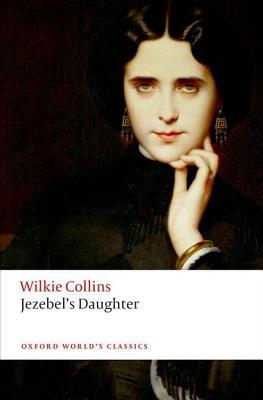
Jezebel’s Daughter by Wilkie Collins

I love Wilkie Collins but it’s been a while since I last read one of his books, so when the Classics Club recently challenged us to read a classic Gothic novel, thriller or mystery during the month of October, I thought Jezebel’s Daughter would be a good one to choose. Published in 1880, this was one of Collins’ later books, although it was based on a much earlier – and apparently unsuccessful – play of his, The Red Vial. I wasn’t really expecting it to be as good as his more famous novels such as The Woman in White, The Moonstone, No Name or my personal favourite, Armadale, all of which I read and loved in the years before I started blogging, but now that I’ve read Jezebel’s Daughter, I can say that while it’s not quite in the same class as those other books, it’s still very entertaining and enjoyable.

At the heart of the novel are two very different women who seem to have little in common other than the fact that they are both widows. First, in England, we meet Mrs Wagner, who has inherited her husband’s share of the business in which he had been a partner. Mrs Wagner is looking forward to becoming more involved in running the business and making some changes of her own – including employing more women. As a philanthropist, she also wants to use her money and position to help those less fortunate, such as Jack Straw, an inmate in the Bedlam lunatic asylum. Believing that Jack would benefit from some kindness and affection, she takes him into her own home, determined to prove that her theory is correct.

The action then switches to Germany, where we are introduced to Madame Fontaine, the widow of a French scientist who had devoted his life to the study of poisons. Since her husband’s death, she has found herself struggling financially, so when her daughter Minna falls in love with Fritz Keller, the son of Mrs Wagner’s wealthy business partner, she sees a possible solution to their money problems. Unfortunately, Madame Fontaine has a terrible reputation – she is the ‘Jezebel’ of the title – and Fritz’s father is strongly opposed to the idea of a marriage between his son and Minna. Can Madame Fontaine find a way to ensure that the marriage takes place before her debts are due to be paid?

Jezebel’s Daughter is a great read – it’s suspenseful and exciting and, because it’s a relatively short novel, it’s faster paced than some of his others as well. With a story involving poisonings, stolen jewels, unexplained illnesses, mysterious scientific experiments, morgues, asylums and plenty of plotting and scheming, there’s always something happening and for a long time I couldn’t imagine how it was all going to be resolved! As well as being fun to read, the book also touches on some important social issues, such as job opportunities for women (Mrs Wagner, like her late husband, believes that women should be employed in the office in positions that would normally be filled exclusively by men) and the humane treatment of people with mental illnesses.

The two central characters are wonderful – not the two young lovers, as you might expect, but the two middle-aged widows. They complement each other beautifully, one representing all that is good and the other all that is bad. But although Madame Fontaine can be seen as the villain of the story, Collins portrays her in a way that allows us to have some sympathy; she is an intelligent, ambitious woman for whom nothing has ever gone smoothly and most of the wicked acts she commits are done out of desperation or love for her daughter.

If anyone has read Collins’ better known works and is wondering what to read next, I would definitely recommend this one – or The Law and the Lady, Man and Wife or Poor Miss Finch, all of which I enjoyed too. I’m glad I decided to read this book for the Classics Club Gothic event – it was the perfect choice!

This is book 9/50 read from my second Classics Club list.

I am also counting this book towards the R.I.P. XIII Challenge (categories: suspense, Gothic).

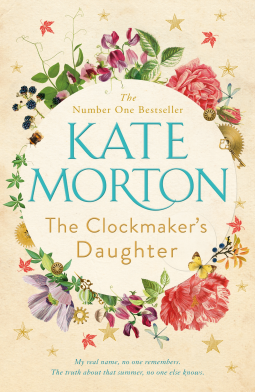
The Clockmaker’s Daughter by Kate Morton

A 19th century artist and his beautiful model; a young girl raised in India and sent to an English boarding school; a writer who takes her children to the countryside during World War II; and a 1920s biographer researching his latest work. These are just some of the characters whose stories are told in The Clockmaker’s Daughter and tied together by a present day archivist, Elodie Winslow, who is trying to make sense of it all.

At the beginning of the novel, in 2017, Elodie comes across two intriguing items in the archives of a man called James Stratton. One is an old photograph showing a woman dressed in Victorian clothing; the other is a sketchbook with a drawing of a house near the bend of a river. Elodie feels that the house looks familiar somehow…but where could she have seen it before? And who is the woman in the photograph?

To find the answers to these questions, we have to go back to the summer of 1862 when a group of young artists known as ‘the Magenta Brotherhood’ are gathering at Birchwood Manor, the home of the talented painter Edward Radcliffe. By the end of their stay, a woman has been killed, another has vanished without trace and a valuable jewel has disappeared. We know that these incidents must be linked in some way to the photograph and sketch that Elodie has found, but before we can fully understand their significance we must follow the stories of all the characters I mentioned above – and several more.

The Clockmaker’s Daughter is a complex novel and, I have to admit, I would have preferred it to have been a bit less complex! There were far too many different strands to the story and I struggled to keep track of what was happening and how the various characters were related to each other. New characters, often seemingly unconnected to any of the others, were still being introduced well into the second half of the book and it wasn’t always very clear how they were going to fit into the sequence of events. It all makes sense in the end, but I’m not sure it was really necessary for things to be so confusing.

Although I would have preferred a more straightforward, linear structure, I still found a lot to like about this book: there’s a supernatural element which I thought was used very effectively; I loved Birdie Bell, the eponymous clockmaker’s daughter; and I really enjoyed the last few chapters, in which we finally discover what really happened that summer in 1862. To compare it with the other two Kate Morton novels I’ve read, I thought this one was better than The Distant Hours but not as good as The Forgotten Garden. I’m not sure whether I will be reading any more of her books, although I could probably be tempted.

Thanks to Pan Macmillan for providing a copy of this book for review via NetGalley.