A Short Story for Saturday: The Black Monk by Anton Chekhov

The Black Monk by Anton Chekhov (1894)

Where do we draw the line between genius and madness? Anton Chekhov explores this question in The Black Monk – the story of a young man called Andrei Kovrin who suffers from an undisclosed mental illness which causes him to believe he is being visited by a monk dressed in black. Even when he becomes aware that the monk is only a hallucination, he is not concerned because his visions make him feel happy and full of energy and creativity. Eventually though, his family begin to worry about his sanity…

This is a fascinating, unusual story which I found easy to read but difficult to fully understand. Chekhov’s poetic writing creates an eerie, disturbing atmosphere appropriate to Kovrin’s descent into mental illness.

“Once or twice a week, in the park or in the house, he met the black monk and had long conversations with him, but this did not alarm him, but, on the contrary, delighted him, as he was now firmly persuaded that such apparitions only visited the elect few who rise up above their fellows and devote themselves to the service of the idea.”

Read The Black Monk online here

Review: Alice I Have Been by Melanie Benjamin

I had been reading so many good reviews of Alice I Have Been that when I won a copy from The Book Whisperer I couldn’t wait to read it and see if it deserved its reputation. I’m happy to say that it did.

Before I read this book, I knew Alice Liddell was the girl who inspired Alice’s Adventures in Wonderland, but that was all I knew about her. I also knew that Lewis Carroll’s real name was Charles Lutwidge Dodgson and that he was an Oxford mathematics professor, but that was all I knew about him. Alice I Have Been is the story of how Alice’s relationship with Dodgson and the book he wrote changed her life forever.

The 19th century is one of my favourite historical periods and it was interesting to read about Alice’s life as the daughter of the Dean of Christ Church, mixing with the upper classes of Victorian society. Mr Dodgson was a friend of the Liddell family, who enjoyed visiting the three little girls – Ina, Alice and Edith – and taking photographs of them. The relationship between Alice and Dodgson was slightly disturbing, but the overall impression I got of him was of a shy, lonely man who felt more comfortable with children than with adults – and didn’t want those children to grow up. When Alice was eleven, an incident occurred that caused a rift between Dodgson and the Liddells – in real life, this is a mystery that has never been solved. Melanie Benjamin gives one possible explanation but states in her author’s note that this is her own interpretation and not necessarily the truth, leaving us to wonder exactly what really did happen.

I had no idea Alice Liddell had such an eventful adult life or that she was romantically involved (though maybe not to the extent the book suggests) with Queen Victoria’s youngest son, Prince Leopold – until hints of the scandal in her past came back to haunt her.

This book is a clever mixture of fact and fiction. I always think a sign of a good historical fiction novel is when it inspires you to find out more about the people you’ve been reading about. There’s a lot of information about Charles Dodgson available online, including some of his photographs (a few of which are reproduced in the book). It was interesting to read about seven year-old Alice posing for Dodgson as a gypsy girl, then being able to look at the actual picture itself. I also wanted to find out more about John Ruskin, who is portrayed quite negatively in the book.

Now I want to go and read Alice in Wonderland again to see if I feel differently about it now that I know the story behind it.

Recommended

Genre: Historical Fiction/Pages: 345/Publisher: Random House/Year: 2010/Source: Won in giveaway

Review: Whistling in the Dark by Tamara Allen

Whistling in the Dark is a heartwarming and poignant historical romance set in New York in the aftermath of World War I. It’s the story of two men, both damaged by the war in different ways, who are drawn together first by fate, then by friendship and finally by love.

Sutton Albright, son of a rich Kansas businessman, has just been expelled from college and, too ashamed to face his parents, travels to New York to look for work. Here he meets Jack Bailey, who is desperately trying to keep his late parents’ struggling novelty shop afloat. Jack has come up with the idea of advertising on the radio (which is still a very new invention) and is looking for someone to provide the music for his broadcasts. Well, guess who just happens to be a talented classical pianist?

This is a very well written book and Tamara Allen does a fantastic job of portraying New York City in the early 20th century. I had no problem at all in forming a mental picture of Bailey’s Emporium, Ida’s restaurant, Jack’s apartment and the other locations we visit. It was interesting to read about the early days of radio broadcasting, the emerging jazz scene, prohibition and all the little period details that the story touches upon. In Jack and Sutton – very different people in terms of both background and personality – she has also created two characters that I really liked and cared about.

The book was just the right length to allow the author to take her time developing the characters and building up the different layers of the plot, without the story dragging at all. Recommended.

Genre: Gay Historical Romance/Pages: 340/Publisher: Lethe Press/Year: 2009/Source: Won from LibraryThing Member Giveaways

Review: Lean on Pete by Willy Vlautin

I received a review copy of this book from LibraryThing Early Reviewers. Willy Vlautin is the lead singer and songwriter with the band Richmond Fontaine and Lean on Pete is his third novel. I’ve seen a lot of other reviewers comparing him to John Steinbeck, though I haven’t read enough of Steinbeck’s work to know whether that’s an accurate comparison.

Charley Thompson is a lonely fifteen year-old boy who lives with his irresponsible single father. The book begins with their arrival in Portland, Oregon, where Charley’s father has been offered a new job in a warehouse. Charley is desperate to get a job of his own so that he can earn enough money to put food on the table but the only work he can find is at the Portland Meadows race track with a disreputable horse trainer called Del. Portland Meadows has seen better days and is now home to hundreds of old, tired horses and second-rate jockeys who can’t get work anywhere else. It is here that Charley meets Lean On Pete, the racehorse who becomes his only friend and companion.

Willy Vlautin uses very simple prose with no flowery descriptions and no big words. As the story is told in the first person from the point of view of fifteen year-old Charley, this writing style is very effective – he uses the kind of language that Charley would realistically use. Despite his miserable home life, Charley comes across as quite a sensible, likeable person, and I really wanted to see him survive and be happy. I did get a bit bored with constantly being told exactly what he had to eat for every meal (usually cheeseburgers, if you’re interested), though I suppose for a teenage boy fending for himself with no money, it was probably quite important!

Almost all of the other characters we meet are drug addicts, alcoholics, or living in poverty, painting a portrait of a side of society we don’t often read about. Most of these people show Charley some kindness, but aren’t really in a position to be able to help him – Charley and Pete are completely alone in the world and there’s a constant atmosphere of sadness and loneliness that hangs over the entire book.

Lean on Pete was a big step away from the type of book I usually read, but I didn’t regret the couple of days it took me to read it.

Genre: General Fiction/Pages: 288/Publisher: Faber & Faber/Year: 2010/Source: Received from LibraryThing Early Reviewers

Review: The Tenant of Wildfell Hall by Anne Bronte

Although Emily Bronte’s Wuthering Heights and Charlotte Bronte’s Jane Eyre have always been two of my favourite Victorian classics, this is the first time I’ve read anything by the youngest Bronte sister, Anne. I feel a bit guilty that it has taken me so long to get round to reading one of Anne’s books, especially as I enjoyed it almost as much as the other two books I’ve just mentioned.

Anne’s writing style is not the same as Charlotte’s or Emily’s – there’s less dramatic romanticism and poetic imagery, although she still writes with a lot of passion. She has quite a sharp style that is probably more similar to Jane Austen than to either of her sisters.

I won’t go into the plot in too much detail but The Tenant of Wildfell Hall is the story of Helen Huntingdon, a young woman who leaves her alcoholic husband and goes into hiding with her five year-old son, Arthur. Not long after arriving at Wildfell Hall she meets local farmer, Gilbert Markham, who falls in love with her. When Gilbert questions her about the rumours circulating about her in the village, she allows him to read her diary in which she had recorded the details of her unhappy marriage.

The book has an interesting structure – it’s told partly in the form of letters from Gilbert Markham to his brother-in-law Jack Halford, and partly as extracts from Helen Huntingdon’s diary. I loved the first section from Gilbert’s point of view, describing the arrival of the mysterious woman at Wildfell Hall with everyone wondering who she was and where she came from. The story probably wouldn’t have worked had it not been set in the 19th century. Today there’s nothing unusual in a single mother living alone with her little boy, but in 1828 when The Tenant of Wildfell Hall takes place, it makes her the target of gossip and scandal.

When Helen’s diary began it took me a while to get used to the change of voice and the change of pace but it soon developed into the most powerful section of the book. I didn’t particularly like Helen as I thought she was just a little bit too saintly and perfect, but she was a very strong person who defied convention to do what she thought was best for herself and her child. Her diary entries are filled with descriptions of some really despicable characters and describe scenes of drunkenness, violence, verbal and physical abuse, and adultery, which I can imagine readers in the 19th century would have been shocked by. Apparently after Anne’s death, re-publication of The Tenant of Wildfell Hall was prevented by Charlotte, who considered the choice of subject to be a big mistake. However, I would have no hesitation recommending this book to anyone who has enjoyed Emily and Charlotte’s work, as well as those of you who have never read any other Bronte books.

Note: This book counts towards the Women Unbound Reading Challenge because it portrays a woman who has the strength to leave her abusive husband and build a new life, working as an artist to support herself and her son – almost unheard of in the 19th century.

Highly Recommended

Genre: Classics/Page: 401/Publisher: Wordsworth Classics/Year: 1996 – first published 1848/Source: My own copy bought new
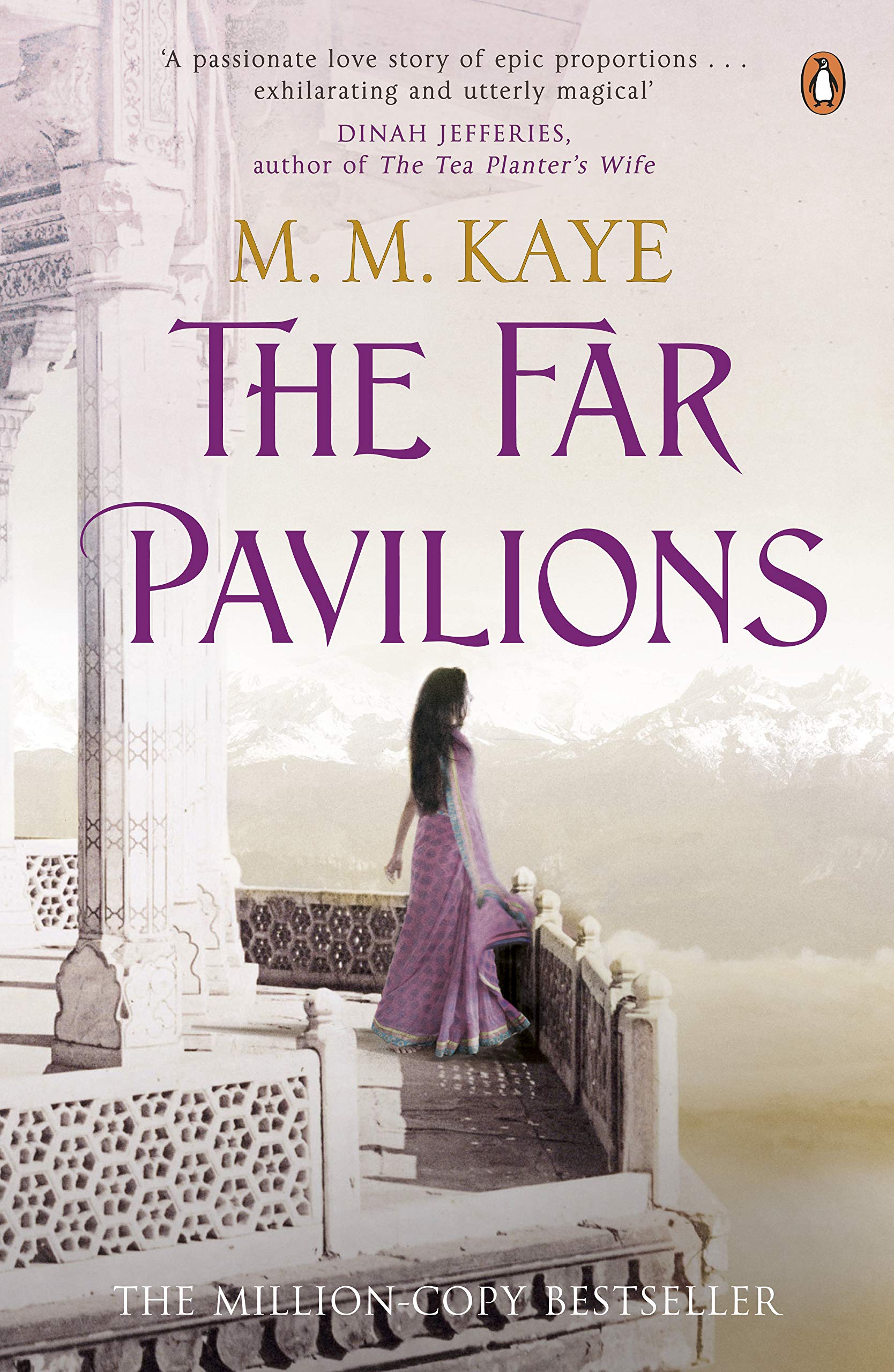
Review: The Far Pavilions by M. M. Kaye

The term ‘sweeping epic’ is used so often it’s become a cliché, but it’s actually an accurate description of The Far Pavilions. M. M. Kaye takes us on a journey across 19th century India and Afghanistan, during which we witness some of the major turning points in the history of those two countries.

Ashton Pelham-Martyn is born in India, the son of British professor Hilary Pelham-Martyn and his wife Isobel. When both of his parents die within a few years of each other, the four year-old Ash is brought up by Sita, the wife of his father’s Hindu groom, unaware that he is not actually Indian. Several years later, after Sita’s death, Ash learns the truth about his birth and is sent to school in England. Eventually he returns to India to serve in the British army, but finds that his loyalties are torn between his Indian friends and the members of his regiment. The Far Pavilions is the story of Ash’s struggle to find his identity.

At the heart of the story is a forbidden romance between Ash and the Hindu princess, Anjuli. However, that’s only one aspect of the book. Non-romance fans will enjoy the action and adventure, descriptions of military life or simply learning more about 19th century British-ruled India. Most of the battles and other historical events mentioned in the book did actually take place and several of the characters, such as Walter Hamilton and Louis Cavagnari, were real historical figures – you may find it interesting to do some research as you read.

Of all the historical fiction books I’ve read, this is one of the most detailed and well researched. Whilst reading this book I’ve learned a huge amount about 19th century British India, from the names of mountains and rivers, details of battles and mutinies, facts about Hindu and Islamic culture, right down to the various types of flora and fauna. We encounter a large number of Indian words and phrases (most are explained either directly in the text or in the glossary at the back of the book) which feels natural and adds to the authenticity of the story. M. M. Kaye spent a lot of time living in India which explains how she was able to write so convincingly about the country and its people. It’s also interesting that although the author was British, she uses various characters in the novel to explore conflicting opinions on whether British rule was a good or a bad thing for India.

At more than 950 pages it does sometimes feel as if the book will never end, but that’s not necessarily a bad thing because it’s one of those books that pulls you into the story so much that you don’t really want to reach the last page and leave behind the characters you’ve spent so much time with. However, the main storyline comes to a natural end at around page 700 and the book could easily have finished at this point in my opinion. The final 200 or so pages deal with the Second Anglo-Afghan War which is still interesting to read about but could have been the subject of a separate book.

The Far Pavilions is one of my all-time favourite historical fiction novels.

Highly Recommended

Review: Spring Bear by Betsy Connor Bowen

I received this novella from the First Reads program at Goodreads. Spring Bear is the story of a girl called Evvie Mallow who lives in the small town of Soper’s Mills, Maine. Evvie’s father suffered bad head injuries in an accident which left him unable to speak or take care of himself, and her mother has become involved with another man – Lester Darrow, a surly, aggressive man who traps bears in the woods.

Evvie dreams of going to California and escaping from the poverty and misery of her home, but when she discovers that she’s pregnant it seems that her chance of a better life has disappeared.

This self-published book is Betsy Connor Bowen’s debut novel. She has achieved what she set out to do, which is to successfully convey the atmosphere of a small town in Maine. I’ve never been to Maine, and the way of life described in the book was very different from my own – in some ways, a simpler way of life but not without its own set of problems and challenges.

Although I could sympathise with Evvie’s sad, lonely existence, I didn’t really feel any connection to any of the other characters – I would have liked to have been able to get to know them in more depth. Maybe if it had been a longer novel, there would have been more opportunity for character development, but for a quick, short read this book was quite enjoyable.

Genre: General Fiction/Pages: 96/Publisher: Lonefeather Productions/Year: 2009/Source: Won from Goodreads