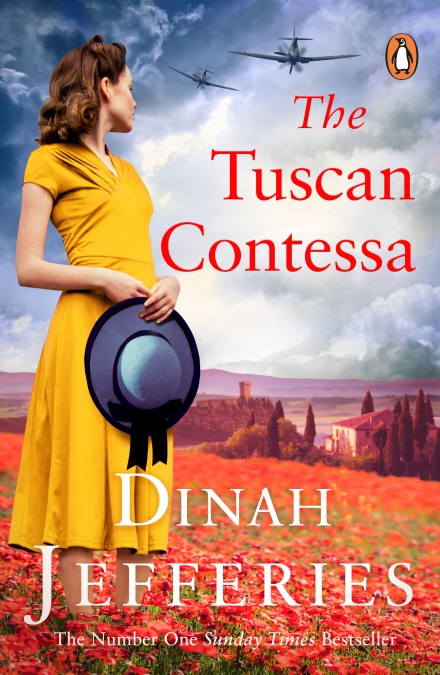
The Tuscan Contessa by Dinah Jefferies

This is the first of Dinah Jefferies’ novels not to be set in Asia. After being whisked off by her previous six books to Sri Lanka, Myanmar, French Indochina and other fascinating settings, it was a surprise to find that her latest one takes place in Italy. I do love reading about Italy, though, and this setting – Rome and Tuscany during World War II – was just as interesting as the others.

The Contessa of the title is Sofia de’ Corsi, who lives with her husband Lorenzo in their Tuscan villa in the Val d’Orcia. Lorenzo works for the Ministry of Agriculture but Sofia knows very little about what his work actually involves, other than that it takes him away from home for long periods of time. The war is in its final years – the story begins in November 1943 – yet life in Italy is becoming more dangerous and more complicated than ever. Much of the country is still under German martial law and although the Allies are advancing and driving the German army back, their progress is very slow. Not only do Italians have the Nazis to worry about, however, but they are also fighting each other, with anti-Fascist partisans locked in civil war with supporters of Mussolini and his Fascist forces.

When James, a British radio engineer, is found wounded near Sofia’s home she offers to give him shelter, but knowing that Lorenzo would be worried for her safety, she decides to keep his presence a secret from her husband. Meanwhile, Maxine, an Italian-American spy, has arrived from Rome to stay with Sofia, having been given the job of gathering information about the Germans to pass on to the resistance and the Allies. But with the Nazi officers stationed in the village beginning to grow suspicious about Sofia’s household, the two women and their loved ones could be in danger.

I have to confess that before I read The Tuscan Contessa I knew very little about Italy during the war, so I was pleased to find that a timeline is included at the front of the book, outlining the key events from the Italian perspective. This helped me to understand what had been happening in the months prior to the beginning of the novel and how there were so many different groups all working with or against each other: the German occupiers, Mussolini’s Blackshirts, the Partisans and communists, Allied soldiers and SOE spies. It’s not surprising that Sofia and her friends are never quite sure who can and cannot be trusted and who might be about to betray them. One thing I really liked about the novel is the way Jefferies shows that there are good and bad people on all sides of any conflict and that both friends and enemies can be found where they are least expected.

Although there are plenty of male characters, all with significant roles to play in the novel, the focus is mainly on the women and the decisions they have to make to keep themselves and their families safe. I liked Sofia but the other characters felt less well drawn and I even found myself confusing some of them with each other. I didn’t feel that I ever truly got to know and understand Maxine, which was a shame because her storyline should have been the most exciting and compelling, as her work took her into some very dangerous situations. It seemed that the characters sometimes took second place to the history unfolding around them, which made the story less emotionally gripping than it could have been.

This is not one of my favourite Dinah Jefferies novels, but I’m still glad I read it even if just for the knowledge I’ve gained of 1940s Italy!

Thanks to Penguin for providing a copy of this book for review via NetGalley.

The Two Hundred Ghost by Henrietta Hamilton

I read my first Henrietta Hamilton novel, Answer in the Negative, earlier this year and wasn’t particularly impressed by it; I wasn’t sure whether I wanted to read any more of her books, but I believe in giving an author a second chance and The Two Hundred Ghost sounded very tempting. I’m glad I gave it a try as I enjoyed it much more than Answer in the Negative.

The Two Hundred Ghost was first published in 1956 and is the first book in Hamilton’s Johnny and Sally Heldar mystery series. The unusual title refers to 200 Charing Cross Road, the address of the antiquarian bookshop in London which is owned by Johnny Heldar’s family and said to be haunted by a ghost. Sally Merton is one of the booksellers in the shop; she is not yet married to Johnny when we first meet her and has been attracting some unwelcome attention from one of the male employees, Victor Butcher. Mr Butcher is an unpleasant bully, disliked by everybody who knows him, so when he is found dead in his office with a knife in his back, there are plenty of suspects…including the ghost, which is sighted in the building shortly before the murder takes place!

This is a very short novel and the plot moves along at a steady pace, making it a quick and easy read; although, as with the other Hamilton novel I read, I felt that there was a bit of repetition surrounding discussions of alibis, timing of events and layouts of rooms, this one has a better balance between these technical aspects of mystery-solving and the more ‘human’ aspects, such as motives and personalities. I didn’t guess who the murderer was, but I don’t think the author was unfairly holding back information from the reader and it may have been possible to solve the mystery if you were paying more attention than I was and didn’t miss any clues!

Henrietta Hamilton (a pseudonym of Hester Denne Shepherd) worked in a London bookshop in the years following World War II and had personal experience of selling antiquarian books, which gives the novel a feeling of authenticity. Bookselling is not just a background to the novel, but an important part of the plot, and the author’s knowledge and interest in ‘incunabula’ (early printed books) comes through very strongly.

I was pleased to find that Sally plays a bigger part in the investigations in this book than she did in Answer in the Negative and makes some important discoveries which prove to be turning points in the mystery – although, remembering that it was written in the 1950s, there’s always a sense that Johnny feels the need to protect her because she’s a woman. Still, both Johnny and Sally are characters who are easy to like and to care about; it was nice to get to know them before they were married and to see their relationship develop (although it does so quite subtly and their romance is only one small part of the story). Having enjoyed this book, I would like to meet the Heldars again – luckily, there are another two books in the series and I’m hoping they will be reissued soon too!

Thanks to Agora Books for providing a copy of this book for review via NetGalley.
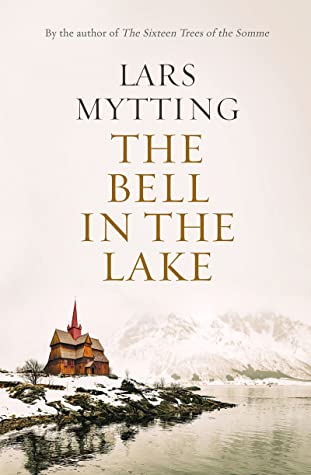
The Bell in the Lake by Lars Mytting

This beautifully written novel, translated from the original Norwegian by Deborah Dawkin, is the first in a planned trilogy based around the legend of the Sister Bells. The bells commemorate conjoined twin sisters Gunhild and Halfrid Hekne, who lived in the remote village of Butangen and died within hours of each other. Their family donated the bells to the local church in memory of the twins and they are still hanging there, in the bell tower, in 1880 when the novel begins…

As the rest of the world heads towards the twentieth century, Butangen appears to be frozen in time, a place where life is still ruled by superstition and folklore, where people still believe in evil spirits and ill omens. When Kai Schweigaard, an ambitious young pastor, arrives in the village he despairs of ever bringing change to a population so resistant to progress and modern ways of thinking.

If only people had light, he thought. If there was a strong lamp in every home, which could illuminate faces and edifying books, I could banish these mad notions in a few years. But at sunset the village grew dark, and with it folk’s minds, and these unknown powers ruled until sunrise.

One of the ways in which Kai hopes to improve life in the village is by replacing the ancient 12th century stave church where a parishioner actually froze to death during Mass with a larger, warmer, more comfortable building. The old church, complete with its pagan carvings and twin bells, is to be dismantled and reconstructed in Dresden, and a young German architect – Gerhard Schönauer – has arrived to make drawings of the church before it is taken down. However, Kai and Gerhard face opposition not only from the people of Butangen, who are suspicious and resentful of anything new, but also from the Sister Bells themselves. The bells are said to have supernatural powers and to ring on their own when danger is approaching – and it seems that the bells don’t want to be removed.

As well as the two men, a large part of the story is also written from the perspective of twenty-year-old Astrid Hekne, who works as a maid in Kai Schweigaard’s household at the parsonage. Despite the differences in their social standing, Kai is considering making Astrid his wife, but complications arise when Astrid finds herself drawn to Gerhard Schönauer. Meanwhile, as a descendant of the twins Halfrid and Gunhild, Astrid feels a responsibility for the bells and decides she must do whatever it takes to prevent Gerhard from transporting them to Dresden with the rest of the church.

The Bell in the Lake is a wonderfully atmospheric novel thanks to Lars Mytting’s beautiful descriptions of the landscape around Butangen, particularly in winter with its frozen lakes and snow-covered hills and valleys, while the supernatural elements and the role of the Sister Bells legend give the story an eerie and mysterious feel. The sense of time is as strong as the sense of place and the characters feel like real 19th century people, rather than modern day people dropped into a random historical setting. However, I think the decision to have Astrid and the other villagers speak in a dialect which seems to be mainly Scottish is a bit strange. I suppose the translator had to find a way to differentiate between the speech of the local people and the outsiders (who speak in standard English), and using Scottish words makes sense because of the close ties with Norway, but I found it slightly distracting and kept forgetting that Astrid was actually Norwegian!

One of my favourite themes in fiction is the conflict between old ways of life and new, and in this novel we see how the inhabitants of Butangen are reluctant to move away from the traditions they have always followed and try to resist any kind of social, scientific or religious progress. Although Astrid has been brought up with the same beliefs, she has a more adventurous spirit than most of her neighbours and longs to see more of the world, which is what draws her to Gerhard. The demolition of the old church, which Gerhard has come to oversee, and the building of the new one is symbolic of all of this. If you’ve never seen a Norwegian stave church, by the way, I recommend googling them – they look amazing and it’s sad to think that there are so few of them left.

Having enjoyed The Bell in the Lake so much, I am looking forward to the other two books in the trilogy and hope we won’t have to wait too long for the next one!

Thanks to Quercus Books for providing a copy of this book for review via NetGalley.
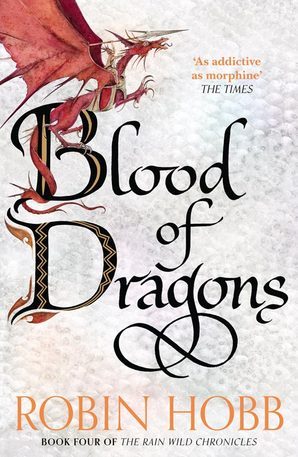
Blood of Dragons by Robin Hobb

This is the fourth and final book in Robin Hobb’s Rain Wild Chronicles quartet and I can honestly say I don’t think I’ve ever been so pleased to come to the end of a series! Why have I persevered with it through four long books that I wasn’t particularly enjoying? Well, the series is part of the sixteen-volume Realm of the Elderlings sequence. I loved the first nine books (The Farseer, Liveship Traders and Tawny Man trilogies) and intend to read the last three, so didn’t feel that I could leave out these four in case I missed out on any details or plot points that turned out to be important later. Anyway, they’re not that bad – they’re just not as good as the earlier books I read by Hobb.

Blood of Dragons continues the story from the previous book, City of Dragons, with our band of young keepers and their dragons beginning to make their way into the deserted Elderling city of Kelsingra. Abandoned by the Elderlings in the aftermath of an earthquake many generations earlier, Kelsingra has been left in ruins but still holds magic within its stones. As the dragons replenish their strength and energy in the enormous hot baths, the keepers search for the source of the legendary Silver, the mysterious substance the dragons desperately need if they are ever to regain their full powers. Meanwhile, Tintaglia, the magnificent blue queen dragon, is trying to return home after being wounded in an attack by Chalcedean dragon-hunters – while in faraway Chalced itself, Selden Vestrit has found himself imprisoned by the Duke, who believes that Elderling blood is the next best thing to the dragon blood he needs to prolong his life.

As the last of the Rain Wild Chronicles, I thought this book brought the series to a satisfactory conclusion and I didn’t feel that anything significant had been left unresolved. Although these four novels seem very separate from the rest of the sequence (only a few shared characters with The Liveship Traders and hardly any overlap at all with the Farseer and Tawny Man books), I’m still pleased that I read them as they have added to the overall world-building and helped me to understand more about the relationship between dragons and Elderlings. I was particularly intrigued by the role of the Silver as a sort of life-force with magical properties; I’ve been remembering other references to silver in the earlier Hobb trilogies and trying to work out how all of this relates to the Skill. It was also interesting to see Rapskal taking on more and more of the characteristics of his long-ago counterpart Tellator as he spends more time immersing himself in Kelsingra’s memory stones.

Despite enjoying the magical elements of the story, however, I again struggled to really engage with any of the characters, something which has been a problem for me in all four novels. I became quite fond of a few of them (such as Alise, Sedric and Leftrin), but I felt that too much time was spent on the love triangle between Thymara, Rapskal and Tats, and on trying to sort all of the characters into romantic pairings, even the dragons. I did love the way Hest’s story ended, though! After a short break while I read other books, I will be ready to embark on the final trilogy, which begins with Fool’s Assassin, and am very much looking forward to rejoining Fitz and the Fool at last.

The Lifted Veil and Silly Novels by Lady Novelists by George Eliot – #NovNov

The second book I’ve read for this month’s Novellas in November is one of the Penguin Little Black Classics series. It contains a novella by one of my favourite Victorian authors, George Eliot – The Lifted Veil – as well as an essay, Silly Novels by Lady Novelists, also written by Eliot.

The Lifted Veil was written very early in Eliot’s career and published in 1859, the same year as her first novel Adam Bede. It’s a controversial story which seems to get very mixed reviews and now that I’ve read it, although I found it quite enjoyable, I can understand why. It’s not her usual sort of book at all; I’ve seen it described as science fiction, Gothic fiction and horror, none of which are genres you would normally associate with Eliot!

Our narrator, Latimer, is a young man who suffers from an illness which seems to leave him with an unusual and unwelcome gift – the ability to see into the future and into the minds of other people. It begins with a vision of Prague, a city he has never visited or seen in a picture, and it is so incredibly detailed – ‘right down to a patch of rainbow light on the pavement, transmitted through a coloured lamp in the shape of a star’ – that Latimer is both excited and alarmed. Other episodes of clairvoyance follow, including dreamlike sightings of a tall, blond-haired young woman dressed in green. This turns out to be Bertha, his brother Alfred’s fiancée…but Latimer has seen a future version of himself married to Bertha. Will this come true – and if so, will the marriage be as unhappy as the vision seems to suggest?

I can’t say much more about the plot without spoiling the story, but I found The Lifted Veil an interesting and intriguing read. For such a short piece of writing, it contains many different topics and themes: the contemporary scientific ideas of Eliot’s time, ranging from mesmerism and phrenology to blood transfusions; fate and whether it can be changed; the possibility of life after death; and the question of what we can see when the ‘veil is lifted’. I should warn you that there is a scene involving a dead body – as I said, this is not a typical Eliot book – although it’s quite tame if you’ve read a lot of Edgar Allan Poe, as I have!

The novella takes up just over half of this 110 page book. The essay from 1856 that follows, Silly Novels by Lady Novelists, is unrelated and seems to be a bit of a random choice to fill the remaining pages in the book. Still, I thought it was fascinating to read Eliot’s thoughts on her fellow female authors. In case you can’t tell from the title, Eliot has a very low opinion of books she describes as ‘the frothy, the prosy, the pious or the pedantic’, and an even lower opinion of the women who write them:

It is clear that they write in elegant boudoirs, with violet-coloured ink and a ruby pen; that they must be entirely indifferent to publishers’ accounts, and inexperienced in every form of poverty except poverty of brains. It is true that we are constantly struck with the want of verisimilitude in their representations of the high society in which they seem to live; but then they betray no closer acquaintance with any other form of life. If their peers and peeresses are improbable, their literary men, tradespeople, and cottagers are impossible; and their intellect seems to have the peculiar impartiality of reproducing both what they have seen and heard, and what they have not seen and heard, with equal unfaithfulness.

Although I did feel a bit sorry for the lady novelists mentioned in the essay, including the authors of Laura Gay, The Old Grey Church and Rank and Beauty (three of the novels which come in for particular criticism from Eliot), I can also see why Eliot would have felt frustrated by female writers who were perpetuating stereotypes of Victorian fiction such as the perfect, virtuous heroine, and making it difficult for more literary authors like herself to be taken seriously. Of course, her male pseudonym would help to distance her work from the type of novels she despised and I’m sure Eliot would be pleased to know that her own novels have stood the test of time while the ‘silly novels’ and their authors have largely been forgotten.

So, two very different short reads in one book! Have you read either of them? I would love to hear what you thought.

Shadowplay by Joseph O’Connor

Having enjoyed one of Joseph O’Connor’s earlier novels, Ghost Light, about the relationship between the playwright John Millington Synge and the actress Molly Allgood, I was looking forward to reading his newest book, Shadowplay, which was shortlisted for this year’s Walter Scott Prize for Historical Fiction. Like Ghost Light, this book explores the lives of several real historical figures from the literary and theatrical worlds – in this case, the Irish author Bram Stoker and the English stage actors Henry Irving and Ellen Terry.

Bram Stoker, of course, is best known for his 1897 novel Dracula, which is written in an epistolary style and O’Connor uses a similar format in Shadowplay, telling the story through a series of imagined diary entries, letters and transcripts of recordings. Beginning with his life in Dublin and marriage to Florence Balcombe, the novel takes us through Stoker’s meeting with the great Shakespearean actor Sir Henry Irving and his move to London to become the manager of Irving’s Lyceum Theatre. Stoker’s involvement with Irving and the Lyceum leads to a friendship with Ellen Terry, the leading actress of her time, and the relationship between these three characters forms the heart of the novel.

While much of Stoker’s time is taken up with managing the theatre and trying to deal with Irving’s eccentricities, sudden rages and heavy drinking, he also continues to work on his own career as an author. Sadly he won’t achieve the fame he deserves until after his death, but in Shadowplay we see him drawing on his experiences and the people and places around him to put together the various parts of the novel that will become Dracula. I should point out, though, that this book is a work of fiction and Joseph O’Connor finds some very creative ways to weave Dracula allusions into the plot. They are not necessarily things that influenced the real Stoker, but I thought it was fascinating and cleverly done. Jonathan Harker appears, and Mina, although not quite in the way you might expect, a visit to an asylum inspires the creation of the insect-eating Renfield, and with Jack the Ripper haunting the streets of London at that time, it’s easy to see why themes of death and darkness wouldn’t be far from an aspiring author’s mind.

Despite all the interesting ideas explored in this novel, I can’t really say that I loved it. I thought the format and structure of the book made it feel slightly disjointed; a more conventional narrative would have worked better for me and would have made it easier for me to connect with the characters and become more fully asbsorbed in their stories. Still, this is an entertaining and very imaginative novel and I’m pleased to have had the opportunity to learn a little bit more about Bram Stoker, Henry Irving and Ellen Terry!

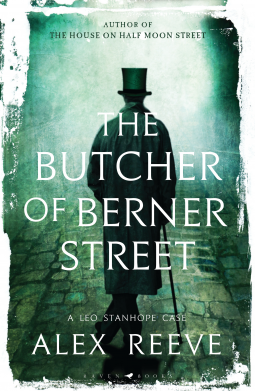
The Butcher of Berner Street by Alex Reeve

Along with Antonia Hodgson’s Thomas Hawkins books and Andrew Taylor’s Marwood and Lovett books, this is one of several new historical mystery series I have been enjoying over the last few years. It is set in Victorian London and follows the adventures of Leo Stanhope, an interesting, intelligent and likeable young man who has a secret he must keep hidden at all costs. This is the third book in the series and although you could certainly read it without having read the previous two (The House on Half Moon Street and The Anarchists’ Club), I do recommend getting to know Leo and his friends from the beginning if possible.

As The Butcher of Berner Street opens, we learn that Leo, formerly a coroner’s assistant, has a new job writing articles on science for the Daily Chronicle newspaper. He is enjoying the work and is grateful for the opportunity he has been given, but he longs for something more exciting to write about – something that will give him a front page headline. When he receives an anonymous note warning of a murder due to take place at a wrestling club in the East End of London that night, it seems Leo is about to get his wish. A murder does take place, although not quite in the way Leo had expected, and when suspicion falls on a Hungarian female wrestler, Irina Vostek, he must find a way to get the headlines he needs while making sure that Irina really is the killer.

I think The Butcher of Berner Street is my favourite of the three books in this series. The plot is well constructed and although I did guess who the murderer was, there were several possible suspects and enough twists and turns to give me a few doubts. More than the plot, though, I loved the setting, the atmosphere and the insights into various aspects of Victorian life: the class differences and the fate of those living in poverty, the early days of the women’s suffrage movement and attitudes towards the Catholic church.

Leo himself is a very compelling character; it’s no spoiler to tell you that although he has chosen to live as a man, he was born and raised as a girl before leaving home as a teenager and taking on a new identity, knowing that he could never be happy unless he had the freedom to be true to himself. Only one or two trusted friends know Leo’s secret and he lives in fear of anyone else finding out; life as a transgender man in the 19th century is not easy and he has heard stories of others who have been arrested and forced to undergo horrific ‘cures’. Although this book is first and foremost a mystery novel and not specifically a book about the experience of being trans, it does have an impact on the way Leo approaches solving the mystery, as he needs to avoid drawing too much attention to himself and risking being blackmailed or exposed. As well as Leo, there are lots of other recurring characters in the series and I enjoyed meeting them all again, particularly the pie maker Rosie Flowers and Alfie the pharmacist and his young daughter, Constance.

I don’t know whether there will be a fourth book in this series. This one has a proper ending, tying up some loose ends and not leaving too much unresolved, but I still hope to see Leo and his friends again soon!

Thanks to Raven Books for providing a copy of this book for review via NetGalley.