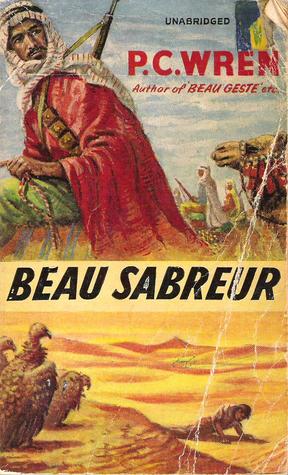
Beau Sabreur by PC Wren

I loved PC Wren’s 1924 classic Beau Geste and when I discovered that it was the first in a trilogy I knew I would have to read the other two. It has taken me more than five years, but a few weeks ago I finally got around to picking up the second book, Beau Sabreur, which was first published in 1926. Although this is a sequel to Beau Geste and features a few of the same characters, it’s not really a direct continuation of the story so would probably work as a standalone; however, some parts of the plot will make more sense if you have already read the previous book.

Beau Sabreur is divided into two sections and really is a book of two very distinct and different halves! The first half, Failure: The Making of a Beau Sabreur, is narrated by Major Henri de Beaujolais, whom you may remember as the French army officer who discovered the eerie abandoned fort at the beginning of Beau Geste. Henri’s narrative follows his early days with his regiment, the friends and enemies he makes, each of whom will have an impact on his future career, and the challenges he faces in settling into army life.

After completing his training, Henri is sent to North Africa with the cavalry where he has a series of adventures that wouldn’t be out of place in Lawrence of Arabia: camel rides across the desert; encounters with bands of Touareg robbers; and negotiations with Emirs and Viziers. It is here in the Sahara that Henri meets the beautiful Mary Vanbrugh, a guest of the colonel of the French-occupied city of Zaguig, who is ‘doing Algeria and seeing something of the desert’ with her brother and her maid-companion, Maudie. Henri is captivated by Miss Vanbrugh, but when the city comes under attack, he must decide whether she is more important to him than his duty to France.

I really enjoyed the first section of the book. Henri de Beaujolais is an engaging narrator and although his story encompasses serious themes of love, honour and duty, it is told with a lot of humour; I found the part where he visits a tailor to be fitted with his army uniform particularly funny. Bearing in mind that this is a novel written in the 1920s and some of the views on race and gender would be considered problematic today, I was pleased to find that Mary Vanbrugh is depicted as a courageous, independent and intelligent woman with a mind of her own (although Maudie, who dreams of being carried off on horseback by a handsome Sheikh, is less so). This first half comes to an end with a surprising plot twist that I hadn’t seen coming, before the whole style and tone of the novel changes entirely as we enter Part Two – Success: The Making of a Monarch.

The second half of the novel, sadly, didn’t live up to the promise of the first half. The focus moved away from Henri to concentrate on two of the characters from Beau Geste whom I liked in that book but didn’t care for in this one. The dry wit of Henri’s narrative was replaced by a much less subtle humour and I found the story in Part Two became quite tedious after the excitement and drama of Part One. I was still interested enough to keep reading to the end and I was rewarded with several more plot twists which made me glad I had persevered, but the abrupt change in the middle of the book didn’t work for me at all. I will probably still try the third book, Beau Ideal, and will hope for something more consistent from that one!
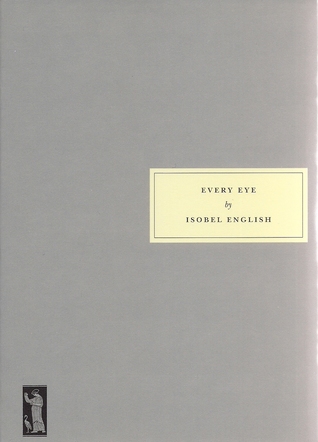
Every Eye by Isobel English – #1956Club

This week Karen from Kaggsy’s Bookish Ramblings and Simon from Stuck in a Book are hosting another of their club events, where we all read and write about books published in a chosen year. This time the year is 1956, which seems to have been a fantastic year for publishing! There were a lot of books that sounded very appealing to me, but there were only two already on my TBR and I decided on this one, Every Eye by Isobel English. This short novella, published by Persephone, has fewer than 150 pages (including the preface by Neville Braybrooke), so was perfect for me at the moment when I’m struggling to concentrate on longer books; my usual reading patterns seem to have been disrupted all year and I don’t know when they will get back to normal.

Anyway, Every Eye is narrated by Hatty, a woman in her thirties who is married to Stephen, a younger man. At the beginning of the book, she and Stephen are preparing to go on a belated honeymoon to Ibiza, when she receives the news that Cynthia has died. Who is Cynthia? Well, she’s the woman who married Hatty’s Uncle Otway many years earlier and who was to become one of the most influential figures in her young life. As Hatty and Stephen travel by train across France and Spain, the story moves back and forth between past and present as Hatty reflects on her childhood and her memories of Cynthia, Uncle Otway – and the older man, Jasper, with whom she had her first romantic relationship.

The book is structured in a way that I would often have found irritating; one continuous narrative with no chapter breaks and sudden jumps between past and present tense as Hatty alternates between telling the story of her trip to Ibiza and reminiscing about episodes from her past. Here, though, the structure works very well and, perhaps because the book is so short, it doesn’t have time to become annoying or confusing. And Isobel English writes beautifully! I am in the habit now of looking out for interesting, inspiring or thought-provoking passages to quote in my monthly Commonplace Book posts; with some books I struggle to find any, but with Every Eye there was a line or a paragraph worthy of being quoted on almost every page. There’s a lovely sense of place too; the descriptions of the scenery through which Hatty and Stephen pass on their journey across Europe are gorgeous and vivid:

Trailing banks of giant blue convolvulus, purple bougainvillea twisted into the formal intricacy of black wrought iron – all hang downward toward the sea. Lemons in the hotel garden, still green but ripening in patches, and below the shelving gardens, the wilder unfenced land parceled into small plots, sloping away to the sea’s edge: everywhere the stunted grey of the olive trees. With our small rationed vision we are like greedy children looking everywhere for more and more; we stare into the brilliance like seers, seeking an unsimple and deeper quality; when we do not find it, we call it surfeit.

The title of the book refers to Hatty’s ‘lazy eye’, which gives her the appearance of not looking straight ahead. She considers this to be a deformity – something that makes her unattractive and undesirable – and even after having an operation to correct it, it still has an impact on her self-confidence. Sight and vision are important themes in the novel, not just in the sense of Hatty having eye problems, but also in how we see other people and how they see us. For example:

After the first six months of our knowing each other, I found it impossible to carry within my mind a clear picture of myself in relation to Jasper. My vision was blurred, because I had outwardly accepted the state.

Or this:

I thought always before the operation on my eye that the source of discordancy between myself and other people lay in the distortion of my own vision; I did not know then as I do now that this outward sign was only the visible proof of inward impediment.

Despite her problems with vision, or maybe because of them, it seems that by the end of the story Hatty can see things more clearly than anyone else. I had heard that this book had one of those amazing last lines that make you catch your breath, so I was expecting something special – and yes, it was worth waiting for (but not quite as powerful as the last sentence of another Persephone, Little Boy Lost). This is a beautiful, atmospheric book and although it’s not one of my absolute favourite Persephones, it’s certainly one I’m glad I read and a great choice for 1956 Club!

Here are some other books from 1956, previously reviewed here on my blog:

Death in Cyprus by MM Kaye
Sprig Muslin by Georgette Heyer
Death on a Quiet Day by Michael Innes
Mary of Carisbrooke by Margaret Campbell Barnes

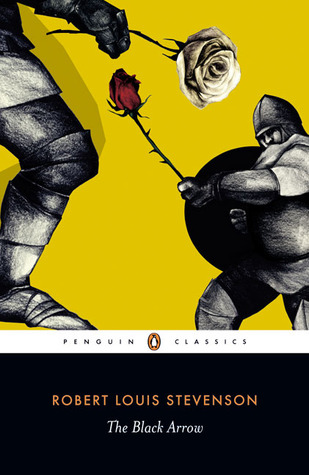
The Black Arrow by Robert Louis Stevenson

This was the book chosen for me in the last Classics Club Spin and for once, I have managed to read it and post my review by the deadline, which is today!

I have had mixed results with Robert Louis Stevenson in the past: I loved The Master of Ballantrae, liked Dr Jekyll and Mr Hyde, couldn’t finish Kidnapped and can hardly remember Treasure Island, which I read as a child. I hoped The Black Arrow would be another good one; it sounded as though it should be fun, at least, and the setting – 15th century England, during the Wars of the Roses – appealed to me. Originally published as a serial in 1883, then as a novel in 1888, it is often labelled a ‘children’s novel’, but apart from the fact that the hero and heroine are in their teens, I think it’s a book that could be equally enjoyed by older and younger readers. It’s probably too old fashioned for a lot of children today, but any who do like reading classic adventure stories should find this one entertaining.

The Black Arrow tells the story of seventeen-year-old Dick Shelton, an orphan who comes to believe that his guardian, Sir Daniel Brackley, was responsible for the murder of his father. Setting out to discover the truth and obtain justice for his father, Dick joins a company of outlaws known as the fellowship of The Black Arrow who also have reasons for wanting to take revenge on Sir Daniel. Meanwhile Dick falls in love with Joanna Sedley, a young heiress kidnapped by Sir Daniel so that he can arrange a marriage for her to his own advantage. And while all of this is taking place, the Wars of the Roses plays out in the background and Dick must decide whether his loyalties lie with York or Lancaster.

The novel is written in a sort of pseudo-medieval style, with archaic words and phrases like ‘ye’, ‘methinks’, ‘forsooth’, ‘cometh’ and ‘goeth’ – common in older historical fiction, but not usually used today, so could take a while to get used to if you don’t read a lot of books like this. In many ways it reminded me of Sir Walter Scott’s Ivanhoe, particularly once the band of Robin Hood-like outlaws appeared, and I think readers who enjoy one book will probably enjoy the other.

Despite the historical setting, you won’t really learn a lot of accurate history from this book. Throughout the first half, at least, the focus is on Dick’s mission to avenge his father’s death and rescue Joanna from Sir Daniel’s clutches. We hear of battles taking place but don’t see much of the action until the second half of the novel when Dick is drawn into the fictitious Battle of Shoreby and meets Richard ‘Crookback’, Duke of Gloucester – the future Richard III. As the events of the novel are taking place in 1460-61, Richard would actually have been about eight years old at that time (not the adult man we see in the story) and not yet Duke of Gloucester, but Stevenson does admit to this in a footnote!

I can’t really say that I loved this book – although I was entertained at first by the spying and intrigue, the disguises and daring escapes, the shipwrecks and secret passages, I felt that the story and the characters lacked depth and eventually it all started to become slightly tedious. Apparently Stevenson himself didn’t rate The Black Arrow very highly and described it as “a whole tale of tushery” (tushery referring to the archaic language). I still think it was worth reading and I preferred it to Kidnapped – although, to be fair, I should probably try Kidnapped again as I didn’t get very far with it. For now, I’m just pleased to have finally read another book from my Classics Club list as I’ve been making very little progress with it this year!

This is book 18/50 read from my second Classics Club list.

Catching up…three historical reads

I usually try to write about each book I read as soon as possible after finishing it, but sometimes that doesn’t happen and I find myself with a backlog of reviews to write for books read earlier in the year. Here are three historical novels that I read a few months ago and haven’t got around to writing about until now.

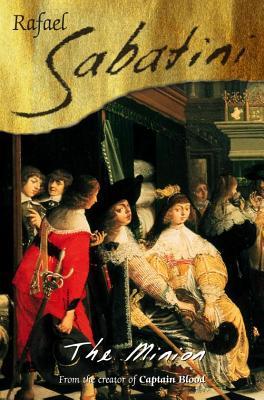
I was drawn to The Minion (1930) both because I’ve loved some of the other Rafael Sabatini books I’ve read and because it is a fictional account of the Thomas Overbury Scandal, a 17th century murder case I’ve previously read about in The Poison Bed by EC Fremantle and The King’s Favourite by Marjorie Bowen. Set during the reign of James I of England and VI of Scotland, the novel follows the story of Robert Carr, a young man who becomes a favourite of the king. The ambitious Earl of Northampton sees a chance to get closer to the throne by encouraging his great-niece, Frances Howard, to begin an affair with Carr, but the romance is opposed by Carr’s friend, Thomas Overbury. When Overbury is found dead in the Tower of London, suspicion falls on Carr and Frances.

As a fan of Sabatini, I have to confess I didn’t really like this particular book very much. Unlike the other novels of his I’ve read that have mainly fictional characters and storylines, this one is based very closely on real history and I think maybe he felt too constrained by historical fact to be able to create a compelling, entertaining story like his others. The characters seemed quite lifeless and the writing felt a bit dry – not really his usual style at all. Having said that, the history on which it is based is fascinating and Sabatini makes no secret of how he feels about the petty rivalries of the Jacobean court. It’s still an interesting read, if not a great example of Sabatini’s work.

If you want to know more about the Thomas Overbury affair, try the Fremantle novel instead – and if you’re new to Sabatini, start with Scaramouche!

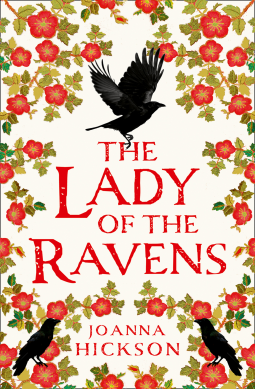
Joanna Hickson has previously written several novels set during the Wars of the Roses, one of my favourite periods of English history. Her latest book, The Lady of the Ravens (2020), opens just after the final major battle in that conflict – the Battle of Bosworth, which resulted in Henry Tudor taking the throne as King Henry VII. This novel looks at the events of the early part of Henry’s reign from the perspective of Joan Vaux, lady-in-waiting to Henry’s queen, Elizabeth of York. We see how precarious Henry’s grip on the throne is, with challenges from various Yorkist pretenders, and the steps he takes to deal with these threats, and we are given some glimpses of his children, including Prince Arthur, his eldest son who is betrothed to Katherine of Aragon, and the future Henry VIII, seen here as a charming, confident young child, already popular with his father’s subjects.

Joan herself has very little, if any, direct involvement in the political intrigues of the court, which perhaps makes the story less exciting than it could have been, but she does form a strong bond with Elizabeth, bringing her close to the lives of the royal family. Joan’s own family life is also explored; I don’t know how historically accurate the book is regarding her personal relationships, but the fictional Joan appears to have been quite fortunate in her marriage to Sir Richard Guildford. It might not exactly be love at first sight, but she and Richard soon learn to get along with each other and, for an arranged marriage in the 15th century, it’s not an unhappy one. As for the ‘ravens’ of the title, they are the birds that live at the Tower of London; as legend has it, if the ravens ever leave the Tower, the kingdom will fall, so Joan, who has become fascinated by the birds, does her best to protect them from those who wish to do them harm.

I didn’t find this quite as interesting as Joanna Hickson’s previous book, The Tudor Crown, maybe because that one was about Henry Tudor and took us straight to the heart of the action, whereas the choice of Joan as narrator of this book, as I’ve said, means a slower pace and a more domestic story. Still, I enjoyed it and was pleased to see that there’s going to be a sequel.

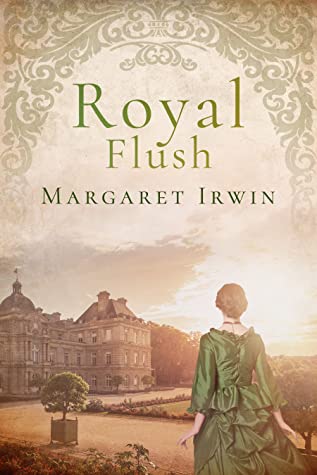
Having enjoyed some of Margaret Irwin’s other books, particularly the first two of her Elizabeth I trilogy (I must read the third one soon), I had high hopes for this one, about Charles II’s younger sister Henrietta – known as Minette. Royal Flush (1932) is a straightforward fictional retelling of Minette’s life, beginning with her exile in France as a child during the period of her father, Charles II’s, beheading and the rule of Oliver Cromwell as Lord Protector. Growing up at the French court, it is at first hoped that Minette will marry the young king of France, Louis XIV, but when another bride is chosen for Louis, Minette finds herself married off to his younger brother Philippe instead.

I won’t say any more about the plot as you will either already be familiar with Minette’s history or, if not, you won’t want me to spoil it for you. However, if you’re completely new to her story, be aware that the book is quite slow and detailed and possibly not the best starting point (although this is the first novel I’ve read specifically about Minette, I’ve come across her many times as a secondary character in books like Dumas’ Louise de la Vallière and Margaret Campbell Barnes’ Lady on the Coin and I found it very useful to have that little bit of prior knowledge about her). I do like Margaret Irwin’s writing and the old-fashioned charm of her novels, which have quite a different feel from most of the historical fiction being published today, but I think this is the weakest of her books that I’ve read so far.

~

Have you read any of these – or any other books by these authors?

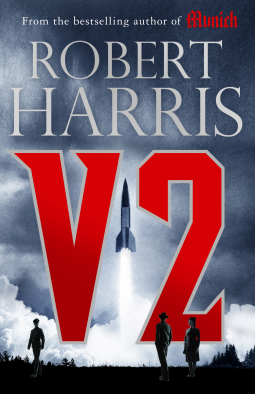
V2 by Robert Harris

Robert Harris is one of my favourite authors, but I was slightly disappointed by last year’s The Second Sleep. The setting was atmospheric and the concept was fascinating but, like a lot of people, I thought the ending was abrupt and confusing. I’m pleased to say that I found his latest book, V2, much more enjoyable and the perfect distraction from the depressing national and world news and from the pressures of returning to work earlier this month after a long period on furlough.

V2 is set during World War II and follows the stories of two people on different sides of the conflict. Dr Rudi Graf is a German engineer who has played an important part in the development of the V2 rocket. Although his intention was originally to build rockets that could fly to the moon, the technology is now being used by Nazi Germany to carry out attacks on Allied cities, something Graf isn’t entirely comfortable with.

In London, meanwhile, Kay Caton-Walsh, a young officer in the Women’s Auxiliary Air Force, narrowly avoids being killed in one of these attacks when a V2 hits the building in which she is staying with her married lover. With her affair in danger of being exposed, Kay jumps at the opportunity to go to Belgium with a group of other WAAF officers on a mission to locate the V2 launch site and prevent the weapons from being used in any more strikes.

The whole novel takes place during just five days in November 1944, with Graf’s narrative alternating with Kay’s until eventually their stories begin to come together. I found both of them equally interesting to read about, but I was particularly impressed with the way Harris makes Graf such a sympathetic character, despite the fact that he is at least partly responsible for the death and destruction caused by the V2. His gradual disillusionment with his work is plain to see and he ends up being confronted with some moral dilemmas as a result. Kay’s work is rather different – she is trying to save lives rather than destroy them – but she also finds herself facing some difficult decisions when she begins to question who can and cannot be trusted.

The thriller element of the novel is very well done, with the tension rising chapter by chapter as each rocket is launched and Kay and her fellow WAAF officers race against the clock to stop them. The women are equipped with logarithm tables, slide rules and an ability to make quick and accurate calculations, but still feel under an immense amount of pressure, knowing that lives depend on their mathematical skills. The story does get quite technical at times, but don’t worry if you’re not a scientist or mathematician – the plot is easy enough to follow even if you don’t fully understand every aspect of Kay’s or Graf’s work.

The novel is equally successful as a portrayal of life in various parts of wartime Europe, from Mechelen in Belgium where Kay is stationed, newly liberated from the Germans but still feeling the effects, to the forests of the Occupied Netherlands where Graf and his team are launching the V2 rockets. Although the V2 is an imprecise and expensive weapon and ultimately seen as a waste of German resources, it is still capable of causing enormous destruction and loss of life. It is in the sections of the book set in London that we see the evidence of this, such as when 168 people are killed in one strike on a branch of Woolworths, which is packed with shoppers who have heard that a new consignment of saucepans has just been delivered.

V2 has not become an absolute favourite Harris novel – I don’t think it really compares with An Officer and a Spy or the Cicero trilogy – but I still thoroughly enjoyed it. I have had Munich, an earlier book by Harris, on my TBR for a few years, so I’m hoping to find time to read that one soon too.

Thanks to Random House UK for providing a copy of this book for review via NetGalley.

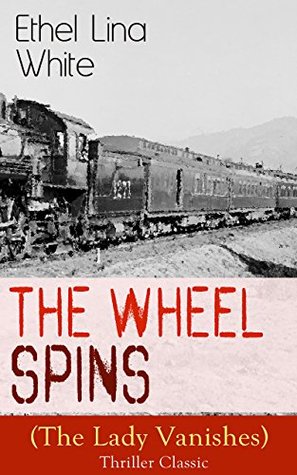
The Wheel Spins by Ethel Lina White

I was re-watching one of my favourite films, Alfred Hitchcock’s The Lady Vanishes, a few weeks ago and it occurred to me that I should probably try reading the book on which it was based – The Wheel Spins by Ethel Lina White, published in 1936. Luckily, I was able to find a Project Gutenberg version available to download, so I could start it immediately while I was in the mood. Now that I’ve read it, I think it’s one of the few cases where, for me, the film is better than the book! I did enjoy reading it, but I was surprised by how different it was and by how many of the elements I love from The Lady Vanishes are not part of the novel.

The Wheel Spins begins with Iris Carr, a young Englishwoman, staying at a small hotel in an unspecified country somewhere in Europe. Her friends have already left but Iris has decided to stay on alone at the hotel for a few more days. On the day she is due to catch the train home, she briefly loses consciousness at the station and assumes she must be suffering from sunstroke. Managing to board the crowded train just in time, Iris finds herself sharing a carriage with several other people, including Miss Froy, an English governess who is also on her way home. Iris accompanies Miss Froy to tea in the dining carriage where she listens to her new friend talk about her recent teaching jobs. After returning to their seats, Iris falls asleep – and awakens to find Miss Froy gone. When the rest of the passengers all deny that Miss Froy ever existed, Iris begins to panic: has the sunstroke affected her more than she’d realised or is something more sinister taking place?

After a slow start in which the author takes her time introducing us to Iris and the other guests at the hotel, all of whom seem to end up on the same train home, things soon pick up with the disappearance of Miss Froy and the efforts Iris makes to try to find out what has happened to her. There are only really two possible scenarios: either Iris has imagined things or everybody on the train is lying – and if they are lying, why? This is where the significance of those early chapters becomes clear as Iris is not the most pleasant of people and makes herself so unpopular with her fellow travellers that it’s easy to see why they don’t feel like helping her. Some of them also have other motives for not wanting to get involved and although I thought this was handled better in the film, the book does still give us a sense of how unsettling all of this is for Iris and how she begins to doubt her own sanity.

As I’ve said, there are so many things I love in the film which don’t appear in the novel: the significance of music to the plot; Charters and Caldicott, the two cricket-obsessed Englishmen determined to get home in time to see the Test Match; the relationship between Iris and the musicologist Gilbert; and the performances of Margaret Lockwood (a much more likable Iris than the one in the book), Michael Redgrave and May Whitty in the leading roles. On the other hand, there are also some interesting aspects of the novel that Hitchcock didn’t include – for example, some occasional glimpses of Miss Froy’s elderly parents at home in England looking forward to their daughter’s return.

Although I think I might have felt more enthusiastic about the book if I had read it first, rather than the other way around, I still enjoyed it and am curious about Ethel Lina White’s other books now.

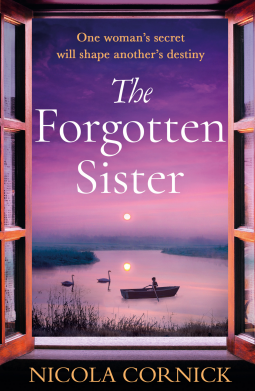
The Forgotten Sister by Nicola Cornick

The Forgotten Sister is the fourth book I’ve read by Nicola Cornick and, like the others (The Phantom Tree, House of Shadows and The Woman in the Lake), it is a dual time period novel with hints of the supernatural.

In the modern day, we meet Lizzie Kingdom, a television presenter and former child star. Having grown up in the public eye, Lizzie has always known how to manage her image and avoid bad publicity, but all of that is about to change with the death of Amelia Robsart. Amelia is the wife of Lizzie’s best friend, Dudley Lester, an ex-boyband member, and when she is found dead at the bottom of the stairs, Lizzie is drawn into the scandal that follows.

If you know your Elizabethan history, you may have already seen parallels here, so it’s no surprise that the historical thread of the novel is set in the 16th century and tells the story of Amy Robsart, trapped in an unhappy and loveless marriage to the courtier Robert Dudley. Everyone knows that the woman Robert really loves is Elizabeth I and he spends more and more of his time at court while Amy stays hidden away in the countryside. History tells us that in September 1560, Amy will be found dead, believed to have broken her neck falling down the stairs. Rumours immediately begin to circulate because, of course, Amy’s death leaves Robert free to marry the queen.

The fate of Amy Robsart remains an unsolved mystery to this day. Was her husband responsible for her death? Was it an accident? Was it suicide? Whatever the answer, we know that Robert Dudley never did marry Elizabeth I. As soon as those rumours began to spread, it became important for her to distance herself from them – which is exactly what Lizzie Kingdom does in the present day timeline of the novel when people begin to wonder whether she and Dudley Lester had something to do with Amelia’s death.

Whenever I read a book set in two time periods, I usually find that one of them appeals to me more than the other. With this book, it was the storyline set in the past. I enjoyed reading about Amy Robsart; I had a lot of sympathy for her as she gradually loses her youthful enthusiasm for life and her hopes for a loving, affectionate marriage and becomes aware that her husband wants very little to do with her. The mystery of Amy’s death is handled in an interesting way and if Nicola Cornick had just concentrated on telling this story and not the one set in the modern day, I would probably have been able to give this book a much more positive review.

Unfortunately, I didn’t like the present day story at all. The characters didn’t quite feel real to me and I think a large part of that was due to their names and relationships seeming so contrived and unnatural. Not only do we have Lizzie Kingdom (corresponding to Elizabeth I), Amelia Robsart (Amy Robsart) and Dudley Lester (Robert Dudley, Earl of Leicester), almost all of the other characters have similar names to their historical counterparts too. When even the Elizabethan noblewoman Lettice Knollys appeared in modern form as Letty Knollys, the wife of one of Dudley Lester’s bandmates, I started to find it all very distracting and I think the whole thing would have worked better for me if the parallels between past and present had been more subtle.

After finishing the book I looked to see what other people thought of it and it seems that most people have loved it, so I think this was probably just a case of book and reader not being right for each other! I enjoyed all of the other Nicola Cornick novels I’ve read, particularly The Phantom Tree, so I will continue to look out for more of her books in the future.

Thanks to HQ for providing a copy of this book for review via NetGalley.