The Big Book of Swashbuckling Adventure, edited by Lawrence Ellsworth

After reading Lawrence Ellsworth’s new translation of the Alexandre Dumas novel The Red Sphinx last year, I discovered that Ellsworth was also the editor of the enticingly titled The Big Book of Swashbuckling Adventure. As a fan of the swashbuckling genre, I knew I would have to read it.

This is certainly a big book, containing eighteen stories and poems written in the 19th or early 20th centuries. Some of them are by well-known classic authors such as Dumas, Arthur Conan Doyle and Baroness Orczy, but some of the others are more obscure – authors who may have enjoyed some success at the time, but have been largely forgotten today. Ellsworth provides a brief introduction to each author’s work, including a short biography and some background information on the story which follows and why he selected it for this collection. All different types of swashbuckling hero are represented: the pirate, the musketeer, the jester, the swordsman, the aristocrat and more.

I’m not going to discuss all of the stories in depth here – there are too many of them – but I will highlight a few favourites and just give the others a quick mention.

One that I particularly enjoyed was Crillon’s Stake by Stanley J Weyman, an author I’ve heard about but have never actually read until now. Set in France in 1587, two men sit down to play a game of dice in which the stakes become higher and higher until they are literally gambling with their lives. The outcome of the game will have surprising consequences, however, as the participants become entangled in a conspiracy against the king.

Another favourite was The Black Death by Marion Polk Angellotti, one of only a few female authors to be featured in the book. This story is part of a series that she wrote about the adventures of the 14th century mercenary captain Sir John Hawkwood. On a journey through the mountains of Italy, Hawkwood tries to protect his men from attack by enemy soldiers, but with the Black Death raging across the country, he could be leading them into a different type of danger instead.

I also enjoyed Pirate’s Gold by H. Bedford-Jones, which was first published in an American ‘pulp magazine’ in the 1920s. George Roberts accepts a position as first mate on a ship sailing to Virginia, The King Sagamore, which is captained by the charismatic Captain Low. It is only when the ship has left port and is out at sea that Roberts discovers his captain is actually the notorious pirate better known as Bloody Ned. This is a much longer story than most of the others in the book – more of a novella, really, which allows more development of storyline and characters – and although I doubt I’ll look for anything else by Bedford-Jones, this was fun to read.

The Sin of the Bishop of Modenstein by Anthony Hope is another fun read, set in the kingdom of Ruritania, the same world as his famous novel The Prisoner of Zenda. In this story, King Rudolf of Zenda gambles away his castle and estate, but when the new owner, Count Nikolas of Festenburg, moves in, he discovers that Rudolf’s sister, Princess Osra, is still there…

I was surprised to find that I had already read some of the pieces in the book. The Cabaret de la Liberté by Baroness Orczy is taken from her collection The League of the Scarlet Pimpernel, which I read a few years ago. I couldn’t really remember this particular Pimpernel story, so I was happy to read it again. I did not re-read White Plume on the Mountain by Alexandre Dumas, which is not actually a standalone story, but a reproduction of several chapters from the end of The Red Sphinx.

For the same reason I didn’t bother with Captain Blood’s Dilemma by Rafael Sabatini, and I only briefly looked at The Fight for Black Bartlemy’s Treasure by Jeffery Farnol, which are also the concluding chapters of full-length novels (Captain Blood and Black Bartlemy’s Treasure respectively). It just seemed an odd decision to include these in a collection of ‘short stories’ and will surely spoil the actual novels for anyone who hasn’t read them. On the other hand, Ellsworth does include the opening chapters of Johnston McCulley’s first Zorro novel, turning them into a story titled Señor Zorro Pays a Visit. This seems a much more sensible way to introduce a new reader to an author’s work!

There’s also a second story by Sabatini (Sword and Mitre, a true standalone this time), and one each by Sidney Levett-Yeats, John Bloundelle-Burton and Harold Lamb. I hadn’t come across any of the last three authors and I found their stories entertaining but forgettable (although Lamb’s is slightly different, being set in India). Finally, there’s a story by Arthur Conan Doyle which features his hero Brigadier Gerard, and a Robin Hood adventure by Pierce Egan. The collection is completed by several short poems, Cheerly O and Cheerly O by Jeffery Farnol, The Buccaneer’s Last Shot by Farnham Bishop and The Pirate Sea by Lilian Nicholson. These are interspersed amongst the stories and add a bit of extra variety.

As is usually the case with anthologies of this kind, the stories and the writing are of mixed quality and I found it quite uneven, especially towards the end. With such a variety of different types of story, though, I think there should be something for almost everyone here.
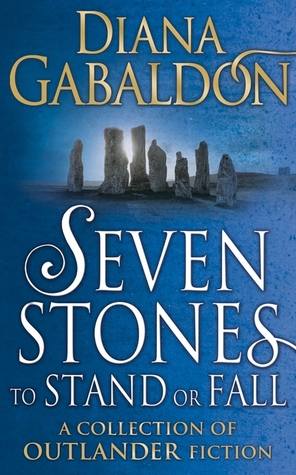
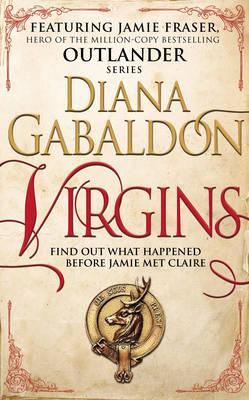
Seven Stones to Stand or Fall by Diana Gabaldon

No, this is not a new novel in Diana Gabaldon’s Outlander series, but a collection of seven stories featuring characters from the series, written over a number of years. The first five have previously appeared in other collections, such as 2013’s A Trail of Fire, or as standalone novellas, but the final two are new ones. I hadn’t really intended to read this book; although I loved the earlier Outlander novels, I’ve been less impressed with the more recent ones, mainly because of the increasing focus on Lord John Grey’s family, and as most of these stories seemed to involve the Lord John characters I wasn’t in any hurry to read them. When I found a copy in the library a few weeks before Christmas, though, I thought I would give it a try in the hope that at least one or two of the stories would interest me – and some of them did, but maybe not the ones I would have expected!

The first story (they are all really novellas rather than ‘short stories’; I don’t think Diana Gabaldon is capable of writing anything that can truly be described as short!) is The Custom of the Army. Lord John gets into trouble at an electric eel party and when he is forced to fight a duel which goes disastrously wrong, he takes the opportunity to escape to Canada to serve as character witness for an officer who is facing a court martial. While he is there he finds himself caught up in the Battle of Quebec of 1759. Despite my general lack of enthusiasm for reading about Lord John, I found the setting interesting and thought this was a good start to the collection.

The next story, The Space Between, is entirely different from the first. It’s set around the time of An Echo in the Bone, I think, and our protagonists this time are Joan MacKimmie (whom readers of the Outlander series will remember as Laoghaire’s daughter) and Michael Murray (one of Jenny and Ian’s sons). Michael is escorting Joan to Paris where she is to become a nun, but on their arrival they become entangled with the sinister Paul Rakoczy, a character who has previously appeared in the series under a different name. I found this story quite enjoyable; it was good to meet some old friends again and also to learn more about the time travel aspects of the series. I think it’s funny that in the first Outlander novel (or Cross Stitch as it used to be called here in the UK), Claire’s ability to time travel seemed to be something unusual, yet by this point in the series almost everyone is doing it!

Now we’re back to Lord John again with Lord John and the Plague of Zombies. This time John is in Jamaica where he has been sent on army business to deal with a slave rebellion in the mountains. When the Governor of Jamaica is found murdered, it seems that a zombie could be responsible for his death…but Lord John knows nothing about zombies so needs to learn quickly. I have to admit, the title of this story was enough to put me off before I’d even read it! These particular ‘zombies’ do have a rational explanation, though, and are only one element of the story. In the overall timeline of the series, this story seems to take place shortly before the events of Voyager, when a certain Mrs Abernathy is still living at Rose Hall…

Next, we have A Leaf on the Wind of All Hallows, which answers the question of what happened to Roger’s father, Jerry MacKenzie, a Spitfire pilot whose plane went down over Northumberland during World War II. This fascinating story, another which involves time travel, gives a different perspective on an episode from Written in My Own Heart’s Blood which we have already read from Roger’s point of view. I enjoyed this one as Roger is one of my favourite Outlander characters and I found it interesting to learn more about his parents.

You may be starting to wonder whether Claire and Jamie appear in any of these stories; sadly, we don’t see anything of Claire (although she is mentioned once or twice), but the next novella, Virgins, does feature a young Jamie Fraser. A straightforward prequel to Outlander, it is set during the period following Jamie’s flogging by Black Jack Randall when he joins his friend Ian Murray in France. This was the biggest disappointment in the collection, for me. It didn’t even feel as though it was written by the same author as the other stories, at least at first, although I can’t put my finger on the reason why. It does pick up halfway through, with a subplot involving the marriage of a young Jewish girl, but I still didn’t like it. I think I’m so used now to an older Jamie that I found it disconcerting to meet him as a nineteen-year-old!

Next comes my favourite story in the book: A Fugitive Green. Set in 1744, this is the story of Lord John Grey’s brother Hal, the Duke of Pardloe, and his future wife, Minnie Rennie. The young Minnie makes a wonderful heroine and I loved this tale of spying, blackmail and family secrets which takes us from Paris to London and back again. Both Hal and Minnie have appeared in other Outlander and Lord John novels, but they are not characters who ever interested me before. This story was a real surprise!

Finally, there’s Besieged, a sort of follow-up to Plague of Zombies. Lord John is still in Jamaica, but has received news that his mother, the Dowager Duchess of Pardloe, is in Havana, which is about to become the centre of a battle between Britain and Spain. Heading for Cuba to rescue her, John finds that he is too late to avoid the British invasion and the siege which follows. Like the other Lord John stories, this is set at an interesting moment in history, but the story itself was not very memorable.

So, they are the seven stories – the ‘seven stones’ of the title. They do all stand alone and it’s not completely necessary to have read anything else by Gabaldon first. However, if you’re new to her work I don’t think this would be a good place to start. I would recommend this book more for existing fans of the Outlander books (in particular, the spin-off Lord John series) who are waiting for the next full-length novel to be published.

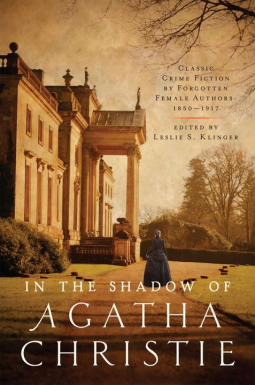
In the Shadow of Agatha Christie, edited by Leslie S. Klinger

Agatha Christie is an author most people have heard of, whether or not they’ve ever read any of her books. Ask someone to think of a female crime writer and she is probably the first name that will come to mind. Christie’s first novel, though, wasn’t published until 1920 – and she was by no means the first woman to write in the crime genre. This new collection of short stories, edited by Leslie S. Klinger, features some of the lesser known women crime writers who came before Agatha and could even have inspired her work.

The book is subtitled Classic Crime Fiction by Forgotten Female Writers: 1850-1917 and although I wouldn’t personally describe all of these authors as ‘forgotten’, there were certainly quite a few whose names were new to me. Of the sixteen stories included in the book, I had already read one of them – A Jury of Her Peers by Susan Glaspell (1917), which shows the different ways in which men and women evaluate the same situation and the different clues they pick up on – but it’s such a good story I was happy to read it again. Other names who may be familiar to many readers are Victorian novelist Elizabeth Gaskell and Scarlet Pimpernel author Baroness Orczy, although the stories included here – The Squire’s Story (1853) and The Regent’s Park Murder (1901) – didn’t particularly stand out to me.

As a fan of Victorian sensation novels, I was intrigued to come across stories by Ellen Wood and Mary Elizabeth Braddon, two authors whose work I’ve loved in the past. The Braddon one, The Winning Sequence (1896), is more of a ghost story than a mystery and I found it disappointingly weak, but Wood’s story, Mrs. Todhetley’s Earrings (1873), was very enjoyable. It is narrated by her young hero, Johnny Ludlow, who is apparently the subject of a whole series of short story collections, although I had never heard of him until now.

Others that I think deserve a special mention include The Statement of Jared Johnson (1899) by Geraldine Bonner, a murder mystery with a twist I’ve come across several times in crime stories recently but which I always find clever, The Ghost of Fountain Lane (1893) by C.L. Pirkis, in which a link emerges between two seemingly unconnected mysteries, and The Case of the Registered Letter by the Austrian author Augusta Groner. There’s also A Point in Morals (1899) by Ellen Glasgow, an unusual story which considers whether murder is always morally wrong, The Blood-Red Cross (1902) by L.T. Meade which features a sinister villain called Madame Sara, and Anna Katherine Green’s Missing: Page Thirteen (1915), an eerie tale of a house with a secret room.

The other authors represented in the book, whose work made less impression on me, are Catherine Crow, Mary Fortune, Harriet Prescott Spofford, Elizabeth Corbett and Carolyn Wells – whose The Adventure of the Clothes-Line (1915) is a parody of a Sherlock Holmes story which I think a lot of readers would enjoy even though I didn’t.

There’s nothing here, in my opinion, which resembles an Agatha Christie story in any way, so the title of this book could be slightly misleading if someone picked it up expecting a selection of Christie-style mysteries. I didn’t find any new authors here that I liked enough to want to explore further, but it was still interesting to read this collection and see how crime fiction has developed over the years.

Thanks to Pegasus Books for providing a copy of this book for review via NetGalley.

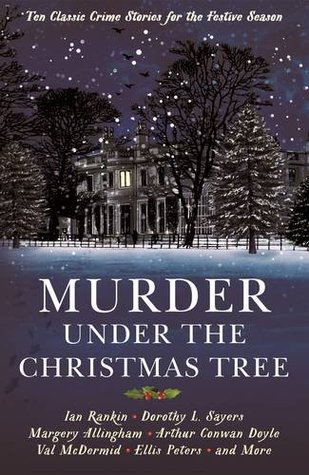
Murder Under the Christmas Tree, edited by Cecily Gayford

Murder Under the Christmas Tree contains ten stories by a variety of crime authors, all with a Christmas theme or set during the festive period. I don’t often choose to read short story collections (although I seem to have read more of them this year than ever before, so maybe that is beginning to change) but I picked this one up in the library a few weeks ago because I was intrigued by the mixture of authors – some modern, some classic, some that I was familiar with and some that I wasn’t.

I’m never sure of the best way to write about books like this, but as there are only ten stories I think I should be able to give all of them a brief mention. The book opens with The Necklace of Pearls, a Lord Peter Wimsey mystery by Dorothy L. Sayers, one of the five authors in the collection I had read before. The story involves a search for a valuable pearl necklace which goes missing as a party of guests gather to celebrate Christmas. I always like Sayers’ writing, but this particular story is not very strong and not a great start to the book, in my opinion. It is followed by The Name on the Window by Edmund Crispin, a locked room mystery set in winter and featuring his detective Gervase Fen. Crispin is another author I have previously read – I highly recommend The Moving Toyshop if you haven’t read it yet – and again, this story is not the best example of his work but it’s still enjoyable and I didn’t guess the solution.

Now we come to one of the authors who were new to me: Val McDermid. Yes, there are some huge gaps in my reading when it comes to more recent crime fiction! A Traditional Christmas is a short and simple murder mystery with a nice twist at the end. I really liked this one, although it felt odd coming straight after Sayers and Crispin – especially as the next story is an even older one: The Adventure of the Blue Carbuncle by Arthur Conan Doyle. This is a classic Sherlock Holmes mystery involving a Christmas goose and a precious jewel. I feel sure I must have read it before, but I couldn’t remember it at all!

The Invisible Man is next: a Father Brown mystery by GK Chesterton. I first encountered Father Brown in a British Library Crime Classics anthology I read earlier this year (Miraculous Mysteries), but I enjoyed this story much more than that one. It made me think about the things we never notice and the things that we do! This is followed by another modern story, Cinders by Ian Rankin. During rehearsals for a performance of Cinderella, the Fairy Godmother is found dead and Rankin’s detective Rebus is called in to investigate. I have never read anything by Ian Rankin before and although there was nothing wrong with this story, I don’t think he’s an author for me.

The next two stories are my favourites. The first, Death on the Air by Ngaio Marsh, is a fascinating story set during the early days of radio. On Christmas morning, ‘Septimus Tonks was found dead beside his wireless set’, presumably having been electrocuted – but was it an accident or was it murder? This is my first introduction to Marsh’s work, but I would love to read more. The next story, Persons or Things Unknown, is by Carter Dickson, a pseudonym of John Dickson Carr. A host entertains his house guests with an atmospheric tale of murder set in the 17th century. I loved it – and again, I will be looking for more by this author.

The penultimate story in the book is Margery Allingham’s The Case is Altered. It’s an Albert Campion mystery and while I had hoped it would be one of the highlights of the book, I found it quite forgettable. The last story, The Price of Light by Ellis Peters, was good but felt out of place in this collection, being a Brother Cadfael mystery set in 1135. I’ve never read anything by Peters before and I liked this enough to want to try one of her full-length Cadfael novels.

This is an uneven collection, then, and I don’t think the mixture of Golden Age, historical and contemporary mysteries really worked. I’m pleased I read it, though, if only because it has given me my first taste of Ngaio Marsh, John Dickson Carr and Ellis Peters. Another book in this series, Murder on Christmas Eve, also edited by Cecily Gayford, has just been published and seems to include many of the same authors.

A Halloween Treat: Six stories by Edgar Allan Poe

It’s been a while since I last read anything by Edgar Allan Poe so I decided to pull my Complete Tales and Poems off the shelf this weekend to re-read a few of his stories. With Halloween on its way, I thought I would concentrate on some of his spooky, unsettling or gothic stories rather than the mysteries, science fiction, essays and other genres which are also included in the collection. Maybe I will write about some of those in a future post, but for now, here are my thoughts on the six stories I’ve managed to re-read over the weekend:

~

Ligeia – This has always been one of my favourite Poe stories. It begins with the narrator describing his beautiful, talented, intelligent wife Ligeia, whom he met in a ‘large, old, decaying city near the Rhine’. When Ligeia dies, the heartbroken narrator retreats to England where he buys and restores an ancient abbey. Marrying again, he brings his new wife, the Lady Rowena, to live with him at the abbey where he prepares for her a chamber which sounds wonderfully sinister and eerie. The rays of the sun and moon fall ‘with a ghastly lustre on the objects within’, in each corner stands ‘a gigantic sarcophagus of black granite’ and an artificial current of wind behind the tapestries gives a ‘hideous and uneasy animation to the whole’.

The story is notable for the unreliability of the narrator and for the inclusion of one of Poe’s poems, The Conqueror Worm.

– 5 Ravens

~

The Masque of the Red Death – This is a story I’ve always found slightly confusing. A prince and a thousand friends (could anyone really have a thousand friends?) lock themselves away in a castle while a terrible plague devastates the rest of the country. The moral of the story seems clear enough to me, but I’m not sure I’ve ever understood all of the symbolism, such as why the prince has seven chambers each decorated in a different colour – That at the eastern extremity was hung, for example in blue — and vividly blue were its windows. That’s maybe why this one has never been a favourite.

– 3 Ravens

~

Metzengerstein – In this story, set in what I assume is medieval Germany, the young Baron Metzengerstein witnesses a horse in a tapestry take on human characteristics: The eyes, before invisible, now wore an energetic and human expression, while they gleamed with a fiery and unusual red; and the distended lips of the apparently enraged horse left in full view his sepulchral and disgusting teeth. Moments later a strange horse appears in his stables outside. Is it just an innocent animal or is it something more sinister? Again, this is not a favourite, but it’s an interesting story with lots of gothic elements.

– 3 Ravens

~

The Oblong Box – I found this the weakest of the stories I’ve read this weekend. The narrator takes passage on a ship from Charleston to New York City and meets an old friend aboard. The friend is accompanied by his wife, his two sisters…and an oblong-shaped box made of pine. I thought it was quite obvious what must be inside the box – and I guessed correctly. The most interesting thing about the story is that the narrator comes to entirely the wrong conclusion!

– 2 Ravens

~

Silence: A Fable – This is a very short story (three pages long in my edition) but one that I’ve always loved, mainly for the language Poe uses to create atmosphere. The story is narrated by a Demon, who is describing a region of Libya where giant water lilies ‘stretch towards the heaven their long ghastly necks’, the river ‘palpitates forever and forever beneath the red eye of the sun’ and ‘strange poisonous flowers lie writhing in perturbed slumber’. With its rhythm and repetition it has the feel of a poem in prose. It was night, and the rain fell; and, falling, it was rain, but, having fallen, it was blood.

As it’s so short, I don’t want to spoil the plot (not that there’s much plot to spoil). Without going into details, I think there are different ways you could interpret this story, but I see it as meaning that while humans may not necessarily be afraid of chaos, noise and destruction, what they fear most of all is complete and utter silence.

5 Ravens

~

The Oval Portrait – Another very short story, at two and a half pages long. Our narrator becomes injured during a journey and takes refuge in a château, a place of ‘gloom and grandeur’. A portrait of a young woman in an oval frame opposite his bed catches his eye and he is fascinated when he learns the tragic story behind it. The similarities between The Oval Portrait and Oscar Wilde’s The Picture of Dorian Gray – and what they each have to say about art and artists – are striking.

– 4 Ravens

~

Have you read any of these? What are your favourite Poe stories?

If I’ve got you in the mood for more Poe, here are some of my older Poe-related posts which you may find interesting:

Mrs Poe by Lynn Cullen

Dragonwyck by Anya Seton (Poe makes a few brief appearances in this one)

The American Boy by Andrew Taylor (the title character is the ten-year-old Poe)

Ulalume: A Poem for Halloween

Small and Spooky (a short story anthology including Poe’s Morella)

Snowdrift and Other Stories by Georgette Heyer

I always love spending time in Georgette Heyer’s world; with duels, masked balls, elopements, high-stakes card games and lively period slang, her novels provide perfect escapism – and based on this collection, so do her short stories. Originally published as Pistols for Two in 1960, Snowdrift and Other Stories contains eleven of Heyer’s tales of Regency romance and adventure plus three additional stories not included in the earlier book.

I found these stories so enjoyable and so much fun, it was tempting to read them all at once, but instead I decided to just dip in and out, reading one or two at a time over the course of a few weeks. This was probably a good idea as many of the stories in the book are very similar, so better in smaller doses, I think! In particular, there are several that deal with young couples eloping with various family members in pursuit and a series of misunderstandings ensuing along the way – and also several involving duels, fought with either pistols or swords, and never quite going according to plan. Most of the stories have a twist or two, which are usually easy for the reader to predict, but come as a complete surprise to the characters!

I don’t want to discuss all fourteen stories here, but I can honestly say that I liked all of them – some more than others, of course. Some of my favourites included Bath Miss, in which a gentleman agrees to escort the daughter of a family friend home from school in Bath, but finds that the girl is not quite what he’d expected; The Duel, which follows a young lady who goes in search of the disreputable Lord Rotherfield to beg him not to shoot her brother; and Hazard, where a nobleman ‘wins’ a friend’s sister in a drunken game of dice and is horrified when he wakes up the next day and finds himself on the way to Gretna Green. Another which stood out, although it wasn’t one I particularly loved, was Night at the Inn. Unlike the others, which are all romances of various types, this one is more of a suspense story in which three guests arrive at a lonely inn one dark, foggy night.

As for the three extra stories – Pursuit, Runaway Match and Incident on the Bath Road (all from the 1930s, I think) – they are very entertaining too, although they suffered slightly from being placed at the end. Speaking as someone who is not usually a fan of short stories, I did really enjoy this book. I prefer her full length novels but, as I’ve said, if you just want a small dose of Heyer – or maybe if you’ve never read her before and don’t want to commit to anything longer – I would recommend giving Snowdrift a try.

Thanks to Sourcebooks for providing a copy of this book for review via NetGalley.

Hemmed In edited by M.R. Nelson

This is another collection of classic short stories edited by M.R. Nelson. I have previously read two of her others – Love and Other Happy Endings and Small and Spooky – and enjoyed them both, so I was looking forward to finding out what was in store this time! Nelson calls her collections ‘taster flights’ because they give us a taste of each author’s writing; this particular book contains only one author (Willa Cather) whose work I have previously read – the other five were new to me. Although the stories are very different, they are all linked by a common theme. The title, Hemmed In, should be a clue as to what that theme is!

The opening story is A Jury of Her Peers (1917) by Susan Glaspell, in which a sheriff and a witness are accompanied by their wives on a visit to a house where, it appears, a woman has murdered her husband. This is a cleverly written story, showing how men and women can perceive the same situation differently. The two wives in the story pick up on things that their husbands would never have noticed and are able to use their own knowledge and experience to understand the misery and oppression that may have led the accused woman to commit murder. I have never read anything by Susan Glaspell before but I’m aware that two of her novels have been published by Persephone and now I’ll have to consider reading them.

Kate Chopin’s A Pair of Silk Stockings (1897) appears next and follows the story of Mrs Sommers, who unexpectedly finds herself in possession of fifteen dollars and the luxury of deciding what to spend the money on. She knows she should be sensible and buy things for her children, but when a pair of beautiful silk stockings catches her eye, she finds it hard to resist. Despite being so short, this is a powerful story about how a woman reacts when given the chance to escape her responsibilities and have just one day to herself.

The next story – probably the most famous of the six – is one that I’ve wanted to read for a while and I’m pleased that I’ve finally had the opportunity. It’s The Yellow Wallpaper (1892) by Charlotte Perkins Gilman, in which a woman is prescribed a rest cure for a ‘nervous complaint’. Spending hour after hour alone in a room at the top of the house, the narrator becomes obsessed with the patterns on the yellow wallpaper because she has nothing else to stimulate her mind. This is a disturbing and unsettling story, but also a fascinating one and I can see why it is considered a feminist classic.

In Little Selves (1916) by Mary Lerner we meet Margaret O’Brien, an elderly woman who is dying and looking back on her earlier life. Not having had any children, she thinks instead about the little girls who were her own younger selves and laments the fact that ‘there’s all those poor dear lasses there’s nobody but me left to remember, and soon there’ll not even be that’. This is an interesting and unusual story by an author I’ve never come across before.

Edna Ferber is yet another author I’ve never read until now and although her story The Leading Lady (1912) is probably my least favourite in this collection, I did still enjoy it. The main character is an actress on tour with a small company and suffering from loneliness and boredom. Like the woman in Kate Chopin’s story, she jumps at the chance to break out and do something different for the day.

Finally, we have a story by Willa Cather, The Bohemian Girl (1912). This one feels slightly different from the previous five as it features a male protagonist, Nils Ericson, who is returning to his hometown after an absence of many years. However, once his sister-in-law Clara Vavrika arrives on the scene and we learn a little bit about her life, I could see why this story had been included along with the others. It’s the longest and most developed story in the book – more of a novella, I would say – and I found it very reminiscent of My Ántonia.

I loved reading Hemmed In. It contains a great selection of stories, all six of which could be considered important works of feminist literature. Of course, I could have read them at any time as they have all been published in other books or are in the public domain and available online, but I wouldn’t have read them all together and that’s what makes M.R. Nelson’s anthologies so good. It’s always interesting to read her thoughts at the back of the book on why she chose each particular story and how it fits with the overall theme. Best of all, I have now been introduced to five new authors, all of whom I would like to explore further!