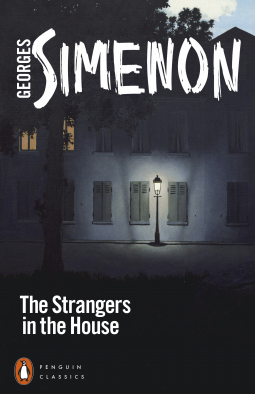
The Strangers in the House by Georges Simenon

Since enjoying my first Georges Simenon book, The Man from London, last year, I’ve been looking forward to reading more. I had intended to try one of his Maigret books next, but the opportunity to read this one came up first; it’s a new Penguin Classics edition of a novel originally published in 1940, The Strangers in the House, and is translated by Howard Curtis. Unfortunately, at 224 pages in the paperback version, it’s just slightly too long to count towards Novellas in November!

The Strangers in the House is one of the many standalone novels written by Simenon that are described as romans dur, or ‘hard novels’. I’m not entirely sure what that term means, but as far as I can tell, it refers to the dark, noirish atmosphere, and the hard, bleak lives that the characters are leading. And the life of our protagonist, Hector Loursat, is certainly bleak! Once a successful lawyer, he fell into a depression when his wife left him eighteen years earlier and turned to alcohol for comfort. Since then, he has spent his time sitting alone with his books and a constant supply of red wine, living in the same house as his daughter Nicole, but barely aware of her presence.

Loursat’s miserable, solitary existence continues until, one night, he hears a gun being fired inside the house and discovers a dead body in one of the bedrooms. When Nicole and her friends become implicated in the murder investigation, Loursat is forced to acknowledge that his daughter is now a stranger to him…or is it in fact Loursat himself who is the stranger in the house?

There’s a detective fiction element to this novel, as Loursat sets out to uncover the truth behind the murder. When suspicion falls on Nicole’s lover, he agrees to defend the young man in court and finds that getting involved in the legal profession again gives him some purpose in life. However, although we see Loursat speaking to the suspects, getting to know Nicole’s circle of friends and learning all he can about the victim, this is not a conventional mystery novel and not one that the reader has much chance of being able to solve. If you’re expecting a story with clever twists and surprises you’ll be disappointed; even the court scenes which take up about half of the book lack suspense.

The book is much more successful as a psychological study of a lonely, reclusive man who is forced to confront his own behaviour and gradually engage with the people and things he has neglected for years. Watching Loursat’s reawakening as he becomes aware of the things that have been going on in his own house without his knowledge is fascinating. Whether or not he finds redemption and whether it’s too late to repair the damage to his relationship with Nicole I will leave you to discover for yourself, if you read the book. All I will say is that Simenon’s storytelling is realistic, unsentimental and ‘hard’.

Have you read this or any of Georges Simenon’s other books? Which can you recommend?

Thanks to Penguin Classics for providing a copy of this book for review via NetGalley.
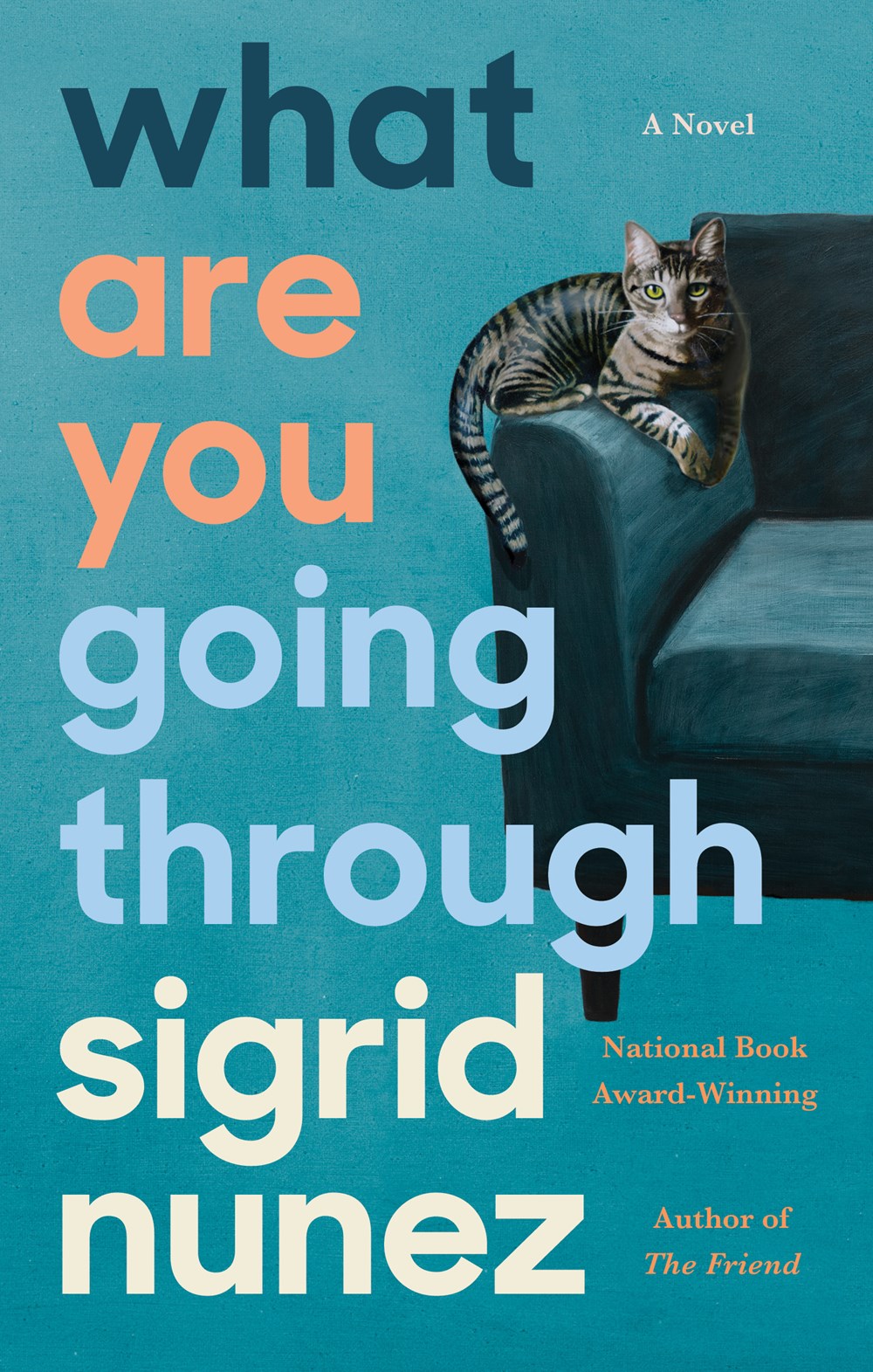
Six Degrees of Separation: From What Are You Going Through to Tomorrow

It’s the first Saturday of the month which means it’s time for another Six Degrees of Separation, hosted by Kate of Books are my Favourite and Best. The idea is that Kate chooses a book to use as a starting point and then we have to link it to six other books of our choice to form a chain. A book doesn’t have to be connected to all of the others on the list – only to the one next to it in the chain.

This month we are beginning with What Are You Going Through by Sigrid Nunez. I haven’t read it and although it does sound interesting, I don’t think it’s my kind of book and I have no plans to read it. Here’s what it’s about:

A woman describes a series of encounters she has with various people in the ordinary course of her life: an ex she runs into by chance at a public forum, an Airbnb owner unsure how to interact with her guests, a stranger who seeks help comforting his elderly mother, a friend of her youth now hospitalized with terminal cancer. In each of these people the woman finds a common need: the urge to talk about themselves and to have an audience to their experiences. The narrator orchestrates this chorus of voices for the most part as a passive listener, until one of them makes an extraordinary request, drawing her into an intense and transformative experience of her own.

In What Are You Going Through, Nunez brings wisdom, humor, and insight to a novel about human connection and the changing nature of relationships in our times. A surprising story about empathy and the unusual ways one person can help another through hardship, her book offers a moving and provocative portrait of the way we live now.

I often struggle to come up with a first link when the starting book is not one that I’ve read and doesn’t have any obvious similarities to other books I’ve read. I’m afraid I’m just going to have to find a connection through the author’s name and link to Kristin Lavransdatter by Sigrid Undset (1). This is actually a trilogy published between 1920 and 1922, but the edition I read included all three in one very long book of over 1000 pages. However, I thought it was definitely worth the time and effort it took to read this fascinating, tragic story of a young woman’s life in 14th century Norway. Sigrid Undset was awarded the 1928 Nobel Prize in Literature “principally for her powerful descriptions of Northern life during the Middle Ages”.

I read Kristin Lavransdatter in a very readable English translation by Tiina Nunnally. Another book by a Norwegian author and originally published in Norwegian is Burned by Thomas Enger (2), translated by Charlotte Barslund. This is the first in a crime series set in Oslo and featuring the journalist Henning Juul. Although I enjoyed it, with a few reservations, I never continued with the rest of the series or any of Thomas Enger’s other books. Maybe I should.

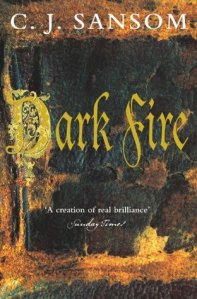
The title Burned makes me think of other titles to do with flames and fires. Dark Fire (3) is the second book in CJ Sansom’s Shardlake mystery series set in Tudor England. ‘Dark Fire’ refers to Greek Fire, a weapon said to be able to destroy a ship in minutes, and in this book Shardlake is searching for the secret formula to produce more of the weapon, while also trying to clear a young girl of a murder accusation. I have read all of the Shardlake novels apart from the newest one and enjoyed them all; this one introduces one of my favourite characters in the series, Jack Barak.

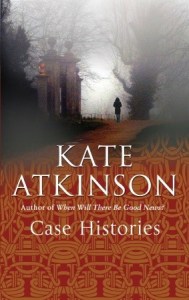
Dark Fire is set during the summer heatwave of 1540. Case Histories by Kate Atkinson (4) opens during a summer heatwave in 1970 during which a little girl disappears while sleeping in a tent in the garden. Private detective Jackson Brodie – who features in another four Atkinson novels after this first one – investigates this and two other historical cases which at first seem to be completely unrelated. As a mystery novel I don’t think this one was particularly strong, but I loved the characters and their personal stories.

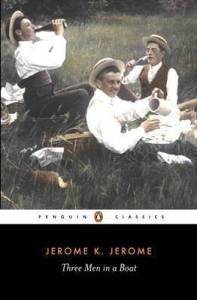
A very different scene involving a tent appears in Three Men in a Boat by Jerome K Jerome (5). This is such a funny, entertaining book; I sometimes pick it up and re-read a few pages if I need to cheer myself up! It follows the adventures of three men who take a boat trip along the River Thames, where everything that can go wrong does go wrong – including a disastrous attempt to put up a tent in the rain!

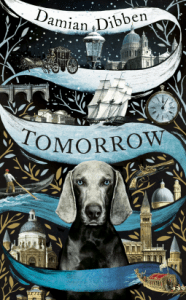
The full title of the above book is Three Men in a Boat (To Say Nothing of the Dog), a reference to the dog Montmorency who accompanies the men on their trip. Tomorrow by Damien Dibben (6) also features a dog – in fact, the narrator is a dog! He’s also over two hundred years old and Tomorrow tells the story of how he and his owner came to live for such a long time, describing some of the events they have witnessed and places they have visited along the way, from the court of Versailles to the battlefield of Waterloo. I can’t really say that I loved this book, but it was certainly different!

~

And that’s my chain for November! My links have included the name Sigrid, Norwegian translations, ‘fiery’ titles, heatwaves, tents and dogs.

In December we’ll be starting with the classic novella Ethan Frome by Edith Wharton, a book I have actually read for once!

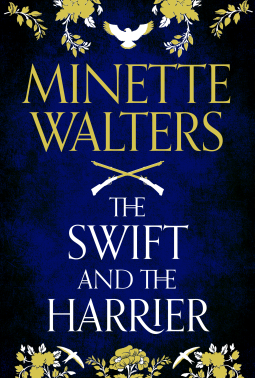
The Swift and the Harrier by Minette Walters

Minette Walters is better known as a crime writer, but she has made some forays into historical fiction in the last few years with The Last Hours and The Turn of Midnight, both set in England during the Black Death of 1348. Although I didn’t love either of those books, I did find them interesting, so I was keen to try her new one, The Swift and the Harrier, which is set in a completely different time period.

It’s 1642 and England is divided by civil war. On one side, the supporters of King Charles I; on the other, the Parliamentarians. In the middle, refusing to commit to either group, is Jayne Swift, a Dorset physician – although, as a woman, she is not allowed to officially give herself that title. The reason for her neutrality is that she values all human lives and doesn’t believe in denying treatment to someone in need just because they are the enemy. Most people, however, do take sides and Jayne finds that there are divisions within her own family.

Visiting her Puritan cousin in Dorchester one day, Jayne finds herself caught up in a crowd gathering to watch the hanging of some Catholic priests. She is rescued by a neighbour, Lady Alice Stickland, who introduces Jayne to her footman, William Harrier. Even on that first meeting, Jayne can’t help feeling that William doesn’t behave at all like a servant and, as their paths cross again and again, she begins to wonder who he really is. Footman, nobleman or soldier? Royalist or Parliamentarian? William is an enigma and Jayne must decide whether he can or cannot be trusted.

The Swift and the Harrier provides a wonderfully detailed depiction of life in the south of England during the Civil War. Real historical characters such as Oliver Cromwell and Prince Maurice (Charles I’s nephew) appear now and then and have a part to play in the story, but the main focus is on the ordinary people of Dorset and the impact the war has on them. I found the section of the book set during the Siege of Lyme Regis particularly interesting as I can’t remember reading much about it before, certainly not in as much detail as this.

However, I had difficulty believing in Jayne Swift as a 17th century woman. While I could maybe accept the premise that she had received some medical training from a male physician friend, I felt it was completely unrealistic that she would be able to practise her medicine so openly in the 1640s. The challenges she faces in getting the men she meets to accept her as a doctor seem to be very easily overcome and there is no sense of the danger Jayne would surely be in due to the witch hunts sweeping England at that time, when women with even a basic knowledge of healing and herbal remedies were at risk of accusations of witchcraft. Although I did find the plot quite gripping and enjoyed getting to know William Harrier and some of the secondary characters such as Alice Stickland, the fact that I found Jayne and her circumstances so unconvincing stopped me from becoming fully absorbed in the story.

Thanks to Allen & Unwin for providing a copy of this book for review via NetGalley.
Book 48/50 read for the 2021 Historical Fiction Reading Challenge.

Nonfiction November Week 1: My Year in Nonfiction

November is always a busy time in the book blogging world and one of the many reading events taking place this month is Nonfiction November. Non-fiction doesn’t form a large part of my reading, but I find that taking part in this event helps me to focus on the non-fiction I’ve read and would like to read, so it’s still worthwhile for me. Each week throughout November, one of the challenge hosts will post a different topic for participants to discuss. I probably won’t have time to join in with all of them, but this week’s topic is an easy one:

Week 1: (November 1-5) – Your Year in Nonfiction with Rennie at What’s Nonfiction: Take a look back at your year of nonfiction and reflect on the following questions – What was your favorite nonfiction read of the year? Do you have a particular topic you’ve been attracted to more this year? What nonfiction book have you recommended the most? What are you hoping to get out of participating in Nonfiction November?

So far this year I have read the following six non-fiction books, a mixture of history, science, biography and self-help:

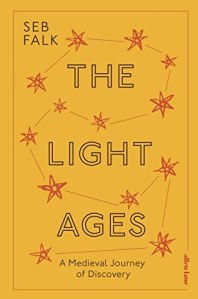
The Light Ages by Seb Falk – a look at the progress of science, philosophy and invention in the medieval period

The Fall of the House of Byron by Emily Brand – a biography of the ancestors of the poet Lord Byron.

The Killer of the Princes in the Tower by MJ Trow – a new solution to one of history’s greatest unsolved mysteries.

The Haunting of Alma Fielding by Kate Summerscale – the story of a woman who claims to be experiencing paranormal events in her London home.

Live Alone and Like It by Marjorie Hillis – a 1930s guide for single women who live alone.

Myself When Young by Daphne du Maurier – the memoir of one of my favourite authors.

Of these, I think the book I enjoyed most was probably Live Alone and Like It. For a book published in 1936, a lot of the advice is still surprisingly relevant today!

This month, although I do have several other non-fiction books on my TBR, I’m going to concentrate on finishing a very long book I started a few weeks ago – Powers and Thrones by Dan Jones.

Are you taking part in Nonfiction November this year?

My Commonplace Book: October 2021 – and rounding up R.I.P. XVI

A selection of words and pictures to represent October’s reading:

commonplace book
noun
a book into which notable extracts from other works are copied for personal use.

~

Ah, happiness courts the light so we deem the world is gay. But misery hides aloof so we deem that misery there is none.

I Would Prefer Not To by Herman Melville (2021)

~

‘Oh, with the link of kindness between master and man quite gone, I begin to see that Hardy is right after all. The vote is all that can give us a voice among these men of wealth and power. They treat the poor like mere machines, left to rust when no longer of use. What kind of life is that? Independence, Laurence, and a dignified freedom. That is what all men seek.’

Black Drop by Leonora Nattrass (2021)

~

Flag of the Isle of Man

It was a warm dusk and people were strolling along the vast promenade enjoying it. The holiday season had started and the town was full of visitors. It all looked very pleasant. Horse-trams clopping along the asphalt, happy crowds milling about, singing popular hits, the sea in front, blue, placid, with the tide out, and behind, the gentle hills of Man, sweeping smoothly down to the waterfront.

Death of a Tin God by George Bellairs (1961)

~

‘You refused to align yourself with Sir John and the Royalist cause, and you treat the rural poor for free. Milady hopes that means you’re on the side of Parliament and the people.’

Jayne gave a surprised laugh. ‘Then I’ll disappoint her as badly as I disappointed her brother. I support men and women who seek an end to division, not those who look to make it worse.’

The Swift and the Harrier by Minette Walters (2021)

~

Have less to do with the demands of the world. This world is but a thoroughfare and full of woe, and when we depart from this place, we take nothing with us but our deeds, good or ill, that will be remembered after us. No man knows how soon God will call him and therefore it is good for every creature to be ready.

The Royal Game by Anne O’Brien (2021)

~

It’s a curious moment, when a problem that has troubled you so much suddenly starts to make sense.

A Fatal Crossing by Tom Hindle (2022)

~

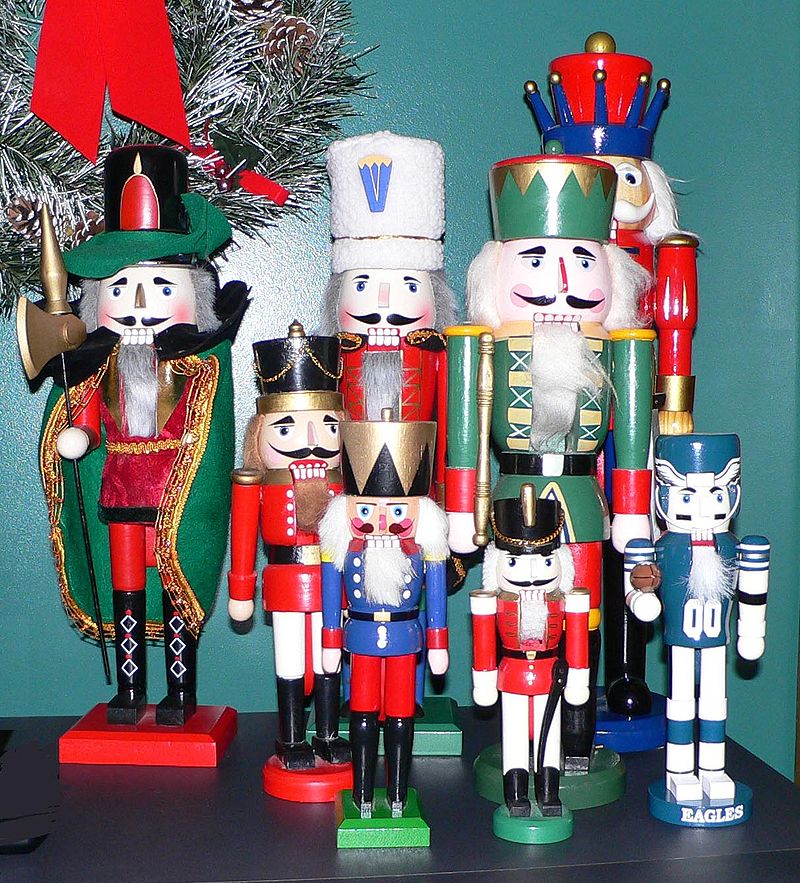
Traditional nutcrackers

When she danced, she flew on gossamer wings that lifted her away from the dragging weight of her family’s expectations. Enticed her with a glimpse of an alternate path to the one she was obligated to tread. When she danced, she had a voice. And nothing was more fearsome than a silent future.

Midnight in Everwood by MA Kuzniar (2021)

~

“It often seems to me that’s all detective work is, wiping out your false starts and beginning again.”

“Yes, it is very true, that. And it is just what some people will not do. They conceive a certain theory, and everything has to fit into that theory. If one little fact will not fit it, they throw it aside. But it is always the facts that will not fit in that are significant.”

Death on the Nile by Agatha Christie (1937)

~

Dreams, Lily decided, played a part in almost everything. They could turn the past into the future. They could send you forth on a path you had once thought of but never dared to take – until now, in the tangled mathematics of your brain, dreams can sometimes lay before you equations which are perfect and correct.

Lily by Rose Tremain (2021)

~

Happiness often seems a thing of the past, understood only when it is gone.

Castle Barebane by Joan Aiken (1976)

~

Favourite books read in October:

Castle Barebane and A Fatal Crossing

Authors read for the first time in October:

Leonora Nattrass, Joan Aiken, Herman Melville, MA Kuzniar, Tom Hindle

Places visited in my October reading:

England, France, Isle of Man, USA, Scotland, Egypt, the Atlantic Ocean

~

Have you read any of these books? What are you planning to read in November?

~

The end of October also means the end of this year’s R.I.P. XVI event, which involved reading dark and atmospheric books between 1st September and 31st October. Here’s what I managed to read:

1. Carmilla by Sheridan Le Fanu
2. The Mummy Case by Elizabeth Peters
3. Crooked House by Agatha Christie
4. The Grey King by Susan Cooper
5. Death of a Tin God by George Bellairs
6. Castle Barebane by Joan Aiken
7. Black Drop by Leonora Nattrass
8. Death on the Nile by Agatha Christie

I’m happy with my R.I.P. reading this year, although I didn’t have time for all of the books on my original list. Some will now have to be winter reads instead of autumn ones!

Did you take part in R.I.P. XVI? How did you do?

Midnight in Everwood by MA Kuzniar

If you’re looking for a different kind of Christmas read this year, Midnight in Everwood could be it. This retelling of The Nutcracker will whisk you away to a fantasy land of snow and sugar and will be best read in front of a fire with a hot drink on a cold day. Sadly, I didn’t like it as much as I’d hoped to but I know other readers will enjoy it much more than I did (and judging by the early reviews, they already are).

The novel opens in Nottingham in 1906, where twenty-year-old ballet dancer Marietta Stelle is hoping to audition for a prestigious ballet company. Her parents, however, have other plans for Marietta; they want her to give up dancing and settle down into a conventional and respectable married life. The husband they have in mind is their new neighbour, the inventor Dr Drosselmeier, who has been delighting everyone with his wonderful clockwork toys – everyone except Marietta, who senses something cold and cruel behind Drosselmeier’s charming exterior. Trying to escape from Drosselmeier’s unwelcome attentions on Christmas Eve, Marietta hides inside a grandfather clock, but when the clock strikes midnight she finds herself trapped within the enchanted, snow-covered land of Everwood.

This book is being marketed as children’s author MA Kuzniar’s debut adult novel – ‘The Nutcracker for adults’ – but I think this is misleading as it feels much more like a book for teenagers. There’s nothing wrong with that, of course, but it’s not what I expected and the book lacked the depth I would have preferred. I also found the writing style much too flowery; there are long descriptions of clothes and food and every sentence is packed with adjectives and similes, most of them related to cakes and sweets – voices are ‘smooth and rich as buttercream’, eyes are the colour of ‘butterscotch’ and expressions ‘soften like melted chocolate’. The sugary theme continues throughout the entire book and while I found it quite captivating at first, my senses began to feel overwhelmed with sights, tastes and smells! I can see, though, that this is exactly what other people loved about the book, so it really does depend on the individual reader.

On a more positive note, it was interesting to read a book set in Edwardian Nottingham, rather than the usual London. I wished we had seen more of that setting, but the majority of the story takes place in the magical land of Everwood (which is reached in a way that reminded me of The Lion, the Witch and the Wardrobe). Although Everwood seems enchantingly wonderful at first and a safe haven in which Marietta can hide from the sinister Drosselmeier, it quickly becomes clear that it is more of a prison, making this a dark Christmas read rather than a happy, festive one. The friends Marietta makes in Everwood – Dellara the fairy and Pirlipata, princess of Crackatuck – are imprisoned there too, and there is a feminist thread running through the story, exploring the various constraints on women’s lives, both in the fantasy world and in the real one.

I have to confess, I’ve never actually read the original ETA Hoffmann Nutcracker story or the Alexandre Dumas one on which the famous ballet is based. Maybe if I had, I would have appreciated this novel more, although I would still have struggled with the sweet and sugary writing style which just wasn’t for me at all.

Thanks to HQ for providing a copy of this book for review via NetGalley.

Death on the Nile by Agatha Christie

This month’s theme for Read Christie 2021 is ‘a story set on a mode of transport’. There are plenty of those to choose from and I’ve already read a few of them – Murder on the Orient Express, Death in the Clouds and The Mystery of the Blue Train – but I decided to read a book I’ve never read before, one of Christie’s most famous novels, the 1937 Poirot mystery Death on the Nile.

When Linnet Ridgeway, a beautiful heiress, is found shot dead in her cabin during a cruise along the Nile, there are two suspects with obvious motives. One is her husband, Simon Doyle, who will inherit her money on her death; the other is Simon’s former fiancée Jacqueline de Bellefort, who was left heartbroken by Simon and Linnet’s marriage and has followed them on to the steamer Karnak, threatening revenge. However, both Simon and Jacqueline have alibis, so Hercule Poirot, also touring the Nile on the same cruise, is forced to turn his attention to the other passengers – many of whom, it seems, are hiding secrets of their own and could also have reasons to want Linnet dead.

As it happens, another of Christie’s detectives, Colonel Race (whom I recently met in Sparkling Cyanide), soon arrives onboard the Karnak, on the trail of a man suspected of terrorism. Although it seems unlikely that this will be the same person who killed Linnet, Race joins Poirot in the search for the murderer. It was interesting to see them working together – this is Poirot’s book, of course, and he is the one who solves the mystery, but Race makes some useful contributions and his presence in the story means that Poirot can share some of his theories and thought processes with him (and therefore with the reader).

Knowing that this is one of Christie’s most popular books, I expected to love it but, although I did enjoy it, I don’t think it’s a favourite. That’s partly because I thought the characters, with only one or two exceptions, were a particularly unpleasant, privileged and entitled group, so I didn’t have much sympathy for either the victim or any of the people who found themselves under suspicion! Also, I guessed who had committed the crime almost immediately – before it happened, in fact – which took away some of the fun. I don’t think it was necessarily a particularly easy mystery to solve; I feel as though I’ve read another book recently (maybe not a Christie one) based on a similar idea and once I had that idea in my head, it seemed quite obvious who had done it. What I couldn’t work out was exactly how it was done, so I was still kept in suspense waiting for Poirot to explain it.

Next month’s Read Christie theme is ‘a story set after WWII’. This will mean any Christie novel published after 1945; I’ve already read a lot of them, but any suggestions are welcome!

Book 8 for R.I.P. XVI