Six Degrees of Separation: From Eats, Shoots & Leaves to The Diary of a Provincial Lady

It’s the first Saturday of the month which means it’s time for another Six Degrees of Separation, hosted by Kate of Books are my Favourite and Best. The idea is that Kate chooses a book to use as a starting point and then we have to link it to six other books of our choice to form a chain. A book doesn’t have to be connected to all of the others on the list – only to the one next to it in the chain.
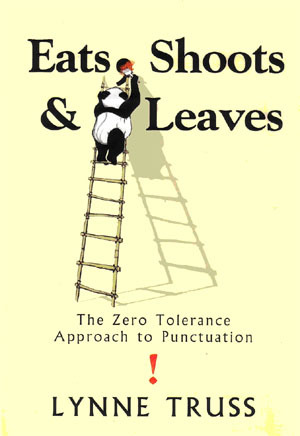
This month we’re starting with Eats, Shoots & Leaves by Lynne Truss. I own a copy of this non-fiction book about the importance of punctuation and read it years ago. I was working as a proofreader at the time, so it was quite appropriate! Here is the description from Goodreads:

Everyone knows the basics of punctuation, surely? Aren’t we all taught at school how to use full stops, commas and question marks? And yet we see ignorance and indifference everywhere. “Its Summer!” says a sign that cries out for an apostrophe, “ANTIQUE,S,” says another, bizarrely. “Pansy’s ready,” we learn to our considerable interest (“Is she?”), as we browse among the bedding plants.

In Eats, Shoots & Leaves, Lynne Truss dares to say that, with our system of punctuation patently endangered, it is time to look at our commas and semicolons and see them for the wonderful and necessary things they are. If there are only pendants left who care, then so be it. “Sticklers unite” is her rallying cry. “You have nothing to lose but your sense of proportion – and arguably you didn’t have much of that to begin with.”

This is the book for people who love punctuation and get upset about it. From the invention of the question mark in the time of Charlemagne to Sir Roger Casement “hanged on a comma”; from George Orwell shunning the semicolon to Peter Cook saying Nevile Shute’s three dots made him feel “all funny”, this book makes a powerful case for the preservation of a system of printing conventions that is much too subtle to be mucked about with.

Punctuation used incorrectly or not at all is something that always annoys me. Rather than single one book out for criticism, I’m going to move away from the subject of punctuation entirely and continue the chain with a completely different link. The cover of Eats, Shoots & Leaves has a ladder on it and this reminds me of the title of a John Boyne book I enjoyed a few years ago: A Ladder to the Sky (1), a novel about an aspiring author who can’t think of any stories of his own so decides to steal other people’s. John Boyne is an Irish author and I read this book in March 2019 for the Reading Ireland Month hosted every year by Cathy and Niall.

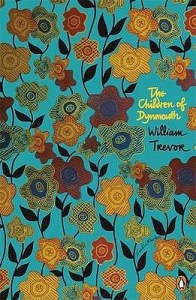
For a previous Reading Ireland Month in 2016, I read The Children of Dynmouth by William Trevor (2). This dark and unsettling novel is set in an English seaside town in the 1970s and follows the story of Timothy Gedge, a lonely and disturbed teenager who wanders the streets of Dynmouth intruding into the lives of people who don’t want him there.

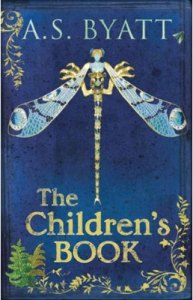
Another book with ‘children’ in the title is The Children’s Book by AS Byatt (3). I loved this long and complex novel about the Wellwood family and all the social and cultural changes going on in the world around them during the late Victorian and Edwardian periods. One of the main characters, Olive Wellwood, is a writer of fairy tales and some of the stories she writes for her children are incorporated into the novel.
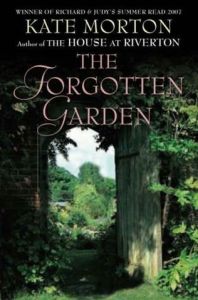
The Forgotten Garden by Kate Morton (4), a novel with multiple narratives and settings, moving between England and Australia and covering a period of more than a hundred years, also features a character who is a writer of fairy tales. Her name is Eliza Makepeace and some of her tales are also included in the novel. The title of the book refers to a house on the coast of Cornwall with a hidden walled garden, surely inspired by The Secret Garden by Frances Hodgson Burnett.

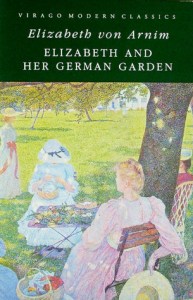
I can think of quite a few other novels about gardens or featuring a garden, but the one I’m going to link to is Elizabeth and Her German Garden by Elizabeth von Arnim (5). This novel from 1898 is written in the form of a diary in which the narrator takes us through a year in her life, describing all the changes she sees in the garden of her home in northern Germany.

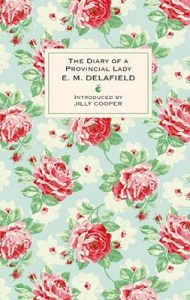
I’m going to finish my chain with another novel written in diary form: The Diary of a Provincial Lady by EM Delafield (6). I had put off reading this for a long time because I wasn’t sure it would be my sort of book, but I enjoyed it much more than I thought I would – a perfect choice if you’re in the mood for something light and funny! I must read the other Provincial Lady books soon.

~

And that’s my chain for this month. My links have included ladders, Irish authors, the word children, fairy tale writers, gardens and diaries.

In August we will be starting with Postcards From the Edge by Carrie Fisher.

My Commonplace Book: June 2021

A selection of words and pictures to represent June’s reading:

commonplace book
noun
a book into which notable extracts from other works are copied for personal use.

~

There are moments in life, so monumental and still, that the memory can never be retrieved without a catch to the throat or an interruption to the beat of the heart. Can never be retrieved without the rumbling disquiet of how close that moment came to not having happened at all.

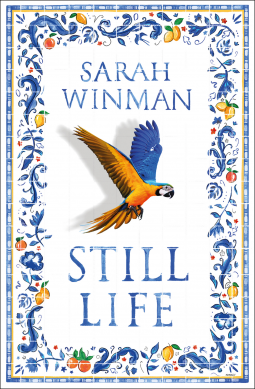
Still Life by Sarah Winman (2021)

~

He leaned forward. ‘Jonah, are you well?’

The oarsman lifted his grizzled face and there was moisture in his eyes. ‘I may be, but my city ain’t. There is a madness here, the like of which I have never seen in all my years on this river. The pride that people wear like a badge, the certainty they are right and the other man is wrong, on both sides, it is a black sin that eats at us all. And it can only lead to great sorrow.’

The Wrecking Storm by Michael Ward (2021)

~

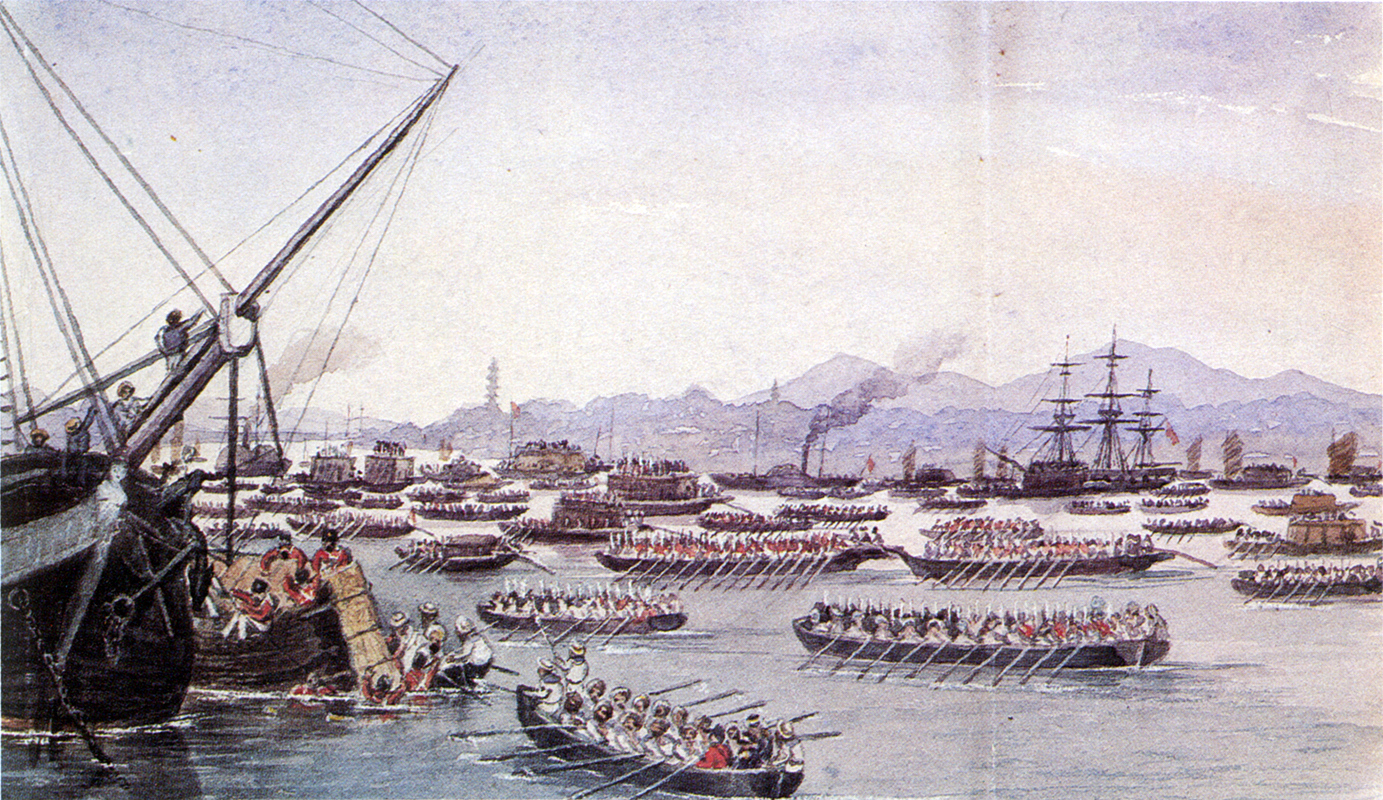
First Opium War – Canton, May 1841

‘I don’t believe in single causes, Trader. Black and white, good versus evil. Real life isn’t like that. Historians in the future will find all kinds of things going on here at the same time, some of which may even be random chance. If historians can discern any pattern, it will probably be complex, a system in flux, like the sea.’ He smiled. ‘God made the universe, Trader, but that doesn’t mean He made it simple.’

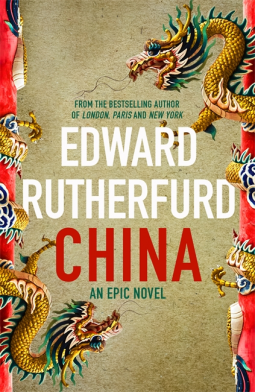
China by Edward Rutherfurd (2021)

~

‘And, of course, yes, I’m very ordinary. An ordinary rather scatty old lady. And that of course is very good camouflage.’

Nemesis by Agatha Christie (1971)

~

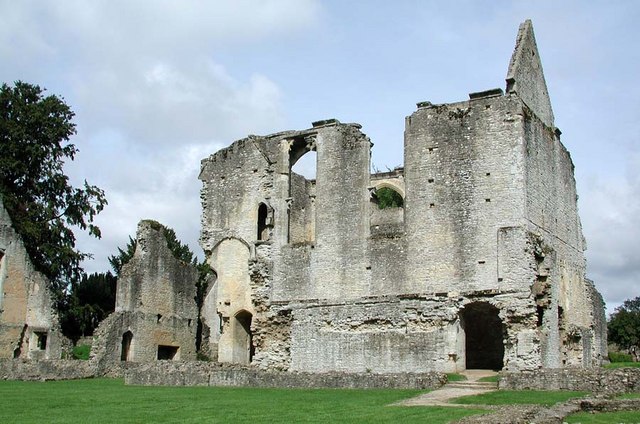
Minster Lovell Hall, Oxfordshire

‘I am almost eleven,’ I said, ‘and I know things because I watch and listen. I think on things. It is not a pastime reserved for men.’

‘It’s uncommon,’ Francis said. Then, with a gleam of amusement in his eyes, ‘In anyone, man or woman. We would all be spared a great deal if men thought first and acted second.’

The Last Daughter by Nicola Cornick (2021)

~

Favourite book read in June:

China

Authors read for the first time in June:

None this month

Places visited in my June reading:

China, Italy, England

~

This was another slow month for me in terms of number of books finished, but I did enjoy everything I read, which I think is much more important!

Have you read any of these? What did you read in June and do you have any plans for July?

Nemesis by Agatha Christie

This month, for Read Christie 2021, the theme is ‘a story featuring a garden’ and the suggested title is Nemesis, a late Miss Marple mystery published in 1971.

Nemesis is an unusual Marple novel because for the first half of the book it’s not really clear what the mystery is that she’s trying to solve. All we do know is that Mr Rafiel, a rich man whom Miss Marple met previously in A Caribbean Mystery (which I haven’t read), has died, leaving her a large sum of money in his will on the condition that she must agree to investigate a crime for him. The only problem is, he doesn’t tell her what sort of crime it is or what she will need to do – only that he remembers her flair for justice and her nickname ‘Nemesis’.

Intrigued by Mr Rafiel’s request and tempted by the money, Miss Marple decides to accept the mission – and promptly receives an invitation to join a tour of Britain’s historic houses and gardens. During the tour she gradually uncovers the details of a crime committed several years earlier and discovers at last what Mr Rafiel wants her to do.

I don’t really want to say much more about the plot of this particular Christie novel because I think part of the fun is in wondering what the mystery is going to be and which of the people Miss Marple meets on the tour are going to be involved in it. Once the crime is revealed and she is able to start her investigations, it becomes more of a conventional mystery novel and I don’t think it’s as strong as some of the other Marples. Several of the clues seemed very obvious and I was able to solve some of it (although not all of it).

I was pleased to find that Miss Marple is present in the story from the beginning all the way through to the end; I’ve often complained that she appears too briefly, so it was nice to spend an entire novel with her this time. I loved the way she uses her apparent absent-mindedness, frailty and ‘twittering’ to fool the people around her into thinking she is a harmless, silly old woman, while all the time her brain is working away, storing information, making observations and staying one step ahead of everyone else. I should warn you, though, that she does express some disturbing views on the subject of rape – views that, unfortunately, a lot of people still hold today. Apart from that, this is an entertaining, if not particularly outstanding, Marple novel and it looks as though I’ll be reading another one soon as July’s selection is Murder at the Vicarage.

Mystery and intrigue in the seventeenth century

Looking at the historical fiction I have read so far this year, it seems that the 17th century is displacing the Tudor, Victorian and early 20th century periods as the most common historical setting for my reading. Here are my thoughts on two more 17th century novels I’ve read recently, both of them historical mysteries.

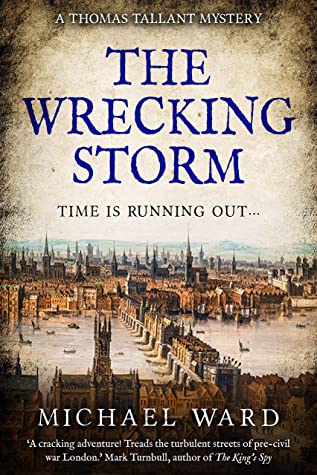
The Wrecking Storm is the second book in Michael Ward’s Thomas Tallant series, following the adventures of a London spice merchant’s son in pre-civil war England. You could read this book without having read the first one, Rags of Time, but if you do read them in order you’ll have a better understanding of the background of the characters, their relationships and the political situation in England at that time.

The novel opens in 1641 with the murder of two Jesuit priests, one of whom was known to have been in hiding in a building close to the Tallant warehouse on the banks of the River Thames. Thomas Tallant’s friends, Member of Parliament Sir Barty Hopkins and Robert Petty of the Merchant Adventurers, ask for Tom’s help in catching the culprit, but before investigations have progressed very far, Tom finds that his own family has become the next target. Joining forces again with another friend, Elizabeth Seymour, Tom must find out who is responsible before the family business is ruined or one of the Tallants is killed.

I enjoyed the mystery element of the book and was surprised when the truth was revealed as I’d had no idea who was behind the attacks on the Tallant family! It was nice to see Elizabeth play such a big part in the investigations; her intelligence, puzzle-solving skills and interest in science and mathematics make her a better detective than Tom himself and her observations and suggestions prove invaluable to the solving of the mystery. I was particularly intrigued by her encounters with Lucy, Countess of Carlisle, a real historical figure who was also involved in political conspiracies during the civil war (and who I’ve discovered may have been the inspiration for Milady in The Three Musketeers).

As with the first book, the historical context was as interesting as the mystery. The story unfolds during the sitting of the Long Parliament, the execution of the Earl of Strafford and Charles I’s attempt to arrest five Members of Parliament in the House of Commons. The conflict between King and Parliament is mirrored by the turmoil on the streets of London where opposing political and religious groups and unruly mobs of apprentices are creating a dangerous and unsettling atmosphere.

The Wrecking Storm is a short, fast-paced read; I think I slightly preferred the longer Rags of Time, but both books are entertaining and I hope to meet Tom and Elizabeth again soon.

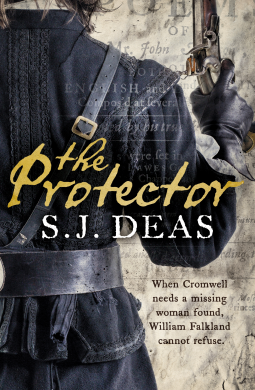
The Protector by SJ Deas is a sequel to The Royalist, which I read several years ago and enjoyed. This second book was published in 2015 and there have been no more in the series since, which is disappointing but it seems the author has moved on to other things.

Anyway, The Protector continues the story of William Falkland, a former Royalist soldier who has reluctantly found himself in the service of Oliver Cromwell. It’s 1646, the First Civil War is over (the Second will begin within two years), and Henry Warbeck, Cromwell’s man, has again approached Falkland to ask for his assistance with another investigation. Anne Agar, sister of John Milton, the epic poet and writer of political pamphlets, has disappeared and Cromwell believes she has been abducted by Royalists in an attempt to convert the pro-Parliamentarian Milton to their cause.

Falkland is less than enthusiastic about taking on this mission; after four years of war he no longer feels any strong allegiance to either side and just wants to go home to his wife and children. However, that’s easier said than done, as he returns to find his house abandoned and his family missing, with no idea where they have gone or why they have left. Hoping that Cromwell will help him to locate his own family in return for tracking down Anne, Falkland sets out on her trail – but the biggest obstacle in his way turns out to be Milton himself, who takes an instant dislike to Falkland and is unwilling to cooperate.

As well as being an interesting and compelling mystery novel, The Protector is also quite a sad and poignant portrayal of the human cost of war, with families left divided, destroyed and separated once the fighting ends. William Falkland is a sympathetic and tragic hero as, lost and lonely, he begins the hunt for Anne Agar while despairing of ever finding his own beloved Caro. I was pleased to see him team up again with Kate Cain (whom we first met in The Royalist), but at the same time I was glad that Deas doesn’t push them into a romance, leaving us in no doubt that William is still devoted to Caro and the children and will continue his search unless and until there is no hope left. I enjoyed this book nearly as much as the first one and would love to know what the future holds for William Falkland, but sadly it looks as though we’re not going to find out.

~

Have you read either of these books – or any other good historical mysteries set in the 17th century?

Books 29 and 30/50 read for the 2021 Historical Fiction Reading Challenge.

Historical Musings #66: June 2021

It’s been a few months since my last Historical Musings post, so I thought I’d start by taking a look at what’s going on in the world of historical fiction and then give an update on my own current reading.

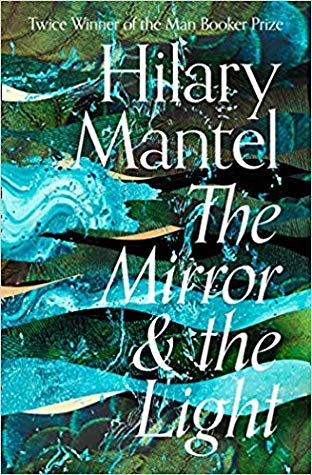
First of all, the winner of this year’s Walter Scott Prize for Historical Fiction has been announced. Congratulations to Hilary Mantel and The Mirror and the Light!

There were five shortlisted titles this year and I’m sorry to say that so far I have only managed to read one of them…

The Tolstoy Estate by Steven Conte
A Room Made of Leaves by Kate Grenville
The Mirror and the Light by Hilary Mantel
Hamnet by Maggie O’Farrell
The Dictionary of Lost Words by Pip Williams

The one that I read was Hamnet and I’m quite surprised that it didn’t win. I wasn’t really a fan (I know I’m in a minority there) but I thought it was the sort of book the judges would go for.

Although I haven’t read The Mirror & the Light, I’m sure it’s a deserving winner. I did actually start to read it last year and enjoyed what I read, but it was a victim of my pandemic-induced reading slump at that time and I found it impossible to concentrate on such a long and complex novel. I have every intention of picking it up again soon!

This means that Hilary Mantel has now won the Walter Scott Prize twice, with two of the books in her Thomas Cromwell trilogy: Wolf Hall in 2010 was the other, although Bring Up the Bodies lost out in 2013 to Tan Twan Eng’s The Garden of Evening Mists.

~

Last week also brought some more sad news for historical fiction readers; not only did we lose Sharon Penman earlier this year, the family of Lucinda Riley announced on 11th June that Lucinda had died following a four year battle with cancer. Not all of her novels were historical, but most featured dual timelines covering a wide range of historical periods and settings. I recently reviewed her latest novel, The Missing Sister. For those of you who have been following the Seven Sisters series, here’s a recent interview in which Lucinda talks about her research for the new book: https://www.youtube.com/watch?v=rrzJyFMOjxQ

~

My current historical reading:

I have just finished The Wrecking Storm, the second book in Michael Ward’s Thomas Tallant mystery series set in 17th century London during the events leading to the Civil War, and am now reading Alison Weir’s Katherine Parr, the Sixth Wife, the last of her Six Tudor Queens novels. The next book I’m planning to start is Red Adam’s Lady by Grace Ingram, which is on my 20 Books of Summer list. I think it’s already safe to say that I’m not going to read all twenty books on that list before September, so I’m going to focus on the ones I’ve been most looking forward to reading.

New to my historical TBR this week:

Mrs England by Stacey Halls (set in the Edwardian era) which was published earlier this month, and The Swift and the Harrier by Minette Walters (set in the 1640s), via NetGalley, due to be published in November.

~

Have you read any good historical novels lately? Which book do you think should have won the Walter Scott Prize?

Still Life by Sarah Winman

I picked up Sarah Winman’s new novel, Still Life, with vague memories of enjoying one of her earlier books, When God Was a Rabbit. That was ten years ago and although she has had two other books published since then, I never got round to reading either of them. The pretty cover of Still Life caught my eye and the Italian setting sounded appealing, so I thought I would give this one a try.

The novel opens in wartime Tuscany in 1944 with a chance meeting between two very different people: Evelyn Skinner, almost sixty-four years old, is an art historian who has come to Italy to try to salvage important works of art; Ulysses Temper is a young British soldier, formerly a globe-maker from London. As the Allies advance across Italy, a brief friendship forms between Evelyn and Ulysses before they are parted and return to their separate lives.

For most of the novel, we follow Ulysses and his friends, first back at home in London and later in Florence, where some of them decide to relocate after the war. There’s Ulysses’ ex-wife, the talented but troubled Peg and her young daughter, Alys; Col who runs the Stoat and Parrot pub and Pete the pianist; Old Cress, who talks to trees and has visions which have a habit of coming true; and a Shakespeare-quoting blue parrot called Claude. It took me a while to warm to these characters, but eventually I became quite fond of some of them, particularly Cress and Alys. None of them are perfect – they all have their flaws and all make mistakes – but they feel like real and believable human beings.

Evelyn, though, appears only occasionally after that opening scene and we have to wait almost until the end of the novel to hear her story – by which time I found I’d lost interest in her and would have preferred to continue reading about Ulysses and the others. Evelyn’s story, which should have been fascinating as it involved a meeting with EM Forster and a pre-war romance with an Italian maid, felt as if it had been squeezed into the end of the book as an afterthought and in my opinion would have worked better if it had unfolded gradually alongside the other storylines.

The novel is beautifully written, there are some lovely descriptions of Florence and the influence of Forster’s A Room With a View can be seen in several different ways throughout the story. With a timespan of several decades, Winman also writes about various historical events that take place during that period; for example, there’s a memorable section set during the devastating flood of the Arno river in 1966. Unfortunately, there was one thing I really disliked about Winman’s writing in this book – and that was the lack of speech marks. I’m never sure what authors are trying to achieve in leaving out basic punctuation. A more ‘literary’ style? A stream of consciousness feel? Whatever it is, it never works for me and I end up just finding it distracting and annoying.

Still Life wasn’t completely successful with me, then, but I did enjoy getting to know the characters and spending some time in Italy in virtual form, which is the closest I will get to a holiday abroad this year!

Thanks to 4th Estate for providing a copy of this book for review via NetGalley.

Book 28/50 read for the 2021 Historical Fiction Reading Challenge.

Book 1/20 of my 20 Books of Summer 2021

China by Edward Rutherfurd

I loved this! It’s been a long time since Edward Rutherfurd’s last novel was published (Paris in 2013), but China is so good I think it’s definitely been worth the wait. It’s slightly different from his earlier novels – all of which I have read and enjoyed – because whereas those previous books follow the history of a country, city or region over a period of many centuries, this one covers a much shorter period, telling the story of China in the 19th century. At nearly 800 pages, that decision to concentrate only on one century allows for more character development and more time spent exploring each historical event or incident in detail.

Beginning in 1839, the first few sections of the novel deal with the First Opium War, taking us through the complicated background to this conflict from the perspectives of several different characters: Shi-Rong, secretary to Commissioner Lin, the man responsible for trying to end the illegal import of opium into China; John Trader, a British merchant who has become involved in the opium trade to improve his financial situation so that he can marry the woman he loves; Nio, a Chinese pirate and opium smuggler; and John’s cousin Cecil Whiteparish, who is a missionary. This range of viewpoints helps to build a full picture of the events leading to the Opium Wars and what happens in the aftermath. These characters and their families appear again and again throughout the novel as the years go by and they are drawn into other key events such as the Taiping Rebellion and the Boxer Uprising.

In a novel of this length, it was inevitable that I would find some parts much more interesting than others – for example, the chapters involving Nio’s adopted sister Mei-Ling who makes the decision to have her little girl’s feet bound while her husband is in America working on the railroads were particularly compelling. However, my favourite sections of the book were those narrated by ‘Lacquer Nail’, a eunuch in the service of the Empress Dowager Cixi. I’m not sure whether it’s because Lacquer Nail is the only character whose story is told in the first person instead of third, but he really comes to life in a way that some of the others don’t. I could have read a whole book about his adventures alone.

Like all of Rutherfurd’s novels, this one is clearly the result of a huge amount of research; as well as the coverage of major political and military events, we are given lots of fascinating little snippets of information on Chinese folklore, crafts such as calligraphy and pottery, and the details of the tea ritual and other traditions. There are also some beautiful descriptions of the various locations in which the action takes place, including Guangzhou (Canton), Hong Kong, Macao and, in Beijing, the Forbidden City and the Summer Palace. I think anyone with even the slightest curiosity about China, its history, geography and people, will find a lot to interest them in this book – just be aware that it’s quite a commitment and will take a while to get through, even for the fastest of readers!

If China doesn’t appeal, I can highly recommend almost any of Edward Rutherfurd’s other books, particularly Sarum, Russka and his two novels about Ireland.

Thanks to Hodder & Stoughton for providing a copy of this book for review via NetGalley.

Book 27/50 read for the 2021 Historical Fiction Reading Challenge.