It’s the first Saturday of the month which means it’s time for another Six Degrees of Separation, hosted by Kate of Books are my Favourite and Best. The idea is that Kate chooses a book to use as a starting point and then we have to link it to six other books of our choice to form a chain. A book doesn’t have to be connected to all of the others on the list – only to the one next to it in the chain.

This month we are starting with Redhead by the Side of the Road by Anne Tyler. It’s a book I haven’t read and know nothing about, but here is the description from Goodreads:
Micah Mortimer isn’t the most polished person you’ll ever meet. His numerous sisters and in-laws regard him oddly but very fondly, but he has his ways and means of navigating the world. He measures out his days running errands for work – his TECH HERMIT sign cheerily displayed on the roof of his car – maintaining an impeccable cleaning regime and going for runs (7:15, every morning). He is content with the steady balance of his life.
But then the order of things starts to tilt. His woman friend Cassia (he refuses to call anyone in her late thirties a ‘girlfriend’) tells him she’s facing eviction because of a cat. And when a teenager shows up at Micah’s door claiming to be his son, Micah is confronted with another surprise he seems poorly equipped to handle.
Redhead by the Side of the Road is an intimate look into the heart and mind of a man who sometimes finds those around him just out of reach – and a love story about the differences that make us all unique.
~

I struggled to think of a first link (some months it’s much more difficult than others, particularly if you haven’t read the book), so I’m afraid I’m going to be unimaginative and just link to another book with the word ‘road’ in the title: The Road to Wigan Pier by George Orwell (1). In this non-fiction book, first published in 1937, Orwell writes about the poor living conditions of working-class people in the north of England, with a particular focus on miners and their families. In one chapter, Orwell describes how he went down a coal mine himself to observe the working conditions.

Another book from the 1930s – fictional this time – which is set in a coal mining community is How Green Was My Valley by Richard Llewellyn (2). The story is narrated by Huw Morgan who is looking back on his childhood growing up in the valleys of South Wales, watching his elder brothers go off one by one to join their father in the mines. I loved this poignant and beautifully written novel.
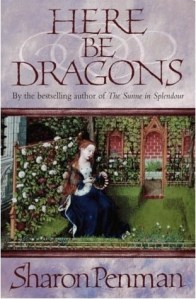
My next link is to another novel set in Wales, but in a much earlier period. Here Be Dragons (3) is the first book in Sharon Penman’s Welsh Princes Trilogy and tells the story of Joanna, daughter of King John of England, and her marriage to Llewelyn ab Iorweth, Prince of Gwynedd. I loved this book and the second one, Falls the Shadow, and was sorry to hear of Sharon Penman’s death a few weeks ago. I must get round to reading the final book in the trilogy soon.
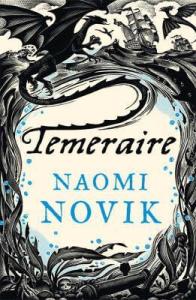
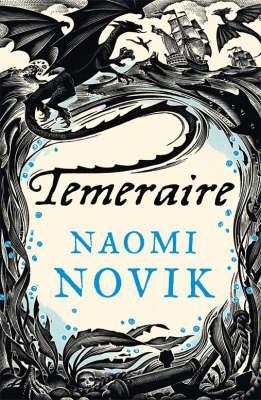
The title ‘Here Be Dragons’ refers to a term used to describe unexplored territories on maps; there are no actual dragons in the story! My next book, however, does involve dragons. Temeraire by Naomi Novik (4) is the first in a series of historical fantasy novels set during an alternate version of the Napoleonic Wars in which dragons provide military support to the British and French navies. I really enjoyed it and loved the relationship between Captain Will Laurence and his dragon, Temeraire, so I don’t know why I still haven’t continued with the second book in the series.

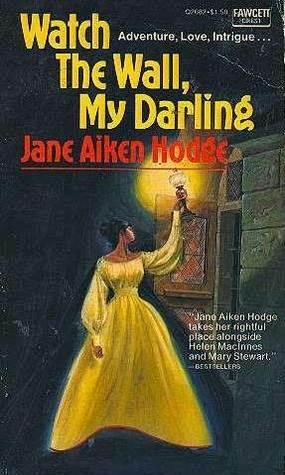
I have read quite a lot of other books set during the Napoleonic Wars but the one I’m going to link to here is Watch the Wall, My Darling by Jane Aiken Hodge (5), a gothic suspense novel from 1966 complete with smugglers, spies, a haunted house and plenty of family secrets! The unusual title, ‘Watch the wall, my darling’, is a line from Rudyard Kipling’s poem, A Smuggler’s Song.

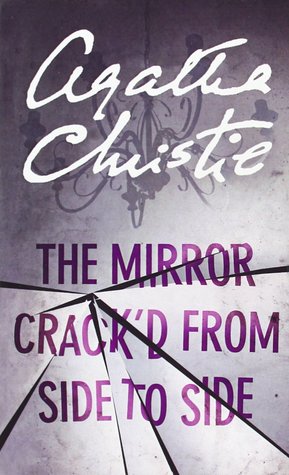
There are many books that have titles inspired by poetry, so I’m going to finish my chain with Agatha Christie’s The Mirror Crack’d from Side to Side (6). The title of this Miss Marple mystery is taken from Tennyson’s The Lady of Shalott – “Out flew the web and floated wide – The mirror crack’d from side to side; ‘The curse is come upon me,’ cried The Lady of Shalott”.
~
And that’s my chain for February. My links have included: the word ‘road’, coal miners, Wales, dragons, the Napoleonic Wars and lines from poems. I have even managed to bring the chain full circle with the word ‘side’ in both the first and last title!
Next month we’re starting with Phosphorescence by Julia Baird.
 If you’ve been following my blog for a while you will know that I have been slowly working through all of the books shortlisted for the Walter Scott Prize for Historical Fiction since the prize began in 2010. I have discovered some great books and authors over the last few years thanks to this prize. You can see the progress I’ve made with this here – and I know there are other bloggers working on similar projects too.




 She Reads Novels