The Butcher of Berner Street by Alex Reeve

Along with Antonia Hodgson’s Thomas Hawkins books and Andrew Taylor’s Marwood and Lovett books, this is one of several new historical mystery series I have been enjoying over the last few years. It is set in Victorian London and follows the adventures of Leo Stanhope, an interesting, intelligent and likeable young man who has a secret he must keep hidden at all costs. This is the third book in the series and although you could certainly read it without having read the previous two (The House on Half Moon Street and The Anarchists’ Club), I do recommend getting to know Leo and his friends from the beginning if possible.

As The Butcher of Berner Street opens, we learn that Leo, formerly a coroner’s assistant, has a new job writing articles on science for the Daily Chronicle newspaper. He is enjoying the work and is grateful for the opportunity he has been given, but he longs for something more exciting to write about – something that will give him a front page headline. When he receives an anonymous note warning of a murder due to take place at a wrestling club in the East End of London that night, it seems Leo is about to get his wish. A murder does take place, although not quite in the way Leo had expected, and when suspicion falls on a Hungarian female wrestler, Irina Vostek, he must find a way to get the headlines he needs while making sure that Irina really is the killer.

I think The Butcher of Berner Street is my favourite of the three books in this series. The plot is well constructed and although I did guess who the murderer was, there were several possible suspects and enough twists and turns to give me a few doubts. More than the plot, though, I loved the setting, the atmosphere and the insights into various aspects of Victorian life: the class differences and the fate of those living in poverty, the early days of the women’s suffrage movement and attitudes towards the Catholic church.

Leo himself is a very compelling character; it’s no spoiler to tell you that although he has chosen to live as a man, he was born and raised as a girl before leaving home as a teenager and taking on a new identity, knowing that he could never be happy unless he had the freedom to be true to himself. Only one or two trusted friends know Leo’s secret and he lives in fear of anyone else finding out; life as a transgender man in the 19th century is not easy and he has heard stories of others who have been arrested and forced to undergo horrific ‘cures’. Although this book is first and foremost a mystery novel and not specifically a book about the experience of being trans, it does have an impact on the way Leo approaches solving the mystery, as he needs to avoid drawing too much attention to himself and risking being blackmailed or exposed. As well as Leo, there are lots of other recurring characters in the series and I enjoyed meeting them all again, particularly the pie maker Rosie Flowers and Alfie the pharmacist and his young daughter, Constance.

I don’t know whether there will be a fourth book in this series. This one has a proper ending, tying up some loose ends and not leaving too much unresolved, but I still hope to see Leo and his friends again soon!

Thanks to Raven Books for providing a copy of this book for review via NetGalley.

Classics Club Spin #25: My list

It’s time for another Classics Club Spin – the last one of 2020. Spin #24 was a success for me (I managed to read my chosen book, The Black Arrow, before the deadline), so I’m hoping for another good result this time!

If you’re not sure what a Classics Spin is, here’s a reminder:

The rules for Spin #25:

* List any twenty books you have left to read from your Classics Club list.
* Number them from 1 to 20.
* On Sunday 22nd November the Classics Club will announce a number.
* This is the book you need to read by 30th January 2021.

And here is my list:

1. Fire from Heaven by Mary Renault
2. Jane and Prudence by Barbara Pym
3. A Laodicean by Thomas Hardy
4. La Reine Margot by Alexandre Dumas
5. Armadale by Wilkie Collins (re-read)
6. Nicholas Nickleby by Charles Dickens
7. The White Guard by Mikhail Bulgakov
8. The Chrysalids by John Wyndham
9. Eugene Onegin by Alexander Pushkin
10. Goodbye Mr Chips by James Hilton
11. Pied Piper by Nevil Shute
12. Germinal by Emile Zola
13. I Will Repay by Baroness Emmuska Orczy
14. The Manuscript Found in Saragossa by Jan Potocki
15. The Brothers Karamazov by Fyodor Dostoevsky
16. Moonfleet by John Meade Falkner
17. The Turquoise by Anya Seton
18. Daniel Deronda by George Eliot
19. Shadows on the Rock by Willa Cather
20. The Fifth Queen by Ford Madox Ford

~

Have you read any of these? Which number do you think I should be hoping for?

Dance of Death by Helen McCloy

This is the latest addition to Agora Books’ Uncrowned Queens of Crime series, making long-forgotten crime novels by female authors available again to modern readers. I think it’s probably my favourite so far. Originally published in 1938, it’s the first of several books written by American author Helen McCloy which feature the psychiatrist Dr Basil Willing.

The novel begins with the discovery of the body of a young woman, buried under a heap of snow in a New York street. Bizarrely, the cause of death appears to be heatstroke and the girl’s face is stained bright yellow. The police think they have identified her as Kitty Jocelyn, a beautiful debutante who has become famous as the face of an advertising campaign, but things take an even more confusing turn when they speak to her cousin, Ann Claude, who closely resembles the dead girl and who claims that she had been persuaded to impersonate Kitty at her recent coming out party.

Inspector Foyle begins to investigate this intriguing mystery, assisted by Basil Willing, an expert in Freudian psychoanalysis who provides a very different and, for the time, probably quite modern approach to crime-solving. While Foyle looks for tangible evidence and clues that will point to the culprit, Willing is more interested in the ‘blunders’ people make: a slip of the tongue, a lost item, a forgotten name. “Every criminal leaves psychic fingerprints,” he says, “And he can’t wear gloves to hide them.” I found Willing’s methods of solving the mystery fascinating, whether it was suggesting psychological reasons for the blunders, conducting word association tests or using his knowledge of the human mind to find out the motivation behind the crime.

Apart from Basil Willing, whom I liked and will look forward to meeting again, the other characters in the book are well drawn and believable too, which is important as the psychological angle of the story wouldn’t have worked if the characters had been nothing more than stereotypes. I didn’t manage to solve the mystery myself; although I suspected the right person, their motive came as a complete surprise to me, so I was content to let Willing do the investigating and explain the solution to me at the end. There are other aspects of the novel which I found nearly as interesting as the mystery, though, such as the ethics of advertising, attitudes towards money in 1930s society and the responsibilities of being a public figure. I thoroughly enjoyed Dance of Death and I’m sure I’ll be looking for more by Helen McCloy.

Thanks to Agora Books for providing a copy of this book for review via NetGalley.

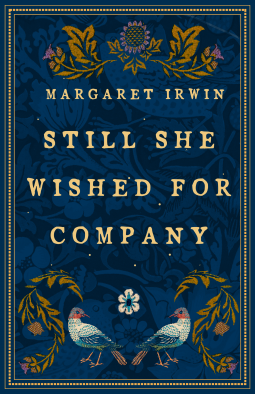
Still She Wished for Company by Margaret Irwin

Times past, times present, or times to come, were they not all one, if he had the power to make them so?

Part ghost story, part time-slip fantasy and part historical fiction, Margaret Irwin’s first novel from 1924, recently reissued with a pretty new cover, is a wonderful, dreamlike read.

Jan Challard is a young woman living in 1920s London and trying to find her place in the new society which has emerged from the aftermath of the First World War. Life seems to be going well, but Jan feels restless: she is bored with her office job, bored with the nice, suitable young man who wants to marry her, and haunted by a face in a portrait – a Gentleman Unknown, who seems to be following her everywhere she goes.

In 1779, we meet another bored young woman: seventeen-year-old Juliana Clare, the youngest daughter of an aristocratic family with an estate in Berkshire. Juliana spends her days walking in the gardens of Chidleigh House and writing in her journal, while waiting for something more exciting to happen and remembering a line from her favourite childhood fairytale: “…still she sat and still she span, and still she wished for company”. Company does eventually arrive, but perhaps not in the way Juliana had expected.

First, following the death of Lord Chidleigh, Juliana’s eldest brother Lucian returns after a long absence to take up his father’s title and his inheritance. Stories of the wild, debauched lifestyle Lucian has been leading have reached the family and he receives a frosty welcome at Chidleigh House. Juliana is the only one who is happy to see him and as the brother and sister grow closer, something strange begins to happen: the centuries separating Juliana’s life from Jan’s seem to dissolve and merge. Jan can see Juliana and Juliana can see Jan, but which of them is the ghost and which of them is real?

This is a very short novel, but just the right length for the story – or stories – being told, and it really doesn’t need to be any longer. Jan’s story frames Juliana’s and is confined to a short section at the beginning of the book and another at the end; Margaret Irwin appears to be more comfortable writing about the eighteenth century (a period she obviously knew well and knew how to bring to life) and most of the novel concentrates on Juliana. I couldn’t help comparing this to most of the dual time-period books being written today, where I usually find that far too much time is spent on a weaker present day narrative, leaving me impatient to get back to the more interesting historical one. The structure of Still She Wished for Company is much more effective, in my opinion, as I could become fully immersed in Juliana’s story without being pulled out of it after every few chapters.

The book is beautifully written, with the same elegant prose and powerful descriptive writing I’ve loved in the other Margaret Irwin novels I’ve read. There are no obvious anachronisms, no dialogue that feels jarringly wrong for the time period…it was just a pleasure to read! The eighteenth century storyline on its own could have been the basis for a compelling novel, but the addition of the ghost story/time travel elements make it something special, particularly as they are handled so well that they feel almost believable. It’s a lovely, magical read and just the sort of thing I was in the mood for at the moment!

Thanks to Agora Books for providing a copy of this book for review via NetGalley.
Six Degrees of Separation: From Uprooted to Jamaica Inn

It’s the first Saturday of the month which means it’s time for another Six Degrees of Separation, hosted by Kate of Books are my Favourite and Best. The idea is that Kate chooses a book to use as a starting point and then we have to link it to six other books of our choice to form a chain. A book doesn’t have to be connected to all of the others on the list – only to the one next to it in the chain.

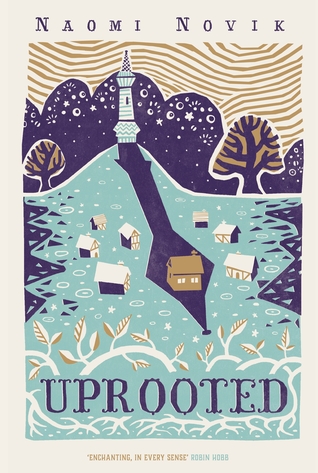
This month is slightly different as we’ve been given the freedom of starting with any book with which we ended a previous chain. As I’ve been taking part in Six Degrees of Separation most months for nearly three years, I had plenty of options but decided to choose the book that ended my chain this time last year, in November 2019. That book was Uprooted by Naomi Novik, a fantasy novel set in a world closely resembling sixteenth century Poland. Our narrator, Agnieszka, lives in a village on the edge of a dark, forbidden forest until her seventeeth birthday when she is selected by a great wizard known as the Dragon who takes her away with him to his tower.

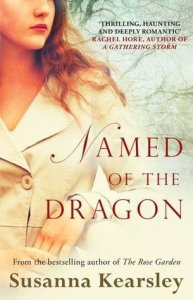
Thinking of the name of the wizard in Uprooted leads me to a book with the word ‘Dragon’ in the title: Named of the Dragon by Susanna Kearsley (1). This is not one of my favourite Kearsley novels, but I did enjoy it. It’s set in modern day Wales but steeped in Arthurian myths and legends.

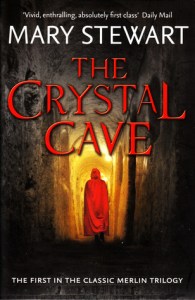
Staying with those myths and legends, my next link is to Mary Stewart’s series of Arthurian novels which begins with The Crystal Cave (2). The title refers to a magical, crystal-filled cave near Merlin’s home in Wales where Merlin retreats on several occasions throughout the series to receive visions and revelations.

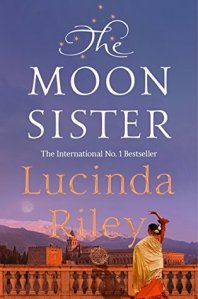
Another novel in which some of the characters live in caves is The Moon Sister by Lucinda Riley (3). This is the fifth book in Riley’s Seven Sisters series and is set in both present day Scotland and in Spain during the Spanish Civil War. There are some wonderful descriptions of the caves of Sacromonte, the traditional home of the Spanish gitano community.

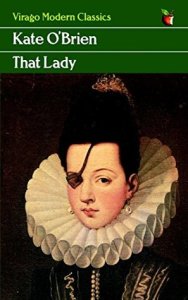
That Lady by Kate O’Brien (4) is also set in Spain, but in a much earlier period. Beginning in 1576, it tells the story of Ana de Mendoza, Princess of Eboli, and her relationship with King Philip II. As you can see from the portrait on the book cover, Ana wore an eye patch which, according to the novel, was because she lost an eye fighting a duel.

Someone else who lived in the same century as Ana and also wore a patch after losing an eye was Francis Bryan, the subject of a non-fiction book by Sarah Beth-Watkins which I read earlier in the year. Sir Francis Bryan: Henry VIII’s Most Notorious Ambassador (5) gives a short and factual account of Bryan’s life at the Tudor court. Bryan was nicknamed ‘the Vicar of Hell’ and this takes me to the final book in my chain.

Jamaica Inn (6), Daphne du Maurier’s Gothic novel of smugglers and shipwrecks on the Cornish coast also features a ‘vicar’ whose name is Francis: Francis Davey, the Vicar of Altarnun. I first read Jamaica Inn many years ago, immediately after reading Rebecca, and found it disappointing in comparison; I read it again more recently and really enjoyed it the second time.

~

And that’s my chain for this month! My links have included dragons, Arthurian legends, cave-dwellers, Spanish history, eye patches and vicars called Francis.

In December we are starting with a book I remember from my childhood: Are You There God? It’s Me, Margaret by Judy Blume.

The Man from London by Georges Simenon – #NovNov

I’ve been struggling to concentrate on longer novels for most of the year, despite having more time than ever before to read them! This month’s Novellas in November (hosted by Cathy of 746 Books and Rebecca of Bookish Beck, ) seemed like a perfect opportunity for me to get through some of the shorter books on my TBR, beginning with this one – a Belgian classic from 1934 reissued today by Penguin Classics.

The Man from London is my first Georges Simenon book (I haven’t read any of the Maigret novels, though I feel that I should have done by now), so I didn’t really know what to expect from it. I was pleased to find that it was suspenseful, atmospheric and, in this translation by Howard Curtis, very readable.

The story begins on a cold, foggy night in Dieppe, where railway signalman Louis Maloin is sitting alone in his watchtower, looking down on the docks at the ferry just arriving from England. It’s a sight Maloin observes every day, but tonight something is different: he watches one of the newly arrived passengers fight with another man and knock him into the water, along with the suitcase he is holding. Aware that he appears to be the only person who has seen this happen, Maloin retrieves the case from the water when nobody is around and takes it home with him. When he discovers what the case contains, the decision he makes could have consequences that will change his life forever.

Although there is an element of mystery to the book, with questions over the identities of the two men and where the contents of the case came from, this is really more of a psychological thriller than a crime novel. The fight Maloin witnesses and his reaction to it provides a starting point for an exploration of the state of Maloin’s mind as the process he has set in motion spirals out of control. He experiences every conceivable emotion over the course of the story, ranging from guilt at not telling the police what he has seen and allowing a murderer to walk free, excitement at gaining possession of the case for himself, and terror, knowing that someone could discover what he has done at any minute.

The atmosphere Simenon creates is wonderful, with the tension building and building as Maloin tries to go about his normal life, while being confronted at every turn by the face of the man he has come to think of as ‘the man from London’. The wet, foggy December weather adds to the overall mood, as do the descriptions of the places and people Maloin encounters as he moves around Dieppe trying to avoid the murderer and the police.

The short length of the book meant it held my interest from beginning to end and although I think the potential was here for a longer and more complex novel, I still found it quite satisfying. I’m glad my first experience of Georges Simenon’s work was a good one and I’m definitely interested in reading more of his books now.

Thanks to Penguin Classics for providing a copy of this book for review via NetGalley

The Tenth Gift by Jane Johnson

When we think about slavery it’s not usually the capture and sale of white Europeans that comes to mind, but that is the topic at the heart of Jane Johnson’s The Tenth Gift. In August 1625, a church in Mount’s Bay, Cornwall was raided by Barbary pirates who took sixty men, women and children into captivity to be sold at the slave markets of Morocco. In The Tenth Gift, Johnson imagines the story of one of these captives – a young woman called Catherine Anne Tregenna.

When we first meet Catherine, or Cat as she is known, she is working as a lady’s maid at a large manor house in Cornwall. A marriage has been arranged for her with her cousin, Robert Bolitho, but Cat wants more out of life. Her skills with a needle have won her a commission from the Countess of Salisbury and she dreams of joining a guild and becoming a master embroiderer, even if she has to leave Cornwall to do it. However, she is soon to travel further from Cornwall than she could ever have imagined. Abducted from church by Barbary corsairs along with her friends, family and neighbours, Cat finds herself on a ship heading towards North Africa, her fate to be decided by the corsair captain.

But Cat’s is not the only story to be told in this novel. In the present day, we meet Julia Lovat, a woman who has been having an affair with Michael, her best friend’s husband, a seven-year relationship which has just come to an end. As a parting gift, Michael gives her an old book of embroidery patterns, but when Julia opens the book she is confronted by something unusual – a series of diary entries written in the margins by someone called Cat who lived in the seventeenth century. Julia is soon engrossed in reading about Cat’s ordeal, but it is only when she visits Morocco herself that she is able to put together all the pieces of Cat’s story.

I found a lot to enjoy in The Tenth Gift, which isn’t surprising as I’ve previously enjoyed two of Jane Johnson’s other Moroccan novels, The Sultan’s Wife and Court of Lions. She writes so vividly about Morocco, describing all of the sounds, sights and smells with a vibrancy that really brings the setting to life. Her depiction of seventeenth century Cornwall is equally well done and it’s obvious that she knows both places very well. The two storylines – past and present – fit together perfectly and the links between them don’t feel too contrived, although there are some supernatural undertones, particularly towards the end, that I thought seemed unnecessary.

I liked Cat and found her story fascinating but, as happens so often with these dual timeframe novels, I thought the present day one was much weaker. I never really managed to warm to Julia and didn’t have much sympathy for her relationship problems; I did become more invested in her story once she arrived in Morocco, but I think the book would have worked better as a straight historical novel without the modern day sections. Cat’s adventures are so interesting and I appreciated the way Jane Johnson tries to give an explanation for why the corsairs behaved the way they did and explores both the similarities and differences between Christian and Islamic cultures.

If you do read this book and enjoy it, you might also enjoy The Sealwoman’s Gift by Sally Magnusson, which deals with a different pirate raid, this time on Iceland’s Westman Islands in 1627, or The Sea-Hawk by Rafael Sabatini, a wonderfully entertaining novel which also takes us from Cornwall to the Barbary Coast.

Thanks to Head of Zeus for providing a copy of this book for review via NetGalley.