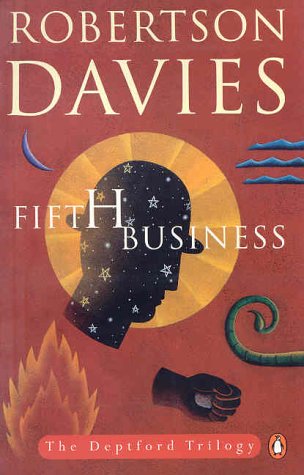
Fifth Business by Robertson Davies

Robertson Davies is a Canadian author best known for his four trilogies – the Salterton Trilogy, the Deptford Trilogy, the Cornish Trilogy and the unfinished Toronto Trilogy. As someone completely new to Davies’ work it was hard to know where to start, but as it didn’t seem necessary to read these trilogies in any particular order, I decided to begin with the one that sounded most appealing to me, the Deptford Trilogy, of which Fifth Business is the first book. I think it was a good choice! I actually started to read it last August for a reading week hosted by Lory, but got distracted during a house move and didn’t go back to it until just after New Year, when I was able to give it the attention it deserved.

Fifth Business is narrated by Dunstable (later renamed Dunstan) Ramsay in the form of a long letter written to the headmaster of the school from which he is retiring, having taught there for many years. In the letter, he looks back on his life, beginning in 1908 when, as a boy growing up in the small Canadian town of Deptford, an incident occurs that will shape his future: Percy Boyd Staunton, his friend and rival, throws a snowball containing a stone; Dunstan – the intended target – jumps aside; and instead the snowball hits a pregnant woman, who goes into premature labour with the shock. This incident means nothing to Percy, but it will haunt Dunstan for the rest of his life.

Many of the things that happen to Dunstan from this point on – the sort of man he becomes, the interests he develops, the career path he follows and the relationships he forms – could be traced back to the day of the snowball. His life-long obsession with the study of saints, for example, comes about because of his feelings of guilt and responsibility towards the pregnant woman, Mrs Dempster, and her son, Paul, the baby born prematurely. He convinces himself that she is a saint who has performed miracles, including saving his life when he is wounded at Passchendaele during the First World War. Illusions, deceptions and the unexplained are important themes running throughout the book, not just in the form of miracles but also magic tricks, conjuring and fortune telling.

I think this is the sort of book that probably needs to be read more than once to be able to fully appreciate all the different layers and ideas it contains. I’m not sure I enjoyed the book enough to want to read it again (although I did like it very much), but I’m certainly interested in reading the other two parts of the trilogy, The Manticore and World of Wonders.

Finally, if you are wondering about the title of the novel, it describes the role Dunstable/Dunstan Ramsay plays throughout his life and throughout the story:

“And you must have Fifth Business because he is the one who knows the secret of the hero’s birth, or comes to the assistance of the heroine when she thinks all is lost, or keeps the hermitess in her cell, or may even be the cause of somebody’s death if that is part of the plot. The prima donna and the tenor, the contralto and the basso, get all the best music and do all the spectacular things, but you cannot manage the plot without Fifth Business! It is not spectacular, but it is a good line of work, I can tell you, and those who play it sometimes have a career that outlasts the golden voices. Are you Fifth Business? You had better find out.”
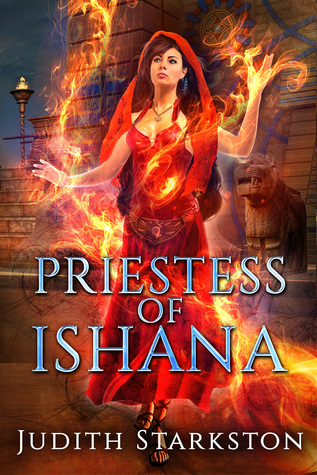
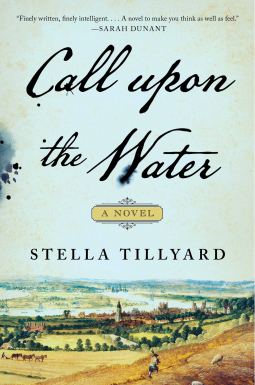
Two from 2019: Priestess of Ishana and Call Upon the Water

I’ve been gradually catching up with my backlog of 2019 reviews throughout January and today I’m going to talk about the final two books I read in December – two books with very different settings and subjects.

First, Priestess of Ishana by Judith Starkston. Historical fantasy set in the Bronze Age isn’t necessarily something I would usually be drawn to, but as I’ve previously enjoyed Starkston’s Hand of Fire, the story of Briseis from the Iliad, when I was offered a review copy of this one I was happy to give it a try.

The novel opens in the Hitolian city of Lawaza with a curse, a death and whispers of treason and dark magic. Suspicion falls on Hattu, the younger brother of the Great King, who has recently arrived in Lawaza, and he is quickly imprisoned and sentenced to death by the city’s Grand Votary. Tesha, the Grand Votary’s daughter, believes Hattu is innocent and sets out to clear his name, but this brings her into conflict with her father. But this is not the only challenge Tesha faces – as a priestess devoted to Ishana, the goddess of love and war, the people of her city are relying on her to overcome the evil of the Underworld.

The characters are fictional and so is the story, but the world in which the action takes place – the Hitolian Empire – is based on the real Hittite Empire. Tesha herself is inspired by the historical Puduhepa, a priestess of Ishtar (renamed here Ishana), although as I know nothing at all about the history of the Hittite Empire and hadn’t previously heard of Puduhepa, I have no idea how close the parallels are between fact and fiction. I think the setting would have provided an interesting enough story even without the sorcery, evil curses and magical creatures, but I’m not a huge fan of fantasy and other readers might feel differently. I did love the atmosphere, the strong female characters – both Tesha and her sister, Daniti – and the element of mystery. Tesha’s story continues in a sequel, Sorcery in Alpara, which is available now.

Moving on to Stella Tillyard’s Call Upon the Water, this is another historical novel but one set in a much more recent period – the seventeenth century. It follows the story of Jan Brunt, a Dutch surveyor and mapmaker who arrives in England in 1649, the year of King Charles I’s beheading. Jan is part of a team working on a new engineering project: the draining and development of the Great Level, a large expanse of marsh to the north of Ely in the English Fens. It is here that Jan meets Eliza, an illiterate young Fenland woman with whom he falls in love.

Switching between two time periods and locations – England in 1649 and Nieuw Amsterdam, the Dutch settlement which would later become New York City, in 1664 – and told in two voices, Jan’s and Eliza’s – this is a beautifully written novel and a moving, poignant story. However, I found the pace very, very slow and I struggled to stay interested in the long, detailed descriptions of Jan’s work in draining the marshes and directing the flow of the water. I don’t think I was the ideal reader for this book as I do prefer novels with stronger plots, but I did like Stella Tillyard’s writing and wouldn’t rule out reading another of her books.

Call Upon the Water has also been published as The Great Level but I have used the title of the edition I received to review from Atria Books via NetGalley.

~

Have you read these books? Do either of these subjects interest you?

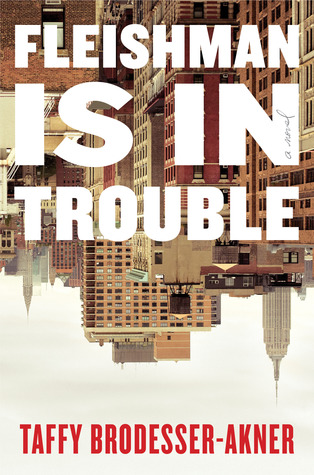
Six Degrees of Separation: From Fleishman is in Trouble to The Private Memoirs and Confessions of a Justified Sinner

It’s the first Saturday of the month which means it’s time for another Six Degrees of Separation, hosted by Kate of Books are my Favourite and Best. The idea is that Kate chooses a book to use as a starting point and then we have to link it to six other books of our choice to form a chain. A book doesn’t have to be connected to all of the others on the list – only to the one next to it in the chain.

This month we are starting with Fleishman is in Trouble by Taffy Brodesser-Akner, a book I haven’t read and hadn’t even heard of until now. It’s a novel “about marriage, divorce and modern relationships” and doesn’t really sound very appealing to me.

My first link is to another book about the breakdown of a marriage, Someone at a Distance by Dorothy Whipple (1), in which the arrival of a young Frenchwoman causes trouble for Ellen North and her husband Avery. The edition I read was the Persephone Classic pictured above.

The first book published by Persephone that I ever read was Miss Pettigrew Lives for a Day by Winifred Watson (2) and although I’ve read others since that I thought were much better, I did find that one a lovely, magical story. I would love to have a day like the one Miss Pettigrew has in that book!

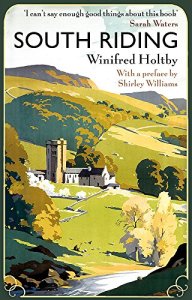
South Riding (3) was also written by an author with the name Winifred – Winifred Holtby. South Riding is set in a fictional Yorkshire community in the 1930s and I remember being completely absorbed in the lives of the characters who live there.

Winifred Holtby was a close friend of Vera Brittain, whom she met at university. Testament of Youth (4) is the first part of Vera Brittain’s memoir, covering the years 1900-1925 and describing her experiences as a VAD nurse during the First World War. I highly recommend reading this book if you haven’t already, but prepare to have your heart broken.

The word ‘testament’ leads me to The Testament of Gideon Mack by James Robertson (5), an unusual, imaginative novel about a man who claims to have met the Devil. I enjoyed it, but the book which inspired it is much better…

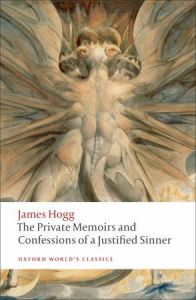
The Private Memoirs and Confessions of a Justified Sinner by James Hogg (6) also tells the story of a man who meets a mysterious stranger who may or may not be the Devil. I loved this weird and wonderful novel, which was first published in 1824.

~

And that’s my chain for February. The links included marriage and divorce, books published by Persephone, authors with the name Winifred, a friendship between two authors, the word ‘testament’ and a meeting with the Devil. Next month, we are beginning with Lucy Treloar’s Wolfe Island – another book I haven’t read.

My Commonplace Book: January 2020

A selection of words and pictures to represent January’s reading:

commonplace book
noun
a book into which notable extracts from other works are copied for personal use.

~

“It is a good phrase that,” said Poirot. “The impossible cannot have happened, therefore the impossible must be possible in spite of appearances.”

Murder on the Orient Express by Agatha Christie (1934)

~

Any separation, however brief, made them anxious. It was to tempt fate; they might never get together again. Entropy is the natural law of the universe, everything tends towards disorder, to break down, to disperse. People get lost: look how many vanished during the Retreat; feelings fade, and forgetfulness slips into lives like mist. It takes heroic willpower just to keep everything in place. Those are a refugee’s forebodings, said Roser. No, they’re the forebodings of someone in love, Victor corrected her.

A Long Petal of the Sea by Isabel Allende (2020)

~

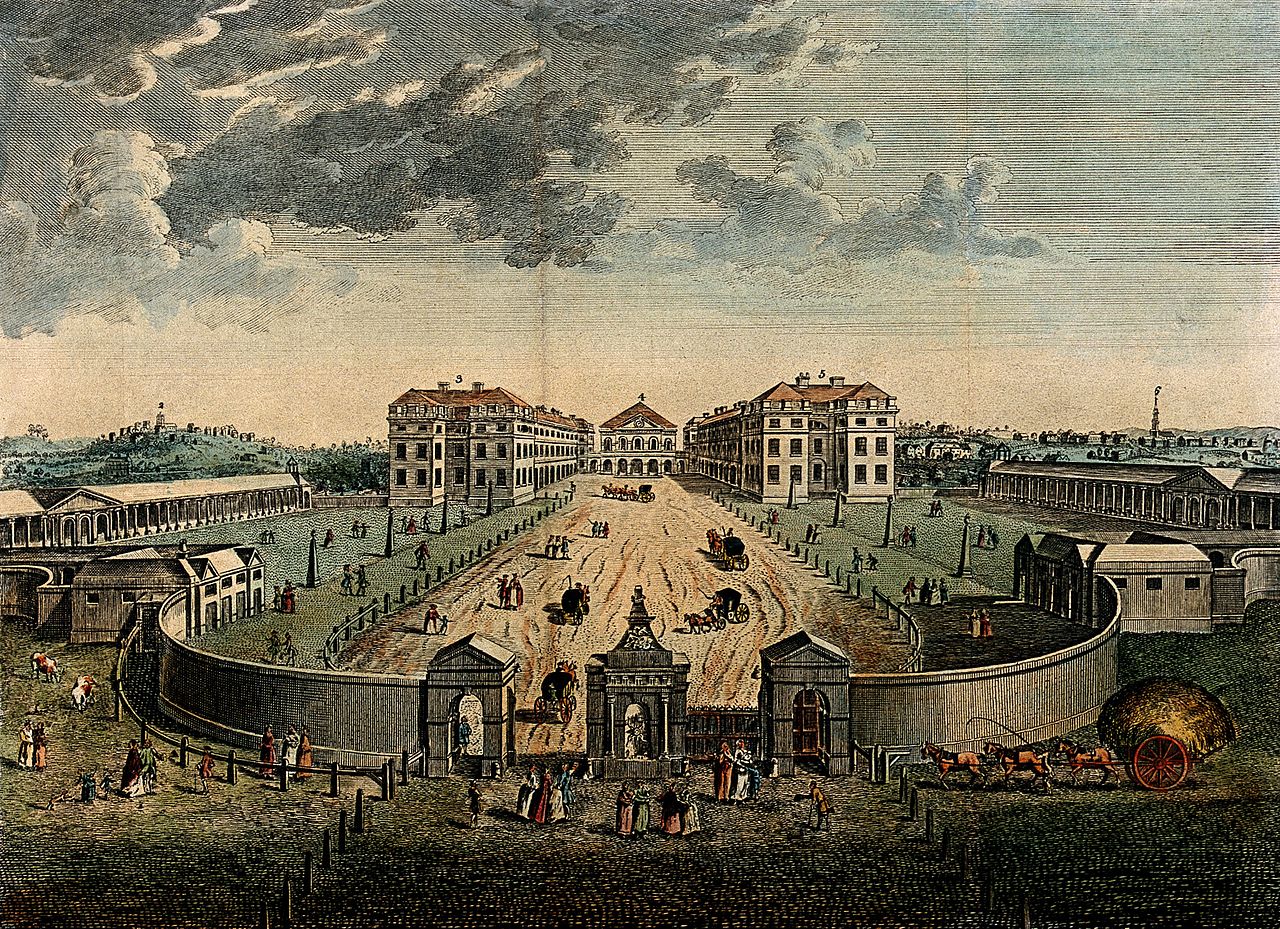
Engraving of the Foundling Hospital, London, 1753.

These feminine vessels we inhabited: why did nobody expect them to contain unfeminine feelings? Why could we, too, not be furious and scornful and entirely altered by grief? Why must we accept the cards we had been dealt?

The Foundling by Stacey Halls (2020)

~

‘Why don’t you come, Reggie? Come for a visit. You might even think about getting a job here.’ New Zealand seemed to Reggie to be awfully far away. ‘Well, not when you’re actually here,’ Dr Hunter wrote. ‘Then it’s not far away at all. Then it’s just where you are. You’re here.’

Big Sky by Kate Atkinson (2019)

~

‘And, of course, it’s simply chance that takes one in the first place into one manner of life rather than another. And one looks back, and imagines one might have chosen better – whereas, really and truly, choice didn’t enter into the matter. What do you think?’

Appleby thought only that the hour was too advanced to enter upon a discussion of the mildly perplexing problem of necessity and free will.

The Long Farewell by Michael Innes (1958)

~

The south-eastern side of Shwedagon Pagoda, Myanmar

As the sky turned gold and dense black shadows began to dissolve the light within the pavilions, she gasped in awe at the dazzling brilliance of the Shwedagon illuminated by the dying sun. With light refracting through coloured glass the whole thing glittered and sparkled: a multi-jewelled marvel like no other Belle had ever seen.

The Missing Sister by Dinah Jefferies (2019)

~

She glanced around but there was no escape and it was, she supposed, a valid question. Eventually she said just one word: ‘Security’.

Malcolm sighed.

‘Security? You disappoint me. Is that all you seek?’

‘If, like me, you had known its lack, Sire, you might value it more highly.’

Blood Queen by Joanna Courtney (2018)

~

‘We can only recognize saints when the plainest evidence shows them to be saintly. If you think her a saint, she is a saint to you. What more do you ask? That is what we call the reality of the soul; you are foolish to demand the agreement of the world as well.’

Fifth Business by Robertson Davies (1970)

~

The tower at Dreamland, Coney Island, 1907.

On my right side, a brace of clarinets and trombones pounded music; in front of me, a square tower with a triangle top soared incredibly high, as high as one of the skyscrapers of Manhattan. More immediately I faced a mountain of water, with people riding down in little wooden cars that reached the bottom with an enormous splash. No matter which way I twisted and turned, I couldn’t see the natural water, the beach, or Surf Avenue. I was deep into Dreamland, away from the ocean and the town.

Dreamland by Nancy Bilyeau (2020)

~

Yet what a strange allegory it was, the river of time. If he was standing here in the now, then to the left, downriver, the past was disappearing away into the night. Time past could never be changed: what was done was done. If only the past did not stay fixed like dead flies in amber. If only he could live his life again.

The Almanack by Martine Bailey (2019)

~

He’d always had a quickening of the heart when he crossed into Arizona and beheld the cactus country. This was as the desert should be, this was the desert of the picture books, with the land unrolled to the farthest distant horizon hills, with saguaro standing sentinel in their strange chessboard pattern, towering supinely above the fans of ocotillo and brushy mesquite.

The Expendable Man by Dorothy B. Hughes (1963)

~

Then the writer paused, the scene recollected in his mind’s eye. ‘These three brothers,’ he continued, a hint of regret in his appraising tone, ‘possessed such surpassing talent that their triple bond could only have been broken with the utmost difficulty’ – ‘if,’ that was, ‘they had been able to avoid conflict.’ It was a big ‘if’.

The Brothers York by Thomas Penn (2019)

~

Favourite books read in January:

The Expendable Man, The Foundling and Dreamland

New authors read in January:

Stacey Halls, Robertson Davies, Dorothy B. Hughes, Martine Bailey

Countries visited in my January reading:

England, Scotland, Canada, USA, Yugoslavia (as it was then), Spain, Chile, Burma (Myanmar)

~

Have you read any of these books? Which books did you enjoy reading in January?

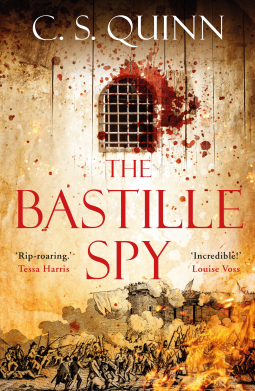
The Bastille Spy by CS Quinn

Set during the French Revolution and featuring an almost super-human female spy and a handsome, charismatic pirate, this book feels like a cross between The Scarlet Pimpernel, James Bond and Pirates of the Caribbean. As the first in a new series – Revolutionary Spy – I’m not sure whether I really liked it enough to want to continue with the next one, but it was certainly entertaining.

Our heroine Attica Morgan is the illegitimate daughter of a British nobleman and an African slave. Raised and educated in England, Attica wants to make the most of the opportunities she has been given and do everything she can to help relieve the suffering of others, whether they are those who are born or sold into slavery, or those who have become political prisoners. With her impressive range of skills and abilities, as well as her intelligence and fearlessness, Attica has been admitted to the secret society known as the Sealed Knot and as the novel opens in 1789, she is preparing to head to France on a new mission.

Armed with her deadly Mangbetu knife and her quick wits, Attica arrives in a Paris where revolution is brewing. A diamond necklace intended for Marie Antoinette has gone missing, something which could have serious repercussions for the monarchy if the jewels are not found. Attica’s task is to locate the necklace, but more important to her is the safety of her cousin Grace, who was sent to Paris on a mission of her own and has disappeared as thoroughly as the diamonds. Meanwhile, a prisoner has been murdered inside the notorious Bastille, but who was he and who was responsible for his death?

As if all of that wasn’t enough, Attica crosses paths with some of the leading figures of the Revolution, including Maximilien Robespierre who is on the trail of an elusive British spy known only by the codename ‘Mouron’, or ‘Pimpernel’. If she is to evade Robespierre’s clutches and survive long enough to complete her mission, Attica needs someone she can trust, but there’s only the pirate Captain Jemmy Avery – and it’s impossible to tell which side he is on and for whom he is really working.

The story moves along at a whirlwind pace, never slowing down for a second as Attica and her friends rush from one adventure to another, trying to stay one step ahead of their enemies. There’s plenty of historical detail in between, but something about the writing style, the language and the characters made the book feel more ‘modern’ than I would have preferred. Attica herself isn’t very believable as an 18th century woman – but then, she wouldn’t be very believable in any other time period anyway! It seems there is nothing she can’t do, from picking locks and wielding weapons to speaking a multitude of foreign languages and decoding secret messages. This makes her fun to spend time with, but I would have liked to have seen a few more flaws and vulnerabilities to round out her character.

Only part of the story is told from Attica’s point of view. There are also some chapters which focus on Robespierre, as well as some in which we follow the adventures of Attica’s cousin Grace. Next to the larger-than-life Attica, Grace is a quieter, less memorable character, but I enjoyed the occasional change of perspective.

I might be tempted to read the next book in this series, but at the moment I don’t think so. However, I’m determined that 2020 will be the year I read Hilary Mantel’s French Revolution novel, A Place of Greater Safety, which I’ve only been putting off reading because of the length.

Thanks to Corvus for providing a copy of this book for review via NetGalley.

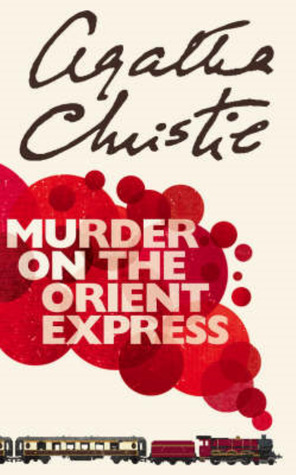
Murder on the Orient Express by Agatha Christie

The January theme for the Read Christie 2020 challenge is ‘a book that changed Christie’s life’. The challenge is hosted by agathachristie.com and their selection for this month was Christie’s first novel, The Mysterious Affair at Styles, but that would be a re-read for me so I chose a different title from their list of alternative suggestions: Murder on the Orient Express!

Murder on the Orient Express is one of Christie’s best known books and has been adapted several times for television, film and stage, but this is precisely why I’ve been putting off reading it for so long – I already knew the solution to the mystery and thought that might affect my enjoyment of the book. Of course, no adaptation is going to be exactly the same as the written version, and once I started reading I could see that some parts of the story were familiar but not all of it.

At the beginning of the novel, Hercule Poirot is in Turkey when he receives a telegram requesting him to return to London. He attempts to book a first-class berth on the Orient Express which is leaving Istanbul that night, but is told that the train is unusually full. It is only with the assistance of Monsieur Bouc, the director of the railway company, who happens to be an old friend of Poirot’s, that he manages to obtain a space in a second-class compartment. Once on board the train, Poirot observes that his fellow passengers are a very diverse group of people of different nationalities, backgrounds and classes. Among them are an American businessman and his secretary, a Russian princess and her German maid, a British Colonel, a Hungarian Count and Countess and several others.

It is the American businessman, Mr Ratchett, who is found stabbed to death in his compartment just after the train comes to a stop in heavy snow near Vinkovci (in what was then part of Yugoslavia). It seems clear that the murderer must be one of the other passengers on the train, but which one? As Poirot begins to investigate, he uncovers clues that, rather than revealing the truth, seem to complicate things further – and the statements he takes from the passengers appear to contradict each other, making the situation even more confusing. Armed with only his ‘little grey cells’, can Poirot solve the mystery?

Yes, of course he can…and for once, so could I, thanks to already knowing the basic outline of the story before I began. It would certainly have been a better – or at least a different – experience to have read the book with no idea of who was responsible for the murder, but as that wasn’t possible, I still enjoyed watching Poirot sort through the evidence and put the pieces of the puzzle together. I think Christie does give us all the information we need, but it’s difficult to say whether I would have been able to guess the solution anyway. Probably not, as I usually don’t.

As well as the mystery, I loved the atmosphere of the book and the claustrophobic feel Christie creates with the simple idea of a train stuck in snow and a murderer onboard. The characterisation is interesting too, although some of the assumptions made about the actions and behaviour of the various suspects based on their nationality feel very dated – for example, M. Bouc’s theory that the murderer must be Italian because the knife is an Italian weapon and Poirot’s reply that he disagrees because the careful, long-term planning requires an ‘Anglo-Saxon brain’. It seems that every passenger on the train has formed a stereotypical view of each of the others and this gives us some insights into attitudes of the time (the book was published in 1934).

Going back to the theme of this month’s Read Christie 2020, I wondered how this book in particular was one that had ‘changed Christie’s life’. Well, it seems that the Orient Express itself did, as she travelled on the train in 1928 to attend an archaeological dig in Syria and it was during this trip that she met the man who would become her second husband. That can certainly be considered a life-changing experience! Anyway, I really enjoyed this book and am looking forward to February’s selection.

The Expendable Man by Dorothy B Hughes

This weekend Jessie of Dwell in Possibility has been hosting another Mini Persephone Readathon and it seemed like the perfect opportunity to read The Expendable Man, one of the thrillers published by Persephone and a book that I’ve been meaning to read for a long time. It turned out to be a great choice.

Published in 1963, the novel opens with a young doctor, Hugh Densmore, driving from Los Angeles to a family wedding in Phoenix. On the way, he spots a teenage girl standing alone at the side of the road. Hugh doesn’t usually stop for hitchhikers but this time he finds himself slowing down…

He simply could not in conscience go on, leaving her abandoned, with twilight fallen and night quick to come. He had sisters as young as this. It chilled him to think what might happen if one of them were abandoned on the lonesome highway, the type of man with whom, in desperation, she might accept a lift. The car was stopped. He shifted to reverse and began backing up.

Hugh quickly begins to regret this impulsive act of kindness. The girl is rude, ungrateful and, when he questions her about who she is and where she is going, it is clear that she is telling lies. When they arrive in Phoenix, Hugh leaves his hitchhiker at a bus station and doesn’t expect to see her again, but that night the girl tracks him down at his hotel, setting in motion a series of events that could ruin the life and career he has built up so carefully for himself.

There’s really not much more I can say about the plot or the characters. If you think you might want to read this book, it’s best that you know as little as possible before you begin. And I do highly recommend reading it! I was completely gripped from beginning to end; when I first picked it up on Friday and started reading, I didn’t expect to actually finish it before the Readathon was over, but as it happened that wasn’t a problem at all. I couldn’t bear to put the book down until I knew what was going to happen to Hugh.

There’s an element of mystery-solving to the novel, but The Expendable Man is much more than a straightforward crime story. A few chapters into the book, there’s a twist – or maybe revelation is a better word to use – that changed the way I felt about what I had read so far and showed me that I had made an unfair assumption without even being aware that I had made it. It was so cleverly done and provided answers to some of the things I’d been wondering about as I read those earlier chapters.

I also loved the author’s beautifully written descriptions of the landscape, particularly near the beginning when Hugh is driving into Arizona. This is the first book I’ve read by Dorothy B Hughes and I was very impressed with every aspect of it! I would like to read more of her books, so if there’s one you would recommend please let me know.