 It’s my final Historical Musings post of 2019, which means it’s time for my annual summary of my year in historical fiction! I have kept the same categories as in the previous three years so that it should be easy to make comparisons and to see if there have been any interesting changes in my reading patterns and choices (my 2018 post is here, 2017 here and 2016 here).
I know the year is not quite over yet, but I have a lot of other posts to fit in before the end of December and I don’t think I’ll read enough historical fiction in the final two weeks of the year to significantly affect these statistics anyway.
~
Time periods read about in 2019
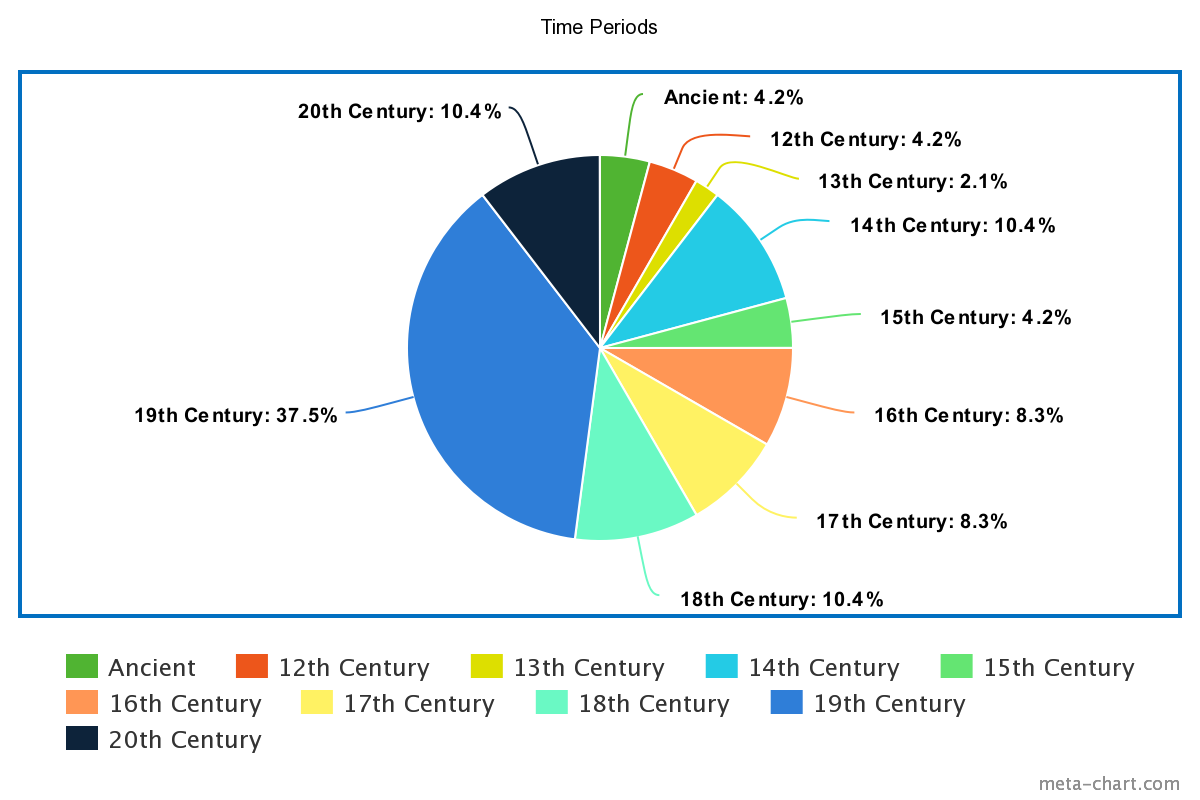
The 19th century has been the most popular time period in my historical fiction reading for the last three years and yet again it’s the clear winner.
I’ve only read two books set earlier than the 12th century this year and they were The Mark of the Horse Lord by Rosemary Sutcliff and The Silver Pigs by Lindsey Davis.
~
54.2% of the historical fiction authors I read this year were new to me.
This is up from 31.2% last year (and higher than 47.3% in 2017 and 26.4% in 2016 too).
Three books I’ve read by new-to-me historical fiction authors in 2019:
Bodies of Light by Sarah Moss
The Outrageous Fortune of Abel Morgan by Cynthia Jefferies
The Confessions of Frannie Langton by Sara Collins
~
Publication dates of books read in 2019

No big surprises here. Most of the historical fiction novels I’ve read this year have been new releases with the rest spread evenly across 1950-2018 and only a few published earlier than that. The earliest was from 1810 – The Scottish Chiefs by Jane Porter.
~
20.8% of my historical reads in 2019 were historical mysteries.
Up from 14.3% in 2018.
Three historical mysteries I’ve read this year:
The House on Half Moon Street by Alex Reeve
The King’s Evil by Andrew Taylor
Blood & Sugar by Laura Shepherd-Robinson
~
I’ve read historical fiction set in 16 different countries this year.

Sadly, this is down from 22 countries in 2018 and 21 in 2017 – I’ll have to make more effort next year! As usual, I have read more books set in my own country (England) than any other, which is not a deliberate choice but more a reflection of the subjects and time periods I tend to be drawn to. France and Scotland were in second and third place this year (the opposite way round from last year).
Three books I’ve read set in countries other than my own:
The Island of Sea Women by Lisa See (South Korea)
Those Who Are Loved by Victoria Hislop (Greece)
The Glass Woman by Caroline Lea (Iceland)
~
Four historical men I’ve read about this year:

Sir James Simpson
Richard II (A King Under Siege by Mercedes Rochelle)
James Simpson (The Art of Dying by Ambrose Parry)
William Wallace (The Scottish Chiefs by Jane Porter)
Casanova (Casanova and the Faceless Woman by Olivier Barde-Cabuçon)
~
Four historical women I’ve read about this year:

Grace Darling
Constance of York (A Tapestry of Treason by Anne O’Brien)
Grace Darling (The Lighthouse Keeper’s Daughter by Hazel Gaynor)
Isabella of France (The She-Wolf by Maurice Druon)
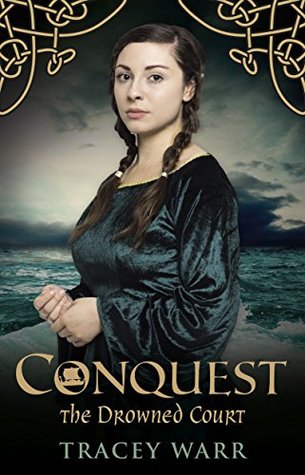
Nest ferch Rhys (The Drowned Court by Tracey Warr)
~
What about you? Have you read any good historical fiction this year? Have you read any of the books or authors I’ve mentioned here and have you noticed any patterns or trends in your own reading?



 She Reads Novels