The Walter Scott Prize 2019 Longlist – and the Academy Recommends

If you’ve been following my blog for a while you will know that I have been slowly (very slowly) working through all of the books shortlisted for the Walter Scott Prize for Historical Fiction since the prize began in 2010. I am always looking for quality historical fiction and I find that the books nominated for this particular prize are of a consistently high standard. You can see the progress I’ve made with this here – and I know there are other bloggers working on similar projects too.

The longlist for the 2019 prize has been announced today and includes lots of intriguing titles. I’m not planning on trying to read the entire longlist – I’m waiting until the shortlist is announced – but I would still like to read as many of these as I can.

Here are the twelve books on this year’s longlist:
Little by Edward Carey (Gallic Books)
A Long Way From Home by Peter Carey (Faber)
After The Party by Cressida Connolly (Viking)
Washington Black by Esi Edugyan (Serpent’s Tail)
The Western Wind by Samantha Harvey (Jonathan Cape)
Dark Water by Elizabeth Lowry (riverrun)
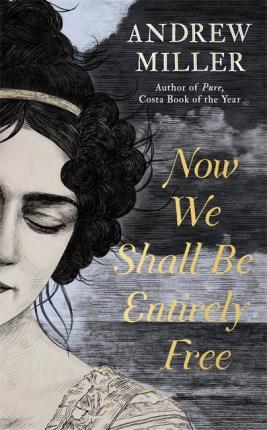
Now We Shall Be Entirely Free by Andrew Miller (Sceptre)
Warlight by Michael Ondaatje (Jonathan Cape)
The Wanderers by Tim Pears (Bloomsbury)
The Long Take by Robin Robertson (Picador)
All The Lives We Never Lived by Anuradha Roy (Maclehose Press)
Tombland by C J Sansom (Mantle)

The only one of these I’ve read so far is Now We Shall Be Entirely Free, which I enjoyed, but I have Tombland and The Western Wind on my TBR and was already interested in reading Washington Black as well. I also have a copy of The Horseman, which is the first book in Tim Pears’ West Country Trilogy; I will need to read that one before I can read The Wanderers.

Have you read any of the books on this year’s longlist? Which ones do you think deserve to be shortlisted?

Academy Recommends

In addition, the Walter Scott Prize Academy has also announced its annual list of twenty recommended historical fiction novels published in the last year (these books are separate from the longlist and have not been nominated for the prize).
Love Is Blind by William Boyd (Viking)
The Prince Of Mirrors by Alan Robert Clark (Fairlight Books)
The Making Of Martin Sparrow by Peter Cochrane (Viking Australia)
So Much Life Left Over by Louis de Bernieres (Harvill Secker)
All Among The Barley by Melissa Harrison (Bloomsbury)
The Hundred Wells Of Salaga by Ayesha Harruna Attah (Cassava Republic)
Only Killers And Thieves by Paul Howarth (Pushkin Press)
Mary Ann Sate, Imbecile by Alice Jolly (Unbound)
The Black Earth by Philip Kazan (Allison & Busby)
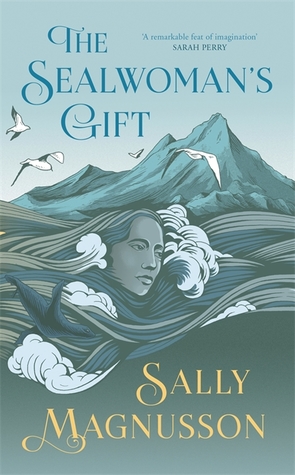
The Sealwoman’s Gift by Sally Magnusson (Two Roads)
Mad Blood Stirring by Simon Mayo (Doubleday)
As The Women Lay Dreaming by Donald S Murray (Saraband)
Kintu by Jennifer Nansubaga Makumbi (Oneworld)
The Angel’s Mark by S J Perry (Corvus)
A View Of The Empire At Sunset by Caryl Phillips (Vintage)
Painter To The King by Amy Sackville (Granta)
A Treachery Of Spies by Manda Scott (Bantam Press)
The Tristan Chord by Glenn Skwerer (Unbound)
Never Anyone But You by Rupert Thomson (Corsair)
The Madonna Of The Mountains by Elise Valmorbida (Faber)

Again, I have read one of these books and enjoyed it – The Sealwoman’s Gift by Sally Magnusson. I’ve heard of a few of the others, but most of them are new to me. I have a lot of investigating to do!

You can find out more about the books and the Academy here. What do you think of their choices?
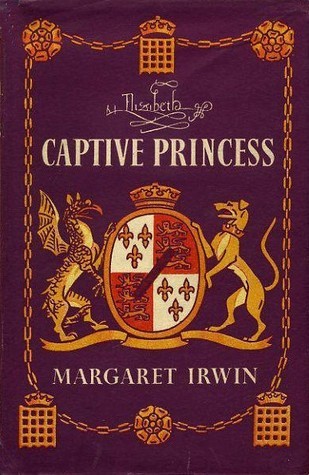
Elizabeth, Captive Princess by Margaret Irwin

I loved Young Bess, the first book in Margaret Irwin’s Elizabeth I trilogy, so I didn’t want to wait too long before picking up the second. I was hoping for another great read but, although there was still a lot to like about this book, I didn’t think it was as good as the first one.

Published in 1948, Elizabeth, Captive Princess, continues the story of the young Elizabeth. The novel begins with the death of Elizabeth’s half-brother, Edward VI, leaving the succession to the throne of England in doubt. We then follow the tragic story of Lady Jane Grey, queen for nine days before eventually being beheaded after Elizabeth’s half-sister Mary comes to the throne. This is a fate that Elizabeth could face herself as she also becomes linked with plots and conspiracies during Mary’s reign, leading to her imprisonment in the Tower of London.

Before the novel ends, two very different men have entered Elizabeth’s life: one is Robert Dudley, son of the Duke of Northumberland and another prisoner in the Tower; the other is Philip of Spain, who has come to England at last to marry Queen Mary. I would expect Elizabeth’s relationships with these two men to form the basis of the final book in the trilogy, Elizabeth and the Prince of Spain, but this particular book concentrates on the stories of Lady Jane Grey and Queen Mary. We actually see very little of Elizabeth herself in this book, which I thought was strange as she is the title character, although I suppose it’s not too surprising as a lot of the drama during this specific period was taking place elsewhere.

The lack of focus on Elizabeth wasn’t really a problem for me in itself; after all, in Young Bess it had been the secondary characters that I found most interesting anyway, particularly Thomas Seymour and his brothers Edward and Henry. But the characters in this book just don’t come to life in the way that the Seymours did and I struggled to connect with any of them on an emotional level. This made the novel feel a bit slow and flat, which was disappointing for me after enjoying the first one so much.

I don’t want to sound too negative, though, because I did like this book and the quality of Margaret Irwin’s writing still makes it a worthwhile read. I love her descriptive writing and the way she recreates Tudor London:

It was seven o’clock as they entered the city of London. The sun was setting in a fury of flame and storm-clouds. All the dark rickety wooden houses leaning top-heavily across the streets as though they were nodding to each other, all but rubbing each other’s foreheads, all seemed to have put on scarves and petticoats, so many bright cloths fluttered from the windows, while the gaily painted shop signs flaunted and creaked and clattered in the breeze.

Away from the main storylines, I enjoyed all the other little details of 16th century life and 16th century history. For example, I was interested in the account of the Edward Bonaventure’s voyages to the White Sea and the ‘strange land of endless snow’ which I first read about in The Ringed Castle by Dorothy Dunnett.

Having come this far, I will be finishing the trilogy with Elizabeth and the Prince of Spain, but will then look forward to reading some of Margaret Irwin’s other books. I have The Galliard, her novel about Mary, Queen of Scots and the Earl of Bothwell on my TBR and would also like to read The Stranger Prince, about Prince Rupert of the Rhine.

Six Degrees of Separation: From The Arsonist to Seven for a Secret

It’s the first Saturday of the month which means it’s time for another Six Degrees of Separation, hosted by Kate of Books are my Favourite and Best. The idea is that Kate chooses a book to use as a starting point and then we have to link it to six other books of our choice to form a chain. A book doesn’t have to be connected to all of the others on the list – only to the one next to it in the chain.

This month we begin with The Arsonist by Chloe Hooper. I haven’t read this book – in fact, it isn’t out in the UK until the end of May – but it does sound like an interesting Australian true-crime book about ‘Black Saturday’, the day in February 2009 when a man lit two fires in Victoria’s Latrobe Valley.

For my first link, I have chosen another book on a fire-related subject, although this one is fiction: The Fire Court by Andrew Taylor, a historical mystery set in the aftermath of the Great Fire of London. This is part of a series featuring the characters of Cat Lovett and James Marwood (I used the first book, The Ashes of London, in a previous Six Degrees post) and the next book, The King’s Evil, is on my shelf waiting to be read soon.

My next link is to another historical crime novel written by an author whose name is Andrew. He is Andrew Hughes and the book is The Convictions of John Delahunt. Set in Dublin in the 1840s, this is a dark, atmospheric novel with an unusual and intriguing narrator. I remember loving it.

Another book set at least partly in Dublin – in the early twentieth century this time – is Ghost Light by Joseph O’Connor, the story of the Irish actress Molly Allgood and her relationship with the playwright John Millington Synge. I thought this was a beautifully written novel, but I still haven’t read any of Joseph O’Connor’s other books yet.

Despite the title, Ghost Light is not actually a ghost story. A novel with the word ‘ghost’ in the title that really does feature ghosts is The Ghost Writer by John Harwood. The main character discovers that his great-grandmother, Viola Hatherley, was a writer of ghost stories and some of the tales she had supposedly written are incorporated into the plot.

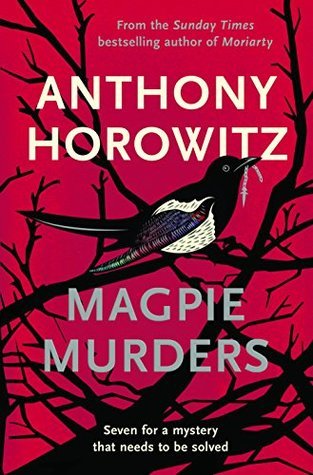
This leads me to another book which uses the story-within-a-story concept, but in a very different way: the wonderful Magpie Murders by Anthony Horowitz. The novel includes, almost in its entirety, an Agatha Christie-style murder mystery written by a fictional author called Alan Conway.

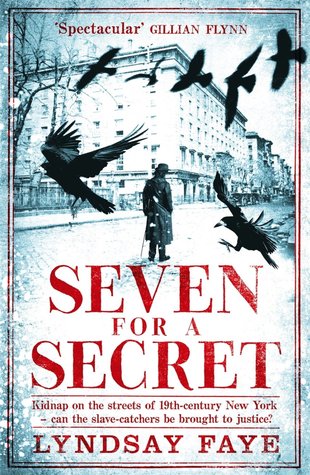
My final link is to Seven for a Secret by Lyndsay Faye, the middle book in her Timothy Wilde trilogy which I loved and was sorry to see come to an end. It can be linked to the previous book in the chain in two ways – as well as having birds pictured on the cover, the title refers to the famous rhyme about magpies (One for sorrow, two for joy, three for a girl, four for a boy, five for silver, six for gold, seven for a secret never to be told).

And that’s my chain for this month! Have you read any of the books I’ve mentioned?

In April we will be starting with How to be Both by Ali Smith.

My Commonplace Book: February 2019

A selection of words and pictures to represent February’s reading:

commonplace book
noun
a book into which notable extracts from other works are copied for personal use.

~

Seredith turned away and dropped the knife into the open drawer by my side. ‘Memories,’ she said, at last. ‘Not people, Emmett. We take memories and bind them. Whatever people can’t bear to remember. Whatever they can’t live with. We take those memories and put them where they can’t do any more harm. That’s all books are.’

The Binding by Bridget Collins (2019)

~

There was only one Drake, but also there was only one Beauvallet. The Spaniards coupled the two names together, but made of Beauvallet a kind of devil. Drake performed the impossible in the only possible way; the Spaniards said that El Beauvallet performed it in an impossible way, and feared him accordingly.

Beauvallet by Georgette Heyer (1929)

~

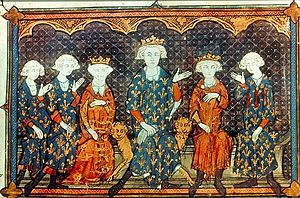
The family of Philip IV of France, depicted in 1315.

Alas, in love, it is not enough to have the same desires; they must also be expressed at the same time.

The She-Wolf by Maurice Druon (1959)

~

‘I am so fixed upon my own struggles I confess I barely give the plight of Africans a thought. Tad had his troubles too, yet he cared only for the enslaved, the dispossessed.’

‘He saw the world as a sculptor sees a block of stone. Not how it is. How it could be.’

Blood & Sugar by Laura Shepherd-Robinson (2019)

~

“Things are never so frightening in front of you as they are behind you. Remember that. Anything seems frightening when it’s behind your back and you can’t see it. That’s why it’s always better to turn and face things – and then very often you find they are nothing at all.”

Giant’s Bread by Mary Westmacott (1930)

~

Mount Longonot, Kenya

A vast golden valley of sun-bleached grass, speckled by scrub and flat-topped thorn trees and seamed with dry gullies; hemmed in to left and right by the two great barriers of the Kinangop and the Mau, and dominated by the rolling lava falls and cold, gaping crater of Longonot, standing sentinel at its gate.

Death in Kenya by M.M. Kaye (1958)

~

“I am going to dictate, and I hope that this time you will not interrupt at what I consider a dramatic moment. Let me think. I must repeat the first part, I suppose. Another time, sergeant, warn people at the beginning. It saves them from boring themselves, which is after all the most heinous of crimes.”

And Death Came Too by Richard Hull (1939)

~

Until then I had thought each book spoke of the things, human or divine, that lie outside books. Now I realized that not infrequently books speak of books: it is as if they spoke among themselves. In the light of this reflection, the library seemed all the more disturbing to me. It was then the place of a long, centuries-old murmuring, an imperceptible dialogue between one parchment and another, a living thing, a receptacle of powers not to be ruled by a human mind, a treasure of secrets emanated by many minds, surviving the death of those who had produced them or had been their conveyors.

The Name of the Rose by Umberto Eco (1980)

~

Favourite books read in February:

Giant’s Bread and Beauvallet

New authors read in February:

Bridget Collins, Laura Shepherd-Robinson

Countries visited in February:

England, Italy, France, Spain, Kenya

~

Have you read any of these books? Which books did you enjoy in February?

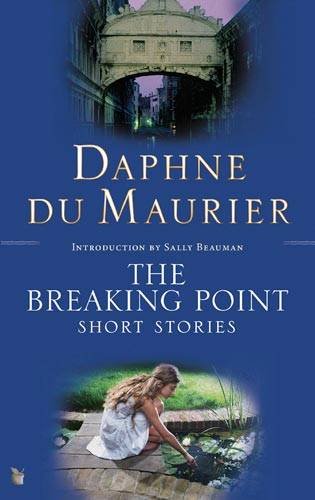
The Breaking Point: Short Stories by Daphne du Maurier

Having enjoyed some of Daphne du Maurier’s other short story collections – The Birds and Other Stories, The Rendezvous and Other Stories and Don’t Look Now and Other Stories – I’ve been looking forward to reading this one. Originally published in 1959 and written at a time when du Maurier herself said she had been close to a nervous breakdown, the eight stories in this collection are particularly dark and unsettling.

There is a paragraph just before the introduction in my Virago edition of the book which gives an idea of the common theme linking the stories and why the title The Breaking Point was chosen:

There comes a moment in the life of every individual when reality must be faced. When this happens, it is as though a link between emotion and reason is stretched to the limit of endurance, and sometimes snaps. In this collection of stories, men, women, children and a nation are brought to the breaking-point. Whether the link survives or snaps, the reader must judge for himself.

I enjoyed this book, but I found the first three stories by far the strongest and some of the others slightly disappointing in comparison. For this reason, I preferred The Birds and Don’t Look Now, which I felt were more even in quality. Anyway, the first story in the book, The Alibi, gets the collection off to a great start. A man, bored with his life, his marriage and his daily routine, makes an impulsive decision to rent a room in a house chosen at random. Adopting a new identity, soon he is spending every spare moment at the house, but what is his real motive for doing this? This is a creepy and disturbing story; the suspense builds and builds as we wait to see whether it will end in the way we hope it won’t!

The Blue Lenses is a very strange story about Marda West, a woman who has been having eye surgery. When her bandages are removed and she is fitted with a new pair of lenses, she finds that the people around her look very unusual – in fact, you could say that she is finally seeing them for what they really are. I can’t say much more without completely spoiling the story, but Marda’s situation is both frightening and fascinating. I loved this story and thought the twist at the end was perfect.

The next one, Ganymede, reminded me of Death in Venice by Thomas Mann, both in setting and in plot. A man is visiting Venice for a relaxing October break when a young man working in a restaurant catches his eye. As the days go by, he becomes more and more obsessed with the young waiter, whom he thinks of as ‘Ganymede’. This is another very suspenseful story, as it quickly becomes obvious that things are not going to go smoothly for our narrator – and in du Maurier’s hands, Venice becomes an eerie and sinister setting where we know some sort of tragedy is going to happen.

In the next story, The Pool, we meet Deborah and Roger, two children staying at their grandparents’ house for the summer. One day Deborah escapes from her younger brother and enters the woods nearby, where she discovers a pool which seems to lead into a secret world. I didn’t like this story as much as the first three – although, as always, du Maurier’s descriptions are beautiful and vivid. The Archduchess, which follows, is an account of a revolution in a fictional European country called Ronda. This was the only story in the collection that actually bored me – there seemed to be a huge amount of world-building and scene-setting, with very little plot or depth of character – but it’s possible that I didn’t fully understand what she was trying to say.

I wasn’t sure what to make of The Menace either. It seemed like a science fiction story at first, about a new filming technology known as ‘feelies’ where actors are wired up to a machine powered by their own life-force. This aspect of the story is never really explained, but I did enjoy getting to know actor Barry Jeans as we follow him through a twenty-four-hour period and I loved the ending. The Chamois is another of the weaker stories in the collection, but still an interesting one. A woman travels to Greece with her husband so that he can hunt chamois, but as they climb further into the mountains, the cracks in their marriage start to show and the woman’s deepest fears become exposed.

Finally, The Lordly Ones is a great story to finish with. Ben is a young mute boy who feels neglected and unloved by his parents. When the family move to a new house in the countryside, he escapes to the moors one night and for the first time in his life feels welcomed and cared for by another family he thinks of as The Lordly Ones. This is a very short story with a clever twist at the end that made me want to go back to the beginning and read it again!

Overall, I do recommend The Breaking Point but if you’re new to du Maurier’s short stories, I would suggest reading The Birds or Don’t Look Now collections first as I thought they were stronger. I still have The Doll, her collection of ‘lost’ stories to read, and will try to get to that book soon.

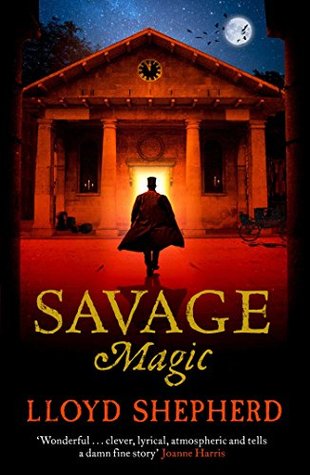
Savage Magic by Lloyd Shepherd

Savage Magic, published in 2014, is Lloyd Shepherd’s third historical mystery to feature Charles Horton of the Thames River Police. The books all stand alone, so if you’ve never come across this series before you could easily read this one first without having read the previous two. Having said that, I found the other two – The English Monster and The Poisoned Island – much stronger and wouldn’t recommend starting here.

After a brief prologue, Savage Magic opens in London in 1814 with Abigail Horton entering Brooke House, a ‘private madhouse for the deranged’. She has made the decision to do this voluntarily as she has been suffering from visions of a wild, savage woman, haunting her dreams and pursuing her through her waking hours. Afraid she is losing her sanity, Abigail hopes she can receive the help she needs at Brooke House, but her husband, Constable Horton, is hurt when he discovers that she has done this without confiding in him first.

Meanwhile, Horton’s superior, the magistrate Aaron Graham, is also concerned about his own wife, who has left him to go and live with her new lover, taking their young daughter with her. Graham has heard some very disturbing rumours about Thorpe Lee House, where his wife and daughter are now living, and he sends Horton off to investigate. Horton has barely left London when a murder takes place, under the strangest of circumstances. A wealthy, aristocratic gentleman is found dead in his own bed, wearing a satyr’s mask on his face. This is only the first in a series of similar murders in which all of the victims are from the same social circle and all disguised by a mask. With Horton gone, Graham is left to investigate the killings himself.

At first, the separate strands of the story feel quite unconnected, with Graham trying to solve the London murders and Horton, miles away, becoming embroiled in accusations of witchcraft and hauntings at Thorpe Lee House. Eventually, everything begins to fall into place and we see how they are linked – and how the key to the entire mystery may lie in the events which occur behind the walls of Brooke House Asylum.

Reading back over what I’ve written above, I know this sounds like the sort of book I would usually enjoy…and yet I was disappointed. It’s possible that if I hadn’t loved Lloyd Shepherd’s first two novels so much, I might have liked this one more, but I’m not sure. The English Monster combined an investigation into the Ratcliffe Highway Murders with a pirate adventure in the Caribbean, while The Poisoned Island featured the story of a Tahitian prince. By comparison, I found this book less exotic, less exciting and lacking the originality of the previous two. It seemed like a much more conventional novel and, although I was pleased to see Abigail given a larger role to play, the asylum storyline is something I feel I’ve read several times before.

I do still like Lloyd Shepherd’s writing (despite the annoying use of present tense) and I love the way he creates atmosphere – the scenes which take place at the supposedly haunted Thorpe Lee House are particularly good and, knowing how Shepherd has used supernatural elements in his other books, I was kept wondering whether there really were witches at work or whether there was a more logical explanation. There was too much switching between one storyline and another, though; there were too many different threads to keep hold of and it took too long for them to start coming together.

The fourth book in the series, The Detective and the Devil, sounds more promising. I haven’t been put off reading it, but I’m not in any hurry either.

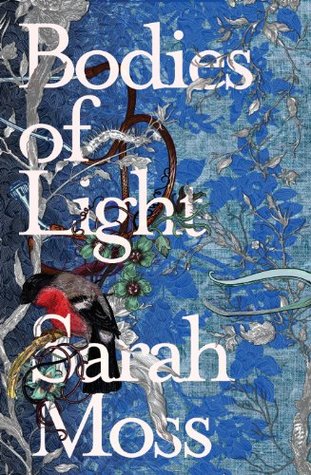
Bodies of Light by Sarah Moss

This is the first book I’ve read by Sarah Moss, an author I had never really thought about trying until I saw so much praise for her latest novel, Ghost Wall, last year. Bodies of Light is apparently loosely linked to an earlier book, Night Waking, but I didn’t feel that I’d missed anything by reading this one first.

The setting for Bodies of Light is Victorian Manchester where, as the novel opens, a newly married couple – Elizabeth and Alfred Moberley – are moving into their new home. Even this early in their marriage, there are clues that suggest they might not be very happy together; Alfred is a painter who appreciates the finer things in life while Elizabeth is passionate about social reform and women’s rights. Their two daughters, Alethea (Ally) and May, grow up trying to please both parents, being asked to model for their father’s latest portrait one day and accompanying their mother on one of her missions to help women in Manchester’s poorest areas the next.

I really enjoyed the first half of this book; after a slow start I found that I had become completely drawn into the lives of the Moberley family. Each chapter starts with a description of a portrait painted by Alfred or one of his circle, giving an idea of what will follow in the pages to come, and I thought that was a nice touch. As the novel progresses and the children grow older, we see that Elizabeth, despite her good deeds in public, can be a harsh and unloving mother; to explain this, Sarah Moss spends some time at the beginning of the book showing us what made her the way she is, focusing on Elizabeth’s relationship with her own mother and the depression she suffered after Ally’s birth.

The second half of the novel is devoted mainly to Ally, as she goes to London to study medicine at the first medical school to accept female students. She is pushed into this career path by her mother, who believes very strongly that women – particularly ‘fallen women’ – should be entitled to request treatment from a female doctor and who likes the idea of her own daughter becoming one of these doctors. Ally is an intelligent young woman who loves learning, so she throws herself into her studies, but there is always a sense that she is doing this mainly to make her mother happy – and yet, whatever she does, it seems that Elizabeth is never happy.

I felt so sorry for Ally, who self-harms and suffers from nightmares as she is growing up, longing for some comfort and compassion from her mother but receiving only criticism and impatience instead, told that she has no right to complain about anything ‘because there is always someone else worse off.’ Interestingly, her younger sister May, who has the same upbringing, doesn’t seem to suffer from Ally’s anxiety-related problems, possibly due to the fact that Ally, as the eldest, has always felt under more pressure.

Once Ally had left home to begin her medical studies, I found the story a bit less compelling but still interesting. It certainly made me appreciate the educational opportunities that are open to women today and how difficult it must have been for those who were among the first to try to enter a field dominated by men. This is a fascinating book and I do like Sarah Moss’s writing, so I now want to read the sequel, Signs for Lost Children, as well as the earlier Night Waking, which I think tells some more of May’s story.