Thoughts on finishing The Tawny Man Trilogy (The Golden Fool and Fool’s Fate)

After reading Fool’s Errand a few months ago, I knew I didn’t want to wait too long before reading the other two books in Robin Hobb’s Tawny Man Trilogy; on the other hand, I didn’t want to read them too quickly because then it would all be over and I wouldn’t have them to look forward to anymore (I’m sure I’m not the only one who feels that way about long-anticipated books). Once I started reading The Golden Fool, though, I had to keep going until I’d reached the end of the trilogy. I cared too deeply about the characters to abandon them while I read other books.

Before I go any further, I will give my usual advice that if you are new to Robin Hobb, the place to start is the Farseer Trilogy, which begins with Assassin’s Apprentice. After that, you should read The Liveship Traders Trilogy – it’s not completely necessary but I strongly recommend it as it will give you a better understanding of the world Hobb has created – and then move on to Fool’s Errand. If you have not yet read all of those books, you will come across spoilers for them in the rest of this post (it would be impossible for me to avoid them).
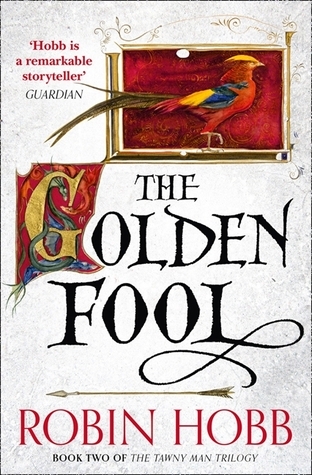
First, The Golden Fool. As the middle book in the trilogy, this one is neither as tightly plotted as the first nor as epic as the third. Its main function seems to be to tie up some of the storylines begun in the first book (such as Laudwine and the Piebalds), while setting the scene for the quest that will form the basis of the final book. The foundations of this quest are laid during negotiations for Prince Dutiful’s betrothal to an Outislander princess, the Narcheska Elliania. Dutiful’s mother, Queen Kettricken, intends this marriage to form a lasting alliance between the Six Duchies and the Outislands, but it seems that things aren’t going to go quite as smoothly as she’d hoped. Before the Narcheska will agree to marry the prince, she insists that he will have to prove himself worthy…by bringing her the head of the black dragon Icefyre, who lies in a glacier on a distant ice-covered island.

To help Dutiful prepare for his mission, Fitz – still posing as Tom Badgerlock, servant to the nobleman Lord Golden (the Fool) – reluctantly agrees to take on the role of Skillmaster, tutoring the prince in the Farseer magic known as the Skill. The importance of creating a coterie for Dutiful – a circle of those gifted in the Skill who will offer support and strength to the prince – is clear, but at present Fitz has other things on his mind. His adopted son, Hap, is in love with a girl from Buckkeep Town whose parents strongly disapprove of the match, and Hap risks losing his apprenticeship as a result. Meanwhile, his daughter Nettle, with whom he is linked through the Skill, is being visited in her dreams by a blue dragon; Kettricken and Chade want her brought to the safety of Buckkeep Castle and raised as befits a Farseer heir, but Fitz disagrees…

Worst of all, the friendship between Fitz and the Fool, which has endured for so many years, comes under threat when a delegation from Bingtown arrives. Among them is a certain woman called Jek, who will be remembered by readers of the Liveship Traders, and who seems to be under a misapprehension about the Fool. And this is one of several points in the novel where I was glad I had resisted the temptation to go straight from the Farseer Trilogy to the Tawny Man – this particular scene would have made far less sense otherwise. Even with my understanding of what it was all about, I found this a difficult and uncomfortable scene to read – it’s never nice to see people who care so much about each other hurting each other so badly.
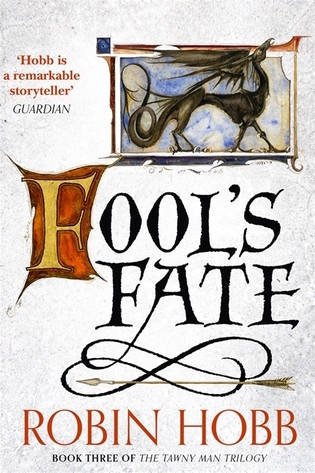
Fool’s Fate picks up the story in the middle of the preparations for Dutiful’s journey to the Outislands where he must hunt down and behead the dragon Icefyre. Along with his old mentor Chade, and the difficult but strongly-Skilled Thick, Fitz is accompanying the prince on his voyage but insists that the Fool, who has predicted his own death on the icy island of Aslevjal, must stay behind. Can the future really be changed as easily as that – or will fate refuse to be defied?

This is the book where the significance of everything we’ve learned in the previous eight novels regarding dragons, Elderlings, White Prophets and Catalysts finally starts to become clear and I found the ‘quest’ element of the novel more compelling than the one in the final Farseer novel, Assassin’s Quest – although, having said that, there are some direct links between the two and, remembering that earlier quest, I enjoyed the brief glimpses we are given of Girl on a Dragon and Verity as Dragon! This is such a visual book too; some of the scenes involving Icefyre, the glaciers of Aslevjal and the Elderling ruins beneath the ice are described so vividly, I almost felt as though I was watching them unfold on film. We also see both the Skill and the Wit being used in new and fascinating ways.

As the final book in the Tawny Man Trilogy and, until the publication of the Fitz and the Fool Trilogy in 2014 (which I still have to look forward to), the final book about Fitz, there are a lot of loose ends to tie up and a lot of ongoing storylines to be resolved. I think whether or not you will be satisfied with these resolutions will depend on how you feel about the characters concerned. Although one of Fitz’s relationships is given a happy ending, it comes at the expense of at least two others – and because I had felt much more closely engaged with the latter two characters than with the former, I found it a very bittersweet conclusion to Fitz’s story.

As usual, coming to the end of one of Robin Hobb’s trilogies has left me feeling bereft. I’m planning to start her Rain Wild Chronicles soon, but I’m wondering where the novella The Wilful Princess and the Piebald Prince fits in and whether I should maybe read that first.
Nonfiction Mini-Reviews: A Tudor Christmas and Henry VII

I didn’t have time last month to write about all of the books I read for Nonfiction November, so I’m combining the final two into one post today, which I think is quite appropriate as they are both Tudor related!

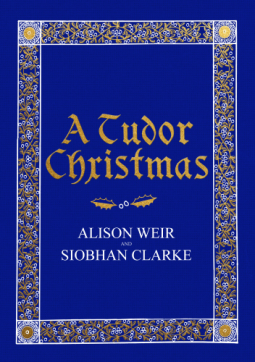
First, A Tudor Christmas. If you haven’t finished your Christmas shopping yet, this lovely little book by historian and novelist Alison Weir and her co-author Siobhan Clarke, a guide for Historic Royal Palaces, could be the perfect gift for any history lovers in your life (or for yourself, at any time of year, of course).

Divided into twelve sections to represent each of the twelve days of Christmas, the book takes us through the origins of many of our favourite Christmas traditions, as well as some that were popular in Tudor times but have disappeared over the years. The text is interspersed with recipes, poems, carols and illustrations, so if you don’t want to read it straight through from beginning to end, you could just pick it up and read a page or two whenever you have a few spare moments over the festive period. This is much shorter than the other non-fiction books I’ve read by Alison Weir and obviously doesn’t have the same level of depth, but even so she and Clarke manage to cover a large amount of material, touching on almost every aspect of Christmas you could think of.

I enjoyed reading about the various ways in which St Stephen’s Day/Boxing Day was celebrated in different parts of Europe, ranging from hunting the wren and taking beribboned horses to be blessed by the priest, to distributing alms to the poor. There’s a discussion of when the turkey was first introduced to England, a fascinating chapter about the typical games that would be played at home or at court, and some eye-opening accounts of how much money Henry VIII would spend on celebrating Christmas. There are also descriptions of earlier traditions such as the burning of the yule log and the origins of holly, ivy and mistletoe being used as decorations and, although I would have preferred a tighter focus on the Tudor period itself (which is what I’d expected from the title), I did find the whole book an interesting and worthwhile read.

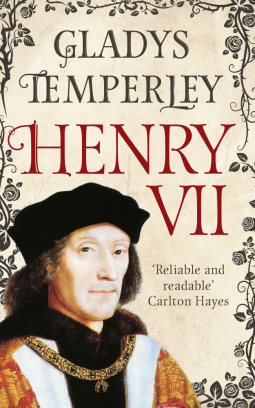
From a Tudor Christmas to a Tudor king…Henry VII by Gladys Temperley is a biography of the first Tudor monarch who reigned from 1485 to 1509. Originally published in 1914 (and reissued more recently by Endeavour Compass), it does feel a bit dated and dry in places, but I still found it perfectly readable.

I started to read this book shortly after finishing The Tudor Crown by Joanna Hickson, a fictional account of Henry’s life before he became king, so I was particularly interested in the earlier sections which gave the facts behind some of the episodes which were featured in the novel such as Henry’s time in exile and preparations for his return to England at the head of an army. However, all of this is passed over very quickly, to be followed by a much longer section on the rebellions, conspiracies and pretenders to the throne – including Perkin Warbeck and Lambert Simnel – that repeatedly threatened Henry’s reign. As Temperley says, “He trusted few men, suspected many. He had plunged too early into the bitter waters of adversity, and as a fugitive exile, eating the bread of dependence at the courts of France and Brittany, had learnt to watch and school himself until repression had killed all spontaneity.”

Henry VII isn’t one of my favourite kings, but Gladys Temperley seems to have a lot of respect and admiration for him, which I think is a good thing – as long as it doesn’t lead to too much bias, I always think it’s better when an author likes and is genuinely passionate about their subject. Temperley highlights many of Henry’s lasting achievements, such as his ‘Mercantile System’, a policy which aimed to increase foreign trade and improve England’s economy, and the steps he took towards reforming the country’s judicial system.

The book feels thoroughly researched; there are footnotes throughout the text, three appendices giving more information on The Star Chamber, Perkin Warbeck and Juana of Castile, and a very impressive bibliography. You do need to remember, though, that this is a very old biography and that what we know of history is constantly evolving. For a more modern look at Henry VII, I recommend Winter King by Thomas Penn.

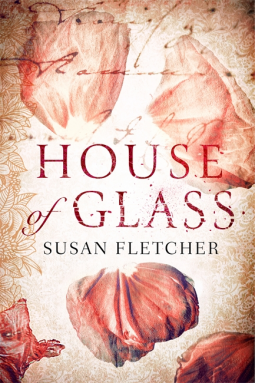
House of Glass by Susan Fletcher

I loved Susan Fletcher’s Corrag, a novel about the Glencoe Massacre of 1692, but for some reason have never read any of her other books until now. That has clearly been a mistake because House of Glass is another impressive novel. Although it is a very different type of story from Corrag, there are still some similarities, such as the beautiful writing and the interesting, unusual protagonist.

The novel is set in 1914, just before the outbreak of the First World War. Our narrator is Clara Waterfield, a young woman who suffers from osteogenesis imperfecta, better known as brittle bone disease. Because of her condition, Clara has led a very sheltered life, kept indoors where she is less likely to fall and injure herself. She has made the best of her situation, using books to educate herself on the people and places she is never likely to see, but still she longs to go out into the world and have the experiences that other people take for granted. When she is twenty years old, Clara loses her mother to cancer and, left alone in their London home with her well-meaning but over-protective stepfather, she takes her first tentative steps towards taking control of her own life.

Venturing as far as Kew Gardens, Clara discovers a love of plants and returns day after day to learn everything the head gardener can teach her about botany. Her new skills lead to her being summoned to Shadowbrook, a large estate in Gloucestershire, where the owner, Mr Fox, is looking for an expert to help fill his new glasshouse with plants from Kew. Almost as soon as Clara arrives at Shadowbrook, however, she becomes aware that something is wrong. Why do the housekeeper and the maids seem so afraid? Could the house really be haunted by the ghost of a former occupant, Veronique Pettigrew? And is the mysterious Mr Fox ever going to make an appearance?

House of Glass seems at first to be a typical Gothic ghost story. It certainly has all the elements of one: a neglected mansion with secrets hidden behind closed doors; unexplained noises in the night; servants who hint at trouble in the house’s past; and various other eerie occurrences which may or may not have a rational explanation. There are definite shades of classic novels such as Jane Eyre and Rebecca or, to give a more recent comparison, The Little Stranger by Sarah Waters. Throughout the first half of the book the sense of mystery builds as we try to work out what is really happening at Shadowbrook and Clara is as much in the dark as we are. Because of the way her life has been until now, her contact with other people has been very limited which means, as well as trying to solve the mysteries of Shadowbrook, she also has a lot to learn about social relationships and human nature. As she moves around the house and its grounds, asking questions and making observations, she not only makes some discoveries about Mr Fox and the Pettigrews, but she grows in confidence as a person too. I didn’t always like Clara quite as much as I felt I should have done, but I admired her for her strength and resilience.

In the second half of the book, everything changes; some revelations are made which send the story in a different and slightly unexpected direction and although some of my questions – and Clara’s – were answered, I wasn’t entirely convinced by these new plot developments. I wasn’t disappointed, exactly, but I did feel that I was reading a different type of story than it had seemed to be at first.

Now I need to go back and read some of the other Susan Fletcher books I seem to have missed out on over the last few years. Apart from this one and Corrag, have you read any you can recommend?

Thanks to Virago for providing a copy of this book for review via NetGalley.

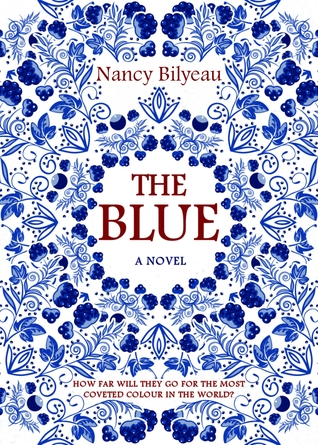
The Blue by Nancy Bilyeau

Since reading the Joanna Stafford trilogy (The Crown, The Chalice and The Tapestry) a few years ago, I’ve been waiting and hoping for a new book from Nancy Bilyeau and here it is at last: The Blue. Bilyeau wrote so convincingly about Tudor England in the Joanna Stafford books that I was surprised to find she was switching to an entirely different period for this latest novel – the Seven Years War of 1756 to 1763, a war which involved most of Europe, with Britain and France on opposite sides. Set against this backdrop, The Blue is an exciting, thrilling tale of espionage, art, religious persecution – and the race to create a new and beautiful shade of blue.

Our heroine, Genevieve Planché, is a young Huguenot woman whose family fled France when it became impossible for them to openly practise their religion. Despite her French ancestry, Genevieve has grown up in London among the silk weavers of Spitalfields and considers herself to be English, viewing the French king as someone to be feared. As a talented artist, she longs to have the chance to study painting and develop her skills, but as a woman she discovers that most of the opportunities open to men are closed to her. Her grandfather has made plans for her to go to a porcelain manufactory in Derby where she can paint pretty designs on plates and vases, but that’s not what Genevieve wants out of life. Then, just as she’s losing hope, she meets Sir Gabriel Courtenay at a party and receives a very tempting offer…

Sir Gabriel urges her to take up the position she has been offered at the Derby Porcelain Works and track down their chemist who is working on the development of a new colour blue. If Genevieve can steal the formula for blue and pass it to Sir Gabriel, he will help her travel to Venice where, he tells her, she will be taken seriously as a female artist. Genevieve is quick to agree, but once she is in Derby and the true scale of her mission becomes apparent, she begins to have doubts. Why is Sir Gabriel so desperate for the blue? What is the colour’s significance? And what will happen if she is caught?

The Blue is a fascinating novel – I learned so much about the production and decoration of porcelain, the meanings of different colours, and the ways in which art and science can combine to create things of beauty – but it is also a gripping and suspenseful historical thriller. One of the things I enjoyed most about the story was that it was so difficult to decide who could and could not be trusted. From the young woman Genevieve shares a room with at the Porcelain Works to Sir Gabriel himself, she has no idea who is on her side and who is likely to betray her. Although she sometimes makes silly mistakes, that is to be expected when she is faced with trying to navigate her way through so many dangerous situations!

This is the first book I have read via The Pigeonhole, a website/app which makes books available in daily instalments (referred to as ‘staves’). Each stave ended on a cliffhanger which left me desperate to get back to the story the following morning and reading it over a period of ten days was a wonderful experience. The book is written in present tense, something I usually find off-putting, but it seemed to work much better in the serialised format because it helped me to feel closer to Genevieve, almost as if I was sharing in her adventures as they happened.

I would love to read a sequel to The Blue, but if that doesn’t happen then I will look forward to whatever Nancy Bilyeau chooses to write about next.

Thanks to The Pigeonhole and Endeavour Quill for the opportunity to read this novel.

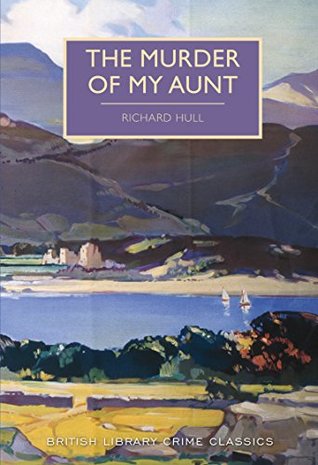
The Murder of My Aunt by Richard Hull

I haven’t read as many of the British Library Crime Classics as a lot of the other bloggers I follow, but of the few that I have read this one is the best so far. It’s not really a whodunnit so there’s no puzzle to solve or clues to decipher, but that doesn’t matter at all – the fun is in wondering whether the crime described in the novel will succeed and, if so, whether the culprit will be caught.

Our narrator, Edward Powell, is a self-obsessed, miserable and bitter young man who lives with his Aunt Mildred in a small Welsh village with a name (Llwll) he finds impossible to pronounce. With his little Pekingese dog and love of French novels, Edward feels out of place in Llwll and longs to move to somewhere more lively and fashionable. Unfortunately, being financially dependent on his aunt, it seems that he will have to stay where he is for now…unless he can think of another solution.

Given the title of the book, I’m sure you will have guessed what Edward’s solution is! Now, under normal circumstances I would be horrified at the thought of somebody plotting to murder his aunt, but I did have some sympathy for Edward as Aunt Mildred is portrayed as such a thoroughly unpleasant woman. She constantly criticises him, complains about everything he says or does, and goes to great lengths to make him look stupid in front of the entire village. Had Edward been a nicer person I could almost have given him my support, but he is no more likeable than she is – he’s lazy, selfish, and believes he is much cleverer than he actually is. Needless to say, the murder of his aunt proves to be more difficult than he expected!

Will Edward’s plans succeed? Obviously, I’m not going to tell you and will leave you to enjoy the story for yourself, but what I will say is that things don’t go smoothly and there are plenty of twists and turns before we reach the end. But the plot is only part of what makes this book so enjoyable; Edward’s narrative voice is wonderful too and transforms what could have been a very dark novel into a very funny one. From the beginning, when he spends the whole of the first page trying to explain how to pronounce Llwll, there is a strong thread of humour running throughout the entire story which is why, despite Edward and his aunt being such unlikeable people, their battle of wits is so entertaining to read.

As well as being funny, there’s also a sense that Edward’s narration could be unreliable. Is he correctly interpreting people and situations? Is Aunt Mildred really as horrible as he thinks she is or is his own negative view of the world distorting the way he sees her? Although this isn’t a mystery in the conventional sense, there’s still plenty of suspense as we wonder whether our questions will be answered, and when – and how – the murder of Edward’s aunt will take place.

The Murder of My Aunt was Richard Hull’s first novel, published in 1934. Having enjoyed it so much, I am looking forward to reading more of his books. Excellent Intentions is also a British Library Crime Classic, while a few others have been reissued by Agora Books. Have you read any of them?

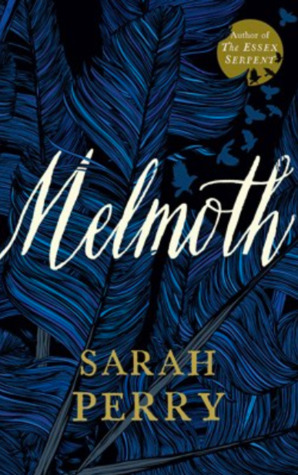
Melmoth by Sarah Perry

Having read Sarah Perry’s previous novel, The Essex Serpent, last year, I was looking forward to reading her new one, Melmoth. I read it in October, just before Halloween, and found it the perfect read for the time of year: dark, atmospheric and Gothic. It’s very different from The Essex Serpent, but with some similar ideas and themes.

At the centre of the novel is the legend of Melmoth the Witness, the woman who stood by Christ’s empty tomb and denied the Resurrection. As punishment for lying about what she had witnessed, she is condemned to wander the earth alone forever, dressed in black and with bare, bleeding feet, forced to bear witness instead to all of the cruelty and misery humans cause for one another. Desperate for some company in her exile, she appears to those who have lost hope and holds out her hand to them, urging them to join her in her wandering.

Helen Franklin, an Englishwoman who lives in Prague where she works as a translator, is fascinated by the tale of Melmoth. Her friend Karel, a Czech academic, has inherited a collection of papers which explore Melmoth’s story, and he passes these on to Helen. As she delves more deeply into the subject, she discovers more documents and journals giving different accounts of Melmoth from earlier times and from around the world. But the story of Melmoth could have a personal significance for Helen herself – because Helen is hiding a secret of her own, which could make her an ideal target for a mysterious woman in black.

Melmoth is a wonderfully atmospheric novel, partly because Prague is such a great setting which lends itself to strong, vivid descriptions, but I think Sarah Perry’s writing style also adds to the mood. Here is the opening paragraph in which we are introduced to Helen Franklin for the first time:

“Look! It is winter in Prague: night is rising in the mother of cities and over her thousand spires. Look down at the darkness around your feet, in all the lanes and alleys, as if it were a soft black dust swept there by a broom; look at the stone apostles on the old Charles Bridge, and at all the blue-eyed jackdaws on the shoulders of St John of Nepomuk. Look! She is coming over the bridge, head bent down to the whitening cobblestones: Helen Franklin, forty-two, neither short nor tall, her hair neither dark nor fair…”

The writing style and some of the devices the author uses, such as speaking directly to the reader, give it an almost timeless feel; although the main part of the novel is set in the modern day, there’s a sense that it could have taken place at any time in history – and of course, the Melmoth legend is a very old one. Through the stories-within-stories which emerge as we continue to read, we see how the influence of Melmoth has touched the lives of not just Helen Franklin, but many other characters throughout history, the most memorable being a boy who faces the horrors of the Holocaust. I enjoyed some of the stories while others interested me less and in the middle of the book I found my concentration wandering; the writing style, which works so well in other ways, creates a distance between the reader and the characters and I felt that I was watching them from afar rather than engaging with them as real people.

On the whole, I preferred The Essex Serpent, but I did love what this book had to say about forgiveness, atonement and loneliness. I’ve also been reminded of Charles Maturin’s 1820 novel, Melmoth the Wanderer, which it might be interesting to read and compare with this one.

Six Degrees of Separation: The Christmas Edition

It’s the first Saturday of a new month which means it’s time for another Six Degrees of Separation, hosted by Kate of Books are my Favourite and Best. The idea is that Kate chooses a book to use as a starting point and then we have to link it to six other books of our choice to form a chain. A book doesn’t have to be connected to all of the others on the list – only to the one next to it in the chain.

The book we’re going to begin with this month is, appropriately for December, A Christmas Carol by Charles Dickens. I still have the beautiful hardback copy I was given as a child with illustrations by Arthur Rackham. I talked about my memories of A Christmas Carol in a Classics Club monthly meme from a few years ao.

There were many different directions I could have taken from this starting point, but I decided to get into the festive spirit with a chain made entirely of Christmas-themed books. Shortly after I first started blogging in 2009, I took part in a Christmas reading challenge for which I read two books: the one above and The Christmas Mystery by Jostein Gaarder.

This is an unusual novel (like most of Gaarder’s), in which the story of an ancient pilgrimage to Bethlehem unfolds through scraps of paper found behind the doors of an Advent calendar. In the present day, meanwhile, a mystery begins to emerge involving the creation of the calendar itself.

Now, from one Christmas mystery to a whole collection of them…

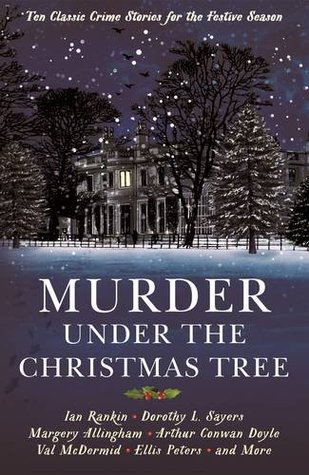
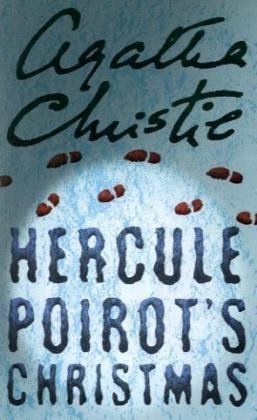
Murder Under the Christmas Tree contains stories by classic crime authors such as Margery Allingham, Dorothy L Sayers and Arthur Conan Doyle. One author whose work doesn’t appear in that collection is Agatha Christie, but she did write a few books with a Christmas theme…including the next book in my chain, Hercule Poirot’s Christmas.

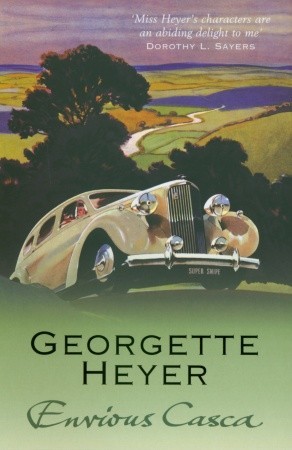
The book involves the murder of an old man who is found dead in his home while his family gather to celebrate Christmas. I enjoyed it, but it wasn’t a favourite Christie and I didn’t find it very Christmassy either. Another book with a very similar plot, published three years later, is Envious Casca by Georgette Heyer.

Envious Casca has also been published under the title A Christmas Party. However, the family featured in the novel were such a nasty, unpleasant group of people, I couldn’t think of anything worse than being a guest at that particular party! Another mystery set at Christmas with a dysfunctional family at its heart is I Am Half-Sick of Shadows, the fourth in Alan Bradley’s Flavia de Luce series.

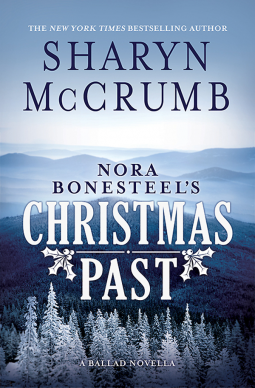
In I Am Half-Sick of Shadows, eleven-year-old Flavia tries to catch Santa Claus on his way down the chimney. In the final book in my chain, Nora Bonesteel’s Christmas Past by Sharyn McCrumb, Sheriff Spencer Arrowood is also trying to catch a man on Christmas Eve – a criminal who lives on a remote farm in the Appalachian Mountains.

For the first time since I’ve started taking part in Six Degrees of Separation, I am able to bring the chain full circle. The title of my final book contains the words ‘Christmas Past’ – and the first book features the Ghost of Christmas Past!

Have you read any of these? What are your favourite Christmas-themed books?

Next month (January) we will be starting our chains with The French Lieutenant’s Woman by John Fowles.