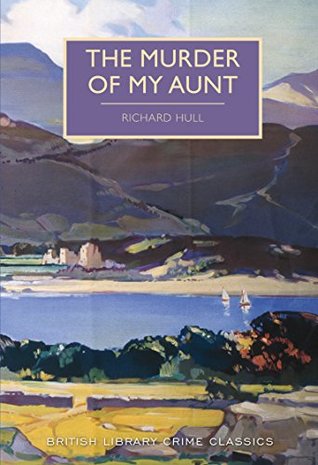
The Murder of My Aunt by Richard Hull

I haven’t read as many of the British Library Crime Classics as a lot of the other bloggers I follow, but of the few that I have read this one is the best so far. It’s not really a whodunnit so there’s no puzzle to solve or clues to decipher, but that doesn’t matter at all – the fun is in wondering whether the crime described in the novel will succeed and, if so, whether the culprit will be caught.

Our narrator, Edward Powell, is a self-obsessed, miserable and bitter young man who lives with his Aunt Mildred in a small Welsh village with a name (Llwll) he finds impossible to pronounce. With his little Pekingese dog and love of French novels, Edward feels out of place in Llwll and longs to move to somewhere more lively and fashionable. Unfortunately, being financially dependent on his aunt, it seems that he will have to stay where he is for now…unless he can think of another solution.

Given the title of the book, I’m sure you will have guessed what Edward’s solution is! Now, under normal circumstances I would be horrified at the thought of somebody plotting to murder his aunt, but I did have some sympathy for Edward as Aunt Mildred is portrayed as such a thoroughly unpleasant woman. She constantly criticises him, complains about everything he says or does, and goes to great lengths to make him look stupid in front of the entire village. Had Edward been a nicer person I could almost have given him my support, but he is no more likeable than she is – he’s lazy, selfish, and believes he is much cleverer than he actually is. Needless to say, the murder of his aunt proves to be more difficult than he expected!

Will Edward’s plans succeed? Obviously, I’m not going to tell you and will leave you to enjoy the story for yourself, but what I will say is that things don’t go smoothly and there are plenty of twists and turns before we reach the end. But the plot is only part of what makes this book so enjoyable; Edward’s narrative voice is wonderful too and transforms what could have been a very dark novel into a very funny one. From the beginning, when he spends the whole of the first page trying to explain how to pronounce Llwll, there is a strong thread of humour running throughout the entire story which is why, despite Edward and his aunt being such unlikeable people, their battle of wits is so entertaining to read.

As well as being funny, there’s also a sense that Edward’s narration could be unreliable. Is he correctly interpreting people and situations? Is Aunt Mildred really as horrible as he thinks she is or is his own negative view of the world distorting the way he sees her? Although this isn’t a mystery in the conventional sense, there’s still plenty of suspense as we wonder whether our questions will be answered, and when – and how – the murder of Edward’s aunt will take place.

The Murder of My Aunt was Richard Hull’s first novel, published in 1934. Having enjoyed it so much, I am looking forward to reading more of his books. Excellent Intentions is also a British Library Crime Classic, while a few others have been reissued by Agora Books. Have you read any of them?
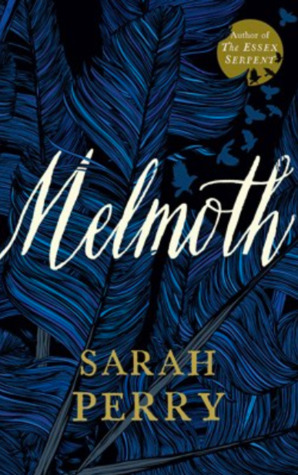
Melmoth by Sarah Perry

Having read Sarah Perry’s previous novel, The Essex Serpent, last year, I was looking forward to reading her new one, Melmoth. I read it in October, just before Halloween, and found it the perfect read for the time of year: dark, atmospheric and Gothic. It’s very different from The Essex Serpent, but with some similar ideas and themes.

At the centre of the novel is the legend of Melmoth the Witness, the woman who stood by Christ’s empty tomb and denied the Resurrection. As punishment for lying about what she had witnessed, she is condemned to wander the earth alone forever, dressed in black and with bare, bleeding feet, forced to bear witness instead to all of the cruelty and misery humans cause for one another. Desperate for some company in her exile, she appears to those who have lost hope and holds out her hand to them, urging them to join her in her wandering.

Helen Franklin, an Englishwoman who lives in Prague where she works as a translator, is fascinated by the tale of Melmoth. Her friend Karel, a Czech academic, has inherited a collection of papers which explore Melmoth’s story, and he passes these on to Helen. As she delves more deeply into the subject, she discovers more documents and journals giving different accounts of Melmoth from earlier times and from around the world. But the story of Melmoth could have a personal significance for Helen herself – because Helen is hiding a secret of her own, which could make her an ideal target for a mysterious woman in black.

Melmoth is a wonderfully atmospheric novel, partly because Prague is such a great setting which lends itself to strong, vivid descriptions, but I think Sarah Perry’s writing style also adds to the mood. Here is the opening paragraph in which we are introduced to Helen Franklin for the first time:

“Look! It is winter in Prague: night is rising in the mother of cities and over her thousand spires. Look down at the darkness around your feet, in all the lanes and alleys, as if it were a soft black dust swept there by a broom; look at the stone apostles on the old Charles Bridge, and at all the blue-eyed jackdaws on the shoulders of St John of Nepomuk. Look! She is coming over the bridge, head bent down to the whitening cobblestones: Helen Franklin, forty-two, neither short nor tall, her hair neither dark nor fair…”

The writing style and some of the devices the author uses, such as speaking directly to the reader, give it an almost timeless feel; although the main part of the novel is set in the modern day, there’s a sense that it could have taken place at any time in history – and of course, the Melmoth legend is a very old one. Through the stories-within-stories which emerge as we continue to read, we see how the influence of Melmoth has touched the lives of not just Helen Franklin, but many other characters throughout history, the most memorable being a boy who faces the horrors of the Holocaust. I enjoyed some of the stories while others interested me less and in the middle of the book I found my concentration wandering; the writing style, which works so well in other ways, creates a distance between the reader and the characters and I felt that I was watching them from afar rather than engaging with them as real people.

On the whole, I preferred The Essex Serpent, but I did love what this book had to say about forgiveness, atonement and loneliness. I’ve also been reminded of Charles Maturin’s 1820 novel, Melmoth the Wanderer, which it might be interesting to read and compare with this one.

Six Degrees of Separation: The Christmas Edition

It’s the first Saturday of a new month which means it’s time for another Six Degrees of Separation, hosted by Kate of Books are my Favourite and Best. The idea is that Kate chooses a book to use as a starting point and then we have to link it to six other books of our choice to form a chain. A book doesn’t have to be connected to all of the others on the list – only to the one next to it in the chain.

The book we’re going to begin with this month is, appropriately for December, A Christmas Carol by Charles Dickens. I still have the beautiful hardback copy I was given as a child with illustrations by Arthur Rackham. I talked about my memories of A Christmas Carol in a Classics Club monthly meme from a few years ao.

There were many different directions I could have taken from this starting point, but I decided to get into the festive spirit with a chain made entirely of Christmas-themed books. Shortly after I first started blogging in 2009, I took part in a Christmas reading challenge for which I read two books: the one above and The Christmas Mystery by Jostein Gaarder.

This is an unusual novel (like most of Gaarder’s), in which the story of an ancient pilgrimage to Bethlehem unfolds through scraps of paper found behind the doors of an Advent calendar. In the present day, meanwhile, a mystery begins to emerge involving the creation of the calendar itself.

Now, from one Christmas mystery to a whole collection of them…

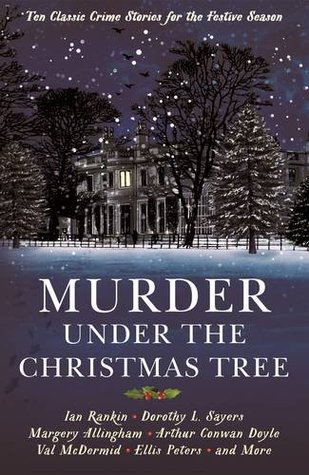
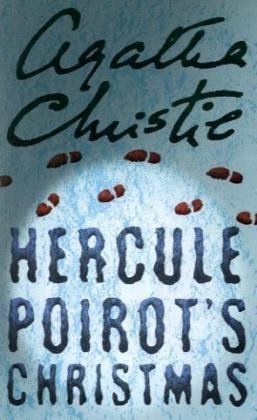
Murder Under the Christmas Tree contains stories by classic crime authors such as Margery Allingham, Dorothy L Sayers and Arthur Conan Doyle. One author whose work doesn’t appear in that collection is Agatha Christie, but she did write a few books with a Christmas theme…including the next book in my chain, Hercule Poirot’s Christmas.

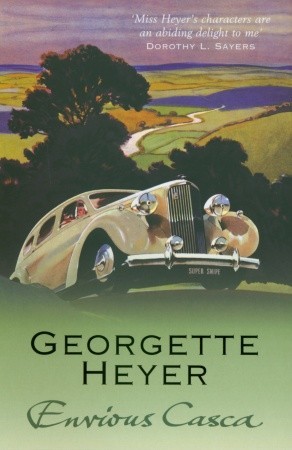
The book involves the murder of an old man who is found dead in his home while his family gather to celebrate Christmas. I enjoyed it, but it wasn’t a favourite Christie and I didn’t find it very Christmassy either. Another book with a very similar plot, published three years later, is Envious Casca by Georgette Heyer.

Envious Casca has also been published under the title A Christmas Party. However, the family featured in the novel were such a nasty, unpleasant group of people, I couldn’t think of anything worse than being a guest at that particular party! Another mystery set at Christmas with a dysfunctional family at its heart is I Am Half-Sick of Shadows, the fourth in Alan Bradley’s Flavia de Luce series.

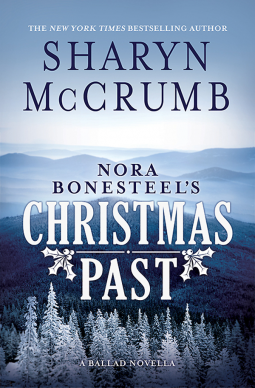
In I Am Half-Sick of Shadows, eleven-year-old Flavia tries to catch Santa Claus on his way down the chimney. In the final book in my chain, Nora Bonesteel’s Christmas Past by Sharyn McCrumb, Sheriff Spencer Arrowood is also trying to catch a man on Christmas Eve – a criminal who lives on a remote farm in the Appalachian Mountains.

For the first time since I’ve started taking part in Six Degrees of Separation, I am able to bring the chain full circle. The title of my final book contains the words ‘Christmas Past’ – and the first book features the Ghost of Christmas Past!

Have you read any of these? What are your favourite Christmas-themed books?

Next month (January) we will be starting our chains with The French Lieutenant’s Woman by John Fowles.

My Commonplace Book: November 2018

A selection of words and pictures to represent November’s reading:

commonplace book
noun
a book into which notable extracts from other works are copied for personal use.

~

We know what causes the plants to grow and multiply, so to feed the planet and ourselves. We know how to harness the hidden forces of the world to pump water from the mines, to send engines down tracks, to speed our massive ships to the far ends of the Earth. We know what fixes the stars in their heavens.

But the engine which powers all these transitions, the mighty organ that is the Mind of man, remains an essential mystery to us.

Savage Magic by Lloyd Shepherd (2014)

~

“The spell for finding books,” she whispered, closing her eyes before pronouncing the incantation. “Abracadabra, Alakazam, Angela Thirkell and Omar Khayyam.”

I had never seen my sister so excited.

The Grave’s a Fine and Private Place by Alan Bradley (2018)

~

Illustrated page by Ernest Clegg.

She shook her head and mopped up a drop of paint with a damp cloth. “Not yet. But at least my lack of forward planning isn’t worrying me quite so much now.”

“That’s good,” he said. “If there’s one thing I’ve learnt in my life, it’s that worrying over your future can be a waste of energy.”

The Poppy Field by Deborah Carr (2018)

~

She loved the way a photograph could tell an entire story and preserve it in a single moment. She hoped she’d be able to take more pictures inspired by her heart and not just by her head, and, if she could manage to get out and about and grasp something of the mysterious quality of the ordinary people, she’d be happy.

Before the Rains by Dinah Jefferies (2017)

~

But above all, there were books. Books were my consolation. For if I could not walk into the bright, blowing world I could, at least, read of it; books, I was told, contained it all.

House of Glass by Susan Fletcher (2018)

~

Agatha Christie never described it, nor did any other mystery writer I can think of: that moment when the detective works it out and the truth makes itself known. Why did Poirot never twirl his moustache? Why didn’t Lord Peter Wimsey dance in the air? I would have.

The Sentence is Death by Anthony Horowitz (2018)

~

Jan Willem Pieneman’s ‘The Battle of Waterloo’ (1824).

Some of the senior officers were looking grave; here and there a rigid, meaningless smile was pinned to a mother’s white face, or a girl stood with a fallen mouth, and blank eyes fixed on a scarlet uniform. A queer, almost greedy emotion shone in many countenances. Life had become suddenly an urgent business, racing towards disaster, and the craving for excitement, the breathless moment compound of fear, and grief, and exaltation, when the mind sharpened and the senses were stretched as taut as the strings of a violin, surged up under the veneer of good manners, and shone behind the dread in shocked young eyes.

An Infamous Army by Georgette Heyer (1937)

~

“Yes — by my every hope of Heaven!” I cried passionately.

She continued to survey me with that quiet smile of mocking scorn.

“I have heard it said,” quoth she, “that the greatest liars are ever those that are readiest to take oath.”

Bardelys the Magificent by Rafael Sabatini (1906)

~

Although plenty of young Italians were filled with excitement, they were the minority. ‘The news of war’ noted Mussolini’s son-in-law and Foreign Minister, Count Galeazzo Ciano, in his diary, ‘does not arouse much enthusiasm. I am sad, very sad. The adventure begins. May God help Italy.’

The Desert War by James Holland (2018)

~

Prospero, Ariel and sleeping Miranda from a painting by William Hamilton

Is the island magic? Felix asks himself. The island is many things, but among them is something he hasn’t mentioned: the island is a theatre. Prospero is a director. He’s putting on a play, within which there’s another play. If his magic holds and his play is successful, he’ll get his heart’s desire. But if he fails…

Hag-Seed by Margaret Atwood (2016)

~

You seek a false comfort when you demand that I define myself for you with words. Words do not contain or define any person. A heart can, if it is willing.

The Golden Fool by Robin Hobb (2002)

~

To be entirely engrossed with today, with meals and motor-cars and work and play, is a short-sighted selfishness. Have time to remember the child you were, give him a deep thought now and then, be sensitive to all you can of the past, and it will reward you with bright shoots of everlastingness. To live in the present moment is easy, any animal does it: to live in eternity is really to live.

The Trap by Dan Billany (1950)

~

Favourite books read in November:

The Golden Fool and The Sentence is Death

Where did my reading take me in November?

England, North Africa, India, France, Canada, Belgium – and Robin Hobb’s fictional Six Duchies.

Authors read for the first time in November:

Deborah Carr, Lloyd Shepherd, Dan Billany and James Holland

~

Have you read any of these books? Which books did you enjoy in November?

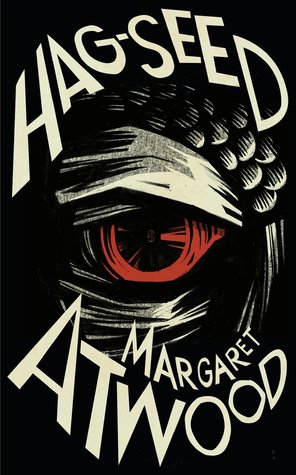
Hag-Seed by Margaret Atwood

This month I’ve been taking part in Nonfiction November, but it’s also Margaret Atwood Reading Month hosted by Naomi at Consumed by Ink and Marcie at BuriedInPrint. I was planning to read one of her longer books – The Blind Assassin or possibly Cat’s Eye, but I found myself running out of time towards the end of the month, so I decided on the much shorter Hag-Seed instead. This book is part of the Hogarth Shakespeare series of retellings of Shakespeare’s plays by modern authors.

Felix Phillips had a successful career as Artistic Director of the Makeshiweg Theatre Festival until his assistant, Tony, betrayed him and took his job. Forced to abandon his plans to stage a contemporary version of The Tempest – a play close to his heart, having recently lost his three-year-old daughter Miranda (who shared her name with Shakespeare’s heroine) – Felix drops out of public life and begins to plot his revenge. Under the name of Mr Duke, he applies for a position at Fletcher Correctional, helping to improve the literacy of the prisoners. Here he will have his chance to direct The Tempest after all, while making his enemies pay for what they have done.

The Tempest is a play that I know quite well, although I wish I’d found time to re-read it before starting Hag-Seed. I’m tempted to do that now, but I think reading them in the opposite order would have been more helpful! I enjoyed watching the prisoners as they study the play for the first time and try to interpret it in their own unique way (could Ariel have been an alien rather than a fairy? Would Shakepeare’s songs be improved by rewriting them as rap?) Personally, when it comes to adaptations of books and plays, I don’t usually like to see things being modernised or given ‘contemporary twists’, but even so it was good to see the Fletcher Correctional Players having so much fun and being so inventive.

Felix plays Prospero, the magician and rightful Duke of Milan, in the prisoners’ production, but he also fills the role of Prospero in the framing narrative. The prison represents the magical island to which Prospero is exiled, while Tony is clearly the equivalent of Prospero’s usurping brother, Antonio. Events in Felix’s life mirror events from The Tempest, coincidentally at the beginning, but then intentionally as he begins to orchestrate his plan for revenge. And of course, even as Felix controls and manipulates the other characters, we know that he is also a character and a prisoner, caught between the pages of Margaret Atwood’s novel, controlled and manipulated by Atwood herself.

Having some familiarity with the play does make it easier to understand and unravel the many layers of Hag-Seed, but if you’re not familiar with it, that shouldn’t be a problem as the whole story is told at various points in the novel, in various different ways (including a full summary at the end of the book). We can learn along with the prisoners as they try to identify the nine types of prison portrayed in the play and as they write an analysis of their chosen character and imagine how his or her story might continue after the play comes to an end. I particularly enjoyed the contributions made by Anne-Marie Greenland, the actress and dancer Felix brings in to play the part of Miranda.

As for the real Miranda – Felix’s daughter who died as a child – the novel is as much about Felix’s feelings for her and his inability to let things go and move on as it is about anything else. Without saying too much, I really liked the way that part of the story was resolved and the way the novel ended.

I must read some of those longer Atwood novels soon – and I would like to try another of the Hogarth Shakespeare books too.

Classics Club Spin #19: The Result

The result of the latest Classics Club Spin has been revealed today!

The idea of the Spin was to list twenty books from my Classics Club list, number them 1 to 20, and the number announced today (Tuesday) represents the book I have to read before 31st January 2019. The number that has been selected is…

1

And this means the book I need to read is…

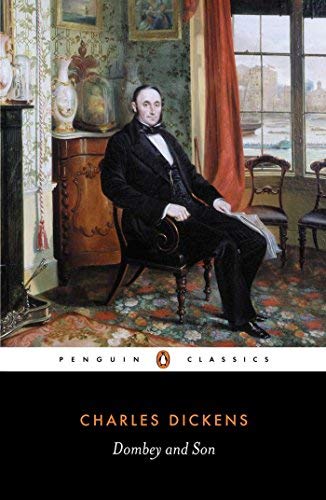
Dombey and Son by Charles Dickens

To Paul Dombey, business is all and money can do anything. He runs his family life as he runs his firm: coldly, calculatingly and commercially. The only person he cares for is his frail son, grooming him for entry into the family business; his daughter Florence, abandoned and ignored, craves affection from her unloving father, who sees her only as a ‘base coin that couldn’t be invested’. As Dombey’s callousness extends to others – from his defiant second wife Edith, to Florence’s admirer Walter Gay – he sows the seeds of his own destruction. Can this heartless businessman be redeemed?

A compelling depiction of a man imprisoned by his own pride, Dombey and Son explores the devastating effects of emotional deprivation on a dysfunctional family and on society as a whole.

~

I’m glad I have until the end of January to read this book, as it was probably the longest on my list! I’m happy with this result as it’s been a while since I read any Dickens, but I was hoping for Nicholas Nickleby rather than this one.

Have you read Dombey and Son? Did you take part in the Classics Spin? What will you be reading?

Top Ten Tuesday: Friends and family

The topic for this week’s Top Ten Tuesday, hosted by That Artsy Reader Girl is:

Platonic Relationships In Books (friendships, parent/child, siblings, family, etc.)

Romantic relationships in books usually get most of the attention, but often the relationships I find the strongest or the most moving are the ones between family and friends. Here are ten of my favourites. I could have included many more!

~

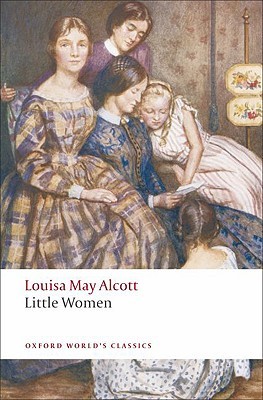
1. Meg, Jo, Beth and Amy March (Little Women by Louisa May Alcott)

I wanted to start my list with some fictional sisters and naturally the March girls were the first to come to mind! Meg, Jo, Beth and Amy don’t always get along, but as sisters there’s an unbreakable bond between them. I think part of the appeal is that the four all have such different personalities, so most readers will be able to identify with at least one of them.

~

2. D’Artagnan, Athos, Porthos and Aramis (The Three Musketeers and sequels by Alexandre Dumas)

All for one and one for all! I had to include this classic tale of friendship on my list. Like the sisters in Little Women, d’Artagnan and his three friends each have very different character traits, which means that most readers will be able to pick a favourite. In the later books in the series, the four of them are leading separate lives of their own, only interacting occasionally, but it’s the relationship between them that makes the first book such a joy to read.

~

3. Francis and Richard Crawford (The Lymond Chronicles by Dorothy Dunnett)

This wonderful series contains lots of relationships, platonic and otherwise, which are developed over the course of the six novels, but one I find particularly interesting is the one between our hero, Francis Crawford of Lymond, and his brother, Richard. To say that they don’t always see eye to eye would be an understatement and following the ups and downs of their relationship from The Game of Kings to Checkmate was one of my favourite aspects of the series.

~

4. Claire Fraser and Jenny Murray (the Outlander series by Diana Gabaldon)

As with the Lymond Chronicles above, there are many relationships in the Outlander series that I could have featured here, but I have chosen the one between Claire Fraser and her sister-in-law Jenny Murray, one of the most long-standing in the series, being formed in the first book of eight. Their relationship changes a lot throughout the series as Claire travels the world having adventures while Jenny stays at home on the family estate in Scotland; sometimes they are barely speaking, while at others they’re the best of friends.

~

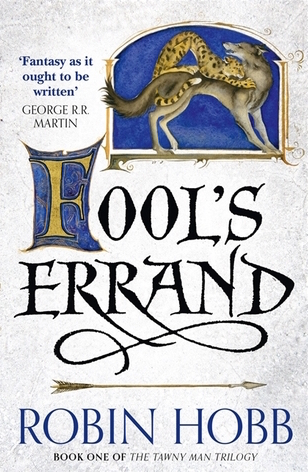
5. Fitz and Nighteyes (The Farseer and Tawny Man trilogies by Robin Hobb)

I’m currently in the middle of the Tawny Man trilogy, so this relationship came quickly to mind. Nighteyes is a wolf, but in Hobb’s fantasy world the bond he shares with Fitz is far stronger than the bond you would usually expect between a human and an animal. There are several occasions where Fitz owes his life to Nighteyes and vice versa.

~

6. Bishop Jean Marie Latour and Father Joseph Vaillant (Death Comes for the Archbishop by Willa Cather)

The two central characters in Willa Cather’s 1927 novel are French missionaries who are sent into the newly formed diocese of New Mexico in the nineteenth century. They are very different men and I found the depiction of the friendship between the warm, friendly Vaillant and the quiet, reserved Latour very moving.

~

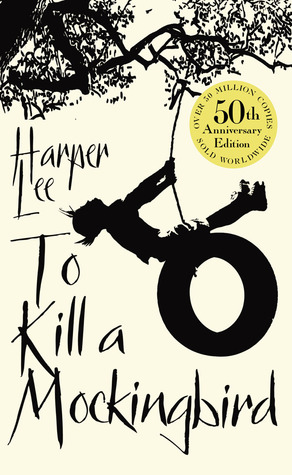
7. Atticus, Jem and Scout Finch (To Kill a Mockingbird by Harper Lee)

This 1960 classic is a favourite of many people, including myself, and one of the reasons for that is surely the relationship at the heart of the novel between lawyer Atticus Finch and his children, Jem and Jean Louise (Scout). It’s a relationship based on mutual respect and understanding; Scout and Jem learn a lot of important lessons from their father, but they have a lot to offer him in return.

~

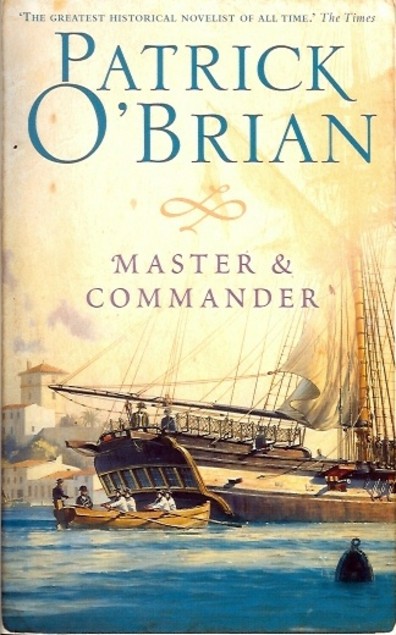
8. Jack Aubrey and Stephen Maturin (the Aubrey/Maturin series by Patrick O’Brian)

I’m not usually a fan of nautical fiction, but I am now six books into Patrick O’Brian’s seafaring series and looking forward to reading the seventh. I still don’t know my mainsail from my topsail, but the friendship between Royal Navy Captain Jack Aubrey and ship’s surgeon and spy Stephen Maturin is enough for me to keep reading.

~

9. Arthur Bryant and John May (Bryant and May series by Christopher Fowler)

These two eighty-year-old detectives have the perfect partnership, each bringing a very different approach to crime-solving. May is practical, logical and ready to embrace modern technology, while the eccentric Bryant prefers to rely on clairvoyants, witches and his own arcane knowledge. Their differences could explain how they’ve had so much success over the years and have remained such good friends.

~

10. Flavia, Ophelia and Daphne de Luce (the Flavia de Luce series by Alan Bradley)

I started my list with sisters, so will finish with sisters. The relationship between twelve-year-old Flavia and her two older sisters is one that has frustrated me since the beginning of the series. Why do they dislike each other so much? Why are Feely and Daffy so cruel to Flavia? Nine books into the series, there are finally some signs that their relationship is starting to improve, but it has taken a long time!

~

Have you read any of these? What are your favourite platonic relationships in fiction?