My Commonplace Book: May 2018

A selection of words and pictures to represent May’s reading:
commonplace book
noun
a book into which notable extracts from other works are copied for personal use.

~

My master was not often rude to people, but he replied sternly: ‘Every war is a civil war. Does the fact that armies come from different realms make the fight between them more natural? We all occupy the same realm, sir: it is called humanity.’

Tomorrow by Damian Dibben (2018)

~

Anne Boleyn

‘The guide’s here,’ she said, seeing a lady in Tudor dress advancing towards them. ‘She’s early too. And what a gown!’ It was an exact replica, in sumptuous black velvet, of the elegant attire Anne wore in her portrait. Even the French hood – no easy thing to get right – was perfect.

The Tower is Full of Ghosts Today by Alison Weir (2017)

~

‘Well, never mind about that,’ said his lordship. ‘It’s no use your saying that you’d prefer to be a governess to marrying me, because it’s absurd! No one would. Dash it, Hero, I don’t want to talk like a coxcomb, and I dare say I may want for principle, and have libertine propensities, and spend all my time in gaming-hells, besides being the sort of ugly customer no woman of sensibility could stomach, but you can’t pretend that you wouldn’t be far more comfortable with me than at the curst school you keep on prosing about!’

Friday’s Child by Georgette Heyer (1944)

~

‘The thing is to be happy if you can,’ said Arthur.

‘No; – that is not the thing. I’m not much of a philosopher, but as far as I can see there are two philosophies in the world. The one is to make one’s self happy, and the other is to make other people happy. The latter answers the best.’

The Prime Minister by Anthony Trollope (1876)

~

Flag used by the Templars in battle

‘Then I hope you are finding comfort in your memories, sire.’

William smiled a little. ‘Not all are comfortable, but they are instructive and enlightening. When I returned, I stowed them away and did not look at them again, but now it is time to make my peace with those that are still difficult, and to draw sustenance from the uplifting ones.’

Templar Silks by Elizabeth Chadwick (2018)

~

He’d grown to accept that joy was to be discovered at the edge of existence, fluttering in the corner of one’s eye, glimpsed only in those moments of serenity at dawn before one was fully awake. Happiness, when it came to Albert, was an explosion of sunlight.

House of Gold by Natasha Solomons (2018)

~

Louise apologised again. ‘I’m afraid I spoiled it. Is it a favourite of yours? I like thrillers, too. Miriam, my daughter, is trying to remould my taste. I have to keep books like that in a drawer, because if I leave them by my bed, she takes them away and substitutes a biography she thinks I should read, or one of those novels they write nowadays about uneasy people who think things for pages and pages.’

The Winds of Heaven by Monica Dickens (1955)

~
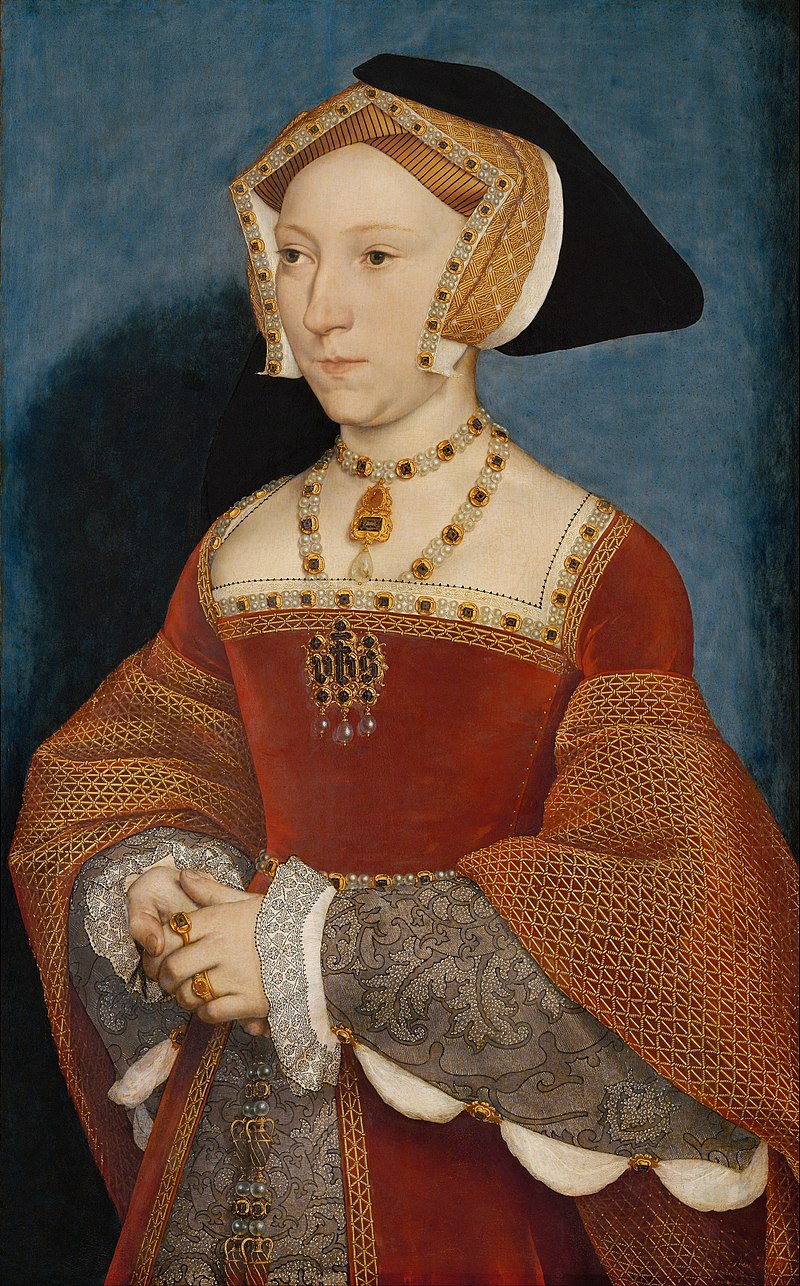
Jane Seymour

His smile vanished. ‘Jane, you have little idea of what makes a woman beautiful to men. It is not just a matter of face and form. If her heart is pure, it shines forth. If she be modest and virtuous, yet kindly withal, it is written in her face. But if she is shrewish, complaining and unkind, be she never so lovely, she cannot be beautiful.’

Jane Seymour: The Haunted Queen by Alison Weir (2018)

~

“I am afraid,” confessed Pen, “that I am not very well-behaved. Aunt says that I had a lamentable upbringing, because my father treated me as though I had been a boy. I ought to have been, you understand.”

“I cannot agree with you,” said Sir Richard. “As a boy you would have been in no way remarkable; as a female, believe me, you are unique.”

She flushed to the roots of her hair. “I think that is a compliment.”

“It is,” Sir Richard said, amused.

The Corinthian by Georgette Heyer (1940)

~

‘One thing I do know,’ I said, ‘is that there is no pleasure on this earth better than reading. I have been transported,’ I said, ‘to realms beyond my wildest imagining, to places I shall never see, for they are on the other side of the world, or do not exist at all. And I have been made to cry – and to laugh and to think and to be peaceful, and all of this I have got from books’.

The Illumination of Ursula Flight by Anna-Marie Crowhurst (2018)

~

Favourite books read in May:

The Prime Minister, House of Gold, The Corinthian and The Winds of Heaven (lots of good ones this month!)

Where did my reading take me in May?

England, Italy, Austria, Germany, the Holy Land

Authors read for the first time in May:

Damian Dibben, Anna-Marie Crowhurst, Monica Dickens

~

Have you read any of these books? Which books did you enjoy in May?
20 Books of Summer – 2018

This time last year I decided to take part in 20 Books of Summer hosted by Cathy at 746 Books. It’s a simple idea – to make a list of twenty books (or fifteen or ten) that you would like to read during the summer months – but it’s more difficult to complete than you might expect! I managed to read 16 out of 20 last year, which I was still quite pleased with, but I’m looking forward to trying again this year.

Here are my twenty books for 2018, in no particular order:

1. The Story Keeper by Anna Mazzola

2. Desperate Remedies by Thomas Hardy

3. The Silence of the Girls by Pat Barker

4. A Game of Hide and Seek by Elizabeth Taylor

5. The Way of All Flesh by Ambrose Parry

6. Fool’s Errand by Robin Hobb

7. The Poison Bed by EC Fremantle

8. Elizabeth and Her German Garden by Elizabeth von Arnim

9. For the Immortal by Emily Hauser

10. Post of Honour by RF Delderfield

11. The King’s Witch by Tracy Borman

12. Marking Time by Elizabeth Jane Howard

13. Lamentation by CJ Sansom

14. The Bull from the Sea by Mary Renault

15. Tapestry of War by Jane MacKenzie

16. Don’t Look Now and Other Stories by Daphne du Maurier

17. My Beautiful Imperial by Rhiannon Lewis

18. Fortune’s Fool by David Blixt

19. The Wardrobe Mistress by Patrick McGrath

20. The Craftsman by Sharon Bolton

~

I’ve included a mixture of review copies (from NetGalley and from authors/publishers), books from my Classics Club list and some that I just want to read. I will need to read these twenty books between 1 June – 3 September, but I’m sure I will find myself reading others that aren’t on the list too!

Have you read any of these? Will you be taking part in 20 Books of Summer this year?

Top Ten Tuesday: Bookish Worlds I’d Never Want To Live In

The topic for this week’s Top Ten Tuesday hosted by That Artsy Reader Girl is: Bookish Worlds I’d Want to/Never Want to Live In. I decided to focus on the second option and list ten of the most unpleasant or unappealing settings from books previously reviewed on my blog…and here they are:

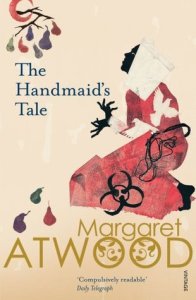
1. The Republic of Gilead (The Handmaid’s Tale by Margaret Atwood)

From my review: “In this new dystopian society, women no longer have any of the rights or freedoms they had before; they’re not allowed to work, not allowed to have their own bank accounts, not even allowed to read in case reading leads them into temptation.”

2. The room (Room by Emma Donoghue)

From my review: “The story is narrated by Jack, a five-year-old boy who has spent his whole life living with his mother in a converted shed measuring eleven foot square. His mother had been kidnapped seven years ago and Jack was born in captivity. He has no idea that a world exists outside Room and apart from Ma and Old Nick, the man who is keeping them captive, he has never seen another human being.”

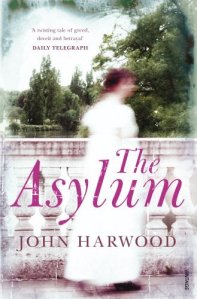
3. Tregannon House, Cornwall (The Asylum by John Harwood)

From my review: “Most of the action takes place within the confines of Tregannon House (the private asylum on Bodmin Moor, Cornwall, in which Georgina becomes trapped) and the atmosphere Harwood creates is wonderfully claustrophobic and eerie. I really sympathised with Georgina’s situation and shared her terror and bewilderment.”

4. Melanie Langdon’s drawing room (The Victorian Chaise-Longue by Marghanita Laski)

From my review: “The book conveys a sense of confusion, panic and disorientation and I could really feel Melanie’s helplessness as she lay on the chaise-longue, trapped in Milly’s body, desperately trying to work out who she was and how she could escape.”

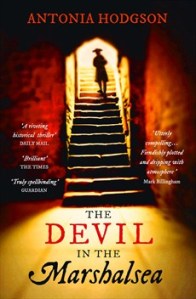
5. The Marshalsea Prison (The Devil in the Marshalsea by Antonia Hodgson)

From my review: “The prisoners who had some money to spend or who had influential friends, lived on the Master’s Side, which was almost like a complete town in itself, with coffee houses, bars, restaurants and even a barber. They had the freedom to move around and in some cases were even given permission to go out into London during the day. For the poor people on the Common Side, things were much worse. Crammed into tiny cells and suffering from starvation, disease and overcrowding, they died at a rate of up to twelve a day.”

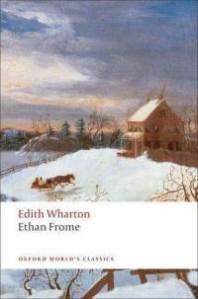
6. Starkfield, Massachusetts (Ethan Frome by Edith Wharton)

From my review: “The most striking thing about this book, for me, was the tense, claustrophobic atmosphere Wharton created, making the reader feel locked within Ethan’s miserable world. The town of Starkfield, Massachusetts is as stark as its name suggests; the descriptions of the snow, the ice and the cold all contribute to the heavy feeling of oppression which hangs over the entire book.”

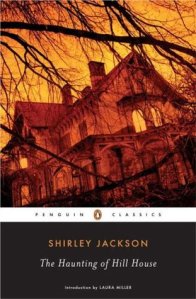
7. Hill House (The Haunting of Hill House by Shirley Jackson)

From my review: “I loved the descriptions of Hill House – it has all the characteristics you would expect a haunted house to have, including a tragic history – but there are very few physical manifestations of ghostly activity. The creepiness of the story comes mainly from the fact that we don’t know how much of the ‘haunting’ is caused by Hill House itself and how much is the product of Eleanor’s disturbed mind.”

8. Lexham Manor at Christmas (Envious Casca by Georgette Heyer)

From my review: “I have rarely read a novel with so many nasty, rude, unpleasant characters and I couldn’t think of anything worse than being a guest at the Herriards’ party, even without a murder taking place! From the obnoxious, sarcastic Stephen and the haughty butler Sturry to the cantankerous, bad-tempered Nathaniel, they were all so annoying I was surprised only one murder was committed.”

9. Green Town, Illinois at carnival time (Something Wicked This Way Comes by Ray Bradbury)

From my review: “Good versus evil is obviously one of the major themes of the novel. A feeling of malice and danger hangs over the carnival from the moment it arrives and the people connected with it are both strange and sinister – particularly the blind Dust Witch who hovers over the boys’ houses in a hot air balloon in one of the creepiest scenes in the book.”

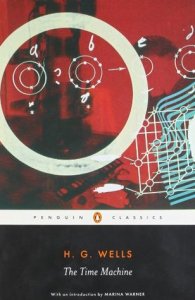
10. The future (The Time Machine by HG Wells)

From my review: “Remembering when this novel was published, Wells’ vision of a future world has been developed from some of the issues which would have seemed relevant at the end of the 19th century, such as widening class divisions, theories of evolution and Darwinism. It’s a bleak and depressing view of the future – and if that really is what we have to look forward to, then imperfect as our current society may be, I’m very glad to be living in 2016!”

~

Have you taken part in this week’s Top Ten Tuesday? Can you think of some bookish worlds you wouldn’t want to live in?

Some recent additions…

It’s been a while since I posted about any new additions to my TBR, so I thought I’d share with you some recently acquired books which I discovered in a second-hand bookshop this morning:

The Sussex Downs Murder by John Bude – I love the British Library Crime Classics series, although I haven’t read many of them. This will be the first one I’ve read by John Bude.

Busman’s Honeymoon by Dorothy L Sayers – A Lord Peter Wimsey mystery that I haven’t read yet.

Farewell the Tranquil Mind by RF Delderfield – I loved my first Delderfield novel, Long Summer Day, so I was pleased to come across another of his books. This one is set during the French Revolution.

The Dante Club by Matthew Pearl – I’m not sure about this one as I had mixed feelings about the other Matthew Pearl book I’ve read (The Last Dickens), but I thought it would be worth giving it a try.

The Persian Boy by Mary Renault – The second in her Alexander the Great trilogy. I already have the first book on my shelf but haven’t read it yet.

~

Have you read any of these? What did you think of them?

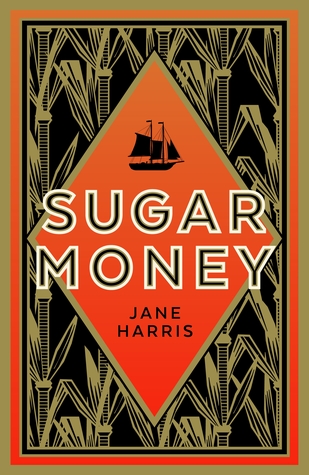
Sugar Money by Jane Harris

When I discovered that there was a new Jane Harris book coming out last year, I couldn’t wait to read it. It had been a long time since the publication of her last one, Gillespie and I, in 2011, but I could still remember how much I loved that book – and her previous one, The Observations, which I read a few months later. I’m not sure why it has taken me until now to get round to picking up Sugar Money, then, but it’s probably just been a combination of too many other books to read (as usual) and a fear that, after anticipating a third Jane Harris book for so long, I might be disappointed by it.

While Gillespie and I and The Observations are both set in 19th century Scotland, Sugar Money takes us to a very different time and place: the Caribbean in the year 1765. Our narrator, teenage Lucien, and his older brother Emile were brought up on the island of Grenada before being taken to nearby French-controlled Martinique as slaves. Their French masters need more workers to labour on the sugar plantations, so the brothers are entrusted with a secret mission: to return to Grenada, once also a French colony but now ruled by the British, and bring a group of forty-two slaves back to Martinique.

Emile and Lucien are the obvious choices to be given this task, with their prior knowledge of Grenada and its people, as well as Lucien’s ability to speak English. It’s not going to be easy, though; there is no guarantee that they will be able to persuade the slaves to join them, when they cannot offer freedom but only the exchange of one master for another – and even if the slaves do agree to come, will they be able to escape from the island without being caught?

Sugar Money, however unlikely it may seem, is based on real historical events which are described in the Afterword at the end of the book. The true story of slaves being involved in the smuggling of other slaves is certainly an interesting idea to base a novel around. Jane Harris grew up in Scotland and she highlights both the Scottish and English involvement in the slave trade, as well as drawing comparisons with slavery in the French colony of Martinique. She doesn’t shy away from describing the brutality of slavery and there are some quite graphic details of the ways in which slaves are treated by their masters and the horrific punishments given to them for the most minor of ‘crimes’, but she writes about all of this in a matter-of-fact sort of way, showing us the evils of slavery without preaching about it, which is something I liked and found quite effective.

I also loved the relationship between Emile and Lucien. Lucien has all the enthusiasm and sense of adventure you would expect in a boy of his age and, of course, it sometimes leads him into danger. Emile, who is much older and wiser, protects him as far as he can, but understandably loses patience at times, while Lucien admires and respects his big brother but doesn’t always understand his actions! I liked them both, but we naturally feel closer to Lucien because he is our narrator. Jane Harris really excels at giving her narrators strong, distinctive voices of their own. To immerse us more fully in the Caribbean of the 18th century, she has Lucien narrate in a sort of Creole mixed with French and English, and an explanation for his unusual speech is given towards the very end of the book. He couldn’t be more different from Bessy Buckley and Harriet Baxter, the narrators of her previous two novels!

I found this a very entertaining read, but it didn’t impress me quite as much as the other two Jane Harris novels. It works well as an adventure novel (Robert Louis Stevenson is mentioned as an inspiration in the acknowledgements), but it lacks all the clever twists and turns that I loved in Gillespie and I. It has impressed the judges of the Walter Scott Prize for Historical Fiction, though, and has been included on this year’s shortlist. The winner will be announced in June; if Sugar Money wins, I’ll be very happy for Jane Harris, but as I haven’t read the rest of the shortlist yet I don’t know whether there’s another book that is more deserving.

Tomorrow by Damian Dibben

There are two things which make the narrator of Tomorrow one of the most unusual I have ever encountered. One is that he is over two hundred years old. The other is that he is a dog. We all know how loyal dogs can be, but this dog takes his loyalty to exceptional levels. Having been separated from his master, the chemist Valentyne, in 1688, our narrator has spent two centuries sitting patiently outside the church in Venice where they parted.

“If we lose one another,” Valentyne had told him, “wait for me on the steps. Just here, by the door.” The dog has no doubt that he and Valentyne will be reunited one day and so he sits obediently by the door and waits. Then, one day in 1815, he catches a glimpse of Vilder, a man whose path has crossed many times with Valentyne’s…and he sets off in pursuit, sure that this is the clue which will lead him to his master.

Tomorrow is a book that raises questions immediately. What has happened to Valentyne? How have he and his dog lived for so many years? Who is Vilder and what is his connection with Valentyne? All of these questions are answered eventually, as the story moves backwards and forwards in time, alternating between the dog’s search for his master in 19th century Venice and his memories of their early days travelling Europe together.

Their adventures take them from 17th century London to the court of Versailles and the battlefield of Waterloo and along the way they meet kings and queens, famous poets and musicians and great military leaders. Valentyne falls in love and the dog forms some special relationships too – with Sporco, a puppy he finds abandoned in Venice, and with a female dog called Blaise. However, this is where they discover that living forever is not much fun when it means having to watch your loved ones grow old and die.

I do like the idea of writing from the point of view of a canine narrator and I can appreciate both the opportunities this must give an author and also the restrictions. The dog in Tomorrow is a real dog, despite his apparent immortality – he is not a magical, talking dog and although he listens and reports on the human conversations around him he cannot take part himself. On the other hand, he is so intelligent and his internal thought processes and logic feel so human that there were times when I could almost forget that he was a dog. I’m not sure that I found all of this entirely successful, but it was certainly imaginative and different.

Finally, in case you’re wondering, the dog does have a name but I haven’t mentioned it here as it is only revealed near the end of the book and I thought it was a nice surprise!

Thanks to Michael Joseph for providing a copy of this book for review via NetGalley.

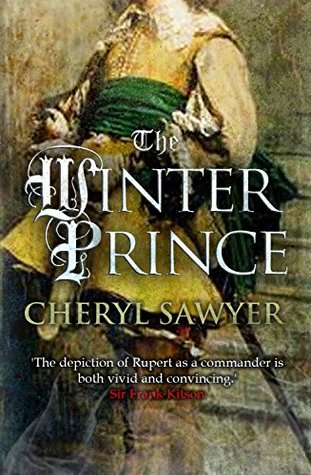
The Winter Prince by Cheryl Sawyer

After reading Charles Spencer’s biography Prince Rupert: The Last Cavalier a year or two ago, I mentioned that I wanted to read more books, either fiction or non-fiction, about Rupert of the Rhine, surely one of the most interesting and colourful characters of the English Civil War and Restoration period. The suggestion I was particularly drawn to was The Stranger Prince by Margaret Irwin, but with another of Irwin’s books already unread on my shelf (The Galliard) I wanted to read that one first before buying another one. Meanwhile I came across The Winter Prince by Cheryl Sawyer and decided to give it a try.

The Winter Prince is the first in a trilogy which continues with Farewell, Cavaliers and The King’s Shadow. It opens in 1642 with conflict building between King Charles I and his Parliament. When Mary Villiers is informed by her husband, the Duke of Lennox and Richmond, that the King is planning to arrest five members of Parliament in the House of Commons, she thinks she is doing the right thing by warning the five men of his intentions. Mary is a royalist – the Duke is one of the King’s closest advisers – but she believes it will send out the wrong signal if the men are arrested.

Around this time, the King’s nephew, Prince Rupert, arrives on England’s shores having recently been released from imprisonment in Germany. Charles needs all the loyal support he can get and, when civil war does inevitably break out, Rupert (accompanied by his beloved white poodle, Boy) is given the task of leading the Royalist cavalry. Mary Villiers was only fourteen the last time Rupert had come to Charles’s court and they don’t have very fond memories of each other. Meeting again now, as adults, they are instantly drawn to each other and a friendship quickly forms which could develop into something more – except that Mary is already married and Rupert is her husband’s friend.

The Winter Prince is written partly from Mary’s perspective and partly from Rupert’s. There is no actual evidence to prove that they were involved in a romantic relationship, but there are rumours to suggest that it may have happened and Cheryl Sawyer expands on this to create a romance for Rupert and Mary that runs throughout the novel. Because Rupert is away with the army so much of the time and because Mary doesn’t want to hurt her husband (whom she likes but doesn’t love), our hero and heroine don’t often have the opportunity to be together which makes the occasions when they do meet more significant. For me, though, there was something slightly lacking in the romantic aspect of the story. Although Cheryl Sawyer’s writing is very good in other ways, I thought the characters felt a little bit lifeless and because I couldn’t fall in love myself with her version of Rupert I couldn’t entirely believe in Mary’s feelings for him and his for her.

As far as I could tell, the book had been well researched, although as I am definitely not an expert on Prince Rupert or Mary Villiers (or this period in general) it’s hard for me to judge the historical accuracy. I did notice that on the first page the king is referred to as Charles the First whereas at the time he would have been simply King Charles as at that point there had not been a second, but I didn’t pick up on anything else like this. I just don’t have the knowledge to be able to comment, though. Anyway, it is not a light or fluffy novel – in fact, I felt as though I was being overloaded with information at times.

The romance is only one element of the novel; a large part of the book is also devoted to the Civil War itself and there are pages and pages of detailed descriptions of each battle, the tactics and strategies used and the role played by Rupert and his cavalry. I struggled to stay interested through these long military accounts, but this was probably my fault rather than the fault of the author as it’s not very often that I do enjoy reading battle scenes!

My feelings about this book were mixed, then, but it was good to have an opportunity to learn a little bit more about Rupert. I probably won’t read the other books in this trilogy, but I do still want to read Margaret Irwin’s The Stranger Prince.

This book counts towards this year’s What’s in a Name? Challenge: A title containing a season.