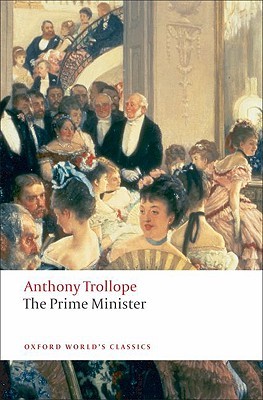
The Prime Minister by Anthony Trollope

I love Anthony Trollope’s books, but sometimes I need to be pushed into picking them up; I know I’m going to enjoy them, but they are all so long and, once you start reading and become caught up in the lives of the characters, so intense, that I really have to be in the right mood before starting one. As I have already read the first four books in the Palliser series, I added the last two – The Prime Minister and The Duke’s Children – to my Classics Club list to ensure that I got to them sooner rather than later.

The Prime Minister is the fifth in the series and, as predicted, once I got into it I loved it. It had been a while since I read the previous novel, Phineas Redux, (two years, in fact) but that didn’t matter at all – yes, we are reunited with some old friends, but there are new characters and new storylines too, so it wasn’t really necessary to be able to remember everything that happened in the last book. One of those new characters is Ferdinand Lopez, a handsome, charismatic adventurer, thought to be of Portuguese-Jewish descent, who sets his sights on marrying Emily Wharton, the daughter of a wealthy London lawyer.

Emily is in love with Lopez, but Mr Wharton is not at all happy at the prospect of having him as his son-in-law. He has always hoped to see Emily marry her friend Arthur Fletcher, whose family have connections with the Whartons. However, as his main objection to Lopez as a suitor is based on the fact that he is not an Englishman and nobody knows who his parents are, Mr Wharton eventually agrees to let Emily choose her own husband. Will she be happy with her choice or will she end up regretting her decision?

Ferdinand Lopez is a wonderful character; it is obvious from the start that he is going to be the villain of the novel, but we don’t know exactly what form his villainy will take. Watching him plot and scheme as he tries to make himself rich and rise up the social ladder is what drives the story forward. It’s disappointing, from a modern day perspective, that Ferdinand’s background is seen as one of the factors against him, but of course it’s realistic that a conservative, conventional Victorian gentleman like Mr Wharton would have held those views. Anyway, he is much more interesting to read about than Emily’s other love interest, the likeable, socially acceptable but slightly boring Arthur Fletcher. The relationship between the three of them reminded me of the two similar storylines in the first Palliser novel, Can You Forgive Her?

But this book is called The Prime Minister and so far I haven’t mentioned the title character at all! He is a man we already know from the previous books in the series: Plantagenet Palliser, who has recently inherited the title of Duke of Omnium. With neither main political party able to form a government on their own, a coalition has been formed and Plantagenet has been made Prime Minister, mainly because no one else is considered suitable. And Plantagenet is not entirely suitable either; he is an honest, dignified, principled man but lacks the ruthlessness and the leadership skills that are needed in his new job.

The Duchess of Omnium – formerly Lady Glencora Palliser – is much happier in her role as Prime Minister’s wife than Plantagenet is in his as Prime Minister! In some ways she has a better understanding of politics than he does, but their very different methods of dealing with their new position in the world lead to some conflict and tension in their marriage – particularly when Ferdinand Lopez arrives at one of Glencora’s parties hoping to be shown some favour by the new Prime Minister.

Both stories – the story of Emily and her husband and the story of the Prime Minister – are interesting and compelling. Although it was published in 1876 some aspects of the plot still have a lot of relevance today, such as the power of the press and the integrity of politicians being called into question. This is one of my favourite books in the Palliser series and I’m now looking forward to reading the final one, The Duke’s Children.

This is book 4/50 from my second Classics Club list.
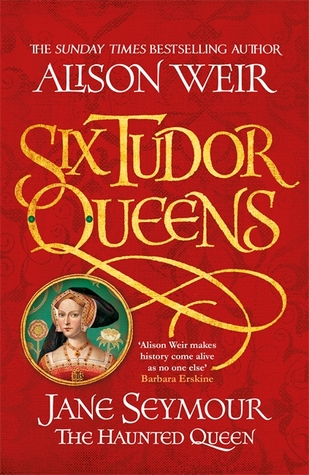
Six Tudor Queens: Jane Seymour, the Haunted Queen by Alison Weir

While Prince Harry and Meghan Markle were getting married at Windsor Castle yesterday, I have spent the weekend absorbed in reading about the lives of a much earlier royal couple…Henry VIII and his third wife, Jane Seymour. Jane Seymour: The Haunted Queen is the third book in Alison Weir’s Six Tudor Queens series which aims to retell, in fictional form, the stories of all six of Henry’s wives. Having read the first two novels on Katherine of Aragon and Anne Boleyn, I have been looking forward to this new one; I’ve read about Jane less often than Katherine and Anne so I was interested in learning more about her and curious to see how she would be portrayed.

The novel begins by introducing us to Jane as a young girl, living with her parents and brothers and sisters at Wulfhall, the Seymours’ manor house in Wiltshire. For several years, Jane is convinced that she would like to become a nun but eventually she discovers that she has no true vocation for a religious life and she decides that her future lies at court instead. With the help of Sir Francis Bryan, a courtier and family friend, she obtains a place in the household of Katherine of Aragon as one of the queen’s maids-of-honour. Jane is devoted to the queen, but when Henry puts Katherine aside so that he can marry Anne Boleyn, she finds herself in the unwelcome position of having to serve Anne instead of Katherine.

When Jane catches the king’s eye, her ambitious brothers see this as an opportunity to make the Seymours the power behind the throne, while Jane herself is keen to use her new influence with Henry to help reinstate Katherine and her daughter, the Lady Mary. But then comes Anne Boleyn’s downfall and suddenly Jane, who has watched her younger sisters marrying before her and has almost given up hope of ever finding a husband herself, is elevated to the highest position of all: Queen of England, as Henry’s third wife. With only two daughters from his first two marriages, Henry is desperate for a son, but can Jane succeed where her two predecessors failed?

I have given a basic outline of the plot of The Haunted Queen in the two paragraphs above, but I’m sure none of it will be very surprising to anyone who already knows their Tudor history. Weir sticks closely to historical fact as far as possible although, as she explains in her author’s note, the information we have on Jane is limited and there are areas where she has to use her imagination and historical knowledge to fill in the gaps – for example, the possibility of Jane contemplating taking religious vows, the question of whether she could already have been pregnant at the time of her marriage to Henry, and the probable cause of her death shortly after giving birth in October 1537. There were enough new ideas and interpretations here to make this, for me, a worthwhile and compelling read.

Jane Seymour often comes across as one of the less interesting wives, particularly following Anne Boleyn, but I liked the way she was portrayed in this novel. Was Jane used as a pawn by Thomas Cromwell and her ambitious family, or was she as manipulative as they were in bringing down Anne Boleyn and taking her place as queen? Different authors and historians have different views on this, but Alison Weir’s version of Jane is somewhere between the two and I found it a realistic, convincing portrait of a quiet, compassionate young woman who did not set out to become queen but who seized the opportunity when it arose in the hope of using the power it would give her to help those she loved and to restore the ‘true religion’. Henry is depicted in quite a balanced and nuanced way too; we see a more loving side of him in his relationship with Jane, as well as his cruelty towards his previous two wives and his daughter, Mary. We also get to know some of the other characters who play a part in Jane’s story, including her brothers Edward and Thomas; I particularly liked the portrayal of Sir Francis Bryan, who is a good friend of the Seymour family, despite his reputation as ‘the vicar of Hell’.

I enjoyed reading about Jane’s early life at Wulfhall (marked by the scandal caused by her father’s affair with his daughter-in-law Catherine Fillol – something I have previously read about in Suzannah Dunn’s The May Bride) and, later in the book, her brief reign as queen, but the section in the middle which covers Henry’s attempts to divorce Katherine of Aragon and then his marriage to Anne Boleyn, was less interesting to me. This is because it’s the third time in this series that I’ve read about those same events. Obviously, the three women involved – Katherine, Anne and Jane – have very different views on the matter, but I still found it just a little bit tedious to read it all again. I was also not a fan of the supernatural elements which are suggested by the title, The Haunted Queen, but I’m sure other readers will disagree.

I am now looking forward to the fourth book in the series which will tell the story of Anne of Cleves, definitely the wife I know the least about!

Thanks to Headline Review for providing a copy of this book via NetGalley.

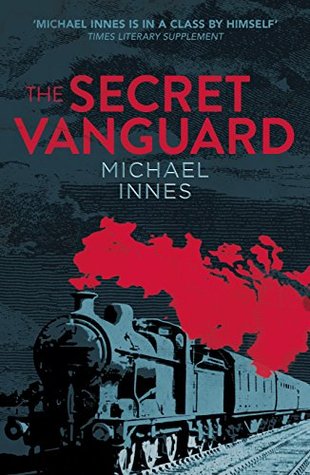
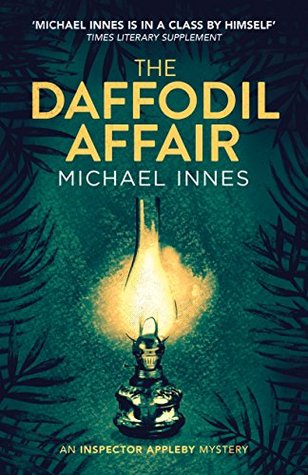
Michael Innes: The Secret Vanguard and The Daffodil Affair

I don’t think you could accuse Michael Innes of being formulaic – each book of his that I’ve read has been entirely different from the last! I’ve read two recently (The Secret Vanguard and The Daffodil Affair) and thought I would write about both of them in this post.

The first one, The Secret Vanguard, was published in 1940 and is the fifth in the Inspector Appleby series. It is set just before the beginning of World War II and is much more of a spy thriller than a detective novel. Our heroine, Sheila Grant, is on her way to Scotland to visit family when she overhears a conversation between some fellow passengers on the train, one of whom is reciting a poem by Swinburne. Sheila, who happens to be familiar with the poem, knows that it has been misquoted and can’t resist saying so – but when she is captured and held prisoner after disembarking from the train, she wishes she had said nothing. It seems that the misquoted poem contained a secret message and that Sheila is now in possession of information which could make her a threat to some very dangerous enemies.

It’s not long before Inspector John Appleby gets involved and begins to link Sheila’s abduction with the recent murder of a minor poet, Philip Ploss, and the disappearance of a scientist who has been working on a secret formula which could help the war effort. There are lots of twists and turns as Appleby tries to track Sheila and the missing chemist through the Scottish Highlands and Sheila tries to escape from her kidnappers, unsure of who she can and can’t trust. Although it’s all very melodramatic and unlikely, I did find it quite a fun, fast-paced read. However, the constant chase scenes, last-minute escapes and cases of mistaken identity became a bit tedious after a while. A good entry in the series, but not a great one.

The Daffodil Affair isn’t a typical detective novel either. Published two years after The Secret Vanguard, in 1942, the war is an influence on this novel too, but I won’t say much more about that as I would be risking giving away too much of the plot.

In The Daffodil Affair, Appleby and his colleague Hudspith are investigating three separate mysteries, none of which are the sort of thing you would expect two Scotland Yard detectives to become involved in. First, there is the theft of Daffodil, an extraordinary horse who seems able to count and to read minds. Next, there’s the disappearance of Lucy Rideout, a vulnerable young girl who appears to have been lured away from home by promises of a trip to the island of Capri. Finally, and strangest of all, an entire house has vanished from a street in London – a house which is said to have been haunted.

These three strange occurrences may seem at first to be unconnected, but links soon start to emerge and an adventure begins which sends Appleby and Hudspith on a voyage to South America in the company of the sinister Mr Wine. All sorts of paranormal phenomena are incorporated into the story, including telepathy, séances, witchcraft, hauntings and possession by demons. Some of the situations in which our detectives find themselves are quite surreal and implausible, but there are darker undertones too, which is where the war influence comes in. I think Mr Wine’s schemes and actions would have been frighteningly relevant to readers in the 1940s.

Again this is an entertaining novel, but I found it too bizarre to be truly enjoyable. On the plus side, we do see a lot of Appleby, who has a much bigger role to play than he does in some of the other books in the series. Of these two novels, I preferred The Secret Vanguard, but I don’t think I would recommend either of these as a first introduction to Innes. I would start with Hamlet, Revenge! for a good literary murder mystery or Lament for a Maker if you’re in the mood for a novel in the style of Robert Louis Stevenson with multiple narrators and plenty of Scottish dialect. Those are my two favourites so far.

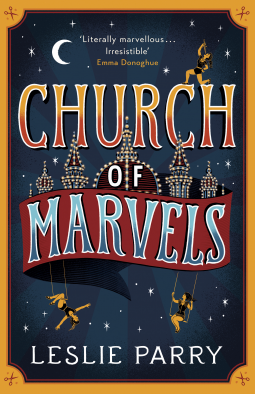
Church of Marvels by Leslie Parry

Church of Marvels, published in 2015, is Leslie Parry’s first and, so far, her only novel but I enjoyed it so much I hope she will be writing more. It’s a dark, complex and unusual story set in New York City in 1895 and, despite comparisons with The Night Circus, I think it’s a very different sort of book.

There are three main characters to get to know. First there’s Sylvan Threadgill, a ‘night-soil collector’ who makes his living from cleaning privies, as well as fighting in the occasional amateur boxing match. One night, Sylvan finds a newborn baby girl who has been abandoned and left to lie in the dirt of the street. He rescues the baby and, as an orphan himself, resolves to find out what has happened to her parents.

Next, there’s Odile Church, who performs in a Coney Island sideshow as the girl on the wheel of death – spinning in circles as a blindfolded man throws knives in her direction. Odile is trying to come to terms with the tragic death of her mother in a fire and the disappearance of her twin sister Belle, a sword-swallower and contortionist, who has run away to Manhattan with no explanation. Worried about her sister’s state of mind, Odile decides it’s time to go and look for her.

Finally, we meet Alphie, an undertaker’s wife, who has found herself imprisoned in Blackwell’s Island Lunatic Asylum. She can’t remember how she came to be there, but she’s sure it’s part of a plot dreamed up by her mother-in-law who has never liked her and wants her out of her son’s life.

At first these felt like three completely separate storylines and I couldn’t see how they could be connected in any way. Of course they do eventually come together and then I could appreciate how cleverly structured the whole novel is, with things being revealed only when we really need to know them and the biggest plot twists kept until near the end of the book. For this reason, I can’t discuss some of the most intriguing aspects of the novel, but I will say that there is a lot going on and that there is much more to each of the characters above than meets the eye!

The circus element, which is probably one of the things that draws a lot of readers to this novel, is actually a fairly small part of the story and only a few scenes are set at Coney Island. Most of the action takes place in New York and, more specifically, in the dark side of New York, a world of asylums, opium dens and underground tunnels. The people who populate these dark and unpleasant places are those who are considered to be social outcasts; misfits; men, women and children who are ‘different’ in some way. Odile, Belle, Sylvan and Alphie all fit into this category and I had a lot of sympathy for each of them – life has not been easy for them and all they want is to have a chance of happiness.

Although it is certainly not the most cheerful or uplifting of novels, I found Church of Marvels a fascinating read and, as I’ve said, I would love to read more by Leslie Parry.

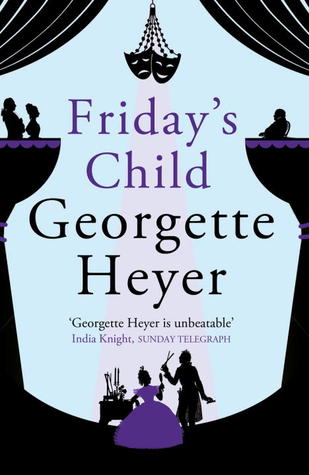
Friday’s Child by Georgette Heyer

This Heyer novel was published in 1944 and as it’s a particularly lively and humorous one, I expect it provided her wartime readers with some welcome escapism. It’s still an entertaining read in the twenty-first century too and although it hasn’t become a favourite, I did enjoy it.

“Friday’s child is loving and giving” says the famous rhyme and that is how the heroine of the novel, seventeen-year-old Hero Wantage, is described by her friends. As an orphan treated as a poor relation in her cousin’s household, Hero’s marriage prospects are not good and she is facing a future as a governess when she receives a surprise proposal from her childhood friend, Lord Sheringham. Hero is under no illusions that Sheringham – or Sherry, as he is known – is actually in love with her; she knows that he needs to marry in order to receive his inheritance and that he has already been rejected by the beautiful Isabella Milborne. It will be a marriage of convenience only, but even this is so much more than Hero could ever have hoped for that she has no hesitation in accepting.

Hero may be young and naïve, but Sherry is only a few years older and no more mature. He has no intention of changing his lifestyle just because he now has a wife, so he continues his reckless spending, gambling and womanising without considering the bad example he is setting for Hero. I don’t think it’s spoiling too much to say that Sherry does gradually come to love and appreciate his wife, but not without a lot of misunderstandings and ‘getting into scrapes’ along the way! And when he does eventually admit to himself how he really feels about Hero, will he have left it so late that he risks losing her to another man?

Although the relationship between Hero and Sherry is at the heart of the novel, with both characters slowly developing and maturing as time goes by, there is also a secondary romance which involves Isabella Milborne (known as the Incomparable) and George, Lord Wrotham, a passionate, hot-headed young man who is always ready to fight a duel. George, along with Gil Ringwood and Ferdy Fakenham, forms Sherry’s little circle of friends – and they become Hero’s friends too, providing most of the humour in the book as they give her some dubious guidance in the social etiquette of Regency London and try to help her out of the disastrous situations she finds herself in.

Friday’s Child has just about everything you would expect from a Heyer novel: duels, card games, gambling, balls and parties, elopements and attempted elopements. It reminded me of two of her other books, The Convenient Marriage and April Lady, which also have storylines revolving around a newly married couple learning to love each other. Although I enjoyed this book much more than April Lady, The Convenient Marriage is my favourite of the three, mainly because I preferred the hero in that one, the Earl of Rule. I do tend to prefer her older, wiser heroes rather than the young, irresponsible ones like Sherry. I also thought this book felt slightly longer than it really needed to be and the constant misunderstandings became a bit repetitive towards the end.

There are other Heyer novels that I’ve liked better than this one, then, but her books are always a lot of fun to read and this is no exception. There are plenty of funny moments, usually involving Sherry’s three friends (I particularly loved the hilarious Ferdy). I have The Corinthian, An Infamous Army and Faro’s Daughter to choose from for my next Heyer. If you have read them, which one would you recommend I read first?

Historical Musings #38: Reading Edward Rutherfurd

Welcome to my monthly post on all things historical fiction. For the last few months, I have been looking at the work of some of my favourite historical fiction authors; having previously featured Elizabeth Chadwick and Anya Seton, this month it’s the turn of a very different author: Edward Rutherfurd.

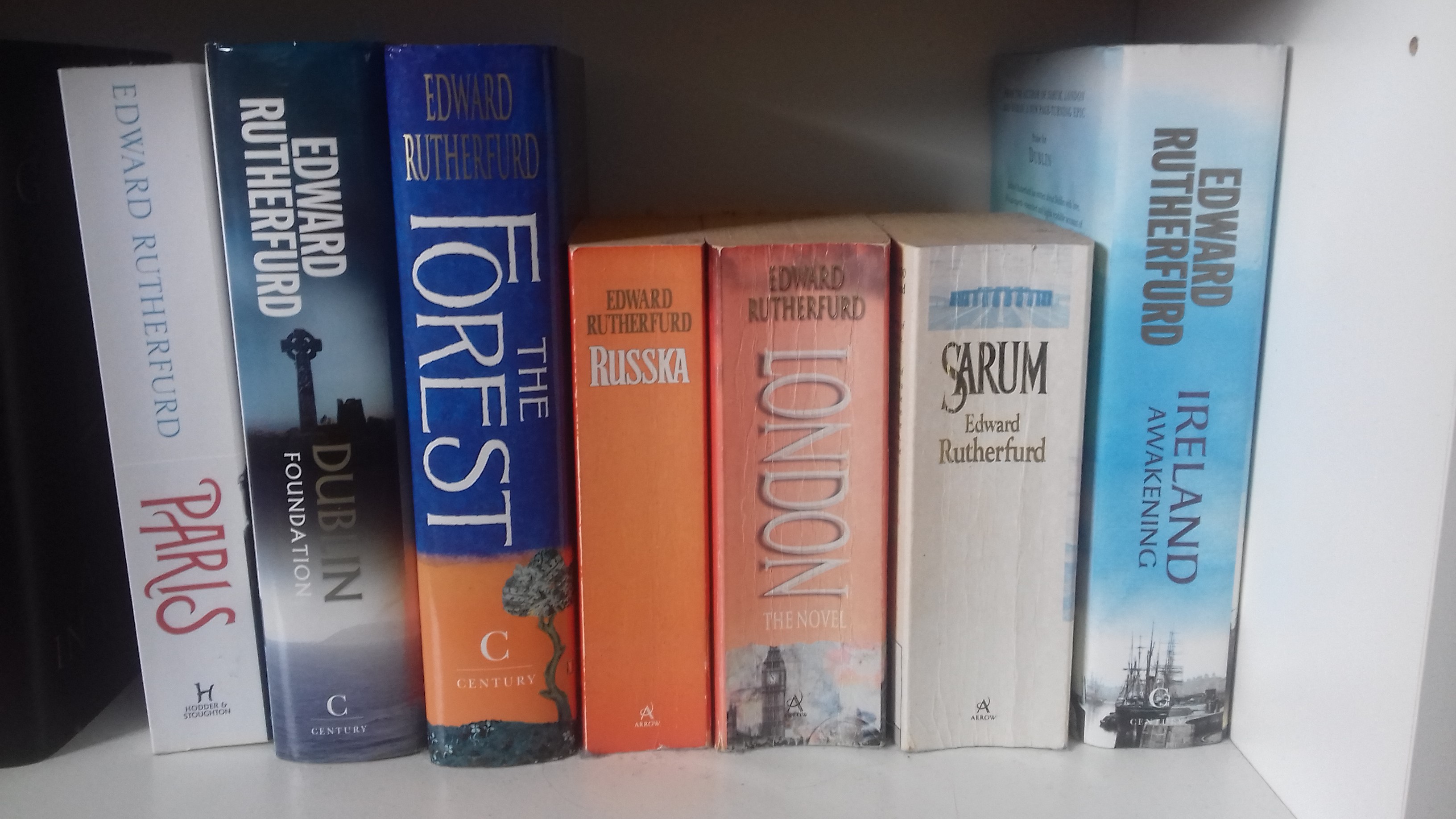
Edward Rutherfurd is the pseudonym of Francis Edward Wintle, born in Salisbury, England in 1948. His first novel, Sarum, was published in 1987, and since then he has written seven others, with a new one expected in 2019. Rutherfurd’s novels all follow a very similar format; they each tell the story of several families who live in one particular country, city or region over a period of many years. Sarum, for example, is set in and around the city of Salisbury; it begins in prehistoric times, then moves forward a few generations with each chapter, bringing us right up to the 1980s, and in this way, we watch the entire history of the city (and of England) unfold. His most recent book, Paris, is slightly different from the others as instead of moving forward chronologically in time, the narrative jumps backwards and forwards from one century to another, and although I didn’t find this as effective it did make a change!

As you can imagine, covering so much history means Rutherfurd’s novels are very long – most of them have around 1,000 pages, which I’m sure will put a lot of people off reading them. However, the way in which they are structured makes each novel feel almost like a collection of interrelated short stories, so once you start to read they are not quite as daunting as they seem! I have read all of his novels and own all of them apart from New York, which I borrowed from the library and didn’t like enough to want to buy my own copy.

Sarum (1987)
Russka (1991)
London (1997)
The Forest (2000)
Dublin: Foundation (2004)
Ireland: Awakening (2006)
New York (2009)
Paris (2013)

Of these, my favourites are Sarum, Russka and the two books set in Ireland. His new book, which I think should be coming next year, is apparently going to be about the history of China and I’m sure it will be another fascinating read.

You can find out more about Edward Rutherfurd and his work at his official website.

I will be looking at another historical fiction author in next month’s post, but for now:
Have you read any of Edward Rutherfurd’s novels? Which are your favourites?

My blog’s name in TBR books

I’ve seen this meme appearing on a lot of other book blogs recently and I knew I wouldn’t be able to resist joining in with it myself! It originated at Fictionophile’s blog, who posted the following rules:

1. Spell out your blog’s name.

2. Find a book from your TBR that begins with each letter.

3. Have fun!

Luckily, my blog doesn’t have a very long name and as I use Goodreads to keep track of my TBR, I found it easy enough to choose a book for each letter.

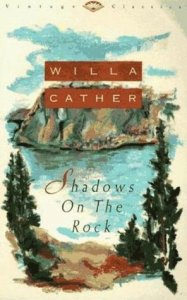
Shadows on the Rock by Willa Cather
High Rising by Angela Thirkell
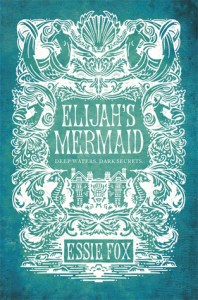
Elijah’s Mermaid by Essie Fox

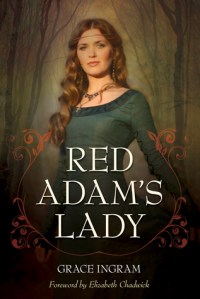
Red Adam’s Lady by Grace Ingram
Elizabeth and Her German Garden by Elizabeth von Arnim
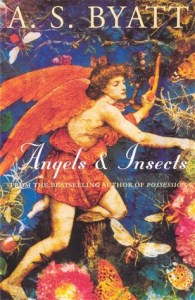
Angels and Insects by AS Byatt
Dark Angel by Sally Beauman
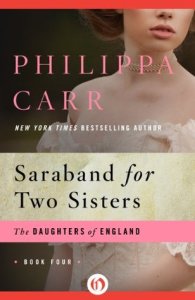
Saraband for Two Sisters by Philippa Carr

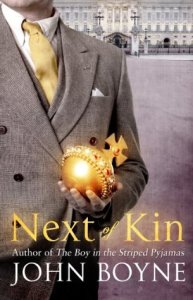
Next of Kin by John Boyne
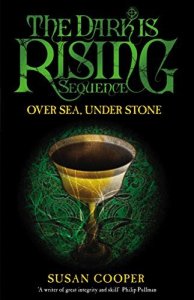
Over Sea, Under Stone by Susan Cooper
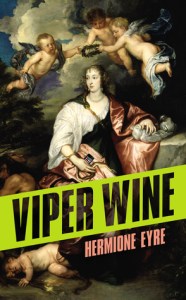
Viper Wine by Hermione Eyre
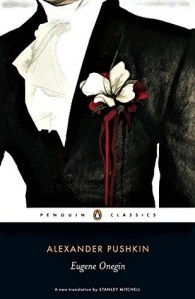
Eugene Onegin by Alexander Pushkin
Lady in Waiting by Rosemary Sutcliff
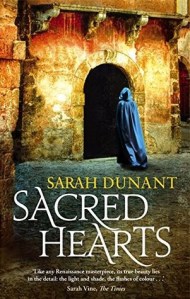
Sacred Hearts by Sarah Dunant

~

Have you read any of these books?