Gentian Hill by Elizabeth Goudge

For the last few years Lory of The Emerald City Book Review has been hosting a celebration of Elizabeth Goudge’s work on the author’s birthday and as a result I have read three wonderful novels, one every April since 2015 – The Child from the Sea, The White Witch and Towers in the Mist. This year Lory has taken a break from hosting this event, but I was pleased to find that it has a new home at Howling Frog Books and Jorie Loves a Story. Even before I knew that there would be an Elizabeth Goudge Day 2018, I had already decided to mark the day myself by reading another of her books. I still had plenty of unread Goudge novels to choose from, but Gentian Hill was the one I felt most drawn to this year.

Gentian Hill, first published in 1949, is set in Devon during the Napoleonic Wars. It opens on a peaceful August evening with a Royal Navy fleet arriving at Torbay during a glorious sunset. On board one of the frigates is fifteen-year-old Midshipman Anthony Louis Mary O’Connell, who has been in the Navy for eight weeks and has had all he can take of the seasickness, the brutal treatment, the punishments, and the taunts of the older, more experienced sailors. Escaping from the ship during the night, he deserts and disappears into the countryside where, taking the name of Zachary, he wanders from place to place looking for work until, eventually, fate takes him to Weekaborough Farm near Gentian Hill.

Weekaborough Farm is home to the Spriggs and their ten-year-old adopted daughter Stella. Stella is a gentle, sensitive girl whose time is divided between caring for the animals on the farm and attending lessons with Dr Crane, the village doctor, a man who values the importance of a thorough education for girls as well as boys:

Reading, writing, and elementary arithmetic were all the child needed to learn of the doctor, Mother Sprigg maintained. This, combined with the arts of housewifery that she herself could teach her, was all the education required by a farmer’s daughter. Doctor Crane disagreed; the education required by any individual, he maintained, was just exactly all the knowledge the individual could possibly assimilate.

When Zachary arrives in Stella’s life, an instant connection forms between the two of them which quickly blossoms into love, but soon Zachary must go to sea again…and there is no guarantee that they will be reunited.

I enjoyed Gentian Hill; as with all the other Goudge novels I’ve read, the writing is beautiful and there are some truly lovely descriptions of the Devon countryside. Here are the words she uses to bring Torbay to life:

The last light of the sun was streaming over the rampart of green hills to the west, brimming the leafy valleys with liquid gold, then emptying itself in a sort of abandonment of glory into the vast domed space of sky and sea beyond. There were ripples on the water, and a fragile pattern of cirrus clouds above, and these caught the light in vivid points of fire that were delicate as filigree upon the fine metal of the gold-washed sea and sky.

However, this is probably my least favourite of the four books I’ve read so far. With the hero and heroine being ten and fifteen (and they only age slightly over the course of the novel), I couldn’t really believe in the romance between them – it felt more like the love between a brother and a sister. I also found the characters a little bit too good and too pure, even for a Goudge novel; I feel sure there were characters in her other books who were more complex – unless I was just in the wrong mood this time.

I did find plenty of things to love, though. I particularly liked the way Goudge weaves local legends into the story, such as the legend of St Michael’s Chapel in Torquay, as well as all the customs and traditions that formed part of 18th century rural life: Christmas wassailing, the Ploughing Chant, harvesting, corn dollies, and the ancient instrument known as the bull-roarer. I also enjoyed following the story of the Abbe de Colbert, chaplain of Torre Abbey, who lived and suffered through the recent French Revolution. And although the plot is predictable, what I was hoping would happen is exactly what did happen, so I was happy with that!

Gentian Hill is a lovely story, but if you have never tried one of Elizabeth Goudge’s historical novels before I would recommend starting with either Towers in the Mist or The Witch Witch. She also wrote several contemporary novels including The Scent of Waterdon’t forget to enter my giveaway if you would like to win a copy of that one!
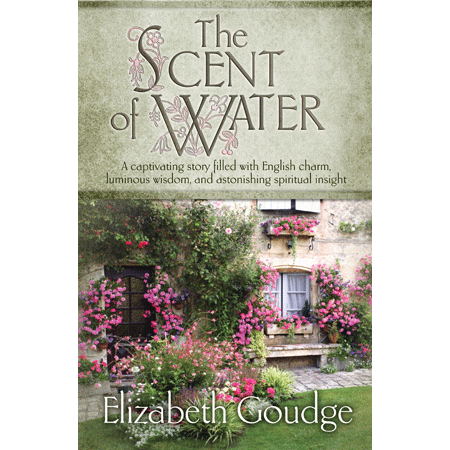
Win a copy of The Scent of Water by Elizabeth Goudge

This giveaway is now closed. Thanks to all who entered. The winner has been announced here.

It would have been Elizabeth Goudge’s birthday today – and to celebrate, Hendrickson Publishers are kindly offering a giveaway of her 1963 novel The Scent of Water.

From the Hendrickson website:

A captivating story filled with English charm, luminous wisdom, and astounding spiritual insight

Goudge’s singular gift is the depth and insight she brings to her characters. Mary Lindsay is a born and bred Londoner who has enjoyed her city life — a prestigious job, and friends with whom she takes in the city pleasures of theatre, art and music. But fleeting memories of a childhood visit to her father’s elderly cousin out in the country are revived with the news that the woman has willed her home, the Laurels, to Mary. She makes an uncharacteristically sudden and life-changing decision to leave London for the country. The gradual unfolding of her understanding of herself, of the now-deceased woman who has bequeathed her home to Mary, and of the people of Appleshaw, all weave together in a most memorable story of love’s redemptive power.

Elizabeth Goudge is an author I have come to love over the last few years. You can see my reviews of some of her novels here. Although I haven’t read The Scent of Water yet, I think it sounds lovely!

To enter the giveaway simply comment on this post telling me why you would like to read The Scent of Water. The winner will be chosen at random on Saturday morning (28th April). Good luck!

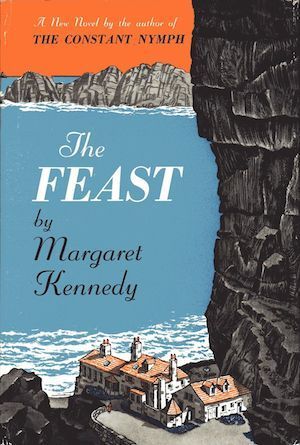
The Feast by Margaret Kennedy

It would have been Margaret Kennedy’s birthday today and she is the next author to be featured in Jane’s Birthday Book of Underappreciated Lady Authors. Having only read three Margaret Kennedy novels – The Constant Nymph, Lucy Carmichael and Troy Chimneys – I still have a lot of her books to choose from, but I decided on The Feast for this year’s Margaret Kennedy Day as I’ve seen several people name it as a favourite. Now that I’ve read it myself I can understand why!

The Feast was published in 1950 and is set three years earlier, in the summer of 1947. The novel follows a week in the lives of a group of guests who are staying at Pendizack Hotel on the coast of Cornwall. The week will end in tragedy when part of the cliff collapses on the hotel, killing everyone inside. This is not a spoiler because the book opens with a prologue in which we see the Reverend Bott attempting to write a sermon in memory of the dead. We also know that there will be some survivors – but the identities of those who will live and those who will die won’t be revealed until the end of the book.

The hotel is owned by the Siddals, although it’s Mrs Siddal who does all the work while her lazy husband does nothing at all and their three sons, now adults, make their own plans for the future. The housekeeper, Mrs Ellis, is a bitter, resentful woman who spends most of her time gossiping about other people, so the Siddals are relying more and more on the maid, Nancibel, a friendly, kind-hearted local girl.

The guests are a varied and not particularly pleasant group of people. They include Sir Henry Gifford, his selfish wife and their four children (three of whom are adopted); Mrs Cove, a cold and heartless woman who has very little affection for her three neglected daughters; the Paleys, a couple whose marriage has been strained since the loss of their child several years earlier; bad-tempered, overbearing Canon Wraxton and his long-suffering daughter Evangeline; Anna Lechene, an unscrupulous, irresponsible writer who is working on a new book about the Brontës, and her chauffeur, a handsome young man called Bruce who tells lies to make himself sound more interesting.

I was aware before I started the book that Margaret Kennedy had based the personalities of some of her characters on the Seven Deadly Sins and this added an extra layer of interest as I matched up different characters with different sins as I read. There are some obvious villains in the novel – Mrs Cove, Lady Gifford and Canon Wraxton are particularly nasty – but others have a mixture of good and bad qualities. I knew which characters I wanted to survive and which I didn’t, but life is not always fair and people don’t always get what they deserve, so there was still an element of suspense as the story moved towards its tragic conclusion.

I loved following the lives of the Siddals, their guests and their servants. Bearing in mind that the whole story takes place over the course of just seven days, there’s an impressive amount of character development with people making life-changing decisions, searching for happiness and taking control of their own futures. With over twenty characters all playing important roles in the novel, some authors would have struggled to make each man, woman and child different and memorable, but Margaret Kennedy succeeds and the result is a really enjoyable and absorbing read. It’s probably my favourite of her books so far – although I did love Troy Chimneys as well!

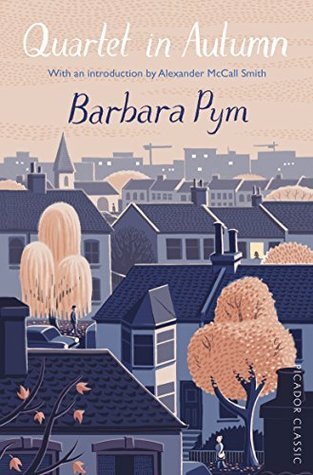
Quartet in Autumn by Barbara Pym #1977Club

This is my second choice for this week’s 1977 Club (hosted by Simon and Karen) and the third book I’ve read by Barbara Pym. Having so far read only Excellent Women and Less Than Angels, I was surprised by how different Quartet in Autumn is. It’s a much darker, sadder, more poignant novel and, although I did like it, I found it a little bit depressing.

The ‘quartet’ are two women and two men – Letty, Marcia, Edwin and Norman – who work together in the same office in 1970s London. They are four very different people with different personalities, but they have two things in common: they are all in their sixties and they all live alone. Although Pym never specifies exactly what their jobs involve, it is implied that the four of them have been sharing an office for several years and have an understanding of each other’s personal circumstances and living arrangements. Despite this, and despite their loneliness, they never do anything together outside of working hours – they eat lunch separately and then go their separate ways again at the end of the day.

We learn very little about Norman, except that people consider him an ‘odd little man’ and that his social life consists solely of dentist appointments and occasional visits to see his brother-in-law, whom he dislikes. Edwin, a widower, is sometimes invited to stay with his married daughter and grandchildren, but otherwise tries to keep himself busy by taking part in as many church activities as possible. The two men seem to play slightly smaller roles in the novel, at least until halfway through when the women retire (not to be replaced) and the quartet is reduced to a duo.

Letty has always planned to move to the countryside with her friend Marjorie after her retirement, but when the unthinkable happens and Marjorie gets engaged, she is left facing a future in an old people’s home instead. But it’s Marcia who is the most tragic character – Marcia who has had surgery for breast cancer and looks forward to her trips to the hospital as ‘holiday treats’, who has developed an obsession with hoarding empty milk bottles in the garden and who attracts the unwelcome attention of a concerned social worker.

A book about four lonely people doing meaningless, unappreciated jobs and looking for ways to fill boring, empty lives does not make the most uplifting of reads, but Pym still manages to sprinkle some humour into the story and to leave us with the sense that there is some hope for our characters after all. Letty, at least, seems to want things to change and to be willing to take the first steps towards bringing about those changes.

Despite the sad, melancholic feel of the book, I think it is my favourite so far by Barbara Pym. Her observations are both witty and sensitive and I found myself really caring about Letty, Norman, Marcia and Edwin. Another good choice for 1977 Club and now I’m looking forward to reading Jane and Prudence, the other Pym novel I have on my shelf.

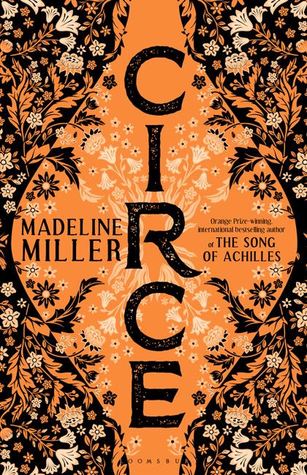
Circe by Madeline Miller

It’s been a long wait for Madeline Miller’s second novel (her first, The Song of Achilles, was published in 2011), and now that I’ve read it I’m pleased to say that I thought it was worth waiting for. I enjoyed The Song of Achilles, though maybe not as much as other people seemed to, but I found Circe an even more interesting read with characters and storylines which I personally found much more appealing.

I will start by admitting that before beginning this novel, I knew nothing about the witch Circe other than what I remembered from her appearance in the Odyssey, when Odysseus lands on the island where she lives alone with her lions and wolves, turning men into pigs. My knowledge of Greek mythology is sadly lacking, so I was curious to find out what else her story would involve and how it would be enough to fill a whole book.

The first thing we learn is that Circe is the daughter of the sun god Helios and the Oceanid nymph Perse. She grows up in the shadow of her seemingly more talented siblings, possessing neither the beauty of her sister Pasiphaë, who goes on to marry King Minos of Crete, nor the magical powers of her brothers Perses and Aeëtes (the future king of Colchis). To make matters worse, she even has the voice of a mortal rather than a goddess. It is only when she is driven by an uncontrollable jealousy to cast a spell on a rival that she discovers she does have a talent for witchcraft after all…but this same action results in her exile to the remote island of Aiaia.

Her new home is lonely but peaceful and Circe occupies herself with taming the wild animals that share her island and learning the properties of the flowers and herbs that grow there. Gradually she becomes aware of the true extent of her abilities as a witch and finds that she is not the failure she has always believed herself to be.

Let me say what sorcery is not: it is not divine power, which comes with a thought and a blink. It must be made and worked, planned and searched out, dug up, dried, chopped and ground, cooked, spoken over and sung. Even after all that, it can fail, as gods do not. If my herbs are not fresh enough, if my attention falters, if my will is weak, the draughts go stale and rancid in my hands.

Although Zeus has forbidden her to leave the island, Circe is not entirely isolated and she receives a number of visitors bringing news from the outside world. I was surprised by how many different myths Madeline Miller pulls into the story – myths even I was familiar with, such as Jason and the Golden Fleece, Daedalus and Icarus, the torture of Prometheus, and the Minotaur in the Labyrinth. I hadn’t expected to find all of these in a book about Circe (and I’m not sure how much involvement, if any, she has in other versions of these myths), but the way in which they were woven into the novel felt quite natural. The only problem is that with Circe trapped on her island, there’s a sense that most of the action is taking place elsewhere and our heroine is left to rely on information brought by Hermes and her other visitors.

It is not until halfway through the book that Odysseus comes to Aiaia and Circe’s story begins to overlap with the events of the Odyssey. This is another turning point in Circe’s life, as the time she spends with Odysseus leaves her with some important choices to make and carries the novel forward towards its conclusion.

I loved Circe; it’s a beautifully written novel and ideal for readers like myself who only have a basic knowledge of the Greek myths. I felt a stronger connection with Circe herself than I did with Patroclus in The Song of Achilles and for that reason this is my favourite of the two books, but I do think if you enjoy one of them you’ll probably enjoy the other.

Thanks to Bloomsbury Publishing for providing a copy of this book for review via NetGalley.

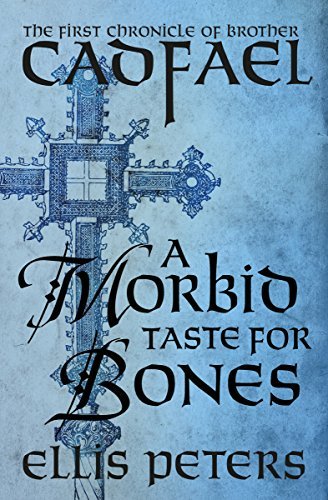
A Morbid Taste For Bones by Ellis Peters #1977club

This week, Karen of Kaggsy’s Bookish Ramblings and Simon of Stuck in a Book are hosting another of their clubs where bloggers read and write about books published in one particular year. The chosen year this time is 1977 and although at first I thought I might have problems finding anything I wanted to read from that year, it turned out I had two suitable books already. One of them was A Morbid Taste for Bones, the first book in Ellis Peters’ Cadfael mystery series. I’ve been meaning to read this series for years, so 1977 Club seemed like the perfect opportunity to begin!

A Morbid Taste for Bones is set in the spring of 1137 and we first meet Brother Cadfael in the gardens of Shrewsbury Abbey tending the herbs with the assistance of two younger monks, John and Columbanus. John is a down-to-earth, practical young man, although Cadfael doubts whether he has a true vocation for the religious life, while Columbanus is starting to make a name for himself with his visions and dramatic ‘falling fits’. Returning from a trip to St Winifred’s Well in Gwytherin, North Wales, Columbanus claims that the saint has appeared to him, saying that her bones are being neglected by the people of Gwytherin and that she would like to be moved to Shrewsbury Abbey where more pilgrims will be able to visit her. Cadfael can’t help thinking that this seems very convenient, as Prior Robert has been considering ways to attract pilgrims to the Abbey and obtaining the bones of a saint would be the perfect solution!

As a Welshman, Cadfael is chosen as one of a small party of monks to travel into Wales and bring the saint’s relics back to Shrewsbury. However, when they reach Gwytherin they are met with resistance from the local people who don’t want to lose Winifred, especially not to England. Tensions rise and when a murder takes place in the woods, Cadfael works with the victim’s daughter to try to find the killer before an innocent man is accused.

I enjoyed my first Cadfael novel and part of the reason for that was because I really liked the character of Cadfael himself, with his mixture of warmth and intelligence, tolerance and imagination. Having entered the monastery later in life, he has a sort of worldliness that helps him to understand the feelings and motivations of people in the ‘outside world’. This allows him to have some sympathy for Brother John, who is struggling to reconcile his faith with other temptations, and also for Sioned, the young woman from Gwytherin whose father’s murder forms the mystery aspect of the novel.

I loved the way Peters portrays life in a small Welsh community: the village hierarchy, the farming of the land, what people did for entertainment, and most of all, how they felt about monks from England coming to take away the remains of a Welsh saint against their will. I was interested to learn, after finishing the book, that this was based on historical fact and Winifred’s relics really were taken from Wales to Shrewsbury Abbey where they remained until the dissolution of the monasteries in the reign of Henry VIII.

I don’t want to give the impression that this is a heavy or dry historical novel, though, because it isn’t – I found it entertaining and very readable. I already knew I liked Ellis Peters’ writing because I read one of her Cadfael short stories in a Christmas anthology last year, but I think her style is better suited to a full-length novel than it is to the shorter form and I enjoyed this much more. It’s also a good example of how to write a murder mystery without including an excessive amount of violence or unnecessarily graphic descriptions. A good choice for 1977 Club and a promising start to a new series for me!

~

I should have another 1977 book to tell you about later in the week, but for now here are a few older reviews I have posted of books published in that year:

The Brethren by Robert Merle
The Mauritius Command by Patrick O’Brian
Golden Bats and Pink Pigeons by Gerald Durrell
Gildenford by Valerie Anand

Walter Scott Prize Shortlist 2018

Following last month’s announcement of the 2018 longlist for the Walter Scott Prize for Historical Fiction, the shortlist has been revealed today. As you probably know by now, I am currently working my way through all of the shortlisted titles for this prize since it began in 2010 (you can see my progress here). There are six books on this year’s list and here they are:

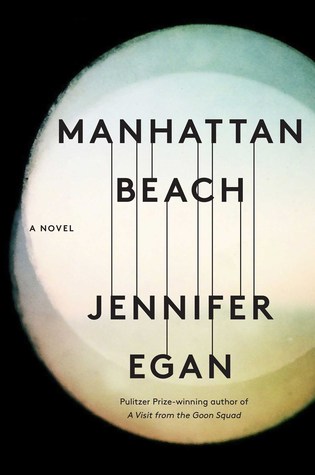
Manhattan Beach by Jennifer Egan

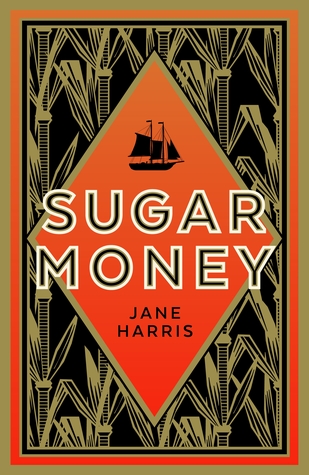
Sugar Money by Jane Harris

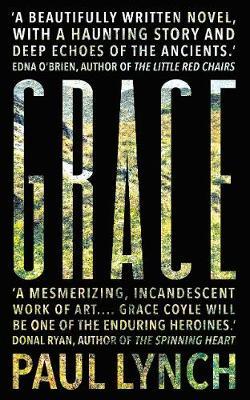
Grace by Paul Lynch

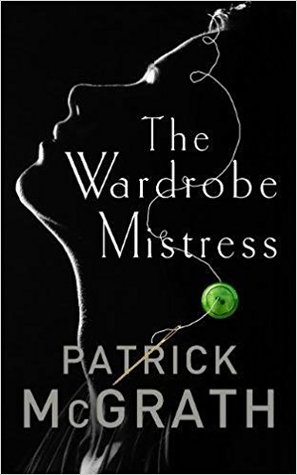
The Wardrobe Mistress by Patrick McGrath

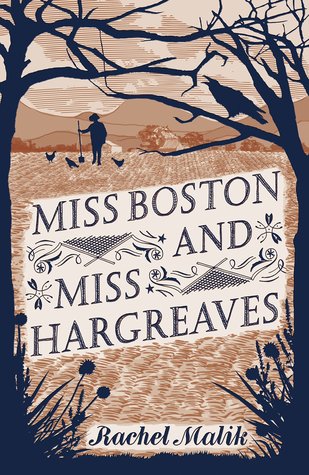
Miss Boston and Miss Hargreaves by Rachel Malik

The Gallows Pole by Benjamin Myers

~

I am currently halfway through Sugar Money, but haven’t read any of the other five books yet. If you’ve read them, please let me know what you thought. I’ll be reading them all eventually anyway, but which would you recommend I read first?

The winner will be announced in June.