Marry in Haste by Jane Aiken Hodge

This is the third Jane Aiken Hodge novel I’ve read and my favourite so far. Based on an earlier story, Camilla, which was serialised in Ladies’ Home Journal in 1961, Marry in Haste was originally published in 1969 and has just been reissued by Ipso Books. It is set in England and Portugal during the Napoleonic Wars and has just the combination of romance, suspense and history that I am coming to expect from her novels.

The saying “marry in haste and repent at leisure” perfectly describes Camille de Forêt’s situation. Having fled to England with her father, a French Comte, and changed her name to Camilla Forest to distance herself from her French origins, she has spent several years in the home of the Duchess of Devonshire. Following the death of the Duchess, Camilla found a position as governess in another household but when we meet her at the beginning of the novel she has been dismissed from her job and sent away with no money and nowhere to go.

A chance encounter with the Earl of Leominster when his carriage passes her on the road seems to provide the perfect solution to Camilla’s problems. She needs a husband, a home and some money; Leominster (or Lavenham, as he is known to his friends) needs a wife in order to claim his inheritance. In the sort of plot development which will be familiar to readers of Georgette Heyer’s Regency romances, Lavenham proposes to Camilla and she accepts – on the condition that it will be a marriage in name only. Of course, it doesn’t take long for Camilla to discover that she is falling in love with her husband after all…but will Lavenham, who has a distrust of women based on a bad experience in his past, ever return her feelings?

Marry in Haste is an enjoyable and entertaining novel; it’s not particularly original (as I said, it feels quite similar to some of Georgette Heyer’s books, among others) and most of the plot twists are very predictable, but that doesn’t make it any less fun to read. The romance between Lavenham and Camilla is thwarted by misunderstandings, lies and communication problems, which makes it feel very contrived at times, but it’s satisfying overall – and anyway, things which would be likely to annoy me in a more ‘serious’ novel feel much more acceptable in this sort of book. There’s also a secondary romance later in the book, involving Lavenham’s younger sister, the lively and irresponsible Chloe, and I enjoyed this storyline too.

Most of the action takes place in Portugal, where Lavenham is sent early in the novel to carry out secret diplomatic work. Camilla and Chloe accompany him there and promptly find themselves caught up in the conflict involving France, Britain, Spain and Portugal which has been escalating in Europe. There are some lovely descriptions of Portugal and enough historical detail to give the reader a basic understanding of the Peninsular War, but the focus is always on the characters and the relationships between them. I was disappointed that Lavenham kept abandoning his wife and sister for long periods while he was away on undercover work, but I can see that it was necessary for the plot and enabled them to have some adventures of their own while trying to escape the French and make their way back to the safety of England.

I’m looking forward to reading more Jane Aiken Hodge as so far I’ve only read this one, Strangers in Company and Watch the Wall, My Darling (three very different books). I already have a second-hand copy of Red Sky at Night on my shelf as well as another new reissue, First Night, from NetGalley – and I think it’s time I tried her sister, Joan Aiken’s, books too!

Thanks to Ipso Books for providing a copy of this book for review via NetGalley.

Top Ten Tuesday: Wise, Witty, Wonderful Words

This week’s Top Ten Tuesday hosted by That Artsy Reader Girl asks us to list our ten favourite quotations from books, but I have taken a slightly different approach to the topic. There are so many passages I love from so many books that I would never be able to narrow them down to ten favourites – or even remember them all (which is why, for the last few years, I have been putting together my monthly Commonplace Book posts so that I will have some sort of record to look back on in the future).

Back to today’s post, though, and I have turned to Goodreads for help. Those of you who use Goodreads may know that there is a ‘Quotes’ function where you can find, ‘like’ and save notable quotations – and I have quite a few stored there, from which I have picked out ten that I found beautiful, funny, interesting or memorable in some way. Not necessarily all-time favourites, then, but I hope you’ll enjoy reading them anyway.

~

1. One that all book lovers will understand:

“What she was finding also was how one book led to another, doors kept opening wherever she turned and the days weren’t long enough for the reading she wanted to do.”

Alan Bennett – The Uncommon Reader

~

2. One from a favourite children’s book:

“Animals don’t behave like men,’ he said. ‘If they have to fight, they fight; and if they have to kill they kill. But they don’t sit down and set their wits to work to devise ways of spoiling other creatures’ lives and hurting them. They have dignity and animality.”

Richard Adams – Watership Down

~

3. One I find beautiful and inspiring:

“A hard truth: that courage can be without meaning or impact, need not be rewarded, or even known. The world has not been made in that way. Perhaps, however, within the self there might come a resonance, the awareness of having done something difficult, of having done…something.”

Guy Gavriel Kay – The Last Light of the Sun

~

4. One of my favourite opening lines:

“He was born with a gift of laughter and a sense that the world was mad.”

Rafael Sabatini – Scaramouche

~

5. One that I can identify with at the moment:

“Are there any leading men in your life?”

“Several, but they’re all fictional.”

Catherine Lowell – The Madwoman Upstairs

~

6. One with which anyone who has read Dorothy Dunnett’s Lymond Chronicles will sympathise:

“I wish to God,” said Gideon with mild exasperation, “that you’d talk – just once – in prose like other people.”

Dorothy Dunnett – The Game of Kings

~

7. One from a favourite classic:

“Some of us rush through life and some of us saunter through life. Mrs. Vesey sat through life.”

Wilkie Collins – The Woman in White

~

8. One of Dickens’ best:

“That was a memorable day to me, for it made great changes in me. But it is the same with any life. Imagine one selected day struck out of it, and think how different its course would have been. Pause you who read this, and think for a moment of the long chain of iron or gold, of thorns or flowers, that would never have bound you, but for the formation of the first link on one memorable day.”

Charles Dickens – Great Expectations

~

9. One which gives us some good advice:

“The past can teach us, nurture us, but it cannot sustain us. The essence of life is change, and we must move ever forward or the soul will wither and die.”

Susanna Kearsley – Mariana

~

10. One I find comforting when I’m having a bad day:

“Come what come may, time and the hour run through the roughest day.”

William Shakespeare – Macbeth

~

Do you have any favourite quotations? How do you remember them? Do you keep a notebook or do you record them online somewhere?

Classics Club Spin #17: My list

The Classics Club

I love taking part in the spins hosted by The Classics Club – this is the seventeenth and although I’ve missed one or two I think I’ve managed to participate in most of them. As I just recently started my second Classics Club list, I have plenty of books to choose from for this spin and I’ll be happy to read any of them.

Here are the rules for Spin #17:

* List any twenty books you have left to read from your Classics Club list.
* Number them from 1 to 20.
* On Friday 9th March the Classics Club will announce a number.
* This is the book you need to read by 30th April 2018

And here is my list:

Five Victorian Classics

1. Nicholas Nickleby by Charles Dickens
2. Jezebel’s Daughter by Wilkie Collins
3. Desperate Remedies by Thomas Hardy
4. The Cloister and the Hearth by Charles Reade
5. The Black Arrow by Robert Louis Stevenson

Five Classics in Translation

6. The Black Sheep by Honoré de Balzac
7. The White Guard by Mikhail Bulgakov
8. La Reine Margot by Alexandre Dumas
9. In a Dark Wood Wandering by Hella S Haasse
10. Germinal by Emile Zola

Five 20th Century Classics by Women

11. Don’t Look Now and Other Stories by Daphne du Maurier
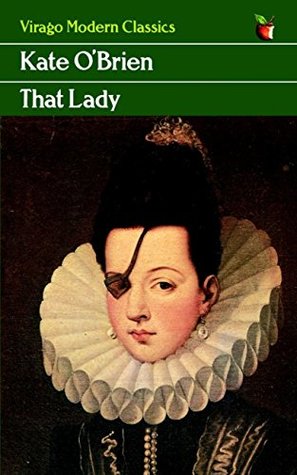
12. That Lady by Kate O’Brien
13. Jane and Prudence by Barbara Pym
14. High Rising by Angela Thirkell
15. The Corn King and the Spring Queen by Naomi Mitchison

Five 20th Century Classics by Men

16. How Green Was My Valley by Richard Llewellyn
17. The Chrysalids by John Wyndham
18. The Grapes of Wrath by John Steinbeck
19. Claudius the God by Robert Graves
20. A Passage to India by EM Forster

~

Have you read any of these books? Which numbers do you think I should be hoping for on Friday?

Six Degrees of Separation: From The Beauty Myth to Death in Venice

It’s the first Saturday of the month, which means it’s time for another Six Degrees of Separation hosted by Kate of Books are my Favourite and Best. The idea is that Kate chooses a book to use as a starting point and then we have to link it to six other books of our choice to form a chain. A book doesn’t have to be connected to all of the others on the list – only to the one next to it in the chain.

The first book this month is The Beauty Myth by Naomi Wolf. For the first time since I started taking part in Six Degrees in January, I haven’t read the starting book in the chain – and I have to confess that I hadn’t even heard of it. It seems that The Beauty Myth was originally published in 1990 and was “the bestselling classic that redefined our view of the relationship between beauty and female identity.” It sounds interesting, but is probably not a book I will ever read.

I struggled for a while trying to decide where to take the chain next, but in the end I went with another book with a ‘beautiful’ title: For the Most Beautiful by Emily Hauser. This is a novel based on Homer’s Iliad, retelling the story from a feminine perspective and focusing on two female characters – Krisayis and Briseis.

It’s the first of three books which form the Golden Apple trilogy, which brings me to my next link: books with an apple connection. I had two to choose from here – one was The Wilding by Maria McCann, about a 17th century cider-maker, but the book I’m going to include in my chain is At the Edge of the Orchard by Tracy Chevalier, the story of a family trying to establish an orchard in the Black Swamp of Ohio.

Another book with an orchard in the title (not one containing apples, though) is The Orchard of Lost Souls by Nadifa Mohamed. This is a novel set in 1980s Somalia, following the lives of three women as the country heads towards civil war.

In 2013, Nadifa Mohamed was named one of Granta’s Best of Young British Novelists. Also nominated in the same year was Joanna Kavenna, who wrote The Birth of Love, a novel about childbirth and motherhood. This turned out not to be my sort of book, but I think a lot of readers would love it.

Staying on the subject of childbirth, the next link in my chain is to The Midwife of Venice by Roberta Rich. Set in 16th century Venice and Malta, this is the story of Hannah Levi, a Jewish midwife accused of witchcraft after assisting at a difficult birth.

Venice is a wonderful place to visit and to read about. The book I have chosen to finish my chain is Death in Venice by Thomas Mann. I read it for German Literature Month in 2015 and although I didn’t love the book, I did love the atmospheric descriptions of Venice.

~

Have you read any of the books in my chain? What did you think of them?

Next month’s chain will begin with Memoirs of a Geisha by Arthur Golden, another book I haven’t read.

Walter Scott Prize – the 2018 longlist

I’ve mentioned before that I am attempting to read all of the books shortlisted for the Walter Scott Prize for Historical Fiction since the prize began in 2010. I am always looking for quality historical fiction and I have found the books nominated for this particular prize to be of a consistently high standard. You can see the progress I’ve made with this here – and I know there are other bloggers working on similar projects too, which is great to see.

The longlist for this year’s prize has just been announced and includes lots of intriguing titles. I’m not planning on trying to read the entire longlist – I’m waiting until the shortlist is announced – but I’m sure I will still be dipping into this list from time to time.

Here are the thirteen books on the 2018 longlist. I’ve only read two so far!

The Clocks in This House All Tell Different Times by Xan Brooks
Birdcage Walk by Helen Dunmore
Manhattan Beach by Jennifer Egan
The Last Man In Europe by Dennis Glover
Sugar Money by Jane Harris
Prussian Blue by Philip Kerr
The Draughtsman by Robert Lautner
Grace by Paul Lynch
The Wardrobe Mistress by Patrick McGrath
Miss Boston and Miss Hargreaves by Rachel Malik
The Gallows Pole by Benjamin Myers
The Horseman by Tim Pears
The Bedlam Stacks by Natasha Pulley

Of the two books I’ve already read, I enjoyed Birdcage Walk and I think its inclusion on the longlist is a nice tribute to Helen Dunmore, who died last year. I had a few problems with The Bedlam Stacks but I’m not surprised to see it listed here as I know most people who have read it loved it much more than I did.

Apart from Sugar Money, which is on my TBR and just waiting for the right time to be read, none of the others were books that I was planning to read – and there are a few that I haven’t even heard of! I obviously have some investigating to do.

Have you read any of the books on this year’s longlist? Which ones do you think will be on the shortlist in April?

My Commonplace Book: February 2018

A selection of words and pictures to represent February’s reading:

commonplace book
noun
a book into which notable extracts from other works are copied for personal use.

~

Now the fascination of the past, according to psychologists, consists in its air of security. The past is over and done with; nothing more can happen in it; it is therefore a refuge from the difficult to-day and the problematic tomorrow.

There Came Both Mist and Snow by Michael Innes (1940)

~

“At least you’re not a stranger to yourself, Miss Hardcastle,” I say. “Surely you can take some solace in that?”

“Quite the contrary,” she says, looking at me. “I imagine it would be rather splendid to wander away from myself for a little while. I envy you.”

The Seven Deaths of Evelyn Hardcastle by Stuart Turton (2018)

~

“Clever? Who said that we all had to be clever? But we have to have courage. The whole position of woman is what it is to-day, because so many of us have followed the line of least resistance, and have sat down placidly in a little provincial town, waiting to get married. No wonder that the men have thought that this is all that we are good for.”

The Crowded Street by Winifred Holtby (1924)

~

Example of a ‘corpse road’ or coffin path.

I’m used to all weathers and I know the tricks that Nature can play. I’ve scared myself at times, imagining spirits in the mist or glimpsing marsh lights dancing on the moor at midnight. But those are nothing more than half-remembered fantasies of a child with a head full of goblins and fairies, put there by a God-fearing father with a dread of the Devil’s creatures. I’m not one for superstition and I’ve never before felt truly afraid…

The Coffin Path by Katherine Clements (2018)

~

It may be obtuseness on my part, but I never could see that people who lived in the Basses-Pyrénées are any more cultivated or had any broader horizons than people who live in the Green Mountains. My own experience is that when you actually live with people, day after day, year after year, you find about the same range of possibilities in any group of them.

The Brimming Cup by Dorothy Canfield Fisher (1919)

~

A feeling of tension hung about Lisbon these hot days of early summer: rumours ran the streets in the daytime, as packs of scavenging dogs did by night, and Camilla did not know which she found more disturbing, the whispers that ran, incomprehensibly, through the Great Square by day, or the desolate howling of the dogs by night.

Marry in Haste by Jane Aiken Hodge (1969)

~

It’s really most remarkable how the human race is so seldom satisfied with what it’s got. Give a man the world and he’s still pining for the moon.

Re-read of Penmarric by Susan Howatch (1971)

~

Kyrenia, Cyprus

I should like to live here, thought Amanda dreamily; and remembered what Miss Moon had said about Time…that in the Villa Oleander, Time was their servant, and not they the servants of Time. Perhaps that was true of all Cyprus. Certainly this shimmering blue day held a timeless and dreamlike quality. But it was a deceptive quality, for Time must move on here as relentlessly as it did in colder and harsher countries, and it was only a pleasant illusion that here it drifted slowly and lazily. One day the world would catch up with Cyprus.

Death in Cyprus by M.M. Kaye (1956)

~

She had learnt to wait for the changes and the help that life brings. Life is like the sea, sometimes you are in the trough of the wave, sometimes on the crest. When you are in the trough, you wait for the crest, and always, trough or crest, a mysterious tide bears you forward to an unseen, but certain shore.

Someone at a Distance by Dorothy Whipple (1953)

~

Favourite books read in February:

Penmarric (re-read), The Crowded Street, The Seven Deaths of Evelyn Hardcastle

Where did my reading take me in February?

England, USA, Portugal, Cyprus

Authors read for the first time in February:

Stuart Turton, Dorothy Canfield Fisher, Dorothy Whipple

~

Have you read any of these books? What have you been reading in February?

Someone at a Distance by Dorothy Whipple

Today would have been Dorothy Whipple’s birthday – and she is the next author in Jane’s Birthday Book of Underappreciated Lady Authors. I have never read any of her books but have been curious about them for a while and I thought a good place to start might be Someone at a Distance, her 1953 novel which seems to be her most popular and which has been published both as a standard dove-grey Persephone and as a Persephone Classic.

On the surface, Someone at a Distance is the simple story of the breakdown of a marriage. At the beginning of the novel, publisher Avery North and his wife, Ellen, seem to be the perfect couple. Having been married for twenty years, they are no longer passionately in love but still have an affectionate relationship and appear to be quite content with their comfortable, middle-class lives. They are devoted to their two children – eighteen-year-old Hugh, who is away on National Service, and fifteen-year-old schoolgirl Anne – and have a lovely house in the countryside with a large paddock for Anne’s beloved pony, Roma. If only Avery’s mother, the elderly Mrs North, hadn’t begun to feel lonely living alone in her big house nearby, and if only she hadn’t decided to look for a companion for the summer…

Old Mrs North responds to an advertisement in The TimesYoung Frenchwoman desires to spend July, August in English home. French conversation. Light domestic duties – and soon Louise Lanier comes to stay. Louise is the daughter of a bookseller in a provincial town in France and sees coming to England as a way of escaping from the humiliation of being rejected by her lover who has recently married another woman. Bored and miserable, Louise sets her sights on Avery North and won’t be satisfied until she has caused as much trouble as possible.

As I’ve said, the plot is a simple one, but Whipple’s writing and the way in which she tells the story give it the additional layers that make it such a compelling read. You can see what is going to happen almost from the start, but you don’t know exactly when or how it will happen – and when the inevitable moment comes, you feel as shocked and upset as the characters themselves. My sympathies were with Ellen; she came across as such a genuinely nice person, who really didn’t deserve the treatment she receives from Avery and Louise. I was impressed by how well she coped with the huge changes in her life…at least until an incident near the end of the book, which disappointed me slightly as I discovered that Ellen didn’t feel quite the way I would have liked her to have felt (sorry for being vague, but I’m trying to avoid too many spoilers).

The reactions of the other characters – the North children, the servants, friends and neighbours, and Louise’s family in France – are also explored. In some ways their thoughts and emotions are timeless, but in others this does feel like a book of its time, for example when Anne is too ashamed to tell her teachers and friends at school about her parents’ separation because she thinks they will view her differently. As for Louise, she is a wonderful character. It would have been easy for Whipple to write her as a one-dimensional villain, who does what she does purely out of spite and nastiness, but instead she takes the time to show us Louise’s life in France and to try to explain what made her such a bitter person. There were times when I could almost, but not quite, feel sorry for Louise – although in the end it was her parents I pitied, as they were forced to come to terms with the sort of woman their daughter was.

Someone at a Distance is a great book, with much more emotional depth and complexity than I expected when I first started to read. Now that I’ve been introduced to Dorothy Whipple, I’m sure I’ll be reading more of her work.