The Butcher’s Hook by Janet Ellis

The Butchers Hook Life is not easy for Anne Jaccob, the young protagonist (more anti-heroine than heroine) of The Butcher’s Hook. Her mother is an invalid, her father is cold and distant, and she is struggling to warm to her new baby sister, who will never, ever take the place of the beloved little brother who died. The one bright spot in Anne’s life is her secret romance with Fub, the butcher’s apprentice, but even this is threatened when her father announces that he is arranging a marriage for her with the vile Simeon Onions. It seems that Anne is going to have to take matters into her own hands…

The Butcher’s Hook is the debut novel of Janet Ellis, who is probably best known for presenting the BBC’s long-running children’s show Blue Peter in the 1980s. It’s an unusual and imaginative story set in a Georgian London populated with colourful, larger-than-life characters. Many of them feel as though they could have stepped out of the pages of a Charles Dickens novel. There’s Titus Levener, the grotesquely fat butcher, and Dr Edwards, the sinister tutor who gives the young Anne an education she’ll never forget. There’s Angus, the Scottish soldier defeated in the recent Jacobite rising, who wanders the streets of London hungry, ragged and cold. And then, of course, there’s Anne.

From the beginning I was drawn into Anne’s world – the world of a lonely, confused young woman who has difficulty fitting in with the people around her. As the story progresses, Anne decides to take control of her life and shape her own destiny despite the obstacles which have been placed in her way. From this point on, things become very dark and twisted! I don’t want to say too much, but you need to be aware that you’ll be spending a lot of time in the company of a character who is seriously flawed and capable of the most horrifying things.

The Butcher’s Hook is an unsettling and atmospheric novel, with a plot that took me by surprise several times with its unexpected changes of direction. Based on this first effort, I’m sure Janet Ellis can look forward to a successful new career as a writer. To think that I nearly didn’t read it because I’m a vegetarian and found the title off-putting! My only disappointment was that I thought the ending felt slightly unfinished, as if there was more of Anne’s story still to be told; I don’t know whether there will be a sequel, but if not I’ll be interested to see what Janet Ellis writes next.

I had the opportunity to read this book just before Christmas, but have been waiting to post my review here until after the UK release date – which was yesterday. Thanks to Lovereading for the review copy.

2016 Walter Scott Prize longlist announced

As some of you may know, I am in the process of slowly working my way through all the shortlisted titles for the Walter Scott Prize for Historical Fiction since it began in 2010. Historical fiction is my favourite genre and I have so far found the books nominated for this prize to be of a consistently high quality.

You can learn more about the prize on the Walter Scott Prize website and you can follow my progress through the shortlists on this page. Kay of What Me Read has already joined me in this project and if anyone else would like to do the same, you’re more than welcome.

Anyway, the reason I’m posting this today is that this year’s longlist has just been announced – with the shortlist to follow in March and the winner in June. I’m not currently planning to attempt to read the entire longlist, which includes thirteen books, but I would like to dip into the list from time to time and read at least some of them.

The thirteen books are as follows:

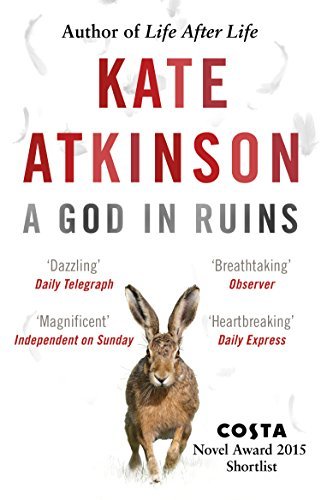
A God in Ruins A God in Ruins by Kate Atkinson
Sweet Caress by William Boyd
A Petrol Scented Spring by Ajay Close
A Place Called Winter by Patrick Gale
Dictator by Robert Harris
Devastation Road by Jason Hewitt
Death and Mr Pickwick by Stephen Jarvis
Mrs Engels by Gavin McCrea
End Games in Bordeaux by Allan Massie
Tightrope by Simon Mawer
Signs For Lost Children by Sarah Moss
Curtain Call by Anthony Quinn
Salt Creek by Lucy Treloar

The only one I have read so far is A God in Ruins, but I do have Dictator on hold at the library and can’t wait to read it. I have heard good things about Sweet Caress – and Death and Mr Pickwick sounds interesting, although I’m not sure if I should wait until I’ve read The Pickwick Papers first. Most of the others are new to me, so I have some investigating to do!

Have you read any of these books?

Renegade by Robyn Young

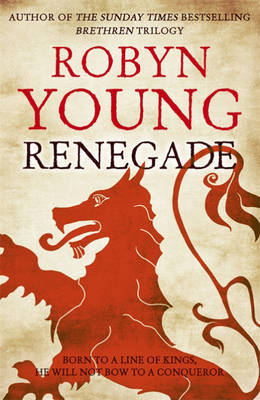
Renegade One of the reasons I love reading historical fiction is that it gives me an opportunity to learn about historical people and events that I might otherwise have gone through life knowing little or nothing about. I would probably never have thought of picking up a non-fiction book on Robert the Bruce, so I’m pleased to have been introduced to him in fictional form in this trilogy of novels by Robyn Young.

The first book, Insurrection, which I read in 2014 and loved, took us through Robert’s early years, explaining the origins of his claim to the Scottish throne, his family’s rivalries with the other contenders, the Balliols and the Comyns, and how he entered the service of Edward I of England after John Balliol was made King of Scotland. I immediately bought a copy of the second book, Renegade, so that I could find out how Robert’s story would continue, but I struggled to get into it and put the book aside until a few weeks ago, when I felt ready to have another attempt.

Renegade begins in the year 1300 with Robert Bruce in exile in Ireland, having betrayed the English and set his sights on taking the throne of Scotland. He intends to search for the Staff of St Malachy, one of four legendary relics, and use it to bargain with King Edward, but things don’t go according to plan and Robert is forced to take a different approach. Swearing loyalty to Edward again, Robert must convince the English that he has turned his back on Scotland once and for all…while secretly biding his time and waiting for a chance to launch his campaign for the Scottish crown.

I think my initial problem with this book was due to the fact that it opens with the search for the Staff of St Malachy and I tend to find ‘hunting for hidden relics’ stories quite tedious and over-used in historical fiction. However, once I got past the first few chapters this storyline was pushed into the background and I started to find the book much more enjoyable (although I still think Insurrection was the better of the two).

Robert himself is still not a character I particularly care for, which is maybe not surprising as his path to the throne is built around treachery and betrayal, but I did have sympathy for the position he found himself in and the difficult choices he had to make. I felt sorry for his friend, Humphrey de Bohun – one of the few characters in the trilogy that I do like – when it became obvious that he too was going to be deceived by Robert for a second time. As in the previous novel, the women in Robert’s life have only small roles to play, but I enjoyed the brief glimpses we are given of his wife, Elizabeth de Burgh, and daughter, Marjorie, and I was sorry that Robert seems to have so little time for them both. Isabel Comyn, Countess of Buchan, is another intriguing female character and I’m hoping we’ll find out what happens to her in the final novel – although I suspect it won’t be good.

Also in this book we learn the fate of William Wallace, who has been lying low since the Battle of Falkirk, trying to avoid being captured. Meanwhile, in England, the ageing King Edward is looking to his son – Edward, Prince of Wales – to carry on his work once he is gone, but the prince seems more interested in his friendship with Piers Gaveston and it is already obvious that he is not going to be the ruler or the military leader his father is. The period in which Renegade is set is a time of conflict and conquest, which means Robyn Young devotes a lot of pages to battles, sieges and ambushes. I’m not really a lover of battle scenes but these were easy enough to follow and understand, as well as being detailed and, as far as I could tell, quite accurate. I was interested to find that the trebuchet Warwolf which Edward is having built during the novel really existed and was used in the Siege of Stirling Castle just as Young describes in the book.

I’m now looking forward to reading the final part of the trilogy, Kingdom, and would like to do so as soon as possible, because Robyn Young has a new novel set in Renaissance Europe coming out later this year.

The Poisoned Crown by Maurice Druon

The Accursed Kings has it all. Iron kings and strangled queens, battles and betrayals, lies and lust, deception, family rivalries, the curse of the Templars, babies switched at birth, she-wolves, sin and swords, the doom of a great dynasty…and all of it (well, most of it) straight from the pages of history.

This is how the author George R.R. Martin has described Maurice Druon’s series of French historical novels, the inspiration behind his own Game of Thrones. The Accursed Kings (Les Rois Maudits) consists of seven books, all published between 1955 and 1977 and all available in English translations. The Poisoned Crown (Les Poisons de la Couronne) is the third in the series, continuing the story from The Iron King and The Strangled Queen.

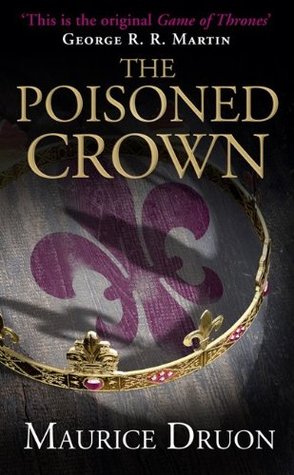
The Poisoned Crown It’s 1315 and Louis X (known as le Hutin, the Quarreller) is on the throne of France. As the son of the late Philip the Fair, whose line was cursed ‘to the thirteenth generation’, Louis’ reign will be short and troubled. In the previous novel we saw the demise of his first wife, Marguerite of Burgundy. Now a second marriage has been arranged – with the beautiful Clémence of Hungary, who arrives in France after a terrible sea voyage and quickly wins the hearts of those around her with her kindness, generosity and religious devotion. All that remains is for Clémence to provide the king with heirs and secure the succession to the throne.

In some ways it seems that the presence of Clémence is making Louis a better person, but in others he is still proving to be cruel, weak and incompetent. A war against Flanders ends disastrously, he is unable to deal with the impact of famine and he fails to listen to good advice, being too easily influenced by his unscrupulous uncle, Charles of Valois. Meanwhile, trouble is brewing again between the king’s cousin, Robert of Artois, and Robert’s great-aunt Mahaut, who are still fighting over the lands they each regard as their own. Eventually the barons of Artois begin to rise against Mahaut, bringing the king into the dispute and setting a chain of events into motion which could bring about the end of Louis’ reign.

Three books into this series, I’m still enjoying it, but The Poisoned Crown is probably my least favourite so far. It feels like a bridging novel, leading us from the previous two volumes into the remainder of the series, rather than a satisfying story in itself. There’s less action in this one and too much focus, at least in my opinion, on the conflict between Robert of Artois and the Countess Mahaut. Still, there were plenty of things that I did like and the history is as fascinating as ever; I previously had almost no knowledge of what was happening in France during this period, so I’m really learning a lot from these novels.

Not everything in The Accursed Kings is based strictly on historical fact, though. One of the subplots which is largely fictional involves the Lombard banker, Spinello Tolomei, and his young nephew, Guccio Baglioni. Guccio’s romance with the impoverished noblewoman Marie de Cressay moves on a step in this book, although Druon goes on to spoil things for us by informing us of what the next ten years will have in store for them. One thing I find quite annoying about Druon’s writing is his habit of constantly telling us what is going to happen next. Of course, when you don’t know the history, even the titles of some of these books are spoilers in themselves!

The Poisoned Crown ends abruptly, but the scene is set for the fourth book in the series, The Royal Succession.

Phineas Redux by Anthony Trollope

This is the fourth book in Trollope’s Palliser series and continues the story begun in the second book, Phineas Finn. It would have been possible to move straight from one Phineas novel to the other, but in between the two there is The Eustace Diamonds, which I’m glad I read first as several characters and storylines from that book are picked up again in this one.

*Spoiler warning – If you have not yet read Phineas Finn, be aware that the rest of this post will contain spoilers.*

Phineas Redux At the beginning of the novel we learn that Phineas is now living alone in Dublin, his wife having died in childbirth. Phineas is leading a comfortable but uneventful life and misses the excitement of his former political career in London, so when an opportunity arises for him to return to England and stand for parliament again, he jumps at the chance. Soon Phineas is back in the House of Commons having won a seat as the member for Tankerville, but he almost immediately finds himself caught up in the controversy surrounding plans for the disestablishment of the Church.

The return of Phineas Finn to parliament also means that both he and the reader are reunited with old friends from earlier in the series. These include Plantagenet Palliser, now Duke of Omnium following the death of his elderly uncle, and his wife, Lady Glencora, the new Duchess. Madame Max Goesler, who had been a companion to the old Duke, is still part of Glencora’s circle and is pleased to be able to resume her friendship with Phineas. Meanwhile, Lady Laura Kennedy, the woman Phineas once hoped to marry, has left her husband, but Phineas knows that even though she is passionately in love with him, his own feelings have now changed.

There’s so much going on in Phineas Redux; now that we are four books into the series, the cast of characters is widening all the time. As well as all of the characters I’ve already mentioned, I was pleased to catch up with Lord Chiltern and Violet Effingham and to find that they are now a happily married couple. A young woman called Adelaide Palliser is staying with the Chilterns and one of the novel’s subplots centres around her as she attracts the attentions of two very different men – Gerard Maule and Ned Spooner. And a few characters from The Eustace Diamonds appear again too, including Lizzie Eustace, Lord Fawn and Mr Emilius.

I enjoyed meeting all of these people again and being back in the world of Phineas and the Pallisers, but it took a while for me to become fully drawn into this particular novel. There are some long political passages in the first half of the book, and some fox-hunting chapters too, which I struggled to get through. Then, somewhere in the middle of the novel, a murder takes place and from this point on I thought things became much more interesting. The murder is that of Mr Bonteen, a political rival of Phineas’s, and all the evidence seems to point to Phineas as the culprit.

Now, Anthony Trollope is no Agatha Christie, and we know from the beginning who really committed the crime, but the murder and the trial which follows allows Trollope to develop the relationships between Phineas and each of the other characters, some of whom have no doubts that Phineas is innocent and some who aren’t so sure. Phineas finds that his strongest support comes from the women in his life. Lady Laura wants to help, but is limited as to what she can actually do, and eventually becomes aware that while Phineas values her friendship, the offer he once made her is unlikely to be repeated. Laura’s story is a sad one, in contrast with Madame Max Goesler’s, who goes to great lengths to try to clear Phineas’s name and proves herself to be a true friend. And I love the warm-hearted Duchess and her enthusiasm for the causes she believes in.

After a slow start I enjoyed Phineas Redux and am looking forward to reading the final two Palliser novels. Next will be The Prime Minister!

Historical Musings #11: A post for Valentine’s Day

Historical Musings I had a few topics in mind for this month’s Historical Musings post, but as it’s Valentine’s Day today I thought it would be appropriate to talk about romance…specifically, historical romance.

In one of last year’s posts I discussed the negative impressions and misconceptions some readers have of historical fiction as a genre. It seems that historical romance suffers from a worse reputation: often when I look at reviews of historical novels I see remarks like, “This is so badly written and poorly researched I consider it to be historical romance, not historical fiction.” Is this fair? Surely just because a novel is a romance it doesn’t necessarily mean it’s badly written or that the author hasn’t carried out their research. Of course, it depends on what type of books you think about when you hear the words ‘historical romance’ – and that is what I want to discuss in this post.

I have read some wonderful books over the years which I suppose could be described as historical romance (although I think I probably just thought of them as historical fiction at the time). Yet I am also sometimes guilty of complaining that books are too “romance-orientated and lacking the depth I prefer”. I said something to that effect just a few days ago when writing about Philip Lindsay’s Here Comes the King. So why do I enjoy some types of romance and not others – and why do so many of us seem to dislike reading (or admitting to reading) romance?
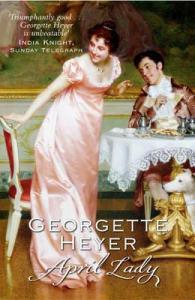
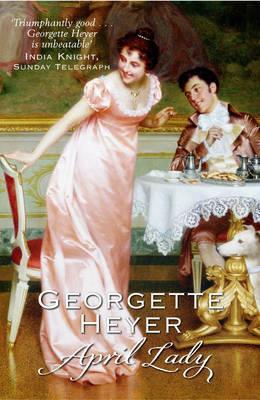
April Lady I’ve noticed that a lot of people talk about historical romance (and sometimes historical fiction too) as something they read as a teenager or young adult, the implication being that they consider the books they used to read as being less relevant, less important or simply less appealing than the books they read now. I’m certainly not criticising anybody who may have said or felt that; I just think it’s interesting that tastes change so much over time and that people sometimes seem to grow out of reading certain genres (in my case it’s contemporary crime and horror that I rarely read these days). I don’t feel ashamed that, as an adult, I enjoy reading Georgette Heyer’s Regency romances or that I had fun working through the first three books in Philippa Carr’s Daughters of England series a few years ago. I missed out on those types of books when I was younger, so if I don’t read them now I never will.

So what exactly is historical romance and how is it different from historical fiction? It seems to me that there are several different types of romance to think about here:

1 – Books which are specifically marketed as ‘historical romance’ and targeted at a particular readership. These books tend to follow certain conventions which readers of romance will expect; the focus will be on the relationship between the hero and heroine, and there will usually be a happy ending. The Flame and the Flower by Kathleen E. Woodiwiss, published in 1972, is thought to have been one of the first of this type of book. More recent examples could be The Duchess War by Courtney Milan, The Viscount Who Loved Me by Julia Quinn and Again the Magic by Lisa Kleypas. I haven’t read any of these novels or anything similar, but I’m sure that, as with any genre, there are some good ones and some bad.

2 – Historical fiction novels which include romance as part of the plot but not as the main focus of the story. Now, I do read a lot of this type of book. In fact, I would argue that most historical fiction does include some sort of romantic aspect. Even Patrick O’Brian’s Aubrey-Maturin novels contain a certain amount of romance – but don’t worry, I’m not suggesting that they should be considered historical romance! At the other end of the scale there are authors like Philippa Gregory, whose books often have a strong romantic element, but because they are usually based on the life of a real historical woman and follow the whole course of that woman’s life, I wouldn’t consider them to be romances in the traditional sense either.

3 – ‘Romances’ in the old-fashioned sense of the word. This would include 19th century novels like The Three Musketeers by Alexandre Dumas and Ivanhoe by Sir Walter Scott. I love to read these books, but they are not really the kind of romances I’m talking about in this post.

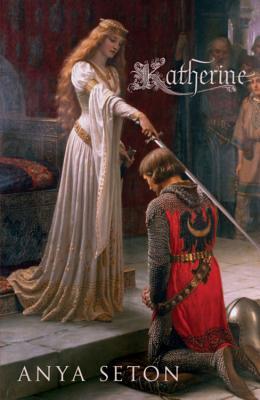
Katherine Of course, there are plenty of books that I would have trouble fitting into any of these categories. There are novels I’ve read and loved, such as Katherine by Anya Seton and Forever Amber by Kathleen Winsor, which could be described as either historical fiction or historical romance but don’t, in my opinion, belong in either category 1 or category 2 above. Then there are gothic romances by authors like Victoria Holt and Jane Aiken Hodge. And what about a classic novel like Gone with the Wind?

My conclusion, then, after all of this, is that trying to give books labels or to make them fit neatly into one genre or subgenre is a waste of time – for me, anyway. I know what sort of romances I like to read and what sort I’m not at all interested in reading and surely that’s all that matters.

What are your opinions on this month’s topic?

Do you – or have you ever – read any historical romances? Are there any you would recommend?

What do you think makes historical romance different from historical fiction?

Have your reading tastes changed over time?

Here Comes the King by Philip Lindsay

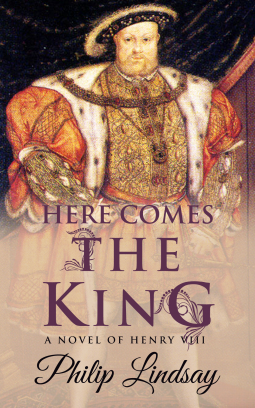
Here Comes the King Philip Lindsay (1906-1958) was an Australian author of historical fiction. His books have been out of print in recent years but are now being made available to a modern audience in ebook form by one of my favourite independent publishers, Endeavour Press. Here Comes the King, a 1933 novel about Katherine Howard and Thomas Culpeper, is the first of his books that I’ve read.

Katherine (or Catherine, but I’m sticking to the spelling used in the novel) is a young woman of seventeen or eighteen when she marries Henry VIII at Oatlands Palace and becomes his fifth wife. Her predecessor, Anne of Cleves, has recently been set aside by the king, who believes he was misled as to her appearance. The new queen’s beauty and youthful spirit are much more pleasing to Henry, who calls her his ‘rose without a thorn’. Katherine, though, is less enamoured with her fat, gluttonous, fifty-year-old husband who is suffering from painful leg ulcers and whose moods are becoming increasingly volatile. Although Henry is not generally unkind to her, she is tempted into an affair with the handsome young courtier, Thomas Culpeper – an affair which will lead to both their downfalls.

Here Comes the King is written in the third person from the perspective of several different characters including Culpeper, Henry and Katherine herself, as well as Will Sommers, the king’s fool, Francis Dereham, another man once romantically involved with Katherine, and Jane Boleyn, Lady Rochford, who helps to arrange Katherine’s secret meetings with Culpeper. Jane and Sommers were both in a difficult position, knowing or suspecting what was going on and unsure of what to do with that knowledge, and this made them interesting characters to read about.

However, I felt that I didn’t get to know Katherine very well. She is portrayed as a pretty, flirtatious, immature young girl, and while this does seem to be a widely held view of what the real Katherine was like, I would still have preferred her character to be given a little more depth. Even when she was the viewpoint character, I never felt that I really knew what she was thinking. Culpeper’s character is better written; he is shown in a negative light, being irresponsible, impulsive and a heavy drinker (and allegedly guilty of both rape and murder, although these things are only briefly mentioned as they happen outside the scope of the novel), but his thoughts and feelings come through strongly.

I am far from being an expert on Katherine’s life and her time as Henry’s queen, so I can’t really comment on Lindsay’s accuracy, but the story did seem to follow quite faithfully the general outlines of Katherine’s and Culpeper’s lives. He incorporates things which are known to be historical fact, such as the text of Katherine’s incriminating letter to Culpeper (complete with grammatical mistakes; she is thought to be the least well educated of Henry’s wives) as well as things which may or may not be true but which have become part of the legends surrounding Katherine: practising laying her head on the block the night before her execution, for example, and declaring that “I die a Queen, but I would rather have died the wife of Culpeper”.

I had no problems with Lindsay’s writing (it’s slightly flowery and over-descriptive in places but otherwise feels surprisingly contemporary for a 1930s book) and I would read more of his work, but I didn’t find this particular novel very compelling, maybe because it’s so romance-centred. Admittedly, it would be difficult to write a book about Katherine Howard and not focus on her love affairs; as she spent such a short period as queen and died so young, she left less of a legacy than some of Henry’s other wives, and I think this is why her story has never appealed to me very much. Maybe one of Lindsay’s other novels would interest me more than this one did.

I received a copy of this book for review via NetGalley.