The Hollow Hills by Mary Stewart

Hollow Hills I didn’t really intend to read The Hollow Hills last weekend. I have books on my library pile, review copies to catch up with, and books to read for various other projects, but something made me yearn for Mary Stewart and I picked up the second of her Arthurian novels on Saturday morning. I was immediately pulled into the story and had finished the book by Monday.

The Hollow Hills is part of a series of five books set in Arthurian Britain, although the first three are usually described as the Merlin Trilogy. The first book, The Crystal Cave, introduces us to Merlin and his world; The Hollow Hills continues the story, beginning just before the birth of Arthur. As the illegitimate son of Uther Pendragon and Ygraine of Cornwall, the young Arthur is sent into hiding, not only as protection against Uther’s enemies but also to keep him conveniently out of the way until another legitimate heir is born. But Merlin, with his gift of prophecy and visions, knows that it will be Arthur who will one day raise the legendary sword Caliburn from its resting place and become King.

Like The Crystal Cave, the story is narrated by Merlin himself and as Arthur is only a baby throughout much of the novel (and still only fourteen at the end) this book is more about Merlin than it is about Arthur. While Arthur is growing up in safety, ignorant of his true parentage, Merlin is having adventures of his own as he travels throughout Europe, takes on new identities, and explores the legends behind the great sword Caliburn (which until now I have always known as Excalibur). I loved the book from beginning to end and was never bored, but there is always the sense that the whole novel is building towards the moment when Arthur will learn who he really is and be ready to reclaim his heritage.

The plot means that Merlin and Arthur are kept apart for most of the novel, but I enjoyed the scenes that they do have together. I like the way Mary Stewart portrays both characters and the development of the bond between the two of them. It’s disappointing, though, that there are no strong female characters in this book: Ygraine only appears briefly and while Morgause (in this version Arthur’s half-sister) does have an important role in the story, she is hardly portrayed very flatteringly. Apart from that, I loved everything else about this book, and of course, it’s very well written with lots of beautiful, vivid descriptions. It’s Mary Stewart, after all!

While I don’t have a lot of knowledge of the Arthurian legends, I do know the basic details, so some parts of the story felt familiar to me – but even where I thought I knew what was going to happen, this didn’t lessen the enjoyment of the book for me. There is not just one version of the legend, of course, but lots of them which all differ slightly, and in her notes at the end of the book, Stewart explains some of the choices she has made. Some readers may be disappointed that there is so little actual ‘magic’ in this novel, but that’s one of the things I like about it; most of what happens has a rational explanation and there’s only a touch of the supernatural.

I think of the two books in this series that I’ve read so far, I did prefer The Crystal Cave, but only slightly, and I’m now looking forward to reading the next one, The Last Enchantment.
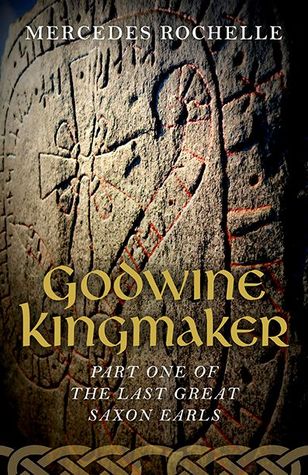
Godwine Kingmaker by Mercedes Rochelle

Godwine Kingmaker Earlier this year I read Mercedes Rochelle’s Heir to a Prophecy, a novel set in the 11th century and inspired by Shakespeare’s Macbeth. Her second book, Godwine Kingmaker: Part One of The Last Great Saxon Earls, is also set in Anglo-Saxon England – in the years leading up to the Norman Conquest – and tells the story of Godwine, Earl of Wessex.

Godwine, son of Wulfnoth, is only eighteen when he meets a Danish warrior in the woods and offers his assistance. This chance meeting will change the course of Godwine’s life, because the man he has befriended is Ulf, brother-in-law of Canute, King of Denmark. When Canute takes the throne of England after the death of Edmund Ironside in 1016, Godwine is by his side offering advice and support. During the years that follow he rises to become Earl of Wessex, one of the most powerful men in the kingdom, but Godwine’s good fortune will not last forever…

Godwine Kingmaker provides a fascinating portrayal of one of the last and greatest Saxon Earls. I have come across Godwine once or twice before in other novels set during this time period, but have never read about his life in so much depth. As the father of Harold, the future King of England, his historical significance is obvious, but he was also a very important nobleman in his own right. I thought he was a great character and I enjoyed following his story from his humble beginnings to the height of his power and influence.

One aspect of the story I found particularly interesting – and also quite frustrating – is the relationship between Godwine and Ulf’s sister, Gytha. Gytha very reluctantly becomes Godwine’s wife and for a long time after the marriage she persists in denying her feelings for him, even to herself. Although her behaviour annoyed me at times, I thought it was good that this storyline was not resolved too quickly and continued to have implications for several of the characters later in the book.

Godwine is an ambitious man but he is also a man who cares about his family and throughout the novel we see him working to ensure a safe and secure future for his children, even while his fortunes rise and fall as three more kings follow Canute. Despite Godwine’s best efforts, his eldest son, Swegn, stumbles from one disaster to another, but it is his second son, Harold, who will carry the family’s legacy forward.

Mercedes Rochelle is now working on the sequel to this book, The Sons of Godwine, which will tell the story of Harold Godwineson and his brothers. I’m looking forward to reading it!

Thanks to the author for providing a copy of Godwine Kingmaker for review.

Six in Six: the 2015 edition!

Jo’s meme is the perfect way to look back at the books we’ve read during the first six months of the year. The idea is to choose six categories and for each one list six books that you’ve read so far this year. Six in six! If you need inspiration, Jo has provided a selection of category headings from previous years but you can also create new ones to fit your own reading.

6

I’ve been musing over my categories and lists for a few weeks now and this is what I’ve come up with:

Six books with a person’s name in the title:

1. Fair Helen by Andrew Greig
2. David Copperfield by Charles Dickens
3. Edwin: High King of Britain by Edoardo Albert
4. Ross Poldark by Winston Graham
5. Mary of Carisbrooke by Margaret Campbell Barnes
6. Jakob’s Colours by Lindsay Hawdon

Six books set during a war:

1. If You Go Away by Adele Parks (World War I)
2. Girl at War by Sara Novic (Yugoslav Wars)
3. The Book Thief by Markus Zusak (World War II)
4. The Royalist by S.J. Deas (English Civil War)
5. Red Rose, White Rose by Joanna Hickson (Wars of the Roses)
6. HMS Surprise by Patrick O’Brian (Napoleonic Wars)

Six books that are not novels:

1. The League of the Scarlet Pimpernel by Baroness Orczy (short stories)
2. The Gothic: A Very Short Introduction by Nick Groom (non-fiction)
3. The Importance of Being Earnest by Oscar Wilde (play)
4. Rebellion by Peter Ackroyd (non-fiction)
5. Cyrano de Bergerac by Edmond Rostand (play)
6. The Idle Thoughts of an Idle Fellow by Jerome K. Jerome (essays)

Six books with a mystery to investigate:

1. Peril at End House by Agatha Christie
2. Death in Kashmir by MM Kaye
3. One Good Turn by Kate Atkinson
4. Dark Fire by CJ Sansom
5. Little Black Lies by Sharon Bolton
6. The Silent Boy by Andrew Taylor

Six books about historical women:

1. The Chosen Queen by Joanna Courtney (Edyth of Mercia)
2. The Child from the Sea by Elizabeth Goudge (Lucy Walter)
3. The King’s Curse by Philippa Gregory (Margaret Pole)
4. Rebel Queen by Michelle Moran (Rani Lakshmibai)
5. Alias Grace by Margaret Atwood (Grace Marks)
6. An Accidental Tragedy by Roderick Graham (Mary, Queen of Scots)

Six cities visited:

1. Rome – City of God by Cecelia Holland
2. London – The Crimson Petal and the White by Michel Faber
3. New York City – The Fatal Flame by Lyndsay Faye
4. Florence – Romola by George Eliot
5. Paris – Pure by Andrew Miller
6. Venice – The Glassblower of Murano by Marina Fiorato

Well, that’s my six in six for this year! Will you be posting yours?

The Invention of Fire by Bruce Holsinger

The Invention of Fire This is the second in Bruce Holsinger’s series of historical mystery/thrillers set in 14th century England. A Burnable Book introduced us to John Gower, poet and ‘trader in secrets’, and followed his search for a book of prophecies containing a treasonous prediction foretelling the King’s death. In The Invention of Fire we enter Gower’s world again as he attempts to solve a second mystery. It’s not necessary to have read A Burnable Book first, although I would recommend doing so; I read it last year and enjoyed it, so have been looking forward to this new one.

The Invention of Fire begins in the year 1386 when sixteen dead bodies are found in a London privy one night. The cause of death is not obvious at first, but it soon becomes clear that the men were killed by a weapon few people in England have seen or even heard of. John Gower’s mission is to investigate the murders – an investigation that will lead him on a journey into the Kent countryside with his friend, Geoffrey Chaucer, and then across the sea to Calais where he is reunited with a face from his past. But when it is revealed that some of England’s most powerful men are involved in the crime, Gower becomes aware of the danger his own life is in – and of the implications of the new weapon on the future of warfare.

John Gower is an interesting character to build these novels around. He is a person who really existed in the 14th century, but one who is not particularly well known today. This gives Holsinger scope to use his imagination and create some fascinating fictional storylines for the character, while at the same time incorporating the few facts that we do know about the real John Gower: for example, his work as a poet, his friendship with fellow poet Geoffrey Chaucer, and the fact that he became blind in later life.

I have seen the John Gower novels compared with CJ Sansom’s Shardlake series and there are definitely some similarities. This book reminded me very much of Sansom’s Dark Fire which I read earlier this year; the time period is completely different, of course, but the plot is quite similar and both deal with the discovery of a new weapon. I have to admit, the weaponry aspect of this book didn’t particularly interest me, and with everything that has been going on in the world recently it’s depressing to read about the invention of new ways to kill. I was more interested in Gower’s personal story – his relationship with his son, his efforts to cope with his gradual loss of sight, and his conversations with Chaucer, who is working on The Canterbury Tales.

I had hoped there would be a third book in this series, but Bruce Holsinger has said that his next novel will be a ‘transhistorical fantasy’. That sounds intriguing but I hope he might still return to John Gower in the future.

It’s the last day of June…

…and summer seems to have reached the UK at last. I’m hoping it will stay for a while as I have a week off work coming up!

JuneLooking back at my June reading, I have read eight books this month and my favourite was Sharon Bolton’s wonderful Little Black Lies. I’ve loved all of her books (apart from Blood Harvest, which is the only one I still haven’t read) but I think this one is possibly her best so far.

Cyrano de BergeracAlso in June, I decided to set myself the challenge of reading the three plays on my Classics Club list and I’m pleased to say that this was a success! I read all three and enjoyed them all, especially the last two. I’ve never had a lot of interest in reading plays in the past but I feel much more enthusiastic about them now and will choose some more to read soon. The plays I’ve read this month are:

Doctor Faustus by Christopher Marlowe
The Importance of Being Earnest by Oscar Wilde
Cyrano de Bergerac by Edmond Rostand

In another attempt to tackle my out of control TBR pile, I chose ten random books from my Goodreads to-read shelf. The idea is to go through them one by one, either reading them or deciding not to read them – so that in one way or another they can be removed from my shelf. I have read one of the ten so far (Alias Grace by Margaret Atwood, which I loved and will be reviewing very soon) and I’m hoping to continue with some of the others in July.

Rebel QueenMy final three reads this month were all historical fiction, set in three very different time periods: Godwine Kingmaker by Mercedes Rochelle (Anglo-Saxon England), Rebel Queen by Michelle Moran (19th century India) and If You Go Away by Adele Parks (the First World War). I enjoyed all three of these, especially Godwine Kingmaker – my thoughts on that one will be coming soon too!

As we move into July I am still reading The Vicomte de Bragelonne by Alexandre Dumas; I’m loving it but it’s a very long book and I want to take my time with it. And because I can never just read one book at a time the way I used to, I’m also reading Linda Holeman’s The Devil on her Tongue, a novel set in 18th century Portugal. After this, I have a copy of The Last Confession of Thomas Hawkins by Antonia Hodgson, the sequel to The Devil in the Marshalsea, which I can’t wait to start reading!

How has your June been? What will you be reading in July?

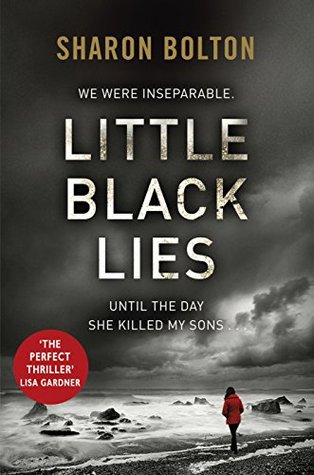
Little Black Lies by Sharon Bolton

Little Black Lies As soon as I started to read Sacrifice by S.J. Bolton back in 2011, I knew immediately that I had found an author who would become a favourite and this was confirmed a few months later when I read another of her books, Awakening. Now writing under the name Sharon Bolton, her last four novels have been part of a series following the investigations of detective Lacey Flint – and while I have enjoyed the series, I was pleased to hear that her newest book, Little Black Lies, was going to be another standalone.

Little Black Lies is set on the Falkland Islands, the British territory in the South Atlantic which is still the subject of dispute between Britain and Argentina. The events of the novel take place over one week in November 1994. The Falklands War which took place twelve years earlier is still fresh in people’s minds, but as the story opens the islanders have something new to worry about: the fate of a little boy who has disappeared on the islands – the third missing child in three years.

The novel is divided into three sections narrated by three different characters, each of whom may or may not be involved in the disappearances of the boys. The first of these narrators, Catrin Quinn, is someone who understands exactly what it is like to lose a child. Still trying to come to terms with the recent deaths of her two young sons in a car accident, Catrin is seeking solace in her conservation work and in plotting revenge on her former best friend, Rachel Grimwood, the woman she blames for the tragedy.

Next we hear from Catrin’s ex-lover, Callum Murray, a British soldier who took part in the Falklands War of 1982. Callum is suffering from post-traumatic stress disorder and is experiencing worrying lapses in his memory. Finally, Rachel has a chance to tell her side of the story – and unsurprisingly, her version of events is very different from Catrin’s.

Three different narrators and, as I’ve come to expect from Sharon Bolton, all three are flawed and all three are unreliable. The author delves deeply into the lives of each character, but although we get to know them very well over the course of the novel we can never be quite sure whether they’re being completely honest with the reader or with themselves. As I read, I suspected first Catrin, then Callum, then Rachel – and then I changed my mind – and then I changed it again. There are plot twists, there are surprises and there are revelations (one of them coming at the end of the very last page) and every time I thought I knew where the story was going, I was proved wrong.

I have praised the plot and the characters, but the setting also deserves a mention. The Falkland Islands are hardly a popular choice of setting for crime novels (with a population of fewer than 3,000 people, most of whom live in the capital, Stanley, violent crime is almost unheard of on the islands) but the fact that I’d never read a book set there before is one of the reasons I loved Little Black Lies so much. The landscape is beautifully described and the sense of isolation creates a wonderful, eerie atmosphere. This book is dark, powerful and emotional…and probably my favourite by Sharon Bolton so far.

I received a copy of Little Black Lies for review via NetGalley.

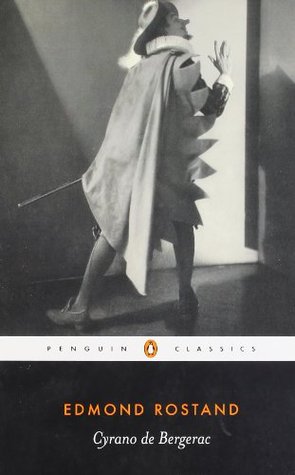
Cyrano de Bergerac by Edmond Rostand

Cyrano de Bergerac How many ways are there to insult a man with a big nose?

“Solicitous: ‘But sir, how do you drink? Doesn’t it trail in your glass?’
Or else descriptive: ‘It’s a rock, it’s a peak, it’s a cape…No, not a cape, it’s a peninsula!’
Inquisitive: ‘Do tell me, what is that long container? Do you keep pens in it, or scissors?’
Twee: ‘How darling of you to have built a perch for little birds to rest their tiny claws’.”

These are Cyrano de Bergerac’s own words about his own nose and although it might seem from this that he can see the funny side, he is actually very sensitive about it. Because of his appearance he believes no woman could ever find him attractive – especially not his beautiful cousin, Roxane, the woman he loves.

The handsome Christian is also in love with Roxane but is afraid that he doesn’t have the ability with words to impress her. Cyrano, who is a talented poet as well as a great swordsman and soldier, comes up with the perfect solution: he will write love letters to Roxane and send them in Christian’s name. Not only will this help to further Christian’s romance with Roxane, it will also give Cyrano a chance to express his own feelings. The plan is a success, but who is Roxane really falling in love with – the man who is writing the letters or the man she thinks is writing them?

Edmond Rostand’s French play Cyrano de Bergerac (subtitled An Heroic Comedy in Five Acts) was hugely successful when it was first performed in 1897. The audiences must have loved the same things that I did: the action, the romance, the combination of comedy and tragedy, and the swashbuckling hero. I’m not fortunate enough to have seen a stage version of this play (or any of the film versions either) but I’m sure it must be great fun to watch, with its swordfights, battle scenes and witty dialogue. I enjoyed reading it on the page, but it’s not quite the same as being able to see it performed!

Rostand’s inspiration for the play was a real person, the novelist, playwright and soldier Savinien de Cyrano de Bergerac, but only a few elements of his life are included in the play; the rest is imaginary. And what a great imagination Rostand had! There are so many memorable scenes, ranging from Cyrano fighting a duel while simultaneously composing a ballad, to Roxane standing on a balcony listening to Christian declare his love for her while Cyrano hides in the shadows telling him what to say, to the play’s tragic and emotional ending.

Rostand is credited with bringing the French word ‘panache’ into popular use (at least with the meaning we know today i.e. style and flamboyance). There are many examples of Cyrano’s panache throughout the play – and it is even his final word (although some translators give it the literal translation ‘white plume’). The edition I read was the Penguin Classics one with a recent translation by Carol Clark. I know this is not considered one of the better ones, so I do plan to read a different version of the play at some point. Any recommendations are welcome!