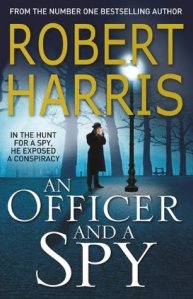
An Officer and a Spy by Robert Harris

An Officer and a Spy “Is it possible that innocence is not recognised in an age of enlightenment and truth? Let them search. I ask no favour, but I ask the justice that is the right of every human being. Let them continue to search; let those who possess powerful means of investigation use them towards this object; it is for them a sacred duty of humanity and justice.”

In 1894, Alfred Dreyfus, a Jewish officer in the French army, is found guilty of spying and passing on France’s military secrets to the Germans. After being publicly degraded and stripped of his rank at a ceremony in Paris, he is exiled to Devil’s Island to live in solitary confinement in a tiny stone hut. One of the men involved in the conviction of Dreyfus is Georges Picquart, the narrator of An Officer and a Spy.

At first, Georges is sure that Dreyfus is guilty, but after being promoted to Colonel and made head of the Statistical Section (French military intelligence) he starts to have doubts. And when evidence of a second spy comes to light, Georges begins to wonder…what if Dreyfus was innocent all along?

An Officer and a Spy may be a work of fiction, but the events I’ve described above really happened. Known as the Dreyfus Affair, it was a serious miscarriage of justice that caused a huge scandal and divided public opinion in France. The author Emile Zola was even inspired to write an article in support of Dreyfus which was published under the title J’accuse…! and led to him being brought to trial for libel. The most shocking aspect of the case was the extent to which military officials had attempted to cover up the truth and fabricate evidence to hide the fact that mistakes had been made and that an innocent man had been used as a scapegoat.

This fictional account of the Dreyfus Affair is closely based on historical fact. The first half of the novel follows Georges Picquart as he discovers that there’s more to the case than meets the eye; in the second half we see what he decides to do with the information he has uncovered. Every step of the way he is thwarted by the very people he should have been able to depend upon for help and it becomes obvious that some members of his department are more interested in protecting their reputations than in seeing justice prevail.

This is the first book I’ve read by Robert Harris; for a long time he’s been an author I’ve been aware of without ever thinking I might enjoy, but when I saw that this novel had won this year’s Walter Scott Prize for Historical Fiction it convinced me to give it a try. And guess what? I loved it! Not having much previous knowledge of the Dreyfus story (it was touched on in Paris by Edward Rutherfurd but this is the first time I’ve read about it in any depth), I was completely gripped by Georges Picquart’s investigations.

From the historical fiction perspective, this book is excellent. It’s packed with information but never becomes boring or overly detailed and it’s firmly set in its time period – Georges travels by steam train, he communicates via telegram, and during a posting in Tunisia he can only rely on out-of-date newspapers as a way of following the progress of the case at home in France. But I would also recommend this book to readers of spy novels and thrillers and to anyone who enjoys well-written, well-researched fiction in general. Although the pace is slow at the beginning, it soon becomes quite a page turner, especially if you’re not very familiar with the facts of the Dreyfus Affair.

An Officer and a Spy really is a fascinating novel and took me through a range of emotions from shock to frustration to absolute outrage! Now I would like to try another book by Robert Harris. Any suggestions?
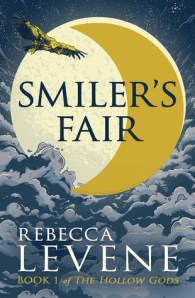
Smiler’s Fair by Rebecca Levene

Smiler's Fair I don’t read a lot of fantasy, but something drew me to this book – probably a combination of the striking cover and unusual title – and I’m glad it did. Smiler’s Fair is the first of a new fantasy series, The Hollow Gods, and I enjoyed it enough to be in no doubt that I’ll be reading the next one whenever it appears. It’s always difficult to know how much information on the plot to give away when writing a review, especially with fantasy as I think one of the most enjoyable things about reading a fantasy novel is discovering the world the author has created and the surprises it contains. I would hate to spoil any of those surprises for future readers, so I can promise you that I’ve included very little here that can’t already be found on the back cover of the book itself.

The story begins with the birth of a baby…not just any baby, but the heir of Yron the Moon God, reborn to human parents. His father, King Nayan, has heard a prophecy that this child will grow up to kill his father, so he tries to have the boy destroyed at birth. His attempt fails, however, and the baby escapes with the help of his mother and her maid. We will have to wait to find out what exactly happens to the child, because the story now jumps forward several years and we get our first glimpse of Smiler’s Fair.

Despite its name, the fair is not quite as wonderful as it sounds. Forced to keep moving from place to place – because something terrible will happen should it stay in one spot for too long – Smiler’s Fair adapts itself to each new location, reassembling and rearranging its labyrinth of market stalls, taverns and gambling dens. You may be able to find your heart’s desire there (the fair can offer “every food, every spice, every pleasure and every vice”) but it will come at a high price.

Smiler’s Fair provides a starting point for storylines involving five very different characters. First there’s Nethmi, a young woman who pays a visit to the fair on her way to Winter’s Hammer where she will become the wife of Lord Thilak. On arriving in her new husband’s fort she finds that married life is not going to be easy and is driven to commit an act that will change everything. Next, there’s Dae Hyo, the last surviving member of his tribe. Following the slaughter of the rest of the Dae, he has been left alone to find a way of avenging his people and is turning increasingly to alcohol for support.

Our third character is Eric, a teenage boy who works in a brothel in Smiler’s Fair. When Eric finds himself falling in love he must decide whether to stay with the fair or to leave and seize his chance of happiness. Next there’s Marvan, a rather unpleasant person who enjoys provoking fights so that he can have the fun of killing his victims. And finally, there’s Krish, a young goatherd from a remote mountain village who makes a discovery that changes his life.

At first, each character seems to be having adventures of his or her own which are separate from all of the others but eventually connections between the storylines begin to emerge and we see how each one is linked in some way with the central plot surrounding the re-birth of Yron the Moon God. Nethmi, Dae Hyo, Eric, Marvan and Krish all have entirely different personalities and backgrounds and so can offer very different perspectives on life in and around Smiler’s Fair. All five of these characters are flawed and they all do things at times that are shocking, cruel or unexpected, which makes them interesting, if not very likeable. The secondary characters are equally interesting – these include Sang Ki, the illegitimate son of Nethmi’s new husband; Olufemi, the mage of Mirror Town; and my personal favourite, Rii, a giant talking bat.

The world Rebecca Levene describes in this book is, in some ways, not entirely different from our own and there are echoes of cultures, religions and civilisations that feel familiar. But the world of Smiler’s Fair differs from the real world in some very imaginative and unusual ways. I was surprised to find that the fair itself plays a relatively minor role in the story; much of the action actually takes place in other locations. However, the fair is at the dark centre of what I quickly discovered was a very dark novel. If you’re going to read Smiler’s Fair you need to be prepared for violence, murder, prostitution, alcoholism and other serious themes. This is not a light and whimsical fantasy novel, but the exact opposite.

This did feel very much like the first book in a series, with a lot of time spent introducing the characters, setting the scene and explaining some of the history of this imaginary world. The ending is not completely satisfying because so much is left unresolved in preparation for the rest of the series, but I can almost guarantee that if you finish this book you’ll want to read the next one to find out how the story is going to continue.

Thanks to Bookbridgr for my copy of Smiler’s Fair

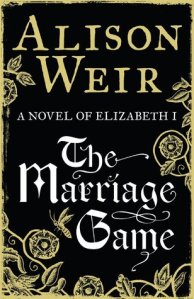
The Marriage Game by Alison Weir

The Marriage Game Elizabeth I faces many challenges during her time on the throne of England: the threat of the Spanish Armada, for example, and the question of what to do about Mary, Queen of Scots. The most pressing issue for ‘the Virgin Queen’, however, is the need to secure the succession to the throne. Afraid of what might happen if their Queen was to die with no heir, her councillors advise her to marry and have children as quickly as possible. Elizabeth, though, has other ideas.

Month after month, year after year, Elizabeth promises to consider one suitor after another – her brother-in-law Philip of Spain, the Archduke Charles of Austria (son of the Holy Roman Emperor), Prince Eric of Sweden, and the Earl of Arran, just to name a few – and finds a reason to turn down every one of them. The most likely candidate, many people believe, is Robert Dudley, Elizabeth’s childhood friend and the man she truly loves. But Elizabeth prefers to keep the whole of Europe in suspense, using the possibility of marriage as her bargaining power…so Robert must wait with the rest of his rivals as Elizabeth continues to play ‘the marriage game’.

In Alison Weir’s new novel, The Marriage Game, she gives a fictional account of Elizabeth’s reign with a focus on the Queen’s marriage negotiations and her relationship with Robert Dudley. Although she does stick to the known facts where possible, there are some ‘unsolved mysteries’ that are left open to interpretation, such as the death of Robert’s wife, Amy Dudley (was she murdered or was it an accident?), the question of what exactly happened between the teenage Elizabeth and her stepmother’s husband, Thomas Seymour – and of course, the mystery of why the Queen was so reluctant to marry.

Historians can’t be completely sure as to why Elizabeth never married, but Weir gives several possible explanations in this book. The most obvious reason is that, as a female monarch, Elizabeth believes that if she takes a husband he will expect to rule as King and she will have to share her power. As a Protestant, she also needs to consider the religion of any potential husband. Then there’s the possibility that she is afraid of marriage and childbearing, having witnessed her father Henry VIII’s many unhappy marriages, the fate of her own mother and the deaths of Jane Seymour and Katherine Parr in childbirth. Of course, for Elizabeth’s advisers, none of these objections to marriage seem reasonable to them; the most important thing as far as they are concerned is to find Elizabeth a suitable husband and secure England’s future. And as for poor Robert Dudley, he simply wants to marry the woman he loves.

I don’t think I’ve read a fictional representation of Elizabeth yet that I’ve actually liked and this one was no different. At the beginning of The Marriage Game, I did feel that I might be able to like this version of Elizabeth: she seemed very human and I had sympathy for a young woman who had already suffered so much unhappiness in her short life, with her mother (Anne Boleyn) being beheaded and enduring months of imprisonment herself. As the story progressed, though, I began to feel as frustrated with her as everyone else in the novel did. When Robert Dudley decided that “He had had enough…He was weary of strife and the intrigues of the court, and Elizabeth’s endless, tortuous games” I knew exactly how he felt!

This was not a bad book and I enjoyed it more than the last Alison Weir novel I read, A Dangerous Inheritance. For readers new to Elizabeth-based historical fiction it will probably be a fascinating read, but if you have read about Elizabeth’s reign before you might feel, as I did, that there’s nothing very new or different here. The most interesting parts of the book for me were the scenes in which Elizabeth’s complex relationship with Mary, Queen of Scots is discussed, with Elizabeth torn between fear of the threat Mary poses to her throne and her desire to support a fellow queen. I wonder if Alison Weir will consider writing a novel about Mary at some point in the future.

I received a copy of this book for review from the publisher via NetGalley

Completed Challenge: What’s in a Name?

challenge_2014whatsinaname

I only signed up for two reading challenges at the beginning of 2014 and I’m pleased to say that I’ve now completed one of them! This was the What’s in a Name? challenge, hosted for the first time this year by Charlie of The Worm Hole.

The idea of the challenge was to read one book from each of five categories, plus an optional bonus category. The categories and the books that I read are listed below:

A reference to time:

The Midnight Rose by Lucinda Riley

A position of royalty:

Empress of the Night

Empress of the Night by Eva Stachniak

A number written in letters:

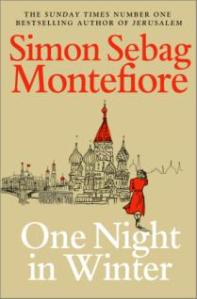
One Night in Winter

One Night in Winter by Simon Sebag Montefiore

A forename or names:

Gretel and the Dark

Gretel and the Dark by Eliza Granville

A type or element of weather:

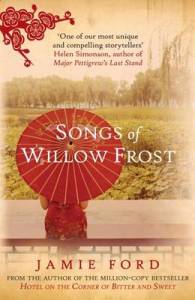
Songs of Willow Frost

Songs of Willow Frost by Jamie Ford

Bonus category – A school subject:

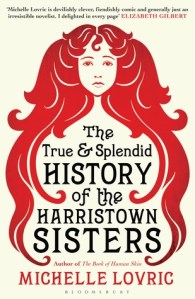
Harristown Sisters

The True and Splendid History of the Harristown Sisters by Michelle Lovric

Thanks to Charlie for hosting this year’s challenge!

Have you read any of these books?

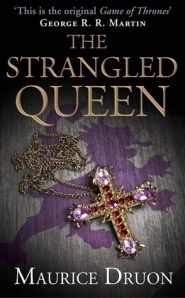
The Strangled Queen by Maurice Druon

The Strangled Queen This is the second book in Maurice Druon’s Accursed Kings series (Les Rois Maudits in French). There are seven novels in the series, all published between 1955 and 1977, telling the story of the monarchs of medieval France. The front covers of these new HarperCollins editions tell us that The Accursed Kings inspired George R.R. Martin’s A Game of Thrones, but be aware that this is not a fantasy series!

In the first book, The Iron King, we saw how Philip IV the Fair of France brought about the destruction of the Knights Templar. Before being sent to burn at the stake, the Grand Master, Jacques de Molay, cursed Philip and his descendants to ‘the thirteenth generation’. Philip was the first victim of the curse, but now he is dead and in The Strangled Queen we see how his son, Louis, becomes the next to suffer. Unlike his father, the newly crowned Louis X proves to be a very weak king and allows himself to be manipulated by his uncle, the Count of Valois, who is engaged in a power struggle with Enguerrand de Marigny, the former king’s chief minister.

Louis’ personal life is also a disaster – his wife, Marguerite of Burgundy, has been imprisoned for adultery following the Tour de Nesle Affair (described in the previous book) and as there is currently no Pope, he is unable to obtain a divorce so that he can find a new queen. Valois is hoping to arrange a marriage between his niece, Clemence of Hungary, and Louis, but first a new Pope will have to be chosen. However, Enguerrand de Marigny has other ideas and will do whatever it takes to thwart Valois’ plans.

I enjoyed The Strangled Queen, though not as much as The Iron King which I read more than a year ago and loved. I wished I hadn’t let so much time go by between reading the first book and the second as this really does seem to be a series that needs to be read in order with each book following on directly from the one before. Storylines that were begun in The Iron King were picked up again and continued in this book and I found myself struggling to remember exactly what had happened previously. I had forgotten all about Tolomei, the Lombard banker and his nephew Guccio, for example, but I was very pleased to see Guccio again as he is one of the few likeable characters in the series.

My only real complaint with this book is that, as someone who doesn’t know much about this period of French history, the title is a very big spoiler in itself. Knowing that the queen was going to be strangled took away some of the suspense! Luckily, though, the queen’s fate only forms a part of the story. Most of the novel is actually devoted to the rivalry between Charles of Valois and Enguerrand de Marigny…so you can expect lots of plotting, scheming and intrigue! And these are not the only plotting, scheming characters – there’s also Robert of Artois, still hoping to find a way of reclaiming his lands from his detested Aunt Mahaut.

I think the element of the book I found most interesting, though, is the portrayal of a young man (Louis X) who is unexpectedly forced to accept responsibilities that he is not ready for and not able to deal with. While I certainly didn’t like Louis (I find it difficult to have sympathy for someone whose idea of fun is shooting doves in an enclosed barn), I could understand his fears and insecurities and could see why it was so easy for the people around him to take control.

The third book in the series is called The Poisoned Crown so it sounds as if there’s still more trouble ahead for the sons of Philip the Fair!

The True and Splendid History of the Harristown Sisters by Michelle Lovric

Harristown Sisters Manticory Swiney and her six sisters are born into poverty in rural 19th century Ireland and brought up by their mother, a laundress. They have never known their father (he visits once a year in the middle of the night) but from him they have inherited some very special gifts: their wonderful names and the abundance of long, thick hair which proves to be their route to fame and fortune. Bullied by the eldest sister, Darcy, into performing on the stage, the girls entertain their audiences by singing, dancing and, as a finale, unleashing their luxuriant cascades of ankle-length hair.

Approached by Augustus Rainfleury and Tristan Stoker, both of whom can see the money-making potential of seven long-haired sisters, the ‘Swiney Godivas’ leave their impoverished Harristown lives behind to find success in first Dublin then Venice. But for black-haired, sharp-tongued Darcy, the rival twins Berenice and Enda, quiet Pertilly, gentle, blonde Oona, wild Idolatry and our narrator, red-haired Manticory, fame doesn’t necessarily bring happiness.

I loved this book, the first I’ve read by Michelle Lovric, and I would agree that it really is a ‘splendid history’. It’s not quite a true one – Manticory and her sisters are fictional – but it was inspired by the story of the real-life Sutherland Sisters, an American family who really did become celebrities due to their long hair. If you have trouble imagining what seven sisters all with floor-length hair would look like, lots of pictures of the Seven Sutherland Sisters can be found online.

With so many Swineys to get to know, I was pleased to find that each sister is given a strong and distinctive personality of her own. I liked some of the girls and disliked others, but they were all great to read about, particularly the fierce, devilish Darcy who takes control of every scene in which she appears. One of my favourite characters, though, was not a Swiney sister at all, but their childhood enemy, Eileen O’Reilly (or the Eileen O’Reilly as she is always described) who enjoys exchanging very imaginative insults with Darcy – and who claims to hate the Swineys yet can’t seem to stay away from them.

Manticory herself has a wonderful narrative voice: strong, poetic and unmistakably ‘Irish’. She manages to bring a lot of humour into her ‘true and splendid history’ but it’s really a very dark story. There’s a vulnerability about the sisters, even Darcy, in that they are manipulated and taken advantage of by ruthless businessmen and men who are…well, attracted to girls with long hair. The Swineys are betrayed and exploited by the very people they have placed their trust in and what makes this even more tragic is that the reader can see this from the beginning while the sisters can’t.

Finally, I want to mention the excellent descriptive writing in this book. Every time Manticory thinks of her childhood in Harristown, County Kildare, she remembers the ‘turf stoves, thin geese and slow crows’ until Harristown becomes almost a character in itself. Later in the book, the descriptions of Venice are particularly beautiful…

The palazzi and churches let their fretted stones hang down into our faces like beautiful, insitent ghosts. Beckoning lanterns hung at arched water-gates. Inside their houses, equisitely dressed Venetians displayed themselves in glowing tableaux so that each palace seemed to host a puppet theatre performing just for us. The city was mystical and barbaric all at once, a floating fortress so delicate that the fairies would hesitate to place the weight of their wings on it.

I also loved the images of the girls hanging their hair from the windows of the bell tower of San Vidal like seven Rapunzels and each of them standing in the bow of a gondola with her hair trailing into the boat behind. I could tell this book was written by someone who knows and loves Venice!

The True and Splendid History of the Harristown Sisters is one of my favourite books of the year so far and I’m now looking forward to investigating Michelle Lovric’s previous novels.

I received a copy of this book from NetGalley for review.

The Classics Club Spin number is…

The Classics Club

Number 17

Last week I decided to take part in the Classics Club Spin. The rules were simple – list twenty books from your Classics Club list, number them 1 to 20, and the number announced today (Monday) represents the book you have to read before 6th October 2014.

The number that has been selected is 17, which means the book I’ll be reading is:

The Idiot

The Idiot by Fyodor Dostoevsky

I have to admit this is not one of the titles on my list that I was hoping for, but I’m prepared to give it a try! I had a failed attempt at reading Crime and Punishment a few years ago, so I’m hoping I might have more luck with a different book.

If you took part in the spin are you happy with your result?