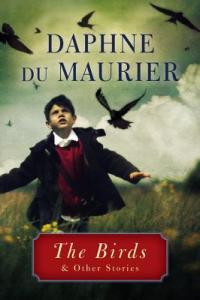
 I have never enjoyed reading short stories as much as full length novels and my various attempts over the years at increasing the number of short stories I read have generally failed. However, one of the few authors whose short stories I do enjoy is Daphne du Maurier (in fact, I’ve loved almost everything I’ve ever read by du Maurier, whatever the format). I have actually read The Birds before (soon after reading Rebecca for the first time as a teenager) but I never went on to read the other stories in this collection so when I saw that this book was available through NetGalley, it seemed a good opportunity to rectify this.
I read another du Maurier collection a few years ago – The Rendezvous & Other Stories – which contained some of the earliest examples of her work, but I found the stories in The Birds and Other Stories much stronger – the work of an accomplished author rather than a beginner. There are six stories in the book, including The Birds, and all of them are excellent, although I felt that two were slightly weaker than the other four.
The Birds, made famous by Alfred Hitchcock’s film of the same name, is the first story in the book and one of my favourites. For those of you not familiar with the plot, this is the story of Nat Hocken, a farm worker who lives with his wife and two young children. When Nat notices an unusually large number of birds in the skies above him, he senses that the weather must be about to change. The next day a national emergency is declared: Britain is under attack from huge flocks of birds. Nat begins to board up the windows and doors, but will he and his family survive the night?
This is such an atmospheric story; you can feel the claustrophobia inside Nat’s house, you can hear the sounds of pecking and tapping at the windows, and you can see the birds gathering in the sky:
He walked down the path, halfway to the beach and then he stopped. He could see the tide had turned. The rock that had shown in midmorning was now covered, but it was not the sea that held his eyes. The gulls had risen. They were circling, hundreds of them, thousands of them, lifting their wings against the wind. It was the gulls that made the darkening of the sky. And they were silent.
I loved this story and it was certainly worth re-reading, but the next two that followed were also very enjoyable. Monte Verita is a haunting tale of a lonely monastery high in the mountains, an isolated community of priestesses and a village of superstitious peasants. The Apple Tree is a great little story about a man who becomes obsessed by the old apple tree in his garden, believing that it is taking on the characteristics of his dead wife, Midge. Whether this is really happening or whether it’s all in his imagination you will have to read the story to decide.
Stories four and five were the ones I didn’t like as much as the others. The Little Photographer tells the story of a beautiful married woman who has a summer affair with a photographer and gets a lot more than she bargained for when she tries to end the relationship. In Kiss Me Again, Stranger, the narrator remembers a girl he once met and fell in love with, only to have his heart broken when he makes a macabre discovery. There was nothing wrong with either of these stories, but they didn’t have the eerie, otherworldly feel of the previous three.
Finally, The Old Man is the shortest story in the book, but also the cleverest. I’m not going to give any more details except to say that when I reached the end of this particular story, I was so surprised and delighted that I had to go straight back to the beginning and read it again!
So, a very impressive selection of stories! They contain many of the same elements that du Maurier uses in her full-length novels, such as the male narrative voice, the unnamed characters, the ambiguous endings, the wonderful use of atmosphere and the vivid sense of place. They are the ideal length too – each one is long enough to allow the reader to be fully drawn into the story, but short enough to read in one sitting. I would highly recommend this collection even to those readers who, like me, don’t often choose to read short stories.
Thanks to Little, Brown and Company for providing a review copy via NetGalley






 She Reads Novels