Cat Among the Pigeons by Agatha Christie

Cat Among the Pigeons Cat Among the Pigeons, published in 1959, is one of Agatha Christie’s later Poirot mysteries and combines a girls’ school setting with the story of a revolution in Ramat, a fictional country in the Middle East. I still have a lot of reading to do before I’ll have finished all of the Poirot books, but this is one that I’ve particularly enjoyed.

Most of the action takes place at Meadowbank School, an exclusive girls-only school in England which is still run by its two founders, Miss Bulstrode and Miss Chadwick, but first we visit Ramat, where Prince Ali Yusuf is preparing to escape the uprising in his country. In an attempt to keep some of his fortune safe, the Prince gives some valuable jewels to his pilot and asks him to smuggle them out of the country. The pilot’s sister and young niece, Jennifer, have been visiting Ramat but are due to return to England the next day, so he hides the jewels in their luggage without telling them what he has done.

Back in England, Jennifer begins attending Meadowbank School, one of several new girls to join the school that term. There are also some new teachers, a new secretary and a new gardener. When a murder takes place at the school a few weeks later, it seems that whoever committed the crime may have been trying to find the missing jewels. Is there someone at Meadowbank who shouldn’t be there? In other words, is there a ‘cat among the pigeons’?

Well, I was completely fooled by this one! While I found it very easy to guess the hiding place of the jewels, I did not guess who the murderer was until the truth was revealed. The most annoying thing was that I did originally suspect the right person but was thrown off the scent halfway through the book and decided I must have been wrong. After that, I think I suspected almost everybody!

As I was reading I kept wondering when Hercule Poirot himself was going to enter the story and I was surprised to find that he doesn’t actually make his first appearance until the final third of the book. By the time he arrives on the scene the mystery has already been partially solved and while he does unravel the rest of the clues and identify the murderer, I’m not sure Poirot’s involvement really added anything to the story.

Although the mystery was a good one that kept me guessing, the reason I enjoyed this book so much was the setting rather than the plot. Like many British children I grew up reading Enid Blyton books and still have very fond memories of them. I loved her two school series, St Clare’s and Malory Towers, and in Cat Among the Pigeons Agatha Christie captures the same sort of atmosphere. The school setting, the focus on the lives of the girls and their teachers, and the very late appearance of Poirot, gives this book a slightly different feel from the others I’ve read.

Have you read this one? Which is your favourite Poirot mystery?

Crippen by John Boyne

Crippen I read my first John Boyne book, the Gothic ghost story This House is Haunted, last year just in time for Halloween. Since then I’ve been wanting to read another of his books and this novel, based on a real-life crime which took place in London more than a century ago, is the one I chose. It turned out to be a good choice because I enjoyed it as much as I enjoyed This House is Haunted, although the two books are quite different.

Crippen is a fictional account of the life of the notorious murderer, Dr Hawley Harvey Crippen, who was found guilty of murdering his wife and hiding the remains in the cellar of his home at 39 Hilldrop Crescent. It sounds very morbid and gruesome, I know, but the book is actually not as dark as you might imagine thanks to Boyne’s sense of humour, colourful characters and storytelling flair.

The story begins in the summer of 1910 and introduces us to a group of passengers on board the SS Montrose, sailing from Belgium to Canada. There’s Mrs Drake, a demanding, overbearing woman, and her daughter, Victoria, who is hoping to find romance on the journey. Then there’s Martha Hayes, who would prefer to hide herself away in her cabin with a pile of novels than mix with the other passengers, and Matthieu Zela, a Frenchman travelling with his obnoxious nephew, Tom. And finally, we meet Mr Robinson and his teenage son, Edmund, who are hoping for a quiet and uneventful journey.

If you’re not already familiar with the Crippen murder case, you might be wondering what the relevance is of the Atlantic voyage I’ve just described. I can promise you it is very relevant, although we don’t find out why until later in the book. Before we reach that point, we go back in time to the 1860s where we follow the young Hawley Harvey Crippen through his childhood in Michigan. As a teenager he decides he wants to study medicine, but when his parents refuse to help him financially it seems unlikely that Hawley will ever become a fully qualified doctor. After marrying Cora Turner, a music hall singer, the Crippens move to London where Hawley becomes an assistant in a homeopathic medicines company. Several years later, Cora disappears, her friends become convinced she has been murdered, and Hawley finds himself under suspicion…

Before beginning this book, I had heard of Dr Crippen but didn’t know any of the details of the case. I didn’t even know that there was so much controversy surrounding it. Boyne presents an interesting theory as to what may have actually happened, though I have no idea whether there could be any truth to this theory or not – I suspect there probably isn’t, but the book certainly does show Crippen in a much more sympathetic light than you might expect. It would be hard not to feel sorry for Boyne’s portrayal of a boy forced to abandon his dreams, a quiet and mild-mannered man bullied and abused by his selfish, manipulative wife.

My only complaint is that it was difficult to know exactly which parts of the novel were fictional and which weren’t. I looked up some factual information about Hawley Harvey Crippen after I read the book and was surprised to find that Boyne had changed so many biographical details, such as the names of Crippen’s parents and the fact that his first wife had actually died of a stroke rather than a road accident as described in the novel. When writing a fictional account of a real person’s life, it’s obvious that things like conversations, thoughts and emotions will have to be invented, but I’m not sure what the point was in altering all those little details.

Anyway, I didn’t worry about any of this until after I’d finished the book. While I was reading I was completely captivated by the twists and turns of the story and by Boyne’s wonderful writing style. I’m looking forward to exploring the rest of his novels now!

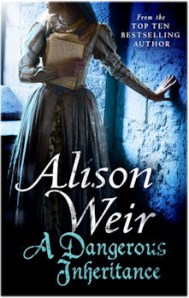
A Dangerous Inheritance by Alison Weir

A Dangerous Inheritance The disappearance of the ‘Princes in the Tower’ (twelve-year-old Edward V of England and his younger brother Richard, Duke of York) remains a mystery to this day. Some believe that they were murdered by their uncle, Richard III, some suspect Henry VII or the Duke of Buckingham, and others prefer to think that one or both of the Princes managed to escape. My fascination with this mystery leads me to want to read everything I can find about it, even books like this one, written by an author whose views on the subject are entirely different from mine.

Alison Weir is an author of both historical fiction and non-fiction and A Dangerous Inheritance is one of her works of fiction. I had enjoyed a previous novel of hers, Innocent Traitor, which told the story of Lady Jane Grey, so I thought I would try this one despite knowing that Weir does not like Richard III at all and I was unlikely to agree with any conclusions she might come to.

Actually, this novel is only partly about Richard and the Princes; at least half of the book is set eighty years later and follows the story of Katherine Grey, the younger sister of the ‘nine-day queen’, Lady Jane Grey. After Jane’s very brief reign as Queen of England comes to an end when she is deposed by Mary I and beheaded, Katherine herself moves one step closer to the throne. To her disappointment, Mary is followed by Elizabeth I, who refuses to acknowledge Katherine as her heir and treats her badly. When Katherine marries the man she loves against Elizabeth’s wishes, she finds herself imprisoned in the Tower of London.

Katherine Grey’s story alternates with the story of another Katherine – Katherine Plantagenet (referred to as Kate to avoid confusion), an illegitimate daughter of Richard III. Kate loves her father and refuses to believe that he had any involvement in the disappearance of the two young princes. After Richard is defeated at Bosworth in 1485 and Henry Tudor takes his place on the throne, Kate’s loyalty to her father and her determination to clear his name could be considered treason. Several generations later, Katherine Grey discovers some letters written by Kate, learns of Kate’s connection with the princes and decides to continue investigating the mystery from within the Tower.

On the subject of the princes, I do find it fascinating that different authors and historians can begin with the same facts and come to entirely different conclusions! As nothing has ever been proven either way regarding the disappearance of the princes and the other controversies surrounding Richard III, I’m happy for it to remain a mystery. Having read quite a lot on the subject over the last few years, I personally find the pro-Richard viewpoint much more convincing than the anti-Richard one, but I can accept that we’ll probably never know the truth and that everyone is entitled to their own opinion.

For Alison Weir, although she states in her author’s note that she likes to keep an open mind, there is clearly no mystery: Richard was guilty of everything. As I was familiar with her views before beginning the book, I suppose I shouldn’t really complain! I was disappointed, though, that the main source Katherine uses in her investigations appears to be Thomas More (who was only seven years old at the time of Bosworth, is thought to have relied upon Richard’s enemy, Archbishop Morton, as his own primary source, and wrote his histories during the Tudor period, when it was obviously to his advantage to please the Tudor monarchs by discrediting their predecessors). However, as Weir explains in the author’s note, she could only use sources that would have been available to Katherine in the mid 16th century.

I did like the fact that this was a dual time period novel where both time periods were historical, rather than one being set in the present day, though I did sometimes feel that I was reading two separate stories that didn’t really belong in the same book. Apart from the fact that both main characters were Katherines and both suffered from being close to the throne, there was very little to link the two. It’s only in the final 100 pages of this 500-page book that Katherine Grey begins to investigate the mystery of the princes and parallels start to be drawn between the two storylines – some of them of a paranormal nature, which you may or may not appreciate!

Of the two, I enjoyed the Katherine Grey storyline the most. I found Katherine a much more engaging character, which is probably not surprising as she narrates in the first person while Kate doesn’t. Also, there is almost no historical information available on Kate Plantagenet, which meant that her sections of the book were largely fictional. I couldn’t help feeling that Katherine Grey’s life story would have been interesting enough to form the basis of a whole novel on its own without the addition of a second, imaginary storyline and without squeezing the Princes in the Tower into the same book as well.

Have you read anything about the Princes in the Tower? Who do you think was responsible for their disappearance?

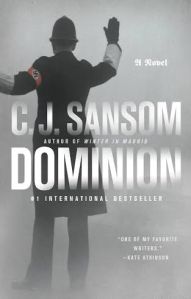
Dominion by C.J. Sansom

Dominion C.J. Sansom is probably best known for his Shardlake novels, a mystery series set in Tudor England. Dominion, however, is set in the twentieth century – but not the twentieth century that you and I are familiar with. Before we even finish reading the first chapter, we know that something is very wrong. In Sansom’s alternate world, Britain surrendered to Nazi Germany in 1940, changing the course of history as we know it.

As the novel opens in November 1952, we begin to see what a high price Britain has paid for peace with Hitler. Yes, the war was brought to a premature end, avoiding more deaths and devastation, but now the Gestapo are established in central London, Britain’s Jews are being rounded up and removed from the cities, and Winston Churchill, who never actually managed to become Prime Minister, has gone into hiding as the leader of the British Resistance.

The story is told from the perspectives of four characters, all with different backgrounds and beliefs. The first of these is David Fitzgerald, one of many people who are unhappy with the way things are in Britain. When he is approached by the Resistance movement, David agrees to use his position as a civil servant to provide them with confidential information. He decides to protect his wife, Sarah, by not telling her that he is working as a spy…but he is also hiding another, equally dangerous secret – one that nobody must ever discover.

Sarah Fitzgerald, David’s wife, has been a pacifist for many years, like her father and sister. She has always believed that signing a peace treaty in 1940 was the right thing to do in order to avoid more lives being lost. However, Sarah’s views are now beginning to change.

We also meet Frank Muncaster, a scientist and an old friend of David’s from university. Frank is now in a mental hospital after pushing his brother, Edgar, through a window during an argument. The Resistance believe that before they began to fight, Edgar – another scientist – may have given his brother some shocking information about his work in America. Finally, there’s Gunther Hoth, a German who is in London on a secret mission. Could Frank Muncaster have the information he needs?

Dominion is a chilling and thought-provoking novel, all the more frightening because the world C.J. Sansom describes is so realistic and believable. In many ways, the Britain of Dominion is not greatly different from the real Britain, but as the story unfolds we begin to see more and more subtle differences, more and more ways in which authoritarian rule has replaced the freedoms we take for granted.

As well as being an alternate history, this is also an exciting thriller. After a slow start I found it became very gripping and suspenseful, with some cliff hanger chapter endings and a few moments when I feared for the fates of some of the characters. The Great Smog of 1952 is incorporated into the novel and really adds to the oppressive atmosphere. There were some parts of the story, though, that felt superfluous and had little relevance to the main plot and this made the book feel longer than it really needed to be.

My favourite character was Frank Muncaster, who through no fault of his own finds himself at the centre of the conflict between the Germans and the British Resistance. We are given lots of flashbacks to Frank’s childhood when, as a shy and lonely boy, he was bullied at school, leaving him suffering from low self-esteem and finding it difficult to make friends. Of all the characters in the novel, I thought Frank was particularly well-written and I found myself warming to him in a way I never really did to any of the others.

Dominion is a disturbing and unsettling novel with a sinister vision of what our lives could have been like had just one or two different decisions been made at crucial moments in history. I thoroughly enjoyed this book, but when I reached the final page it was good to know that the world I was returning to was not quite the same as the one I had just finished reading about!

Dominion tour

I read Dominion as part of the Historical Fiction Virtual Book Tour. For more reviews, interviews and giveaways, please see the tour schedule.

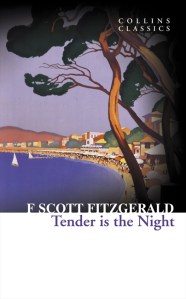
Tender is the Night by F. Scott Fitzgerald

Tender is the Night - Like many people, my first encounter with Fitzgerald was The Great Gatsby, but while I remember being impressed with his writing, I didn’t love the book the way I know so many other readers do. That must have been seven or eight years ago and I haven’t read any of his other books since then (apart from his short story, The Curious Case of Benjamin Button, which I enjoyed) so I decided it was time to try another one to see whether The Great Gatsby, despite being his most popular book, might not have been the best place for me to start.

Tender is the Night, published in 1934, is the story of the disintegration of the marriage of psychiatrist Dick Diver and one of his former patients, Nicole Warren. The novel is divided into three sections and the first is told from the perspective of Rosemary Hoyt, a young American actress spending some time in the south of France with her mother while she recuperates from an illness. One morning she goes down to the beach where she meets Dick and Nicole for the first time. Immediately attracted by their glamorous lifestyle and personal charm, Rosemary becomes captivated by both Divers.

In the second section of the book we move back in time to the beginning of Dick’s relationship with Nicole at a psychiatric clinic in Switzerland. By the time the story returns to the present again, both the reader and Rosemary can see that the Divers’ marriage is not as perfect as it first appeared. The rest of the novel follows the breakdown of their marriage as Nicole grows stronger and Dick’s life goes into a decline.

After I got past the wonderful opening scenes set on the beach, I quickly became bored. I finished the first section with a growing sense of dread at the thought of having to write a negative review of a book that I was sure must be a beloved favourite of so many other people – or worse still, having to abandon it. I’m glad I persevered because it turned out to be only the first section of the book that was a problem and after the focus switched to Dick and Nicole in the second and third parts, I found the story much more engaging.

I know there is another revised version of this book that rearranges the story chronologically and I can understand the reasoning behind that. I’m sure I would have found it much easier to get into the book if it had started with Dick and Nicole instead of Rosemary. However, I think taking Rosemary’s section away from the beginning would remove the sense of mystery – the fact that we first see the Divers through Rosemary’s youthful and naïve eyes means there is more impact when we discover that there’s actually much more to their marriage than meets the eye.

I’m aware that Tender is the Night is partly autobiographical and inspired by Fitzgerald’s own life with his wife, Zelda, who also suffered from mental illness. As I’ve never had enough interest in the Fitzgeralds to have read about their lives in any depth, the autobiographical aspect of the story didn’t have a lot of meaning for me, but I could appreciate that he was drawing on his own experiences with Zelda to give his portrayal of Dick and Nicole’s relationship a feeling of authenticity.

However, I’m not sure if I really liked this book any more than I liked The Great Gatsby. It’s a more complex, mature and emotionally moving story, but with both novels I have struggled to fully connect with any of the characters, something that is more important to me than the elegant writing and complex themes. It’s possible that if I was married I might have more understanding of Dick and Nicole – although I couldn’t identify with Rosemary either, so maybe that wasn’t the problem.

I do think Fitzgerald’s prose is beautiful (I loved the descriptions of the French Riviera, Italy and Switzerland) and this is a book that needs to be read slowly so that you can really appreciate the beauty of each sentence. If I’m going to be honest, though, the feeling of boredom I felt near the beginning stayed with me throughout the whole book. I know now that Fitzgerald is never going to be a favourite author of mine, but I’m glad I’ve at least given him a chance by reading two of his novels before coming to that conclusion.

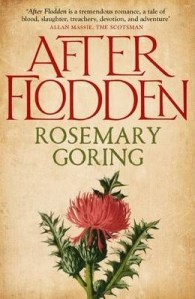
After Flodden by Rosemary Goring

After FloddenThe Battle of Flodden in 1513 was the largest and bloodiest battle fought between England and Scotland. The battle was fought near Branxton, Northumberland, in the north of England and despite the Scots having the biggest army in numbers, the result was a decisive victory for the English. It is estimated that while there were between 1,000-4,000 losses on the English side, there may have been over 10,000 Scottish casualties, including King James IV of Scotland.

After Flodden is a fictional account of the battle and its aftermath. Among the men who went to Flodden and never came back is Louise Brenier’s brother, Benoit. Since coming to Scotland from France several years earlier, the Brenier family have had more than their fair share of troubles, including the death of Louise’s sister, a mistress of James IV. Unwilling to accept that her brother could also be dead, Louise decides to search for him – but finding out the fate of one man among thousands is not going to be easy.

Accompanied by her faithful dog, ‘the vixen’, Louise leaves her home in Edinburgh behind and heads for the dangerous, lawless English/Scottish Borders. She is joined on her journey by two very different men: Gabriel Torrance, a nobleman from the court of King James, and Adam Crozier, leader of one of the Border clans. When both men offer to help look for Benoit, Louise must decide which of them she can trust.

After Flodden is Rosemary Goring’s first novel, published in 2013 to coincide with the 500th anniversary of the battle and having seen some very positive reviews of it last year I was looking forward to reading it myself. Now that I’ve read it, my feelings are mixed. After a slow start I did find myself enjoying the story but I didn’t think it was anything special – though maybe I was just expecting too much from it.

One thing I did love about this book was the choice of subject. Flodden has been mentioned briefly in other books I’ve read, but I have never come across a whole novel devoted to it until now. So many historical fiction novels are the ‘sweeping epic’ sort, covering several decades of history and spanning continents, so it was refreshing to see a book that was so tightly focused on one specific historical event. Reading After Flodden has helped me understand the reasons for the battle and why it was a disaster for the Scots.

In addition to the plot I’ve outlined above, other aspects of the battle and its consequences are also explored. The descriptions of the military preparations for the battle and the weapons and tactics involved are balanced by the more personal, human side. As well as seeing how Louise and her mother react to what has happened, we also meet a young boy who has carried his dying father from the battlefield. Some of the most emotional parts of the book are from the perspective of Patrick Paniter, secretary to James IV, who was one of the men advising the King before the battle and who feels responsible for the disastrous outcome.

I also found the sections of the book describing Louise’s journey south and her encounters with the Border clans very interesting as I only live around 60 miles from the border myself (on the English side). The history of this region is fascinating and I’m surprised it isn’t a more popular choice for historical fiction authors (The Disorderly Knights by Dorothy Dunnett features a feud between two rival Border families, the Scotts and the Kerrs, but I can’t think of many other books that I’ve read that even touch on this subject).

Dialogue is a difficult thing to get right in historical fiction but Goring’s attempt is reasonably good; it doesn’t sound too modern and she uses some Scottish dialect, but not too much. I was less convinced by the way she drops the occasional French word into Madame Brenier’s speech – it didn’t feel natural at all. A bigger problem, for me, is that the story is not told in chronological order but jumps around in time, which I found very confusing. It seemed unnecessary and made it difficult to follow the order of events.

The story was also too predictable, which is not always a bad thing, but when part of the plot revolves around the identity of a traitor it’s disappointing that it’s so easy to guess who that traitor is. It would have been nice to have been kept in suspense until Louise worked out the truth! On the plus side, the book included some useful character lists and a map so that readers can trace Louise’s journey through the Borders. I had to laugh at a misprint listing the members of the ‘Sottish Court’ (though knowing what some of these sixteenth century courts were like, maybe that was an accurate description!)

Although I didn’t enjoy this book as much as I’d hoped to, it was good to have the opportunity to learn more about this important battle.

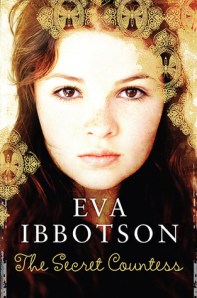
The Secret Countess by Eva Ibbotson

The Secret Countess The Secret Countess (also published as A Countess Below Stairs) is set in 1919 and the title character is Anna Grazinsky, the daughter of a Russian count and countess. During the Russian Revolution, she and her mother and brother are forced to flee their home in St Petersburg for safety in England, but on the journey they lose their remaining family jewels and arrive in England with nothing. Determined to get a job so that she can help to support her family, Anna finds a position as a maid at Mersham, the estate of the Earl of Westerholme. With Selena Strickland’s The Domestic Servant’s Compendium as her guide, she settles into her new job and earns the respect and friendship of the other servants, who are unaware that she is a countess.

The young Earl, Rupert Frayne, is returning to Mersham for the first time since leaving to fight in the First World War and has announced that his fiancée, Muriel Hardwicke will soon be joining him. At first the Fraynes, their friends and their servants are pleased with the news of Rupert’s forthcoming marriage because Muriel is a rich heiress and her money means that the future of Mersham will be safe. But while Rupert is awaiting Muriel’s arrival, he notices the new Russian housemaid and finds himself falling in love.

It was not hard to predict what was going to happen in The Secret Countess! From the beginning it was obvious how it was going to end, but that didn’t make the book any less enjoyable. After finishing the dark and disturbing Gretel and the Dark I wanted something light and gentle to read next and this book was the perfect choice. I thought it was a lovely story with a magical, fairy tale quality and an old-fashioned feel (the book was first published in 1981 but could have been much older than that). The romance between Anna and Rupert is a subtle, understated one and doesn’t ever really dominate the story, but I never doubted that there would be a happy ending and that they would somehow overcome the obstacles in their path.

While my preference is usually for books that are less predictable and with characters that are more complex and nuanced (most of the characters in this book are either completely ‘good’ or completely ‘bad’ with nothing in between) that didn’t really bother me this time. Anna could easily have been one of those sickening heroines who is too good to be true – she’s beautiful, generous, sweet, kind and loving – but I couldn’t help liking her anyway. In the same way, the character who turns out to be the villain of the novel is horrible in every way, yet perfect in the context of the story. Another of the strengths of this book is its wonderful supporting characters. My favourite was the Honourable Ollie Byrne, the little girl who loves life despite its unfairness towards her, but all of the others are given a distinctive personality of their own too – even Rupert’s dog, Baskerville.

If I’ve understood correctly, this book was originally written as a book for adults but has now been repackaged to appeal to YA readers. I honestly think this is a book that could be equally enjoyed by both adults and younger readers and it would be a shame if anyone missed out on reading it because it has been marketed in a certain way. This is only the second book I’ve read by Eva Ibbotson (the other was Madensky Square) and I’m pleased that I still have so many of her other books to explore!