Best Books of 2013

Bloggers’ end-of-year posts have been appearing for a few weeks now and I’ve enjoyed reading them, but I like to leave compiling my own list until the end of December as there’s always a chance I might read something wonderful in the final days of the year. With only two days to go now, I know I won’t be finishing any more books in 2013 so I thought it would be safe to post my list today! And here they are: my favourite books of the year, in alphabetical order.

Aurora Floyd

Aurora Floyd by Mary Elizabeth Braddon

(Read in March)

From my review: “Aurora Floyd, like Lady Audley’s Secret, is a Victorian sensation novel which means you can expect a story filled with mystery, murder and family secrets…It has been a few years since I last read anything by Mary Elizabeth Braddon and I had forgotten how much I like her writing.”
Bring up the Bodies

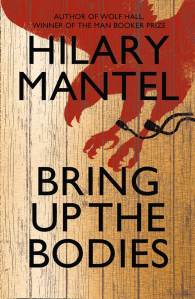
Bring up the Bodies by Hilary Mantel

(Read in July)

From my review: “By allowing us to follow events through Cromwell’s eyes, Mantel makes what to many of us is a familiar story feel like a fresh and interesting one – and in a world already filled with Tudor novels this is a real accomplishment!”
Captain Blood

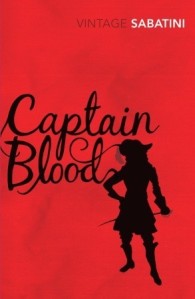
Captain Blood by Rafael Sabatini

(Read in July)

From my review: “With my general dislike of books set on ships I thought the seafaring elements might be too much for me. I was wrong. Captain Blood is another wonderful book…I recommend giving it a try even if pirate stories don’t sound appealing to you, as it’s worth reading this one just to meet Peter Blood!”
Far from the Madding Crowd

Far from the Madding Crowd by Thomas Hardy

(Read in May)

From my review: “Of all the Hardy novels that I’ve read, with the possible exception of Under the Greenwood Tree, this is the most pastoral, with lots of beautiful descriptions of the countryside and lots of information on farming and agriculture. I should now be able to shear sheep, hive bees, forecast the weather by watching the movements of slugs and toads, and deal with a fire in a hayrick! (Well, maybe not.)”

The Golem and the Djinni

The Golem and the Djinni by Helene Wecker

(Read in August)

From my review: “As a first novel, The Golem and the Djinni was a very ambitious one but everything worked perfectly. There were so many things about this book that impressed me – the beautiful writing, the clever plot, the blending of fantasy with historical fiction, and most of all, the wonderful characterisation of both Chava and Ahmad.”

The Iron King

The Iron King by Maurice Druon

(Read in February)

From my review: “Originally published in the 1950s, this is the first in the seven-volume “Accursed Kings” series and tells the story of a fascinating period of French history. The Iron King was one of the most entertaining historical fiction novels I’ve read for a while…with a plot involving murder, torture, poisonings, court intrigue, and family feuds, there was always something happening.”
King Hereafter

King Hereafter by Dorothy Dunnett

(Read in June)

From my review: “King Hereafter is set in eleventh-century Orkney and Scotland (known at that time as Alba) and is based around the idea that Macbeth, the historical King of Alba, and Thorfinn, Earl of Orkney, were the same person…Although the Lymond Chronicles are still my favourites, I can definitely see why some people would consider this Dorothy Dunnett’s best book. It’s amazingly detailed and well-researched, as well as being a very powerful and emotional story.”
Life After Life

Life After Life by Kate Atkinson

(Read in April)

From my review: “Life After Life is a very clever, complex novel; I was so impressed by it! With such an unusual and complicated plot it could have been a disaster, but it wasn’t; I thought everything worked perfectly and although I found it confusing at first, after the first few chapters I knew I was going to love the book.”
Like This For Ever

Like This, For Ever by S.J. Bolton

(Read in April)

From my review: “I found the mystery very difficult to solve – there were several times when I was convinced I knew who the murderer was, only to be proved wrong, wrong and wrong again! I was completely taken by surprise by most of the plot twists (and there are a lot of them). I should have remembered that nothing is ever as it seems in a Bolton novel and if things appear too obvious, it’s usually because they are.”
The Lions of Al-Rassan

The Lions of Al-Rassan by Guy Gavriel Kay

(Read in August)

From my review: “Although this novel is set in a fictional land, the parallels with a real period of history made me feel that I was gaining a better understanding of medieval Spain. But as well as the history, there’s also a lot of drama and excitement throughout the novel…What I really loved about this book, though, was the portrayal of the three main characters and the relationships between them.”

The Midwich Cuckoos

The Midwich Cuckoos by John Wyndham

(Read in October)

From my review: “I wasn’t sure what to expect from this book, but The Midwich Cuckoos was probably the perfect type of science fiction for me – instead of being filled with too much action or violence, it’s a subtle, thought provoking portrayal of a small, seemingly normal community trying to cope with something that is threatening their way of life.”

The Painted Veil

The Painted Veil by W Somerset Maugham

(Read in March)

From my review: “I really didn’t expect to love this as much as I did. I’m so pleased to find that I was wrong! The Painted Veil is one of the best books I’ve read so far this year. I found Maugham’s writing much easier to read than I had thought it might be, but also filled with beauty, poignancy and emotion.”
The Private Memoirs and Confessions of a Justified Sinner

The Private Memoirs and Confessions of a Justified Sinner by James Hogg

(Read in January)

From my review: “This, his most famous novel, is part horror story, part murder mystery and part gothic fiction, but it also incorporates elements of religion, Scottish folklore, the supernatural and even some humour and satire…this is one of the most fascinating and original classics I’ve read and I can’t believe it isn’t better known.”
A Tale of Two Cities

A Tale of Two Cities by Charles Dickens

(Read in November)

From my review: “This is the sixth Dickens novel I’ve read and my favourite so far. I think part of the reason I loved this book so much was that in many ways it was very different from the others I’ve read… I don’t want to say too much and spoil the story for anyone who hasn’t read it yet, but the ending is heartbreaking. This is the first Dickens novel that has made me cry!”
The Three Musketeers by Alexandre Dumas (re-read)

(Read in March)

From my review: “I love Alexandre Dumas and although The Three Musketeers is not my favourite of the novels of his that I’ve read I still think it’s a wonderful book with some great characters. I had forgotten enough so that I could be surprised by the twists and turns of the plot, but remembered just enough to be able to look forward to some of my favourite parts.”
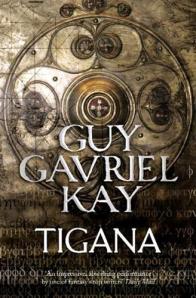
Tigana by Guy Gavriel Kay

Tigana by Guy Gavriel Kay

(Read in June)

From my review: “This is the first book by Guy Gavriel Kay I’ve read, although I’ve been aware of his books for years and am now annoyed with myself for waiting so long to actually read one! I loved Tigana – not unreservedly, but enough to make it one of my books of the year so far.”

Twenty Years After

Twenty Years After by Alexandre Dumas

(Read in September)

From my review: “I found Twenty Years After a much more complex book than The Three Musketeers…but there’s still plenty of swashbuckling adventure and I definitely thought this book was just as much fun to read as the first one. As I expected, Twenty Years After has definitely been one of my most enjoyable reads of the year! The Vicomte de Bragelonne awaits…”

***

Have you read any of these books? What are the best books you’ve read this year?

This will be my final post of 2013 so I’d like to wish you all a Happy New Year!
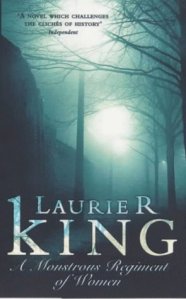
A Monstrous Regiment of Women by Laurie R. King

A Monstrous Regiment of Women This is the second in Laurie R. King’s series of novels featuring Mary Russell and Sherlock Holmes. It’s been almost exactly two years since I read the first in the series, The Beekeeper’s Apprentice, and I really didn’t mean to leave it so long before reading the next one. However, when I picked this book up and started reading a few days ago, I was pleased to find that I’d inadvertently chosen the perfect time to read it because the story is set during the Christmas and New Year period of 1920/1921 – although it’s not a typical festive read as Mary makes it clear in the first chapter that she sees Christmas as something to be survived rather than enjoyed!

At the beginning of the book, Mary is awaiting her twenty-first birthday when she will receive her inheritance and her freedom from her aunt. She is also struggling with her feelings for her friend, the detective Sherlock Holmes. While she’s trying to avoid Holmes, she meets another old friend who introduces her to Margery Childe, the charismatic feminist leader of The New Temple of God. Mary herself is a student of theology at Oxford and is instantly drawn to Margery, fascinated by her interpretations of the Bible and impressed by the work she and her church are doing to help women in need. But at the same time, Mary feels uneasy and when she discovers that several young women from the Temple have recently died under suspicious circumstances, she decides to investigate.

Before beginning this book I had been curious to see how the relationship between Mary Russell and Sherlock Holmes was going to develop. I don’t have a problem with the thirty-nine year age difference (they are both adults and Mary has matured a lot since she first met Holmes as a teenager in the previous book) and I love all of their interactions and conversations. My favourite scenes are the ones in which they are both together, so I was disappointed that there weren’t more of them in this book – although I do understand the reasons why they are working separately for such long periods of the story. The focus is on Mary and her personal development as well as on the development of her romance with Holmes.

The actual mystery seemed to take a long time to get started and I didn’t find the plot very exciting until the second half of the book, but it was still interesting to read about 1920s society and the way life had been affected by the end of the Great War, the changing roles of women as a result of the war and the suffrage movement, and the work of Margery’s church. The title of the novel refers to a 16th century pamphlet by John Knox, The First Blast of the Trumpet Against the Monstruous Regiment of Women, an attack on the rule of female monarchs (specifically Mary of Guise, the Queen Dowager of Scotland, and Mary I of England) and the subjects of feminism and religion both form part of the story.

I did enjoy this book, but not as much as The Beekeeper’s Apprentice, which I loved. I’m looking forward to reading the next one in the series – and will try not to wait another two years!

A Tale of Two Cities by Charles Dickens

A Tale of Two Cities When I decided to take part in the Classics Club Spin last month, in which a book would be chosen for me from a list of twenty, A Tale of Two Cities was not one of the titles I was hoping would be picked. I have to be in the right mood to want to read Dickens and I wasn’t really in that mood. Expecting it to be a long and boring read, I thought it would be a good idea to start immediately so that I would have a chance of being finished by the end of December…

I actually finished it within a week and despite my lack of enthusiasm when the spin number was announced, A Tale of Two Cities is one of the best books I’ve read this year!

The novel is set before and during the French Revolution; Paris and London are the two cities of the title. The story begins with Doctor Manette being released from the Bastille after eighteen years as a political prisoner. Reunited with his daughter, Lucie, and returning with her to England, the lives of the Manettes become entwined with the lives of two young men who are both in love with Lucie. One of these is Charles Darnay, a former French aristocrat, and the other is Sydney Carton, an English lawyer. We follow these characters and others as they return to France where they become caught up in the dramatic events of the French Revolution – and the scheming of wine shop owner, Monsieur Defarge, and his sinister wife, who is never seen without her knitting!

This is the sixth Dickens novel I’ve read and my favourite so far. I find it interesting that everyone who reads Dickens has different favourites and least favourites; there doesn’t seem to be one book that is universally regarded as his best. I think part of the reason I loved this book so much was that in many ways it was very different from the others I’ve read but I know that some readers will probably dislike it for that same reason, so it’s really a matter of personal opinion.

One of the things that struck me about this book was the absence of humour, in comparison to the other Dickens novels I’ve read – and as Dickens and I don’t usually share the same sense of humour, this was definitely a positive thing for me! Of course, the French Revolution is a serious subject, so the more serious tone of the writing was quite appropriate. I also thought the characters felt more realistic and well-rounded than usual (if there is a comedy character in the novel, it’s probably Jerry Cruncher). My favourite character, which probably won’t surprise anyone else who has read this book, was Sydney Carton – although I didn’t fall in love with him until the last few chapters. I hadn’t guessed when we first met him that he would turn out to be so heroic and self-sacrificing.

I was also impressed by how tightly plotted the book is. The focus stays firmly on the main storyline which makes it easy to follow, unlike Bleak House or Our Mutual Friend which have more complex structures with lots of subplots and lots of long descriptive passages. In A Tale of Two Cities, everything feels relevant and helps to move the story forward. The novel begins with some of the most famous lines in literature (It was the best of times, it was the worst of times…) and closes with some that are almost as well known (It is a far, far better thing that I do, than I have ever done; it is a far, far better rest that I go to than I have ever known). I’ve seen those final lines quoted many times before but out of context they didn’t mean much to me; now that I know who and what they refer to they have much more significance. I don’t want to say too much and spoil the story for anyone who hasn’t read it yet, but the ending is heartbreaking. This is the first Dickens novel that has made me cry!

The Classics Club spin was a success for me this time, then. I do have some other Dickens novels on my Classics Club list and feel much happier about reading them now!

2014 Historical Fiction Reading Challenge…and wrapping up this year’s challenge

2014hf2 This year I’ve been taking part in the Historical Fiction Reading Challenge hosted by Historical Tapestry. I signed up at the Ancient History level, which meant I needed to read 25+ books, and as historical fiction is my favourite genre I actually read 32.

I’m happy to see that Historical Tapestry will be hosting the challenge again next year. The challenge runs from 1 January to 31 December 2014 and you can choose from the following levels:

20th century reader – 2 books
Victorian reader – 5 books
Renaissance Reader – 10 books
Medieval – 15 books
Ancient History – 25 books
Prehistoric – 50+ books

I will be aiming for Ancient History (25 books) again but will see how close I can get to the Prehistoric level!

And now, to wrap up the 2013 challenge, here are the historical fiction novels I’ve read and reviewed this year.

Historical Fiction Reading Challenge 2013 1. The Florentine Emerald by Agustin Bernaldo Palatchi
2. Gemini by Dorothy Dunnett
3. The Forgotten Queen by D.L. Bogdan
4. The King’s General by Daphne du Maurier
5. Master and Commander by Patrick O’Brian
6. The Iron King by Maurice Druon
7. The Chalice by Nancy Bilyeau
8. The Agincourt Bride by Joanna Hickson
9. The Master of Bruges by Terence Morgan
10. Shadow on the Crown by Patricia Bracewell
11. Lady of the English by Elizabeth Chadwick
12. The Poisoned Island by Lloyd Shepherd
13. The Scent of Death by Andrew Taylor
14. Queen’s Gambit by Elizabeth Fremantle
15. She Rises by Kate Worsley
16. The Forbidden Queen by Anne O’Brien
17. The Memory of Lost Senses by Judith Kinghorn
18. King Hereafter by Dorothy Dunnett
19. Paris by Edward Rutherfurd
20. Midnight in St Petersburg by Vanora Bennett
21. The Sacred River by Wendy Wallace
22. Elizabeth I by Margaret George
23. Bring up the Bodies by Hilary Mantel
24. Post Captain by Patrick O’Brian
25. The Wild Girl by Kate Forsyth
26. Wars of the Roses: Stormbird by Conn Iggulden
27. Dragonwyck by Anya Seton
28. Colossus: The Four Emperors by David Blixt
29. Hungry Hill by Daphne du Maurier
30. The Firebird by Susanna Kearsley
31. The Nine Day Queen by Ella March Chase
32. The King Must Die by Mary Renault

I enjoyed most of these books and I’m sure a few of them will be appearing on my best of the year list when I compile it later this month!

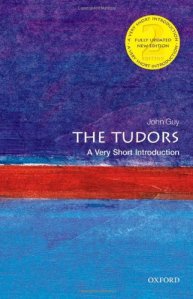
The Tudors: A Very Short Introduction by John Guy

The Tudors Just a short post today to discuss a very short book!

The Tudors: A Very Short Introduction is part of a series of books which offer, as the title suggests, a very short introduction to a wide variety of different topics. Looking at the list of other titles available (and there are hundreds of them) you can choose from subjects as diverse as Folk Music, Feminism or Contemporary Art; Chinese Literature, Biblical Archaeology or American Politics. This one is devoted to the Tudors although, admittedly, I probably didn’t really need a short introduction to them, having recently read Peter Ackroyd’s much longer book on the same subject! I had the opportunity to receive a review copy, though, and was curious to see what the series was like.

In this book, historian John Guy takes us through the reigns of each Tudor monarch – Henry VII, Henry VIII, Edward VI, Lady Jane Grey, Mary I and Elizabeth I. All of the basic facts are here, presented in a format that is easy to follow and understand. There are also some illustrations, genealogical tables, a chronology and a list of suggested further reading. As I already have quite a good knowledge of the Tudor period, very little of the information in this book was new to me, but for those readers who don’t know much about the Tudors this will be an excellent starting point.

While this was not as interesting or compelling as Ackroyd’s book (and I know it’s not fair to compare the two as they are clearly aimed at different readers and have different purposes) I did enjoy reading this Very Short Introduction and would consider trying another one. As well as being short (just over 100 pages), these books are also very small and would be the perfect size to take with you on a train or bus journey or to fit into a bag or pocket so that you could dip into it when you have a few spare moments to read. And if you don’t feel like actually reading it from cover to cover, it would be a good reference book to keep on your shelf for times when you might want to quickly look up some dates or facts.

You can find a full list of all the Very Short Introductions on the Oxford University Press website.

After the Sunday Papers #14

Richard III In my last Sunday post, I promised to give you an update on the FutureLearn course on England in the time of Richard III that I’m participating in. I’m three weeks into the course now and have mixed feelings about it so far. The format of the course is very different from the courses I’ve previously taken with Coursera which have been in the form of video lectures. This course is delivered through a mixture of written articles, audio clips and short videos, and this method of learning actually suits me better as I have found it difficult in the past to concentrate on the longer Coursera videos. The disadvantage is that the course feels more impersonal and there’s less direct engagement with the course leader.

I had been looking forward to starting the course as this is one of my favourite periods of history. I understand that the course assumed no prior knowledge so had to start at a very basic level, but so far I’m not sure I’ve actually learned much more about England in the time of Richard III than I already knew at the beginning. Although the third week was more challenging, taking us through the development of the written word and the technicalities of medieval scripts, some of the articles during weeks one and two felt more like pages from a school textbook than something you would expect from the University of Leicester. It does seem that the idea of the course is not to go into a lot of depth but to just provide a starting point for further research and discussion. I’m enjoying reading the comments of other participants (there are some very knowledgeable people taking part) and I think I’m learning more from their comments than I am from the course material itself.

As this is my first FutureLearn course I don’t know if they will all be very similar or if the quality and methods of teaching will vary from course to course. I’ve signed up for some others starting next year so will find out soon.

What I’m reading…

Larkswood This week I’ve finished two books: the first was The Plantagenets by Dan Jones, a fascinating biography of the Plantagenet monarchs who ruled England from 1154-1399; the other was my re-read of The Game of Kings by Dorothy Dunnett, which I’m pleased to say I loved as much as the first time! I will be starting a re-read of Queens’ Play soon.

I am now reading Larkswood by Valerie Mendes and the second of Elizabeth Peters’ Amelia Peabody books, The Curse of the Pharaohs. I’m enjoying both!

What have you been reading? Are you ready for Christmas?

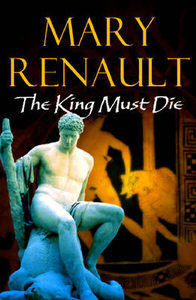
The King Must Die by Mary Renault

The King Must Die After my post on The Odyssey last Friday, I’m staying with an Ancient Greece theme again this week – but in the form of historical fiction this time.

Beginning with his childhood in Troizen, The King Must Die tells the story of Theseus, a story which I’m sure will already be familiar to many readers. Theseus lives with his mother but has never known the true identity of his father, believing him to be the god Poseidon. When he succeeds in raising a boulder to reveal his father’s sword, Theseus learns that he is actually the son of Aigeus, the King of Athens, and sets off for Athens to find him. After an eventful journey during which Theseus becomes King of Eleusis, he arrives in Athens and meets his father at last. But when King Minos of Crete demands that fourteen young people are sent to him to train as bull-dancers, Theseus makes the decision to become one of the fourteen…and finds himself facing the Minotaur in the Labyrinth of the Palace of Knossos.

Mary Renault is an author I’ve been wanting to read for a long time and I became even more interested when I noticed that on the back covers of my Vintage editions of the Lymond Chronicles by Dorothy Dunnett, it says that Dunnett’s writing ‘inspires comparisons with Mary Renault and Patrick O’Brian’. I’ve now read some of Patrick O’Brian’s books and enjoyed them (though not as much as Dunnett) so it seemed a good idea to try Mary Renault too. However, I’ve been hesitant because, as I explained in my Odyssey post, mythology and Ancient Greece are not subjects that really appeal to me. It was finally making it to the end of The Odyssey a few weeks ago that gave me the motivation to pick up The King Must Die at last.

I was curious to see how this book could be described as historical fiction, as a story with a plot involving Poseidon and the Minotaur sounded more like mythology to me. Having read the novel, I now understand that The King Must Die is not simply a re-telling of the Theseus myth but a more realistic recreation of his life, portraying Theseus as a real human being rather than a character from Greek mythology. Most of the essential elements of the myth are here, but they are cleverly incorporated into the historical setting and given logical, plausible explanations.

My favourite part of the book was the section describing Theseus’s adventures in Knossos as a bull-dancer, learning new skills and techniques, and bonding with the other members of his team. I also enjoyed learning about the different customs and rituals of the various cultures and communities Theseus visits on his journey, including the Hellenes, the Minyans and the Cretans. There’s a fascinating author’s note at the end of the book in which Mary Renault explains how she was able to link parts of the Theseus legend to historical fact.

While I did enjoy this book, I do feel disappointed that I didn’t love it as much as I had hoped to. There was nothing specific that I disliked about the book or that I could say didn’t work for me; I certainly couldn’t fault the quality of the writing or the amount of research that must have gone into recreating Theseus’s world. It’s probably just that, as I’ve mentioned, I’m not particularly drawn to this subject or setting. I do still want to read the second half of Theseus’s story in the sequel, The Bull from the Sea!