The King’s General by Daphne du Maurier

The Kings General If you asked me to name my favourite author I wouldn’t be able to give a definitive answer; there are so many that I love and I would find it hard to single one out. But one name that would always be high on my list is Daphne du Maurier. I’ve read twelve of her books now, including this one, and I can honestly say I’ve enjoyed all of them.

The King’s General is set in seventeenth century Cornwall, during the English Civil War. Our narrator is Honor Harris, whose family are Royalists fighting for the King against the Parliamentarians. Honor is eighteen years old when she meets and falls in love with Richard Grenvile but on the day before their wedding tragedy strikes and the marriage never takes place. As the years go by, Richard rises through the ranks of the army, marries another woman and has children, while Honor stays in the Harris family home and remains single.

As the war intensifies and the fighting spreads throughout Cornwall, Honor joins her sister and brother-in-law in the safety of their home, Menabilly, and here she meets Richard again for the first time in fifteen years. He has left his wife, bringing their fourteen-year-old son, Dick, with him, and is now commanding the Royalist forces as the King’s General in the West. Richard and Honor discover they still love each other as much as before and although she refuses to marry him, they begin an unusual relationship that withstands the war, betrayal and rebellion going on around them.

I wasn’t sure at first that I was going to like this book. The first chapter was very confusing – it’s narrated by an older Honor looking back on her life and reflecting on people and events that we know nothing about yet, before going back in time in the next chapter to tell her story from the beginning. But as soon as Honor and Richard had their first meeting on the battlements of Plymouth Castle I knew I needn’t have worried! After I finished the book I went back to re-read the first chapter and it did make a lot more sense.

The King’s General is historical fiction rather than the gothic suspense Daphne du Maurier is probably better known for, but there are still elements of the gothic here, mainly in the atmospheric descriptions of Menabilly with its secret tunnels, hidden chambers and mysterious noises in the night. Menabilly (the inspiration for Manderley in Rebecca) was du Maurier’s home in Cornwall and previously belonged to the Rashleighs, one of the families featured in The King’s General. It was apparently the story of a discovery at Menabilly by William Rashleigh in the 19th century that inspired the writing of this novel.

But while this book could be described as historical romance, as you might expect from du Maurier the romance between Richard and Honor is not a conventional one and neither of the two main characters is a typical romantic hero or heroine. Even people who like flawed characters (and I usually do) might have trouble with Richard as he is not a very pleasant person at all. He’s ruthless, arrogant and cruel and the way he treats his shy, nervous son Dick is particularly horrible. I couldn’t help thinking that his relationship, or lack of it, with Dick reminded me of Heathcliff’s with his son, Linton, in Wuthering Heights and of course, many of du Maurier’s books do have a strong Brontë influence. The only point in Richard’s favour is that he does seem to truly love Honor and in the scenes where they are alone we sometimes see a more human side to him. Honor herself is another strong and complex person. I didn’t always agree with the decisions she made but I admired her courage in helping to protect her family and friends throughout the war and her strength in dealing with the disaster that befell her early in the story. I deliberately haven’t told you exactly what this disaster was because if you can manage to avoid knowing before you start to read the book, it will probably have more impact!

Du Maurier had obviously put a lot of effort into her research for the novel. Although this is a fictional story, the various battles and other historical events in the book did take place as described and most of the characters were real people recorded in history, including both Richard Grenvile and Honor Harris. The Civil War (actually three separate wars between 1642 and 1651) is not a period of English history I have read much about. I know the basics that we were taught at school – that the Royalists (Cavaliers) were defeated by the Parliamentarians (Roundheads), and King Charles I was beheaded and replaced by the Lord Protector, Oliver Cromwell – but beyond that, I don’t know very much at all. That wasn’t necessarily a bad thing, because my total lack of knowledge of the Battle of Lostwithiel, for example, or the Siege of Plymouth Castle, meant that I never knew what was going to happen next.

While The King’s General doesn’t rank as one of my top three or four Daphne du Maurier novels I still loved it and am looking forward to the remaining du Maurier books I still haven’t read.

Truth is the daughter of time…

Richard III
I couldn’t let today pass without mentioning the exciting news that was announced this morning: A skeleton discovered by archaeologists in Leicester has been identified as Richard III, the last Plantagenet king of England who was killed at the Battle of Bosworth in 1485.

As followers of my blog will probably know, Richard III is one of my favourite historical figures and the Wars of the Roses is one of the periods of history I’m most interested in, so I’ve been anxiously awaiting this announcement for months! For those of you in the UK there’s a documentary on Channel 4 tonight at 9pm, The King in the Car Park, which will reveal the details of the archaeological dig and the scientific tests that were carried out on the skeleton. And in honour of today’s news, I have put together a list of the books (both fiction and non-fiction) that I’ve read over the last few years on the subject of Richard III or the Wars of the Roses in general.

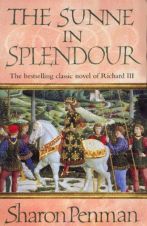
The Sunne in Splendour

The Sunne in Splendour by Sharon Penman

This is one of my favourite historical fiction novels and the best book I’ve read on Richard III. Don’t let the length put you off! Penman does a great job of making a complicated period of history easy to understand as she tells the story of Richard’s life from childhood to his tragic death.

The Daughter of Time

The Daughter of Time by Josephine Tey

Published in the 1950s, this is the story of Inspector Alan Grant who in hospital with a broken leg and decides to investigate Richard III and his alleged crimes from his hospital bed. Reading everything he can find about Richard and the disappearances of the Princes in the Tower, Grant begins to discover that historical sources can’t always be trusted and that history is written by the victors.

Treason

Treason by Meredith Whitford

Like The Sunne in Splendour, this novel also covers Richard III’s life but from the perspective of his cousin Martin Robsart, a fictitious character. I loved this book – it was well-researched, the characters were believable and I could even follow the battle scenes!

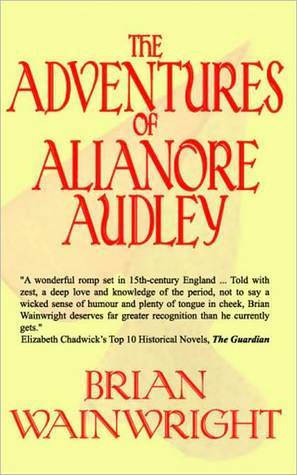
The Adventures of Alianore Audley

The Adventures of Alianore Audley by Brian Wainwright

A parody of the historical novel, this book takes a humorous look at the Wars of the Roses through the eyes of 15th century ‘damosel’, spy and knight’s lady Alianore Audley. Some familiarity with the period is needed to fully understand all the jokes and get the most out of this book.

Review: The White Queen by Philippa Gregory

The Cousins’ War series by Philippa Gregory

I wasn’t a fan of Philippa Gregory’s Tudor court novels but have been following her Cousins’ War series from the beginning because I find this period of history so much more interesting. There are four books in the series so far and each one focuses on a different female historical figure: The White Queen (Elizabeth Woodville), The Red Queen (Margaret Beaufort), The Lady of the Rivers (Jacquetta of Luxembourg) and The Kingmaker’s Daughter (Anne Neville).

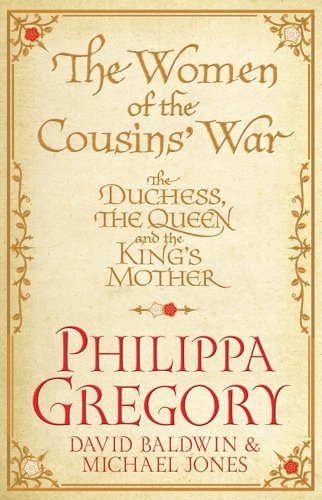
The Women of the Cousins War

The Women of the Cousins’ War: The Duchess, the Queen and the King’s Mother

A non-fiction companion book to the Cousins’ War series mentioned above. The book contains three essays – one by Philippa Gregory on Jacquetta of Luxembourg, another by David Baldwin on Elizabeth Woodville and the final one by Michael Jones on Margaret Beaufort.

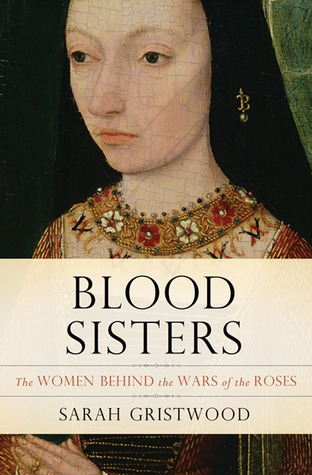
Blood Sisters

Blood Sisters by Sarah Gristwood

I read this book in January and will be posting my review soon. Like The Women of the Cousins’ War this is another non-fiction book that looks at the period from a female perspective.

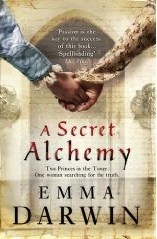
A Secret Alchemy

A Secret Alchemy by Emma Darwin

A present day historian, Una Pryor, researches the lives of Elizabeth Woodville, wife of King Edward IV, and her brother Anthony, and begins to investigate the mystery of the Princes in the Tower. No review link for this one as I found it difficult to get into and didn’t finish reading it.

This is far from being a comprehensive list as this is a relatively new interest of mine and I have only featured here the titles I’ve read or have attempted to read – there are a lot of other books on the Wars of the Roses and Richard III that I’m looking forward to reading.

Please feel free to recommend your favourites!

War and Peace Readalong: January

warandpeace2013
Throughout 2013 I am taking part in a readalong of Tolstoy’s War and Peace hosted by Amy of My Friend Amy and Iris of Iris on Books. Amy has posted some questions to help us discuss January’s reading.

Why are you reading War & Peace?

I read Anna Karenina years ago and enjoyed it so I’ve been meaning to read War and Peace for a long time but haven’t been able to find the motivation to actually get round to doing it. After taking part in a year-long group read of Clarissa by Samuel Richardson last year, when I saw that Amy and Iris were planning a readalong of War and Peace for 2013, I decided to join in with this one too. It seemed like a good opportunity to read another long novel and the reading schedule looked very manageable – this month we had to read Volume 1 Part 1 and I had no difficulty finishing it in time. In fact, I didn’t want to stop at the end of Part 1 and I admit to starting Part 2 before the end of January!

War and Peace What translation are you reading? Are you reading print, ebook, or audio?

I’m reading the Kindle version of the Vintage Classics edition. Opinions seem to be very divided on all of the available War and Peace translations so I wasn’t sure which one to choose. I read the Pevear and Volokhonsky translation of Mikhail Bulgakov’s The Master and Margarita a couple of years ago and was quite happy with it and as I remember disliking the Maude translation of Anna Karenina (though it didn’t affect my enjoyment of the story too much) I decided it might be best to go with P&V again.

So far, is it different than you expected or the same?

I had high hopes for this book and I’m pleased to be able to say that I’ve loved what I’ve read so far, though it does have quite a different feel to Anna Karenina. I’ve found it surprisingly easy to read, though this first section has been mainly concerned with introducing us to the characters – I suspect I might be going to struggle with the military scenes as I don’t have much knowledge of the Napoleonic Wars or the French invasion of Russia.

The only problem I’ve had is that so much of the dialogue is in French and in this edition and format the English translations are in the notes at the end of each chapter – not very convenient with the Kindle (one of the negative things I’ve found with ebooks in general is that it’s not as easy to move backwards and forwards through the text as it is with a physical book).

Do you have a favorite character?

Not yet – I don’t feel I know any of them well enough to have favourites. And there are so many of them too! I’m still having trouble keeping them all straight (and especially remembering how each of them is related to the others) but I’m sure that will become easier as I progress through the book. The characters I’ve found most memorable so far are Pierre, Count Bezukhov’s illegitimate son, and Natasha, the thirteen-year-old daughter of the Rostovs. We haven’t seen much of Natasha yet but she seems a strong, lively character and I’m looking forward to getting to know her better.

What do you see as the biggest obstacle to finishing?

The mistake I made with Clarissa last year was that I kept abandoning the book without picking it up for long periods of time which made it difficult to start reading again. I loved Clarissa while I was actually reading it, but as soon as I stopped and allowed a few weeks to pass, I lost all my enthusiasm for it. I don’t want that to happen with War and Peace so this time I really need to find a reading pace that I’m happy with. I’ll try to stick to the readalong schedule at first as it’s more fun to be reading and posting at the same time as other participants, but it could be that a different pace would suit me better. The important thing is that I continue to enjoy reading this book and don’t start to feel that it’s a chore, which is what happened with Clarissa.

I don’t really have much more to say about the book at this early stage but I’ll post another update at the end of February.

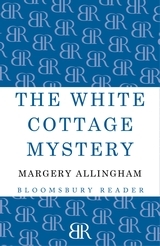
The White Cottage Mystery by Margery Allingham

The White Cottage Mystery I love reading detective novels from the Golden Age but I’m very aware of the number of authors from that era I still haven’t tried and until now, Margery Allingham was one of them. This is the first of her books that I’ve read but I’m now definitely interested in reading more of them. I understand The White Cottage Mystery was her first detective story, originally serialised in the Daily Express in 1927 before being published as a book the following year, and though it does have the feel of an early effort I still enjoyed it.

The mystery begins with Jerry Challoner driving through a small village in Kent one afternoon when he notices a young girl struggling to carry a heavy basket. Stopping his car, he offers to help, but shortly after dropping the girl off at her home, The White Cottage, he hears the sound of a gunshot. After learning that Eric Crowther, from the neighbouring house, the Dene, has been murdered inside The White Cottage, Jerry calls his father, Detective Chief Inspector W.T. Challoner of Scotland Yard. When W.T. arrives on the scene he interviews the family and servants who live both in the cottage and the house next door and discovers that the dead man was an unpleasant, blackmailing bully. There are plenty of people who have a motive for killing Crowther and who openly admit to wanting him dead, but W.T. and Jerry must decide which, if any of them, is the murderer.

Even though a murder is involved, there’s no graphic violence or anything too gruesome in this book, and the focus is on W.T’s attempts to solve the mystery. Written and set in the 1920s, W.T. uses old-fashioned methods of crime solving – looking for clues and questioning suspects – and his investigations uncover family secrets, blackmail and even connections to a secret society of thieves. The plot is not especially original but there’s still some suspense and a big twist near the end that took me by surprise – I would never have guessed who the murderer actually was and I can see why it took W.T. such a long time to figure it out.

The White Cottage Mystery is really more of a novella than a novel, short enough to be read in just a few sittings, but the plot was resolved satisfactorily and I felt that it didn’t really need to be any longer. Now that I know what Margery Allingham’s writing is like I think I’m going to enjoy exploring her other novels!

I received a copy of The White Cottage Mystery from Bloomsbury Reader via Netgalley.

Gemini by Dorothy Dunnett

Gemini In June last year, having finished the final book of the Lymond Chronicles in April, I picked up Niccolò Rising and embarked on Dorothy Dunnett’s second historical series, the House of Niccolò. And now here I am, seven months and eight books later, at the end of Gemini and finding it hard to believe that there are no more adventures of either Lymond or Nicholas left for me to discover. There will be re-reads, of course, but it does make me sad that I can’t read any of these books for the first time again.

*Spoilers follow for both the House of Niccolo and the Lymond Chronicles*

Geographically, unlike the last few Niccolò books where the action switched between a variety of different settings, Gemini is focused mainly on one location: Scotland. After causing damage to the Scottish economy in the course of his long-running contest with his wife, Gelis, Nicholas has returned to try to make amends. Soon after his arrival in Scotland, Nicholas finds himself having to contend with a possible inherited illness (porphyria?) afflicting the royal family, trying to handle the King’s wild and unpredictable younger brother, John of Mar, and attempting to thwart a rebellion by the King’s other brother, the Duke of Albany. With Nicholas’s two biggest enemies, his grandfather, Jordan de St Pol of Kilmirren, and his former trading rival, Davie Simpson, also in Scotland, Gelis stays behind for a while in the relative safety of Bruges with their son, Jordan. But it’s not long before she and Jordan are in Edinburgh too and the eighth and final volume of the House of Niccolò starts to head towards its conclusion.

I did love Gemini overall, but I confess to getting a little bit bored with the political aspects of the novel. It’s not that I don’t find this period of history interesting and important, because I do – it’s just that at this late stage in the series, and especially as I began to reach the end of the book, I was too impatient to slow down and concentrate on all the details. I’m sure on a future re-read I’ll be able to appreciate this side of the novel more, but on this first read I was desperate to see how Nicholas’s personal story would be resolved and to have some of my questions answered.

I found Simon’s and Henry’s deaths particularly moving, though not so much for their sakes as for Nicholas’s, though I did feel slightly cheated when I realised that Simon was never going to acknowledge Nicholas as his son, and that neither Simon nor Henry were ever going to find out the truth about Henry’s parentage – I think I had expected there to be a big confrontation at the end of the book where everything would be revealed. I suppose it’s not the first time in a Dunnett novel that things haven’t turned out the way I had been anticipating! I was also a bit disappointed that a true reconciliation between Henry and Nicholas never happened, despite there seeming to be some steps in that direction earlier in the book.

I get the impression that opinion is divided over the Epilogue with some readers finding it unnecessary, but personally I liked it and was pleased to see that some of the links with the Lymond Chronicles were explained at last. Although I’ve been doing my best to avoid spoilers while reading this series I must have picked up somewhere that Rankin was Lymond’s father because I had that at the back of my mind, but I was completely confused as to how Rankin of Berecrofts could possibly be the same person as Francis Crawford, 1st Baron Culter. As for Sybilla’s parents, I had guessed that Jordan was probably her father, though I had no idea about the identity of her mother. I had been coming up with various theories about the significance of Bel of Cuthilgurdy, but not the right one.

Now for one of the most shocking revelations of the novel: Julius. I didn’t like him and had started to suspect there might be more to him than met the eye, but even though his mother’s name was there in the family tree at the front of the book, it had never occurred to me that there was any connection and when it was revealed it took me completely by surprise. When I get around to reading this series again I will certainly be looking for clues about Julius and paying more attention to everything he says and does in the earlier novels!

*End of spoilers*

I’ve really enjoyed working my way through this series, but the House of Niccolò hasn’t had quite the same effect on me as the Lymond Chronicles, mainly because Nicholas himself, to me, is a less appealing character than Lymond – though I know others will disagree. While I was reading the Lymond Chronicles (and sometimes even now, a year later) I was thinking and worrying about Lymond all the time, even when I was away from the books, but I never really connected with Nicholas on the same level. Still, I did love the series as a whole and am looking forward to reading all the books again and looking out for some of the things I know I missed during the first read. I’ve also bought a copy of King Hereafter and will be reading that at some point, but first I’m spending some time catching up on all the non-Dunnett books I’ve been neglecting over the last year!

The Master of Verona by David Blixt

The Master of Verona by David Blixt The Master of Verona is set in Northern Italy in the early 14th century. At the beginning of the novel the great poet Dante Alighieri, after years of exile from Florence, has been invited to the city of Verona by its ruler, Francesco della Scala, known as Cangrande. Dante and his two sons, Pietro and Jacopo, arrive in Verona at a turbulent time for the city; not only has war broken out with Padua, but Cangrande’s heir, Cesco, has been the target of an assassination attempt.

When seventeen-year-old Pietro impresses Cangrande with his courage and loyalty, he becomes caught up in Verona’s battles with Padua and is also entrusted with trying to help protect the life of baby Cesco. As if this wasn’t enough, Pietro’s two best friends, Mariotto Montecchio and Antonio Capecelatro have both fallen in love with the same girl and an ancient feud between their two families looks set to be reignited…

This was one of the final books I read in 2012 and I finished it just in time for it to make my list of favourite books of the year. It has taken me a while to actually write this post as there’s so much going on in the novel and so many different aspects to the story, it’s difficult to know where to begin! First, there’s a link with Romeo and Juliet; although this is not a retelling of Shakespeare’s play, Blixt suggests a possible theory to explain how the feud between the Montagues and Capulets may have originated. I noticed allusions to some of Shakespeare’s other plays too, but the story could still be understood and enjoyed even if you have no knowledge of Shakespeare at all as this is just one small element of the novel.

The plot does become quite complicated and some concentration is needed at first to keep all the characters straight, especially as many of them are also referred to by their titles or nicknames (Cangrande, for example, is sometimes referred to as Francesco della Scala, the Scaliger, the Greyhound or the Capitano). However, I never had any problems understanding what was happening and could even manage to follow the battle scenes! This is a great book for those of us who like our historical fiction novels long, detailed and complex but with plenty of action at the same time. There’s always something happening, whether it’s a battle, a chase, a festival or a duel. One of the most memorable episodes of the story describes Pietro’s participation in the Palio, a dramatic horse race through the streets of Verona. It’s all breathtakingly exciting and makes the book a much quicker read than you might expect considering the length of it.

But it’s not all non-stop action; in quieter moments, the characters have lots of discussions on religion and philosophy, mainly with reference to Dante’s work – the concepts of Heaven and Hell, the significance of stars, etc – which made me wish I had actually read Dante so I knew what they were talking about! He is definitely on my list now for future reading. There are also some fascinating passages in which we see the 14th century literary world of booksellers and scribes through the eyes of Dante’s daughter, Antonia Alighieri.

Many of the characters in the book are real historical figures of the period. Cangrande, the ‘Master of Verona’ who is believed by some to be the legendary ‘Greyhound’ or saviour of Italy, is fascinating and charismatic, a complex character with several different sides to his personality. As all good historical fiction novels should, this book left me wanting to know more about the real life Cangrande. Dante himself is someone I have never read much about, so knowing very little about his life, I have no idea how accurately he was portrayed in this book. The spelling Alaghieri is sometimes used in place of Alighieri but the author explains his reasons for this both in the text of the story and in his notes at the end of the book, and again, I don’t really have enough knowledge of Dante to be able to comment on this. There are some strong and interesting female characters in the book too: I’ve already mentioned Antonia, but there’s also Katerina della Scala, Cangrande’s sister. And even little Cesco, despite being not much more than a baby, has a very strong personality of his own.

The only negative thing I can say about this book is that the dialogue felt a bit too modern at times (I’m sorry for mentioning this yet again – I feel as if I’ve been complaining about the dialogue every time I’ve reviewed historical fiction recently!) but luckily I was enjoying the story so much I could overlook the occasional word that didn’t sound right.

This book is the first in a series and I’m already looking forward to reading the second one, Voice of the Falconer!

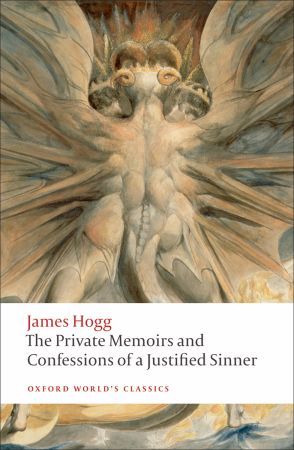
The Private Memoirs and Confessions of a Justified Sinner by James Hogg

The Private Memoirs and Confessions of a Justified Sinner My sister gave me a copy of this book saying it was one of the weirdest books she’d ever read and she thought I would love it. I’m not sure what that says about my reading tastes, but she was right anyway because I did love it!

The Private Memoirs and Confessions of a Justified Sinner, published in 1824, was written by the Scottish poet and novelist James Hogg. I had never come across Hogg and his work until now and was interested to learn that he was a shepherd who taught himself to read and write and became a friend of Sir Walter Scott. This, his most famous novel, is part horror story, part murder mystery and part gothic fiction, but it also incorporates elements of religion, Scottish folklore, the supernatural and even some humour and satire.

Robert Wringhim, the ‘justified sinner’ of the title, is a young man who has been raised by his adoptive father, a Calvinist, to believe he is one of the chosen few, destined for a place in Heaven regardless of the sins he commits in life. One day he meets a mysterious stranger who calls himself Gil-Martin and who seems able to change his appearance at will. Wringhim allows the stranger to convince him that it’s his duty to “cut sinners off with the sword” and that he doesn’t need to worry about committing murder as in this case it’s the right thing to do and he is sure to be saved by God anyway. In his Private Memoirs and Confessions, he describes how he falls under the spell of the sinister Gil-Martin and how, when he begins to have doubts about his new friend, he starts to descend into madness and desperation.

Robert Wringhim’s Confession is presented as an authentic document that has been discovered under unusual circumstances a century later. It is introduced by a Narrative written by a fictitious editor which gives a supposedly factual account of Wringhim’s life and the crimes he is involved in. The Editor’s Narrative also forms the third and final section of the novel and attempts to explain how the Confession was found and what it might mean. But instead of helping to clarify the story, the Editor actually makes things more confusing and sometimes even contradicts what Wringhim has said. Neither narrative seems to be very reliable and at the end of the novel, we have to decide for ourselves what really happened. For example, it’s not clear whether Gil-Martin is a product of Wringhim’s imagination or whether he is a real person or even the Devil.

This book kept me gripped from the first page, but it was quite a challenging story to read. There was a lot of Scottish dialect and while that’s not something I usually have a problem with, many of the words used here were unfamiliar to me and I was constantly turning to the glossary at the back of the book. There were also a large number of Biblical references on almost every page and again, I found that I kept needing to refer to the notes. It wasn’t completely essential to recognise or understand all of these references, but it was important to know how the various characters were interpreting them. Finally, there are no chapter breaks – the middle section, the Confession, forms one continuous chunk of over 100 pages, making it hard to find a place to stop reading.

However, it was definitely worth having to make a bit of extra effort; this is one of the most fascinating and original classics I’ve read and I can’t believe it isn’t better known. I thought it was much better than Robert Louis Stevenson’s Dr Jekyll and Mr Hyde, which is the book it reminded me of most. I’m also surprised that, as far as I’m aware, it has never been adapted for film or television. Some parts of the novel are very visual – the atmosphere of the dark wynds and closes of Edinburgh; the description of the rainbow seen by Robert Wringhim’s brother, George; and some of the scenes where Wringhim finds himself hounded and tormented by fiends and demons. I loved this book and am very grateful to my sister for recommending it!