Historical Fiction Virtual Book Tour: The Chalice by Nancy Bilyeau

The Chalice Today I’m taking part in a blog tour for Nancy Bilyeau’s new novel, The Chalice. This is the second in a series of historical thrillers set in the Tudor period and featuring Joanna Stafford, a former novice nun. Last year I read the first book, The Crown, and since then have been eagerly awaiting more of Joanna’s adventures.

In the previous book, the dissolution of the monasteries by Henry VIII meant that Joanna was forced to leave Dartford Priory before she had the opportunity to finish her period as a novice and become a full nun. It’s now 1538 and Joanna has had to rejoin the secular world where she is hoping to lead a peaceful life raising her cousin’s little boy, Arthur, and establishing her own tapestry business. But when she learns of a prophecy in which she plays an important role, she becomes caught up in a plot to overthrow the King and restore the Catholic religion in England.

Although this is the second Joanna Stafford book I don’t think it’s completely necessary to have read the previous novel before this one, but readers of The Crown will enjoy learning more about Joanna’s background and her past as both the daughter of one of Katherine of Aragon’s ladies and as a novice Dominican nun. Joanna is a great narrator, so easy to like and to sympathise with as she struggles to reconcile all the different sides of her character: her faith and her religious beliefs, her loyalty to her friends and her powerful connections as a member of the Stafford family. As she learns more about the prophecy and the international plot surrounding it, she has some difficult choices to make. How should she interpret what she has heard? And once she has listened to the prophecy is it her responsibility to ensure it is fulfilled whatever the cost?

Because Joanna is a Stafford and the niece of the late Duke of Buckingham, it’s believable that despite the life she has tried to choose for herself, she will inevitably come into contact with rich and powerful people, both close to the King and in opposition to him. In these dangerous times, filled with political intrigue and rebellion, Joanna (and the reader) is never quite sure who can and cannot be trusted, and this adds a lot of drama and suspense to Joanna’s story. Among the real historical people she encounters are her cousins Henry and Gertrude Courtenay (the Marquess and Marchioness of Exeter), the young Catherine Howard, and her old adversary Stephen Gardiner. She also meets the nun and prophet Sister Elizabeth Barton and a few other fascinating historical figures who I won’t name here so as not to spoil the surprise.

Joanna’s two love interests from The Crown are back again too – the former friar, Brother Edmund Somerville, and the constable, Geoffrey Scovill – and her relationships with both of these men are developed further in this book. I do enjoy Joanna’s interactions with Edmund and Geoffrey, who are both great characters, but the romantic aspect of the book never becomes too dominant and is well balanced by the mystery/thriller aspects.

Another area in which I think Nancy Bilyeau really excels is in the way she captures the atmosphere of Tudor England, with all its sights, sounds and smells. She also does a good job of portraying the political and religious tensions of the period, especially what it was like for the nuns and monks whose religious houses had been destroyed or closed down and who were now facing the difficulties of either building a new life for themselves or secretly trying to continue to lead their religious lives in any way they can.

I did find this book a bit confusing at first because unlike the previous book, in which Joanna’s mission was clear – to search for the legendary crown of Athelstan – this time I found it harder to follow what was happening and exactly what Joanna was expected to do. Once I got into the story, though, and the plot began to take shape, it had all the excitement and the page turning qualities I remembered from The Crown. I hope there will be more Joanna Stafford books, but if not I will still be looking forward to any future novels from Nancy Bilyeau.

The Chalice Tour Banner FINAL

I am the first stop on this blog tour – for more reviews, interviews, guest posts and giveaways see the tour schedule.
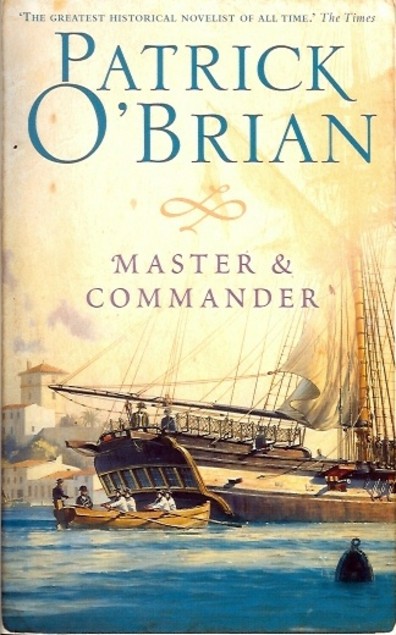
Master and Commander by Patrick O’Brian

Master and Commander I do not usually like books set at sea. However hard I try, I just can’t seem to keep track of the nautical terms and as soon as I see words like ‘mainsail’, ‘fo’c’sle’ or ‘bosun’ my brain just seems to switch off. As a fan of historical fiction, I have been unable to avoid this entirely – after all, until the 20th century the only way to cross the sea was by ship and many historical fiction novels do involve a sea voyage or two – but the thought of reading a book where seafaring forms a major part of the plot is always quite daunting for me. For this reason I’ve resisted reading the Aubrey/Maturin series for a long time, despite it being described as one of the best historical series ever written, but a couple of weeks ago I decided it was time I gave Master and Commander a try.

The story begins in Port Mahon, Minorca, with Jack Aubrey and Stephen Maturin meeting for the first time at a concert in the Governor’s House. After an initial disagreement that almost results in a duel, Aubrey and Maturin discover a shared passion for music and a friendship begins to develop. Jack Aubrey has just been given his first command of the sloop, HMS Sophie, and after discovering that Stephen is a physician, he invites his new friend to join him as ship’s surgeon. With Britain at war with France (it’s the year 1800), life at sea is both dangerous and exciting and as the Sophie cruises the Mediterranean she becomes engaged in a series of sea battles and encounters with enemy ships.

I loved Patrick O’Brian’s writing style from the beginning, but as soon as the Sophie set sail all my fears about naval novels were realised. I did try – there’s a useful diagram at the front of the book and of course there’s always the option of looking up unfamiliar words and finding pictures of ships online (if, like me, you don’t know the difference between a brig and a frigate and have always thought a settee was something you sat on) – but in the end I decided not to worry about it and luckily, there were still plenty of things for a landlubber like me to enjoy, not least the wonderful characters. Too often characters in historical fiction are depicted as having modern sensibilities and come across as twentieth century people dropped into a historical background – that was thankfully not the case with this book; they felt realistic and believable. O’Brian’s prose and dialogue is completely appropriate for the time period and the same is true of the behaviour and thought processes of the characters.

I liked both of the main characters and the contrast between their very different personalities and am looking forward to getting to know them better over the course of the series. At the moment Stephen Maturin is my favourite; I also appreciated the fact that he doesn’t have much more knowledge of seafaring matters than I do and has to have even the most basic naval facts explained to him by other members of the crew. It was good to know that someone else shared my bewilderment of the nautical world and I loved the way even at moments of high drama at sea, he was more excited about spotting a rare bird or fish.

Master and Commander doesn’t have a lot of plot, being of a more episodic nature, but I finished the book with a better understanding of what conditions were like onboard a ship in the Napoleonic era and what daily life involved for a sailor in the Royal Navy. It seems that not being able to follow all of the terminology or the more intricate points of the various naval manoeuvres was not the problem I was afraid it would be. I didn’t instantly fall in love with this series, but I still enjoyed my first introduction to Aubrey and Maturin and I’m sure I’ll be reading the next one very soon!

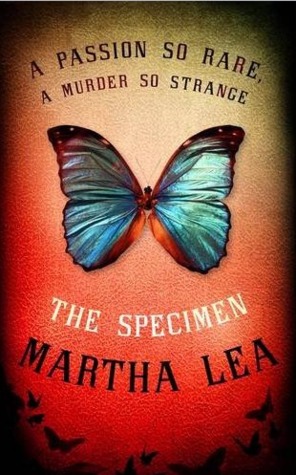
The Specimen by Martha Lea

The Specimen The Specimen sounded like the type of book I usually love. A Victorian setting, a murder mystery, exotic locations, interesting and unusual female protagonists – these are all things I love in a novel, so I had high hopes for this one.

The story begins in 1866 with Gwen Carrick on trial for the murder of the naturalist Edward Scales who has been found dead at his home in London. The narrative then takes us back in time to show us how Gwen first meets Scales and the events that lead up to his death and the murder trial.

Seven years earlier, in 1859, Gwen is living with her sister Euphemia in their remote home in Cornwall. Both women are unmarried and are leading unconventional lives for the time period – Gwen is an artist who is fascinated by natural sciences and loves to draw butterflies, beetles and other insects, while Euphemia is a spiritualist with a talent for mimicking voices. The sisters have little in common and their relationship is a difficult one. When Gwen meets and falls in love with Edward Scales she leaves her sister behind and accompanies him to Brazil to study and illustrate specimens of the flora and fauna there, but on their arrival in South America she starts to discover that Scales is not quite the person she thought he was. Why did Scales really invite Gwen on the trip to Brazil? What is he hiding from her? And is Gwen guilty of his murder?

Sadly, despite sounding so promising, this book didn’t live up to my expectations. I struggled to engage with the characters (Edward Scales is particularly unlikeable) and the Brazilian setting never really came to life. But my biggest problem was that I found the plot so difficult to follow and even after reaching the final page I wasn’t sure I’d understood what had happened. I do like books that encourage the reader to think, but this one was just too confusing for me. This is probably a book that would benefit from a re-read as it’s the type of story that has lots of clues buried in each chapter, which don’t necessarily have a lot of meaning until you get to the end and can see the whole picture. I didn’t like the book enough to want to read it more than once but I do think that might be the only way I would be able to fully appreciate it!

I do like to read about women who were involved in the sciences during the Victorian period and it was interesting to read about Gwen’s interest in studying and drawing insects. Gwen does not always behave the way a Victorian woman is expected to behave; she values her independence and is struggling to find a place for herself and her work in a nineteenth century society dominated by men. Euphemia was an interesting character too, though again, I found her storyline confusing (and often bizarre) and I don’t think I completely understood what was going on with her.

The Specimen is full of fascinating ideas and themes, so I’m sorry I can’t be more positive about it. I think as long as you’re aware that you need some patience and concentration and don’t go into this book expecting the gripping melodrama promised by the blurb, you might enjoy it more than I did.

I received a review copy of this book from the publisher via Netgalley

The Classics Spin!

The Classics Club

When this new Classics Club game was announced a few days ago I wasn’t sure whether I wanted to join in or not, but in the end I couldn’t resist. Here are the rules:

  • Pick twenty books that you’ve got left to read from your Classics Club List.
  • Try to challenge yourself: list five you are dreading/hesitant to read, five you can’t WAIT to read, five you are neutral about, and five free choice (favorite author, rereads, ancients — whatever you choose.)
  • Post that list, numbered 1-20, on your blog by next Monday.
  • Monday morning, we’ll announce a number from 1-20. Go to the list of twenty books you posted, and select the book that corresponds to the number we announce.
  • The challenge is to read that book by April 1

And here is my list:

Five books I’m looking forward to reading:

1. The Heir of Redclyffe by Charlotte M. Yonge
2. Far from the Madding Crowd by Thomas Hardy
3. Captain Blood by Rafael Sabatini
4. Twenty Years After by Alexandre Dumas
5. Frenchman’s Creek by Daphne du Maurier

Five books I’ve been hesitant to read:

6. The Odyssey by Homer
7. The Idiot by Fyodor Dostoevsky
8. A Tale of Two Cities by Charles Dickens
9. East of Eden by John Steinbeck
10. Washington Square by Henry James

Five Victorian books

11. The Mill on the Floss by George Eliot
12. Wives and Daughters by Elizabeth Gaskell
13. Vanity Fair by William Makepeace Thackeray
14. Aurora Floyd by Mary Elizabeth Braddon
15. Around the World in Eighty Days by Jules Verne

Five from the twentieth century:

16. The Painted Veil by W Somerset Maugham
17. The House of Mirth by Edith Wharton
18. Excellent Women by Barbara Pym
19. Wide Sargasso Sea by Jean Rhys
20. Cold Comfort Farm by Stella Gibbons

Now I just have to wait for Monday to find out which book I’ll be reading!

UPDATE: Monday 18th February 2013

So the number has been announced and I will be reading…

#14 – Aurora Floyd by Mary Elizabeth Braddon!

I’m very happy with this as it’s a book I’ve been wanting to read for a long time and as I loved the other two Braddon books I’ve read (Lady Audley’s Secret and The Doctor’s Wife) I’m expecting to enjoy this one too.

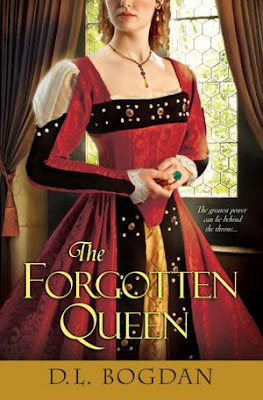
The Forgotten Queen by D.L. Bogdan

The Forgotten Queen Of all the royal women of the Tudor period, one we tend not to hear much about is Margaret, the elder sister of King Henry VIII and grandmother of Mary, Queen of Scots. And yet Margaret was not only a princess of England, but she also became a queen at the age of thirteen when she married King James IV of Scotland. In this historical fiction novel aptly titled The Forgotten Queen, D.L. Bogdan tells Margaret Tudor’s story.

James IV is much older than Margaret and given that this was a marriage made for political reasons, she is fortunate that James proves to be a kind and gentle husband – although not a very faithful one. In time Margaret comes to love him and is devastated when he is killed at the Battle of Flodden in 1513. Their young son succeeds to the throne and is crowned James V, but as he is not yet old enough to reign on his own, Scotland is ruled by a series of regents. Margaret marries again, this time to a man of her own choice, but as she learns more about her second husband – Archibald Douglas, the Earl of Angus – she begins to wonder if she has made a terrible mistake.

With her ties to both England and Scotland, it’s inevitable that eventually Margaret will have to choose between the country of her birth and her adopted country and must decide where her allegiances lie. It’s often unclear to the reader and even to Margaret herself what her true loyalties are, but the one thing that is obvious is that she wants whatever is best for the young James V, who is in a vulnerable position at the mercy of the various advisors, regents and noblemen who surround him. And while she fights to secure her son’s throne, Margaret never forgets her father Henry VII’s dream that through her Scotland and England could one day be united.

I knew absolutely nothing about Margaret Tudor before reading this book so, for me, she really is ‘the forgotten Queen’. It made a nice change to read a book set during the Tudor period that chooses to focus on somebody other than Henry VIII and his six wives and I did learn a lot about Margaret’s life. Unfortunately though, Margaret herself comes across as a very unsympathetic character: immature, selfish and stubborn. She makes some very bad decisions, often failing to take advice from other people, and she expects more from her friends than she is prepared to give in return. However, there were still times when I could feel some compassion for her, as she did seem to have a very difficult and tragic life. Only two of her children survived past infancy – James and her daughter with Angus, Margaret Douglas – and her second and third marriages were both very unhappy (although having said that, I felt that Margaret did nothing to make them any happier).

In addition to learning about Margaret’s life I enjoyed learning more about this period of Scottish history in general, for example the aftermath of Flodden, but I found the author’s attempt at handling Scottish dialect very irritating. To indicate that a character is Scottish she substitutes the words ‘dinna’ and ‘canna’ for don’t and can’t but doesn’t make any real effort to use any other Scottish words. This made the dialogue feel very unconvincing and artificial. Also, as the book covers such a long period of time, it would have been helpful if dates had been provided in the chapter headings or whenever the story jumps forward by a few years. It was hard to tell how much time had passed between one chapter and the next, or sometimes even between one paragraph and the next. Just a small thing but it would have made the story so much easier to follow!

This was a fairly light read, as you can probably tell from the title and cover. I think if I had been looking for a more in-depth book about Margaret Tudor I would have been disappointed, but as an introduction to her story it was enjoyable enough and has left me wanting to know more about this forgotten queen.

Turn of the Century Salon: A Room with a View by E.M. Forster

Turn of the Century Salon - February
This year I am participating in a Turn of the Century Salon hosted by Katherine of November’s Autumn. The idea of this is to read books published around the turn of the century – between the late 1880s and the early 1930s. While I do seem to have read more books from this period than I initially thought, there are still a huge number of turn of the century authors whose work I haven’t explored yet and E.M. Forster was one of those that I was most looking forward to trying for the first time.

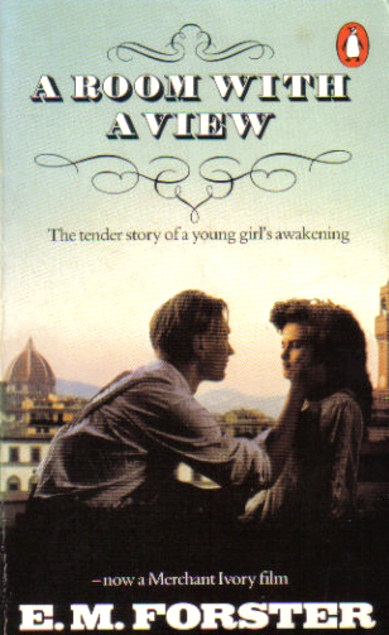
A Room with a View is the story of Lucy Honeychurch who we first meet on a trip to Italy with her cousin, Charlotte Bartlett. Lucy and Charlotte have just arrived at the Pension Bertolini in Florence and are disappointed to find that they have been given rooms with no view of the River Arno. Two of the other English guests – a Mr Emerson and his son, George – hear them complaining and immediately offer to exchange rooms, but instead of accepting their generous offer, the rules of Edwardian society mean that Charlotte is shocked and offended by what she considers their inappropriate behaviour. During the rest of their time in Florence, Charlotte and the other middle-class English tourists dismiss the Emersons as bad-mannered and socially unacceptable but Lucy has several more encounters with them and is intrigued by their different outlook on life.

A Room with a View Back in England, their paths cross again when the Emersons move into a cottage in Lucy’s village not far from the Honeychurch home, Windy Corner. Lucy is now engaged to Cecil Vyse, a cold, pretentious man she doesn’t really love, but who is considered to be a suitable husband for her. But with George Emerson living nearby Lucy must decide whether to be true to her heart even if it means breaking the social conventions of the time.

As this is the first E.M. Forster book I’ve read, I didn’t know what to expect so I was pleased to find it was much easier to read than I had been afraid it might be. I loved the wit and warmth of Forster’s writing and I enjoyed watching Lucy’s slow development from a young woman who allows other people and society in general to dictate how she should think and behave to one who finds the courage to be herself and live her life the way she wants to live it.

The beginning of the book with the portrayal of the English in Italy made me think of The Enchanted April by Elizabeth von Arnim and as for the descriptions of Italy itself, they were beautiful and vivid:

At the same moment the ground gave way, and with a cry she fell out of the wood. Light and beauty enveloped her. She had fallen on to a little open terrace, which was covered with violets from end to end.

“Courage!” cried her companion, now standing some six feet above. “Courage and love.”

She did not answer. From her feet the ground sloped sharply into view, and violets ran down in rivulets and streams and cataracts, irrigating the hillside with blue, eddying round the tree stems collecting into pools in the hollows, covering the grass with spots of azure foam. But never again were they in such profusion; this terrace was the well-head, the primal source whence beauty gushed out to water the earth.

Forster has a sense of humour as well; the dialogue is often quite funny and he puts his characters into some amusing situations. I also loved the character names and the chapter titles (especially Chapter Six – “The Reverend Arthur Beebe, the Reverend Cuthbert Eager, Mr. Emerson, Mr. George Emerson, Miss Eleanor Lavish, Miss Charlotte Bartlett, and Miss Lucy Honeychurch Drive Out in Carriages to See a View; Italians Drive Them.”)

Published in 1908, A Room with a View was a perfect book to choose for the salon as it really does epitomise turn of the century society and a gradual move away from Victorian values into a freer, less socially constrained twentieth century.

Which of E.M. Forster’s other books should I read next?

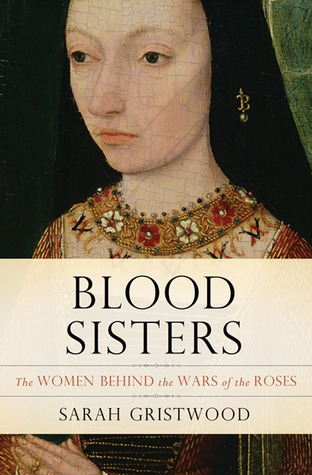
Blood Sisters: The Women Behind the Wars of the Roses by Sarah Gristwood

Blood Sisters Blood Sisters is a non-fiction book which looks at the lives of seven women who all played an important part in the period of history known as The Wars of the Roses or the Cousins’ War – the conflict between the House of York and the House of Lancaster, two branches of the English royal family. These seven women are listed below:

* Margaret of Anjou (Marguerite), Queen to Henry VI

* Cecily Neville, the mother of two Kings of England: Edward IV and Richard III

* Elizabeth Woodville, Queen to Edward IV and mother of the ‘Princes in the Tower’.

* Margaret of Burgundy, sister of Edward IV and Richard III and wife to the Duke of Burgundy.

* Anne Neville, wife of Richard III and daughter of the Earl of Warwick (the Kingmaker)

* Margaret Beaufort, mother of Henry Tudor (the future Henry VII).

* Elizabeth of York, Edward IV’s daughter and Henry VII’s wife.

Notice that I’ve defined these seven women by their relationships to the men, the Kings, and it would have been almost impossible not to do that, as their connections to the Plantagenet and Tudor Kings of England are the reasons they are still remembered today. But in this book, Sarah Gristwood shows that each of them also had an interesting story of her own and was historically important in her own right. Rather than devoting one section of the book to each woman and telling their stories separately, she weaves them together which makes sense considering that some of the women were related and several of them did meet or interact with the others in some way.

While Blood Sisters was very compelling and readable non-fiction, I have to admit I didn’t learn much that I didn’t already know about most of the women. The lives of Elizabeth Woodville and Margaret Beaufort were covered in another book I’ve read, The Women of the Cousins’ War, and a lot of the same information appears here too – though I suppose there’s a limit to how much information is actually available. Of the seven featured in this book, Margaret of Burgundy was the one I previously knew the least about and so I was particularly interested in reading about her.

As well as telling us about the major historical events of the period, Gristwood also gives us a lot of information to help us understand what daily life was like for these women: for example, records of household accounts, and descriptions of clothes worn at coronations or pageants and the dishes served at banquets. I also enjoyed reading about the disappearance of the Princes in the Tower and I appreciate the fact that Gristwood presented some of the different theories and possibilities rather than just blaming Richard III! A lot of attention is also given to the stories of the various Yorkist pretenders to the throne who caused so many problems for Henry VII during his reign, especially Perkin Warbeck, who claimed to be the younger son of Edward IV.

It’s frustrating that so much of the information we have about this period comes from the work of Thomas More and others who were writing during the Tudor period and so were likely to be biased, but Gristwood does take care to point out when something may not be completely accurate and when we need to use some caution. She explains which of her sources may have been unreliable or may have had their own reasons for wanting to portray a person or event in a certain way.

I would recommend Blood Sisters to anyone interested in learning more about this period from a female perspective and it’s also an ideal book for readers like myself who don’t often read non-fiction but want to build on the knowledge they’ve already gained through reading historical fiction.

I received a copy of this book for review via Netgalley