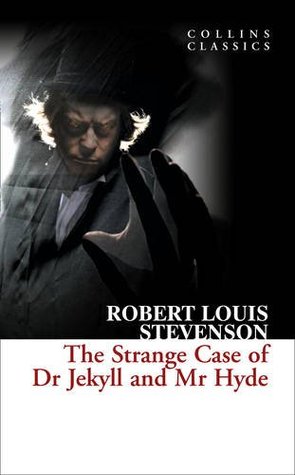
The Strange Case of Dr Jekyll and Mr Hyde by Robert Louis Stevenson

The problem with reading The Strange Case of Dr Jekyll and Mr Hyde in the 21st century is that most of us probably already know what the story involves. Even without having read it or seen any of the film versions, everyone knows what is meant by a ‘Jekyll and Hyde personality’. And this completely takes away the suspense and air of mystery that the story relies on so heavily. I’m sure the original Victorian readership would have found the connection between Dr Jekyll and Mr Hyde much more shocking! So is there still any point in reading it? Yes, I thought there was, because although I knew what the ultimate revelation would be, I didn’t know all the details of the plot or how the conclusion would be reached.

We first see Dr Henry Jekyll and Edward Hyde through the eyes of Jekyll’s friend and lawyer, Mr Utterson, who becomes concerned when he discovers that Jekyll has made a new will leaving everything to Mr Hyde. All Mr Utterson knows about Hyde is that he’s a sinister and brutal man responsible for some cruel and unprovoked acts of violence. The first half of the book follows the lawyer’s attempts to learn more about Hyde and his relationship with Jekyll. It’s only as we approach the end of the story that we hear from Dr Jekyll himself, in the form of a letter addressed to Mr Utterson, and the truth is finally revealed.

The story is cleverly structured so that if you had no idea what was coming, you would be kept wondering, knowing only as much as Mr Utterson knows, and it’s disappointing that for most modern readers the surprise has been spoiled. The part of the story I found the most interesting was the final chapter, after the secret has been uncovered and Jekyll gives his own explanation of what happened and his views on the good and the evil aspects of human nature. We can really feel his desperation as his own dark side grows stronger and things begin to spiral out of his control.

The edition I read contained just the novella The Strange Case of Dr Jekyll and Mr Hyde; other editions include a selection of other Stevenson short stories. Jekyll and Hyde on its own was only 88 pages long and if I’d realised how short it was I would have made time to read it earlier. This was one of my choices for RIP VII, and I would recommend it to other RIP participants who would like to read an important piece of classic Victorian fiction without committing to a full-length novel. I can’t say that I loved it and it’s not something I would want to read again, but I’m glad I’ve read it once and can see why it has become a part of popular culture.
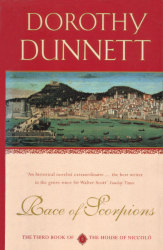
Race of Scorpions by Dorothy Dunnett

This is the third book in the House of Niccolò series, the first two being Niccolò Rising and The Spring of the Ram. The series is set in the 15th century and follows the adventures of Nicholas vander Poele as he travels throughout Renaissance Europe and beyond. By the time this third volume begins, Nicholas’s spectacular rise from dyer’s apprentice to head of a successful trading company, bank and mercenary army has not gone unnoticed and has brought him to the attention of various people who are hoping to use his skills for their own purposes.

In Race of Scorpions Nicholas finds himself kidnapped and taken to Cyprus, an island torn apart by civil war. Cyprus is in a strategically important location and has become the centre of power struggles between various groups including Christians and Muslims, Genoese and Venetian merchants, Egyptian Mamelukes, Portuguese traders, the Pope, the Sultan, the Knights of the Order of St John – and the two Lusignan siblings who are fighting for the crown. Both of the claimants to the throne, Queen Carlotta and her half-brother James de Lusignan (known as Zacco), are determined to recruit Nicholas and his army to their side and are prepared to use any means possible to do so. Nicholas must choose which of them, if either, to support in their battle to gain control of Cyprus, but as well as being drawn into the conflict between Carlotta and Zacco, Nicholas faces some problems of a more personal nature when he is reacquainted with Katelina van Borselen, who we first met in Niccolò Rising.

Many of the characters we have been getting to know over the previous two books are here again – including Tobie, Loppe, Astorre and John le Grant – and we are also introduced to some new ones. A lot of the other characters in the book are real historical figures and one of the most fascinating, I thought, was Zacco’s mother Marietta (known as Cropnose after her nose was bitten off by her rival). Nicholas also meets his young cousin Diniz Vasquez for the first time, contends with a new villain in the form of the Mameluke emir, Tzani-bey al-Ablak, and tries to unravel the complex motives of Primaflora, a beautiful courtesan who is working for Queen Carlotta…or is she really working for Zacco?

Luckily, with his talent for solving puzzles and coming up with labyrinthine plots and schemes, Nicholas is adept at getting out of the difficult situations he finds himself in and although his plans don’t always work out exactly as he wanted them to, he usually manages to stay at least one step ahead of everyone else, including the reader – or this reader at least, and I don’t mind admitting that! But despite not quite understanding everything that is happening or being said, I still loved this book. It also features one of the best scenes in the series so far, certainly one of the most eerie and atmospheric. I’ll never be able to see a moth again without thinking of it!

I loved the setting too – I haven’t been to either Cyprus or Rhodes (Dorothy Dunnett’s books always make me aware of how little of the world I’ve actually seen) but as usual every location is described so thoroughly I can form a vivid picture of them without ever having been there. And not only have I never visited these countries, I know almost nothing about their histories either so it was good to have an opportunity to learn about the Cyprus civil war – a fascinating piece of 15th century history I’d never read anything at all about before.

However, I wouldn’t recommend reading Race of Scorpions unless you’ve read the previous two novels in the series first. These books are complicated enough as it is without reading them out of order and you would also miss watching the development of Nicholas’s character over the course of the series. I really enjoyed this one, and luckily for me I still have five more House of Niccolò books to read. Scales of Gold is next!

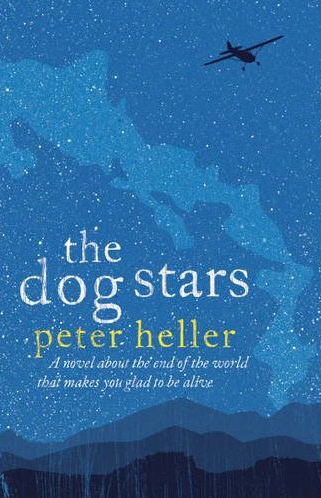
The Dog Stars by Peter Heller

The Dog Stars is a post-apocalyptic novel set nine years after life on earth was almost entirely wiped out by a flu-like illness. Among the few survivors is Hig, a pilot from Colorado who lost his beloved wife Melissa to the disease and has been left alone with his dog Jasper and his Cessna plane. He spends a lot of his time flying over the mountains surveying the area and searching for food for himself and his nearest neighbour, Bangley, a tough, aggressive man who is obsessed with guns and killing.

Under normal circumstances, Hig and Bangley would have had little in common, but to survive in this new world they have decided to work together to protect the abandoned airport compound they both call home. Then one day Hig hears a voice on his radio and is intrigued. He wants to find out who else might be out there, but there’s one big problem – if he flies too far he might not have enough fuel to get back…

I have read very few novels in this genre so The Dog Stars was not the type of book I would normally choose to read and at first I didn’t think I was going to like it, especially when I discovered it was written in an unusual, disjointed, almost stream-of-consciousness style. I expected to pick up the book, read a few pages then put it down again – so I was surprised to find how completely I was drawn into Hig’s world and although I didn’t love the book it was certainly an interesting experience.

The writing style is very different and it took me a while to get used to it. The sentences are short and often incomplete and don’t seem to follow the normal rules of grammar or punctuation. I usually hate this kind of experimental writing and often I can’t see any reason for it, but with this book it did seem to suit the story and I think I do understand why the author chose to write it in this way. I can accept that a man spending most of his time alone with only his dog for company, rarely interacting with other humans, may eventually begin to think differently; another possibility is that Hig’s command of language has been affected by the illness he suffered from (and was lucky enough to recover from, unlike most of the population). Either way, Hig’s story probably wouldn’t have been nearly as effective or memorable if it had been written in normal prose. However, it did make the book much more challenging to read than it would otherwise have been!

I found it depressing that almost all of the other characters who appear in the book are so mindlessly brutal and violent. If you’re living in isolation and come across another survivor, why not talk to them and see if you can help each other, instead of immediately attacking them or stealing from them without even trying to make contact first? I realise that people were competing for dwindling resources and worried about running out of food, but it was hard for me to understand their behaviour. It could be realistic, I suppose, but it seemed such a sad and pessimistic outlook. That’s why I liked Hig, who even in this lonely, desolate world manages to retain some of his compassion and humanity. He kills when he needs to in order to protect himself or when he is threatened by intruders, but he doesn’t take the pleasure in it that Bangley does. He also pays regular visits to some families of Mennonites nearby who have become infected with the disease, and takes them food and supplies.

We are only given brief descriptions of how the flu and the blood disease that followed led to the destruction of most of the world’s population – I would have liked to have learned more about what happened, but that was not the focus of the novel. Instead this is a story about people trying to survive in the wilderness that remains. And in the end, the novel does take a more positive, optimistic view and leaves us feeling more confident that there might still be hope for the human race.

The Dog Stars has been compared to The Road by Cormac McCarthy which I haven’t read so can’t comment on how similar or different they are. With my very limited knowledge of dystopian/post-apocalyptic fiction I would recommend that fans of the genre give this one a try, but I think it was a bit too far out of my comfort zone for me!

I received a copy of The Dog Stars from Headline for review

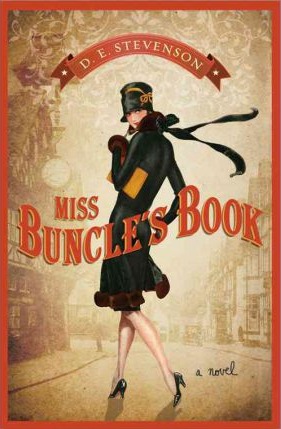
Miss Buncle’s Book by D.E. Stevenson

When Barbara Buncle finds herself short of money she dismisses the idea of keeping hens and decides to write a book instead. Not having much imagination she finds she can only write about people and places that she knows. Drawing her inspiration from her friends and neighbours in the village of Silverstream, she writes her first novel and has it published under the pseudonym of John Smith. When Disturber of the Peace turns out to be much more successful than Miss Buncle could ever have dreamed, it’s inevitable that the residents of Silverstream will eventually read it and recognise themselves within its pages. But how will they feel about the way they are represented in the book and what will happen if they discover who John Smith really is?

Delightful, charming, warm, cosy – those are the type of words I would use to describe Miss Buncle’s Book. Written in the 1930s, D.E. Stevenson captures perfectly the atmosphere of life in a small English village at that time – a place where everybody knows everybody else, where freshly baked breakfast rolls are delivered to the villagers every morning, where people meet for tea parties or musical evenings and gossip with the neighbours over the garden fence. The book is filled with a variety of interesting characters, all with their own quirks and eccentricities. Some of the most memorable include the formidable Mrs Featherstone Hogg, who is enraged by the unflattering way she is depicted in Miss Buncle’s book and leads the campaign against John Smith; Mr Hathaway the vicar and the scheming Vivian Greensleeves who has her eyes on his money; and the retired and lonely Colonel Weatherhead who faces a yearly battle with the Bishop.

Most of the inhabitants of Silverstream make an appearance in Disturber of the Peace and although Barbara Buncle takes the precaution of changing their names (Weatherhead becomes Waterfoot, for example, Miss King and Miss Pretty are renamed Miss Earle and Miss Darling, and Mr Fortnum becomes Mr Mason), she describes their personalities so accurately it’s not surprising that they were able to work out who the book was about! It was fun to see how they each reacted to discovering themselves in Miss Buncle’s story and having all their flaws exposed to the world.

I sent a copy of Miss Buncle’s Book to another blogger as a Secret Santa gift a couple of years ago because I thought it sounded wonderful, and when I saw that it was available through Netgalley I couldn’t wait to finally read it for myself. But although I did like it, I didn’t love it as much as I had hoped I would and as much as most other readers seem to have done. It was an enjoyable, relaxing read with lots of gentle humour and old-fashioned charm, but it lacked that special spark that would have lifted it from being a very good book to a great one. For me, this is a book that sounded better than it actually was, though I would still recommend it as a great way to escape from the stress of life for a while!

I received a review copy from Sourcebooks via Netgalley

August Reading Summary

Now that September’s here it’s time to look back at my August reading. I read eight books, which seems to have been about average for me this year.

I started the month with Seventy-Seven Clocks by Christopher Fowler. I’m slowly working through Fowler’s Bryant and May mysteries and this was the third in the series. My second book in August was In a Treacherous Court, a historical fiction novel by Michelle Diener which introduced me to two little-known characters of the Tudor period – Susanna Horenbout and John Parker. I enjoyed it, although it was a very light read. However, my desire for something deeper and more complex was satisfied by Race of Scorpions, the third book in Dorothy Dunnett’s House of Niccolo series. This was one of my two favourite books of the month – the other was The Scarlet Pimpernel by Baroness Orczy which I loved and wished I hadn’t waited so long to read!

I also re-read Emma by Jane Austen and was pleased to find that I enjoyed it much more than I did the first time I read it! And then I read The Dog Stars by Peter Heller, a post-apocalyptic novel – definitely not the type of book I usually choose to read, so it was an interesting experience! Finally, in the last week of August I decided to read two of the shorter books on my Classics Club list, The Princess of Cleves by Madame de Lafayette and The Prisoner of Zenda by Anthony Hope. As usual, I have not had time to post my thoughts on all of these books but will try to do so within the next few weeks.

New book arrivals

Here are the books I’ve acquired in August:

Scales of Gold by Dorothy Dunnett
The Autobiography of Mrs Tom Thumb by Melanie Benjamin
The Nightingale Girls by Donna Douglas
Jasmine Nights by Julia Gregson
The Conductor by Sarah Quigley
Archipelago by Monique Roffey
The Kingmaker’s Daughter by Philippa Gregory

I’m still trying not to buy any new books so most of the above are review copies, apart from Scales of Gold. Have you read any of them?

Did you have a good August? What are you hoping to read in September?

R.I.P. VII is here!


It’s September tomorrow and summer is coming to an end (not that we’ve had much of a summer here in the UK this year). But as the nights start to get darker it means it’s time for R.I.P. (R.eaders I.mbibing P.eril), one of my favourite reading events! As always, R.I.P. VII is hosted by Carl at Stainless Steel Droppings and runs throughout the months of September and October. The idea is to read books that could be classified as one of the following:

Mystery
Suspense
Thriller
Dark Fantasy
Gothic
Horror
Supernatural
Or anything sufficiently moody that shares a kinship with the above.

There are a few different levels of participation to choose from. I’m planning to participate in Peril the First, which means reading four books.

I’m listing below a selection of books I would like to read that fit the above categories. I certainly don’t expect to have time to read all of these before the end of October, but I wanted to give myself plenty of options. It’s also possible that I’ll change my mind and decide to read some books that I haven’t mentioned. I’m very bad at sticking to lists!

Frankenstein by Mary Shelley – This has been on my R.I.P. list for the last two years and I still haven’t read it!

The House by the Churchyard by Joseph Sheridan Le Fanu – I’ve read Uncle Silas and want to try another Le Fanu book. I might be tempted to read Carmilla instead as it’s much shorter.

The Seance by John Harwood – This was recommended to me after I read and loved John Harwood’s other novel, The Ghost Writer.

The Haunting of Hill House by Shirley Jackson – I’m hoping I’ll enjoy this as much as We Have Always Lived in the Castle.

The Strange Case of Dr. Jekyll and Mr. Hyde by Robert Louis Stevenson – It’s on my Classics Club list along with the Mary Shelley and Sheridan Le Fanu books above, so this is a good opportunity to read all three.

The Quarry by Johan Theorin – Another one that was on my list last year.

Blood Harvest by S.J. Bolton – This is the only book by S.J. Bolton that I still haven’t read.

Dragonwyck by Anya Seton – I love Anya Seton and have been wanting to read this for years!

The Woman in Black by Susan Hill – Another book I’ve been meaning to read for a long time.

A Monstrous Regiment of Women by Laurie R. King – I read the first book in the Mary Russell series in January and loved it, but still haven’t had time to read the second one.

Bleeding Heart Square by Andrew Taylor – I read The American Boy and The Anatomy of Ghosts in 2011 and enjoyed them both, so I’m looking forward to this one.

The Curse of the Pharaohs by Elizabeth Peters – Another series I started and haven’t continued with.

The Romance of the Forest by Ann Radcliffe – I’ve read three of Radcliffe’s other gothic novels, so I’d like to try this one too.

Who else is taking part in R.I.P. this year? See Carl’s post for more information and to sign up.

The Scarlet Pimpernel by Baroness Emmuska Orczy

“The Scarlet Pimpernel, Mademoiselle,” he said at last, “is the name of a humble English wayside flower; but it is also the name chosen to hide the identity of the best and bravest man in all the world, so that he may better succeed in accomplishing the noble task he has set himself to do.”

The Scarlet Pimpernel is set in 1792 during the French Revolution, when every day more and more of the French nobility are being sent to their deaths. A secret society of Englishmen led by the mysterious Scarlet Pimpernel are rescuing the aristocrats from the guillotine and smuggling them to safety in England. Who is the Scarlet Pimpernel? The French agent Chauvelin is determined to find out, but with his variety of clever disguises and daring schemes the Pimpernel continues to elude him at every turn. Will Chauvelin ever discover his true identity?

Since I started blogging I’ve lost count of the number of times I’ve started a review by wondering why I’ve waited so long to read a book and regretting the fact that I never thought about reading it years ago. This is yet another one! I finally read it last week when I was choosing what to read next for the Classics Club – and for anyone else who has this on their Classics Club list or tbr pile, I recommend reading it sooner rather than later. Compared to many classics it’s a quick read and lots of fun too: a combination of swashbuckling adventure story, historical fiction and romance. It’s one of those novels where you sit down planning to just read one or two chapters and before you know it you’re halfway through the book!

Whenever I write about a book I always try to be very careful not to say too much and spoil the story for any future readers, so I won’t tell you any more about the plot and I won’t reveal who the Scarlet Pimpernel really is. You’ll probably be able to guess after a few chapters but if you don’t then part of the fun will be in finding out. This book was published in 1905 and it’s obvious that it’s been the inspiration for so many other books that have been written since then and that the character of the Scarlet Pimpernel has been a model for countless heroes with hidden identities. I also remember reading somewhere that Baroness Orczy was one of Dorothy Dunnett’s influences and I can definitely see how The Game of Kings in particular might have been inspired by The Scarlet Pimpernel. I was reminded of Georgette Heyer’s novels too, especially with the slang the characters used.

I found Baroness Orczy’s writing style very easy to read and the historical background was not too detailed or difficult to follow. The author’s sympathies are obviously with the aristocracy, whereas most novels I’ve read about the French Revolution are told from the opposite perspective so it was interesting to see the other side of the story. This is not really a book you would choose to read for the historical accuracy though, and it does require you to suspend your disbelief at times! I know I would have loved this book when I was a teenager but I’m still glad I got round to reading it at last and am definitely interested in reading more of the Scarlet Pimpernel series now.