The Hunger Trace by Edward Hogan

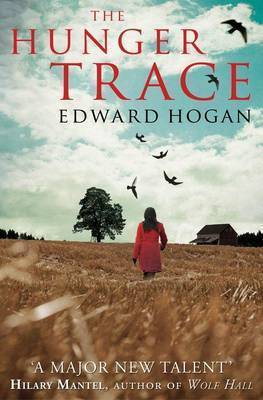
The Hunger Trace is set in a small English village where three very different people are all trying to cope with the death of wildlife park owner David Bryant. There’s David’s wife, Maggie; his son from a previous marriage, Christopher; and their neighbour, Louisa. Throughout the pages of this novel we see how each character comes to terms with losing David and how they gradually learn to get along with each other.

Although there are some moments of drama when a fourth character, Adam, is introduced and when Derbyshire is hit by the worst floods in years, The Hunger Trace is definitely more of a character-driven novel but despite it being quite slow paced I was never bored. All of the main characters are interesting, three-dimensional people each with his or her own set of problems and secrets.

As David’s widow, Maggie is left to run his business which has been having financial difficulties, to take responsibility for the welfare of his animals, and to look after her stepson Christopher. Feeling lonely and isolated, she tries to befriend Louisa, a falconer who lives alone with her birds of prey. However, Louisa has never liked Maggie, who she sees as just one of a long series of women who have passed in and out of David’s life over the years. Louisa herself was connected to David by a terrible secret the two had shared since they were teenagers and now that he’s gone she has little interest in anything apart from her hawks.

Christopher, although it wasn’t actually stated in the book, seems to have a form of autism or something similar which he is taking medication for. He sometimes has trouble relating to other people (including his stepmother) and is often misunderstood; he’s also obsessed with Robin Hood and spends most of his time at college trying to prove that his hero was a real historical figure! Christopher has a habit of saying ‘erm’ before almost every word, which did get a bit irritating to read, but it’s this kind of attention to detail that made all of Edward Hogan’s characters feel so realistic and believable. I initially found Maggie the easiest to like of the three, but eventually I began to warm to the others, particularly Louisa, who I thought was a wonderful character and so much more complex than just the unfriendly, hostile woman she appeared to be at the beginning of the book.

If you’re wondering what the title of the book means, it’s a term relating to falconry and its significance is explained during the course of the story. I loved the whole falconry aspect of the book, which is surprising as it’s not something I would have expected to find so fascinating to read about. This was quite an unusual novel and maybe not one that I would normally have chosen to read, but I’m glad I did as I was very impressed by The Hunger Trace and by the quality of Edward Hogan’s writing!

Thanks to Simon & Schuster for providing a review copy of this book
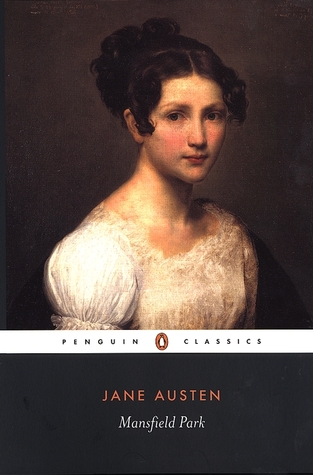
Mansfield Park by Jane Austen (re-read)

Mansfield Park is the story of Fanny Price who, at the age of ten, goes to live with her uncle and aunt, Sir Thomas and Lady Bertram. For Fanny, who has spent her early years in Portsmouth as part of a large working-class family, the Bertrams’ estate, Mansfield Park, is like a different world. While Fanny is grateful for the new opportunities she’s been given, she is made to feel inferior and insignificant by her cousins, Maria and Julia, and another aunt, Mrs Norris (surely one of the nastiest characters in any Austen novel). Only her cousin Edmund offers her any real kindness and friendship, and as the years go by Fanny begins to fall in love with him, although she doesn’t admit it and everyone, including Edmund, is unaware of it. And when Mary Crawford and her brother Henry come to stay at the nearby parsonage, Fanny’s peaceful life at Mansfield Park is suddenly thrown into turmoil.

I first attempted to read Mansfield Park when I was fifteen, immediately after finishing Pride and Prejudice, which I had loved. Compared to Pride and Prejudice I found this one very dry and boring, and gave up after a couple of chapters. Returning to it ten years later, I managed to read it through to the end but still didn’t like it very much. My recent re-read has been an entirely different experience and this time I found that I really enjoyed it!

Fanny Price is a shy, quiet person and seems to be Jane Austen’s least popular heroine, but I’ve never really had a problem with her personality. Not everyone can be witty and lively after all, and since arriving at Mansfield Park Fanny has constantly been reminded that she will never be equal to her cousins and treated almost like a servant, so it’s not surprising that she doesn’t have the confidence of some of the other Austen heroines. I would agree that she’s maybe not the most interesting of characters to read about, and I suppose I can understand why other readers might prefer Mary Crawford, but I personally don’t mind Fanny. I do think she has an inner strength and complexity which wasn’t really apparent to me the first time I read the book but which I could appreciate more this time – one of the reasons I think re-reads are so worthwhile!

I still didn’t like Edmund though, apart from at the beginning when he seems to be the only person who genuinely cares about Fanny. Without him her early days at Mansfield Park would have been a lot more miserable, but later in the book, particularly after the arrival of the Crawfords, he starts to really annoy me.

While Mansfield Park is never going to be my favourite Jane Austen novel, I’m glad I’ve given it another chance. If you’re new to Austen, though, I don’t think I would recommend starting with this one.

February Reading Summary

I read nine books in February which is less than I normally read, but it’s been such a busy month for me I’m quite happy with the number of books I’ve read!

My favourite book read in February was The Game of Kings. I’m so glad I’ve finally discovered Dorothy Dunnett!

Mariana by Susanna Kearsley was another great book I read last month – I loved the setting, the characters and the atmosphere. I also enjoyed The Virgin Queen’s Daughter, a very entertaining historical fiction novel by Ella March Chase.

Also in February, I read both of S.J. Bolton’s two Lacey Flint crime novels, Now You See Me and Dead Scared. I enjoyed them both but I thought the first one was slightly better.

I read Macbeth as part of my plan to read one of Shakespeare’s plays every month of 2012. It’s not the first time I’ve read it, but I think I appreciated it more this time round and will be posting my thoughts on it soon. And I also read Great Expectations by Charles Dickens. It took me nearly the whole month to read it, but it was worth the time and effort!

Two more books I read in February were A Small Circus by Hans Fallada and The Land of Decoration by Grace McCleen, and I found them both disappointing in different ways. I thought A Small Circus was confusing and I didn’t like any of the characters, and although I could definitely see the appeal of The Land of Decoration, it just wasn’t for me.

How was February for you?

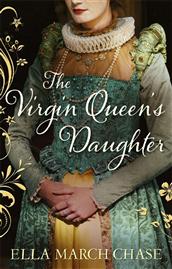
The Virgin Queen’s Daughter by Ella March Chase

This novel, as you can guess from the title, is based on the idea that Elizabeth I, the Virgin Queen, may have had a daughter. Although there’s no real evidence to support this claim, it was apparently rumoured that Elizabeth, as a young princess, had secretly given birth to an illegitimate child who might have been fathered by Thomas Seymour, her stepmother Katherine Parr’s husband. Elizabeth was also linked throughout her life with Robert Dudley and so another theory is that he could have been the baby’s father.

The Virgin Queen’s Daughter is narrated by Elinor de Lacey (Nell), Elizabeth’s newest lady-in-waiting, a young woman who shares Elizabeth’s hair colour and love of books and learning. Nell was brought up in the countryside by John and Thomasin de Lacey, believing them to be her parents, but after her arrival at court she begins to make some discoveries about her past. Could Nell be Elizabeth’s secret daughter?

If you’ve read lots of Tudor fiction I’m not sure The Virgin Queen’s Daughter offers anything very new, but although I’ve read quite a few Tudor novels I’m not at the point where I’m bored with the period yet and so I really enjoyed this book. Although I find it hard to believe that someone in Elizabeth’s position could have concealed the fact that she was pregnant and kept the birth of her child a secret, I still thought it was an interesting subject for a historical fiction novel.

Many of the famous names of the Tudor/Elizabethan period are here: as well as Elizabeth I herself, there’s Robert Dudley, the “spymaster” Francis Walsingham, the mathematician and astrologer John Dee, Elizabeth’s beloved governess Kat Ashley, and several of the Queen’s ladies – Lettice Knollys, Isabella Markham and Mary Grey (sister of Lady Jane Grey). But the strongest characters in the book are the fictional ones: Nell de Lacey and one of the noblemen she meets at court, Sir Gabriel Wyatt. Nell is an interesting and intelligent narrator – like the Queen she enjoys reading and studying, things women were not usually encouraged to do at that time. And Gabriel was such a great character I was a bit disappointed that he didn’t really exist!

I thought Ella March Chase did a good job of portraying the intrigue and danger of life at court, where you never knew who could and could not be trusted, and where anyone believed to be a threat to the Queen could find themselves locked in the Tower. And with two of the main characters being fictional, the author could take their story in some unexpected directions, which added plenty of tension and suspense to the novel.

The Virgin Queen’s Daughter doesn’t really stand out from other historical fiction novels of this type, but overall it was a fun and entertaining read which I would recommend to fans of Philippa Gregory, Alison Weir or Karen Harper.

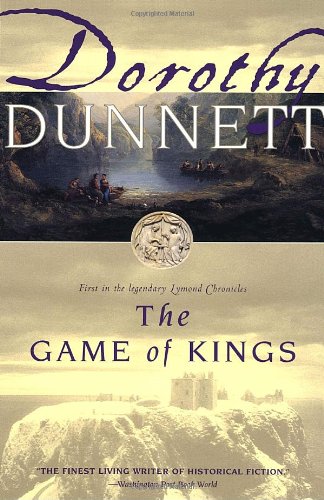
The Game of Kings by Dorothy Dunnett

The Game of Kings is the first of the Lymond Chronicles, a series of historical fiction novels by Dorothy Dunnett originally published in the 1960s and 70s. I’m actually quite surprised and disappointed that I had never come across these books before, especially as historical fiction is my favourite genre and for a few years was pretty much all I read. Anyway, I’ve discovered them now, which is the most important thing!

It’s 1547 and Francis Crawford of Lymond, accused of treason five years earlier, has returned to his home country of Scotland. As the leader of a band of outlaws he begins a search for the three men he believes might be able to clear his name. Lymond’s personal quest is played out during an important period in Scotland’s history: the English are hoping to marry the 4 year old Mary, Queen of Scots to 9 year old King Edward VI of England and unite the two countries – but the Scots are equally determined to prevent this from happening.

I really can’t tell you much more about the plot without spoiling the story, but I can promise you that this was one of the most gripping historical novels I’ve read for a long time – I was never bored for a minute. There are sad scenes, funny scenes, exciting scenes and moving scenes, not to mention the most thrilling sword fight I’ve ever read! I finished reading the book last weekend and since then have been trying to think of what I could possibly say about it that would do it justice…there were just so many things I loved: the wonderful plot, filled with twists and turns, surprises and revelations; the strong, memorable characters; the clever dialogue; and the accurate and well-researched historical setting. Most of all, of course, I loved Francis Crawford of Lymond, brilliant, charismatic and witty, but also very flawed and troubled. He is now high on my list of favourite fictional characters!

In fact, all of the characters in the book are incredibly well drawn. There’s so much I could say about Christian, Will, Sybilla, Kate, Richard, Mariotta and the others, but I won’t because it would be so much more fun for you to get to know these characters for yourself. They all felt like fully formed people rather than just words on a page and they lived on in my mind even when I wasn’t reading, which I always think is a sign of a good book. And I haven’t even mentioned yet the amazing sense of time and place Dorothy Dunnett creates. The amount of detail she goes into in building Lymond’s world is so impressive and everything feels completely accurate.

But much as I loved it, this was not the easiest of books to get into. There are a lot of characters to keep track of and some of them are referred to by more than one name or title, so the character list at the front of the book was very helpful! The novel also has a very, very complex plot and you really need to concentrate because the tiniest detail can turn out to be important later on. Lymond has a very good reason for almost everything he does but many of those reasons are not immediately obvious. Things that initially don’t make any sense suddenly take on new meaning a few chapters later and I found I had to keep re-reading previous sections so I could grasp what had happened.

I should also point out that Lymond’s dialogue is filled with quotes and references from history, literature, myth, nature, philosophy, nursery rhymes, songs and riddles (some of which are in French, Spanish, Latin or other languages, which are not translated for us). I soon realised there was no way I was going to understand all of the references, as unfortunately my education is sadly lacking in comparison to Lymond’s! Some of the things he says seem to mean nothing at all unless you recognise the context they are from, which in most cases I didn’t.

I know there are two Dorothy Dunnett Companions and other guides to the series that you can buy, but I think trying to read those along with The Game of Kings would have been too much for me on a first read! I decided just to enjoy the story and when I re-read the book, as I’m sure I will, I can look up the unfamiliar words and phrases then. In the meantime, there was always Google when I was desperate to know what something meant.

So, if you’re looking for a light, easy read The Game of Kings probably isn’t for you, but if you enjoy complex, well-written historical fiction then I hope you’ll give it a try. Although it could be challenging at times it was so rewarding and definitely worth the effort. I’ve already started reading the second in the series, Queen’s Play – I’m nearly 100 pages into it and loving it so far!

The Land of Decoration by Grace McCleen

The Land of Decoration is narrated by ten-year-old Judith McPherson. Judith’s mother is dead and she lives with her father, who is very religious. The religion to which they both belong is not named but they appear to be Jehovah’s Witnesses or something very similar. They read the Bible together, attend weekly meetings, knock on doors to spread their message and believe that the end of the world is coming soon.

Judith is lonely, friendless and has convinced herself that her father doesn’t love her. She spends most of her time playing in her bedroom, where she has created a ‘Land of Decoration’ from scraps of paper, pipe cleaners, felt, boxes, buttons and any other bits and pieces she can find. One day Judith adds some snow to the Land of Decoration– and when it suddenly starts snowing in the real world too she believes she’s performed a miracle. And when Judith begins to hear the voice of God, she decides to use her new powers to deal with the school bullies and some of the other problems in her life.

The Land of Decoration was not quite what I was expecting and if I had known more about it, it probably wouldn’t have been a book I would have chosen to read. It quickly became obvious that it was going to be a much darker story than I had thought it would be.

I did like Judith – she’s bright and intelligent but also quite innocent and naïve (although there were times when her voice seemed too ‘old’ and I thought she stopped feeling like a believable ten-year-old). The bullying scenes felt sadly realistic and so did her father’s experiences (he is breaking a strike at the factory where he works and he’s also starting to have some doubts about his religion).

I really cared about both Judith and her father and I actually thought the story of their relationship, his problems at work and her problems at school would have been strong enough on its own to form quite a compelling novel. I was less interested in the parts of the book that dealt with the miracles and the conversations with God, and I admit I found some of it very confusing. A lot of my questions were left unanswered at the end and I’m not sure I really understood everything that had happened.

The Land of Decoration is a very imaginative and original book, but not one that I personally enjoyed very much. I’m sure it’s going to be a success though, and it will be interesting to see what Grace McCleen writes next.

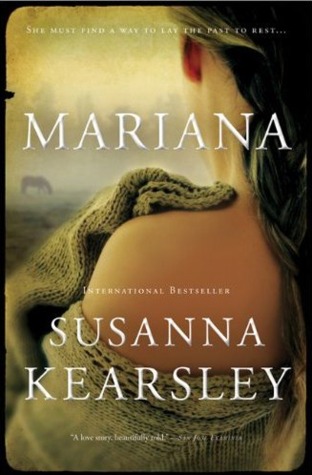
Mariana by Susanna Kearsley

From the moment Julia Beckett first sees Greywethers as a five-year-old, she knows there’s something special about the lonely farmhouse, but it’s not until she’s an adult and a successful illustrator of children’s books that she gets the chance to buy it. As she settles into her new home, Julia gets to know her new neighbours, including the gardener Iain Sumner, Geoffrey de Mornay, the owner of nearby Crofton Hall (which is said to be haunted), and Freda Hutherson, who somehow seems to know a lot about Julia without being told.

Soon Julia’s life becomes mysteriously linked with the life of Mariana Farr, a young woman who lived at Greywethers with her uncle in the 17th century. As Julia spends more and more time in the 1600s she grows increasingly obsessed with Mariana’s story and starts finding it difficult to keep the past separate from the present.

There are some books that feel like they could almost have been written specifically for me and Mariana is one of them – it had all the things I love in a book and I really have nothing negative to say about it. The time period for the historical sections is one that I always find interesting to read about (the Restoration era, the plague and the aftermath of the English Civil War), the characters are easy to like and the relationships between them feel believable, and I also loved the atmosphere – although this is not actually a ghost story, it does have quite a ghostly, haunting feel.

I’ve mentioned before that novels with dual time frames don’t often work for me as I usually find myself enjoying the historical storyline more than the modern day one. That was not a problem with this book because the events that took place in the two time periods were very closely connected and the transitions between the two were so smooth I hardly noticed when one changed to the other. The other Susanna Kearsley book I’ve read, The Rose Garden, has a time travel element too but in Mariana a different method is used and the way Julia moves between the centuries really felt convincing.

The ending was unexpected and really surprised me because I certainly hadn’t guessed what was going to happen. It was maybe a bit abrupt and left a few things unresolved, but I liked it. Susanna Kearsley’s writing reminds me of two other authors whose novels I love – Daphne du Maurier and Mary Stewart. Having enjoyed this one and The Rose Garden so much I’m looking forward to reading more of her books.

I received a copy of Mariana through Netgalley