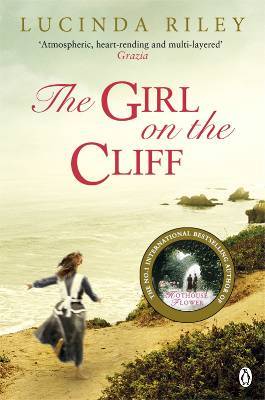
The Girl on the Cliff by Lucinda Riley

I read this book just after Christmas but it’s been one of those reviews that I’ve found difficult to write. Not because I didn’t enjoy the book, but because it was a complex story and hard to summarise or to write about without giving too much away.

The Girl on the Cliff begins in the present day and follows Grania Ryan, who has returned to her parents’ home in Ireland after having problems in her relationship with her boyfriend, Matt, in New York. One day Grania meets an eight-year-old girl, Aurora, standing on the edge of a cliff. As she gets to know the girl and her father better, Grania begins to discover how Aurora’s family, the Lisles, are connected with her own family, the Ryans.

Grania’s mother, Kathleen, is worried when she hears about her daughter’s new friends. Kathleen knows what problems the Lisles have caused for the Ryans in the past and is afraid of history repeating itself. As we go back in time, first to wartime London and then to one summer in 1970, we gradually learn the truth about the two families and why Kathleen has come to see the Lisles as enemies.

As we move through the generations, we meet lots of different characters but the most memorable is Aurora. In many ways Aurora seems much older than eight, though in others she still behaves like the child she is. Some short sections narrated by Aurora herself are interspersed with the main story, which I thought was very effective. There’s something almost otherworldly about her narration and at times I found myself wondering whether she was supposed to be a real child or some kind of ghost or fairy!

This is yet another of those novels with multiple time periods that I’ve been reading so many of recently, but this book is an example of how this structure can work very well – I found all the threads of the story equally interesting and cared about the characters in each one. So many things happen throughout the pages of this novel and I’ve only mentioned a few of them here – each time period contains its own set of surprises and secrets and I wouldn’t want to spoil anything for any future readers! I will say that the 1970s section was particularly moving and took the story in a direction I hadn’t expected at all. But whether I was reading about London in World War I or World War II, a farmhouse in rural Ireland or Grania and Matt’s fashionable loft apartment in New York, every time and location came to life.

The book wasn’t perfect – there were a few plot developments towards the end that I found difficult to believe and some parts of the story were too predictable – but there were plenty of surprising twists that I didn’t see coming and enough suspense to keep me turning the pages to see what would happen next. After enjoying this one so much, I’ll be looking out for Lucinda Riley’s next book and would also like to go back and read her previous one, Hothouse Flower.
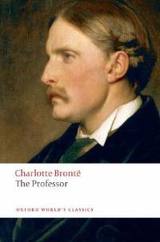
The Professor by Charlotte Brontë

The Professor was Charlotte Brontë’s first novel. She was unable to find a publisher for it during her lifetime and it was eventually published posthumously in 1857. Like Jane Eyre and Villette, this book is written in the first person, but with one difference – the narrator is a man. This is interesting as it shows us Charlotte’s views on how a man would think and behave and what his feelings towards women might be.

The narrator’s name is William Crimsworth, and at the beginning of the novel he is starting a new job as a clerk, working for his brother Edward, a rich mill-owner. However, William finds Edward impossible to get along with – he’s cruel and cold-hearted and treats William badly. Finding himself out of work again, William takes the advice of another businessman, Mr Hunsden, and goes to Belgium to teach English at a boys’ school in Brussels. Here he becomes involved with two very different women: one is Zoraide Reuter, the headmistress of the neighbouring girls’ school, and the other is a poor friendless student-teacher, Frances Henri.

This is the third book I’ve read by Charlotte Brontë. I first read Jane Eyre when I was a teenager and it immediately became one of my favourite books, but I didn’t begin to explore her other work until just last year, when I read Villette. Villette, like this book, is set at a school in Brussels and in many ways is a very similar story to The Professor, but with a female narrator and a more complex, layered plot. In both The Professor and Villette, Charlotte was able to draw on her own personal experience of teaching and studying in Brussels. This is obvious both in her descriptions of the city and in the way she could write so knowledgeably about education and the relationship between teachers and pupils.

What I love about Charlotte Brontë’s writing, as I mentioned in my earlier post on the author, is the way she writes about feelings and emotions. In The Professor she perfectly captures the loneliness and isolation a man might feel on arriving in an unfamiliar country with no money and without a friend in the world.

William is not as sympathetic a character as he should be though, due to Charlotte Brontë expressing some of her own views and prejudices through his narration. There’s a lot of racism and anti-Catholicism throughout this story, particularly when William is describing the girls in the school, making assumptions about them based on their nationality and considering them inferior to Protestant English girls. I’m sure it’s not a coincidence that the scheming, manipulative Zoraide Reuter is Catholic, while the quiet, honest Frances is Protestant (and half-English). Even allowing for the fact that the book was written in the 19th century, some of these passages were uncomfortable to read. And because I could never really warm to William’s character, I didn’t find this book as moving as I might have done otherwise.

Brontë also includes a lot of French dialogue in this novel, which it is assumed that the reader can understand. Some editions of the book provide translations in the notes, but the French is not translated in the original text and it can be frustrating to feel that you might be missing out on something essential to the plot. Also, the constant references to ‘physiognomy’ started to really irritate me (physiognomy is the concept of judging a person’s character based on their appearance). The word seemed to appear on almost every page, whenever William met someone new!

I know I’m probably giving the impression that I didn’t enjoy this book, but that’s not true. Charlotte Brontë’s writing is beautiful and for that reason alone I would say this book is definitely worth reading. Just don’t choose this one as a first introduction to Charlotte’s work – my recommendation would be to start with Jane Eyre and then move on to Villette before deciding whether to try The Professor. I can’t comment on her other book, Shirley, as I still haven’t read that one – maybe later in the year!

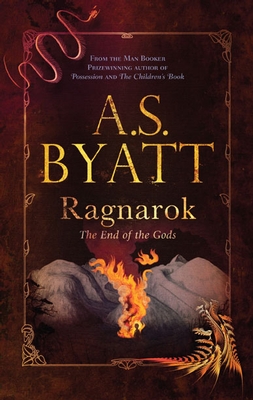
Ragnarok: The End of the Gods by A.S. Byatt

In Ragnarok, A.S. Byatt looks at Norse mythology from the perspective of a little girl (referred to as simply ‘the thin child’) who has been evacuated to the countryside during World War II. When the thin child receives a book called Asgard and the Gods, she is fascinated by the myths it contains, including Ragnarok, the story of ‘the end of the gods’. She reads the book over and over again and the myths help to sustain her throughout the war.

In the first half of the book we are introduced to some of the important characters from Norse myth, including the gods Odin, Loki (the thin child’s favourite) and Baldur, Fenrir the wolf and Jörmungandr, the serpent who wraps herself around the world. Byatt uses wonderful, rich prose to bring all of these characters to life and there are some beautiful descriptions of nature and the environment too – I particularly loved reading about Yggdrasil, the World Tree, and Rándrasill, the Sea Tree. Later in the book, when the destruction of the world begins, there are some equally vivid and well written descriptions of how all of these things were destroyed, and it’s difficult to read Ragnarok without noticing some parallels with the world we live in today.

Throughout the book Byatt moves back and forth between the myths and the framing story of the thin child, showing us how various parts of the myths relate to the child’s own life in wartime Britain, how she makes comparisons between Norse myth and stories from the Bible, and how the myths help her to cope while her father is away fighting in the war. When the child is not reading Asgard and the Gods she’s busy discovering the beauty of the world around her, learning the names of the flowers and trees that surround her new home.

In her author’s note at the end of the book, Byatt tells us why she chose to write about Ragnarok, and it seems that the thin child’s story was very autobiographical, which I had already guessed. She also explains the differences between myths and fairy tales and this was interesting to me because I’m not sure I would have been able to define the differences myself! According to Byatt, characters in myth only have attributes and not personalities the way characters in fairy tales do. This means we don’t actually get to experience the emotions and feelings of the gods in Ragnarok; instead the myths are told in a straightforward, factual style.

I am definitely not an expert on mythology and before I started this book I only knew a few of the basic facts of Norse myth. Although this is just a short book, it contains a huge amount of information, most of which was completely new to me, and I did feel slightly overwhelmed but overall I would say it’s an excellent introduction to Norse mythology. I could really feel the enthusiasm of the thin child (and Byatt herself) for the myths she was reading and by the time I’d finished the book I felt some of that enthusiasm too.

This book was a fascinating read and I would recommend it as a good starting point for other people who are also new to Norse myth, but if you already have a good knowledge of the myths I’m sure you’ll enjoy discovering them again through the thin child’s eyes.

I received a copy of Ragnarok through Netgalley

The Beekeeper’s Apprentice by Laurie R. King

This was the first book I finished in 2012 (the other books I’ve been posting about over the last few days were all reads from the end of 2011) and what a great book it was to start a new year with!

The Beekeeper’s Apprentice begins when fifteen-year-old Mary Russell, living with an aunt in England following the deaths of both her parents in America, is out walking one day and almost steps on a man who is sitting on a hill watching bees. This man happens to be the famous detective Sherlock Holmes, who has retired to the Sussex countryside. In Mary, Holmes finds a mind as intelligent and observant as his own, and the two soon become friends, with Holmes teaching Mary everything he knows about detection. Soon Mary finds herself working with the detective on what will be the first of many cases they’ll solve together and even after Mary leaves home to study theology at Oxford University, their friendship remains as strong as ever.

A lot of time in the first half of this book is spent introducing us to the characters and relating a few of Mary and Holmes’ earliest cases (one involving a woman whose husband is suffering from a mysterious illness and another involving an American senator’s kidnapped daughter). These two cases, and the third main one, appear to be unrelated at first but they do all add to the bigger picture. There was a section in the middle of the book where Mary and Holmes go to Palestine which didn’t seem to have much relevance to the plot, though I’ve since learned that we find out more about that in a later book in the series.

There were so many things to enjoy about this book: great characters, some intriguing mysteries to solve, a setting that I loved (the early 20th century, during and following World War I). I also liked the way the book began with Laurie R. King telling us that she had nothing to do with the book and had simply received a mysterious box of manuscripts written by Mary Russell herself. The Beekeeper’s Apprentice is therefore presented as if it was the first instalment of Mary’s memoirs, with her older self looking back on her younger days and the beginning of her relationship with Sherlock Holmes.

Most of all, I loved Mary Russell’s witty and engaging narrative voice. Her friendship with Holmes feels so natural and there’s some great dialogue between the two of them. The huge age difference (39 years, I think) is slightly disturbing when you think about it, considering Mary is only fifteen at the beginning, but it didn’t come across that way at all in the novel. Despite the differences in their ages and backgrounds, Mary and Holmes have a lot in common and Mary is Holmes’ equal when it comes to spotting clues and making deductions. I loved the portrayal of Sherlock Holmes too; he felt much more human and likeable than the Holmes I remember. And as they spend more time together, both characters change with Mary maturing into a confident young woman and Holmes eventually coming to accept her as his partner.

You might be wondering if it’s necessary to have read Arthur Conan Doyle’s Sherlock Holmes books first, but no, I don’t think it’s necessary at all (there are some references to people and events from the original books, but nothing that would prevent you from understanding this book). I have read Conan Doyle’s books, but it was a long time ago and I wasn’t really a huge fan, which I think might have actually made it easier for me to accept this depiction of Holmes and the other characters.

I can’t believe it’s taken me so long to discover these books (The Beekeeper’s Apprentice was published in 1994). The one advantage of coming to the series so late is that there are now another ten books to read without having to wait for each one to be published. I can’t wait to spend more time with Mary Russell and Sherlock Holmes and hopefully I’ll have many happy hours of reading ahead!

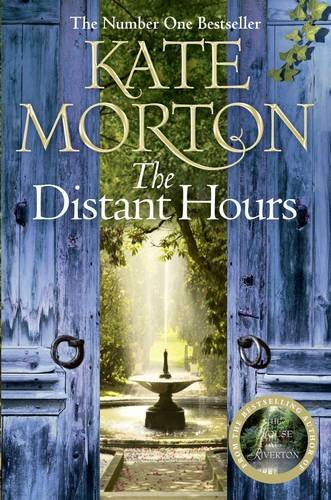
The Distant Hours by Kate Morton

After enjoying one of Kate Morton’s previous novels, The Forgotten Garden, which I read a couple of years ago, I was looking forward to reading this one until I saw that it was getting such mixed reviews. I decided I still wanted to give it a chance, but now that I’ve read it I can understand the problems other people have had with it.

The Distant Hours is narrated by Edie Burchill, whose mother Meredith was evacuated to Milderhurst Castle during World War II. Edie is fascinated by this because her favourite childhood book, The True History of the Mud Man, was written by Raymond Blythe, the owner of Milderhurst Castle. Yet for some reason her mother doesn’t like talking about what happened during the time of her evacuation or her relationship with Blythe’s three daughters, the twins Persephone (Percy) and Seraphina (Saffy) and their younger sister, Juniper.

When Edie, who works in publishing, is asked to write the introduction for a new edition of The True History of the Mud Man, she is given the opportunity to get to know the Blythe sisters who are now elderly women and are still living together at Milderhurst. As Edie begins her quest to discover what inspired Raymond Blythe’s famous story, she also starts to uncover the secrets her mother has been keeping for the last fifty years.

The story moves back and forth between Edie in the 1990s and Meredith and the Blythe sisters in the 1940s. What happened to Juniper’s fiancé who mysteriously disappeared on his way to visit her one night in 1941? What were the true origins of The Mud Man? Why have the three sisters never left Milderhurst Castle? Kate Morton keeps us wondering about the answers to these questions for hundreds of pages, revealing the truth very gradually, and although I was able to correctly guess at some of the story’s secrets, there were others that weren’t so easy to figure out.

The Distant Hours does have a lot of the things I usually love in a book: an ancient castle in the countryside, a literary mystery, lots of gothic elements. Unfortunately the setting, which could have been wonderfully atmospheric, never really came to life for me. Even the sections of the book that took place during World War II lacked the atmosphere I would have expected from a wartime setting. And so much was made of Raymond Blythe’s The True History of the Mud Man, there were times when I couldn’t help wishing Kate Morton had just written that story instead of this one!

There seems to have been a huge increase in the last few years in the number of books with dual timeframes in which a modern day character uncovers a family secret from the past, and to be honest I think I’m getting bored with books of this type in general. I’ve read a lot of them recently and this one didn’t offer anything very new or original. The main problem I had with this book though was the length. I don’t mind reading long books if the story is compelling enough to keep me interested, but the plot was too slow and meandering and I really think this book could easily have been at least 100 pages shorter. There were too many sections that felt repetitive and too many chapters that did nothing to move the plot forward at all.

I didn’t think The Distant Hours was a terrible book – just a bit disappointing and not really worth the time it took to read it. To those of you who’ve read all three of Kate Morton’s books, do you think it’s still worth me reading The House at Riverton?

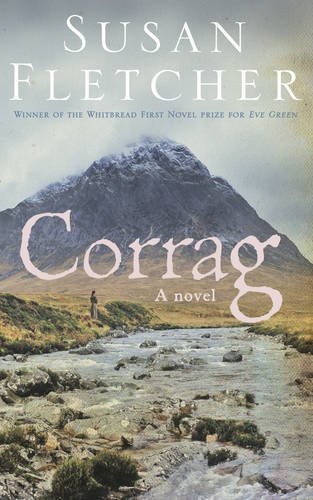
Corrag by Susan Fletcher

I first became aware of this book when Boof of The Book Whisperer said it was one of her favourites. I’ve been curious to see why she loved it so much and now that I’ve read it I agree that it’s a great book, although I didn’t think so at first.

In Corrag Susan Fletcher looks at one tragic moment in Scotland’s history – the Glencoe Massacre of 1692 in which thirty-eight members of the MacDonald clan were murdered by English soldiers and forty more died of exposure as they tried to escape. The story is narrated by Corrag, a young woman who has been branded a witch and sentenced to death for her involvement with the MacDonalds and the part she played in trying to prevent the massacre. As Corrag sits in her cell awaiting her death, she is visited by Charles Leslie, an Irish clergyman and Jacobite who is trying to find evidence to prove that the Protestant King William III was responsible for what happened at Glencoe.

Corrag tells Charles Leslie about her childhood in the north of England and the day her mother, who had also been accused of witchcraft, told her to ride into Scotland, where she believed she would be safe. With only her grey mare for company, Corrag rode “north and west” and made a new home for herself near the valley of Glencoe. Here she met the people of the MacDonald clan and experienced true friendship and love for the first time in her life. As Leslie listens to Corrag’s memories he begins to learn the truth about the Glencoe Massacre and at the same time is forced to change his own preconceived ideas about Corrag herself.

I wasn’t sure about this book when I first started reading. I actually put it down after the first chapter and decided it wasn’t for me. But then something made me pick it up a few days later and try again. Corrag’s narrative style is so unusual and original, it took me a few chapters to get used to it but after that I started to fall in love with the beautiful, lyrical writing. The writing style gives the book a very strong sense of time and place and I felt as if I was really listening to a voice from the past. Corrag is also very observant and appreciates the little details of life that most of us would never even notice. I loved seeing the beauty of the Highlands through her eyes as she rode through Scotland on her grey mare.

Each chapter of Corrag’s story is followed by a letter written by Charles Leslie to his wife at home in Ireland, telling her about his experiences in Scotland and how his opinions about Corrag are changing as he learns more about her life. Corrag of course has not done anything to deserve the accusations of witchcraft; she’s an innocent woman who loves the natural world and has a knowledge of herbalism and healing, like her mother before her and like many other innocent women who were burned at the stake. And yet no matter how hard things get for Corrag and how much cruelty she experiences at the hands of other people she remains a loving, kind-hearted person and never loses her faith in human nature.

Corrag is a beautiful, moving story and I’m so glad I didn’t give up on it.

Note: This book has also been published under the titles of Witch Light and The Highland Witch.

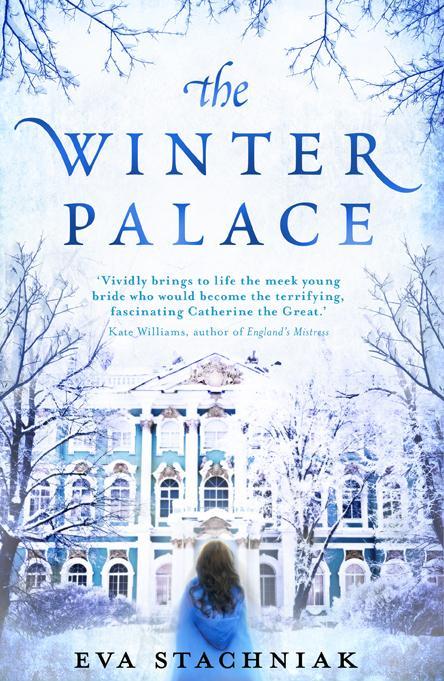
The Winter Palace by Eva Stachniak

I was so looking forward to reading this book. I love historical fiction novels set in Russia and this one sounded wonderful (and has such a beautiful cover too). It would be the perfect book to lose myself in over the Christmas holidays, I thought. Well, unfortunately it wasn’t. Or not for me, anyway – the majority of people who have reviewed this book seem to have loved it, which makes me feel even more disappointed that I didn’t.

The Winter Palace is described as ‘a novel of Catherine the Great’, which is slightly misleading as Catherine is not the main character and the book only covers her early years. Beginning with her arrival at court as the Princess Sophie of Anhalt-Zerbst, a prospective bride for the Empress Elizabeth’s heir, Grand Duke Peter, Catherine’s rise to power is described by her friend, Varvara Nikolayevna. Varvara is a young Polish girl, the daughter of a bookbinder, who is employed as a spy, or ‘tongue’, at the court of Empress Elizabeth. The Winter Palace is really Varvara’s story rather than Catherine’s.

This is a period of Russian history I knew almost nothing about, so I can’t comment on how accurate any of the novel is. I found some of it confusing at first, due to my unfamiliarity with the people and events of the era, though there is a useful character list at the back of the book to help with this. It’s always good to finish a historical fiction novel feeling that you were at least able to learn something about the period and by the time I reached the end of this book I did feel that I had a better knowledge of the subject.

The setting of the book – the Russian Imperial court – was as fascinating as I’d expected it to be. I did enjoy the first few chapters of the book, where Varvara first arrives at the Winter Palace and becomes a spy for the Chancellor, Count Bestuzhev. The atmosphere of claustrophobia and danger was very convincing and showed what it must have been like to live in a world where everything you said or did was being spied on and reported. Reading about all the plotting, scheming, betrayal and changing allegiances made me feel relieved that I didn’t have to experience life at the Russian court myself!

I think the book might have worked better for me if it had been narrated by Catherine herself instead of her story being secondary to Varvara’s, who was not even present at court for long sections of the novel. I didn’t feel enough connection to Varvara and her personal storyline to stay interested throughout the chapters where she was away from the Winter Palace and I thought it was a bad decision to remove her character from the Empress’s household for such a long period of time as this was what led to me becoming bored with the story.

Really, this wasn’t a bad novel; it just didn’t have the depth I was hoping for, especially considering the length of the book. I don’t think I’ll be reading the sequel, though it would be interesting to see how Eva Stachniak continues the story.