I am Half-Sick of Shadows by Alan Bradley

I hope everyone had a great Christmas! I don’t usually read a lot of Christmas-themed books but the one I’m posting about today, I am Half-Sick of Shadows, was a perfect seasonal read.

I know not everyone will be familiar with Alan Bradley’s books, so for those of you who need some background information I can tell you that I am Half-Sick of Shadows is the fourth in a series of mystery novels set in the 1950s and featuring eleven-year-old amateur detective and chemistry genius, Flavia de Luce. Flavia lives with her father and her two older sisters Ophelia (Feely) and Daphne (Daffy), at Buckshaw, their family estate near the small English village of Bishop’s Lacey. Other recurring characters include the de Luces’ two servants, Mrs Mullet and Dogger, as well as the local vicar, the doctor, Inspector Hewitt and several more of the villagers.

At the beginning of this fourth instalment, Flavia’s father is having financial difficulties and in an attempt to bring in some money, he allows the cast and crew of Ilium Films to move into Buckshaw to do some filming over the Christmas period. While the snow falls outside, the people of Bishop’s Lacey gather at Buckshaw to watch the two stars, Phyllis Wyvern and Desmond Duncan, give a special charity performance of Romeo and Juliet. Things go badly wrong, however, and a murder takes place. With the de Luce family and all their neighbours snowed in overnight, there’s a long list of suspects. Flavia begins to investigate, but before she can concentrate on identifying the murderer she needs to finish working on a special project of her own: a trap to catch Santa Claus on his way down the chimney!

I have enjoyed all three of the previous books in this series, but I think I am Half-Sick of Shadows could possibly be my favourite so far. It took a long time (almost half the book) before the murder took place and the actual mystery began – and it was probably the weakest mystery in the series too – but that wasn’t a problem for me at all. I don’t read these books for the murder mystery plots; I read them because I love Flavia and love reading about her adventures.

As well as being shorter than usual, this book has a different feel to the first three because it is set entirely within the confines of Buckshaw. This means we get to see more of Flavia’s interactions with her family members and we also have the chance to learn more about Dogger, one of the most interesting characters in the series. I’ve mentioned before that I was starting to get impatient with Feely’s and Daffy’s nastiness towards their younger sister, but there seemed to be a slight change in Daffy’s relationship with Flavia in this book and I almost liked her at times! There was also a hint that maybe Feely didn’t really hate Flavia and that there might be another reason for her cruel behaviour. I’m still hopeful that the three of them will be friends by the end of the series, but we’ll have to wait and see – I’m already looking forward to the fifth book to find out if there are any further developments.

I’m glad I was able to find time to read this book last week as it really was perfect for the Christmas season. Oh, and in case you’re wondering, the title comes from the poem by Tennyson, The Lady of Shalott.
Sense and Sensibility by Jane Austen

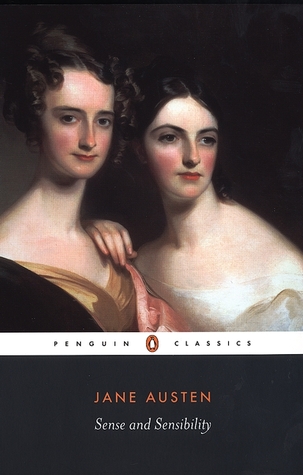
Sense and Sensibility was the only one of Jane Austen’s major novels I hadn’t read and when I saw that Yvann of Reading Fuelled by Tea was hosting a readalong for Advent with Austen it seemed like a good opportunity to read it. Unfortunately I struggled to keep up with the weekly readalong schedule due to lack of time earlier in the month, but I managed to catch up this week and finish the book. Now that I’ve read it, Sense and Sensibility is not my favourite Austen novel (that would definitely be Persuasion) but not my least favourite either.

For those of you who haven’t read it yet, this is the story of two sisters, Elinor and Marianne Dashwood (there is a third sister, Margaret, but she doesn’t have a significant part in the plot). Elinor and Marianne have entirely different personalities and temperaments, representing the ‘sense’ and ‘sensibility’ of the title. While Elinor is the more calm and practical of the two, Marianne is passionate and emotional. After their father’s death, their half-brother John inherits the family estate and the girls and their mother go to live in a small country cottage in Devonshire belonging to their relations, the Middletons.

Marianne soon falls in love with Mr Willoughby, a man she meets soon after moving to their new home. When Willoughby suddenly leaves for London, Marianne is left devastated. She’s certain that he still loves her, but does he? The man Elinor loves is Edward Ferrars, her sister-in-law’s brother, but there are several obstacles preventing them from marrying, including the disapproval of Edward’s mother and also a previous relationship of Edward’s. There’s also a third man, Colonel Brandon, who becomes a friend of the Dashwoods – but which sister is he interested in and will she ever be able to love him in return?

During the story both sisters experience disappointment and heartbreak, and it’s interesting to see how differently they cope with their feelings. Elinor is more reserved and tries to keep her emotions to herself, while Marianne makes no effort to hide how she is feeling. And that is really the major theme of the novel: a comparison between two extreme reactions to a similar situation. Is it better to wear your heart on your sleeve or to suffer in silence? Is one type of behaviour right and the other wrong? The answer, I think, is to find a balance between the two.

I liked both of the Dashwood sisters, though I found Elinor easier to identify with because I’m definitely more of an Elinor myself than a Marianne. Marianne annoyed me a lot during the first few chapters of the book, but my feelings about her changed as the book went on. I did like the fact that she had such strong opinions about things and that she was prepared to speak her mind when she believed it was necessary. I loved Elinor and admired her quiet self-control, though she did frustrate me at times too, because I don’t think it’s necessarily always a good thing to be so reserved that nobody can tell how you feel.

Other than the Dashwoods, there were a good variety of secondary characters. There were some that I liked (Mrs Jennings, who irritated me at first but I warmed to her later as she was one of the few women Marianne and Elinor met who seemed to genuinely like and care about them) and some that I disliked (I thought Lucy Steele and her sister were vile!) and some who gave Austen a chance to have some fun, e.g. Charlotte and Mr Palmer. The story also has lots of examples of Austen’s famous irony and satire. I’ll admit that when I read some of her other books in the past I didn’t always appreciate all the subtleties of her wit, but with this book I did and some of the dialogue and observations were very clever and amusing.

As this was the first time I’ve read Sense and Sensibility, I liked the way Austen kept me wondering what was going to happen. I suspected there would be a happy ending for Marianne and Elinor, but I couldn’t see exactly how things were going to work out for them or which men they would end up with. Austen does put a few twists into the last few chapters of the novel and I liked the way Elinor’s story was resolved, but I’m not sure I was very happy with how Marianne’s ended.

Now that I’ve read all six of her major novels I’m looking forward to exploring Austen’s other work and also reading the novels again so I can pick up on some of the details I probably missed the first time!

Have you read Sense and Sensibility? Are you a Marianne or an Elinor?

Shakespeare’s Mistress by Karen Harper

It’s a well-known fact that William Shakespeare married Anne Hathaway in November 1582. What fewer people know, however, is that just days earlier a marriage licence had been issued to William Shakespeare and Anne Whateley of the village of Temple Grafton. Historians are divided over whether Shakespeare was actually involved with two separate women or whether the first entry in the parish register was a simple clerical error. In Shakespeare’s Mistress Karen Harper takes this as a starting point to explore Anne Whateley’s life and the influence she may have had on Shakespeare’s work. Anne is portrayed as the woman Shakespeare truly loved while the other Anne, Anne Hathaway, is the one who is recognised as his legal wife.

The novel is narrated by Anne Whateley and divided into five ‘Acts’, like one of Shakespeare’s plays, and it really is a fascinating, entertaining story. As well as following the turbulent romance between Anne and Will (as he is referred to throughout the book) we also meet a host of other figures from the Elizabethan period including Queen Elizabeth I, Christopher Marlowe, Henry Wriothesley, John Dee, Richard Burbage, Sir Walter Raleigh and Lord Strange. The story is played out against a backdrop of historical events: an outbreak of the plague, Christopher Marlowe’s death, the defeat of the Spanish Armada, the funeral of Elizabeth I and the building of the Globe Theatre.

The book appears to have been very well-researched and I appreciated the author’s notes at the end as it’s always helpful to have an idea of which parts of a novel are based on historical fact and which are completely fictional. I enjoyed reading all the scenes in which Will and Anne are going through the creative process of writing and staging his famous plays – a knowledge of Shakespeare and his writing is not essential, by the way, but would probably help. Karen Harper has also done a good job of attempting to show how Anne could have been the inspiration behind some of Shakespeare’s work but I was less convinced by the way the characters were constantly dropping lines from Shakespeare’s plays and sonnets into their conversations. It seemed forced and unnatural, particularly when Anne and Will kept speaking to each other in rhyming couplets!

The dialogue, in general, has a modern feel, though it’s interspersed with words like ’twas and ’tis, in an attempt to make it more authentic. The language wasn’t always quite right but it didn’t feel ridiculous (which is always a danger with dialogue in historical novels) and I didn’t have a problem with it.

I did enjoy both this book and also Karen Harper’s The Queen’s Governess, which I read a couple of months ago. I really like the fact that with both novels she has found a way to approach the Tudor period from a fresh and unusual perspective. I think I would put her books on the same level as Philippa Gregory’s, so if you like Gregory’s historical fiction I would recommend trying Harper’s too.

For anyone interested in learning more about Anne Whateley, this website discusses the various arguments for and against her existence.

Note: This book has previously been published in the US under the title Mistress Shakespeare

Reading the Victorians in 2012

I love Victorian classics but seem to have been neglecting them in recent months, so I’m looking forward to taking part in the 2012 Victorian Challenge hosted by Laura of Laura’s Reviews.

Here are the challenge details:

1. The Victorian Challenge 2012 will run from January 1st to December 31st, 2012. You can post a review before this date if you wish.

2. You can read a book, watch a movie, or listen to an audiobook, anything Victorian related that you would like. Reading, watching, or listening to a favorite Victorian related item again for the second, third, or more time is also allowed. You can also share items with other challenges.

3. The goal will be to read, watch, listen, to 2 to 6 (or beyond) anything Victorian items.

Laura is planning to focus on a different Victorian author for each month in 2012 and I would have liked to have done the same, but I know from experience that scheduling my reading in advance just doesn’t work for me. Therefore I’ll be taking a less structured approach to the challenge. I’ve listed below some of the books and authors I’d like to read, but I’m not planning to read them in any particular order.

The Brontës. I still have two Brontë books to read, both of them by Charlotte – Shirley and The Professor – and I’ll try to read one or both of them in 2012. I’m hoping to spend some time re-reading old favourites next year too, so could also decide to re-read either Jane Eyre or Wuthering Heights. I read both of Anne’s books in 2010 and although I enjoyed them, I don’t think I’ll be reading them again in the near future.

Charles Dickens. It’s Dickens’ 200th birthday in February, which makes the beginning of 2012 the perfect time to read one of his novels. I’ve only read four of his books which leaves me with plenty to choose from. I’m thinking about Great Expectations, but could change my mind.

Thomas Hardy. I’m definitely planning to read at least one Thomas Hardy book for the challenge. I loved Tess of the d’Urbervilles, Jude the Obscure and A Pair of Blue Eyes and enjoyed Under the Greenwood Tree too. I’m not sure which one I should try next but I do want to read all of his books eventually.

Wilkie Collins. I had to include my favourite Victorian somewhere on my list! I’ve read all four of Collins’ most popular novels – The Woman in White, The Moonstone, No Name and Armadale – as well as Poor Miss Finch, Man and Wife, The Law and The Lady, A Rogue’s Life, Basil, The Dead Secret and The Haunted Hotel. If anyone has read any of his other lesser-known novels, I’d love to hear which ones you’d recommend. I do have an e-reader so will be able to download anything that’s available free online.

George Eliot. So far I’ve only read Middlemarch (and Silas Marner at school, though I can’t remember very much about it). I think I’d like to read The Mill on the Floss in 2012.

Anthony Trollope. I’m still working slowly through the Barsetshire novels and hope to finish the series in 2012 by reading The Small House at Allington and The Last Chronicle of Barset. I do also have a copy of Can You Forgive Her? the first in the Palliser series, but it’s probably too ambitious to hope that I’ll have time for that one too.

Elizabeth Gaskell. Again, I have plenty of choices as I’ve only read North and South and The Moorland Cottage so far.

Mary Elizabeth Braddon. Aurora Floyd was on my list for 2011 but I didn’t manage to find time for it. I’ll definitely try to read it next year and hopefully I’ll enjoy it as much as I enjoyed Lady Audley’s Secret and The Doctor’s Wife.

The challenge also allows books that are set during the Victorian period and I’m sure I’ll be reading some of those too.

Are there any Victorian books you think I should definitely read in 2012? Any suggestions or recommendations are welcome! Will you be reading some Victorian literature next year too?

The Sisters Brothers by Patrick deWitt

Until I picked up The Sisters Brothers last month I had never read a western before and didn’t think I would ever want to read one. But after Patrick deWitt’s novel, with its unusual title and cover, appeared on the Booker Prize shortlist earlier this year and so many people were saying they enjoyed it, I thought I’d see what it was like.

The Sisters Brothers is set in the 1850s during the Gold Rush and has everything you would expect to find in a western – guns, horses, saloons, duels, drinking, fighting, and gold prospecting. I know this might not sound very appealing to a lot of you, but I hope you won’t let it put you off because at the heart of this novel is a wonderful story about the relationship between two brothers. They are Charlie and Eli Sisters, names that are feared throughout the wild west. Charlie and Eli are hired killers, who earn their living by taking orders from the mysterious Commodore. When the Commodore tells them that their next assignment is to find and kill the prospector Hermann Kermit Warm, the brothers set off on an eventful journey from Oregon to California.

The brothers encounter lots of memorable characters on their travels (including a ‘weeping man’, an orphaned boy and his horse, and a dentist who introduces Eli to the joys of the toothbrush) but the focus is always on Eli and Charlie themselves. Charlie is the more dominant and aggressive brother, while Eli is more cautious and sensitive, which causes some conflict between the two. I was pleased to find that both characters did develop and change, at least to some extent, over the course of the book. Charlie had seemed a completely unsympathetic character at first, but I later found that he had a bit more depth than I’d originally thought. And while Eli wasn’t exactly the most pleasant of people either, I couldn’t help liking him as he did at least have a conscience and wanted to be a better person – even if he didn’t always manage it.

The Sisters brothers are the type of characters we would more often read about from the opposite perspective, as the book’s villains – but in this book, with the story being narrated by Eli, we are supposed to accept them as our heroes (or anti-heroes, maybe). It’s a testament to Patrick deWitt’s writing that he makes it possible for us to care so much about a pair of murderers and I think this is due partly to Eli being such an appealing narrator. Some of the dialogue is very funny and there’s lots of dark humour, but I should probably warn you that there are also some fairly graphic scenes of violence and cruelty, though I think this is to be expected considering the setting and the profession of the two main characters.

The chapters are short and there’s always something happening: in the first fifty pages alone, Eli is bitten by a venomous spider, his horse gets attacked by a bear and a witch tries to put a curse on the brothers. It all felt slightly surreal and sometimes it was hard to see where the story was really leading but it was so much fun it didn’t matter. Later in the book, though, there were some passages that were quite sad and melancholy, which I thought gave the second half of the book a noticeably different feel to the first.

As you can probably tell by now, I loved this book, which I think proves that it doesn’t matter if something is described as a ‘western’, a ‘romance’, a ‘mystery’ or anything else: a good story is a good story and The Sisters Brothers was one of the best I’ve read this year.

The White Devil by Justin Evans

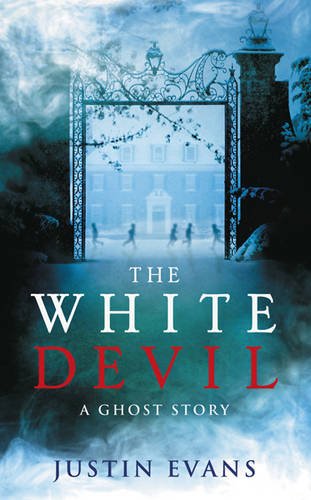
When seventeen-year-old Andrew Taylor gets into trouble at his school in Connecticut his parents decide to send him to Britain’s prestigious Harrow School to finish his education. On Andrew’s arrival at Harrow, people begin to remark on his resemblance to the poet, Lord Byron, who also attended Harrow two centuries earlier. This makes Andrew the perfect choice for the role of Byron in the school play, which is being written by his housemaster, Piers Fawkes. But when Andrew witnesses the death of one of his new friends and starts to experience terrifying visions and ghostly sightings, he becomes convinced that Harrow is haunted and that the death is connected with something that happened during Byron’s time at the school. With the help of Persephone Vine, the only girl at Harrow, Andrew and Fawkes begin to investigate, but can they discover the truth behind the hauntings before someone else dies?

I was excited about reading The White Devil as it really sounded like a book I would enjoy. And I did enjoy it, though maybe not as much as I was hoping to. I would describe the book as part ghost story, part literary mystery (though not a particularly scary ghost story, in my opinion – while it was certainly very atmospheric and unsettling, the scenes where Andrew encountered the ghost didn’t scare me very much). The Byron element of the novel was what really interested me and the main reason why I wanted to read this book. I admit I wasn’t sure exactly how much of this story was based on historical fact and how much was pure fiction, but I did enjoy watching Andrew and the other characters researching Byron’s life and attempting to solve the mystery surrounding him.

I also loved the Harrow setting, which was very vividly portrayed, and the descriptions of the old buildings, fog and rain gave it a slightly gothic feel. Justin Evans himself spent a year at Harrow and this obviously helped to make his descriptions of the school feel authentic and believable, with insights into many aspects of life at a boys’ public school including school uniforms, traditions and slang. And in making Andrew Taylor an American, this allowed the author to draw on his own experiences to show how Andrew had to adapt not only to a new school but also to a new country and culture.

The one thing that disappointed me about The White Devil was the lack of strong, well-developed characters. The only character I really liked was Piers Fawkes, who had once been a famous poet and now suffering from alcoholism and at risk of losing his job at Harrow. Persephone, as the book’s main female character, never really came to life for me – and apart from Andrew himself, none of the other boys at Harrow had any depth either. If the characters had been stronger I think I would have enjoyed this book more than I did, but it was still a good, atmospheric read.

Two from Mary Stewart: Rose Cottage and Touch Not the Cat

After reading the wonderful Nine Coaches Waiting last month, I was desperate to read more Mary Stewart novels. The one I picked up next, Rose Cottage, probably wasn’t the best choice to follow up such a great book as Nine Coaches Waiting, but I was limited by what was available in my library at the time.

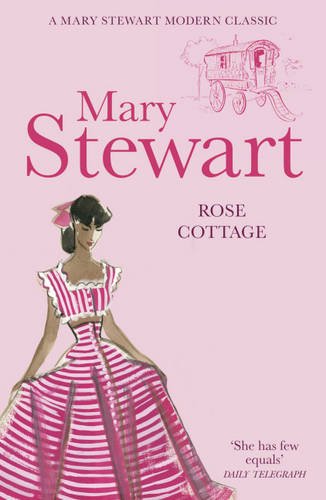
Rose Cottage is set in 1947 at Todhall, a large estate in the north east of England, and is narrated by Kate Herrick. Kate grew up in a cottage on the estate and was raised by her grandmother, a servant working for Todhall’s owners, the Brandons. The end of World War II has brought many changes: Todhall is being converted into a hotel and Kate’s grandmother has moved to Scotland with the Brandon family, leaving Rose Cottage unoccupied. Kate, who has been left a widow following the war, agrees to spend a few days at the cottage, going through some private papers that her grandmother had left behind. When she arrives there, however, she discovers that someone else has been there before her – and as she begins to investigate, she starts to uncover some surprising secrets about her own past.

If I had to describe Rose Cottage in one word, I think that word would be ‘pleasant’. The setting is certainly very pleasant, with some lovely, vivid descriptions of the countryside, with birds singing in the trees and flowers blooming in the meadows. The characters are pleasant too. It would be difficult not to love Kate and in fact, almost all of the characters are very easy to like – there are no villains in this book. Sometimes, though, ‘pleasant’ isn’t enough for me. I did find Rose Cottage quite enjoyable but there was nothing very special or memorable about it. The plot was a simple one, and although there was just enough suspense to keep me interested until the end, it wasn’t hard to predict what was going to happen. If this had been my first experience of Mary Stewart I probably wouldn’t have wanted to read any more of her books, so if you’re new to her work I think it might be best to leave this one until you’ve read some of her other novels first.

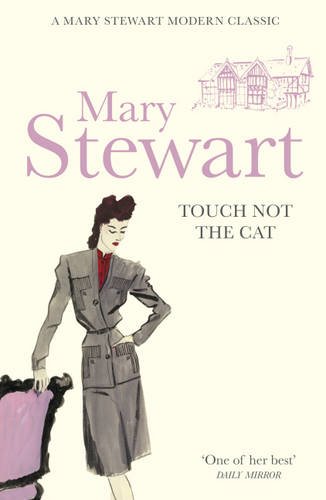
Since finishing Rose Cottage a couple of weeks ago I have now read a third Mary Stewart book, Touch Not the Cat, which was more to my taste and, in my opinion, a much better book. This story is set on another country estate in England – Ashley Court, complete with a moat and a maze. When Bryony Ashley’s father is involved in a fatal road accident in Bavaria, he lives long enough to leave her a cryptic message, warning her that she could be in danger. After his death Bryony returns to Ashley Court where she begins to investigate the meaning of his dying words. However, she also has another mystery to solve – for as long as she can remember, Bryony has had a secret ‘lover’ who she communicates with using telepathy. Her lover has never identified himself, but she suspects it must be one of her three cousins, Emory, James or Francis. Will she ever discover his true identity?

I really enjoyed this book. After a slow start the pace soon picked up and the story had the page turning qualities that Rose Cottage lacked. As the various threads of the story came together and secrets were revealed, things started to get quite exciting. The telepathy aspect of the story gave it a touch of the supernatural, but this was never overused and as a result it didn’t feel unbelievable. And it wasn’t immediately obvious to me who Bryony’s mysterious lover would be, so I was kept guessing for a while. I also liked the Romeo and Juliet references at the beginning of each chapter, which gave a hint as to what was going to happen in the pages that followed.

So, Rose Cottage and Touch Not the Cat – two books by the same author and two very different reading experiences for me!