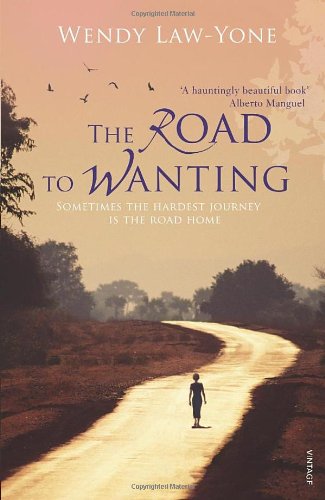
The Road to Wanting by Wendy Law-Yone

In a hotel room in Wanting, a town on the borders of China and Burma, Na Ga is about to commit suicide. But when she’s interrupted by the hotel receptionist who tells her that her companion, Mr Jiang, has killed himself, Na Ga decides not to die just yet. Staying on alone in the hotel, she looks back on the circumstances that have led her to Wanting and begins to consider what she wants from her future.

Wendy Law-Yone instantly grabbed my attention with this fascinating and intriguing opening. The first chapter alone raised so many questions. Who is Na Ga and what is she doing in Wanting? What terrible things had happened in her life to cause her to want to kill herself? We do find out the answers to these questions, but only very slowly as Na Ga’s tragic story gradually unfolds.

We learn that Na Ga was born into Burma’s Wild Lu tribe and sold into slavery by her parents. From there, things go from bad to worse until she eventually ends up in Bangkok with her American lover, Will, who arranges for her to travel back to the village of her birth. The only problem is that Na Ga isn’t sure if she wants to go or not…and after years of conflict and unrest in Burma she doesn’t even know if her village still exists.

As you will have guessed, this is quite a bleak story but thankfully it’s not entirely without humour and lightness. Some of the lighter moments are provided by the character of Minzu, the happy, kind-hearted sixteen-year-old receptionist at the hotel in Wanting. Minzu is one of the few people who offers Na Ga genuine friendship and she brings a glimmer of hope and optimism to an otherwise harrowing story.

Na Ga herself could be a frustrating character at times, failing to take control of her own destiny and seeming to just accept all the bad things that happened to her, but I could see that much of her personality had been shaped by the abuse and neglect she was forced to endure over the years. She’d never had the freedom to choose what she wanted to do with her life. But while I did have a lot of sympathy for Na Ga, I was left feeling that I never really got to know her. I think the structure of the novel, interspersing the present day storyline with glimpses of Na Ga’s past, may have prevented me from becoming as fully absorbed in her story as I would have liked.

The Road to Wanting left me feeling saddened and angered. Some of the things that Na Ga experiences and witnesses are shocking and by the end of the novel I could understand what had driven her to consider suicide. The lack of connection I felt with Na Ga as a character is the only negative thing I can say about this excellent book.
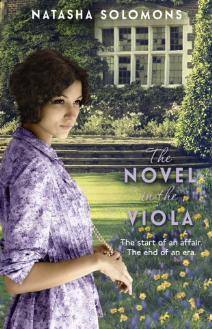
The Novel in the Viola by Natasha Solomons

I love reading fiction set during World War II and The Novel in the Viola is one of the best I’ve read for a while. The story begins in 1938 when we meet nineteen-year-old Elise Landau, a girl from a rich Austrian family (her mother, Anna, is a successful opera singer and her father, Julian, a famous author). Until now, Elise has lead a secure and comfortable life but that’s all about to change because the Landaus are Jews, and with Europe on the brink of war Austria is no longer a safe place to live. And so Elise is sent away from her home in Vienna and travels alone to Tyneford House, a mansion on the south coast of England, where she will work as a maid for Mr Rivers and his son, Kit. Her parents have remained in Austria while they await American visas and they promise to send for Elise as soon as possible – but as the war continues, she begins to wonder if they’ll ever be reunited.

The portrayal of life in an English country house forms a big part of the story, with insights into the class system, social conventions of the time, and the relationships between servant and master. Elise has to get used to working as a parlour maid after spending most of her life having servants of her own. Her background makes it difficult for her to fit in with the other servants at Tyneford but her status as a maid and a Jewish refugee prevents her from being accepted by some of the Rivers’ upper class friends. Elise is a wonderful character and I enjoyed following her as she settled into her new life – I thought Natasha Solomons displayed a real understanding of what it was like to be newly arrived in an unfamiliar country, feeling homesick and struggling with the language and the culture.

There are lots of beautiful, atmospheric descriptions of the Dorset countryside and coast which gave me a true feel of what it was like to live there during the Second World War. The story also looks at the effects the war had on the village of Tyneford and the house itself. The author’s note at the end of the book was very interesting and explained how Tyneford was based on a real place that became a ghost town because of the war.

There are so many other things I could say about this book – there’s the secret of the ‘novel in the viola’ itself, and I haven’t even mentioned yet the romantic storyline which develops as Elise begins to fall in love with someone she meets at Tyneford. But I don’t want to spoil this book for you, so I’ll just say that The Novel in the Viola was a real pleasure to read, a great story with just the right balance of sadness and humour. And I thought the way the book ended was perfect – the only problem was that I had grown to care for Elise and the others so much I didn’t want to leave them behind.

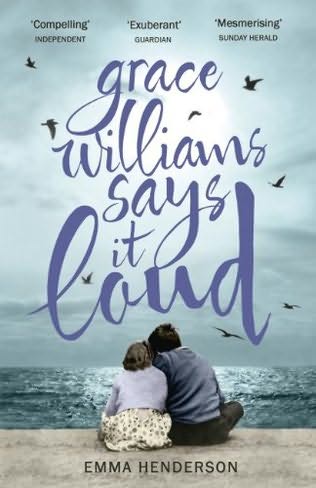
Grace Williams Says It Loud by Emma Henderson

This moving and thought-provoking novel by Emma Henderson introduces us to a girl called Grace Williams. Grace was born with severe disabilities and a childhood case of polio only makes things worse. When she is eleven years old, her parents send her to the Briar Mental Institute, a residential home for disabled people. Unfortunately it’s the 1950s, a less enlightened time than today, but Grace is lucky in that she does meet a few people at The Briar who can see past her disabilities and who offer her friendship and love. One of these is Daniel Smith, a boy who has problems of his own – he suffers from epilepsy and has also lost both of his arms in an accident. But although life at The Briar is not easy, Grace and Daniel form a relationship that helps to sustain them both.

Grace comes across as an observant, funny, loving young woman trapped by her own inability to communicate and her physical appearance, both of which lead to her being dismissed and shunned by society. But the fact that Grace’s narrative voice is so clear and articulate shows that she is not lacking in intelligence and awareness. She doesn’t have a problem understanding what other people are saying; she just finds it hard to express herself verbally, always responding in sentences of no more than two words (“me too” or “yes, please”). And yet because of her limited speech many people assume she’s not able to follow a conversation – and so they talk about her as if she wasn’t a human being with feelings, as if she wasn’t even there, which is all very sad.

Even sadder are the reactions of Grace’s family – the shame and frustration of her parents, the matter of fact way in which her little sister, Sarah, tells a friend that she has ‘two sisters but one of them doesn’t count’ (a scene which really broke my heart). Other bloggers have mentioned that Emma Henderson explained in her author’s note how this and other episodes of the story were based on her own memories and experiences of having a sister who, like Grace, spent many years in an institution. I’m disappointed that my copy of the book didn’t include this note from the author as I would have liked to have known about the inspiration behind the story.

The descriptions of the way the Briar residents were treated by their nurses and teachers are shocking. Although there were a few who did show some kindness and compassion, many of the others were cruel, unkind and displayed a complete lack of interest in even trying to understand the people they were supposed to be caring for. Unfortunately some went even further, abusing their positions of authority and taking advantage of the vulnerable people under their care. As you can imagine, some parts of the book are emotionally quite difficult and uncomfortable to read, but I don’t want to give the impression that this is a bleak and depressing book because it’s really not. However hard things may be for Grace, there are still positive things in her life – the most important of these being her friendship with Daniel.

I really loved the character of Daniel: intelligent, caring, full of hope and optimism. And yet he does still have moments where everything becomes too much for him. He has a very sad and tragic story of his own, a story which moved me in a way that even Grace’s didn’t. Although Grace is the narrator and central character of the book, I never felt quite the same connection with her that I did with Daniel.

I can’t say I loved this book, but I’m glad I read it and I know it’s not a story that will be easily forgotten. I’m sure the things I’ve read will stay with me for years to come. So if you’d like to know what Grace Williams has to say, then pick up a copy of this book and find out.

The Somnambulist by Essie Fox

With my love of all things Victorian I had high hopes for this book, the debut novel by Essie Fox, and I wasn’t disappointed. The Somnambulist is a beautifully written story with memorable characters, an intricate plot and a distinctly gothic feel.

Phoebe Turner is a seventeen-year-old girl who lives in the East End of London. Her mother, Maud, a member of the Hallelujah Army, has done her best to keep Phoebe from sin and to protect her from what she considers to be the bad influence of her sister, Cissy. Phoebe, though, adores her glamorous Aunt Cissy and she is left devastated by her sudden death early in the novel.

Maud is struggling with the loss of Cissy’s income and when the wealthy Nathaniel Samuels offers Phoebe a position as companion to his wife, it seems this could be the solution to their financial problems. And so Phoebe leaves London behind and travels to Dinwood Court, the Samuels’ mansion in Herefordshire, where she begins to uncover some dark family secrets…

Essie Fox is the author of the Virtual Victorian blog and one thing that is very apparent in The Somnambulist is her knowledge and love of the Victorian period. It was interesting to read the author’s note at the back of the book in which she gives us some of the historical fact behind the fiction and lets us know which of the people and places mentioned in the novel are ones that really existed. I was impressed by the amount of period detail and the vivid descriptions which really brought the settings to life, particularly Wilton’s Music Hall and the magnificent Dinwood Court, two contrasting but equally well-drawn locations. The characters, too, are colourful and vibrant and Phoebe herself is a complex character who grows and develops as a person over the course of the novel.

I guessed one of the book’s big secrets almost from the beginning (a sign that I’ve read too many books of this type, maybe!) but that didn’t matter at all because I enjoyed watching Phoebe as she slowly pieced the parts of her history together. There were other surprises and twists that I didn’t see coming and overall I thought the story was very cleverly plotted. I also loved the sleepwalking theme which is indicated in the title and gently woven throughout the book with references to the Millais painting, The Somnambulist, which is widely believed to have been inspired by either the Wilkie Collins novel The Woman in White or the Bellini opera La Sonnambula. The story itself is often ghostly and dream-like and Phoebe’s world is a place where nothing is exactly as it seems.

The Somnambulist is an impressive debut novel and I’ll certainly look out for any future books from Essie Fox.

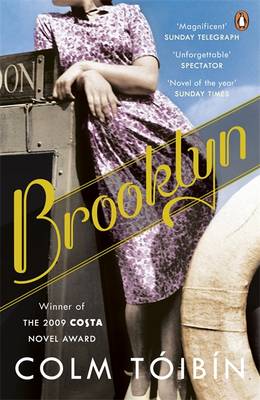
Brooklyn by Colm Tóibín

Brooklyn tells the story of Eilis Lacey, a young woman who lives in a small town in Ireland with her mother and sister. It’s the 1950s, only a few years after the end of World War II and it’s not easy to find a good job in a town like Enniscorthy. When Eilis is offered the chance to work and study in New York she leaves her family behind and prepares to start a new life in Brooklyn. After a traumatic journey across the Atlantic, we see how she settles into her new home and job, struggles with homesickness and makes new friends. But it’s during a trip home to Ireland that Eilis is faced with making the biggest decision of her life…

Brooklyn is a warm, gentle story with an old-fashioned charm. It’s not the most original book I’ve ever read and it’s not the most exciting or dramatic, but when I picked it up and started reading, I found it was just what I was in the mood for. Tóibín tells his story using simple language and a controlled, understated writing style and it was actually quite refreshing to read a book with such clear, direct prose and such a straightforward plot. The book was published in 2009 (and made the Booker Prize long list that year) but if I hadn’t been aware of that I could almost have believed it was written in Eilis’s own era because it does somehow have a very 1950s feel.

Eilis herself is a pleasant, likeable person. Looking at other reviews, many people have complained that she is too passive, allowing other people to run her life for her. I could accept her passivity as part of her quiet, innocent personality, though I agree that it didn’t make her a particularly strong or memorable character. I thought some of the minor characters were more interesting to read about – such as Georgina, the woman who befriends Eilis on her nightmare ocean crossing, or Miss Kelly, who runs the local shop in Enniscorthy where Eilis used to work. We stay with Eilis’s perspective throughout the whole book which means we only get to see the other characters when they are interacting with her directly, but something Tóibín does very successfully is to explore the relationships between Eilis and the important people in her life.

The book does touch on some of the social issues of the time – we learn a little bit about Ireland’s economy, the Holocaust is briefly mentioned, and we get a glimpse of racism in 1950s New York when Eilis starts serving black customers at Bartocci’s department store. But although those issues and others are there in the background they don’t form a major part of the plot. Instead, the focus of Brooklyn is very much on Eilis and the things that affect her personally: her new job at Bartocci’s, studying bookkeeping at evening classes, making new friends and visiting her boyfriend. The reader is immersed completely in the small details of Eilis’s daily life, something which could easily have become very boring, but in Tóibín’s hands is fascinating and compelling.

I haven’t personally had the experience of living in another country and I’m not sure how I would feel about it, but there were still parts of Eilis’ story that resonated with me and that I could identify with. I loved Brooklyn – and I was happy with the way the book ended too!

Why Didn’t They Ask Evans? by Agatha Christie

Continuing my recent forays into the novels of Agatha Christie, Why Didn’t They Ask Evans? is another one that I’ve really enjoyed and one of my favourites so far. This is one of Christie’s standalone novels (i.e. not Poirot, Marple or any other series).

Bobby Jones, son of the vicar of Marchbolt, is playing golf near the sea one day when he discovers that a man has fallen over the cliff. Left alone with the body while his friend goes to get help, Bobby is the only person who hears the man’s dying words: “Why didn’t they ask Evans?” As soon as Bobby informs the dead man’s family of his last words, a number of strange incidents start to occur, ending in Bobby’s beer being poisoned. After consulting with his friend Lady Frances Derwent (known as Frankie), they decide that someone must be trying to silence Bobby before he uncovers the truth behind the man’s death. As Frankie and Bobby attempt to find out what’s going on, they find themselves caught up in a mystery which leads them to a sanatorium run by the sinister Dr Nicholson.

The plot quickly becomes very far-fetched and ridiculous with lots of disguise-wearing, last-minute rescues and amazing coincidences. Frankie and Bobby constantly stumble upon clues and it seems that people give confidential information to them very freely – if it was really that easy to get people to tell you things, every crime would be solved in no time! Frankie and Bobby themselves even remark on the unreality of the situation and that they feel as if they’ve fallen into the pages of a novel.

Due to the number of red herrings and twists in the plot, the mystery is a more complex one than I thought it would be at first. If you could work out the significance of the phrase “why didn’t they ask Evans?” before it is revealed you must be a genius! I would never in a million years have guessed who Evans would turn out to be as it’s not something that can easily be deduced until you’ve been given all the pieces of the puzzle.

Why Didn’t They Ask Evans? is a fast-paced, light-hearted read with a very likeable pair of amateur detectives (particularly the courageous, quick-thinking Frankie). The melodrama and silliness are all part of the fun – this book never takes itself too seriously and despite topics of murder, drug use and kidnapping it never becomes too dark. Be prepared to suspend disbelief for a while, then sit back and be entertained.

A Visit from the Goon Squad by Jennifer Egan

I’m not sure how to begin describing Jennifer Egan’s A Visit from the Goon Squad to you, but I’ll do my best! I’ll start by saying that it’s an original and imaginative novel which revolves around a large number of different characters, most of whom are involved in the music industry in some way (be it as musicians, producers, record label owners, publicists, or music lovers). The main theme of the book is time and Egan uses her characters to explore what happens to us as we age and how life doesn’t always turn out the way we hoped it would.

I don’t know exactly how many characters there were in this book, but it felt like hundreds! Two of the most important are Bennie Salazar, a record executive, and his assistant, Sasha. Most of the other characters are somehow connected to either Sasha or Bennie, whether directly or indirectly. We meet new people in almost every chapter and I found I needed to pay attention to every new name as even someone who seemed completely insignificant could reappear later in the book.

Each chapter is written in a distinct style and has its own unique feel. One chapter takes the form of a celebrity interview; another is presented as a PowerPoint slideshow. Some chapters have a first person narrator; others are told in the second or third person; we move from past tense to present tense, from one country to another and backwards and forwards in time. I don’t think I’ve ever seen an author incorporate so many different styles and ideas into one novel – which could be either a good thing or a bad thing depending on your personal preferences. If you like books that are adventurous, innovative and different, then you’re probably going to love A Visit from the Goon Squad. If not, you might find it all a little bit confusing and overwhelming like I did.

Many of the chapters seemed more like self-contained short stories than part of a novel and although each one is linked to the others in some way, I thought the book felt too disjointed. For me this made the experience of reading it quite uneven – there were some parts that I really enjoyed and some that just didn’t interest me at all. The air of experimentation, along with the PowerPoint presentation and the futuristic world portrayed in the final section, made the whole book feel very ‘modern’ and this is maybe another reason why it didn’t really work for me. I suppose I just prefer novels which have a more conventional structure, less jumping around in time and place, and a stronger plot.

A Visit from the Goon Squad sounded fascinating and I can see why a lot of people would love it – it’s a very unusual book which sparkles with originality and creativity – but it turned out not to be my type of book at all.