Short Story: The Vampyre by John Polidori

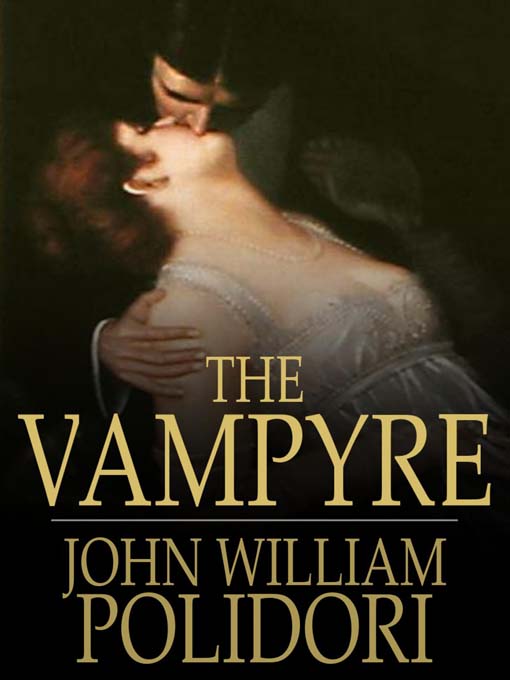
As I’m hoping to read Dracula soon, I thought it might be a good idea to also read one of Bram Stoker’s influences – John Polidori’s The Vampyre. This short story is considered to be one of the first vampire stories in literature and the first to portray a vampire in the way we would recognise today. I have actually been interested in reading this story since I read The Count of Monte Cristo by Alexandre Dumas and was intrigued by the references to the vampire Lord Ruthven. (If you’ve read The Count of Monte Cristo you might remember the scene where the Countess G- is remarking on the Count’s pale skin and nicknames him ‘Lord Ruthven’.)

The origins of The Vampyre are fascinating. John William Polidori was Byron’s personal physician and in 1816, went with him to Switzerland. At the Villa Diodati, on Lake Geneva, Byron and Polidori were joined by the poet Percy Bysshe Shelley, his future wife Mary Wollstonecraft Godwin and her stepsister Claire Clairmont, and decided to amuse themselves by writing horror stories. Mary began work on what would become Frankenstein, and Byron wrote the beginning of a vampire story (which survives today as Fragment of a Novel) based on the various vampire myths and legends. Although Byron abandoned his vampire story, Polidori took inspiration from it and The Vampyre was the result. Unfortunately for Polidori, The Vampyre was wrongly attributed to Byron, despite Byron’s attempts to set the record straight.

As a story, it really isn’t very satisfying. Our narrator is a young Englishman called Aubrey, who travels to Rome with his acquaintance, the nobleman Lord Ruthven. The more time he spends with Ruthven, the more Aubrey begins to distrust him and to realise that Ruthven is not what he seems… The plot is so thin that there’s not much more I can tell you without spoiling it – although really, there’s nothing to spoil as the story is very predictable (for the modern reader anyway – I’m sure it would have been more compelling at the time when it was first published).

The Vampyre is interesting historically because of its portrayal of Lord Ruthven as a mysterious, pale-faced aristocratic figure who preys on innocent young ladies, which is the way many future vampires would be described (the vampires of folklore had generally been described as hideous-looking monsters). If you’re interested in how vampire stories began and how they evolved over the years, this is worth reading. If you’re just looking for a good short story to read, you might be disappointed with this one.

Read The Vampyre online here

Byron’s Fragment of a Novel is also available online and is so short it only takes a few minutes to read. It’s a shame he decided not to continue with this, as I think it had the potential to be much better than The Vampyre. I’ve read a few of Byron’s poems but this is my first experience of his prose and even based on such a short sample of his work I find his writing superior to Polidori’s.

Read Fragment of a Novel online here
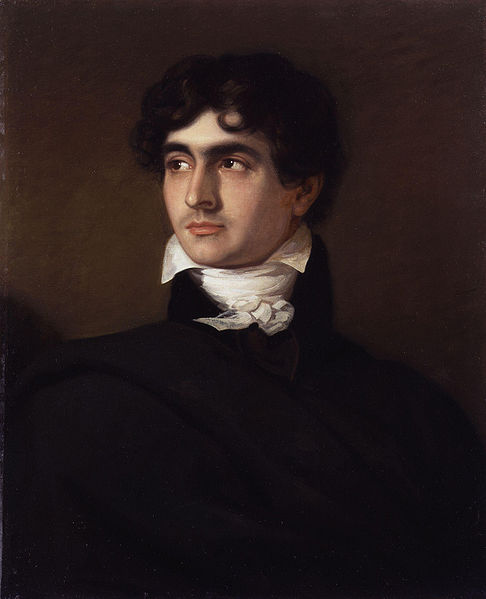

John William Polidori (1795-1821)
Bleak House Readalong: Chapters 14-19

I’m a few chapters ahead of the readalong schedule again, but this post is based on my thoughts at the end of Chapter 19.

*Please be aware that this post may contain spoilers*

It’s week 3 of the readalong, I’m more than 230 pages into my edition of Bleak House, and Dickens is still introducing new characters and new storylines in every chapter!

In this week’s installments, Esther accompanies Caddy Jellyby to the dancing school where her fiancé Prince Turveydrop works. We also meet his father, Mr Turveydrop, who is always talking about the importance of ‘Deportment’ – very annoying! In chapter 15, Mr Skimpole reappears with news that the debt collector Mr Neckett has died, leaving his three children orphaned. The oldest girl, Charley, is taking care of her brother Tom and the baby Emma, as well as going out to work.

The Snagsbys invite the Chadbands for tea and Mrs Chadband turns out to be a face from Esther’s past. Richard changes career again, deciding he wants to be a lawyer this time. And on a visit to Mr Boythorn, Esther encounters Lady Dedlock, who seems strangely familiar although she’s sure she’s never seen her before.

There are an unbelievable number of characters in the first 19 chapters of this book alone! Luckily, I haven’t had too much trouble remembering who they all are. At the moment it’s difficult to tell which of the characters will play a major part in the story and which won’t. Maybe they all will!

As I mentioned last week, I prefer the chapters narrated by Esther to the others, as they are easier to follow. However, we are now starting to see some indications that Esther is not being completely honest with the reader and is choosing what she does and doesn’t want to tell us (usually in relation to a certain young surgeon called Mr Woodcourt).

“For I was so little inclined to sleep, myself, that night, that I sat up working. It would not be worth mentioning for its own sake, but I was wakeful and rather low-spirited. I don’t know why. At least, I don’t think I know why. At least, perhaps I do, but I don’t think it matters.”

I’m enjoying the book but it still feels quite disjointed and confusing. It still seems that storylines are being started and then abandoned just as they’re starting to get interesting, and characters are being introduced then disappear for several chapters at a time. I’m sure that when things start to come together later in the book I’ll be able to appreciate the importance of these early chapters more. I think I just need to be patient!

More posts on the Bleak House readalong here.

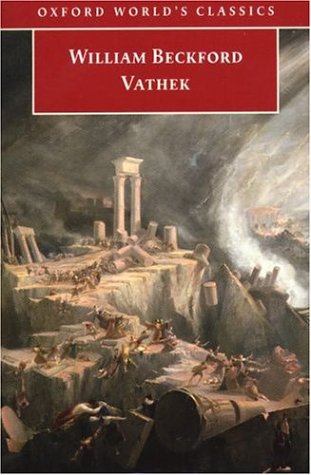
Review: Vathek by William Beckford

This is my first book for the RIP V challenge and one of the strangest novels I have ever read! It’s the story of Vathek, ninth Caliph of the race of the Abassides, and his temptation by a supernatural being (known as ‘the Giaour’), who promises to bestow on him the treasures and talismans of the ‘palace of subterranean fire’. Encouraged by his ambitious mother, the sorceress Carathis, Vathek embarks on a journey through exotic landscapes and begins a descent into hell.

Although William Beckford was English, Vathek was originally written in French and translated into English by Reverend Samuel Henley in 1786. The best way I can describe Vathek is that it’s a sort of dark, twisted fairy tale reminiscent of The Arabian Nights. Beckford mixes eastern mythology and Islamic culture with elements of the gothic novel (ghouls, spirits, graveyards, an atmosphere of evil) and throws in some magic, fantasy and romance for good measure. There are some long and poetic descriptive passages which become quite surreal and dreamlike in places.

Bababalouk had pitched the tents, and closed up the extremities of the valley with magnificent screens of India cloth, which were guarded by Ethiopian slaves with their drawn sabres; to preserve the verdure of this beautiful enclosure in its natural freshness, the white eunuchs went continually round it with their red water-vessels. The waving of fans was heard near the imperial pavilion, where, by the voluptuous light that glowed through the muslins, the Caliph enjoyed at full view all the attractions of Nouronihar.

The book is short in length but it’s not a quick, easy read. The entire story is told in one big chunk, rather than being broken into chapters, which made it seem quite daunting. If it had been any longer I probably wouldn’t have finished it because although the beginning and the ending were great, I started to lose interest during the middle section.

The characters are two-dimensional and impossible to like. At the beginning of the book, Vathek is popular with his subjects as he is fond of the pleasures of life and rarely becomes angry (although when he does lose his temper, one of his eyes becomes ‘so terrible that no person could bear to behold it, and the wretch upon whom it was fixed instantly fell backward, and sometimes expired’). After the Giaour arrives in his kingdom and begins to tempt him with stories of the palace of subterranean fire, however, Vathek becomes a cruel and greedy ruler. One of the conditions the Giaour imposes on him in return for admitting him into the subterranean palace is that he must renounce Islam and perform a series of atrocious crimes. Vathek never shows any remorse for his actions and I found him completely undeserving of any sympathy from the first page of this book to the last. His mother, Carathis, is even worse…

“…by my formidable art the clouds shall sleet hailstones in the faces of the assailants, and shafts of red-hot iron on their heads; I will spring mines of serpents and torpedos from beneath them, and we shall soon see the stand they will make against such an explosion!”

Vathek is completely bizarre and probably a book that you’ll either love or hate. It’s worth reading if you’re interested in the origins of gothic literature, fantasy or horror – and it apparently influenced both Byron and H.P. Lovecraft, among others. If you don’t take this book too seriously, it’s quite entertaining.

After the Sunday Papers #6

On Thursday I posted my sign-up post for the RIP V Challenge. Now I’m signing up for another one: The Really Old Classics Challenge.


The idea of this challenge is to read at least one work that was written before 1600 AD. If you’re very ambitious you can become a ‘Classicist’ by reading four! You can also read a retelling of a really old classic.

The challenge runs until December 31 2010. See the challenge blog to sign up.

At the moment I have no idea what I’m going to read for the challenge. I’m completely new to ‘really old classics’, so any recommendations would be very welcome!

Recently acquired books…

Bought on a visit to my favourite bookshop:
The Secret Scripture by Sebastian Barry
The Rose of Sebastopol by Katherine McMahon
The Victorian Chaise-Longue by Marghanita Laski

Won from LibraryThing Member Giveaways:
Can You Forgive Her? by Anthony Trollope

I was particularly excited to find a copy of The Victorian Chaise-longue, as it’s the first dove-grey Persephone I own (I do also have a copy of Laski’s Little Boy Lost, but it’s one of the Persephone Classics editions). I’m hoping to read The Victorian Chaise-longue soon for the RIP challenge.

Currently reading

I’m still reading Bleak House for the readalong. I’m also reading Vathek by William Beckford, which is a Gothic novel from 1786.

Whatever you’re reading this week, I hope you enjoy it!

Review: Fingersmith by Sarah Waters

I’ve had a copy of this book on my shelf for a few months now but I kept putting off reading it because, after seeing so many glowing reviews, I was afraid I wouldn’t like it. Eventually I decided I would have to just get on with it, before I really was the only person left on earth who still hadn’t read it!

Somehow I had managed to avoid coming across any spoilers (and hadn’t seen the TV adaptation either) so was able to go into Fingersmith knowing almost nothing about the plot. As I don’t want to spoil the book for any of you who haven’t read it yet, all I will tell you is that Fingersmith is the story of Sue Trinder, an orphan raised by Mrs Sucksby in a den of thieves in Victorian London, and Maud Lilly, a young heiress who lives with her uncle at their country house, Briar. When an acquaintance of Mrs Sucksby’s, known as ‘Gentleman’, comes up with a plan to cheat Maud of her inheritance, Sue agrees to pose as a lady’s maid and help him with his scheme. And that’s all I’m going to say about it!

I was expecting a complex plot with lots of twists, and that was what I got. Unfortunately, I guessed what the first big plot twist was going to be! I was disappointed because I would have loved to have been shocked by it. (Actually, I think if only I’d read this a few years ago before I started reading so many Victorian sensation novels, it probably would have come as a shock.) I’m envious of those of you who didn’t see the twist coming because I can imagine it must have been stunning. Although this did have a slight impact on my enjoyment of the book, luckily there were plenty of other things that I did enjoy!

As I’ve probably mentioned before, the 19th century is one of my favourite periods to read about. I love the original Victorian classics and I love Victorian historical fiction too. Having read both this book and Affinity now, I can say that Sarah Waters has a real talent for portraying the atmosphere of Victorian London: the dark alleys, the narrow streets, the fog, the Thames. The locksmith’s shop at Lant Street, where Sue lives, is described particularly vividly.

Although I thought many of the characters in the book were very unlikeable, I could still find every one of them interesting, which must be a testament to Sarah Waters’ skills as a writer. I thought Gentleman was fascinating (funny how the word gentleman can be made to sound so sinister!). I liked the relationship between Sue and Maud too and the way the book switches perspective between the two girls, giving us an insight into each of their emotions, thoughts and motives, and allowing us to sympathise with them both.

I was really hoping I’d be able to gush about how much I loved this book, like the majority of people have. However, although I did enjoy it and couldn’t put it down at times (it didn’t feel like a 550 page book at all – I got through it in half the time it would normally take me to read a book this length), I don’t think it’s going to be one of my top reads of the year. Maybe it’s just that my expectations were a bit too high, which is not the fault of the book. Having enjoyed this one and Affinity, I’m looking forward to reading the rest of Sarah Waters’ books, starting with The Little Stranger for the RIP challenge.

R.I.P. V Challenge

I’m excited about being able to take part in the R.I.P. Challenge for the first time! The challenge actually started yesterday and runs until October 31st. I’m signing up for Peril the First which means I need to read at least four books from any of these genres: Mystery, Suspense, Thriller, Dark Fantasy, Gothic, Horror, Supernatural.

I’m hoping to read some of these, which are all books I already have on my shelf:

Frankenstein by Mary Shelley
The Little Stranger by Sarah Waters
The Monk by Matthew Lewis
The Victorian Chaise-Longue by Marghanita Laski
Dracula by Bram Stoker
Vathek by William Beckford
The Haunted Hotel by Wilkie Collins
The Sweetness at the Bottom of the Pie by Alan Bradley

I might also re-read a few stories from my Edgar Allan Poe collection for the Short Story Peril.

For more information see the challenge post at Stainless Steel Droppings.

Bleak House Readalong: Chapters 8-13

This is Week 2 of the Bleak House Readalong. I’m slightly ahead of the readalong schedule this week, but will keep this post restricted to chapters 8-13.

*If you haven’t read the book yet, you might encounter some spoilers.*

13 chapters into the book now and it still feels that not much has actually happened yet; Dickens is still bringing in new characters and new storylines. I’m enjoying the chapters narrated by Esther the most as I’m finding the other chapters a bit harder to follow.

In this week’s installments, Esther receives a marriage proposal, Richard tries to choose a profession, and a law-copier called Nemo is found dead from a suspected opium overdose. We meet Mrs Pardiggle who, like Mrs Jellyby, is supposed to be a ‘philanthropist’, but whereas Mrs Jellyby neglects her children, Mrs Pardiggle brings her five sons with her everywhere she goes and forces them to invest in charities that they are too young to know anything about.

We also meet a drunken brickmaker and his wife Jenny, who has a black eye and is nursing a sick baby. Other new characters include Mr Boythorn, an old friend of Mr Jarndyce’s who visits Bleak House, a ‘law-stationer’ called Mr Snagsby, and Jo, a homeless crossing-sweeper.

It will be interesting to see how Dickens is going to weave all these storylines and characters together. A lot of things don’t make much sense at the moment, but I’m hoping that everything will start to become clearer soon. I’m enjoying the book more than I was last week, though – and Esther isn’t annoying me as much now.

For more opinions on this week’s installments, see the list of participants at The Zen Leaf.